Weekly ecommerce tips, deals & news.
A URL coupon is a special web link that automatically applies a discount to a shopper’s cart when they click it. You might also hear it called an auto-apply coupon or a discount link. Instead of making people type in a code, the link has the discount details built right into it.
When a buyer clicks this link from an email or a social media post, the store registers the code in the background. The customer then goes straight to a chosen page on your website. They will see the discount already active and calculated in their session.
The main goal of a URL coupon is to make buying as easy as possible. You’re taking away the need for customers to remember or paste complex codes. This makes people more likely to finish their purchase and stay happy with your store.
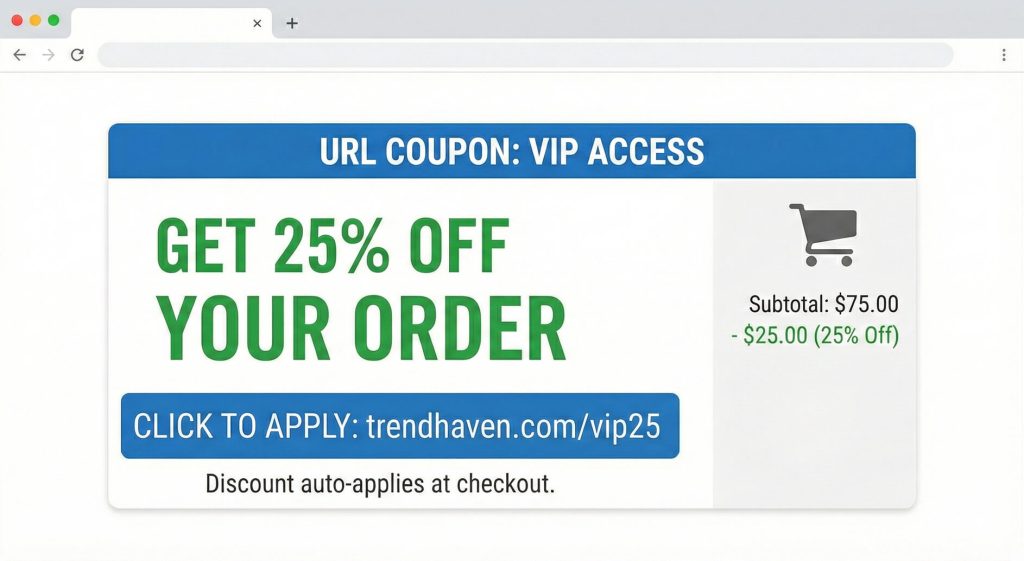
A query string is the part of the web address that passes data to your server. A normal URL coupon adds a parameter at the end of the address. For example, your link might look like yourstore.com/?coupon=mycode.
When your server gets this request, your ecommerce software reads the coupon parameter. It checks your database to see if the promo rule is active. If the rule is valid, the software connects the savings to the current browsing session.
If you use tracking links for emails, you might need different URL formatting. Sometimes you have to use an ampersand instead of a question mark to add the code. If you get the format wrong, it will break the link, and the discount will fail.
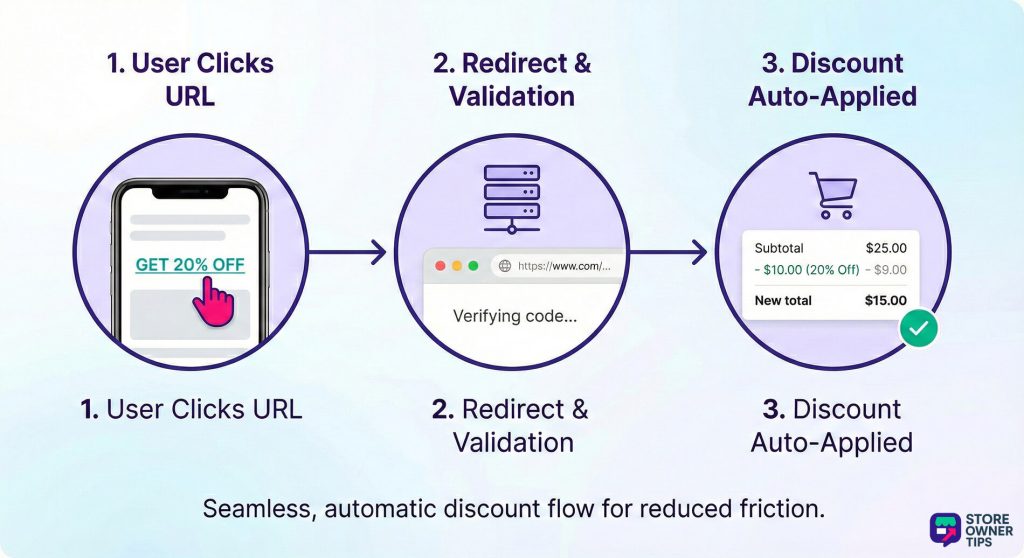
Session storage is what makes these links work so well. When a shopper clicks the promo link, the discount goes into their temporary session data. The savings stay attached to their virtual cart even if they keep browsing.
A customer can click a link, look at different category pages, and add various items over a long time. The discount will still show up on the final checkout screen without them clicking the link again. If they decide to remove the code themselves, it gets deleted from the session.
Good coupon systems give you control over where the user lands after they click. You can send them straight to the shopping cart page with a success message. This confirms the savings and pushes them to buy.
You can also set up product page redirects. This sends the user to a specific item page, which is great for new product launches. You might also route traffic to custom landing pages for special events like Black Friday.
Default query strings can look messy and technical. To make things look better, advanced systems let you use URL overrides. This feature hides the messy code behind a clean and memorable link.
You can make a link that just says yourstore.com/go/freeshipping. When the customer goes to that clean address, the server maps it to the hidden promo logic. You get to keep the technical parts hidden from your buyers.
Any extra step in buying can make a customer leave your site. Traditional promo codes create friction because people have to type them out and avoid typos. URL coupons automate this step entirely.
This one-click pathway to savings keeps the customer in a buying mood. They spend less time doing administrative tasks at checkout. This helps you fight the high cart abandonment rates that affect most online stores.
Seeing empty coupon fields at checkout causes a lot of lost sales. When shoppers see those blank boxes, they feel like they are paying too much. They often leave your site to search Google for deals.
While searching, they might find expired codes or even get distracted by your competitors. A URL coupon neutralizes this threat entirely. Because the discount is already applied, the shopper has no reason to leave and search for better deals. You can even hide the promo box completely to secure the sale.
These links play into the idea of immediate gratification. When a user clicks an email link and sees a custom success message, they feel rewarded. They feel like they are part of an exclusive group.
The moment a customer clicks add to cart and sees a lower price, it triggers a sense of ownership. The user feels like those discounted items already belong to them. Leaving the cart now feels like losing a good deal.
You rarely want to give away blanket sitewide discounts. You can protect your profits by using advanced logic and cart conditions. The system checks the current state of the cart before it allows the discount to work.
You can set subtotal rules so the discount only triggers if the cart goes over a specific dollar amount. Furthermore, you can make sure the savings only apply if certain targeted items are in the cart. You can even restrict the link to specific user roles or shipping zones to control your costs.
Sometimes a user clicks an email link before they add anything to their cart. In a basic system, the coupon would fail because the cart is empty. Advanced tools solve this timing issue with a delayed coupon application feature.
If the user fails the cart conditions at first, the system saves the code in the background. As the user adds items, the system keeps checking the rules. The exact moment the cart meets the requirements, the discount activates instantly.
The most aggressive way to use these links is to automate inventory actions. Clicking the link acts as an automatic add to cart trigger, dropping specific products directly into the session without any extra navigation from the buyer.
| Campaign Type | Technical Action Executed by URL Coupon | Primary Merchant Benefit |
| Free Gift Promotions | Instantly adds a promotional item to the session cart upon click. | Drives immediate loyalty and helps clear out dead stock inventory. |
| Fixed Product Sales | Adds a specific item to the cart while simultaneously applying a fixed discount. | Compresses the entire sales funnel down to a single click to boost conversions. |
| Buy One Get One | Initiates complex logic to automatically deposit the reward item into the cart once the primary item is recognized. | Increases overall order value by forcing the customer to purchase the primary item. |
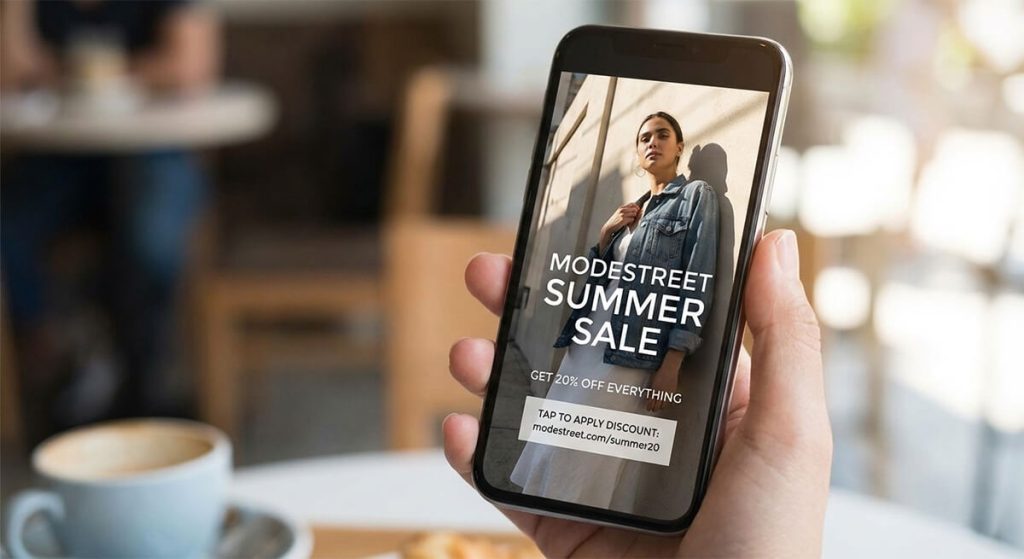
You can deploy these links across many different marketing channels to generate more revenue. Here are some popular ways to use them:
To fully understand the value of a URL coupon, you need to look at other common discounting methods. Each type has distinct operational drawbacks.
| Typology | Application Method | Best Strategic Use Case | Primary Operational Drawback |
| Traditional Promo Code | Manual keyboard entry by the user at the final checkout screen. | General sitewide holiday sales where the code is heavily marketed for brand awareness. | Extremely high friction that actively induces cart abandonment as users search for codes. |
| URL Coupon Static | Single click via hyperlink universally applied to anyone who possesses the link. | Email broadcast blasts and social media advertising. | Links can leak on public forums and require strict cart conditions to prevent profit loss. |
| Dynamic URL Coupon | Single click via hyperlink where the embedded code is uniquely generated for a specific session. | Highly targeted abandoned cart recovery and automated birthday rewards. | Complex to configure technically and requires deep marketing automation software. |
Dynamic URL coupons represent the peak of this promotional technology. Standard links use static codes that can leak to deal scraping websites. Dynamic links solve this security problem by generating a one time use code. After the purchase finishes, the unique code self destructs to prevent unauthorized sharing.
Monitoring your promo link performance is a basic part of store management. Ecommerce dashboards track exact coupon usage without requiring you to leave your website. These built-in reports show a clear ledger of all clicked links.
You need to watch transaction volume to see how many checkouts used a specific link. Revenue tracking shows the total money made from a specific promotion. Average order value tells you if the link pushed buyers to spend more than normal.
Secondary link management tools track raw clicks across the internet. You can see how many times a link was clicked versus how many people actually bought something. This comparison gives you the true conversion rate of your campaign.
You can track clicks on social media, blogs, and email blasts. Analyzing this data helps you test different promotional offers. You can quickly adjust your marketing based on what drives the most sales.
Aggressive server caching is a major issue for discount links. Ecommerce sites use caching to keep pages loading fast. However, aggressive caching plugins can block your site from reading the required query strings.
When a page serves entirely from a static cache, the server misses the promo logic. This causes the discount to fail completely. Always test new URL coupons using private browsing modes before launching a major sale.
Parameter syntax conflicts frequently break active campaigns. You might use tracking parameters alongside the discount code to analyze traffic. If you use the wrong symbol, the link will break.
For example, using a question mark when you need an ampersand will cause an error. This results in a broken page or a failure to apply the discount. You must ensure the URL syntax is perfect for every single link.
Database integrity issues sometimes block promo links from triggering properly. Generating bulk codes or migrating your site to a new host can cause backend errors. Plugin conflicts are another common cause of these issues.
Routine database maintenance is required to keep your promo links working. Keep all of your plugins updated to avoid structural problems. Fixing these database issues quickly keeps your customers happy and prevents lost sales.
Ultimately, URL coupons are one of the most effective tools a store owner can use to streamline the buying process and protect their profits. By eliminating the manual step of typing out promo codes, you remove a major source of friction that actively induces cart abandonment.
When shoppers don’t have to face an empty promo code box at checkout, they are far less likely to leave your site to hunt for deals on Google. Whether you are running a flash sale via email, setting up automated cart recovery, or partnering with influencers, these auto-apply links keep your customers in a buying mood and make them feel instantly rewarded.
Related concepts to explore next: To fully leverage URL coupons for WooCommerce in your marketing strategy, it is helpful to understand these connected concepts:
Ready to get started? Try installing the best WooCommerce coupon plugin to create URL coupons and see how a one-click pathway to savings impacts your overall conversion rate.
Copyright © StoreOwnerTips.com. All Rights Reserved.
