Weekly ecommerce tips, deals & news.
Decoupled ecommerce is a way to build an online store where the front-end (what the customer sees) and the back-end (where the data and payments are handled) are completely separate. Instead of being stuck together in one system, they talk to each other instantly using digital bridges called APIs. This lets store owners create lightning-fast, custom shopping experiences on any device without messing up their core store data.
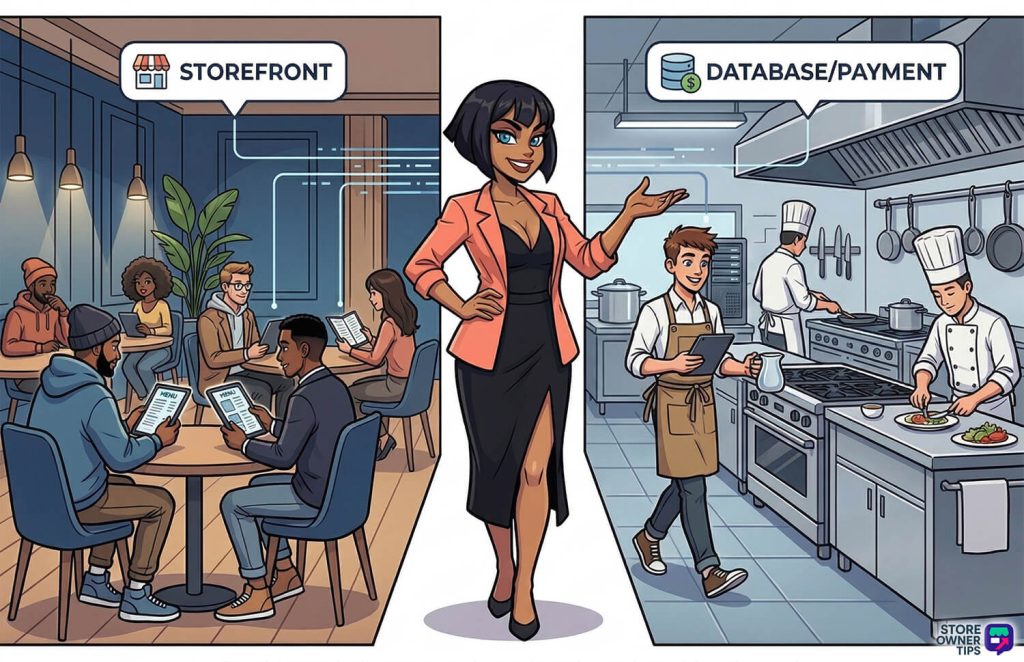
To understand how decoupled ecommerce works, think about a busy restaurant. In a “traditional” ecommerce store, the dining room (where the customer sits and looks at the menu) and the kitchen (where the food is stored and cooked) are all one big room. Thus, if you want to paint the walls in the dining room, you have to shut down the whole kitchen, too. Everything is connected.
In a decoupled store, the dining room and the kitchen are completely separate. The dining room’s only job is to give the customer a great experience. Meanwhile, the kitchen’s only job is to handle the complex cooking (or in ecommerce, the complex math like inventory, taxes, and credit card processing).
The only connection between the two rooms is the waitstaff. The waiter takes the customer’s order, walks to the kitchen, and brings back exactly what was asked for. In a decoupled digital store, those highly efficient waiters are called APIs (Application Programming Interfaces).
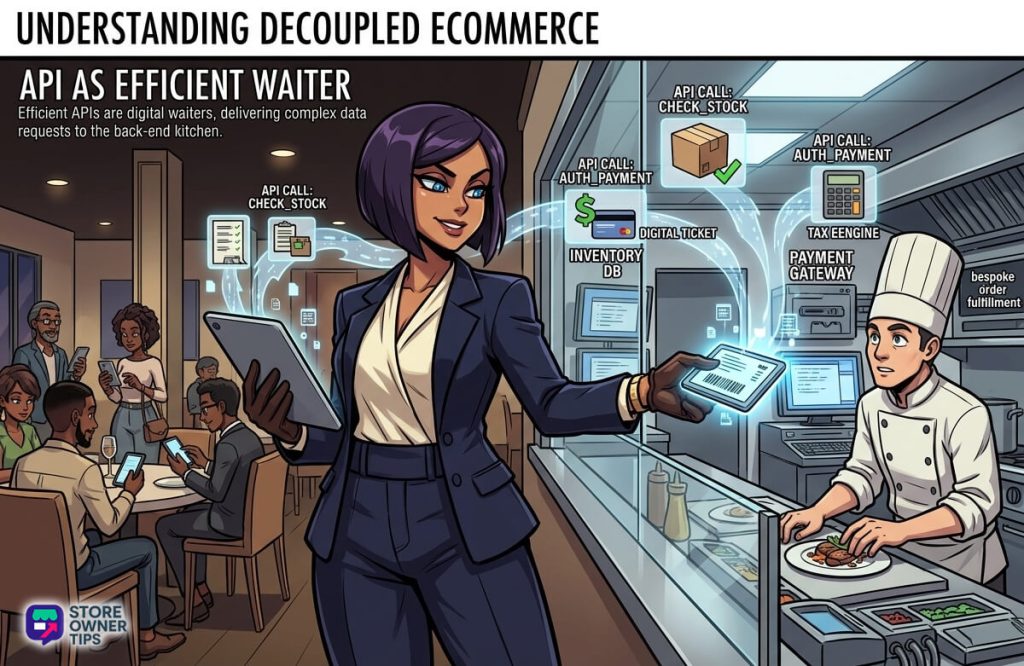
When a shopper clicks on a pair of shoes in a decoupled store, the front-end website sends a quick API request to the back-end. The back-end does the heavy lifting, checking if the shoes are in stock and calculating the price, and then hands only that specific data back to the website.
Why go through all this trouble just to separate the two parts? It all comes down to speed and the psychology of your shopper.
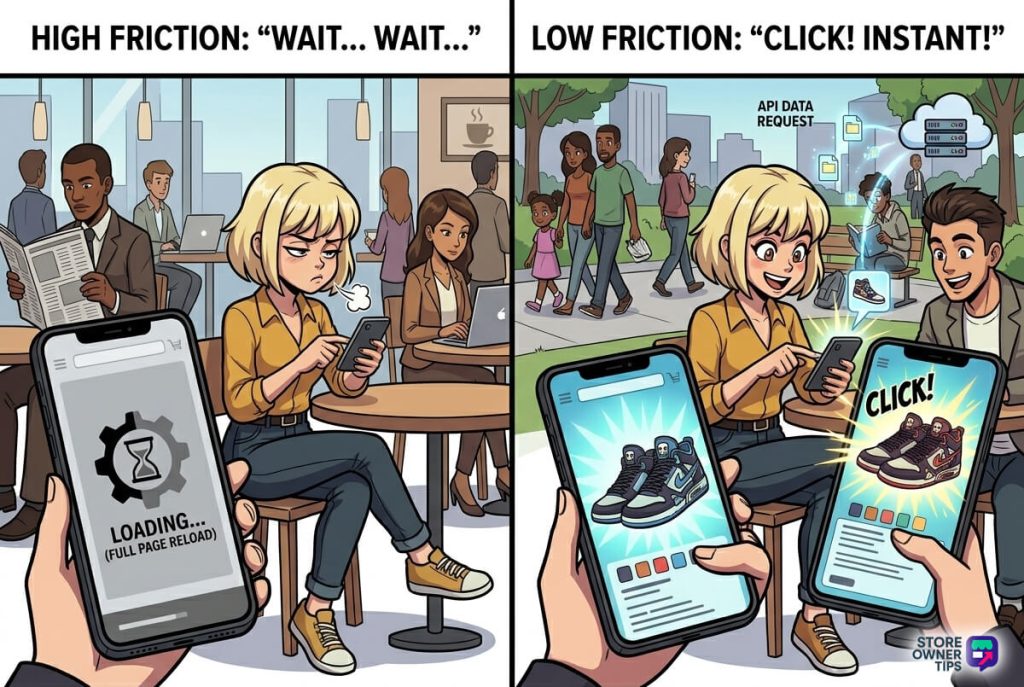
When a traditional website has to reload its entire page—the header, the footer, the sidebars—every time a user clicks a button, it creates a tiny delay. In the ecommerce world, we called this delay “friction.” Even a half-second delay interrupts the shopper’s excitement. It gives their brain a moment to stop and think, “Do I really need to buy this?” This often leads to abandoned carts.
Basically, a decoupled store uses modern, lightweight code (often called static files) that lives on fast servers all over the world. When a customer clicks a button on a decoupled site, the page doesn’t fully reload. Only the specific piece of data changes. It feels instant, just like using an app on your phone. This keeps the shopper in a positive, impulsive buying mood.
Imagine a highly successful mid-sized apparel brand. They get a lot of traffic, but their store is built on a traditional, all-in-one platform. Every time a mobile shopper tries to filter clothes by size or add an item to their cart, the website has a slight delay of about 220 milliseconds. It doesn’t sound like much, but for an eager shopper, this tiny stutter is annoying. Because of this clunky checkout process, the brand is losing a lot of sales.
To fix this, the brand decides to switch to a decoupled architecture. They keep their reliable back-end system to handle their massive inventory and payment processing, but they hire developers to build a brand-new, completely separate front-end website.
The results are massive. By removing the heavy code from the front-end, their website now loads 20% to 50% faster. That annoying 220-millisecond delay drops down to a lightning-fast 120 milliseconds.
Because the shopping experience is now completely smooth and frictionless, shoppers stop abandoning their carts. The brand sees an immediate 12% to 18% jump in their overall conversion rate.
Even better, the decoupled setup allows their marketing team to send incredibly personalized abandoned cart emails using the new APIs. Instead of making an average of $3.65 per email, their new system helps them recover $28.89 per email. By investing in the decoupled structure, they permanently increased their daily revenue.
The opposite of a decoupled store is a “traditional” store setup, which developers call a Monolithic Architecture. When comparing monolithic against headless and decoupled setups, here is how they stack up:
Moving to a decoupled setup is a massive decision. Here are the objective benefits and the very real risks.
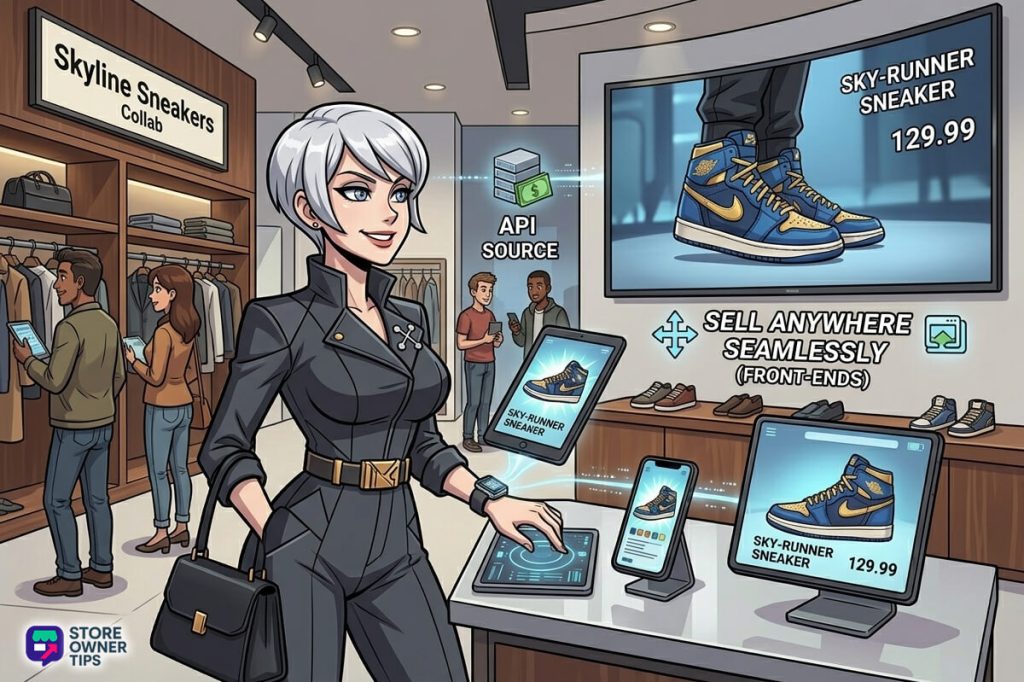

If you’re researching this topic, you’ll likely see developers and marketers throwing around a few different terms. Even though the business world often mixes these words up, tech experts define them like this:
Traditional platforms make it very easy for non-technical users to install dozens of heavy plugins and visual page builders. This creates “code bloat,” meaning the customer’s browser has to download a bunch of heavy, useless code before the page even appears. Decoupled ecommerce setups perform better because they’re built by professional engineers who use lightweight code that only loads the exact math and data needed for that specific click.
It depends entirely on how much money your store makes. Industry data suggests that if your store makes less than $50 million a year, switching to a decoupled setup usually costs too much money and takes too much work. However, if you’re a massive brand that needs custom mobile apps and has the budget for a dedicated engineering team, it’s the best way to grow.
The biggest hidden cost is ongoing engineering. With a traditional platform, your monthly fee covers server updates and security. However, a decoupled ecommerce system involves maintaining the entire front-end infrastructure yourself. Therefore, if you don’t budget for 1 to 2 full-time developers to maintain the system, your custom site will likely break down within 18 to 24 months.
Decoupled ecommerce is a massive upgrade for your store. It separates your website’s visual design from your back-end database. This gives you lightning-fast load times and total design freedom. But here’s the catch: it’s very expensive and hard to manage. Because of this, it’s usually overkill for a brand-new shop. However, if your store makes millions and you want an app-like feel for your shoppers, the extra sales will easily cover the high cost.
Copyright © StoreOwnerTips.com. All Rights Reserved.
