Weekly ecommerce tips, deals & news.
Dropshipping has a bad reputation, and often for good reasons. Shady courses, inflated income claims, and race-to-the-bottom pricing have made the model feel like a scam.
But quietly, real stores still build profitable WooCommerce dropshipping businesses. The common thread is simple. They treat dropshipping as a serious business with margin discipline, not a get-rich-quick scheme.
I’ve seen this play out again and again with store owners. The ones who last aren’t chasing hacks. They’re doing real product research, real brand building, and real margin math.
This guide walks through what actually works in 2026. We’ll cover niche research, supplier sourcing, setup, and the unit economics that make it sustainable.
Table of Contents

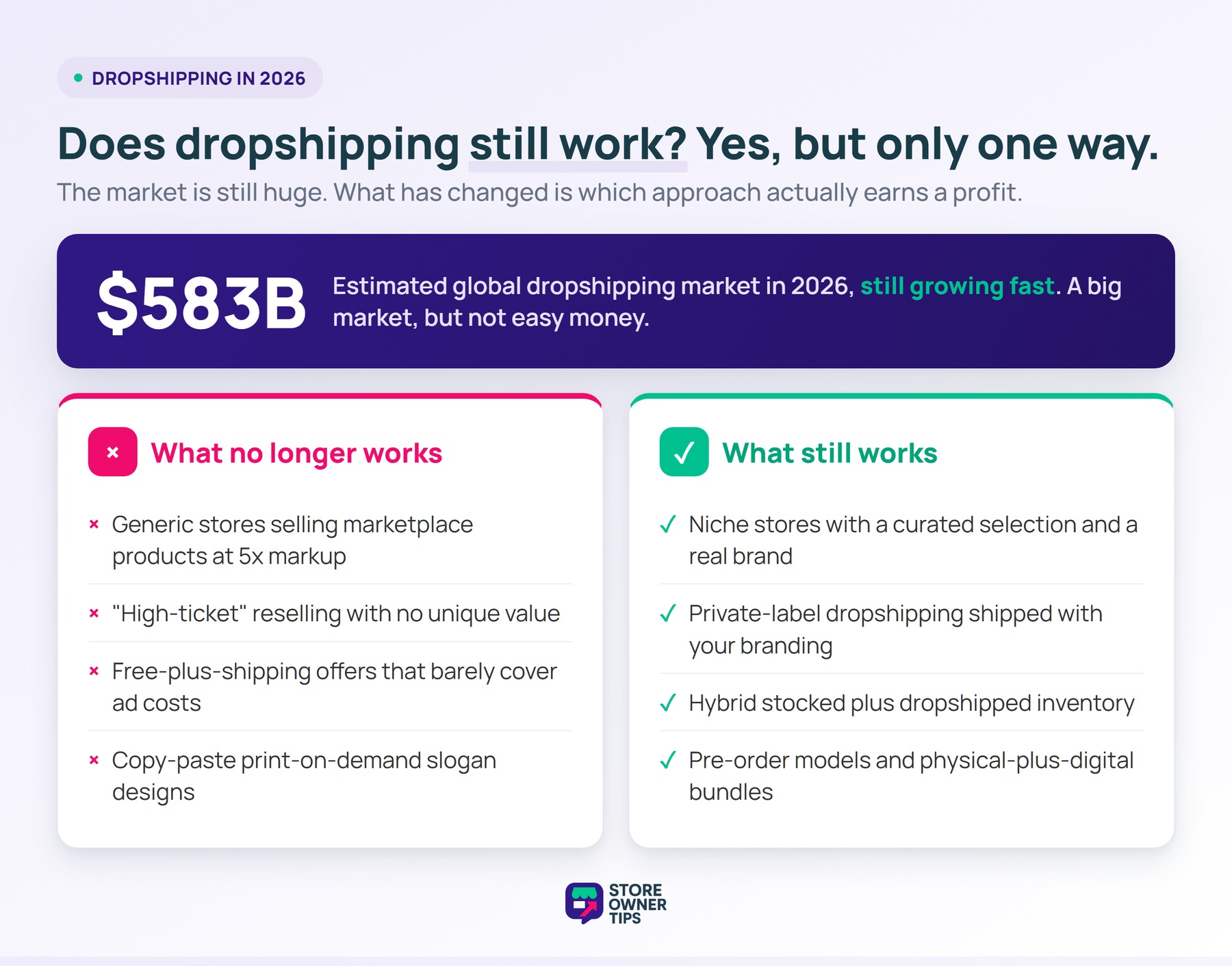
Short answer: yes, but not the way Instagram gurus describe it. The market is still huge and still growing. Grand View Research values the global dropshipping market at roughly $583 billion in 2026, and growing about 20.7% a year through 2033.
Still, a big market doesn’t mean easy money. Here’s what doesn’t work anymore:
By contrast, here’s what still works:
In short, the opportunity has shifted. It’s moved from general dropshipping to niche-specific, brand-focused dropshipping. That means real product research, real brand building, and real margin discipline.
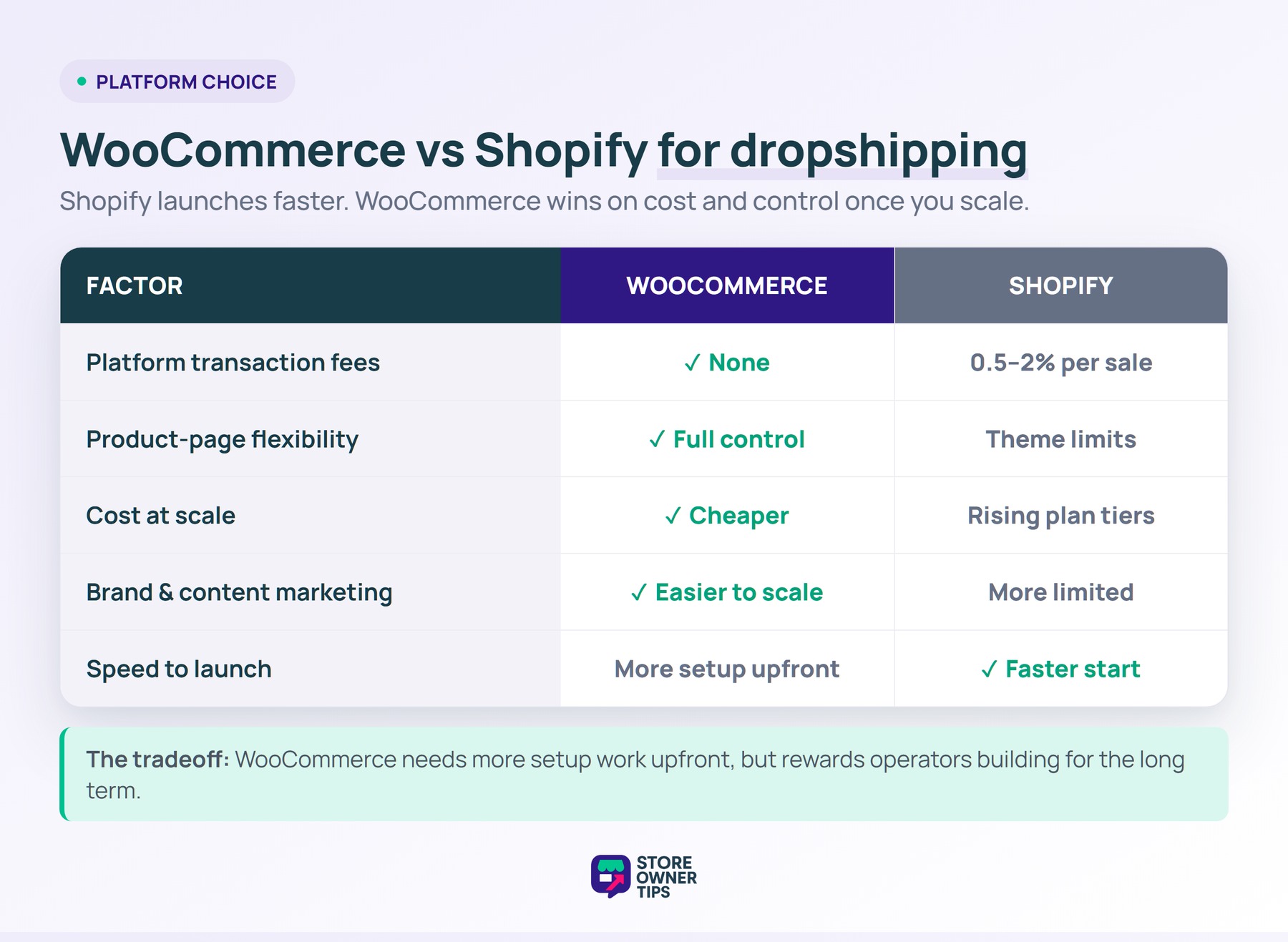
Shopify dominates the dropshipping conversation because of its dedicated apps. But WooCommerce has real advantages for dropshipping at scale:
There’s a tradeoff, of course. WooCommerce needs more setup work upfront, and Shopify is faster to launch.
While general dropshipping has become incredibly competitive, building a highly targeted, brand-focused store remains an excellent way to start an ecommerce business with minimal upfront inventory costs.
The key to long-term profitability is treating the store like a real retail brand. This means finding unique suppliers, automating your workflows, and keeping a strict eye on your actual profit margins.
If you want to build a dropshipping business that lasts, follow these six essential steps to set up your store the right way.
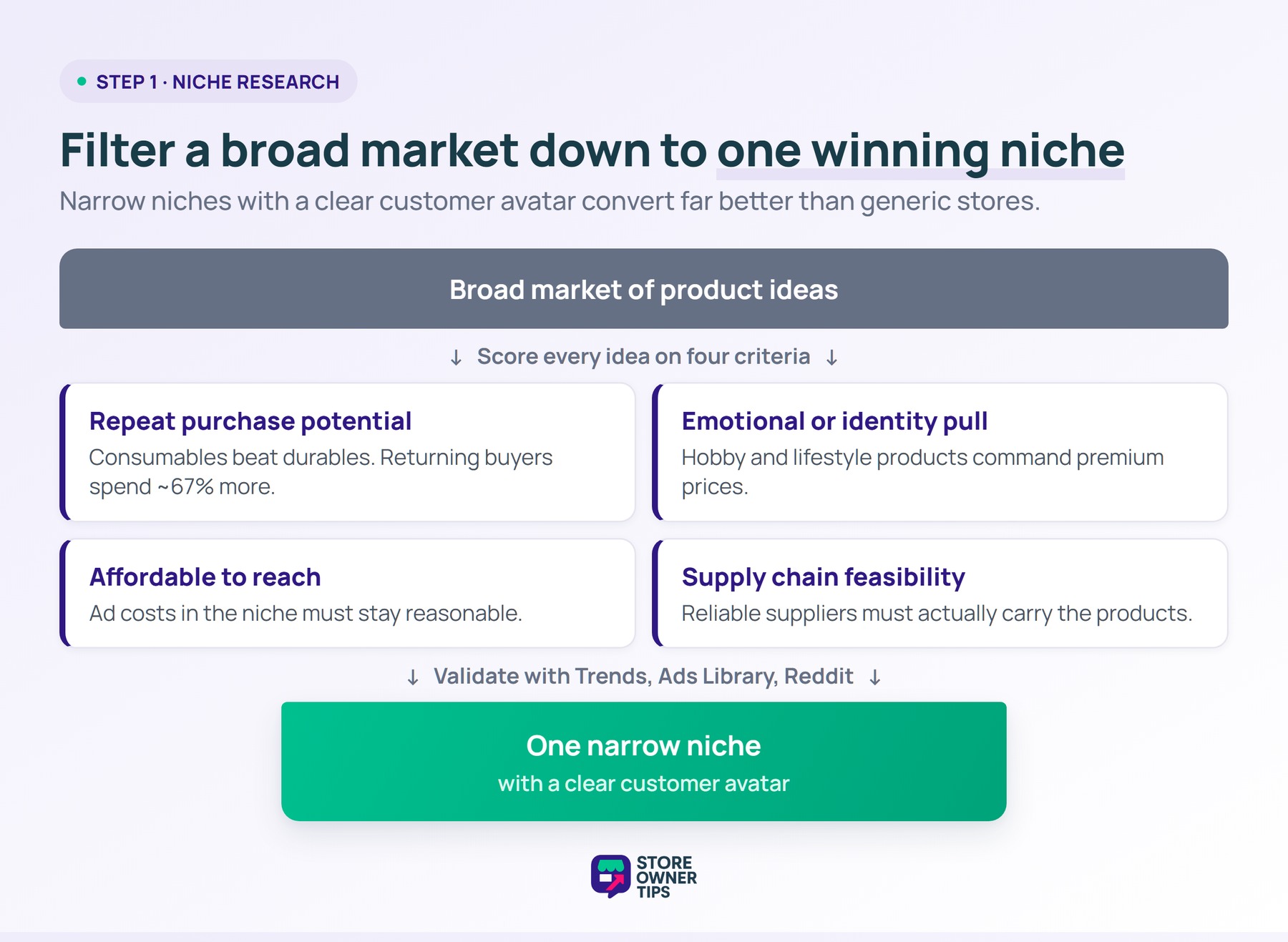
Niche selection makes or breaks your dropshipping store. The wrong niche kills even perfect execution. So evaluate niches on four criteria:
Here are some good 2026 niche examples:
Once you have a candidate, validate it with real signals:
One thing I see trip people up: new dropshippers pick the broadest niche they can think of. They want the largest possible audience. That’s backwards. Narrow niches with clear customer avatars convert far better than generic stores.
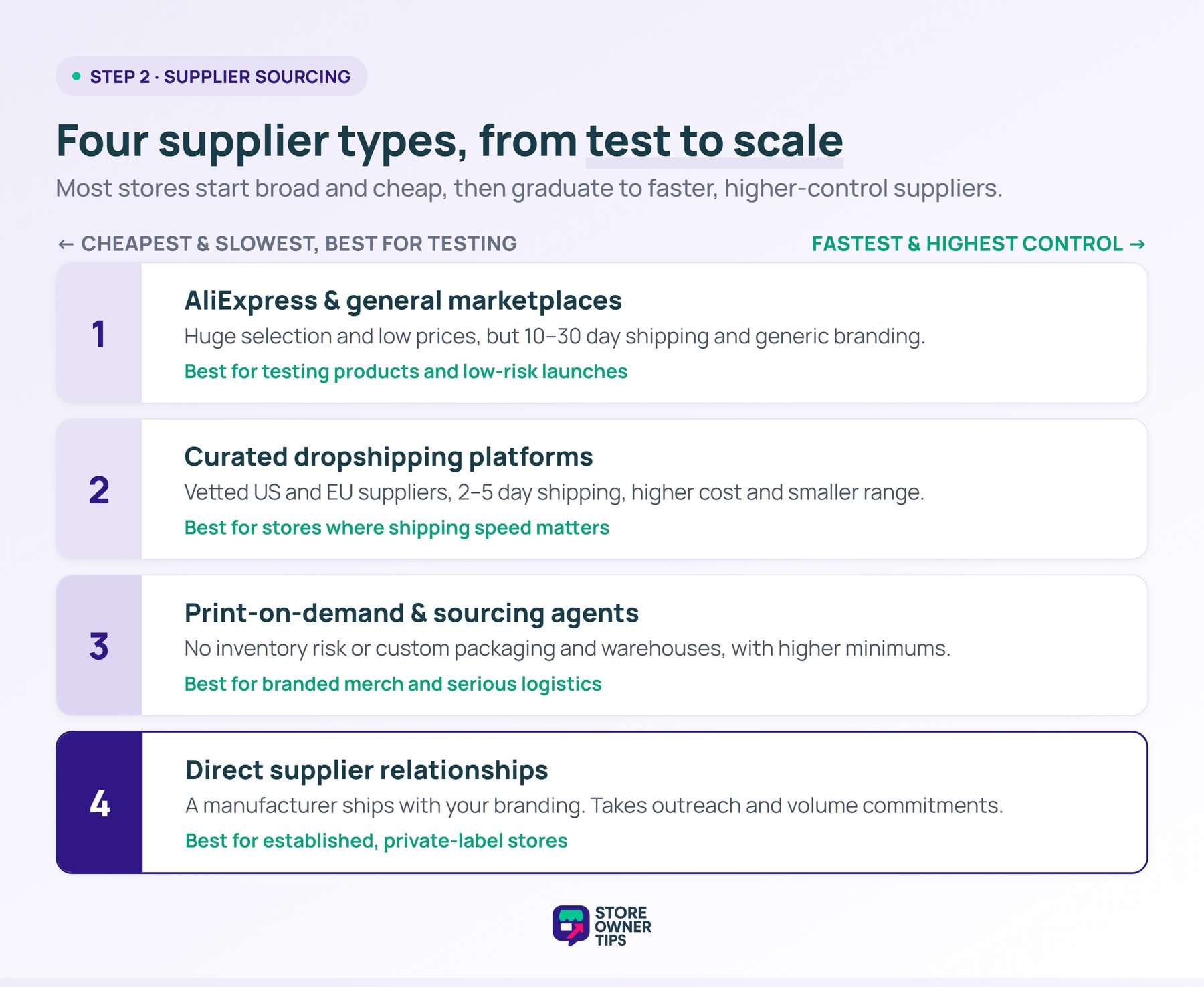
There are four main supplier categories for WooCommerce dropshipping. Each fits a different stage of your store.
The upside is a huge selection, low prices, and an established ecosystem. The downside is long shipping times, often 10 to 30 days, plus inconsistent quality and generic branding. It’s best for testing products and low-risk launches.
Some platforms curate suppliers in the US and EU for faster shipping, often 2 to 5 days, with better quality control. The tradeoff is higher product costs and a smaller selection. This suits stores targeting US and EU customers who care about shipping speed.
Print-on-demand carries no inventory risk and offers customizable products that plug into WooCommerce. Margins are lower because of production costs, and you’re limited to certain product types like apparel and home goods. It’s best for design-driven stores selling branded merchandise.
Some services find products for you and offer fast-shipping warehouses plus custom packaging. The tradeoff is a more complex account setup and higher minimums for custom products. This fits serious businesses ready to invest in better logistics.
This is the highest-leverage model. You find a manufacturer or wholesaler who ships orders directly to your customers with your branding. It takes outreach, negotiation, and often a commitment to minimum order volumes. It’s best for established stores moving into private-label brand-building.
In practice, most stores start broad and narrow down. You test with a marketplace, then graduate to curated or direct suppliers as products prove out.
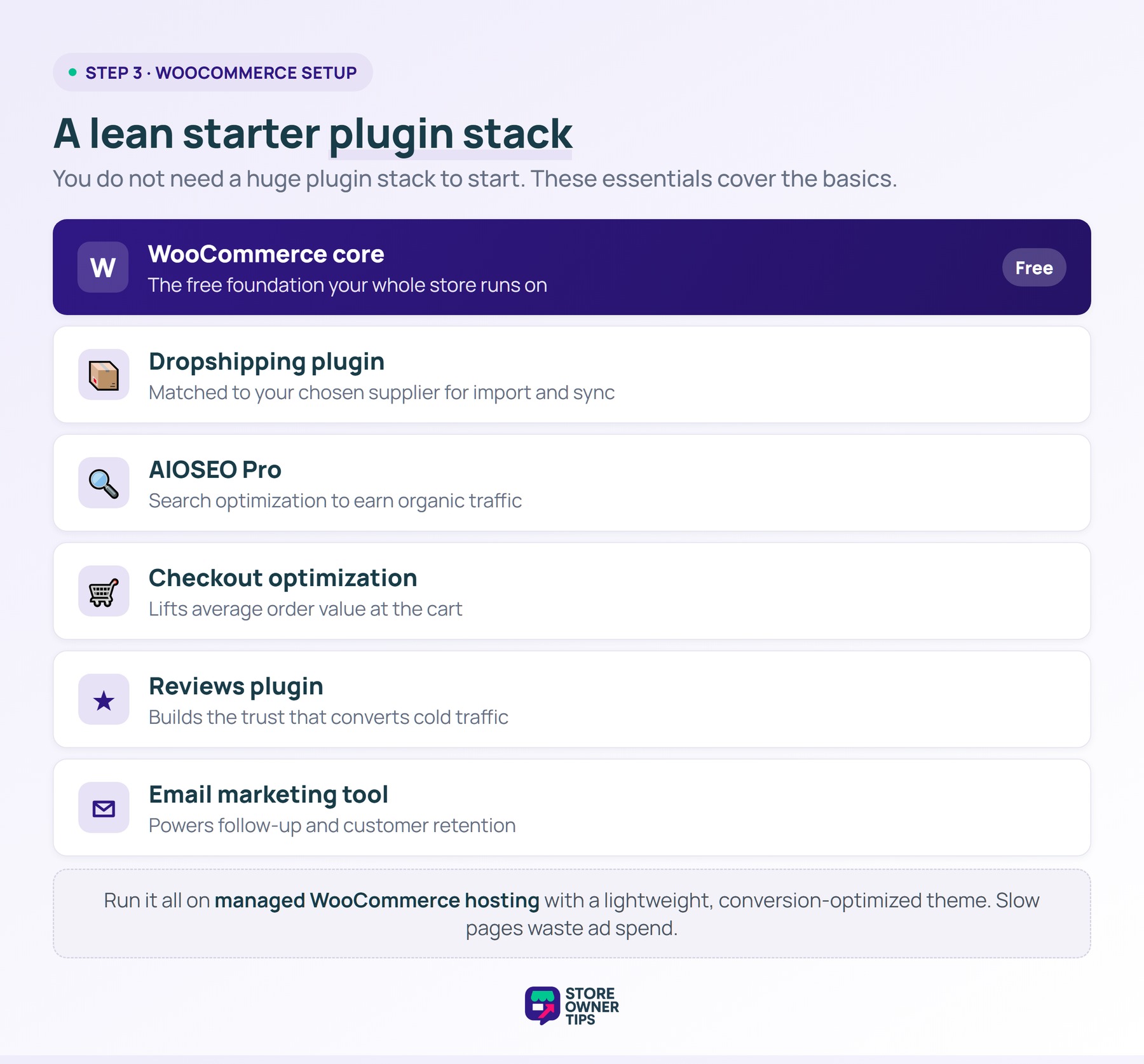
You don’t need a huge plugin stack to start. Here’s a basic setup that covers the essentials:
For your theme, pick something conversion-optimized for single-product pages. Lightweight, fast-loading themes tend to work best for paid-traffic stores.
Don’t cheap out on hosting either. Dropshipping stores depend on paid traffic, and slow pages waste ad spend. Managed WooCommerce hosting is worth the extra cost here.
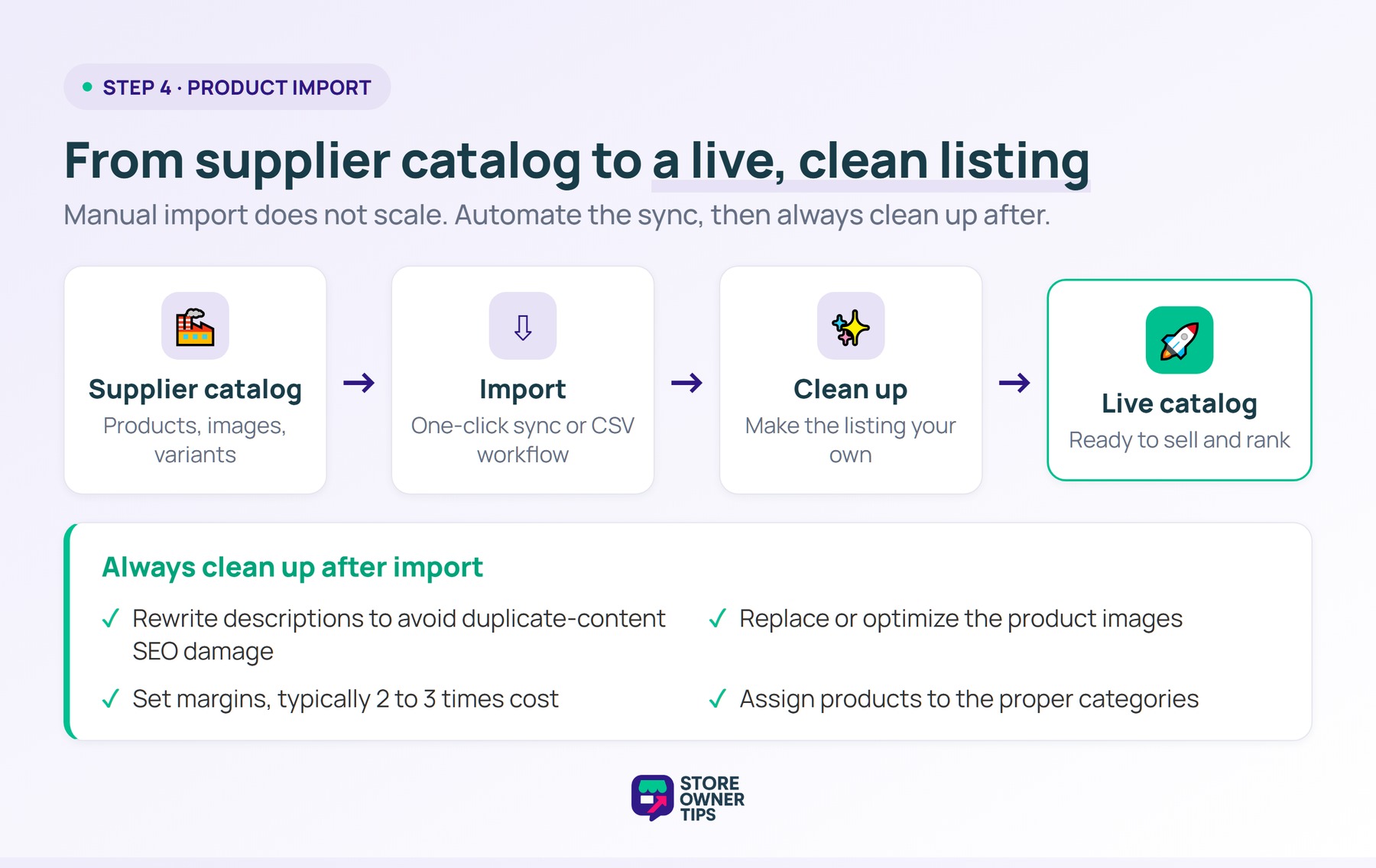
Manual product import doesn’t scale. You want a plugin that syncs products from your supplier to WooCommerce automatically.
Most dropshipping plugins offer one-click product import. You pick a product, click import, and it appears in your catalog with images, descriptions, and variants.
For more control, use a CSV workflow instead. Tools like Visser Labs’ import and export plugins let you export a supplier catalog, edit descriptions and prices in a spreadsheet, then import to WooCommerce. It’s more work, but you own the product data.
Whatever method you use, always clean up after import:
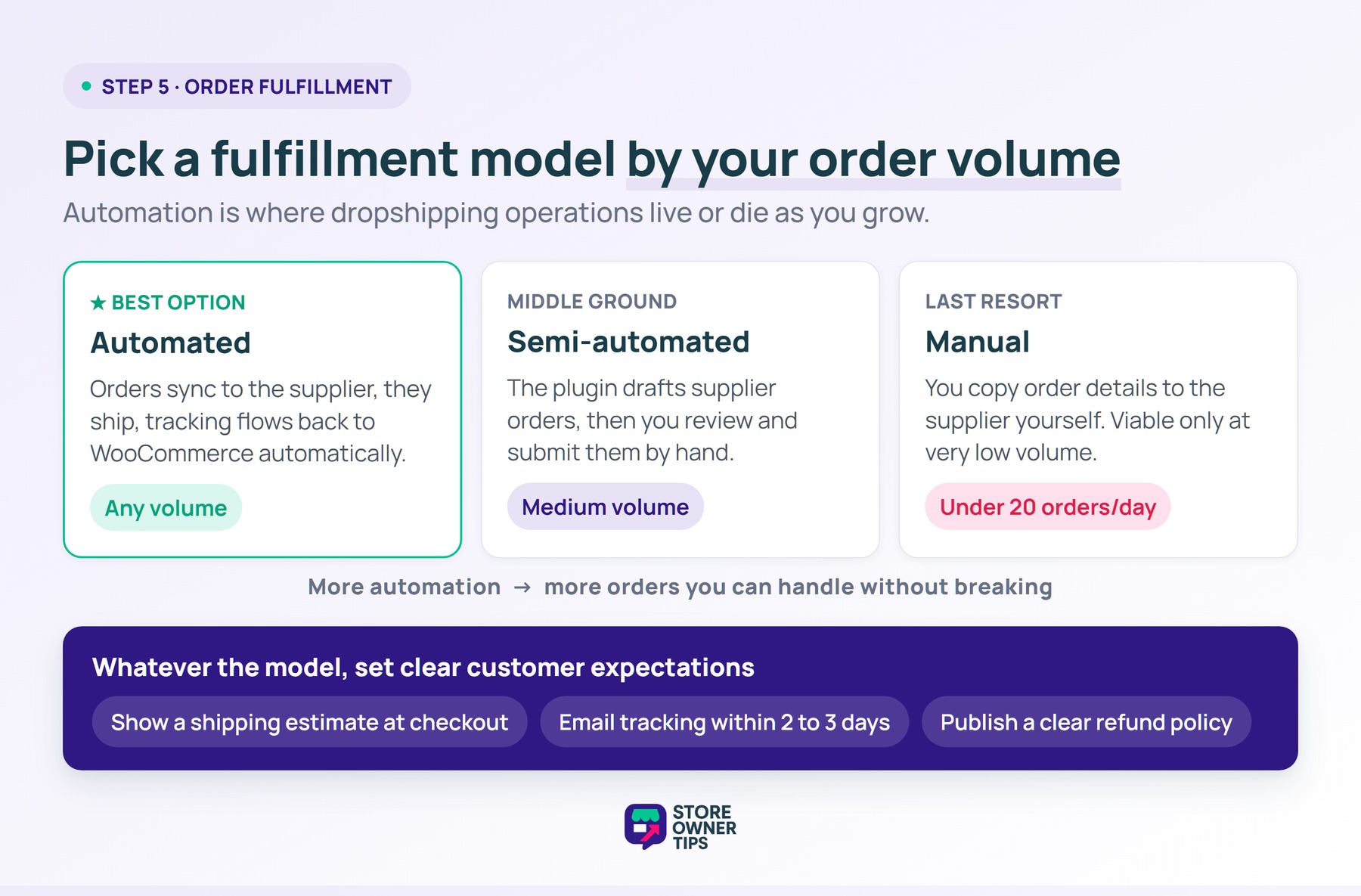
Order fulfillment is where dropshipping operations live or die. There are three broad approaches.
This is the best option. A plugin syncs orders to your supplier automatically. The customer places an order, the plugin sends it to the supplier, the supplier ships, and the tracking number syncs back to WooCommerce.
Here, the plugin generates supplier order details, then you review and submit them manually. It’s useful when you need to verify inventory or check custom requirements.
With this method you copy order details to the supplier by hand. It’s only viable for very low-volume stores, roughly under 20 orders a day.
Whatever method you pick, set clear customer expectations:
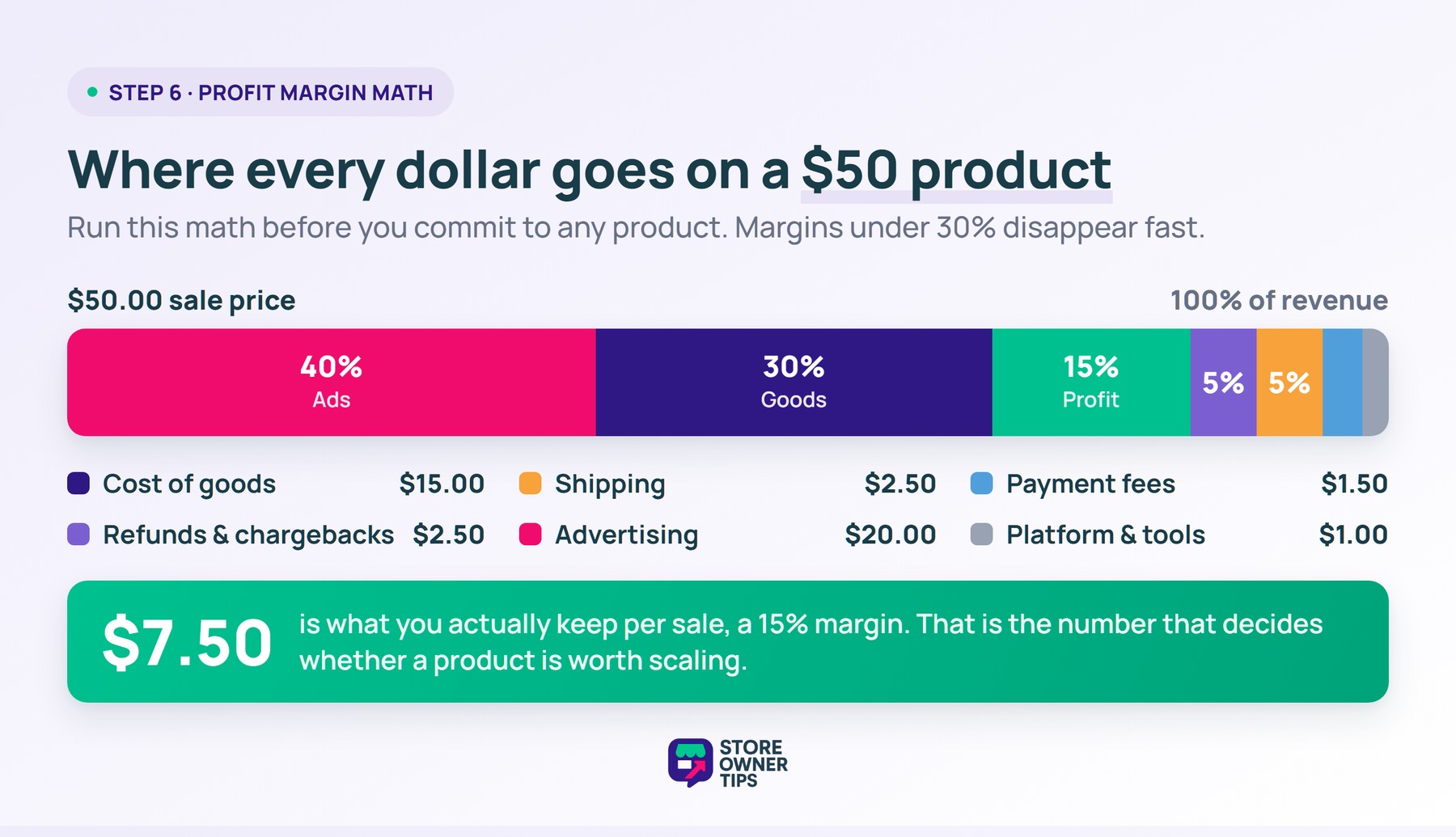
This is the step most new dropshippers skip. Here’s a realistic breakdown of where each dollar goes on a sustainable store:
Let’s run the numbers on a $50 product. With 30% cost of goods, 5% shipping, 3% payment fees, 5% refunds, 40% advertising, and 2% tools, you keep 15%. That’s $7.50 per sale.
Thin net margins vanish fast once ads and fees pile up. So never commit to a product without running this math first. Too many dropshippers discover they’re losing money only after scaling to $10k a month in “revenue.”
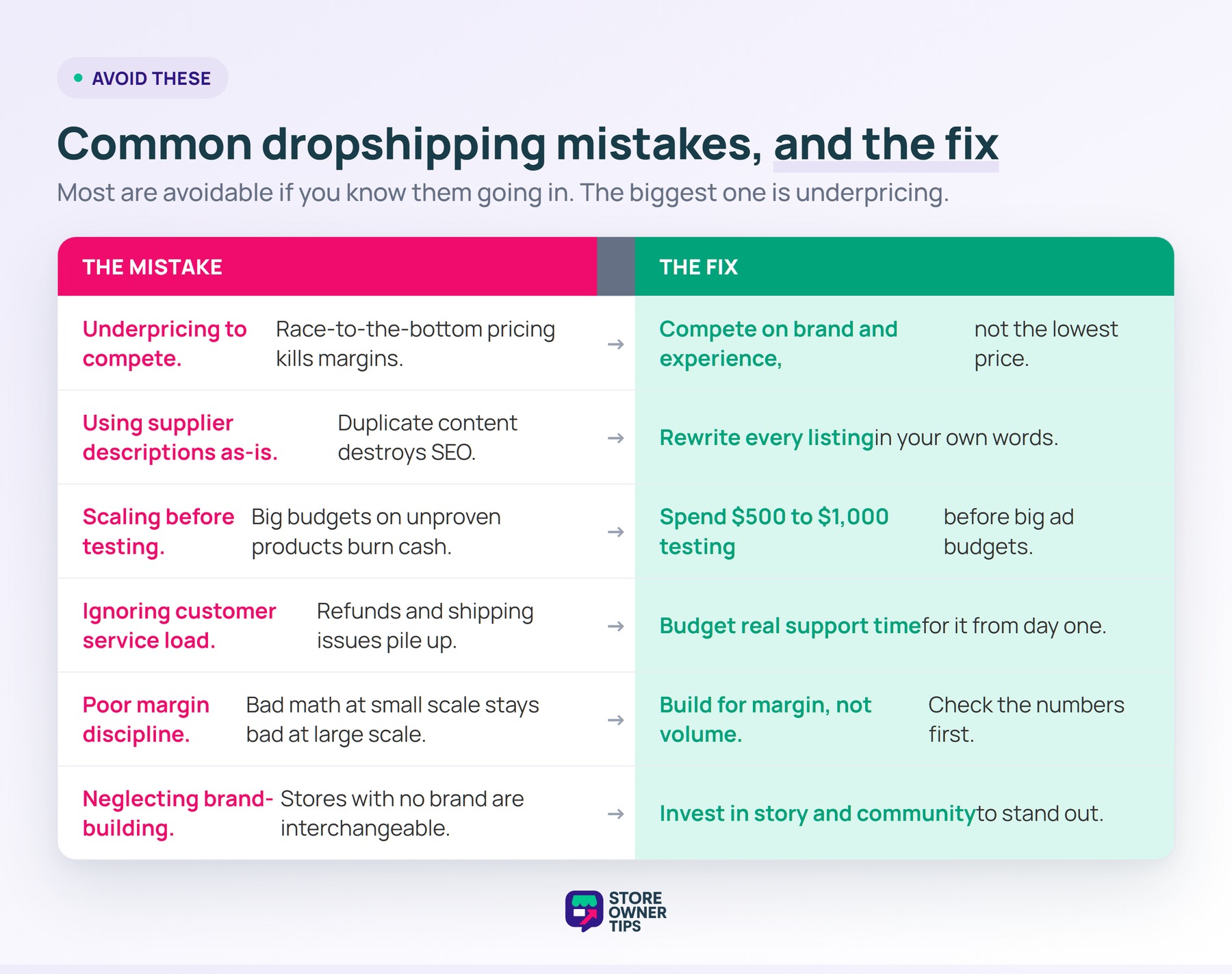
These mistakes keep coming up across WooCommerce dropshipping stores. Most are avoidable if you know them going in.
The biggest one is underpricing. Many dropshippers lose money in their first few months because they cut prices to win early sales. Build for margin, not volume. Volume without margin is just a fast path to burnout.
Yes, but not with the strategies that worked in 2018. Winning now takes niche focus, brand building, and margin discipline. Generic dropshipping with a 3x markup on marketplace products is dead.
A realistic minimum is about $500 for hosting, a theme, and plugins. Add $1,000 to $3,000 for initial ad spend to test products. Under $2,000 total, you’re in survival mode.
WooCommerce is cheaper long-term and more flexible. Shopify is faster to launch. For beginners with no technical experience, Shopify’s ecosystem is easier. For committed operators at scale, WooCommerce saves real money.
Start with a curated platform for US and EU orders, or a general marketplace for global reach. Graduate to direct supplier relationships once you have proven products. Good import and export tools help you manage a catalog across suppliers.
Aim for 25 to 40% gross margin after all costs, including goods, shipping, and fees. Products under 25% margin after ads usually aren’t sustainable long-term.
Mostly, yes. Order-to-supplier sync, tracking updates, and email notifications can all run automatically. Customer service and product research still need human judgment.
WooCommerce dropshipping still works as a business model. It works for operators who treat it seriously and follow the fundamentals. Niche selection, supplier quality, margin discipline, and brand building matter far more than hacks.
Here are the six steps to launch your store, start to finish:
When you’re ready, start with niche validation and a small product test. Put $500 to $1,000 of ad spend across three to five products in one clear niche. That data tells you whether to scale, pivot, or shut down before you commit real capital.

Copyright © StoreOwnerTips.com. All Rights Reserved.
