A doorbuster is a deeply discounted, limited-stock deal designed to pull shoppers into a store. The name comes from crowds pushing through the doors at opening time on Black Friday. Online, a doorbuster works the same way. A headline price draws traffic, and the store earns its profit on everything else those visitors buy.
A doorbuster works by trading margin on one product for attention across the whole store. You advertise an unusually low price on a popular item, and shoppers arrive to grab it. Many of them keep browsing. The deal is the hook, and the rest of your catalog is where the money is made.
A doorbuster is a bit like a free sample tray at the front of a bakery. The tray costs the bakery money. Still, it gets people through the door and close to the full-price cakes. A doorbuster does the same job with a price tag instead of a sample.
Doorbuster psychology leans on a few well-known effects. A slashed price next to the original creates a strong anchoring effect, so the deal looks even bigger. A short window and a visible stock count trigger the scarcity principle. Shoppers who arrive in a buying mood are also primed for an impulse purchase of something else.
A doorbuster is narrower than a storewide flash sale. One or two products carry the deep cut. The rest of the store stays at normal or lightly discounted prices. That focus is what keeps the overall promotion profitable.
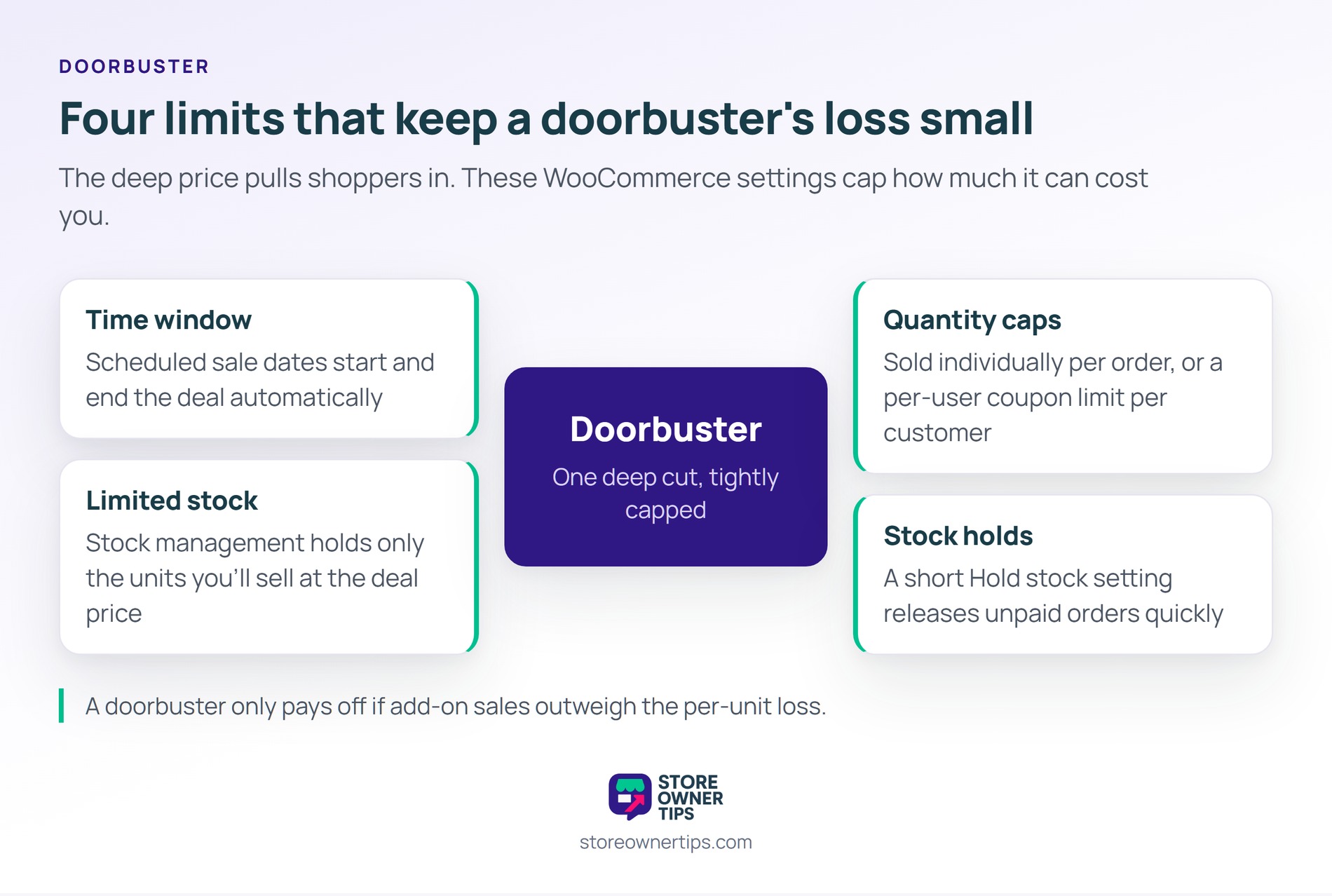
Running a doorbuster in WooCommerce mostly uses settings you already have. You don’t need a special plugin to cover the basics.
Real-time stock tracking matters more than usual during a doorbuster rush. If several orders land at once, poor tracking can lead to overselling. That means canceling orders from your most excited buyers.
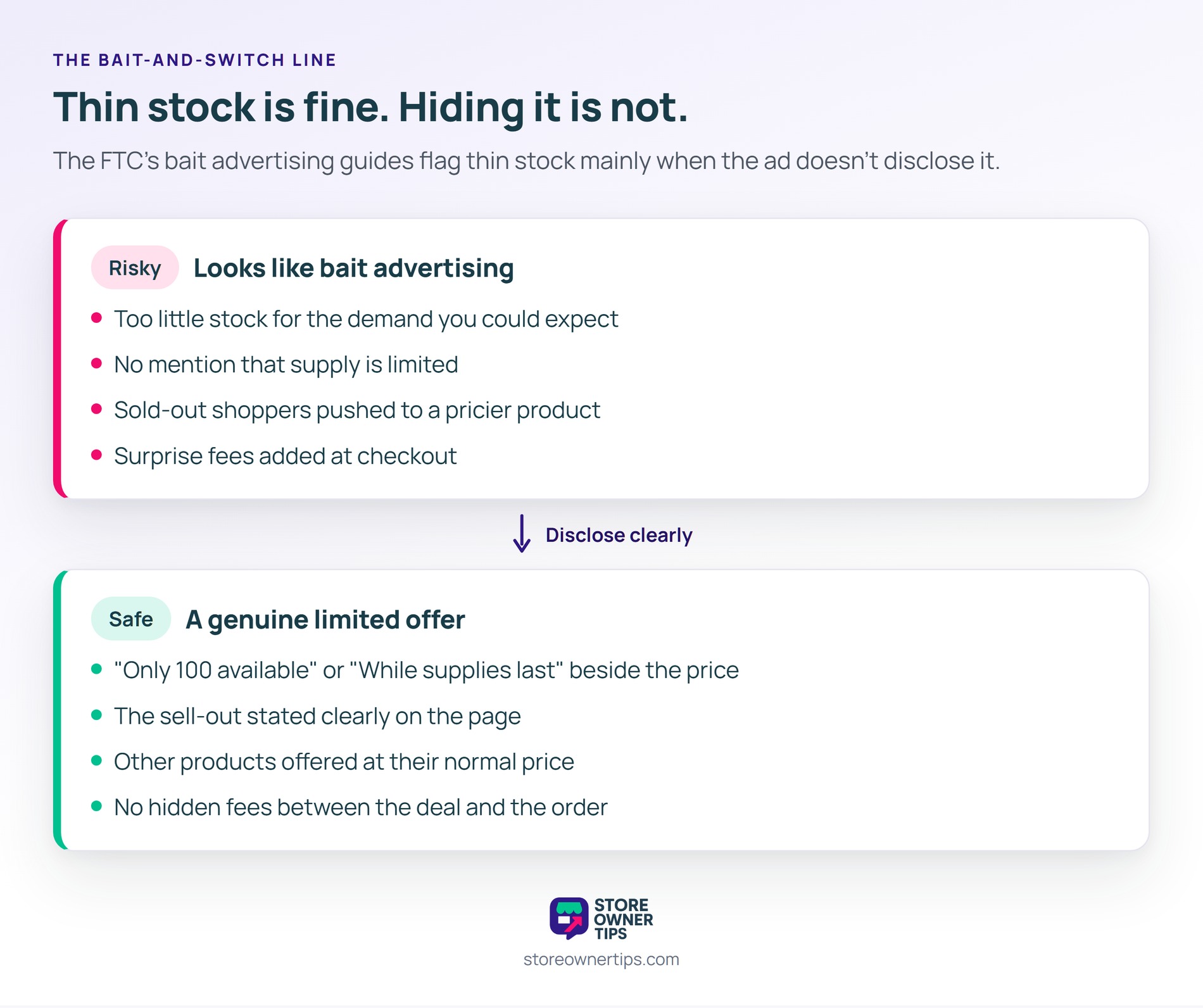
A doorbuster becomes a legal problem when the stock is too thin to be a genuine offer. The US Federal Trade Commission’s Guides Against Bait Advertising address this directly. They list not stocking enough to meet reasonably anticipated demand as a sign of bait advertising.
The bait advertising rule carries an important exception. A small stock is fine when the ad “clearly and adequately discloses that supply is limited.” In practice, that means writing “Only 100 available” or “While supplies last” right next to the price.
The real danger zone is what happens after the deal sells out. Pushing sold-out shoppers toward a pricier product, with no disclosure up front, looks like a bait-and-switch. Pairing a “deal” with surprise fees at checkout causes similar trust damage, because it reads as hidden pricing.
Doorbuster numbers show how concentrated peak-day traffic really is. The National Retail Federation counted a record 202.9 million shoppers over the five days from Thanksgiving through Cyber Monday. Adobe measured US online spending of $11.8 billion on Black Friday alone.
Academic research backs up the traffic logic too. Economists studied a Chicago supermarket chain’s prices over seven and one-half years of scanner data. They found prices tend to fall when demand for a product peaks. The authors say that pattern fits loss-leader pricing models.
In short, retailers cut prices on the items shoppers want most, exactly when they want them. A doorbuster is the sharpest version of that habit.
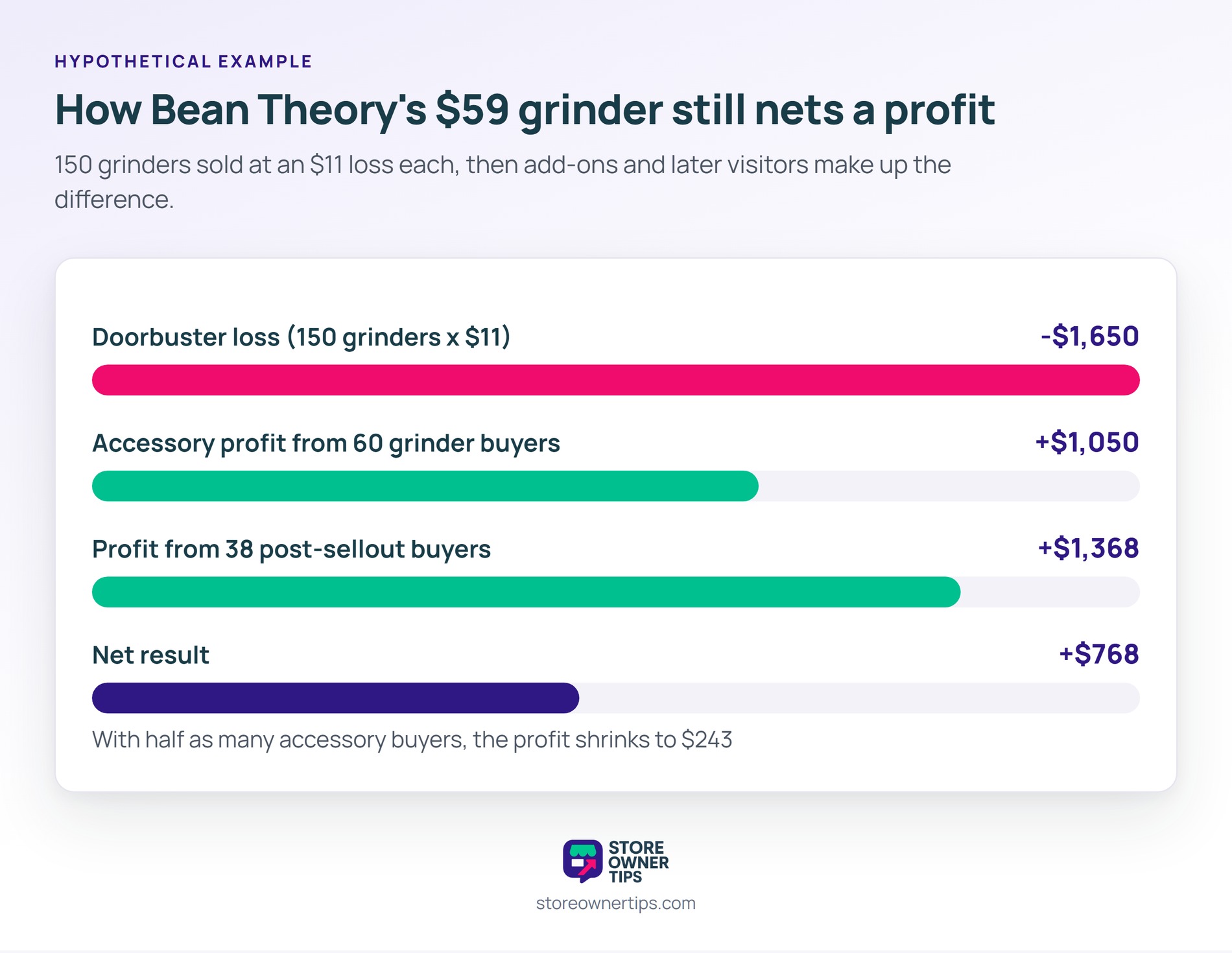
A doorbuster in practice is a capped, time-boxed deal backed by a plan for add-on sales. Here’s a hypothetical example. Imagine a small coffee gear store on WooCommerce called Bean Theory. Its best-selling burr grinder normally sells for $120 and costs the store $70.
Bean Theory prices the grinder at $59 for its Black Friday doorbuster. That’s about 51% off, deeper than typical peak holiday discounts. The store loses $11 on every unit sold.
To keep that loss under control, the owner sets three limits. Only 150 units are available, and the deal runs from 6am to noon. Each customer can buy one. The product page says “Only 150 available, one per customer” beside the price.
Next, the store lines up add-ons. The grinder page suggests beans, filters, and a scale through cross-selling blocks. Meanwhile, sold-out shoppers see a premium grinder as an upselling option at its normal price. The page states the sell-out clearly, so nobody is misled.
All 150 grinders sell, so the direct loss is $1,650. However, 60 of those buyers add accessories averaging $35, at a 50% margin. That adds $1,050 in gross profit.
Another 750 visitors arrive after the grinders sell out. If 38 of them buy other items averaging $90 at a 40% margin, that’s $1,368 more. Overall, Bean Theory nets about $768 after covering the doorbuster loss.
The bigger prize is often the 188 new customers on the email list. Still, the math is fragile. If only half as many buyers had added accessories, the profit would shrink to $243.
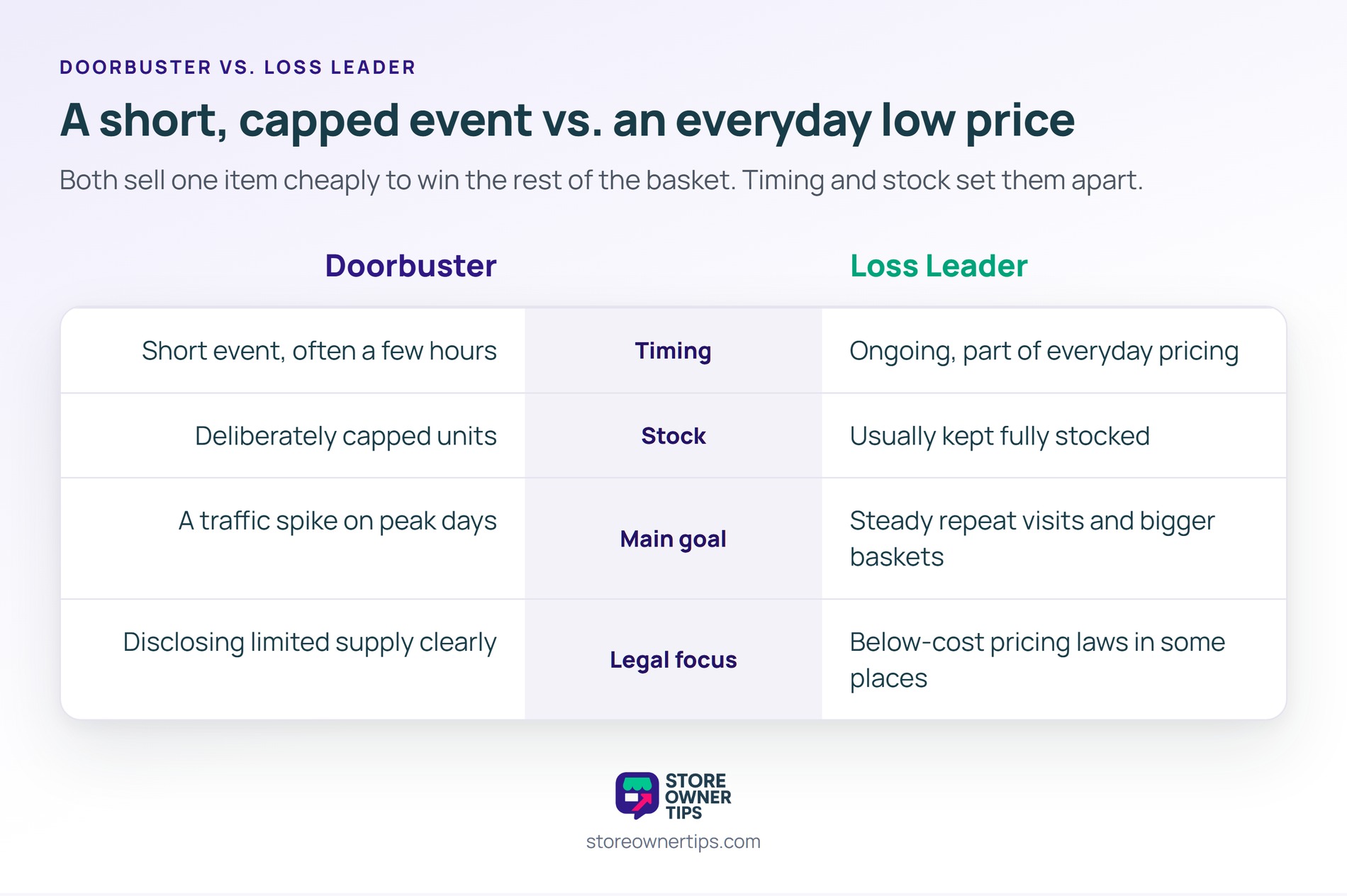
| What you’re comparing | Doorbuster | Loss Leader |
|---|---|---|
| Timing | Short event, often a few hours | Ongoing, part of everyday pricing |
| Stock | Deliberately capped units | Usually kept fully stocked |
| Main goal | A traffic spike on peak days | Steady repeat visits and bigger baskets |
| Legal focus | Disclosing limited supply clearly | Below-cost pricing laws in some places |
A doorbuster is a short, capped event, while a loss leader strategy keeps a low price running long term. Pick a doorbuster when you want a burst of new visitors on a big shopping day. Pick a loss leader when you want shoppers coming back every week.
Yes, a limited-stock doorbuster is legal in the US when you clearly disclose that supply is limited. The FTC’s bait advertising guides flag thin stock mainly when the ad doesn’t disclose it. State the number of units, or say “while supplies last,” right beside the price.
A doorbuster discount should clearly beat the typical sale prices shoppers see that week. Adobe found online electronics discounts peaked at 31% off listed price on Cyber Monday. A doorbuster usually needs to go past that to stand out. Then cap the units so the total loss stays inside your budget.
Yes, WooCommerce can limit a doorbuster, though its built-in product setting works per order. The “Sold individually” option allows one unit per order. For a true one-per-customer cap, run the deal as a coupon with a usage limit per user. For coupon setups, see these Black Friday coupon code ideas for WooCommerce.
A doorbuster matters because one bold price can bring a flood of new visitors on the year’s busiest days. Planned well, it builds a customer list that pays off long after the sale. Planned poorly, it becomes a costly giveaway or a bait-and-switch complaint. For the wider plan, see how to run Black Friday marketing campaigns in WooCommerce.
Copyright © StoreOwnerTips.com. All Rights Reserved.
