Weekly ecommerce tips, deals & news.
Double opt-in is a signup method where a new subscriber must confirm their email before joining your list. After they sign up, you send a confirmation email with a link they have to click. Only then are they truly added. It trades a few signups for a cleaner, more engaged, and more compliant list.
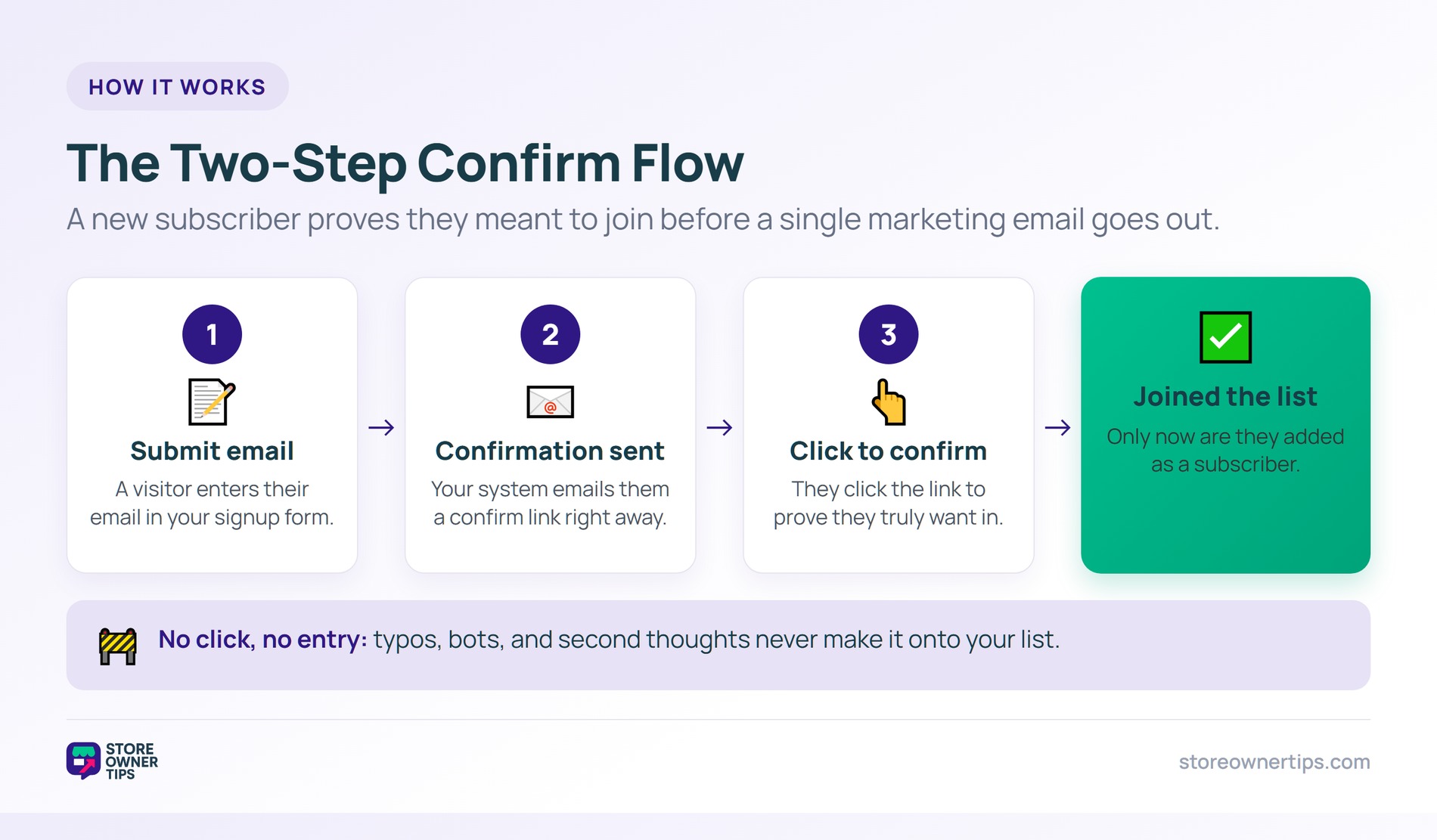
Double opt-in adds one confirmation step to signup. A new subscriber enters their email as usual. Then they must click a link in a follow-up email to join.
Think of it like an RSVP that needs a reply. Saying you will come is step one. Confirming it makes the invite official.
Single opt-in skips that second step entirely. The subscriber joins the moment they submit. Double opt-in waits for proof they meant it.
The name says it all. The subscriber opts in twice, not once. Both the form and the click count as consent.
The flow has three simple steps. First, a visitor submits their email through a form. Second, your system sends a confirmation email right away.
That email holds a single clear button or link. The subscriber clicks it to confirm they want in. Only after that click do they join your list.
If they never click, they never get added. That filters out typos, bots, and second thoughts. The result is a list of people who truly want your emails.
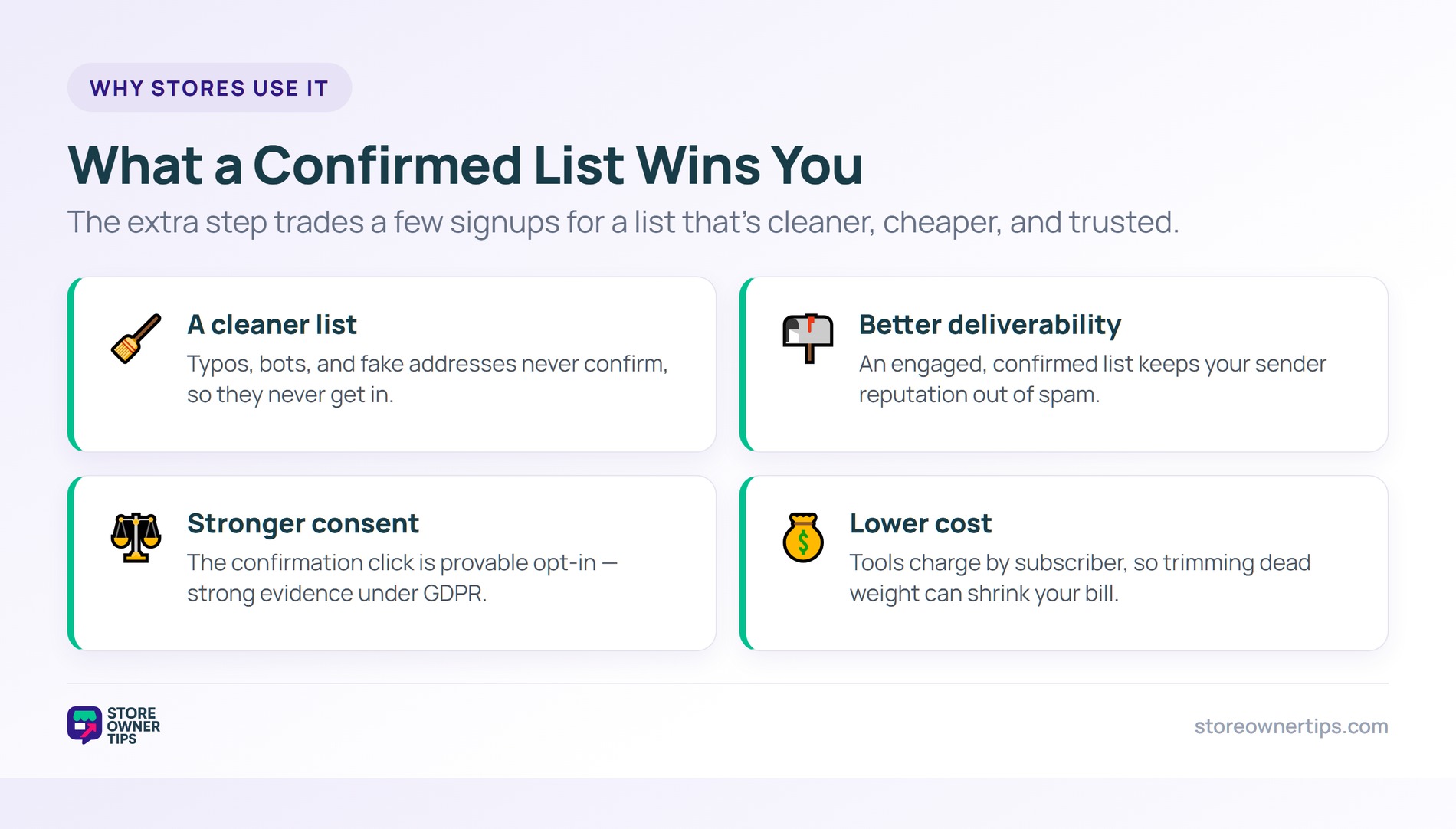
The main reason is list quality. Every confirmed subscriber actually wants to hear from you. That intent makes your whole list more valuable.
It also blocks bad addresses at the door. Typos, fake emails, and bot signups never confirm. So they never pollute your list.
This focus reflects strong targeted email marketing. You build a list of engaged, willing readers. Quality subscribers drive far better results.
A smaller, willing list also costs less. Many tools charge by subscriber count. Trimming dead weight can lower your bill.
A clean list is the key to reaching inboxes. Inbox providers watch how people treat your emails. A confirmed list opens and engages more.
That engagement protects your sender reputation. Email returns about $36 for every $1 spent, but only if it lands. Double opt-in helps keep you out of spam.
The payoff shows in your metrics. A willing list beats the average open rate of 35.63%. Engaged subscribers open and click far more.
Those readers also click more often. A confirmed list tends to beat the 2.62% average click rate. That action is where sales come from.
The confirmation step also creates a clear record. It proves the subscriber actively chose to join. That consent matters under privacy laws.
Rules like the GDPR favor provable consent. A confirmed opt-in is strong evidence of it. Single opt-in offers a weaker paper trail.
So double opt-in lowers your legal risk. It shows you respect the subscriber’s choice. That trust protects your brand too.
Keep records of each confirmation. The timestamp and source prove consent. That log protects you if anyone asks.
Double opt-in is not always the answer. Single opt-in grows a list faster. Every signup joins without a missing-confirmation drop-off.
It can suit a low-risk, high-volume list. A simple newsletter with light stakes may prefer reach. There, raw growth can outweigh perfect quality.
The trade-off is always quality versus quantity. Double opt-in favors a cleaner, smaller list. Single opt-in favors a bigger, looser one.
You can also test both approaches. Run double opt-in on one form and single on another. Compare quality and growth to decide.
Most email tools offer double opt-in as a toggle. You switch it on for your signup forms. The confirmation email then sends automatically.
Customize that confirmation email well. Match it to your brand and keep it warm. A friendly note earns more confirmations.
Set a clear, single call to action. One obvious button to confirm works best. Then test that the whole flow works end to end.
Not everyone confirms on the first try. Many simply get busy and forget. A reminder can win them back.
Send one gentle follow-up after a day. Restate the value of joining your list. That nudge recovers a real share of signups.
Check that your confirmation email is not in spam. Sometimes it lands in the junk folder. A deliverability fix recovers many opt-ins.
Do not chase forever, though. After a reminder or two, let it go. An uninterested signup is not worth the effort.
The confirmation click is a perfect handoff. The moment they confirm, your welcome can begin. That timing meets them at peak interest.
So pair double opt-in with a welcome sequence. Confirmation proves they want to hear from you. A warm welcome then turns them into a buyer.
The two steps feel like one smooth journey. Confirm, then get greeted right away. One confirmation can kick off your whole nurture.
The first mistake is a confusing confirmation email. If subscribers do not understand it, they will not click. Make the confirm button clear and obvious.
Another trap is a slow or missing confirmation. The email should arrive within seconds. A delay loses the eager new subscriber.
A third slip is not following up on non-confirmers. A gentle reminder can recover many. One nudge often doubles confirmations.
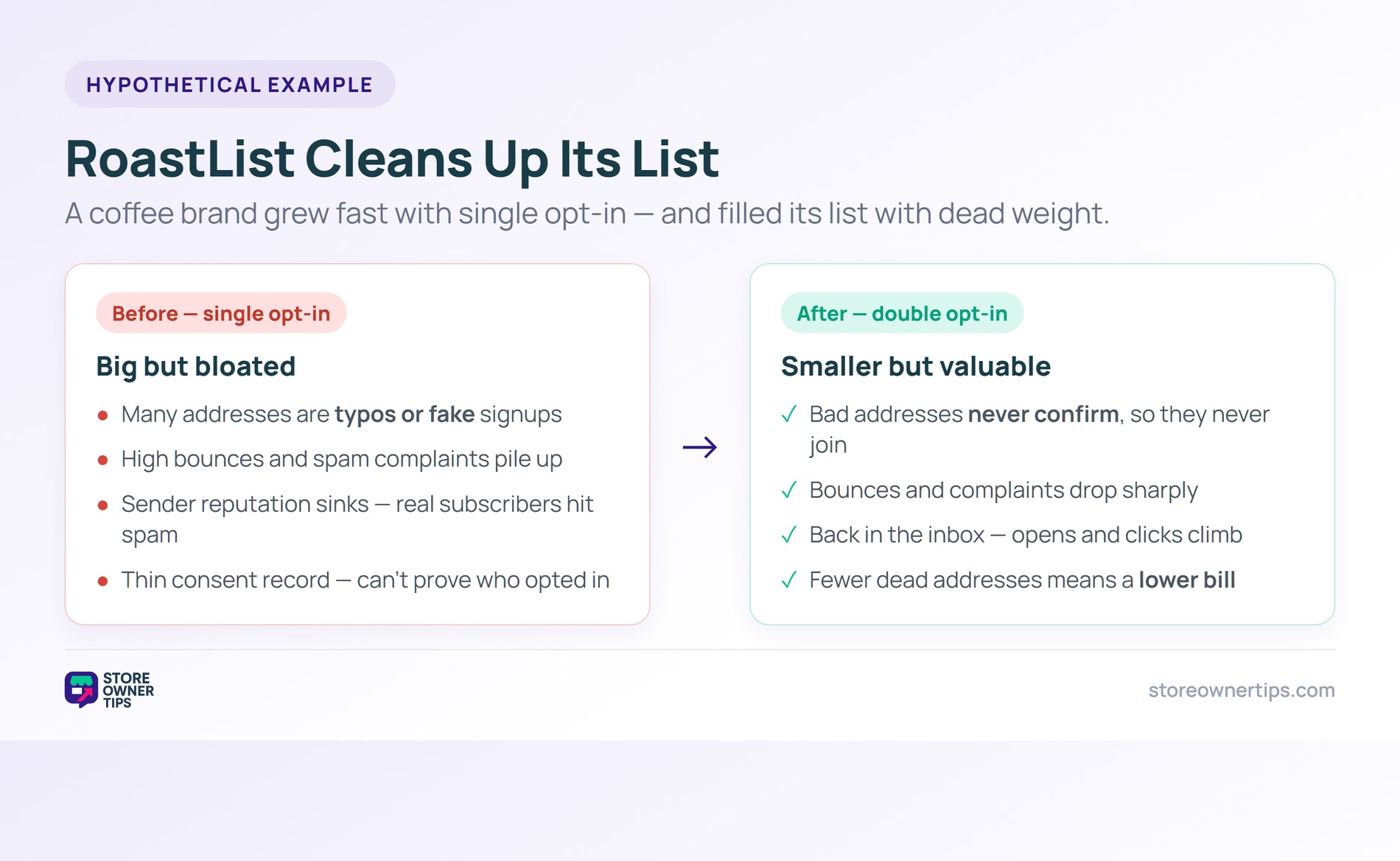
Imagine a coffee brand called RoastList on WooCommerce. It uses single opt-in to grow fast. Its list is large but full of dead weight.
Many addresses are typos or fake signups. RoastList emails them anyway, with no reply. High bounces and spam complaints pile up.
Its sender reputation slowly sinks, and real subscribers start landing in spam. RoastList also cannot prove who consented. With single opt-in, that record is thin.
RoastList switches to double opt-in. New subscribers now confirm before joining. The bad addresses never make it onto the list.
It also sends a clear, fast confirmation email. A friendly reminder nudges anyone who forgets. The list now holds only willing readers.
Bounces and spam complaints drop sharply. RoastList lands in the inbox again. Opens and clicks climb across the board.
RoastList also sees lower email costs. Fewer dead addresses means a smaller, cheaper list. The savings add up each month.
The list is smaller but far more valuable. Every subscriber actually wants the emails. The lesson is clear: a confirmed list beats a bloated one.
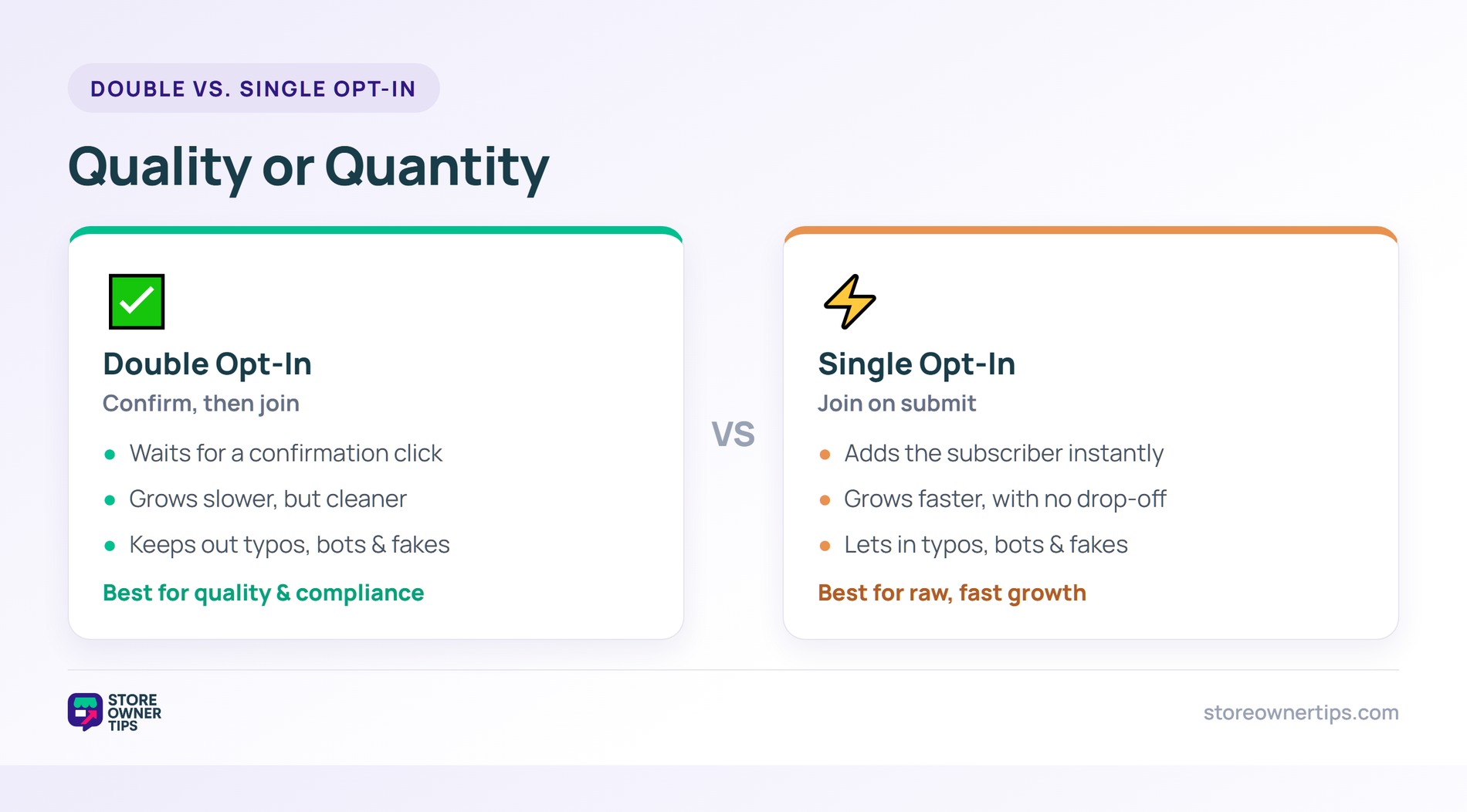
The two methods differ by one step. Single opt-in adds a subscriber the moment they submit. Double opt-in waits for a confirmation click.
Single opt-in grows the list faster. It removes friction and captures every signup. But it lets in typos, bots, and fake addresses.
Double opt-in grows slower but cleaner. It confirms real intent before joining. The result is a smaller, higher-quality list.
The right choice depends on your priority. Choose double opt-in for quality and compliance. Choose single opt-in for raw, fast growth.
It is better for list quality and compliance. Single opt-in is better for raw growth. Most stores favor double opt-in for a healthier list.
It does slow growth, since some never confirm. But the subscribers you keep are far more engaged. Quality usually beats quantity over time.
It is not strictly required everywhere, but it helps. It gives strong proof of consent under privacy rules. When unsure, the safer choice is to confirm.
Double opt-in asks new subscribers to confirm before joining, trading a little growth for a lot of quality. It keeps your list clean, your deliverability strong, and your consent provable. For most stores, that healthier list is well worth the extra step. A confirmed subscriber is worth many passive ones.
Copyright © StoreOwnerTips.com. All Rights Reserved.
