Weekly ecommerce tips, deals & news.
Product bundling is an ecommerce strategy where you group multiple distinct products together. You then sell this curated collection as a single package. Store owners usually offer this package at a lower price compared to buying each item separately.
This pricing tactic is a highly effective way to cross-sell and upsell your inventory. It helps simplify the buying process for your shoppers. It also allows you to move stagnant stock and increase your average order value at the same time.
Selling single items online is getting harder today because of high customer acquisition costs. Offering a bundled package creates a psychological shift known as the bundle illusion. Instead of worrying about the cost of one item, buyers see a complete experience that saves them time and money.
By presenting products as a set, you shift the shopper from an analytical mindset to an opportunity mindset. They stop calculating the pain of paying for individual items. Instead, they focus on the convenience and financial savings your product bundling provides.
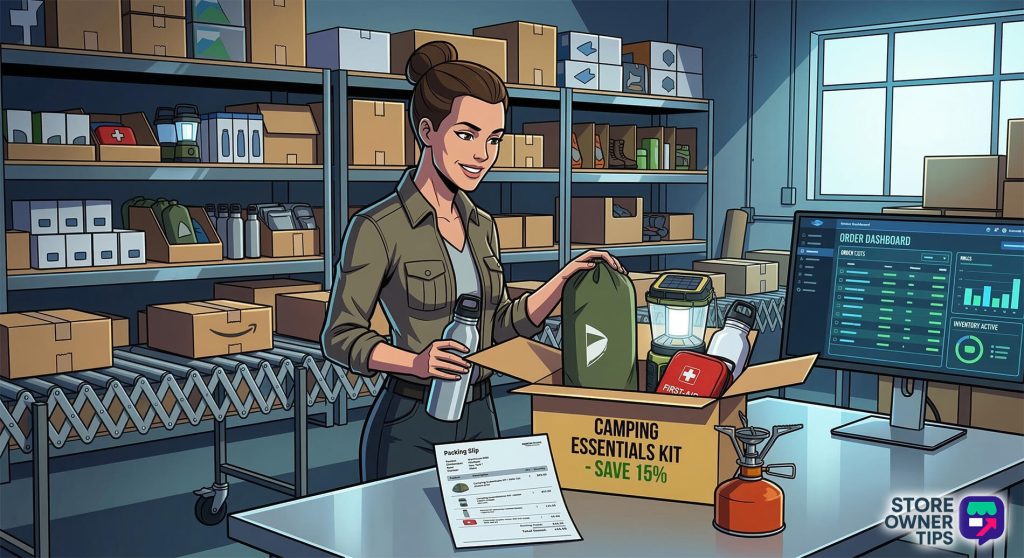
To understand why product bundling works, you need to look at consumer behavior. A successful bundle relies heavily on how you present the offer. It changes how shoppers perceive the overall value of their purchase.
The anchoring bias is a cognitive trait where people rely on the first piece of information they see. In ecommerce, this first piece of information is often the original price of an item.
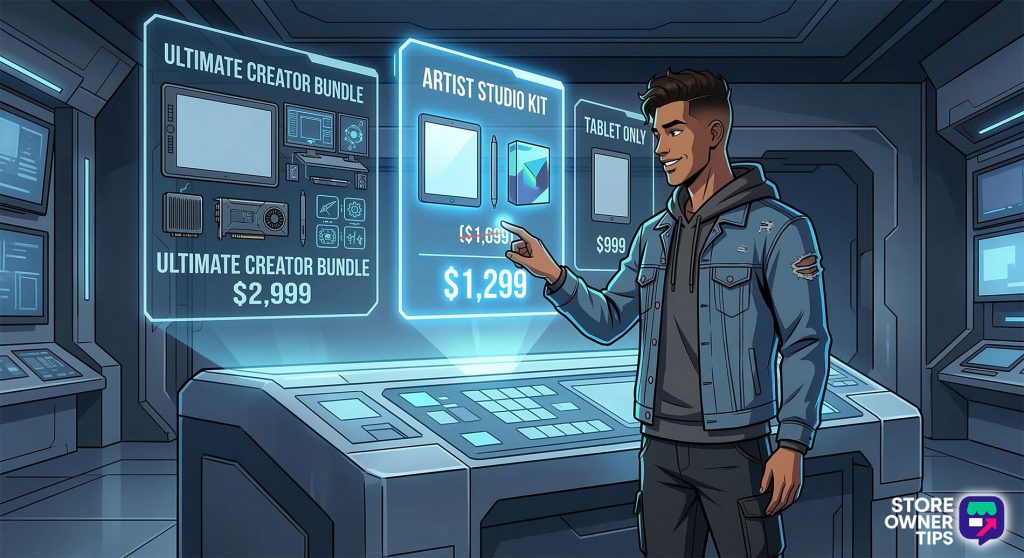
When you show the unbundled prices next to the discounted bundle price, you set a high anchor. This contrast makes the final price of the bundle look like a massive bargain. It creates a sense of urgency and makes people want to buy right away.
The decoy effect works alongside this bias. You introduce a third, less attractive option to push buyers toward your main bundle. Streaming services often use a three-tier pricing model for this exact reason.
Shoppers do not simply add up the value of each item when they look at a bundle. They actually balance their feelings about each component to arrive at an overall evaluation. This is known as the averaging principle.
Buyers will also anchor their perception on the most valuable item in the package. They then adjust their evaluation based on the secondary items included in the deal.
If the secondary items add value without making the price too high, the bundle looks irresistible. This explains why shoppers love packages that pair a highly desired main product with useful accessories.
Online shopping often gives people too many choices. This leads to decision fatigue, where shoppers get overwhelmed and abandon their carts. Product bundling fixes this problem by making choices easier.
You curate complementary items into a single package. This takes the burden of decision making off the shopper. They do not have to search your site for matching accessories.
Instead, they can buy a complete kit with just one click. This improves the user experience and lowers cart abandonment rates. It helps move shoppers quickly from browsing to buying.
Product bundling comes in many different forms. You can tailor your strategy to fit your specific inventory goals. Store owners use several common structures to sell more items.
| Bundling Strategy | Conceptual Definition | Strategic Utility And Ecommerce Example |
| Pure Bundling | You sell items strictly together as a single package. Shoppers cannot buy the components separately. | This forces buyers into an integrated system. An example is a gaming console sold with built-in software. |
| Mixed Bundling | You give buyers the choice to buy items individually at normal prices or together for a discount. | This appeals to deal seekers and single item buyers. An example is a laptop sold with an optional discounted keyboard. |
| Leader Bundling | You pair a popular flagship product with a less popular accessory. | This uses a bestseller to help sell slow moving inventory. An example is a new phone packaged with a basic screen protector. |
| Joint Bundling | You combine two distinct products that naturally work well together. | This solves a bigger problem for the shopper. An example is selling a razor with shaving cream. |
| Cross-Sell Bundling | You recommend related items based on what a shopper is viewing. | This targets active buyers. An example is a frequently bought together section on a product page. |
| Quantity Bundling | You offer tiered discounts when shoppers buy multiple units of the exact same item. | This drives volume sales. An example is a buy three for ten dollars deal on shirts. |
| BOGO Deals | You offer a second item for free or at a discount when someone buys a full price item. | This clears out seasonal stock quickly. An example is buy one get one half off on shoes. |
| Feature Bundling | You group digital features into tiered packages based on functionality. | This helps you reach different budget levels. An example is basic, pro, and elite software plans. |
| Custom Bundling | You let shoppers build their own package from a list of specific options. | This gives buyers a feeling of control. An example is a build your own gift box. |
| Price Bundling | You combine multiple products into a special price offer to encourage bulk purchasing. | This locks customers into long term value. An example is an internet and television combo deal. |
| Gift Set Bundling | You create pre-packaged combinations for special occasions. | This simplifies gift shopping. An example is a pre-made holiday skincare set. |
Pure bundling is often seen as a high risk strategy because it forces shoppers to buy things they might not want. Mixed bundling is much more popular because it preserves consumer choice. Shoppers feel like they are getting a great deal without feeling pressured.
Clearance bundling is another helpful tactic designed to clear out warehouse space. You can pair deadstock items with highly desirable products. This allows you to recover money while maintaining a positive profit margin.
You need to know the difference between common ecommerce merchandising terms. Things like product bundles and grouped products sound similar but work differently. Understanding these differences helps you set up your store correctly.
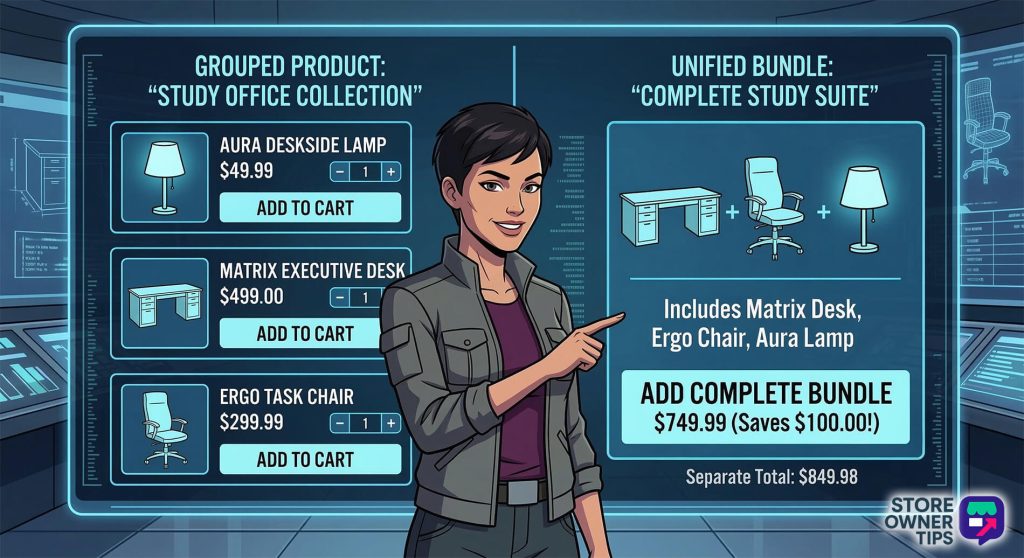
A grouped product is simply a page that shows a list of individual items. The shopper looks at the list and picks the quantity they want for each item. They add these items to their cart separately.
Once in the cart, these items stay separate. There is no automatic discount for buying them together. This setup works well for selling parts of a collection, like individual pieces of a matching bedroom set.
A product bundle is a unified combo product. It has its own specific price, which is usually lower than buying the parts alone. When someone buys a product bundle, they add one single package to their cart.
Cross-selling means recommending related products that go well with the main purchase. These extra items are usually much cheaper than the primary product. Suggesting a phone case to someone buying a smartphone is a cross-sell.
Upselling means trying to get the buyer to purchase a more expensive version of an item. If someone is looking at a basic membership, offering them a premium plan is an upsell.
Product bundling connects both of these concepts. Packaging related items together lets you cross-sell accessories while upselling the total cart value.
The hardest part of product bundling is managing your stock levels. You have to keep your warehouse data accurate to avoid shipping problems. Failing to track items correctly will lead to angry customers.
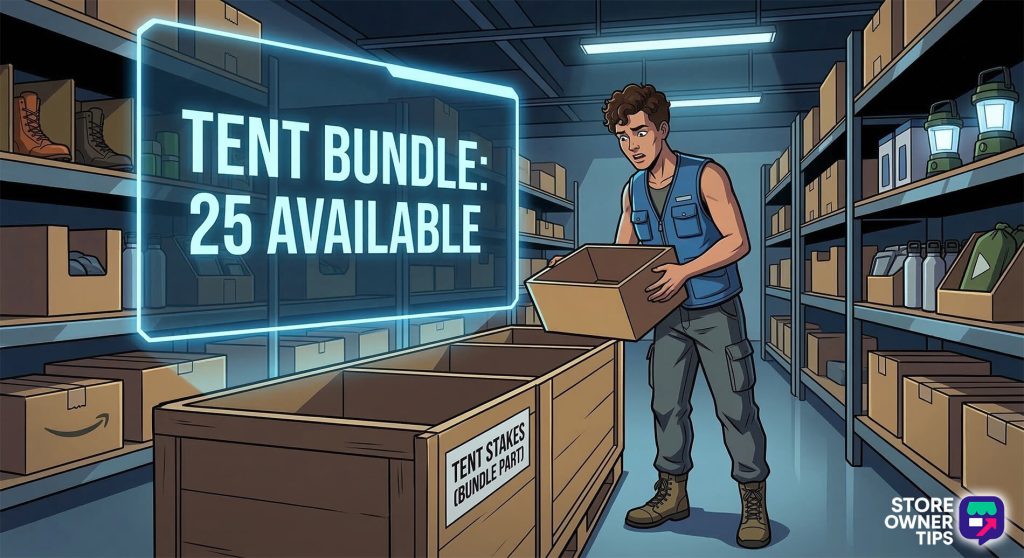
The phantom stock problem happens when your website says a bundle is available, but you are missing one of the parts. This happens a lot when store owners do not use the right tracking software. If a shopper buys a phantom bundle, your warehouse cannot ship it.
To stop this, you must use maximum bundle quantity tracking. This logic calculates your bundle stock based on the rarest item in the package.
If you have one hundred shirts but only two hats, your shirt and hat bundle will only show two available. When the hats sell out, the bundle automatically goes out of stock. This keeps you from selling things you do not actually have.
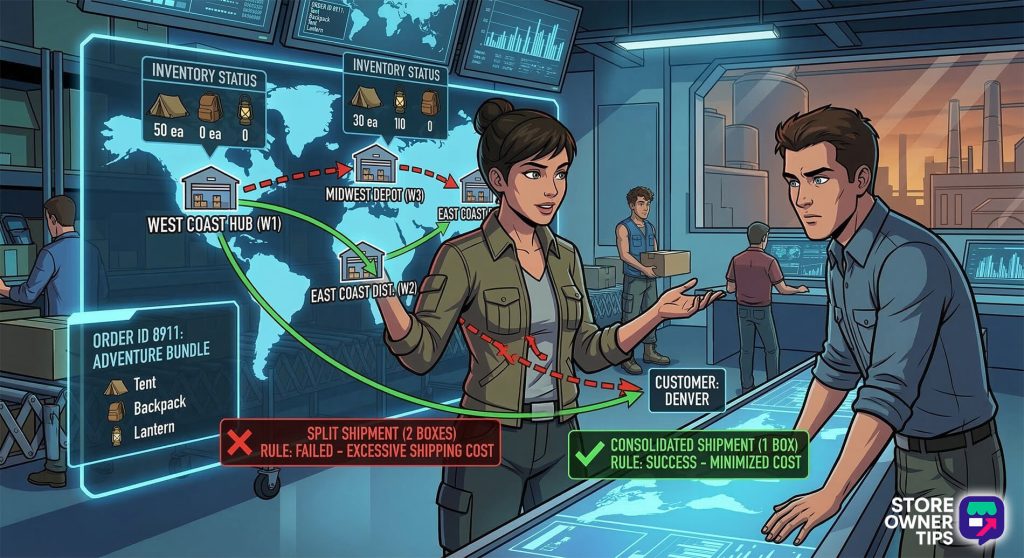
Running multiple warehouses makes inventory tracking much harder. Your system needs to know if the bundle parts are in the same building.
If you have shirts in New York and hats in California, you cannot ship them in the same box. If your system tries to split the shipment, you will pay twice as much for shipping. This cuts directly into your profits.
You need to use routing rules to make sure bundles only ship from locations that have all the parts. You might even want to set up one specific warehouse just for bundle orders.
Custom bundles often include unique details chosen by the customer. Buyers might want a specific color or a custom gift message. These details are vital for your warehouse team to know.
When your system breaks a bundle down into individual items for shipping, these custom notes often get lost. This data loss causes major problems during busy seasons like the holidays. Your team needs these notes to pack the order correctly.
To fix this, technical operators use automation workflows. These systems extract the custom notes from the main order before it breaks apart. They save the information as a permanent note on the packing slip.
Product bundling can help your store grow, but poor planning can cost you money. You have to watch out for a few major problems. Avoiding these mistakes will keep your profit margins healthy.
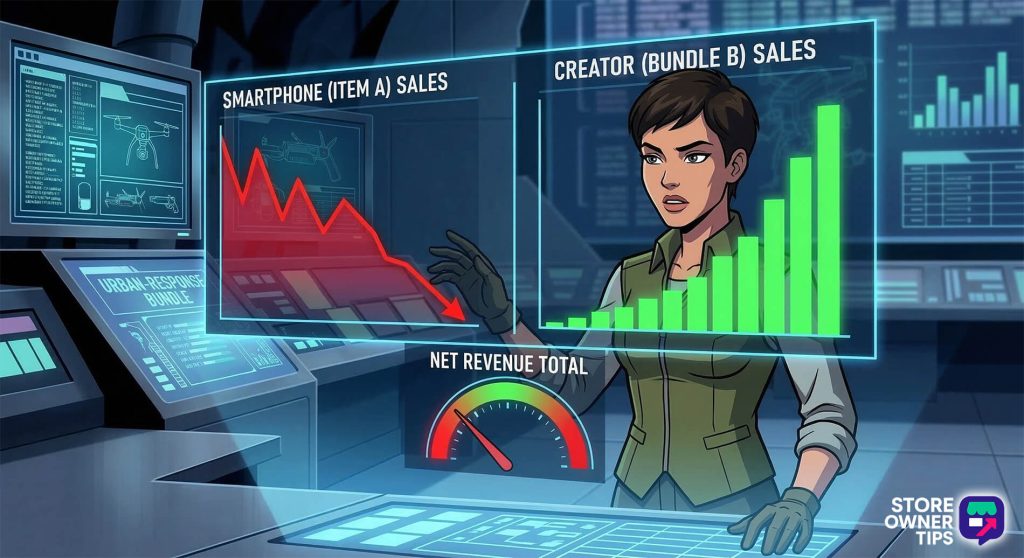
Product cannibalization is the biggest risk of bundling. This happens when a heavily discounted bundle kills the sales of a profitable single item. Instead of finding new buyers, you just convince your current buyers to pay less.
This usually happens when your audience is too small or your products are too similar. You need to look at your data to make sure your bundles target a different type of buyer.
You must always track your sales numbers. Make sure the new money from the bundle is more than the money you lose on single items.
Novice store owners often group completely unrelated items together. Bundling a nice watch with a cheap kitchen tool makes no sense. This confuses your buyers and makes your brand look disorganized.
Your bundles must have a logical connection. The combined items should offer more value together than they do apart.
If your bundle discount is too small, shoppers will not care. They will start overthinking the price and will likely leave your site. A tiny discount ruins the illusion of a great deal.
You need to offer a noticeable discount to get people to act. A good starting point is ten to twenty percent off the normal total. You should always show the exact dollar amount the shopper is saving.
A poorly optimized bundle will not sell well over time. Consumer preferences shift rapidly, so you must adjust your offers. Store owners must employ continuous testing to find the best product combinations.
Testing different product pairings and discount levels helps you see what shoppers actually want. You can refine your product bundling strategy based on real buying behavior. Taking the time to test ensures your bundles stay appealing and profitable.
You cannot just put a bundle on your website and expect it to sell. You have to actively show it to your buyers. Using targeted marketing helps get your offers in front of the right people.
You can use smart popups to show product bundling offers when people are most likely to buy. Store owners use several specific methods to target these shoppers.
This sudden offer often convinces shoppers to stay and finish checking out. It captures their attention exactly when they are ready to make a decision.
To get the most views on your bundle, you need a dedicated landing page. Standard product pages often have too many distractions. A dedicated page focuses entirely on the value of your specific offer.
Store owners frequently use these pages for big events like Black Friday. You can clearly explain why the bundle is a great deal using large text and clear pictures. This keeps the shopper focused on buying.
You can also use specialized order forms on these pages. These forms calculate complex bundle totals automatically. This makes the checkout process fast and simple for the buyer.
Product bundling is more than just grouping items together. It is a highly practical way to boost sales and increase your store revenue. By focusing on giving your current visitors a complete package, you grow your sales without paying for expensive new ads.
Understanding your buyer behavior gives you a big advantage. You can see exactly what your shoppers want and build smart product bundles around their needs. Whether you offer a pure package or a mixed option, mastering this tactic builds a very profitable business over time.
Try adding bundle creation tools to your WooCommerce store. You will quickly see how smart product groupings and clear discounts can turn small, basic purchases into highly profitable orders.
Copyright © StoreOwnerTips.com. All Rights Reserved.
