Weekly ecommerce tips, deals & news.
Product schema is structured data that describes a product to search engines and AI in a language they understand. It labels details like price, availability, brand, and rating. This lets search results show rich extras, such as star ratings and stock status. For online stores, product schema helps your listings stand out and get read correctly by machines.
Product schema is a small block of code on your product page. It follows a shared vocabulary called Schema.org, usually written as JSON-LD. The code tags each detail, so a machine knows your price is actually a price.
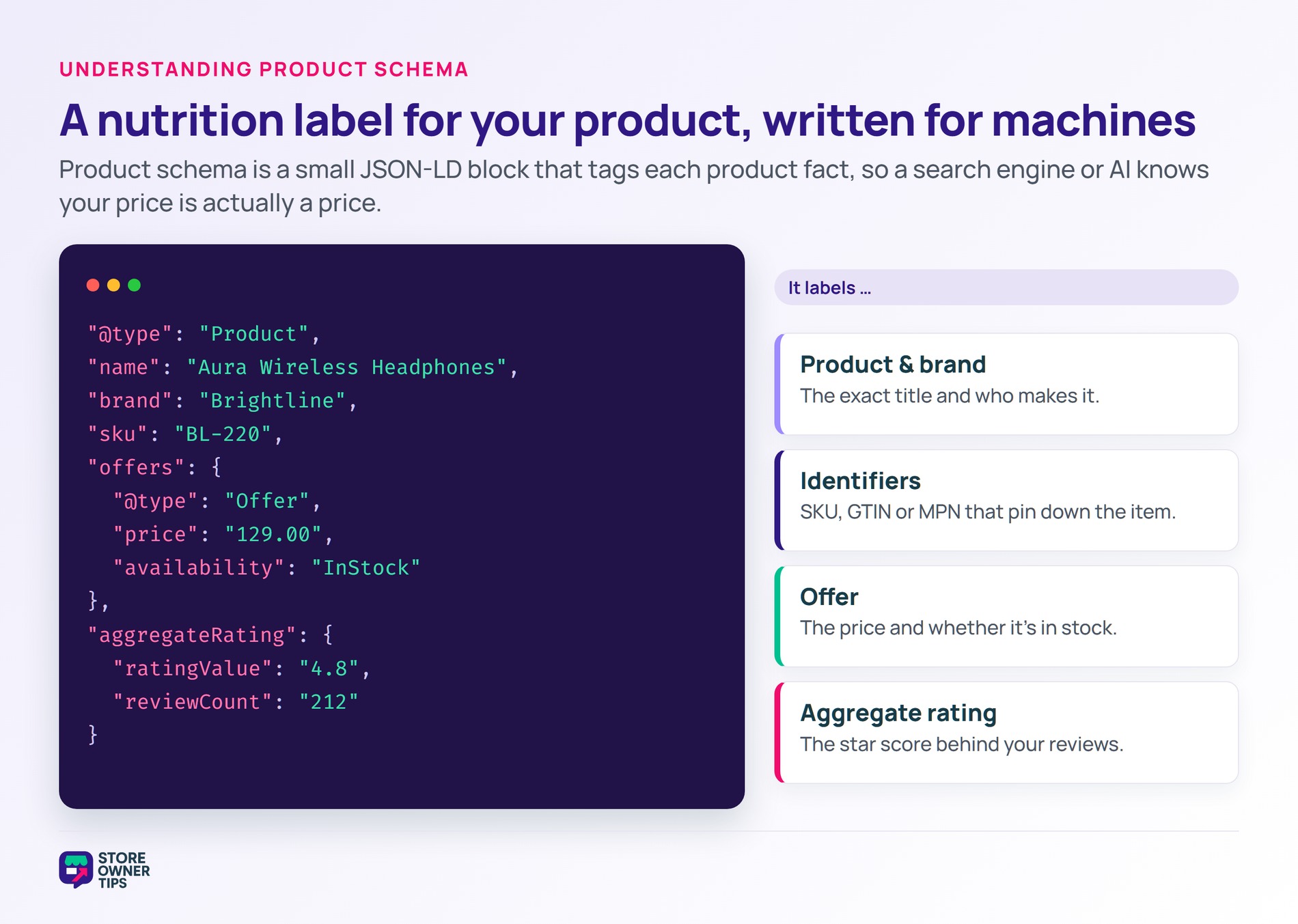
Think of it like a nutrition label for your product. A human reads the page and just gets it. A machine needs the label to know what each number means.
At its core sits a Product type. Inside it, an offer holds the price and availability. An aggregate rating can hold the review score. These pieces nest into one clear record.
It sits close to a structured product data feed. Both describe products in a machine-friendly way. Schema lives on the page itself, guiding any engine that reads it.
Product schema can describe many parts of a listing. Each one becomes a labeled field that machines can trust.
You do not need every field on every page. Still, the more accurate detail you give, the better machines understand your product. Some stores also add shipping, returns, or energy-rating details. Those extra fields can unlock even more listing features.
Schema can be written in a few formats. The three options are JSON-LD, Microdata, and RDFa. JSON-LD is the one most platforms default to, and Google recommends it.
JSON-LD keeps the data in one tidy block, separate from your visible text. Older methods wove tags all through the page’s HTML instead. That made them messier and easier to break.
Picture JSON-LD as a packing slip taped to the outside of a box. The reader checks the slip without unpacking everything inside. Search engines and AI prefer that clean handoff.
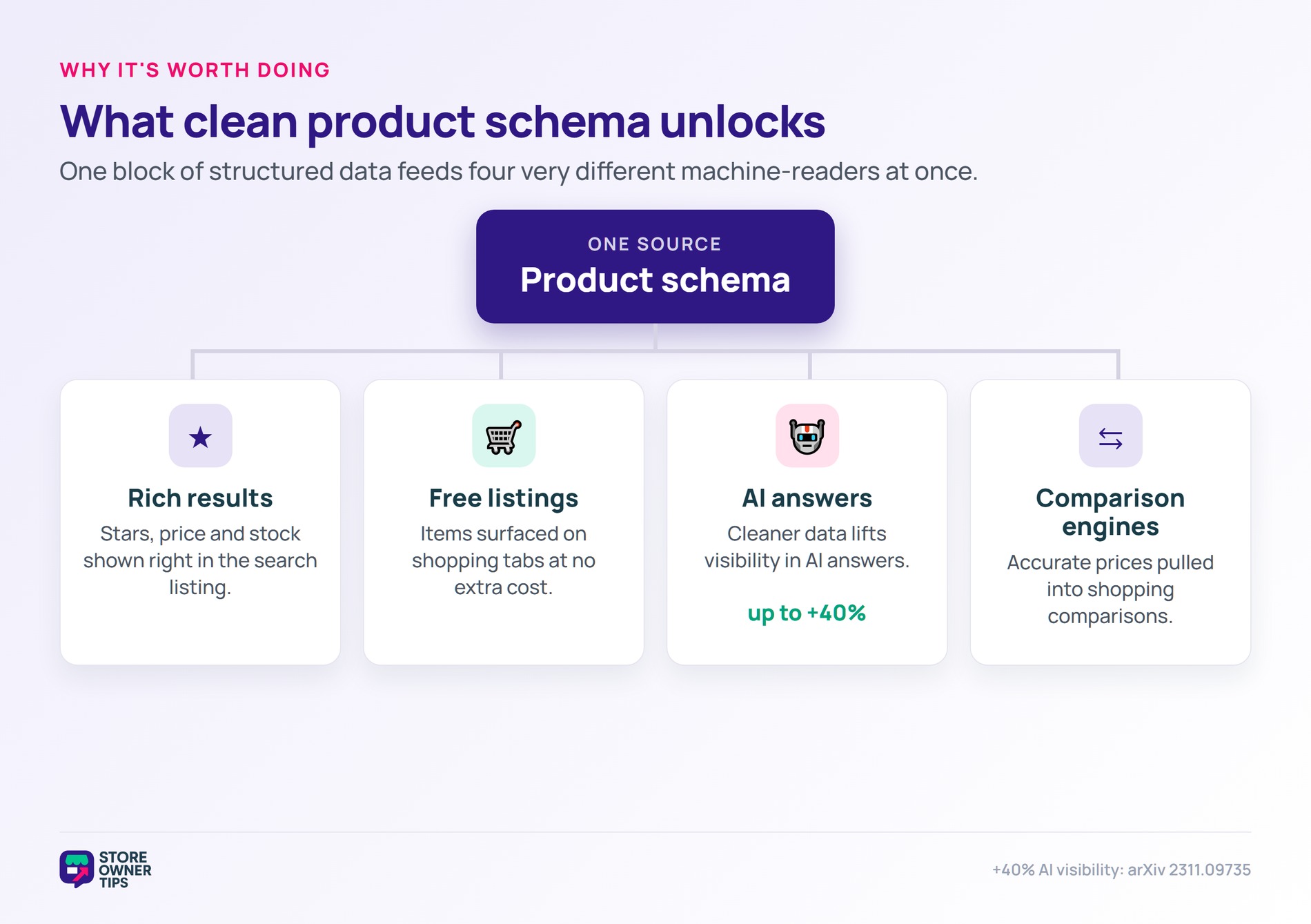
The most visible payoff is rich results. Search listings can show star ratings, price, and stock status. Those extras make your listing pop on a crowded page.
Review stars carry real weight. A product with five reviews is 270% more likely to sell than one with none. Schema puts that social proof right in the search result.
It can also feed free product listings on some search surfaces. That puts your items in front of buyers at no extra cost. Some voice assistants tap the same data to answer product questions out loud.
Structured data also feeds AI and comparison tools. It helps a comparison shopping engine pull accurate prices. Clean structured data can also lift visibility in AI answers by up to 40%, according to recent research.
On WooCommerce or Shopify, you rarely need to code schema by hand. WooCommerce outputs basic product markup on its own. An SEO plugin like Yoast or AIOSEO Pro can extend and refine it automatically.
Feed and markup tools can help too. For example, some plugins fix WooCommerce structured data so variable products report the right price. That keeps your markup matching what shoppers actually see.
Put schema on individual product pages, not category pages. Each product page should carry its own markup. Match the schema type to what the page actually shows.
After setup, always test your pages. Google’s Rich Results Test shows whether your schema is valid. Fix any flagged errors so engines can trust the data.
Then watch Google Search Console over time. Its enhancement reports flag schema errors as they appear. That helps you fix issues before they spread.
A few errors trip up stores again and again. Avoiding them keeps your rich results safe.
When in doubt, keep it simple and accurate. Clean markup beats clever markup every time. A quick monthly check keeps everything in good shape.
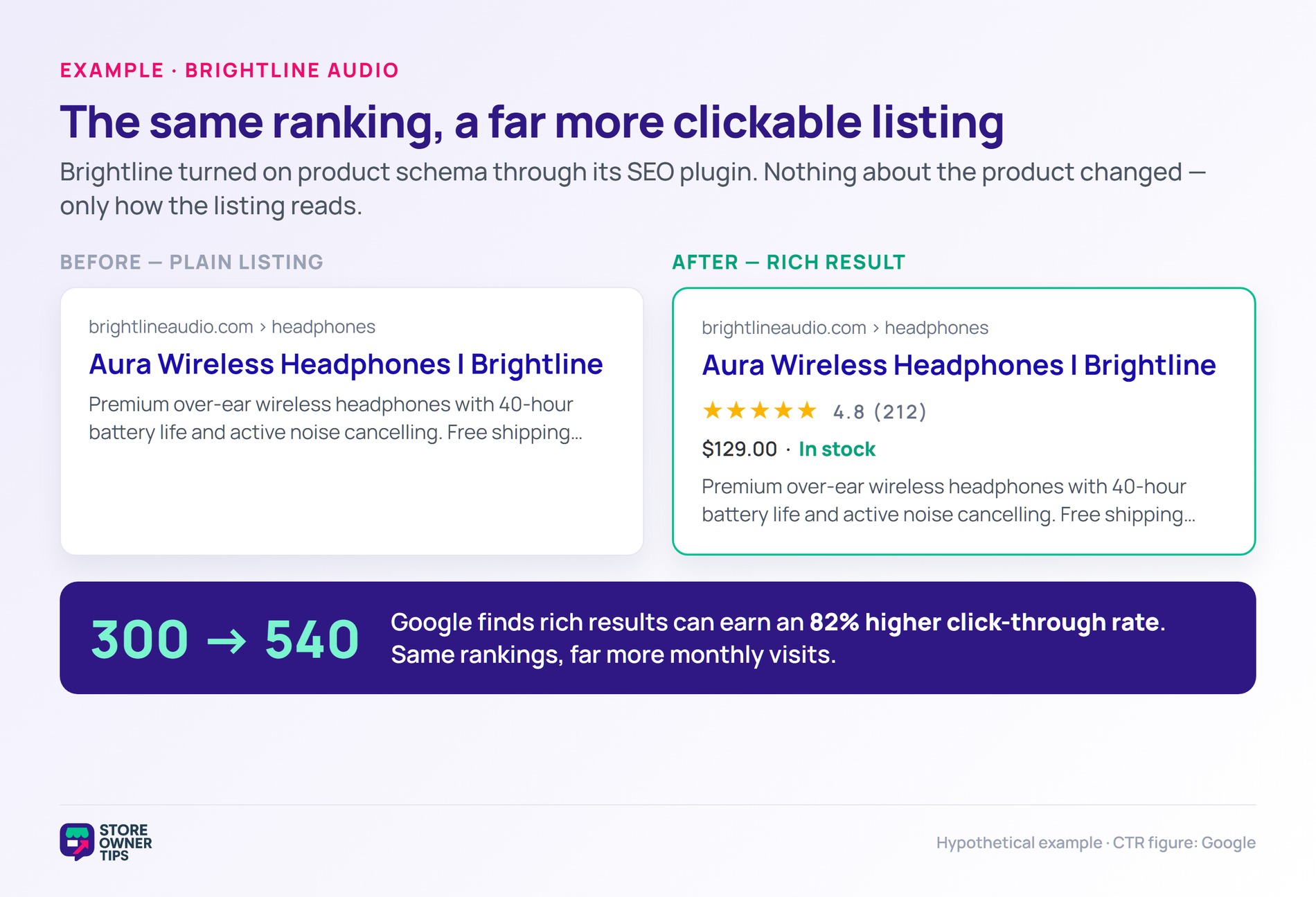
Imagine a WooCommerce store called Brightline Audio that sells headphones. Its listings look plain in search results. They show only a title and a short line of text. Shoppers scroll right past them.
Brightline turns on product schema through its SEO plugin. Now each page reports price, stock, and review ratings. The team validates everything with the Rich Results Test.
Search listings now show gold star ratings and clear prices. The headphones look credible before a shopper even clicks.
That matters more than it sounds. Google has found pages shown as rich results can earn an 82% higher click-through rate. For Brightline, that means more visits from the same rankings.
The math adds up fast. Picture the page drawing 300 organic clicks a month before. A lift of that size could push it past 540. Same rankings, far more traffic.
AI tools also describe the products more accurately. They quote the right price and mention the strong ratings. Buyers researching through chatbots then find Brightline by name. Brightline shows up correctly wherever machines read it.
None of this changed the products themselves. Brightline simply made its data readable to machines, and the clearer signals did the work.
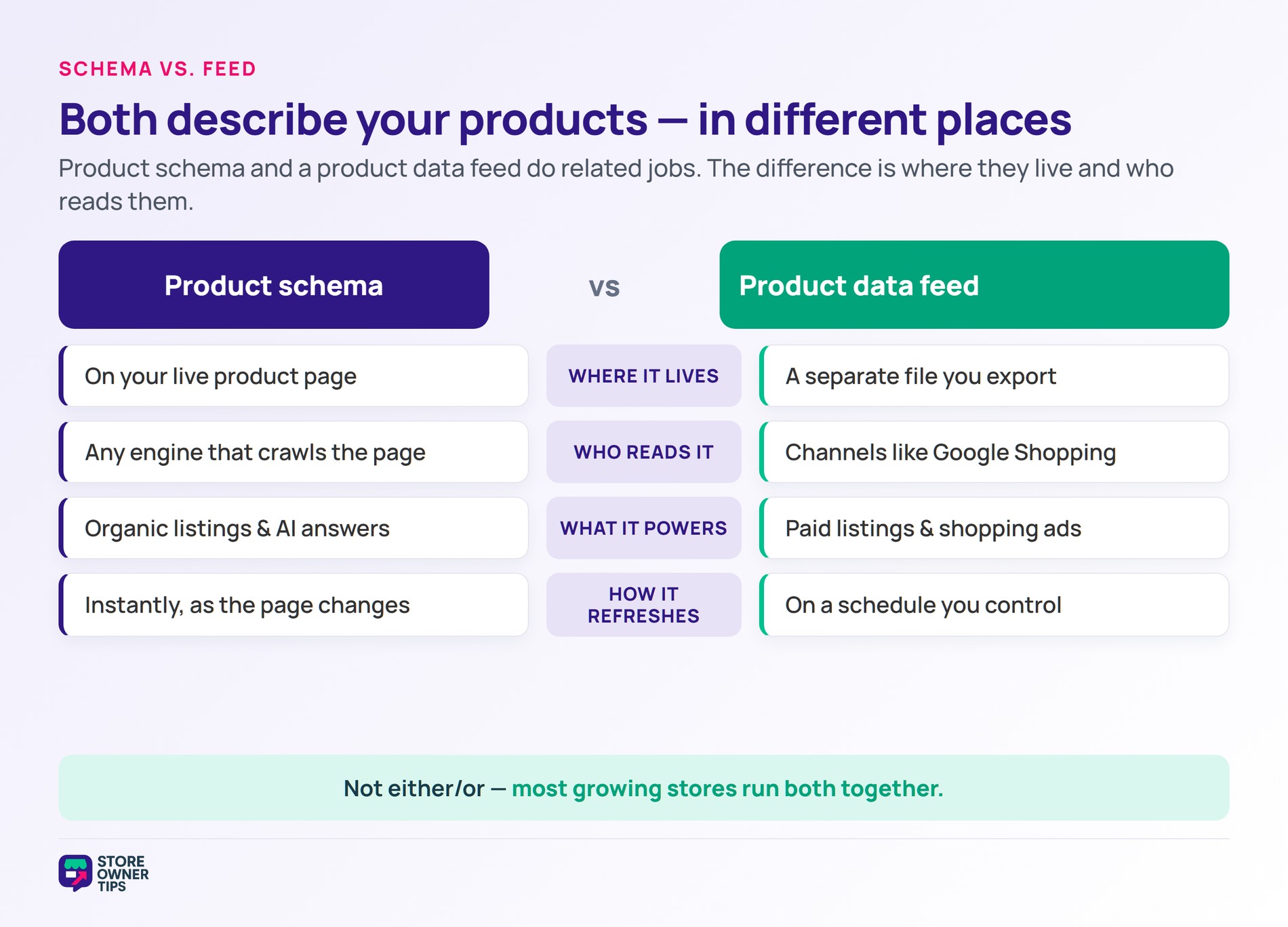
Product schema and a product data feed both describe your products to machines. The difference is where they live and who reads them.
Product schema sits on your live product page. Any engine that crawls the page can read it. It mainly powers search listings and AI answers.
A product data feed is a separate file you send out. It goes to channels like Google Shopping or other marketplaces. It powers paid listings and shopping ads, not your organic page.
They also refresh differently. Schema updates the moment your page does. A feed updates on a schedule you or your tool control.
In short, schema works on your own turf. A feed pushes your data onto other platforms. Most growing stores end up using both together.
Product schema is close to essential, with a few things to watch. Here is the honest balance.
It helps mostly in an indirect way. Schema itself is not a direct ranking factor. Still, richer listings often earn more clicks, which can support performance. It also helps AI engines understand and surface your products.
Usually not. SEO plugins like Yoast or AIOSEO Pro can generate it for you. They pull from your existing product fields. You just confirm the output with a validation tool.
No, and it helps to expect that. Valid schema makes your page eligible, not guaranteed. Search engines choose when to display rich results. Accurate, well-kept markup gives you the best odds.
Yes, quite a bit. AI engines lean on clean, structured signals to read your products. Schema hands them clear facts about price, stock, and ratings. That makes correct, useful mentions of your store far more likely.
Product schema turns your product pages into something machines can truly understand. It powers rich search listings, feeds accurate data to AI, and helps comparison tools quote you correctly. Add it through your SEO plugin and keep it accurate. Then your products will show up clearly wherever shoppers and machines look.
Copyright © StoreOwnerTips.com. All Rights Reserved.
