Weekly ecommerce tips, deals & news.
A third-party logistics provider, or 3PL, is a company that stores, packs, and ships your orders for you. Instead of running your own warehouse, you send your stock to theirs. When a customer buys, the 3PL picks, packs, and ships the order. Think of it as renting a pro warehouse and shipping team instead of building your own.
A 3PL takes the physical work of fulfillment off your plate. First, you ship your inventory to their warehouse. They store it, count it, and keep it safe. Then they wait for orders to arrive from your store.
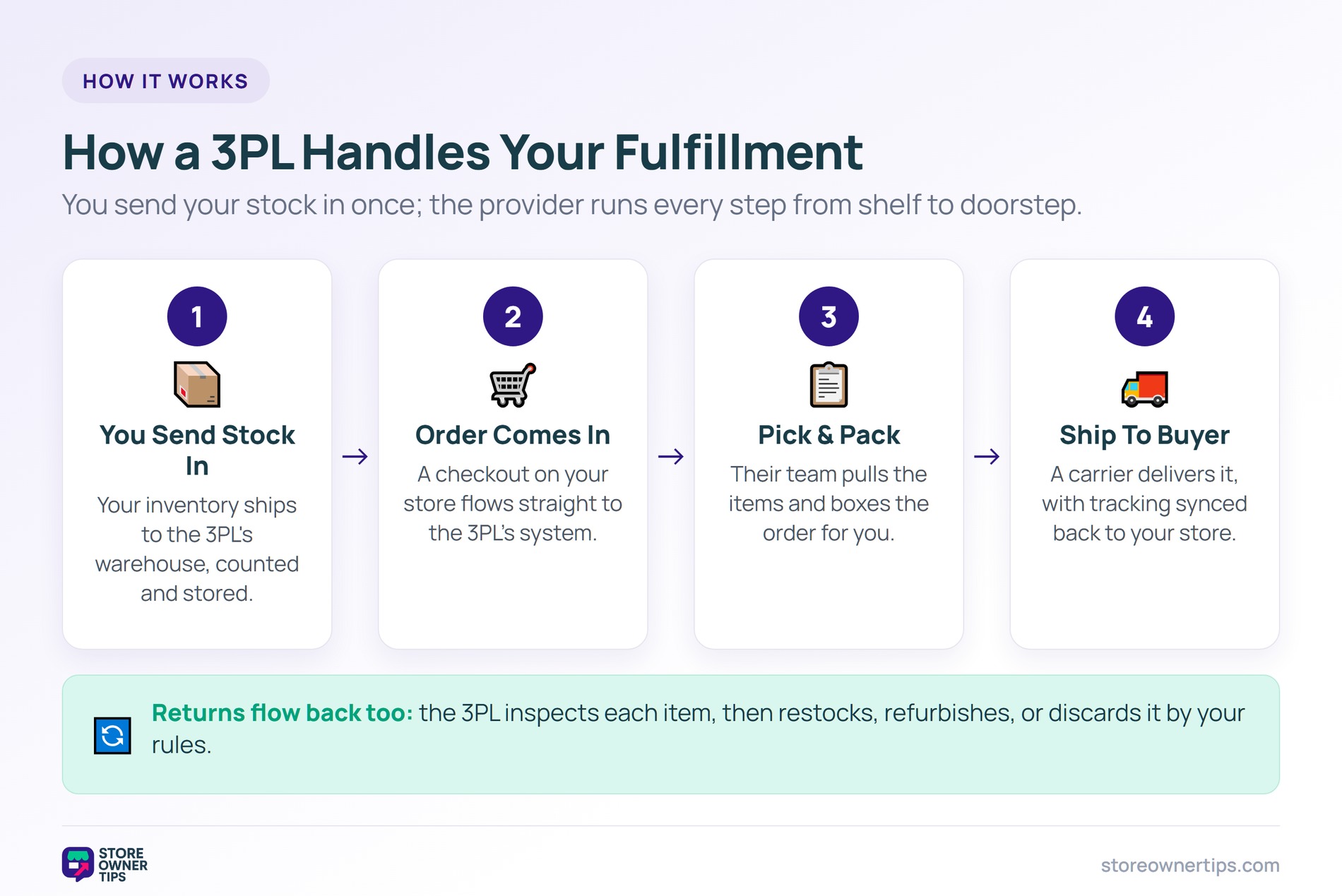
When an order comes in, the 3PL springs into action. They pick the items, pack the box, and hand it to a carrier. Many also process returns and restock items for you. In short, they run the warehouse so you can run the business.
The result is a kind of invisible partner. Customers see only your brand on the box. Yet a whole warehouse team stands behind every order.
This model is now the norm at the top of retail. About 94% of Fortune 500 companies use at least one 3PL. They lean on these partners to cut costs and move faster.
On WooCommerce, a 3PL connects to your store through an integration. When a customer checks out, the order details flow straight to the 3PL. Their system then triggers the pick, pack, and ship steps.
Tracking numbers and stock counts sync back to your store automatically. So your customer gets a shipping email without any manual work. WooCommerce and Shopify both connect to most major 3PLs, though setup steps differ.
Think of the integration like a phone line between two teams. Your store says new order, and the 3PL says shipped. That constant chatter keeps both sides in perfect sync.
Good integrations also push live stock levels back to you. That visibility stops you from overselling an item that ran out. As a result, fewer orders get cancelled and refunded.
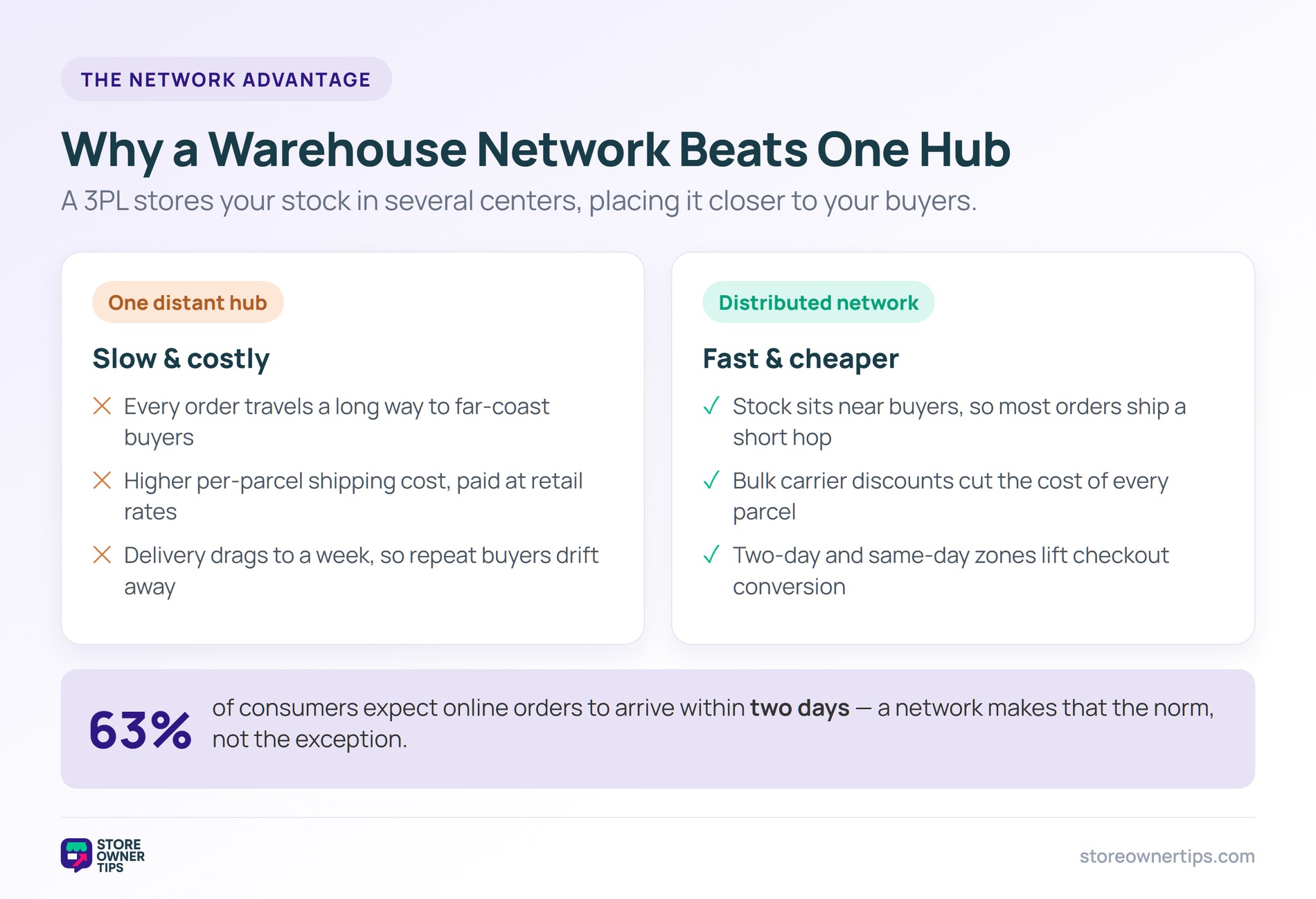
The biggest perk of a 3PL is its warehouse network. Many run several centers spread across the country. That lets them store your stock closer to your buyers.
Shorter distances mean faster, cheaper delivery for each order. This matters because shoppers are impatient. About 63% of consumers expect delivery within two days.
A 3PL also buys shipping in huge volume. So it earns carrier discounts a small store could never match. Those savings can then flow back to you and your customers.
Some 3PLs also offer same-day or next-day zones. That speed can lift your conversion rate at checkout. Shoppers love seeing a fast delivery date on the page.
Returns are a big part of what a 3PL handles. When a buyer sends an item back, the 3PL inspects it. They then restock, refurbish, or discard it based on your rules.
This reverse flow saves you hours of tedious work. It also gets good stock back on the shelf faster. So a strong returns process protects both your time and your margin.
Not every 3PL offers the exact same menu. Some focus only on storage and shipping. Others add extra services that make a small store look bigger.
Common extras include custom packaging and gift notes. Many handle kitting, which means bundling items into one ready-to-ship set. Some also manage returns, restocking, and even light assembly.
It pays to list the services you actually need. A simple store may only want storage and shipping. A complex one may need kitting, returns, and custom inserts.
Start by checking where their warehouses sit. Locations near your buyers mean faster, cheaper delivery. A wide network usually beats one far-off hub.
Next, look closely at their fee structure. Hidden charges can quietly erase your margin. So ask for a clear, itemized quote before you sign.
Also ask about their peak-season limits. A 3PL that buckles during the holidays will cost you sales. So confirm they can scale up when you need it most.
Finally, test their tech and their support. Good software syncs orders, stock, and tracking without errors. Reliable humans matter just as much when something goes wrong.
The first mistake is choosing on price alone. The cheapest 3PL often hides costs in the fine print. A slightly higher fee can be worth fast, accurate service.
Another trap is poor inventory planning. Send too little stock, and you run out during a rush. Send too much, and storage fees quietly pile up.
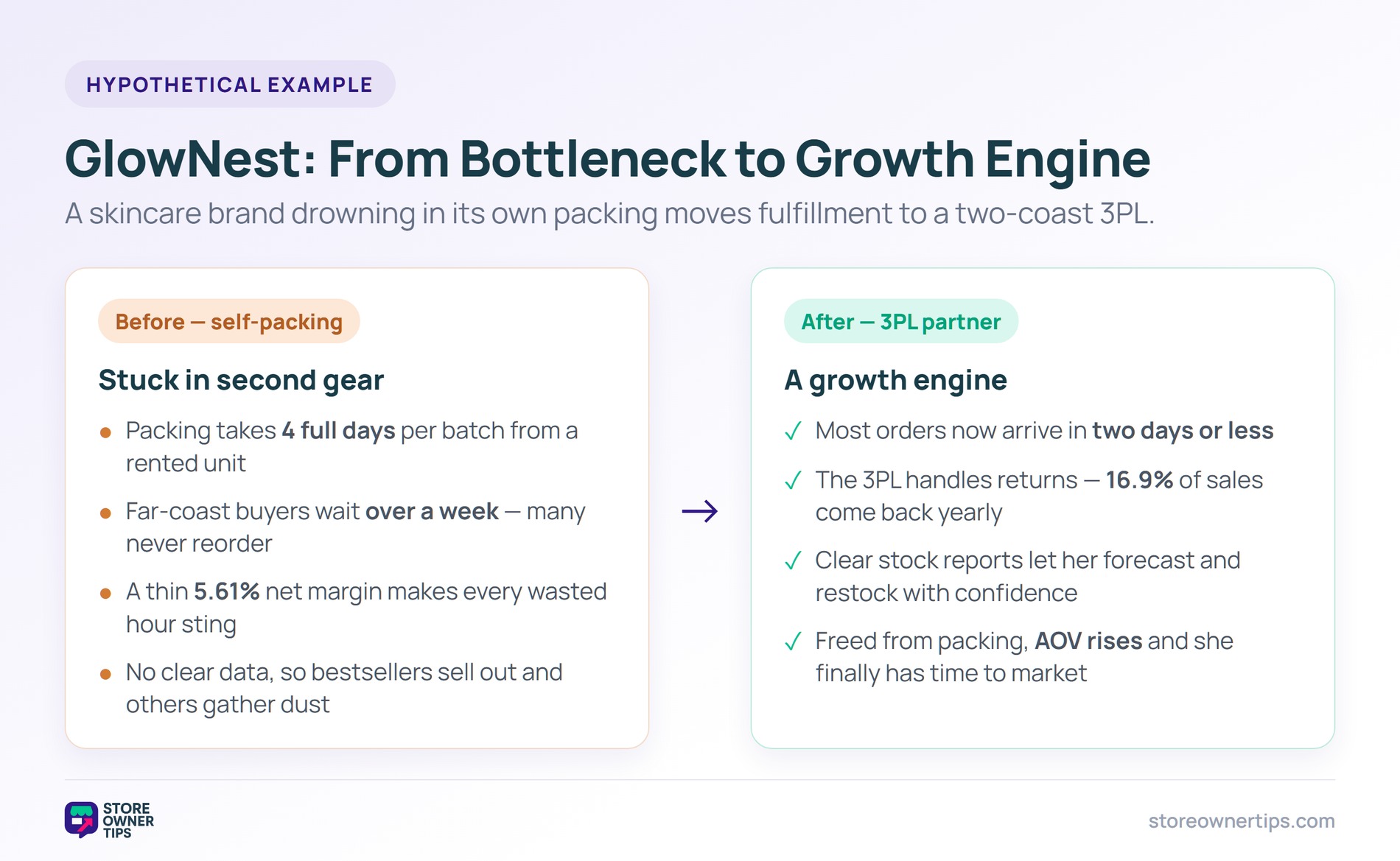
Imagine a growing skincare brand called GlowNest on WooCommerce. The founder packs every order from a rented storage unit. Orders are piling up faster than she can ship them.
Her packing now takes four full days per batch. Buyers on the far coast wait over a week for delivery. Many of them never order a second time.
Her thin margins make every wasted hour sting. General retailers average a net margin of just 5.61%. So she cannot afford to lose repeat buyers over slow shipping.
She also struggles to forecast demand from a cramped unit. Some bestsellers sell out while others gather dust. The whole setup feels stuck in second gear.
GlowNest moves its inventory into a 3PL with two coast-to-coast warehouses. Now most orders arrive in two days or less. The founder also adds a free shipping threshold to lift order sizes.
The 3PL also handles returns, which are a fact of life. Retailers expect 16.9% of sales to come back each year. A smooth returns flow keeps those customers happy and loyal.
She also gains clear reports on stock and shipping speed. Those numbers help her plan restocks before they run low. For the first time, she can forecast with confidence.
Within months, her average order value rises and complaints fall. Freed from packing, she finally has time to market. The lesson is clear: the right 3PL turns a bottleneck into a growth engine.
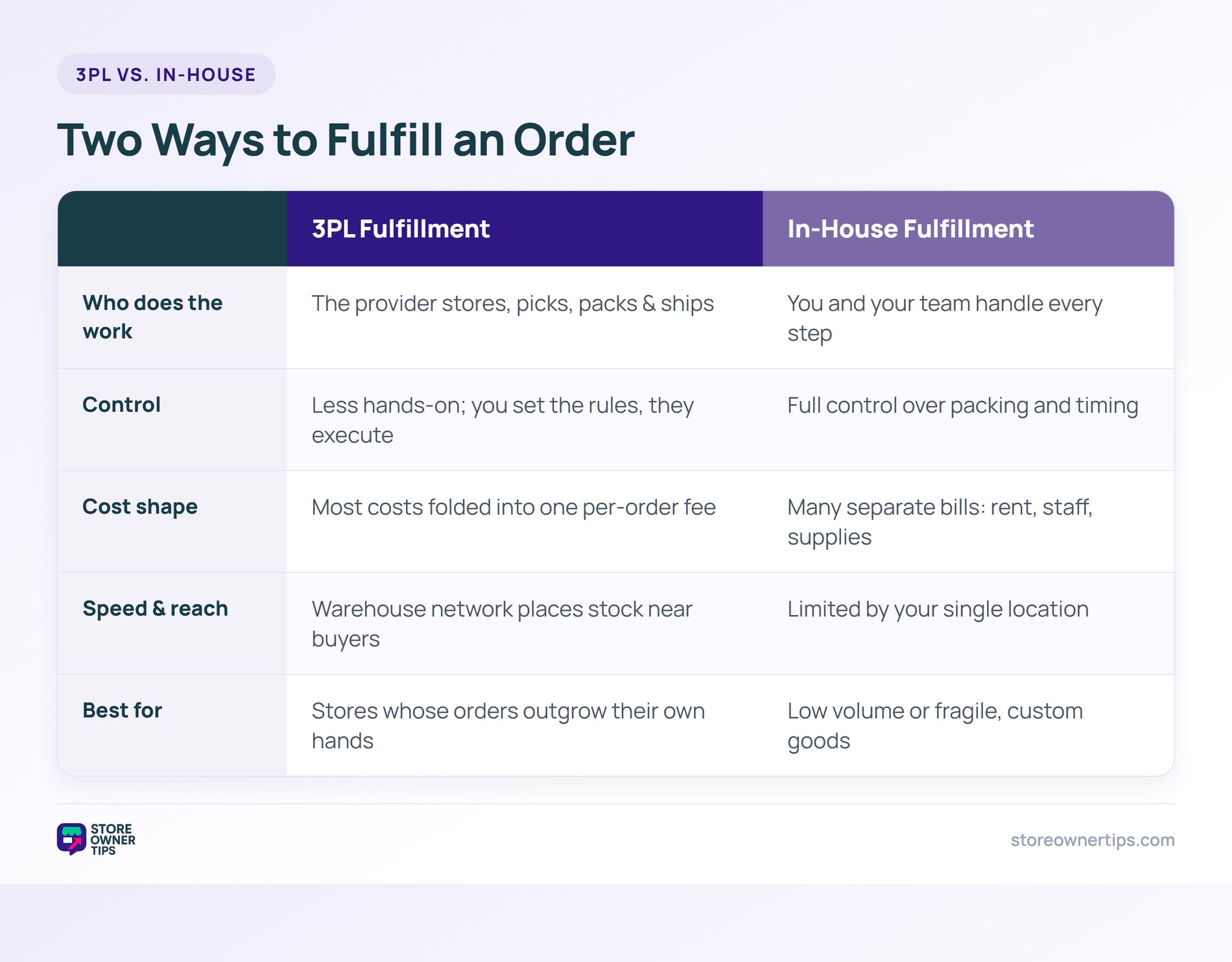
The opposite of a 3PL is in-house fulfillment. With in-house, you store, pack, and ship every order yourself. You control each step, but you carry every cost and chore.
A 3PL flips that balance toward convenience. You hand off the labor, the space, and the carrier deals. However, you lose direct control over packing and timing.
Cost shape is the deepest difference here. In-house mixes rent, staff, and supplies into many bills. A 3PL folds most of that into one per-order fee.
In-house often makes sense at low volume or for fragile goods. A 3PL usually wins once orders outgrow your own two hands. Many brands split the difference and use both at once.
A 3PL ships products you already own and sent to them. A dropshipping supplier owns the product and ships it for you. So with a 3PL, you hold the stock and the risk.
Move when packing orders eats the time you need to grow. Steady daily volume is a strong signal. Holiday surges are another common tipping point. A 3PL also helps when buyers demand faster, wider shipping.
Most 3PLs charge for storage, picking, packing, and shipping. Fees vary by size, weight, and order volume. Watch for setup and minimum monthly fees too. Always compare your total cost per order before you commit.
A 3PL lets you offer fast, reliable shipping without building a warehouse. It frees your time, widens your reach, and lowers shipping costs as you grow. Treat the right 3PL as a growth partner, not just a vendor you pay. Done well, it lets a small team deliver like a giant.
Copyright © StoreOwnerTips.com. All Rights Reserved.
