Weekly ecommerce tips, deals & news.
WISMO (Where Is My Order) is the steady stream of customer messages asking about order status, shipping, or tracking. It’s usually the single biggest category of support contacts in an online store. Each question is easy to answer, but the volume adds up. Left unmanaged, WISMO eats hours of support time and leaves anxious customers waiting.
WISMO works like a waiting room with no clock on the wall. People sit calmly when they know how long the wait will be. Without that information, they walk up to the front desk and ask. Every shopper who can’t see where a parcel is becomes one more trip to your front desk.
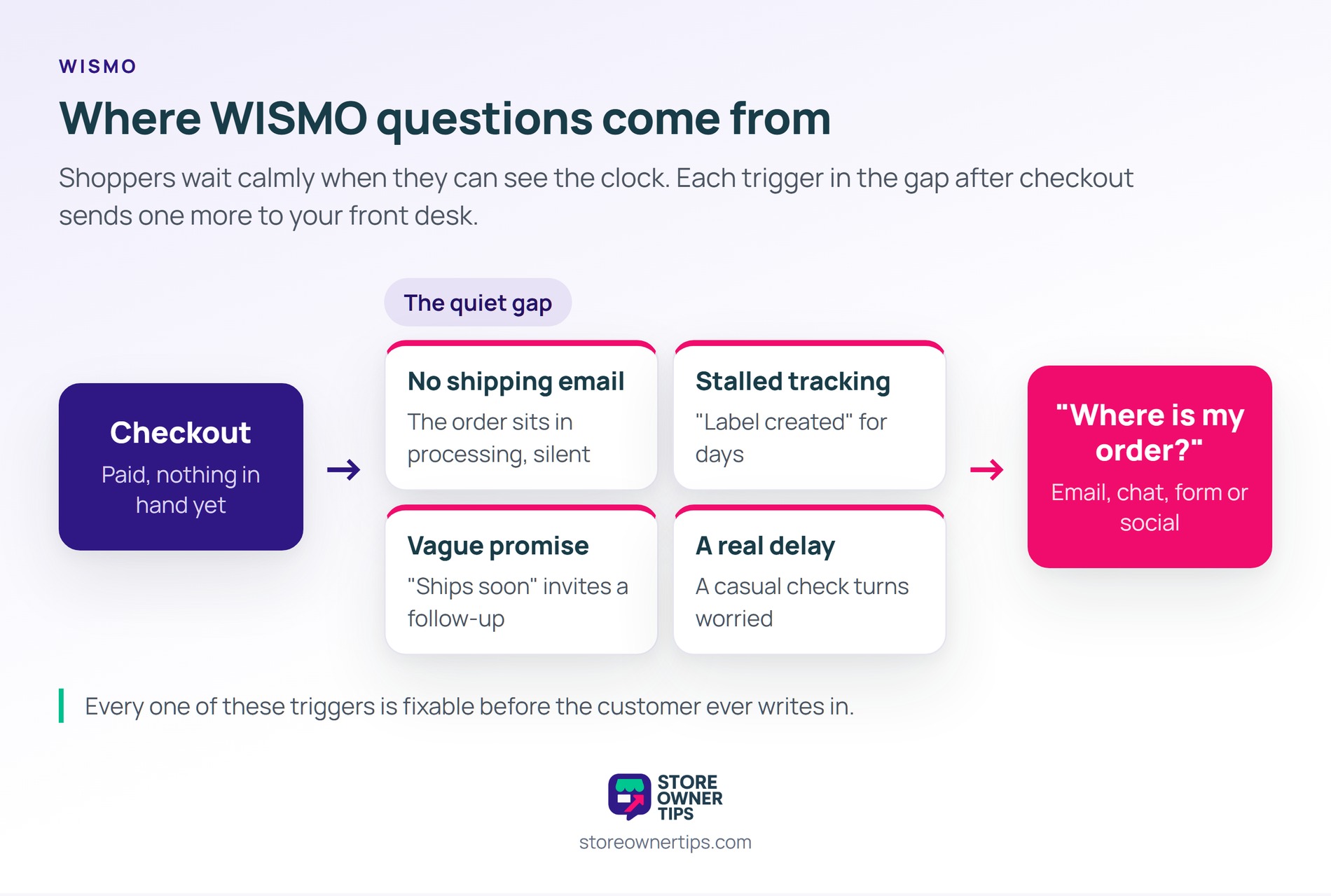
WISMO questions start in the quiet gap after checkout. The customer has paid, but the product isn’t in hand yet. Meanwhile, doubt creeps in, especially if nothing seems to happen for a day or two.
Common triggers include:
WISMO questions arrive through every channel you offer: email, chat, contact forms, and social messages. In WooCommerce, each answer means opening the order, reading its status, and copying a tracking number into a reply. In practice, that takes a few minutes per message. Multiply it by every order, and the routine lookups crowd out work that needs real thought.
The answer is only as good as your order data. WooCommerce statuses like processing, on hold, and completed tell the customer what’s happening. However, if staff update those statuses late, the reply goes out wrong. That’s why tidy WooCommerce order management sits underneath any fix for WISMO.
A WISMO reply works best when it answers everything in one message. Otherwise, the customer simply writes back with a follow-up. A complete reply covers four things:
Miss one of these, and a single question becomes two or three messages. For that reason, the reply template matters as much as reply speed.
WISMO volume rises with online sales, and online sales keep rising. The Census Bureau reported that e-commerce made up 16.4 percent of total retail sales in the second quarter of 2026. Each of those orders can spark a status question. More orders without better tracking means more contacts, never fewer.
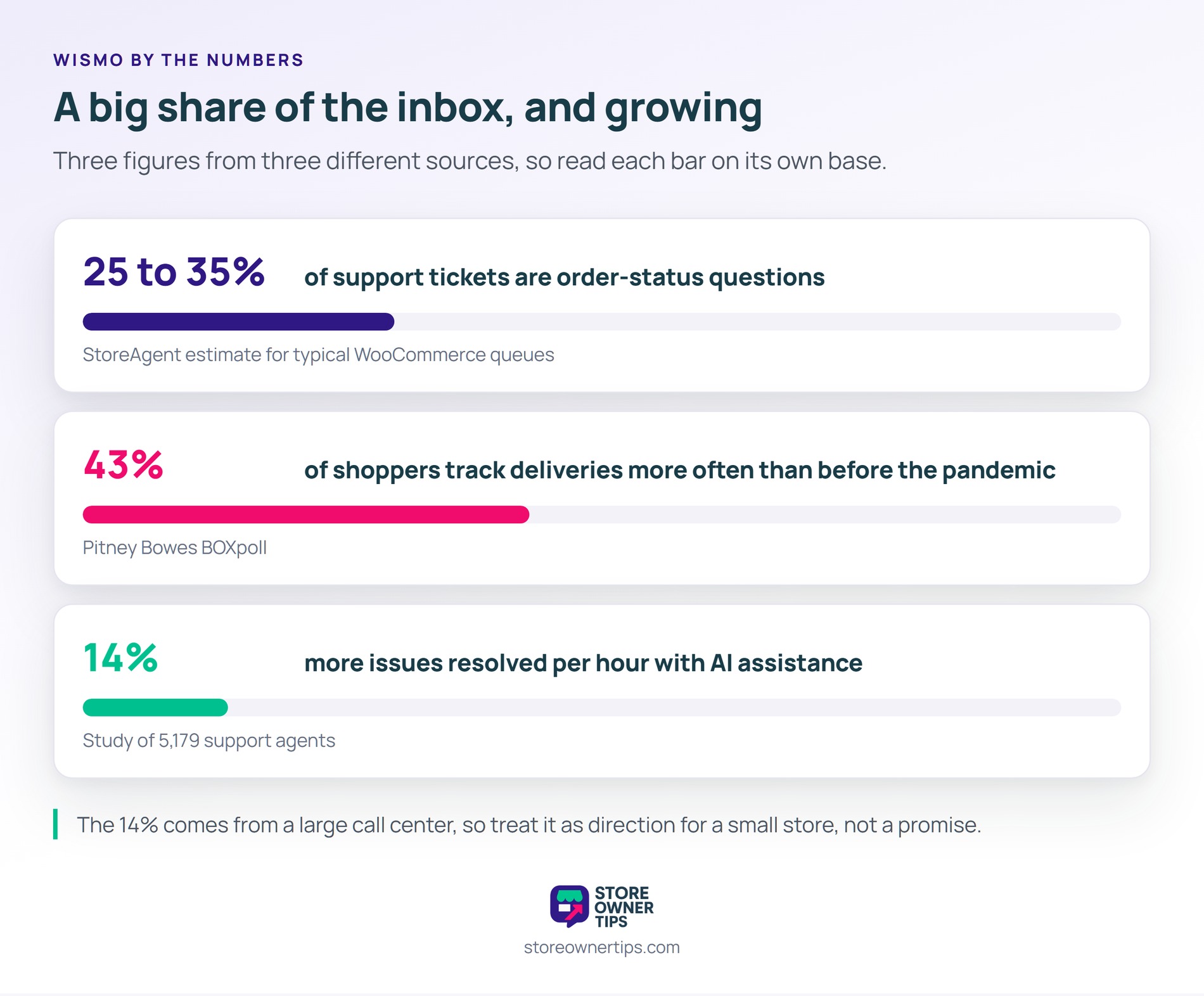
WISMO is a large share of support work. StoreAgent’s breakdown of typical WooCommerce support queues puts order-status questions at 25-35% of tickets. That’s more than product questions or return policy questions.
On top of that, shoppers are checking more often. Pitney Bowes’ BOXpoll survey found 43% of shoppers track deliveries more often than before the pandemic. In the same survey, more than half said they were unlikely to shop again after a poor tracking experience.
Help with routine questions does make a difference. A study of 5,179 customer support agents found AI assistance raised issues resolved per hour by 14% on average. Still, that research covered a large call center, so treat it as direction for a small store.
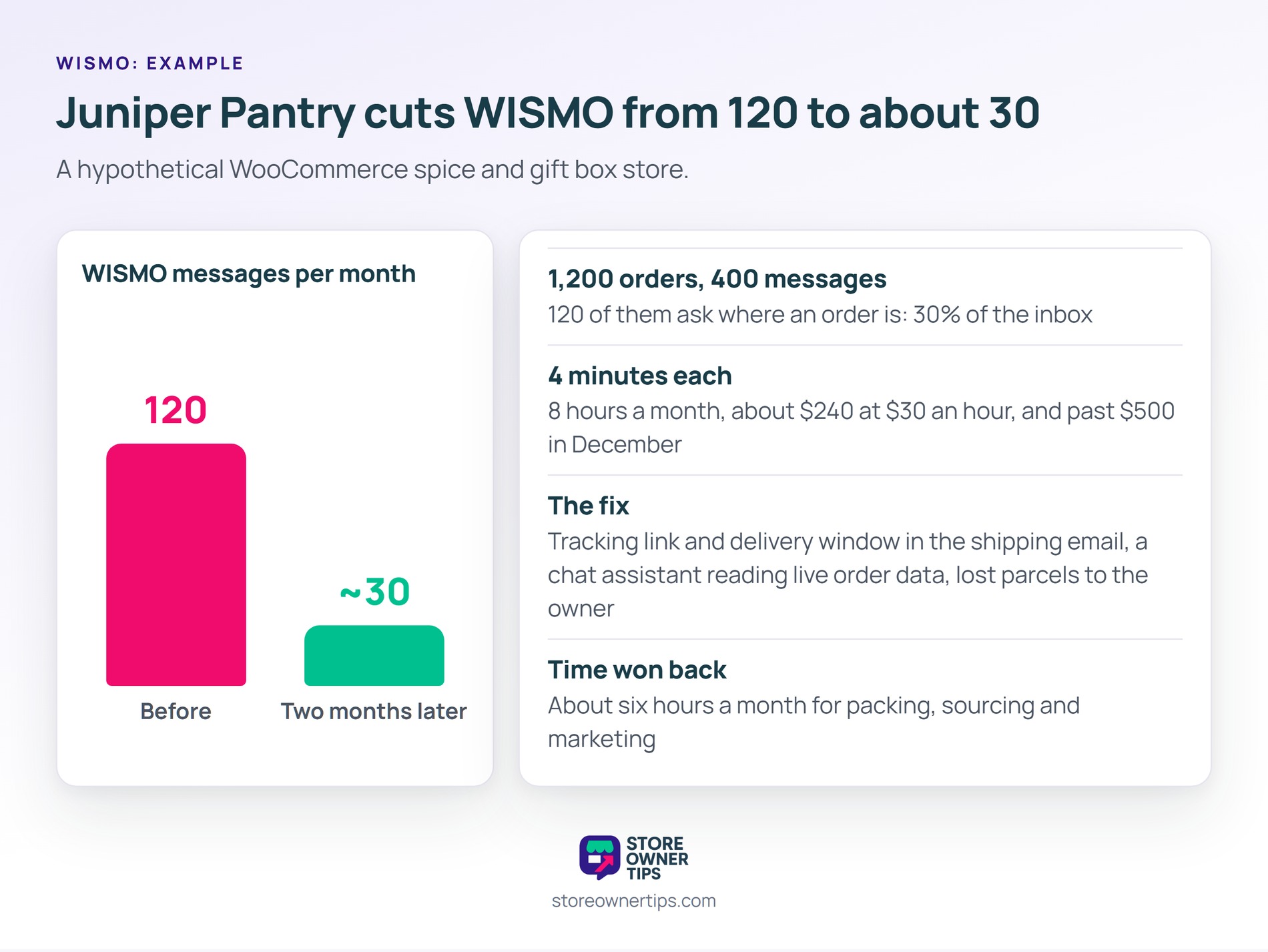
WISMO in practice looks like an inbox full of the same question in different words. Here’s a hypothetical example. Imagine a WooCommerce store called Juniper Pantry that sells specialty spices and gift boxes.
Juniper Pantry ships about 1,200 orders a month and gets roughly 400 support messages. The owner tags a month of messages and finds 120 of them ask where an order is. That’s 30% of the inbox, right in the typical range. Each one takes about four minutes to look up and answer.
So the owner spends eight hours a month on order status alone. Then the holiday rush hits, and orders double and WISMO messages climb past 250. Replies slow down, and customers write a second time asking why nobody answered.
Those second messages show up as a rising repeat contact rate. Valuing the owner’s time at $30 an hour, routine lookups cost $240 in a normal month. In December, that figure passes $500. Worse, a few frustrated customers leave poor reviews about “no communication.”
First, the owner rewrites the shipping confirmation email to include the tracking link and a delivery window. Next, a chat assistant that reads live order data answers status questions on the site. Lost or damaged parcels go straight to the owner with the conversation attached.
Within two months, WISMO messages reaching the owner drop from 120 to about 30. In turn, the owner wins back six hours a month for packing, sourcing, and marketing.
You reduce WISMO by answering the status question before customers ask it, then automating the replies that still come in. Start with these steps:
To track progress, measure your WISMO rate. Divide order-status contacts by total support contacts each month. Then compare that number before and after each change. If the rate falls while orders grow, your fixes are working.
Proactive steps cut WISMO, but some shoppers will still ask in chat. That’s where ticket deflection through automation helps most. A StoreAgent AI chatbot answers order-status questions from your live WooCommerce order data, any time of day. StoreAgent explains the full setup in its guide on cutting “where is my order” tickets.
That said, some cases still need a person, such as a parcel that’s truly a lost shipment. On paid plans, StoreAgent emails you the full chat history when a shopper asks for a human. That way, you pick up the conversation without asking the customer to repeat everything.
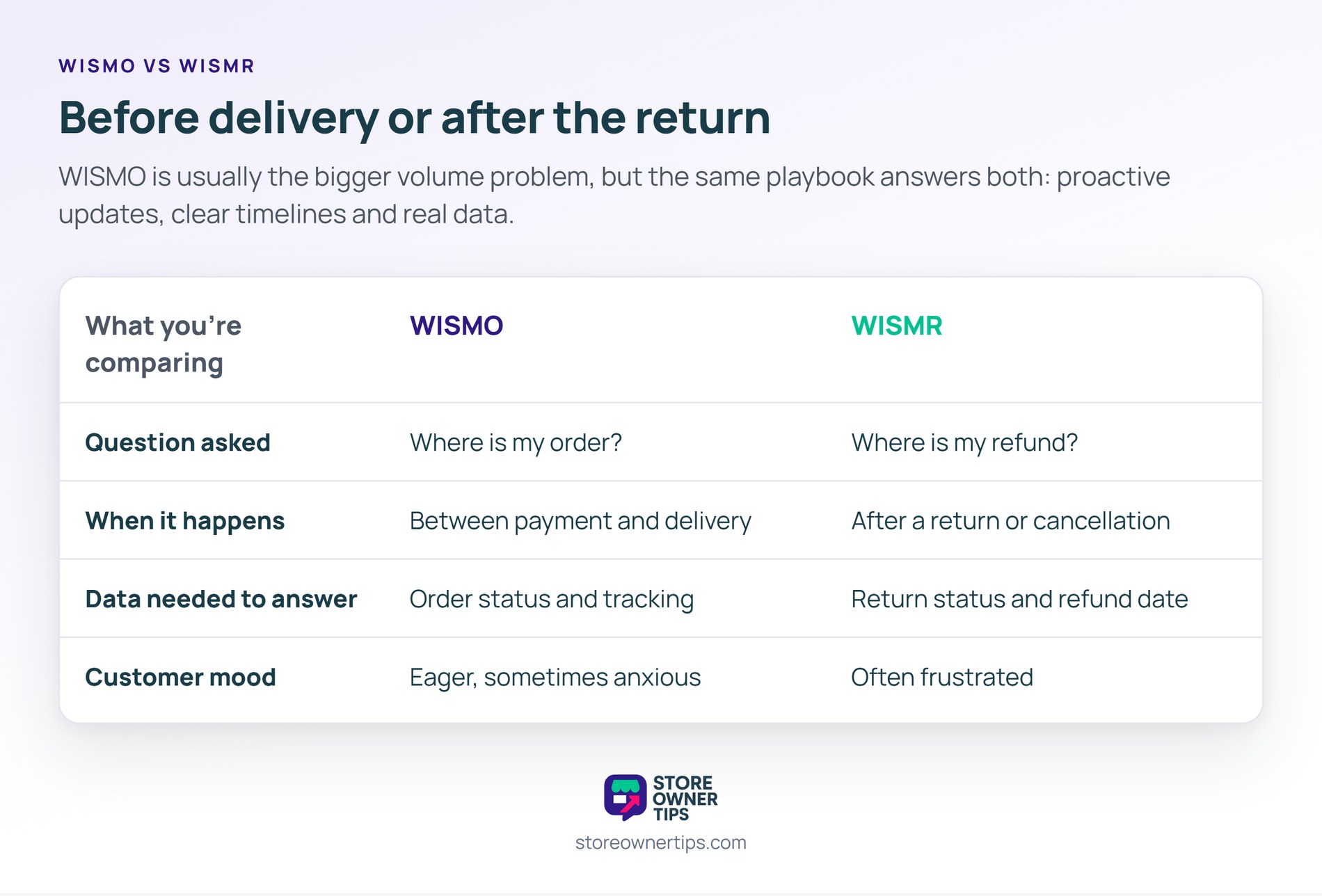
WISMO asks where an order is, while WISMR asks “where is my refund?” WISMO happens before delivery. By contrast, WISMR happens after a return or cancellation, when the customer waits for money back.
| What you’re comparing | WISMO | WISMR |
|---|---|---|
| Question asked | Where is my order? | Where is my refund? |
| When it happens | Between payment and delivery | After a return or cancellation |
| Data needed to answer | Order status and tracking | Return status and refund date |
| Customer mood | Eager, sometimes anxious | Often frustrated |
WISMO is usually the bigger volume problem, so most stores tackle it first. Even so, the same playbook works for refunds: proactive updates, clear timelines, and quick answers from real data.
WISMO stands for “where is my order.” Support teams use it as shorthand. It covers any contact about order status, shipping, or tracking. It’s often the largest single category of e-commerce support questions.
Send shipping emails with tracking links and clear delivery windows. Keep order statuses up to date so answers are accurate. Then let a chat assistant answer the remaining status questions from live order data.
Yes, if it can read your store’s real order data. A rule-based bot can only repeat your shipping policy. By contrast, a store-connected assistant can look up the actual order and report its status.
WISMO matters because it quietly consumes support time that should go to harder problems. A good post-purchase experience also shapes whether customers come back, and repeat customers drive long-term growth. Answering “where is my order” before it’s asked protects your time and your reputation.
Copyright © StoreOwnerTips.com. All Rights Reserved.
