Weekly ecommerce tips, deals & news.
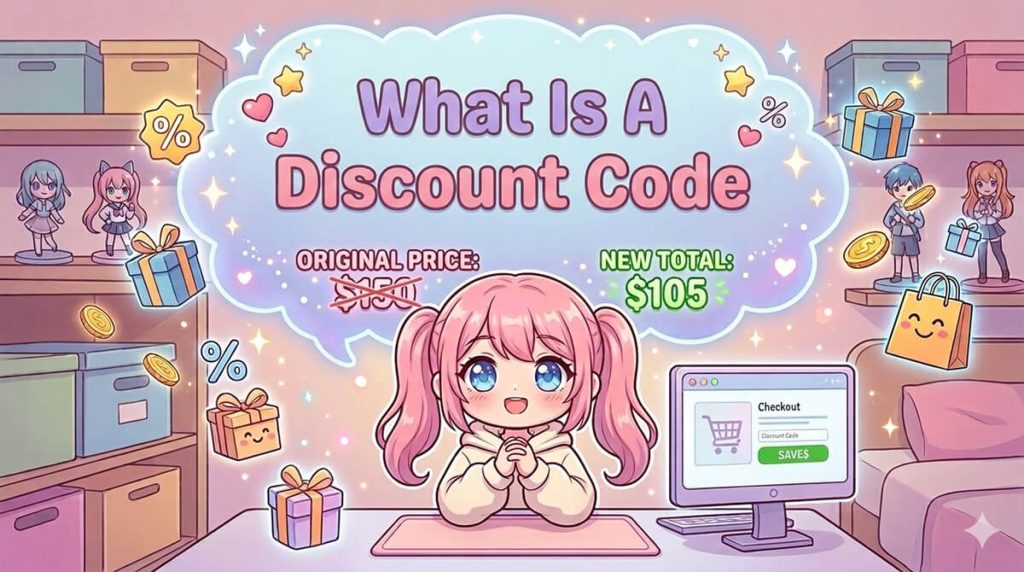
A discount code is a specific mix of letters and numbers that shoppers enter at checkout to reduce the cost of their online order. Businesses use these special deals to attract new buyers and boost overall sales. They are also often called promo codes or digital coupons.
While today’s codes are digital, the concept actually dates back to 1887 when Coca-Cola offered handwritten tickets for a free drink. This historic campaign changed marketing forever by proving that small rewards create massive product interest.
Today, online shoppers completely expect these deals. In fact, if a customer cannot find a discount code at checkout, they will often abandon their cart and leave the website without buying anything.
Store owners can use many types of promo codes. The type you choose changes your profit and how customers act.
A percentage discount lowers the price by a set amount, like 20% off. The savings go up as the customer spends more, allowing shoppers to save money on their entire cart. However, this can hurt profits on very large orders. To protect your earnings, you can put a “cap,” or limit, on the discount to stop the savings at a maximum dollar amount.
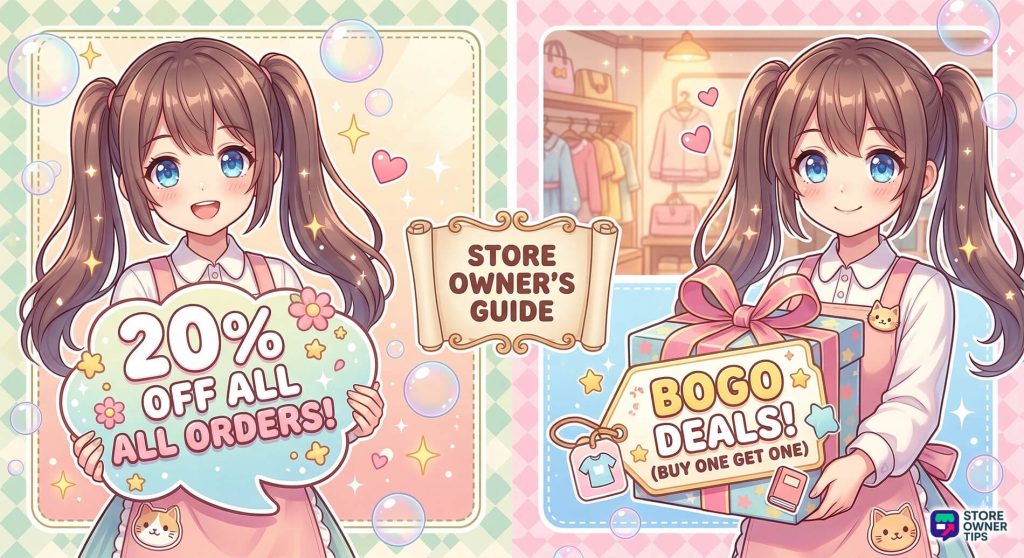
A fixed value discount takes a specific dollar amount off the price, no matter how big the order is. You can apply this to the whole cart or just one item. It is great for getting shoppers to spend more overall, but store owners usually require a minimum order amount to keep the sale profitable.
A BOGO code asks shoppers to buy a certain amount of items to get a reward. This moves inventory quickly and raises average order value because people buy more to get the deal. These deals can give the second item away for free, at a percentage off, or for a low fixed price.
Paying for delivery is a major reason why people leave their online shopping carts. A free shipping code removes this cost, which pushes buyers to finish the checkout process. You should require shoppers to spend a certain amount of money before the code works so the larger order size covers the delivery costs.
Cashback and store credit give shoppers digital money for later, which builds long-term loyalty. The buyer receives credit based on what they just spent. They must return to your store to use this balance, which encourages repeat visits and increases their total spending.
Discount codes work because of how the human brain processes information. Understanding this psychology can help you make more sales.
Here are three psychological phenomena that affect discount codes:
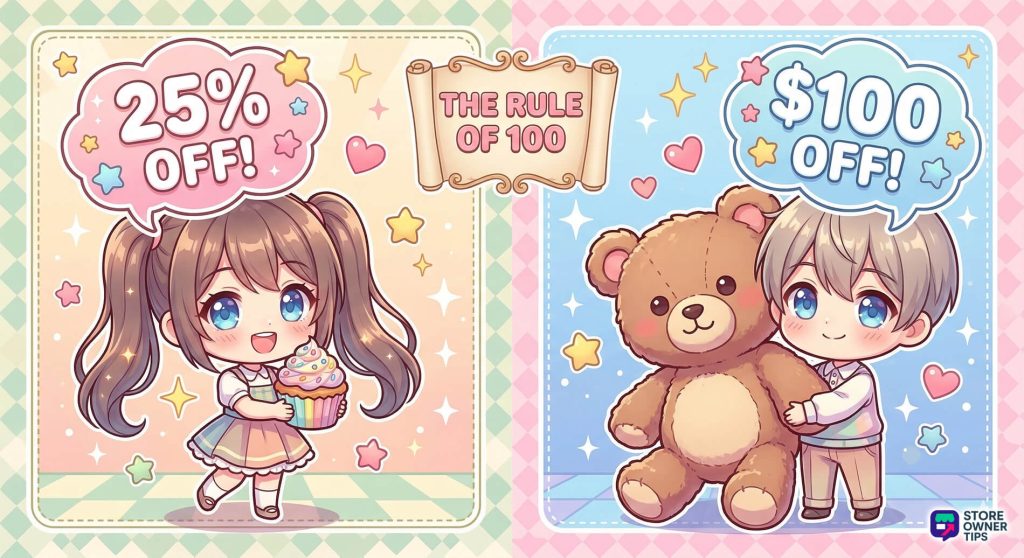
The “Rule of 100” explains how buyers see numbers. People usually prefer the offer with the biggest number. You should change how you present your discount based on the product’s original price.
Here is a quick guide:
Making a discount code limited makes it more effective. A strict expiration date creates a “fear of missing out” (FOMO). These time-limited offers force buyers to act immediately instead of waiting to compare prices.
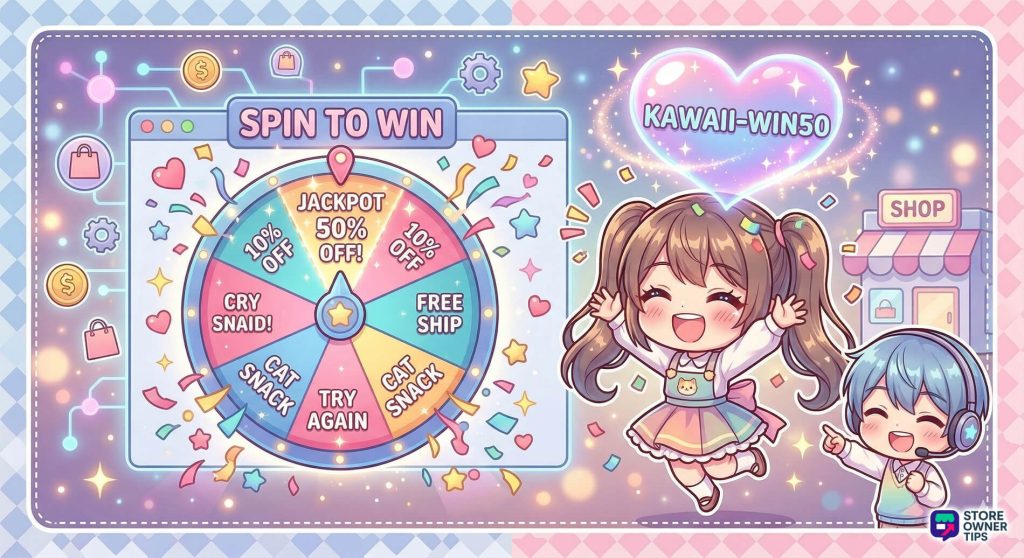
You can “gamify” discount codes to make getting them a fun game. Instead of just showing a code, many stores use digital “spin-to-win” wheels. When a customer spins and wins a code, they feel accomplished. Earning the reward makes them much more likely to actually use it at checkout.
You can use promo codes at different stages of the shopping journey to attract new visitors, save lost sales, and keep old buyers coming back.
Typically, it’s best to give out discount codes when you need to:
Offer a first-time discount code in exchange for a visitor’s email address. This lowers their financial risk and quickly turns casual browsers into paying customers.
If a shopper moves their mouse to leave your website without buying their cart items, show an “exit popup” with a sudden offer to convince them to stay. If they still leave, you can send an automated follow-up email with a personalized code to win back the sale.
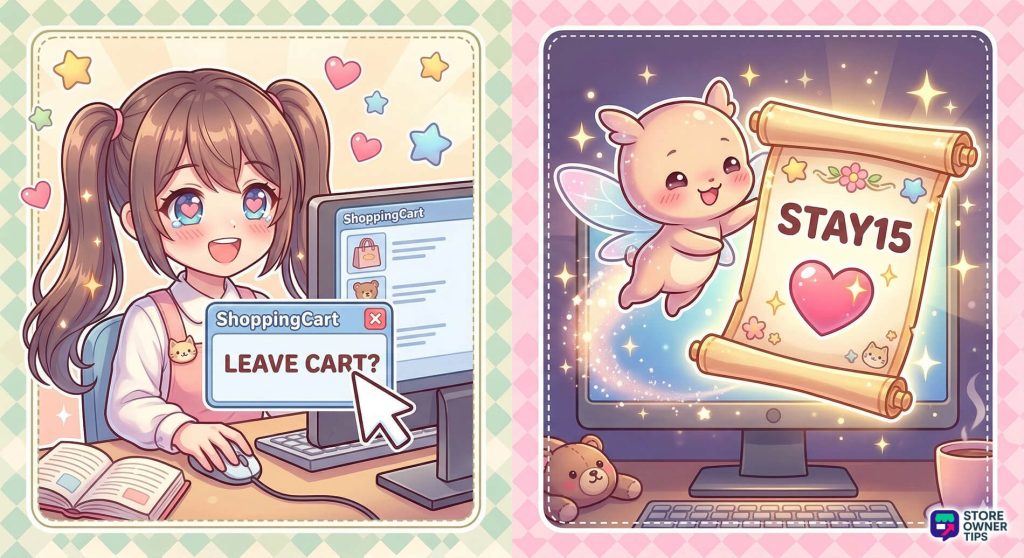
Send a “thank you” email after a purchase that includes a code for a related item. You can also re-engage people who haven’t bought anything in a long time by emailing them a larger, special discount.
A smooth, easy process makes buyers much more likely to finish their purchase.
Here are the major ways customers use discount codes:
Manual entry is the oldest way to use a discount code. It requires shoppers to type or paste the code into a checkout box. However, this often causes spelling mistakes and frustration, which can make buyers give up and leave.
A much better method uses a special web link that automatically applies the discount code directly to the shopping cart. The buyer never has to type anything at all.
Auto apply is the most advanced way to handle a discount code. It completely hides the coupon box. The online store checks the cart in real-time and automatically turns on the discount once the required rules are met. This pleasantly surprises the shopper and speeds up the checkout process.
Giving away discount codes can be risky. You need strict rules to protect your business from people abusing your offers.
A “static” code is a simple, shared word like WELCOME10. These are dangerous because they easily leak to public coupon websites. Browser extensions can also scrape the internet to find these codes and test them automatically at checkout. This gives discounts to shoppers who were originally willing to pay full price.
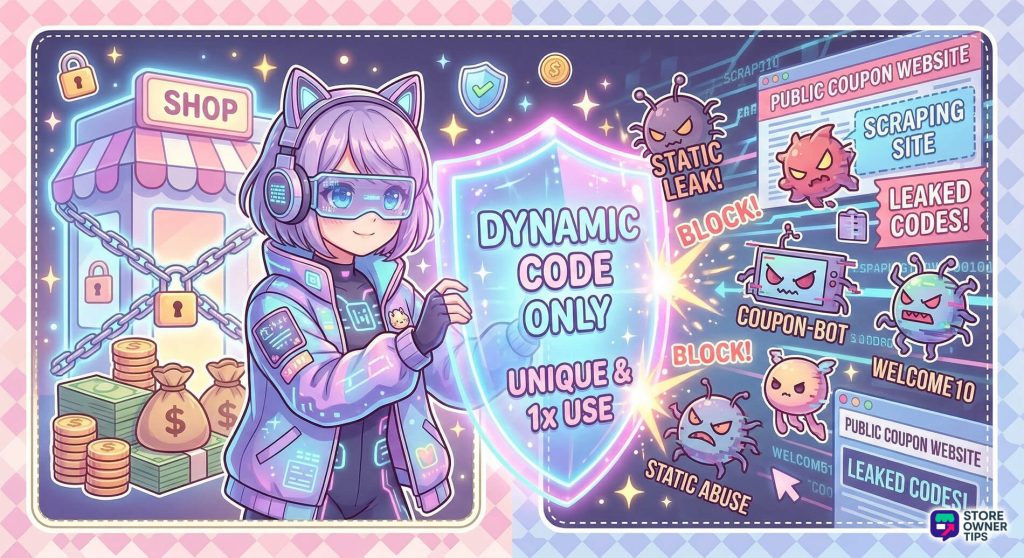
To stop coupon stealers, use “dynamic” codes. Your website creates a unique code that is locked to one specific email address. If this code leaks online, it is completely useless to anyone else. These unique codes can also self-destruct after a single use.
You should limit how many times a code can be used overall and restrict it to one use per customer. Finally, make sure to block codes from working on items that are already on sale.
Business-to-business (B2B) sales need a different approach because wholesale buyers order massive amounts and follow special tax rules.
The two main ways discount codes work for wholesale customers include:
Instead of typing a code every time, wholesale buyers get special store accounts. When an approved business logs in, the public prices disappear and are automatically replaced with their privately negotiated discount rates. This saves time and guarantees they get the exact right price.
Wholesale discounts usually depend on how many items are purchased. Store owners set up “tiers” that give bigger savings for larger orders.
For example, buying 1 to 49 items might give a 10% discount, while buying 50 or more items unlocks a 20% discount. Store owners set high minimum order amounts to make sure these deep discounts stay profitable.
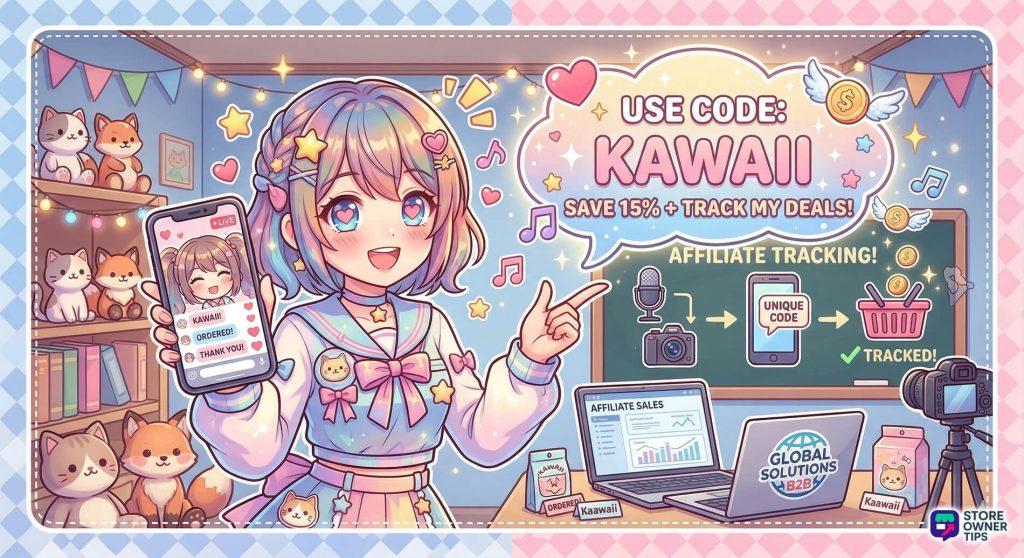
Many stores pay influencers to promote their products. Giving them unique promo codes is the best way to track exactly which influencer sent a buyer to your store.
Social media apps like Instagram and TikTok make it hard for users to click links. Instead, an influencer can simply say their special discount code out loud in a video.
Accurate tracking
When a fan types that code at checkout, they get a deal, and the influencer earns a commission. This tracking is perfectly accurate because it does not rely on someone clicking a web link.
You should never run a promotion without tracking the results. Tracking helps you understand exactly what your customers want.
Below are two of the most common ways to track the performance of your discount codes:
A basic store dashboard will not give you enough details. You need to connect your store to a powerful analytics tool to see exactly where your coupon users are coming from.
This data tells you if a specific code is actually growing your business or just eating into your profits. You can then use this information to plan smarter sales in the future.
A well-timed promo code does much more than just lower a price. It is a powerful tool to win new customers, save abandoned carts, and build long-term loyalty. By understanding how different offers work, you can run highly profitable promotions. Just remember to always protect your profits with secure codes and track your results carefully.
Related concepts to explore next: To get the most out of discount codes, it helps to understand these connected terms:
Ready to get started? Try adding an advanced coupon tool to your WooCommerce store to see how it improves customer engagement and helps turn casual browsers into loyal buyers.
Copyright © StoreOwnerTips.com. All Rights Reserved.
