Weekly ecommerce tips, deals & news.
In e-commerce, a curation reward is a specific payout or perk given to a shopper who organizes and shares a collection of your products. Think of it like a finder’s fee. When someone builds a custom digital wishlist and a follower buys from that list, your store’s software tracks the sale. You then reward the list-maker with cash, points, or store credit for acting as your personal, independent matchmaker.

To really get how this works, think about a traditional fine art gallery. An artist paints a picture, but there’s simply too much art in the world for a buyer to look at everything. The gallery curator does the hard work. They pick the best paintings, put them in a beautiful room, and present them to buyers. The curator adds value by filtering out the noise. In the digital world, a curation reward is the exact same thing. It’s the digital commission paid to a user who guides a shopper to make a purchase.
Historically, this idea started on early blockchain networks. Systems like Steemit would automatically hand out digital tokens from a daily reward pool to users who found and shared great posts before they went viral. It was called a “Proof-of-Brain” system. The goal was to reward real human intelligence for finding good things, rather than relying on a big corporate algorithm.
Today, this concept has moved into everyday online stores. When a shopper builds a “shoppable gallery” of matching clothes on your site, they act as an independent worker for your brand. If someone buys from their list, your store gives them a cut of the sale.

Running a curation reward program requires some smart software under the hood of your store. It works in four simple steps:
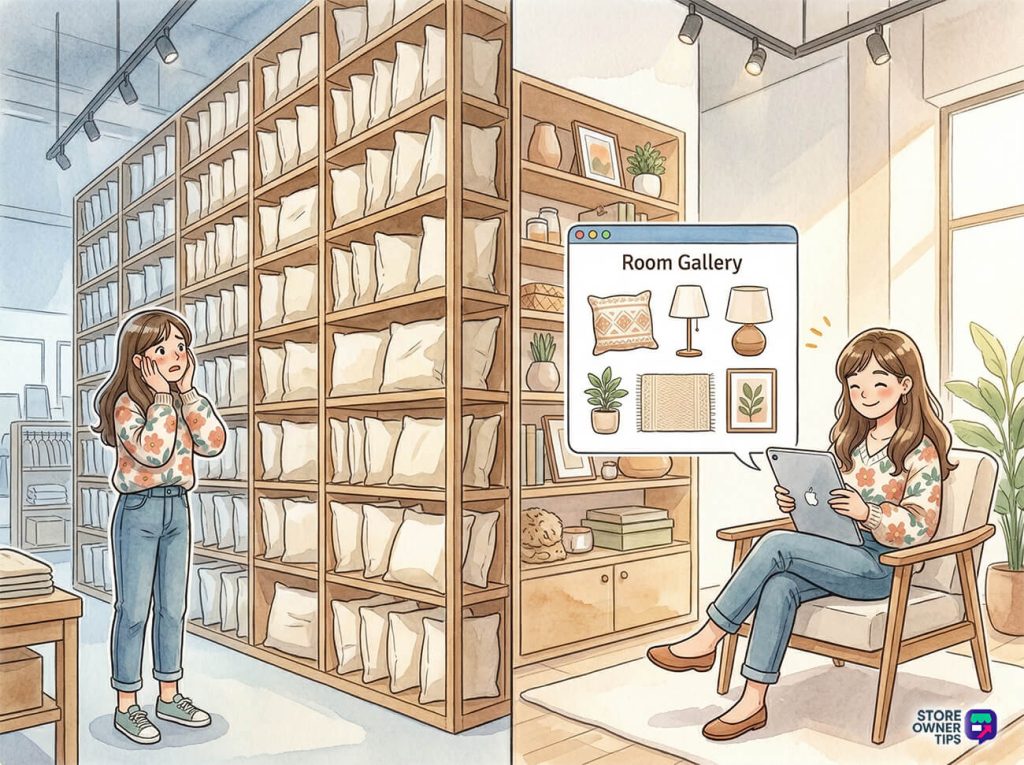
Curation rewards work because they trigger very specific human behaviors. For the buyer, it solves the Paradox of Choice. A famous psychologist named Barry Schwartz figured out that having too many options gives people anxiety. If your store has thousands of items, buyers freeze up and leave. A curated list removes this stress. The curator makes the hard choices, so the buyer can just relax and check out.
For the curator, the psychology is even stronger. Building a list triggers the Endowment Effect. When someone spends time picking and organizing your items, they feel a sense of ownership over them. They value your products more simply because they put effort into arranging them.
Once they earn a few points or a small cash reward, the Sunk Cost Fallacy kicks in. Their brain wants to maximize the reward they started earning. They will promote your brand harder, or even buy things themselves, just to hit the next VIP tier. Because they never know exactly when a follower might buy something, it creates an addictive, exciting game that keeps them hooked on your store.
To see how powerful this is, let’s look at a realistic scenario with a hypothetical online furniture store called Aura Decor.
The Problem: Aura Decor sold home goods and had a standard conversion rate of just 1.3%. This is normal for furniture, but it wasn’t great. They also had a terrible cart abandonment rate of 78%. When they looked at their data, they found a huge problem. People would click an ad for a pillow, land on a page with 400 different pillows, get totally overwhelmed, and leave the site. The sheer amount of choice was killing their sales.

The Fix: Aura Decor decided to launch a decentralized curation program. They created a “Tastemaker Portal” on their site. This allowed amateur interior designers with small social media followings (around 5,000 to 50,000 followers) to build customized “Room Galleries.” For example, a designer could build a page called “The Ultimate Mid-Century Modern Living Room Bundle.” Aura Decor offered the designer a 12% cash commission for any sales, and gave the buyer a 5% discount code baked right into the link.
The Amazing Results: The impact on the store’s math was massive. First, the quality of people visiting the site improved. Instead of random clicks, they got warm leads sent by trusted designers.
Because the designers removed the stress of choosing from 400 pillows, the “Add-to-Cart” rate on these special pages jumped from a sad 4.0% to an incredible 9.2%.
Overall, the entire store’s conversion rate climbed from 1.3% up to 3.4%. This is a massive 161% relative increase! Even though Aura Decor had to give up 12% of their profit margin to pay the designers, the massive spike in actual sales more than made up for it. They spent less on Google and Facebook ads and made far more money overall.

Many store owners confuse human curation with AI product recommendations. They’re very different tools.
If you’re thinking about adding this to your store, you need to weigh the good and the bad.
The Pros:
The Cons:
This is a math rule designed to reward people who spot trends early. If a curator uses their voting power to add a product to a list right when it launches, they get the biggest piece of the pie. If they wait until the item is already famous and selling out, their reward shrinks. It forces curators to act like trend-spotters. They only get the big payouts if they find and share cool items before the general public catches on.
Yes, absolutely. While it’s sometimes hard to track every single click perfectly, the data shows that human-curated lists act as a “soft trust signal.” They remove a buyer’s fear of picking the wrong color or buying things that don’t match. Because of this added trust, traffic coming from curated lists usually converts at a very high rate of about 5.4%.
Having too many choices online makes shoppers freeze up and leave. When you use curation rewards, you’re paying real people to organize the mess and help buyers click “checkout.” Giving up a small slice of your profit might hurt at first, but you’ll make it back with way more sales and super loyal fans. In the end, the winning stores won’t just have the most items—they’ll have a happy, well-paid team of everyday shoppers making buying easy.
Copyright © StoreOwnerTips.com. All Rights Reserved.
