Weekly ecommerce tips, deals & news.
Sell-through rate is the percentage of your stock that sells within a set period. You compare units sold against units you received. A high rate means a product is flying off the shelf. A low one warns that stock is sitting and tying up cash.
Sell-through rate measures how fast a product sells. It compares what you sold to what you stocked. The result is a clear percentage for a set window.
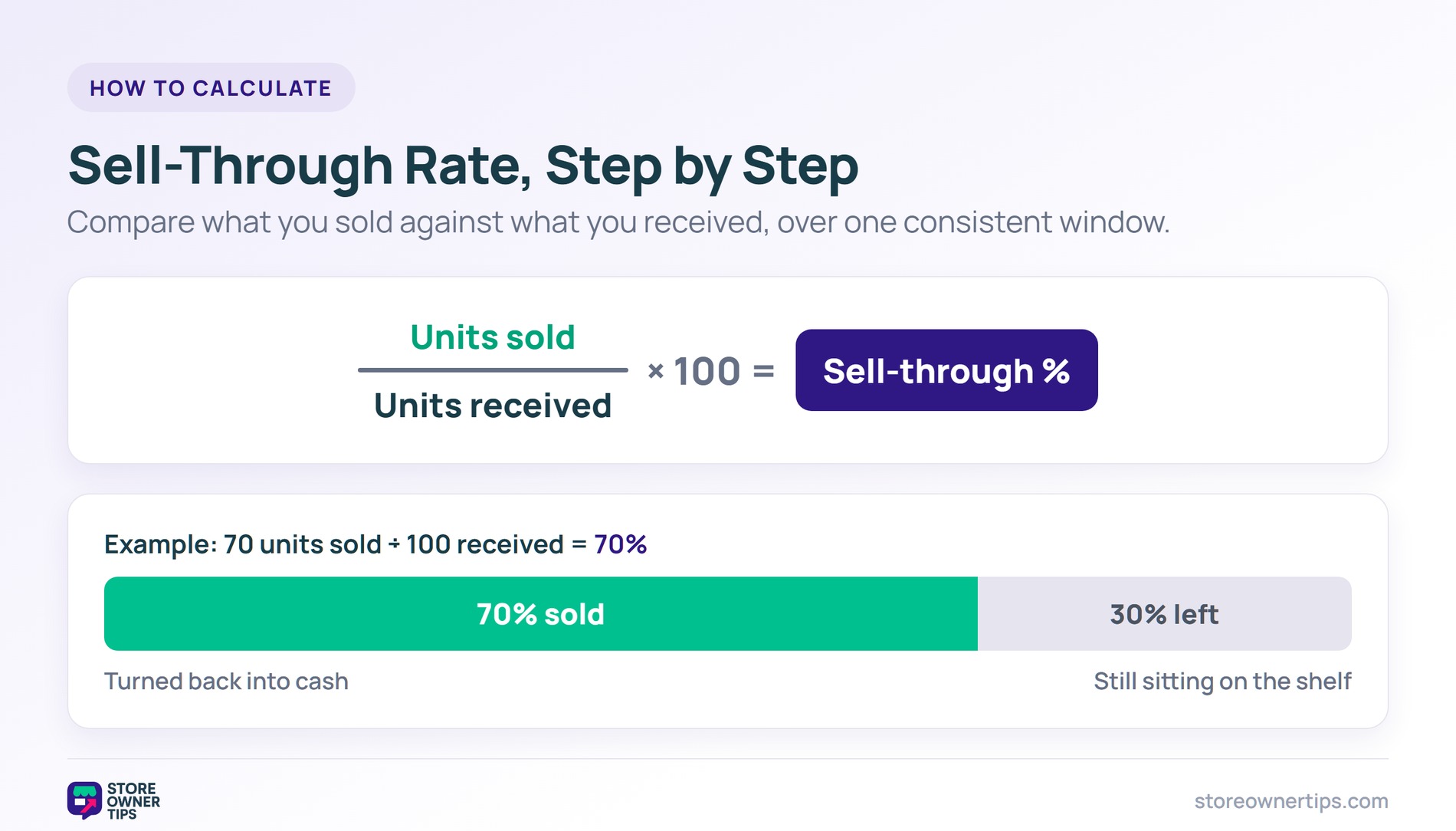
Think of it as a report card for each product. A high grade means buyers love it. A low grade means it is gathering dust.
Most stores measure it monthly. A month is long enough to spot a trend. It is also short enough to act quickly.
The metric works for any time window. Weekly, monthly, or per-season all work. Just match the window to your buying cycle.
The formula is refreshingly simple. Divide units sold by units received. Then multiply by 100 for a percentage.
Say you received 100 units and sold 70. Your sell-through rate is 70%. The other 30 units remain on the shelf.
Always use the same window for both numbers. Mixing timeframes muddies the result. Consistency keeps the metric trustworthy.
On WooCommerce, your reports hold the raw numbers. Sales data shows units sold per product. Your stock records show what you received.
You divide one by the other to get the rate. A good WooCommerce inventory management setup can export both figures for easy math. That turns scattered data into a clear number.
WooCommerce and Shopify both track sales and stock. From there, the calculation is the same. The platform just feeds you the inputs.
There is no single magic number for sell-through. A healthy rate depends on your industry and goals. Fashion, food, and furniture all differ widely.
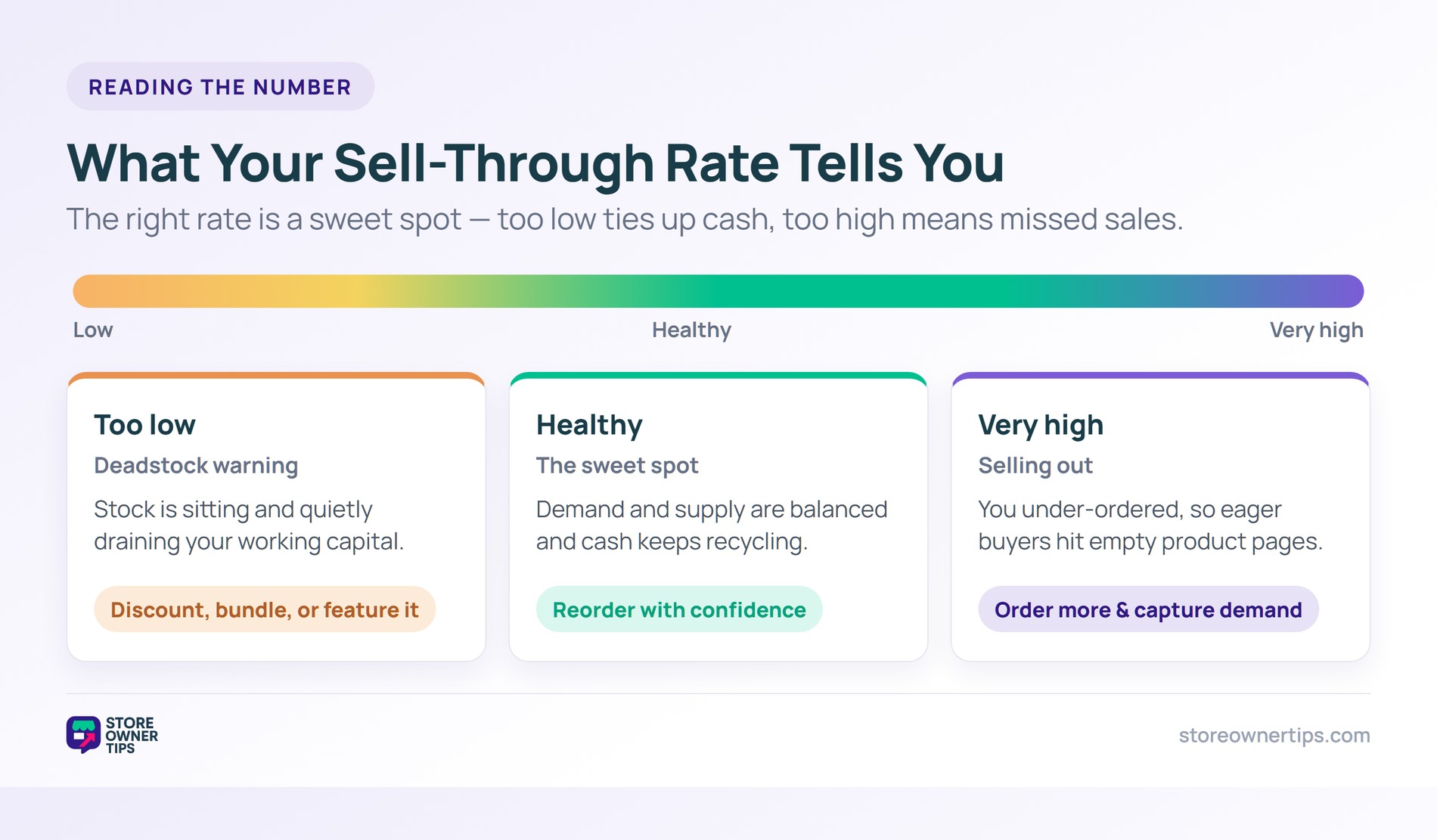
As a rough guide, many stores aim for the higher end each month. A very low rate signals slow stock. A near-total rate may mean you under-ordered.
The trend matters more than any single figure. A rising rate shows growing demand. A falling one is an early warning.
Benchmark against your own past, not just others. Your history is the most honest yardstick. Beat last season, and you are improving.
Sell-through rate is a window into your cash. Slow stock ties up money you could use elsewhere. A low rate quietly drains your working capital.
That drag hits your thin margins hard. General retailers average a net margin of just 5.61%. Deadstock with a low rate can erase that slim profit.
A sky-high rate carries its own warning. Selling out too fast means missed sales. Those stockouts push buyers toward the 70.22% who abandon.
When a hot item does sell out, capture the demand. A back-in-stock notification re-engages eager buyers. That turns a high-rate stockout into a future sale.
The rate turns guesswork into smart action. A high rate says reorder, and maybe order more. A low rate says pause and rethink.
Low sell-through calls for a nudge. A discount or a feature can move slow stock. That frees cash trapped on the shelf.
High sell-through guides smarter buying. You can scale up your bestsellers with confidence. The data backs every order you place.
Tie the rate to your reorder points too. A rising rate may mean raising the trigger. The two metrics work hand in hand.
Share the rate with your buying team too. One clear number aligns everyone. Decisions get faster and less emotional.
Sell-through is really a cash-flow signal. Fast-selling stock turns back into money quickly. Slow stock keeps that money locked away.
A high rate means your cash recycles often. You reinvest sooner in more bestsellers. That cycle fuels healthy growth.
A low rate stalls that cycle. Cash sits frozen in unsold goods. Spotting it early frees money to move.
Pricey items make this even sharper. A slow, costly product locks up the most cash. So watch their rate the closest.
A low rate is a problem you can fix. Start by checking the price and the photos. Small tweaks often revive a slow seller.
A discount or bundle can clear stuck stock. Featuring the item adds fresh visibility. Sometimes it just needed a spotlight.
Bundling slow stock with a hit also works. The popular item carries the slow one. Both move, and your shelf clears.
If nothing works, cut your losses. Mark it down hard and move the cash on. A clean shelf beats a pretty but dead one.
Seasons swing sell-through hard. A coat soars in winter and stalls in summer. So judge each item against its own season.
Compare this season to the last one. A drop versus last year is a real warning. A rise signals a growing trend.
Plan buys around those seasonal curves. Stock up before the peak, then taper. The rate tells you when each window opens.
Selling in many places splits your sell-through. A style may fly online but stall in a shop. So track the rate per channel, not just overall.
A blended number can hide a weak spot. One slow channel drags the average down. Channel-level data shows where to act.
The first mistake is judging one number alone. A single month can mislead you. Watch the trend across several periods.
Another trap is ignoring returns. Retailers expect 16.9% of sales to come back each year. Returned units rejoin stock and skew a naive rate.
A third slip is using mismatched timeframes. Sold and received counts must cover the same window. Otherwise the percentage means little.
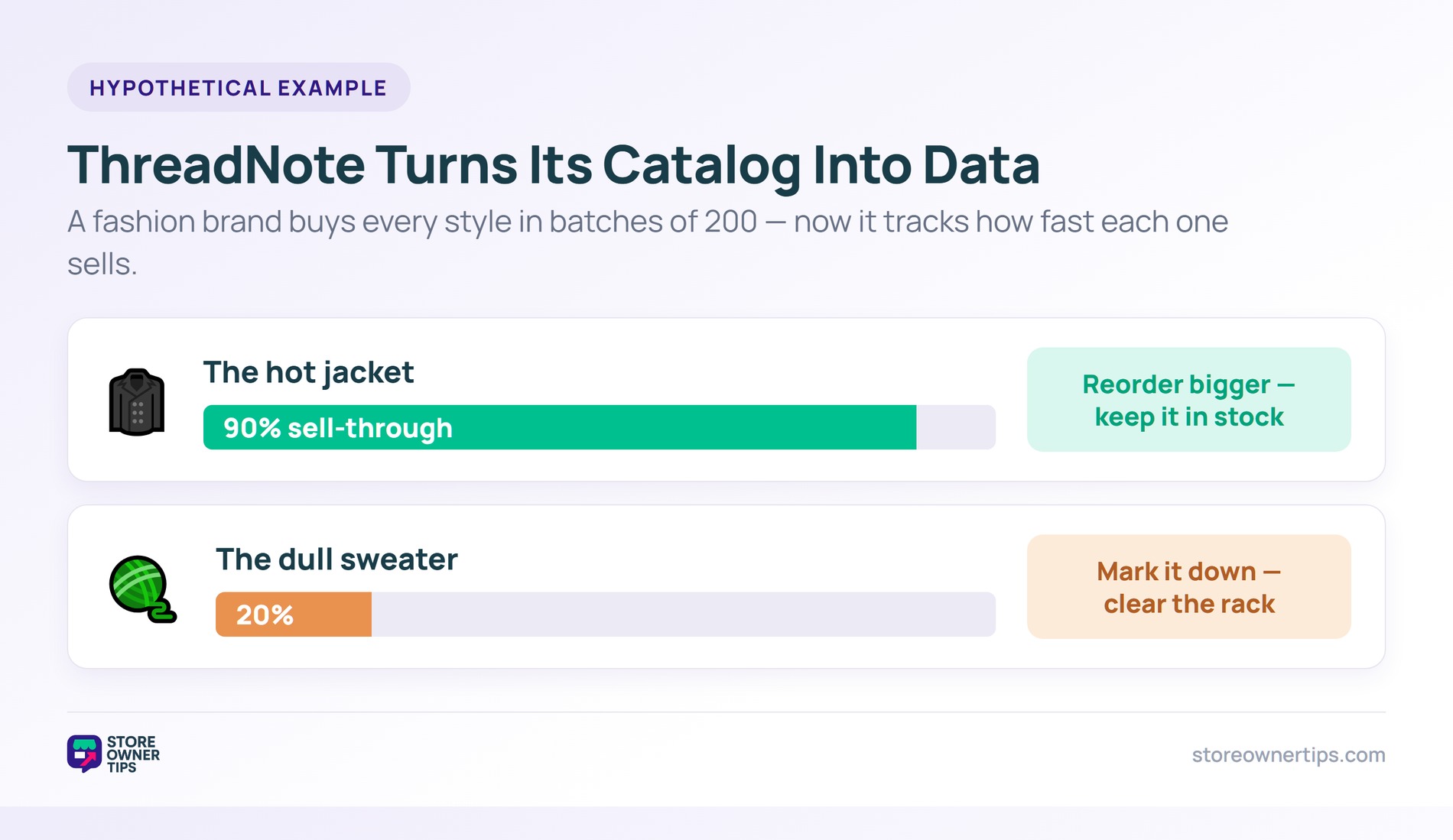
Imagine a fashion brand called ThreadNote on WooCommerce. It buys each new style in batches of 200. But it never tracks how fast each style sells.
ThreadNote reorders styles purely on gut feel. Some bestsellers sell out and miss sales. Other styles sit untouched for months.
Cash gets stuck in slow, unsold racks. The owner cannot tell the hits from the duds. Every buying decision is a guess.
ThreadNote also overbuys styles that flop. Each dud batch of 200 ties up real cash. The misses quietly outweigh the hits.
ThreadNote starts tracking sell-through by style. A hot jacket shows a 90% rate in a month. A dull sweater limps along at 20%.
Now the numbers guide every move. The jacket gets a bigger reorder. The sweater gets a markdown to clear the rack.
Cash unfreezes as slow styles sell down. Bestsellers stay in stock and keep earning. Buying turns from a gamble into a plan.
ThreadNote also watches its cart abandonment on sold-out styles. A bigger reorder keeps hot styles live. The lesson is clear: sell-through turns the catalog into data.
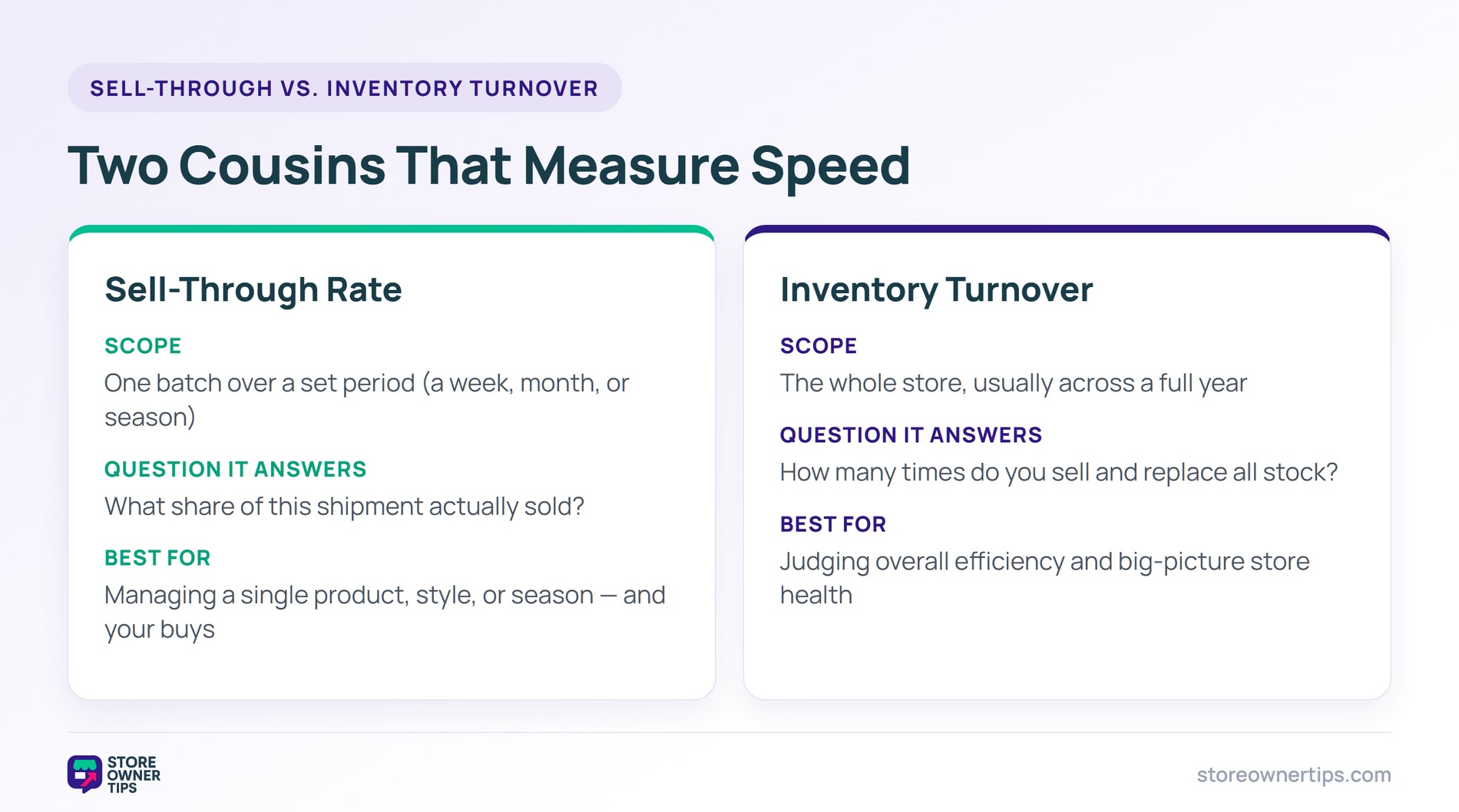
Sell-through rate and inventory turnover are close cousins. Both measure how fast stock moves. But they frame the question differently.
Sell-through rate looks at one batch over a period. It asks what share of a shipment sold. It is great for judging a single product or season.
Inventory turnover looks at the whole store over a year. It counts how many times you sell and replace all stock. It is a big-picture efficiency measure.
Use sell-through to manage products and buys. Use turnover to judge overall health. Together they give a full view of your stock.
It varies by industry, so there is no single target. Many stores aim for a strong monthly figure. Compare it against your own past results.
Sell-through tracks one batch over a set period. Turnover counts how often all stock cycles in a year. One is product-level, the other store-wide.
Monthly works well for most stores. It is frequent enough to act on trends. Fast-moving niches may check it weekly.
Sell-through rate reveals how fast each product turns into cash. It separates your true winners from the deadstock dragging you down. Track it by product, watch the trend, and let it steer every buying and markdown decision. Watch it monthly, and your catalog steers itself.
Copyright © StoreOwnerTips.com. All Rights Reserved.
