Weekly ecommerce tips, deals & news.
A drip campaign is a series of automated emails sent on a schedule or triggered by a customer’s actions. The messages drip out over time, one after another, instead of arriving all at once. Each email nudges the subscriber a little further toward a goal. It is a hands-off way to nurture leads and keep customers engaged.
A drip campaign delivers emails in a planned drip, not a flood. Each message arrives at a set point in time. Together they form a guided path for the subscriber.
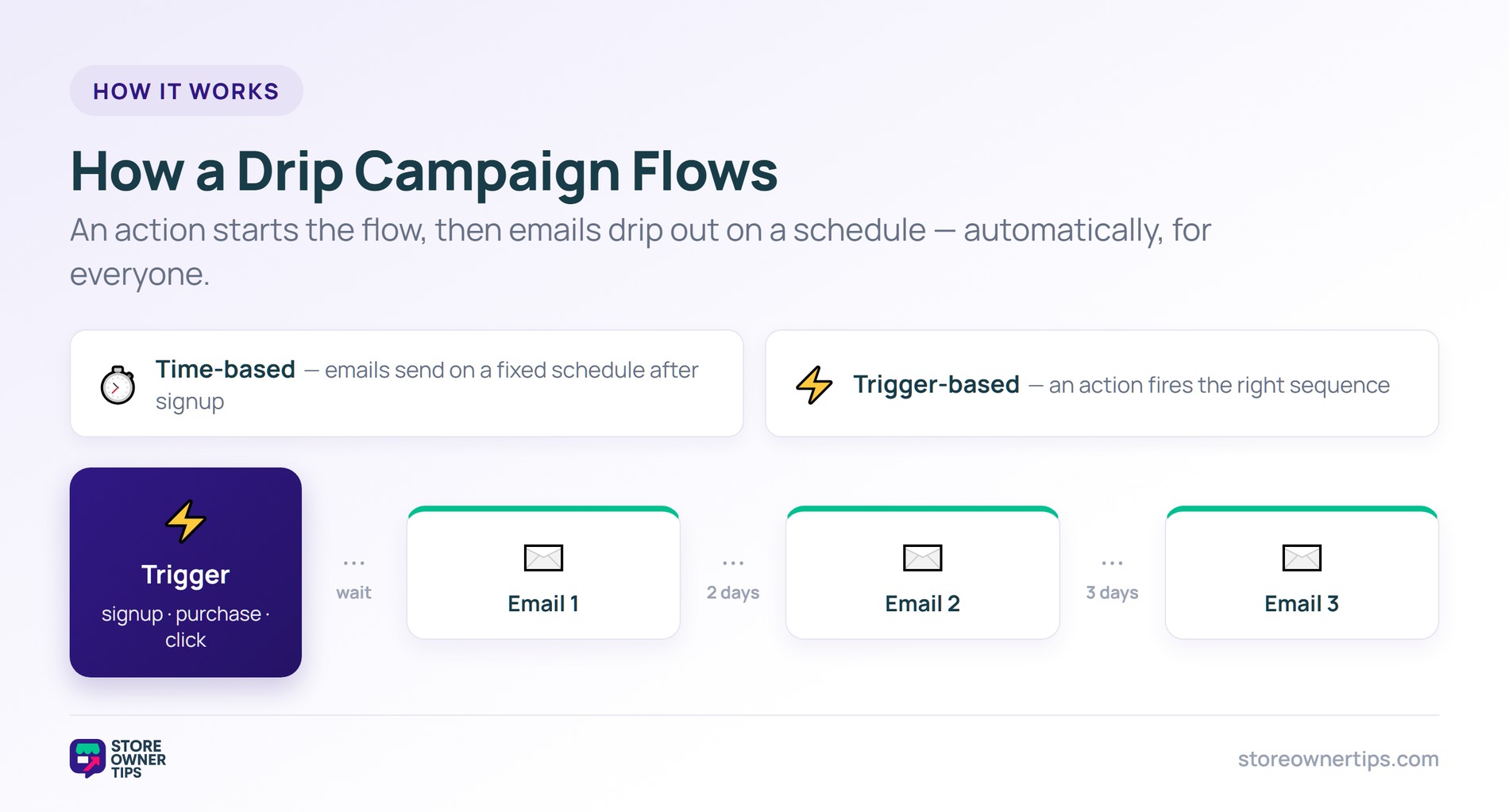
Think of it like a slow, steady IV drip. The content arrives in small, timely doses. That beats dumping everything in one overwhelming message.
The whole flow runs automatically once built. You write the emails and set the rules once. After that, it works for every subscriber on its own.
The word drip captures the gentle pace. Content arrives steadily, never in a rush. That rhythm keeps subscribers comfortable.
Drip campaigns run in two main ways. Time-based drips send on a fixed schedule after signup. Trigger-based drips fire when a subscriber takes an action.
A trigger might be a signup, a purchase, or a click. The action drops the person into the right sequence. From there, the emails flow on their own.
This makes the campaign feel relevant and timely. Each email matches where the subscriber is. That focus is the heart of targeted email marketing.
Branches make drips smarter still. A subscriber’s action can route them onward. The flow adapts to each person’s path.
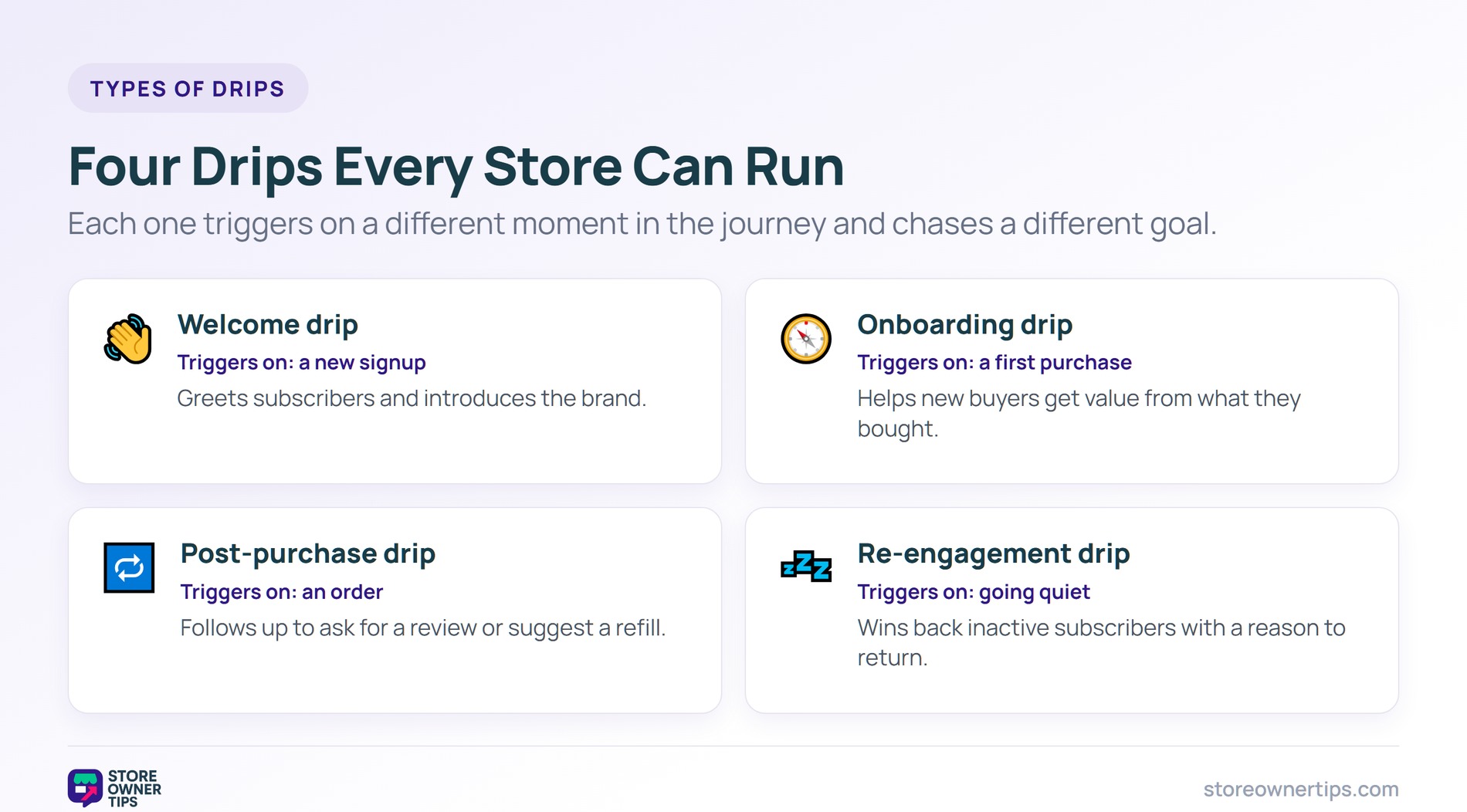
Stores run several common drip types. A welcome drip greets new subscribers and introduces the brand. An onboarding drip helps new buyers use what they bought.
A re-engagement drip wins back quiet subscribers. It reminds inactive people why they joined. A win-back offer often does the trick.
A post-purchase drip follows up after a sale. It can ask for a review or suggest a refill. Each type targets a different moment in the journey.
Pick the drip types that fit your store. A small shop may run just two. A larger one can layer many flows.
Drip campaigns turn one-time effort into ongoing results. You build the flow once and it runs forever. Every new subscriber gets the full sequence.
The payoff is strong because email pays well. It returns about $36 for every $1 spent. A drip spreads that value across many touches.
Relevance is the secret weapon. A timely, fitting email gets read and acted on. The average open rate sits near 35.63%, and a relevant drip can beat it.
Drips also free your time for strategy. The routine sending runs itself. The result is steady sales with little daily effort.
Start with one clear goal for the campaign. Maybe it is a first sale, a review, or a win-back. The goal shapes every email in the flow.
Map the steps a subscriber should take. Then write one email for each step. Each message should move them one notch forward.
Set the timing and the triggers next. Decide what starts the drip and how long between emails. Then turn it on and let it run.
Write each email to stand alone too. Some readers skip a message. Each one should still make sense on its own.
A drip campaign is a powerful retention tool. It keeps your brand in front of customers over time. That steady contact brings buyers back.
Retention is where the profit hides. Acquiring a new customer costs five to 25 times more than keeping one. A good drip nurtures the customers you already have.
It pairs naturally with a loyalty program. A drip can reward, remind, and re-engage members. Together they turn buyers into regulars.
The best drips feel one-to-one. They use the subscriber’s name and behavior. Generic content breaks the personal spell.
Branch the flow on what people do. A click on one product can trigger a tailored path. Reading customer intent guides the branches.
Dynamic content takes it further. The same email can show different products per reader. Relevance like that lifts every metric.
Personal does not mean creepy. Use what helps the subscriber, not everything you know. Helpful beats intrusive every time.
Track each email and the flow overall. Watch opens, clicks, and the final goal. Those numbers show where people drop off.
Find the weak link in the chain. One email with low clicks drags the whole flow. Rewrite or re-time that step.
Test changes one at a time. Try a new subject, offer, or delay. Keep what lifts the end goal.
The first mistake is sending too often. A daily drip quickly feels like a flood. Space the emails to respect the inbox.
Another trap is no clear goal. A drip with no purpose wanders and bores. Anchor every email to one outcome.
A third slip is setting and forgetting forever. Even automated flows need a check-up. Review the results and refresh the content.
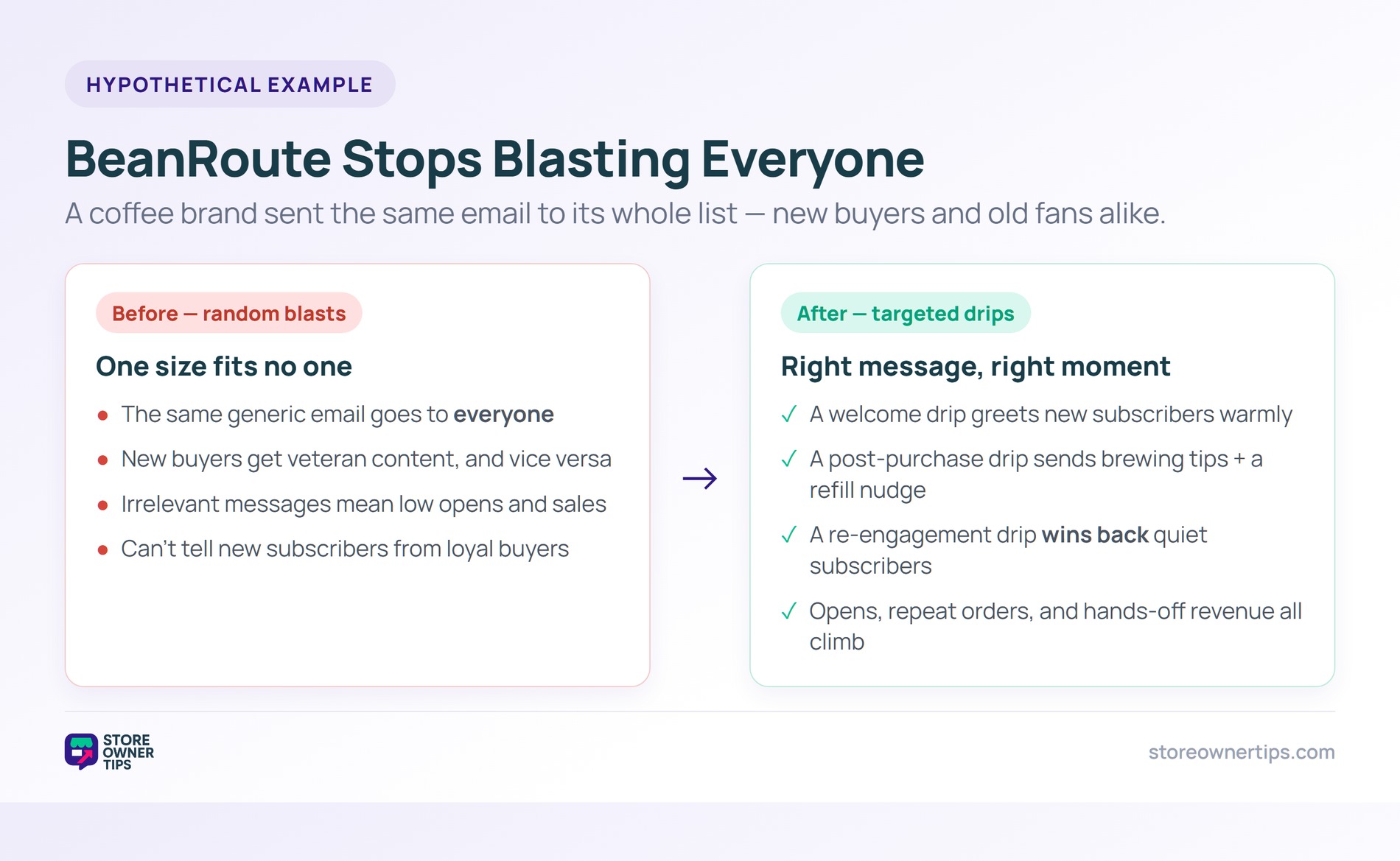
Imagine a coffee brand called BeanRoute on WooCommerce. It blasts the same email to everyone at random. New buyers and old fans all get the same message.
The generic blasts feel irrelevant to most readers. New buyers get veteran content, and vice versa. Opens and sales from email stay low.
BeanRoute also cannot tell new from loyal buyers. Everyone gets the same generic note. The mismatch shows in flat sales.
BeanRoute builds targeted drip campaigns by stage. A welcome drip greets new subscribers warmly. A post-purchase drip follows up with brewing tips and a refill nudge.
Each drip triggers on the right action. The emails now match where the buyer is. The flows run automatically for everyone.
Opens and clicks climb as relevance improves. Post-purchase drips spark repeat orders. Email becomes a reliable, hands-off revenue stream.
BeanRoute also wins back quiet subscribers with a re-engagement drip. It tests each drip’s timing for more opens. The flows keep improving over time.
The list stays active and profitable. Email now runs as a steady growth engine. The lesson is clear: the right drip beats a random blast.
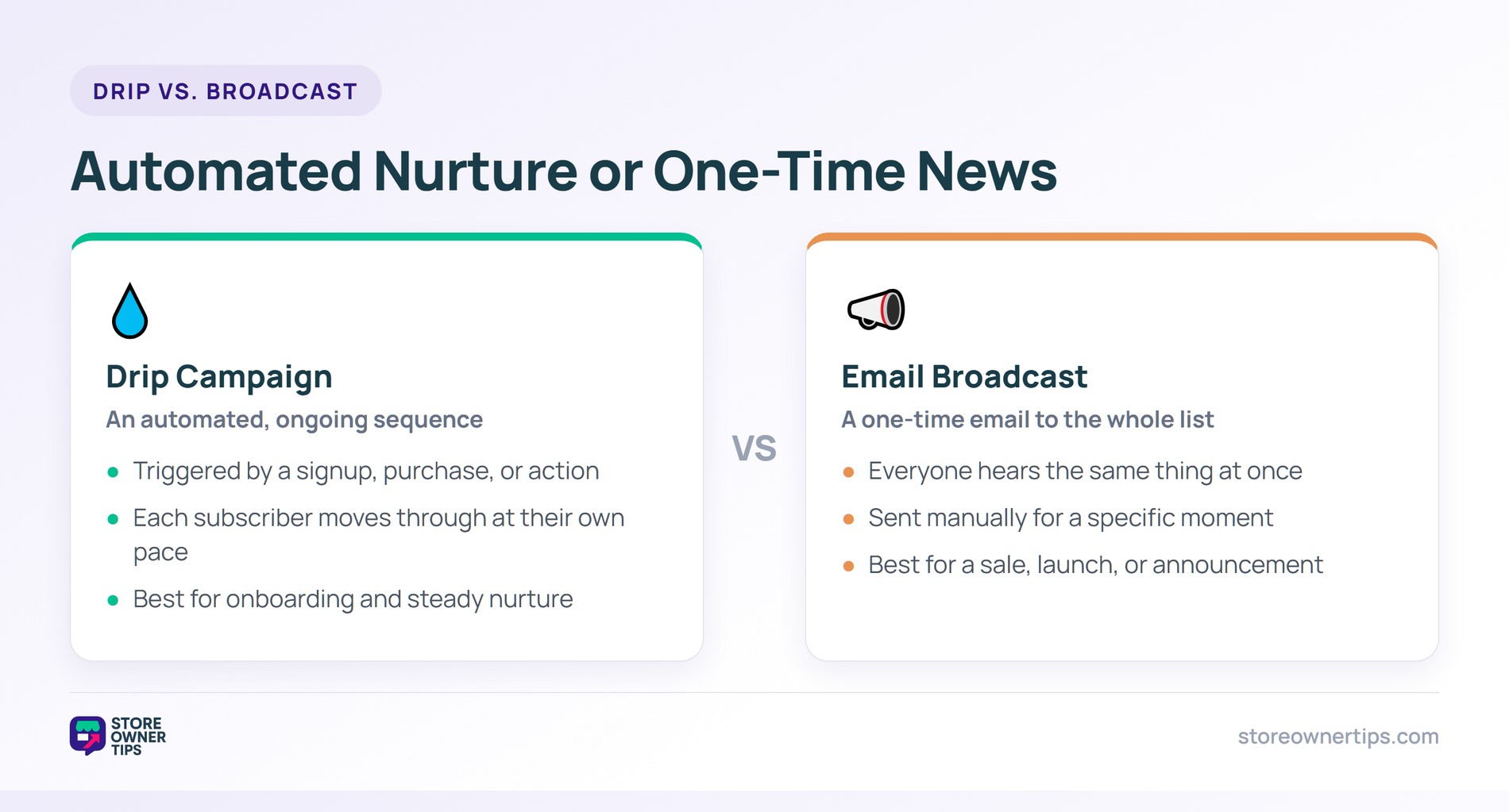
A drip campaign and a broadcast serve different jobs. A drip is an automated, ongoing sequence. A broadcast is a one-time email to your whole list.
Broadcasts suit timely, one-off news. A sale, a launch, or an announcement fits a blast. Everyone hears the same thing at once.
Drips suit ongoing nurture and onboarding. They send the right message at the right moment. Each subscriber moves through at their own pace.
Most stores use both together. Broadcasts handle the news of the day. Drips handle the steady, automated nurture.
A drip campaign is an automated, triggered sequence. A newsletter is a regular broadcast to your whole list. Use a drip to nurture, a newsletter to update.
It depends on the goal, so let that guide you. A simple welcome drip may be three emails. A longer nurture flow can run many more.
The first build takes some planning and writing. After that, the flow runs on its own. Start with one simple flow, then expand.
A drip campaign is an automated email sequence that nurtures subscribers over time. It delivers the right message at the right moment, all on autopilot. Build each drip around a clear goal, and it turns one-time effort into a lasting engine for sales and loyalty. Automate the nurture, and growth follows.
Copyright © StoreOwnerTips.com. All Rights Reserved.
