Weekly ecommerce tips, deals & news.
Average Order Value is one of the most important numbers you can track for your online store. It measures the average dollar amount a customer spends each time they place an order. You can calculate this exact number by dividing your total revenue by your total number of orders.
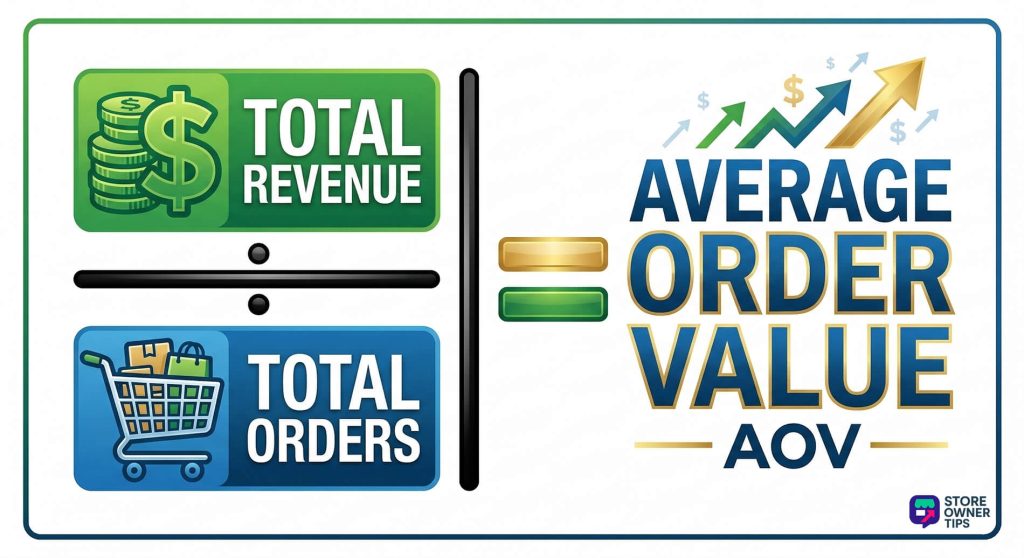
This metric helps you understand the general purchasing habits of your website visitors. A higher number indicates that customers are comfortable spending more money during a single shopping session. A lower number suggests your typical visitors are only making very small purchases.
Tracking this specific data point is a highly effective way to grow your online business over time. It allows you to generate more revenue from the web traffic you already have. You do not have to spend extra money or effort acquiring new daily visitors.
Instead, you focus your energy on the people who are already browsing your website catalog. You simply find creative ways to encourage those current shoppers to spend a little extra money. This makes it an incredibly important metric for long-term retail success.
Acquiring new customers is a very expensive process for any online business owner. You have to pay for ads and marketing just to get people to your website and capture their attention. Because these acquisition costs shrink the profit margin on a first sale, it is much more cost-effective to persuade an existing visitor to spend more.
A person who is already going through your checkout process has a high level of buyer intent. They trust your brand enough to pay, so encouraging them to add another item requires less effort than finding a new buyer. You are simply maximizing the value of a sale that is already happening.
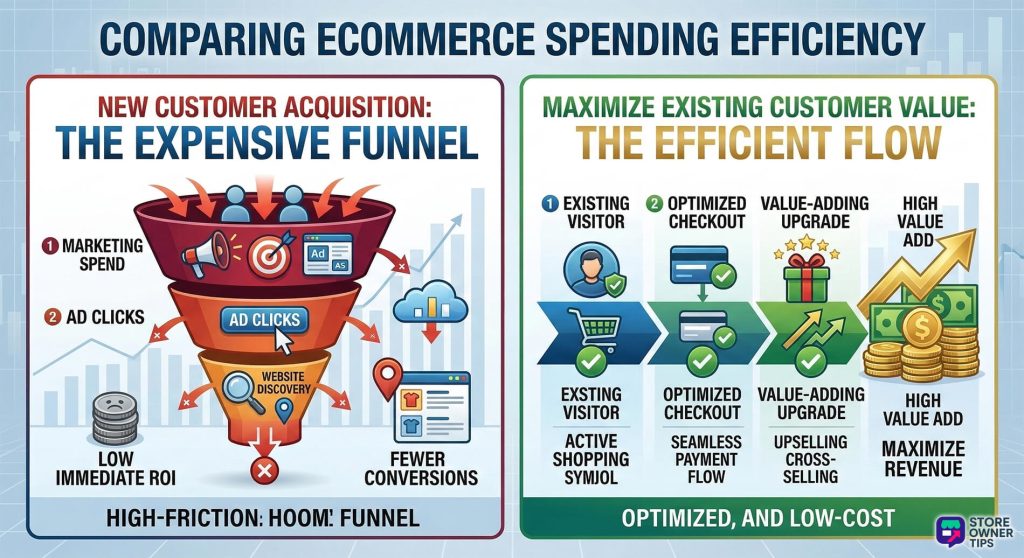
Increasing this metric also helps you manage your fixed operational costs. Every physical order you process comes with set expenses, like shipping boxes, packing materials, and payment processing fees.
When a customer buys multiple items in one transaction, you can package those items together in a single box. This spreads your packaging and shipping costs across a much larger sale. Ultimately, this leaves you with a higher profit margin for that specific order.
To calculate this metric, choose a specific timeframe, like a single week or a business quarter. Then, divide the total money earned during that time by the total number of orders. For example, if your store generates $1,000 in revenue over a weekend from 10 separate orders, your average is $100.
Most store owners use software like Google Analytics 4 to track this automatically. You can use WordPress plugins to connect your checkout pages directly to your main analytics dashboard. This setup lets you see exactly how your sales numbers change from week to week to determine if your strategies are working.
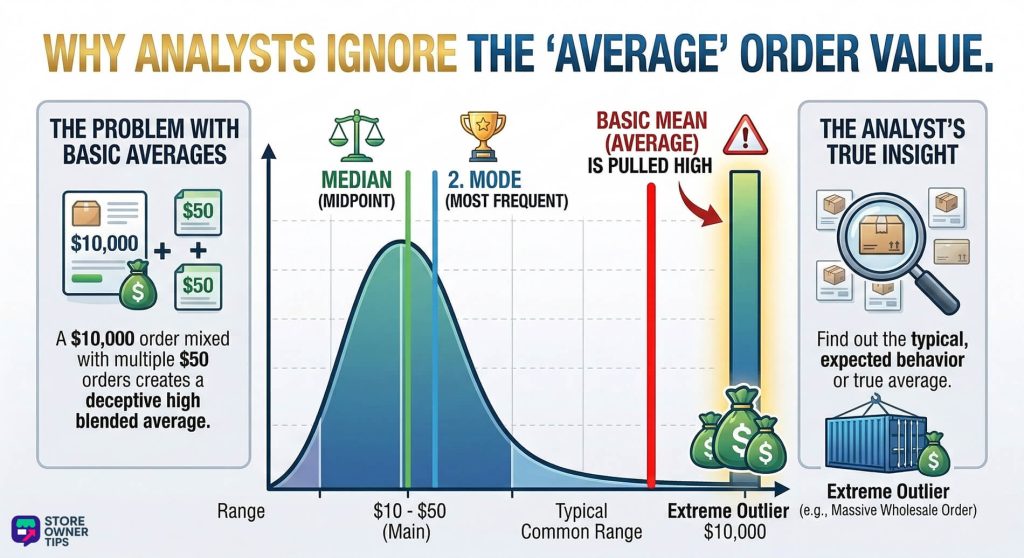
However, analysts warn against relying completely on a basic average because it groups all your store orders together. Extreme outliers can easily skew this math and give you bad data. For example, one massive wholesale order could pull your daily average way up, making it look like regular shoppers are spending much more money than they truly are.
To get a clearer picture, look at the median and mode of your sales data. The median is the exact middle number when you line up all your order totals from smallest to largest. The mode is the specific dollar amount that occurs most frequently. Looking at these numbers gives you a realistic view of what a typical person actually spends, allowing you to make much better financial decisions.
The device a shopper uses strongly affects how much they spend. There is a big difference between desktop and mobile shoppers, and understanding this helps you plan better sales strategies.
| Hardware Category | Estimated Market Share of Sales | Average Order Value Bracket | Cart Abandonment Rate |
| Mobile Devices | 56% | $90 – $110 | 85.65% |
| Desktop Computers | 44% | $140 – $175 | 70% to 73% |
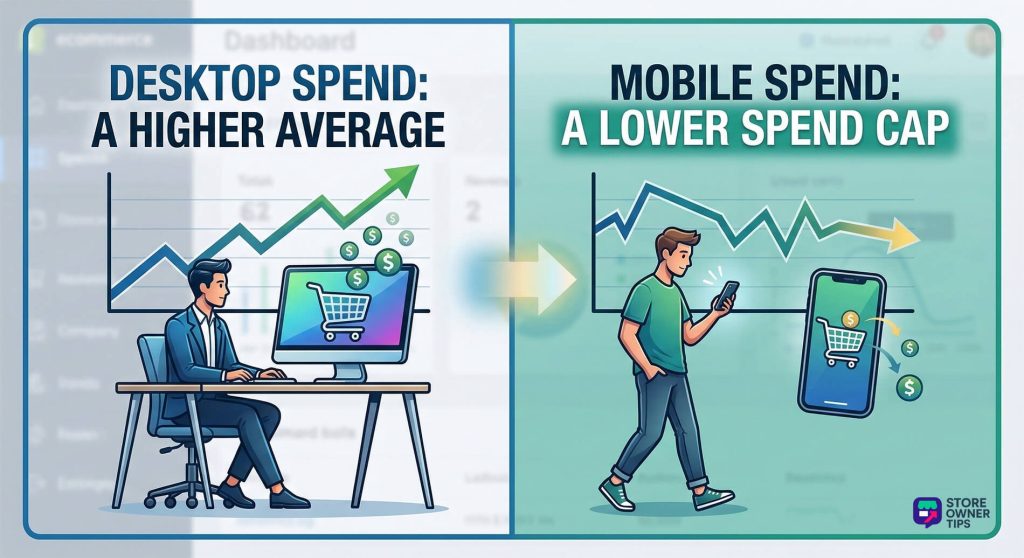
Desktop orders almost always generate the most revenue, typically ranging from $140 to $175. People using computers usually have more free time to sit and browse. A large monitor makes it easy to view high-resolution images, read long descriptions without zooming, and open multiple tabs to compare items. This comfortable setup makes people more willing to spend larger amounts.
On the other hand, mobile orders are usually much lower, averaging between $90 and $110. This drop is a direct result of the phone’s physical limits. Small screens make it harder to view complex product details, making the shopping experience feel restrictive.
Phones also create more hassle during checkout. Typing long credit card numbers and shipping addresses on a small digital keyboard can be frustrating. This extra effort often causes mobile shoppers to buy fewer items or abandon their carts entirely.
Finally, mobile shoppers are frequently distracted by their surroundings. Someone shopping while waiting in line at a grocery store or riding a bus can easily be interrupted, which often prevents them from making a large purchase.
There are many proven optimization strategies you can use to encourage larger customer purchases. These specific strategies leverage basic human psychology to gently change normal buyer behavior. They focus on offering better package deals and creating a strong sense of purchasing urgency.
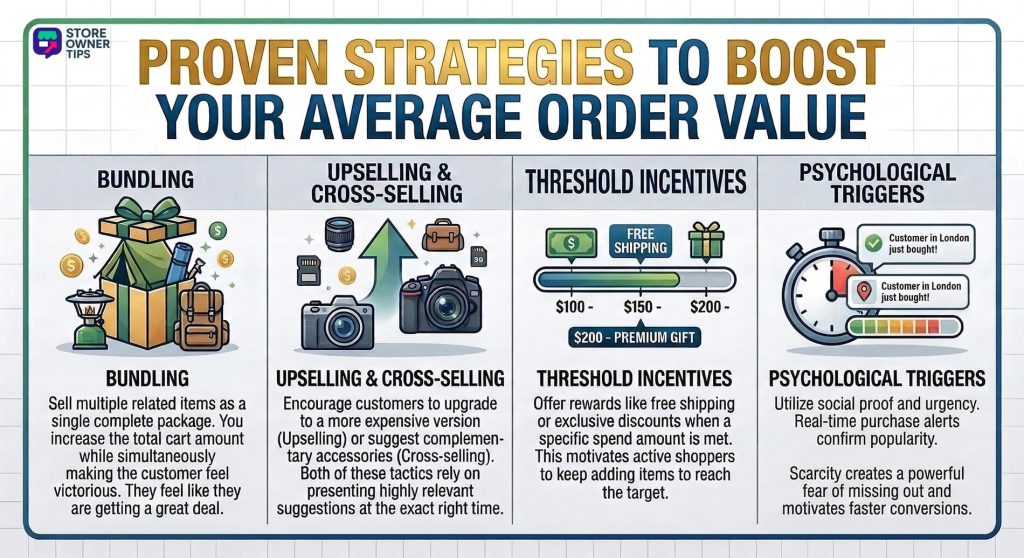
Here are some popular ways to encourage larger purchases on your website:
Product bundling involves selling related items together as a single package, usually at a slight discount compared to buying them individually. This strategy increases the total cart amount while making the customer feel like they got a great deal.
For example, imagine you run a sporting goods store and a customer wants to buy a new baseball glove. You could offer a bundle that includes the glove, a baseball, and leather conditioner.
The slight discount increases the value of the purchase for the shopper. Ultimately, you secure a larger sale while moving more inventory out of your warehouse at the same time.
Upselling means encouraging a customer to buy a more expensive version of a product. For example, if a customer is looking at a basic digital camera, you might highlight a premium model with better features.
Cross-selling involves suggesting related items that go perfectly with the main product. If a customer adds that digital camera to their cart, you could suggest a memory card or a protective case. These small additions quickly increase the order total.
Both tactics work best when you show the right suggestions at the perfect time. You can display these offers on the product page itself, or in a popup window right before the customer checks out.
Many store owners use checkout optimization software to automate this process, ensuring every shopper sees a relevant upgrade or add-on before they finish paying.
A threshold incentive is a financial reward you offer a customer when they reach a spending target. The most popular example is offering free shipping on orders over a certain amount, such as displaying a banner that says, “Free Shipping on Orders Over $150!”
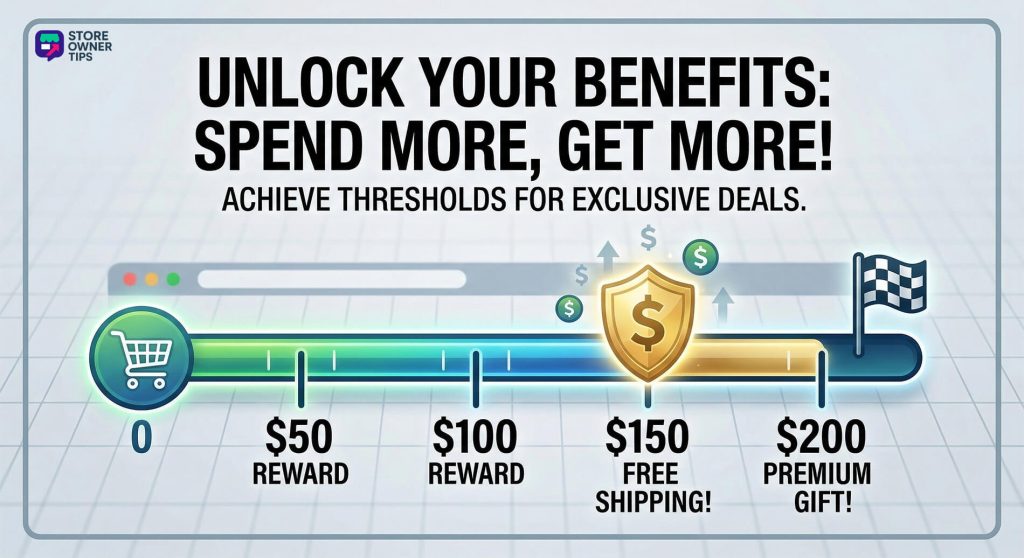
This tactic gives shoppers a clear reason to keep adding items to their cart. Most people will happily buy an extra product they actually want just to avoid paying a delivery fee.
Setting the right target is the key to making this work. You want the threshold to be slightly higher than your current Average Order Value, which encourages shoppers to stretch their spending just a little further.
For example, if your average sale is normally $40, setting your free shipping mark at $100 is too far away for a typical shopper to reach. A much better and more realistic target would be $50 or $60.
Psychological triggers are clever tactics that use human emotion to drive immediate sales. One highly effective trigger is social proof. By using software plugins to display small, live notifications of recent purchases on your screen, you show shoppers that other people are actively buying from you. This builds immediate trust, as people are much more likely to spend money when they see others doing the exact same thing.
Two other powerful emotional triggers are urgency and scarcity.
Urgency makes a customer feel like they need to act quickly to get a good deal, which you can create using active countdown timers for special sales. Scarcity makes a customer feel like an item might run out if they wait too long, which you can trigger by showing low-stock warnings.
Together, these feelings strongly encourage shoppers to finalize their large purchases immediately rather than delaying them.
Ultimately, Average Order Value is more than just a math equation; it is a key measure of your store’s financial health. By focusing on getting your current visitors to spend a little extra, you grow your revenue without paying for expensive new ads.
Understanding your sales data gives you a huge advantage. You can see exactly what your buyers are doing and build smart strategies around them. Whether you offer clever product bundles or set up free shipping targets, improving this number builds a much more profitable business over time.
To get the most out of your store strategy, it helps to understand these connected terms:
Try adding checkout optimization tools to your WooCommerce store. You will quickly see how simple product suggestions and targeted rewards can turn small, basic purchases into highly profitable orders.
Copyright © StoreOwnerTips.com. All Rights Reserved.
