Weekly ecommerce tips, deals & news.
Browse Abandonment is when a shopper looks at products on your store, then leaves without adding anything to their cart. They showed interest by browsing, but never took the next step. It happens earlier in the journey than cart abandonment. For most stores, it is the single biggest source of lost potential sales.
Think of a shopper wandering through a physical store. They pick up a few things, look closely, then put them down and walk out. They never even reached the register. Browse abandonment is the online version of that exact moment.
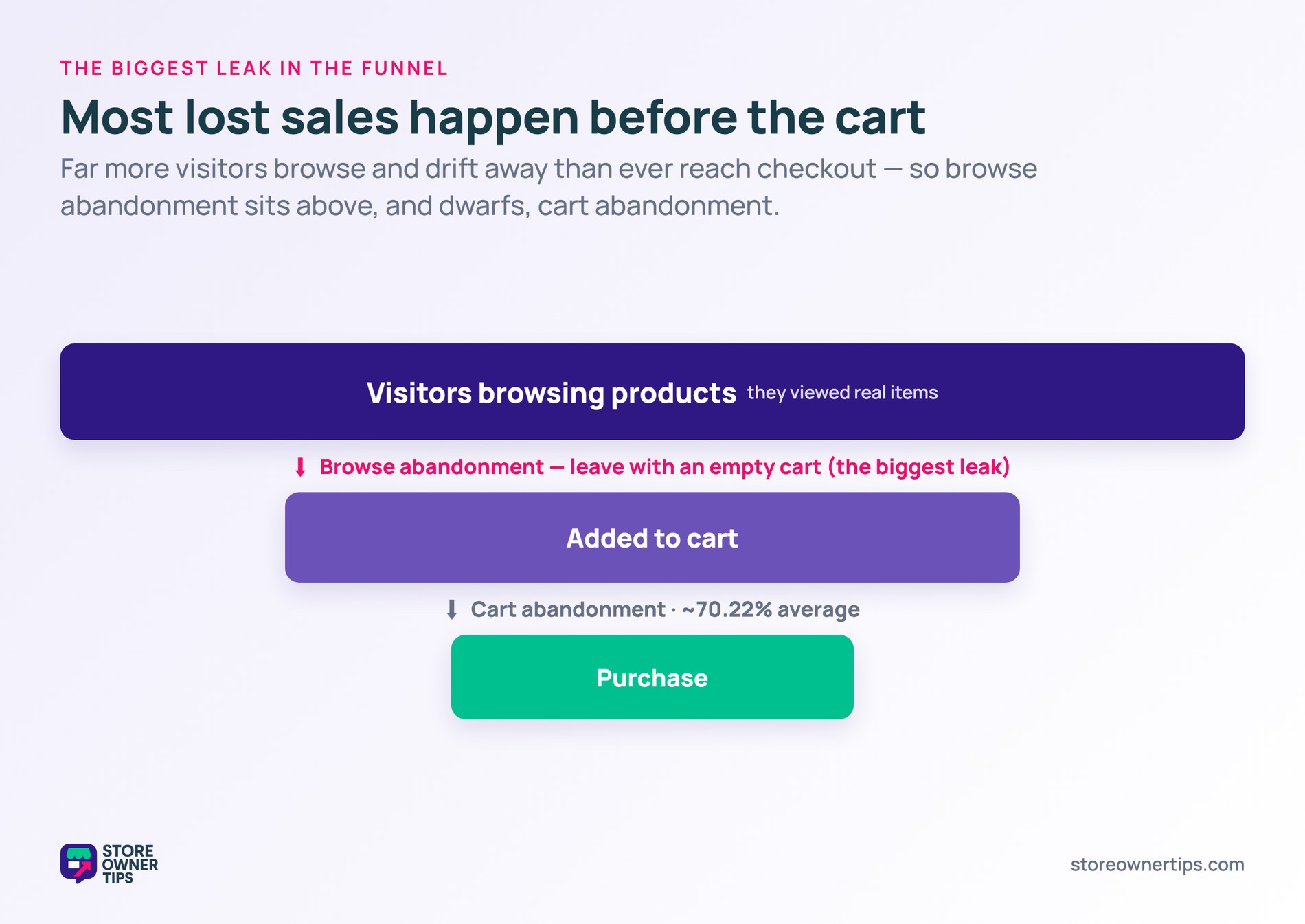
Most people who visit a store are just looking, not ready to buy. They might be comparing prices, killing time, or saving ideas for later. So a high browse abandonment rate is normal, not a crisis. The goal is to recover the shoppers who were genuinely interested.
Online shopping also makes leaving incredibly easy. A new tab or a phone notification is all it takes. There is no salesperson to gently re-engage a wandering shopper. That is why stores must build that nudge into the experience themselves.
This behavior is also the largest leak in your funnel. Far more people browse and leave than add to cart and leave. For context, even cart abandonment runs about 70.22%, and browse abandonment sits much higher. So small recovery wins here add up fast.
A browsing shopper is not a stranger anymore. They came to your store and looked at real products. That makes them far warmer than someone who has never heard of you. Re-engaging them is usually cheaper than finding brand-new visitors.
In a sense, they have already raised their hand and said they are curious. Your job is simply to remind them why they were interested.
The math backs this up. Acquiring a new customer is anywhere from five to 25 times more expensive than keeping interest you already earned. So nudging a browser back is one of the smartest moves you can make. You already paid to get them once.
Shoppers leave without adding to cart for all sorts of reasons. Some are simple, and some you can actually fix. The most common causes include:
Trust gaps are often the most fixable cause of all. Purchase likelihood for a product with five reviews is 270% greater than for one with none. So strong reviews and clear details keep more browsers engaged. That alone can shrink your browse abandonment.
You will not find a single “browse abandonment” number in most dashboards. Instead, you piece it together from a few signals. Look at product-page views compared to add-to-cart actions. A big gap between them points straight at browse abandonment.
It also helps to watch which products get viewed but rarely added. Those pages may have weak photos, unclear pricing, or thin details. On WooCommerce or Shopify, your analytics can flag these quiet drop-off points. Fixing them lifts interest right where it fades.
Track the gap over time so you can see your fixes working.
The trick is to capture interest before the shopper disappears. A save feature turns a fleeting glance into a saved plan. From there, a few gentle nudges can bring them back:
Most stores pour money into ads to drive traffic in. Then they let the bulk of that traffic sl
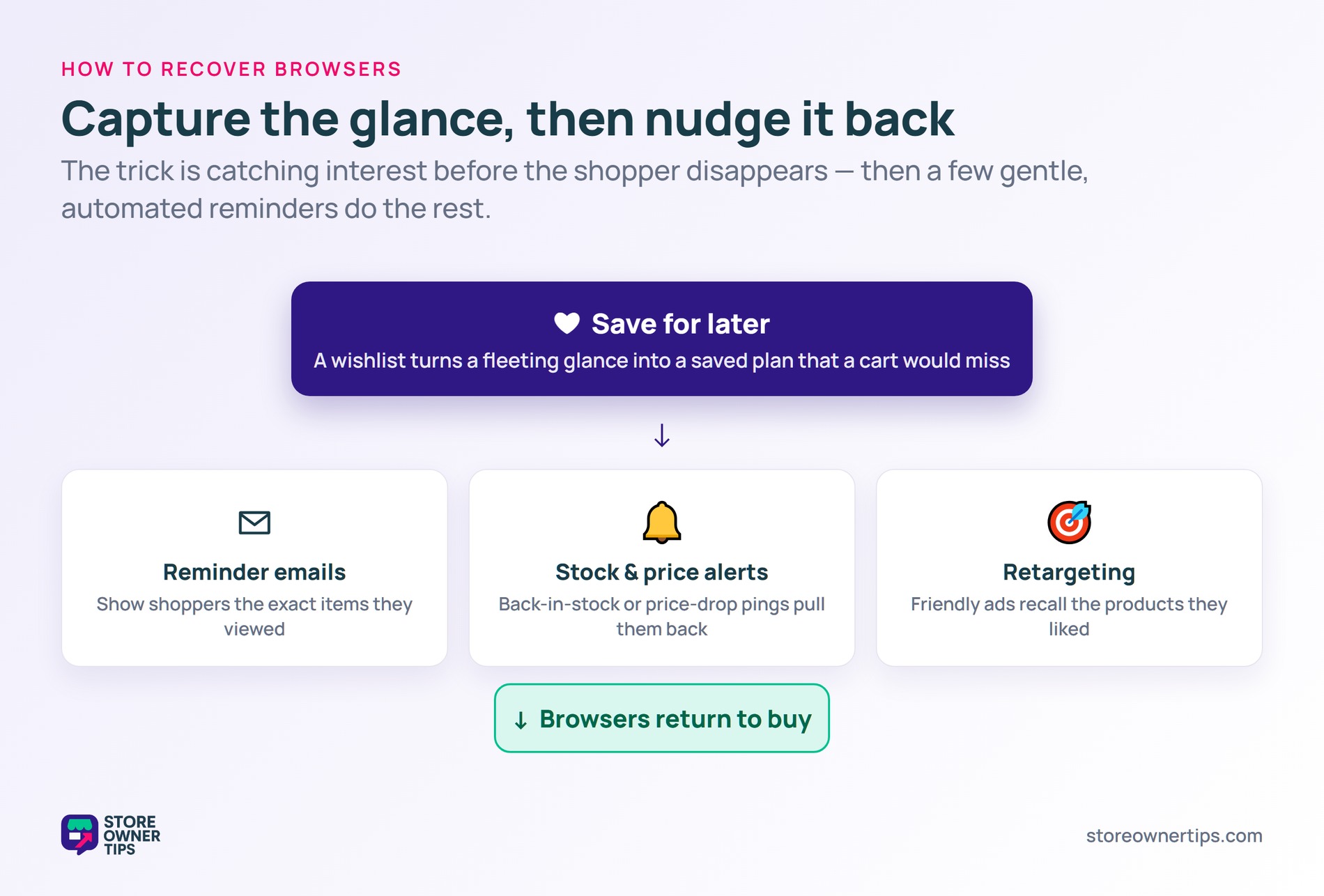
The fix does not require buying more visitors at all. It just means making better use of the ones you already have. A few simple capture-and-remind tools can pay for themselves quickly. That is why this leak deserves real attention, not a shrug.
Even recovering a small share of browsers can fund your next campaign.
Imagine a mid-sized brand called Driftwood Home that sells decor on WooCommerce. They notice tons of traffic but very few carts. So they dig into browse abandonment to understand the gap.
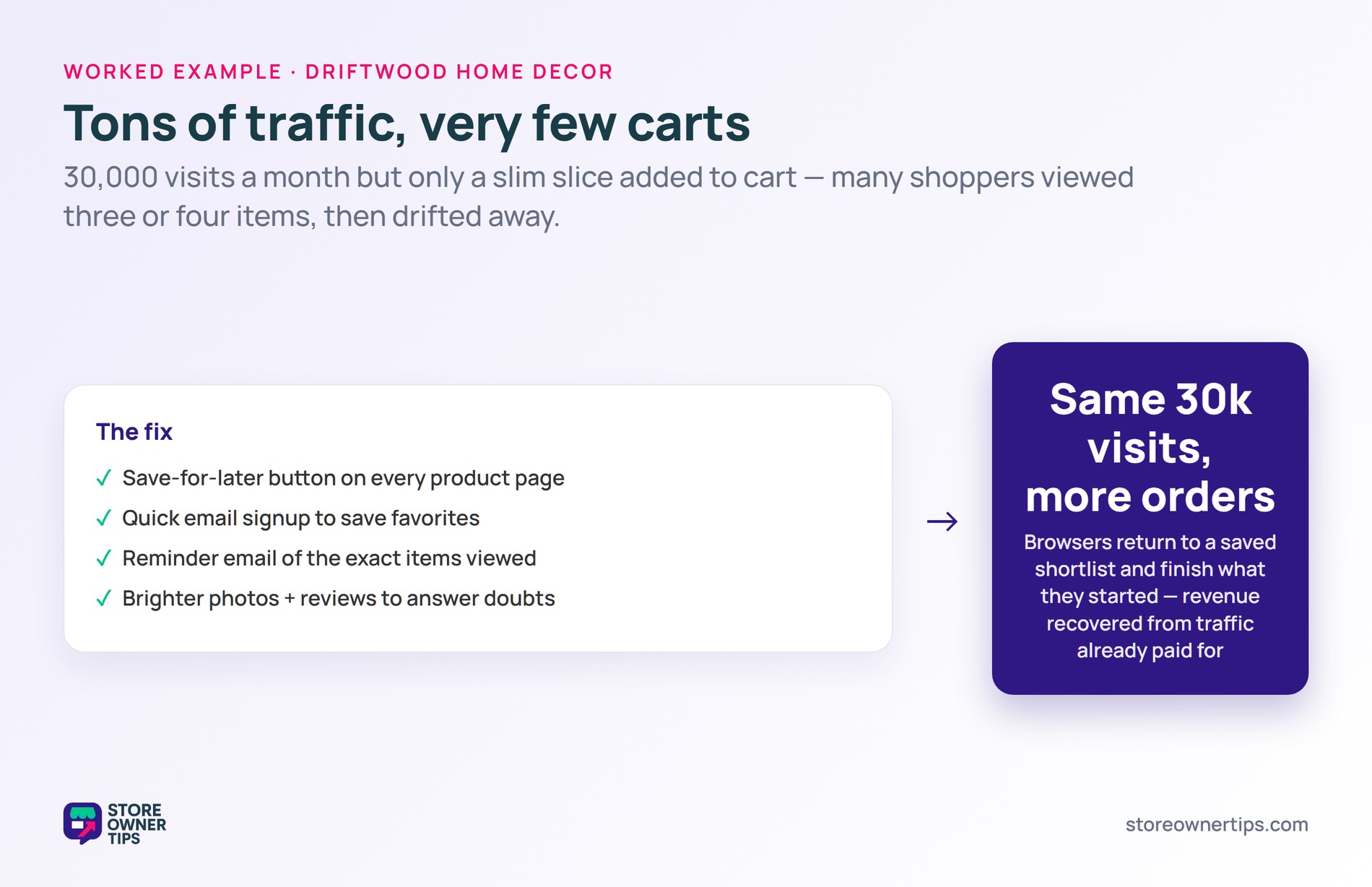
Driftwood gets 30,000 visits a month, but only a small slice add to cart. The vast majority view a product, then drift away. Many of those visitors looked at three or four items first. That browsing is a clear sign of real interest.
Driftwood adds a simple save-for-later button to every product page. They also invite shoppers to save favorites with a quick email signup. Then they send a gentle reminder showing the exact items a shopper viewed. Each step keeps that early interest alive.
They also brighten product photos and add reviews to answer lingering doubts. Those upgrades give shoppers fewer reasons to leave in the first place.
Over a few months, more browsers come back to finish what they started. The saved items act like a personal shortlist waiting for them. A slice of those returning shoppers now add to cart and buy. Driftwood recovers real revenue from traffic it was already paying for.
The same monthly visits now produce noticeably more orders.
Driftwood did not try to force a sale on the first visit. They simply gave browsing shoppers an easy way to save and return. The save button respected how people actually shop for home decor. Most buyers want to think it over before committing.
The reminder email then did the quiet follow-up work. It showed the exact items a shopper had lingered on. That made coming back feel helpful, not pushy or salesy. So interest that would have vanished turned into orders instead.
The whole system ran on autopilot once it was set up.
These two terms are often mixed up, but they mark different moments. Browse abandonment is leaving after viewing products, with an empty cart. Cart abandonment is leaving after adding items, but before paying. One happens earlier in the journey than the other.
<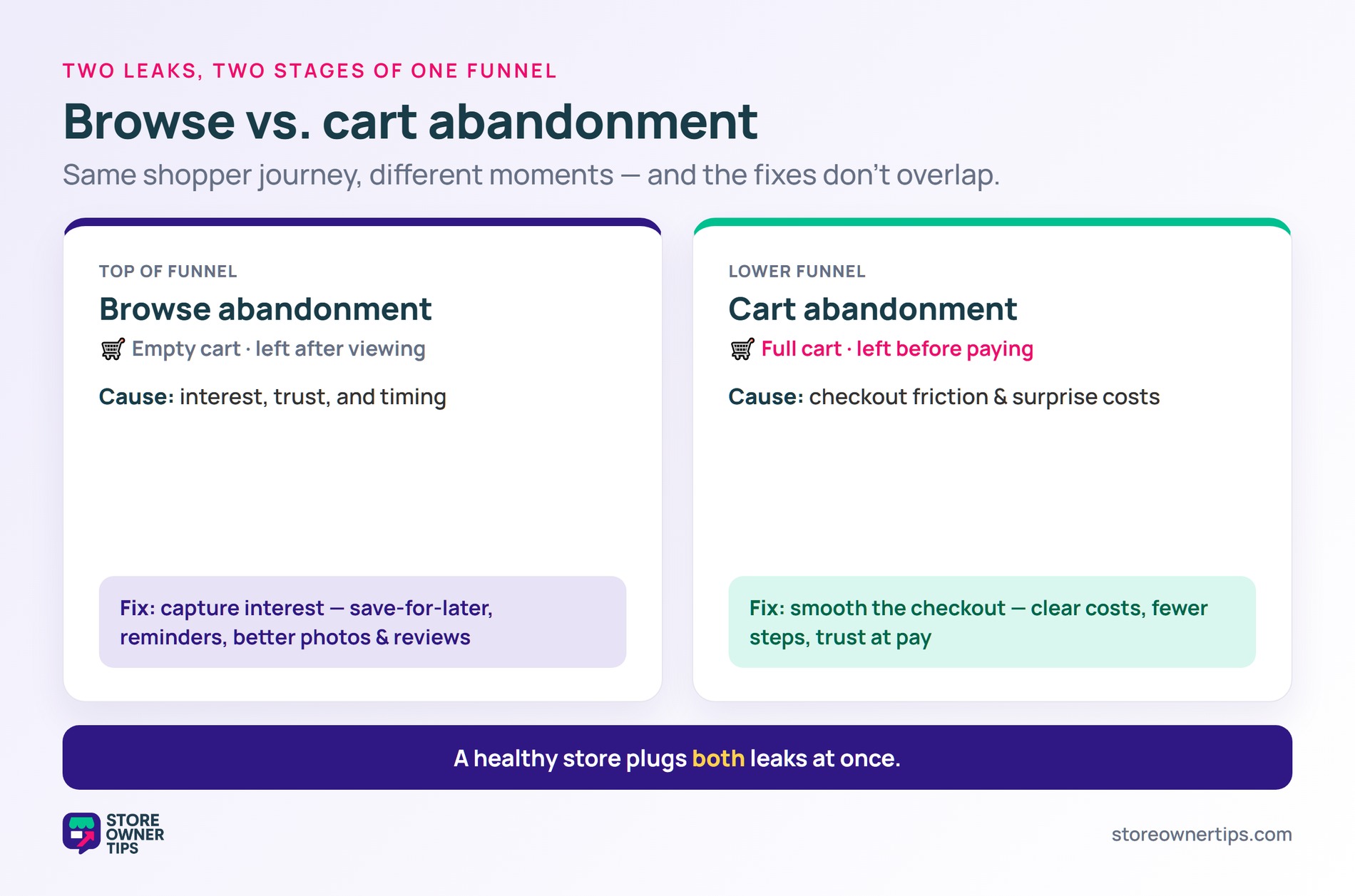
The difference matters because the fixes are different. Cart abandonment is usually about checkout friction, like surprise costs. Browse abandonment is more about interest, trust, and timing. Knowing which one you are facing tells you exactly where to focus.
It also helps to picture them as two stages of one funnel. Browse abandonment happens at the top, where interest is still forming. Cart abandonment happens lower down, closer to the sale. A healthy store works on both leaks at the same time.
Browse abandonment is leaving after viewing products without adding any to the cart. Cart abandonment is leaving after adding items but before checking out. The key difference is the cart itself. One shopper never filled it, while the other filled it and walked away.
Browse abandonment is the bigger, earlier leak of the two.
The best tools capture interest before the shopper leaves. A save-for-later button or wishlist keeps their picks in one place. A browse abandonment email can then remind them what caught their eye. Retargeting ads work as a gentle backup nudge.
The goal is to make returning feel effortless, not pushy. Start with one tool, measure the lift, then layer on the next. The earlier you capture interest, the more browsers you can win back.
Not really, since most browsing visitors were never going to buy on the spot. A high rate is normal across e-commerce. What matters is recovering the slice that showed genuine interest. Even a small recovery rate turns into meaningful extra sales.
So treat it as an opportunity, not a failure. The browsers who lingered longest are the ones most worth chasing.
Browse abandonment is the quiet, massive leak that most stores ignore. Those browsing shoppers already showed interest, so they are worth winning back. Capture their picks, remind them gently, and you turn idle browsing into real revenue without paying for new traffic.
Best of all, the shoppers you recover cost a fraction of brand-new ones. Plug this leak first, and the rest of your funnel gets easier.
Copyright © StoreOwnerTips.com. All Rights Reserved.
