Weekly ecommerce tips, deals & news.
Dropshipping is a retail model where you sell products without keeping any stock. When a customer buys from your store, you forward that order to a supplier. The supplier then ships the item straight to your customer. You never touch the product, and you only pay for goods after you have made a sale.
In a normal store, you buy stock upfront and store it yourself. Dropshipping flips that order around. You list a supplier’s products on your site at your own price. A customer buys one, and you forward that order to the supplier.
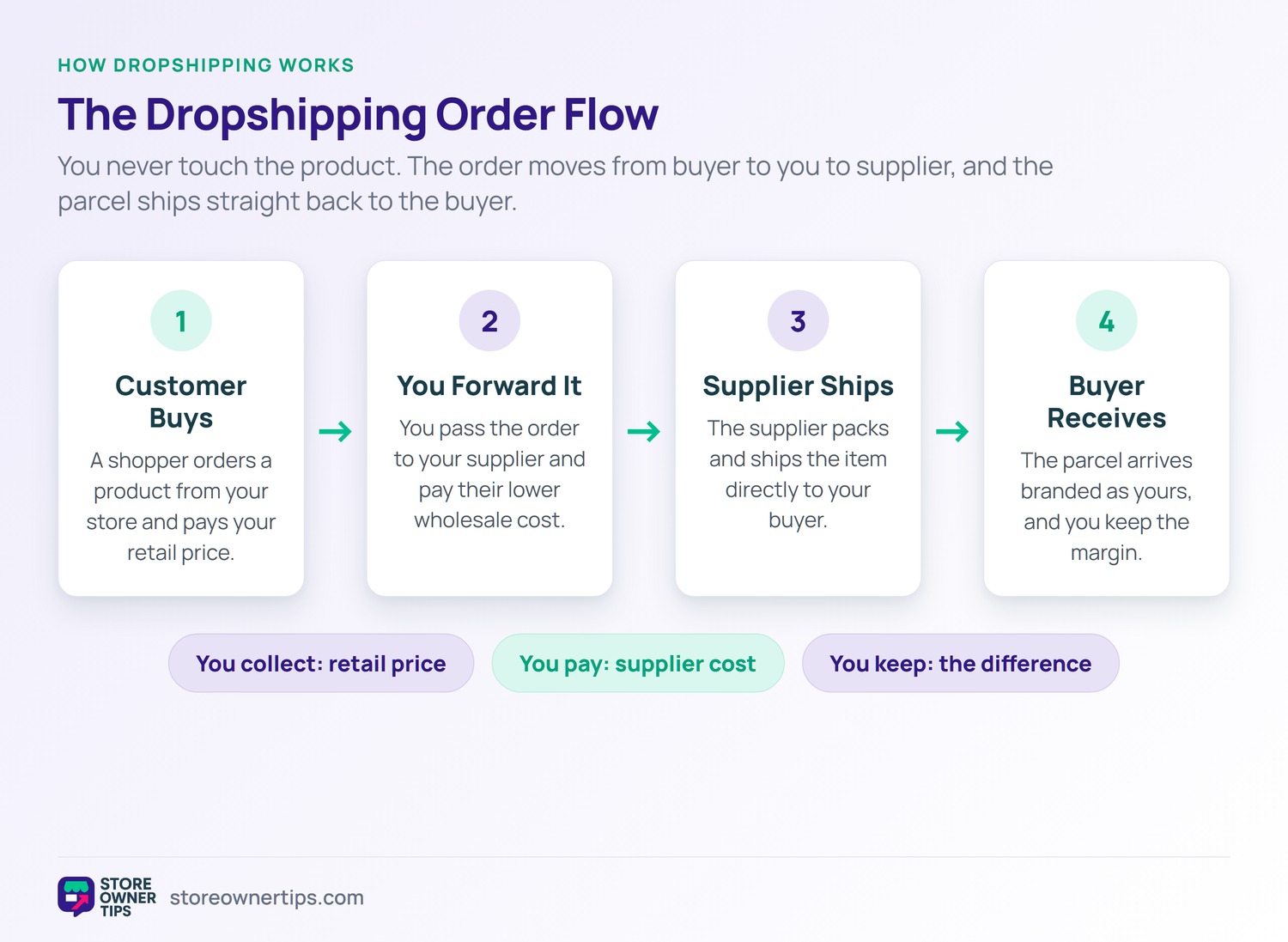
The supplier then packs and ships the item directly to your buyer. You keep the difference between your retail price and the supplier’s cost. In short, you carry no stock and pay no supplier until the sale is already made.
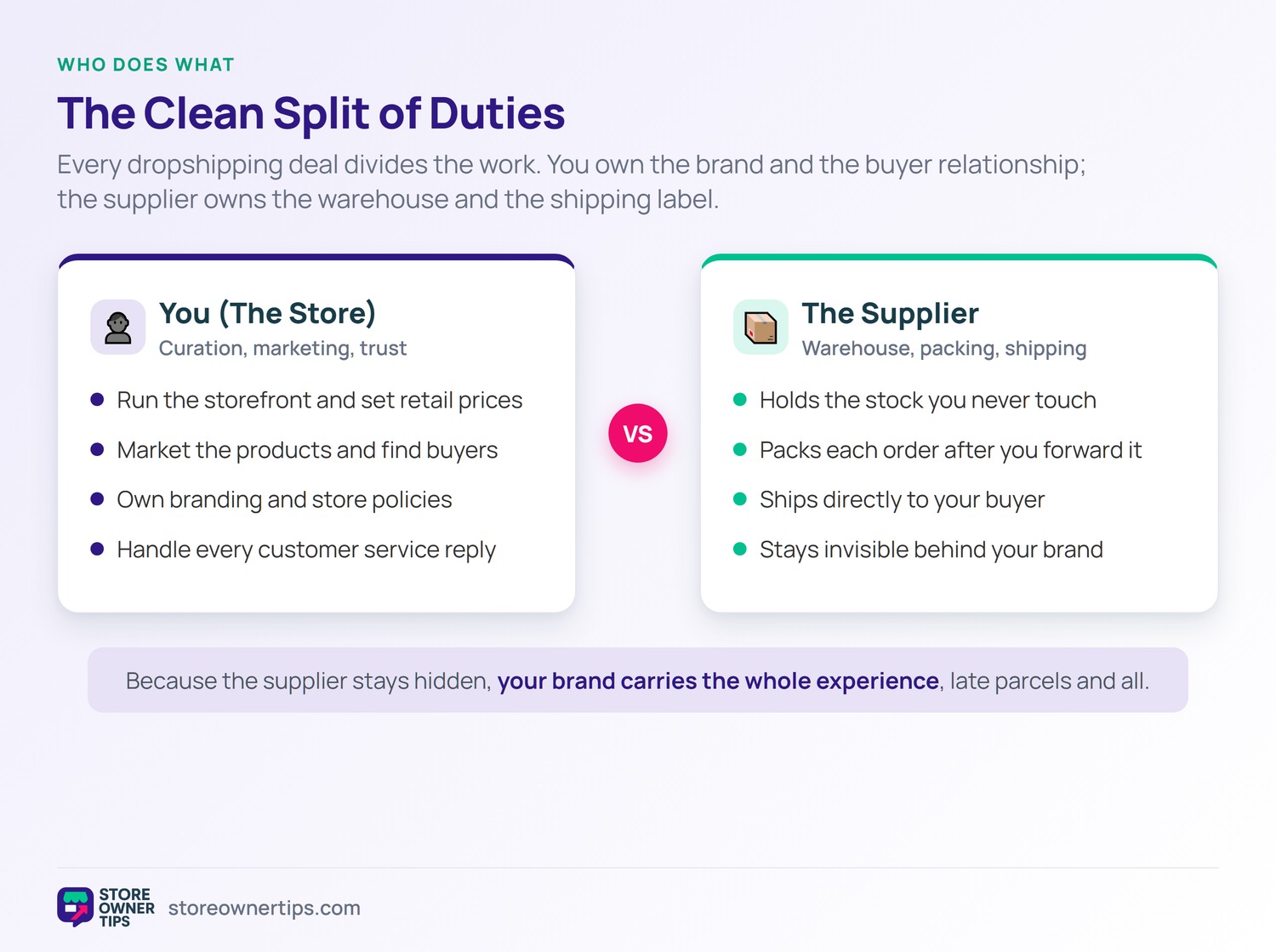
Think of yourself as a matchmaker. You connect a shopper who wants a product with a supplier who has it. You handle the storefront, the marketing, and the customer service. Meanwhile, the supplier handles the warehouse and the shipping label.
You set the retail price, the branding, and the store policies. The supplier simply fulfills what you sell. That clean split of duties is the heart of every dropshipping deal.
On WooCommerce, a dropshipping plugin does the heavy lifting for you. First, you assign each product to a supplier inside the plugin settings. Then, when an order reaches “processing” status, the plugin groups items by supplier automatically. Next, it emails each supplier a tidy list of the products they need to ship.
Many tools also attach a packing slip PDF to that email. The supplier prints it and drops it in the box, so the parcel looks like it came from you. This trick is called blind dropshipping. WooCommerce and Shopify both support this flow, though the exact setup differs.
Getting started is quick once a supplier is set up. You import their catalog, set your own prices, and publish. From there, each new order flows to them on autopilot.
You also keep full control over your own prices. You can mark up each item to cover ads, fees, and profit. Better still, the plugin syncs supplier stock, so you avoid selling items that ran out. This automation is what lets dropshipping run with little daily effort.
Some sellers go further and run a full dropshipping marketplace with many suppliers under one roof. That setup behaves like a multi-vendor marketplace, where each vendor ships their own goods.
Your supplier is the engine of your whole business. A great one ships fast and packs every order with care. A poor one leaves you fielding angry emails about late or broken items.
So vet every supplier before you list their products. Order a sample yourself to judge the quality and speed. On top of that, read reviews, ask about stock levels, and confirm their return policy. In short, treat supplier choice as your most important decision.
The appeal is simple: you avoid the biggest cost in retail, which is inventory. You do not gamble cash on stock that might never sell. You can test a new product in minutes by adding one listing. If it flops, you remove it with zero dead stock left over.
So what are you actually selling? You are selling curation, marketing, and trust. You find products people want, present them well, and make buying easy. Because the supplier stays invisible, your brand carries the whole experience.
This is also why customer service matters so much here. When a parcel runs late, the buyer blames your brand, not the supplier. So fast, kind replies can save a sale that shipping nearly lost.
Imagine a small home-decor brand called LumenLeaf. It sells warm, modern lamps through a WooCommerce store. The owner, Priya, does not want to rent a warehouse. So she dropships every lamp from an outside supplier.
Priya lists a lamp for $80 in her store. Her supplier charges her $50 per unit, plus a small shipping fee. That leaves her a gross margin far healthier than most shops enjoy. For comparison, general retailers average a net margin of just 5.61%.
Because Priya holds no stock, her overhead stays tiny. She has no rent, no packing staff, and no unsold boxes. As a result, she can spend more of her budget on ads and product photos. Still, she prices with care, since ad costs can eat a thin markup fast.
Say each sale costs her about $12 in ads on average. After the lamp and the shipping fee, her real profit is modest. That math is exactly why volume and repeat buyers matter so much.
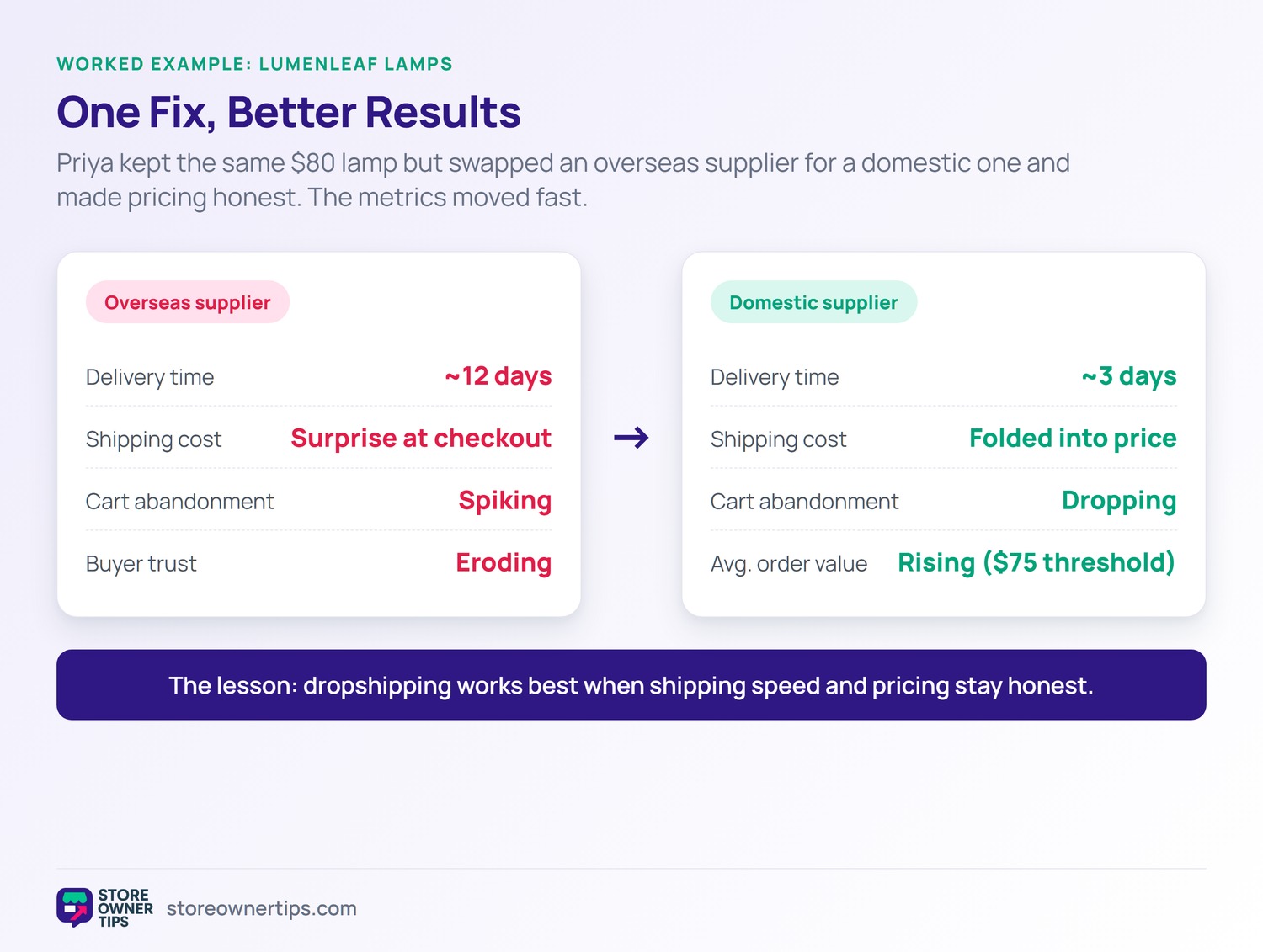
Her supplier ships from overseas, so delivery takes about 12 days. That timeline collides hard with what shoppers expect. Around 63% of consumers expect their orders within two days.
On top of that, surprise fees scare buyers away at the last step. In fact, 48% of shoppers abandon carts when extra costs feel too high. Priya soon sees a spike in cart abandonment, which already averages 70.22% across e-commerce.
Long shipping also brings weak tracking and customs delays. Buyers grow anxious when a parcel sits silent for days. Each worried email chips away at their trust in her store.
Priya switches to a domestic supplier with three-day shipping. She also folds the shipping cost into the product price to avoid checkout surprises. To nudge larger orders, she adds a free shipping threshold at $75.
She also writes clear shipping times on every product page. That honesty sets expectations and cuts down on refund requests. Customer service still lands on her desk, since the supplier stays hidden from buyers.
Her abandonment rate drops, and repeat orders start to climb. Her average order value rises too, as shoppers add a second item to clear the threshold. The lesson is clear: dropshipping works best when shipping speed and pricing stay honest.
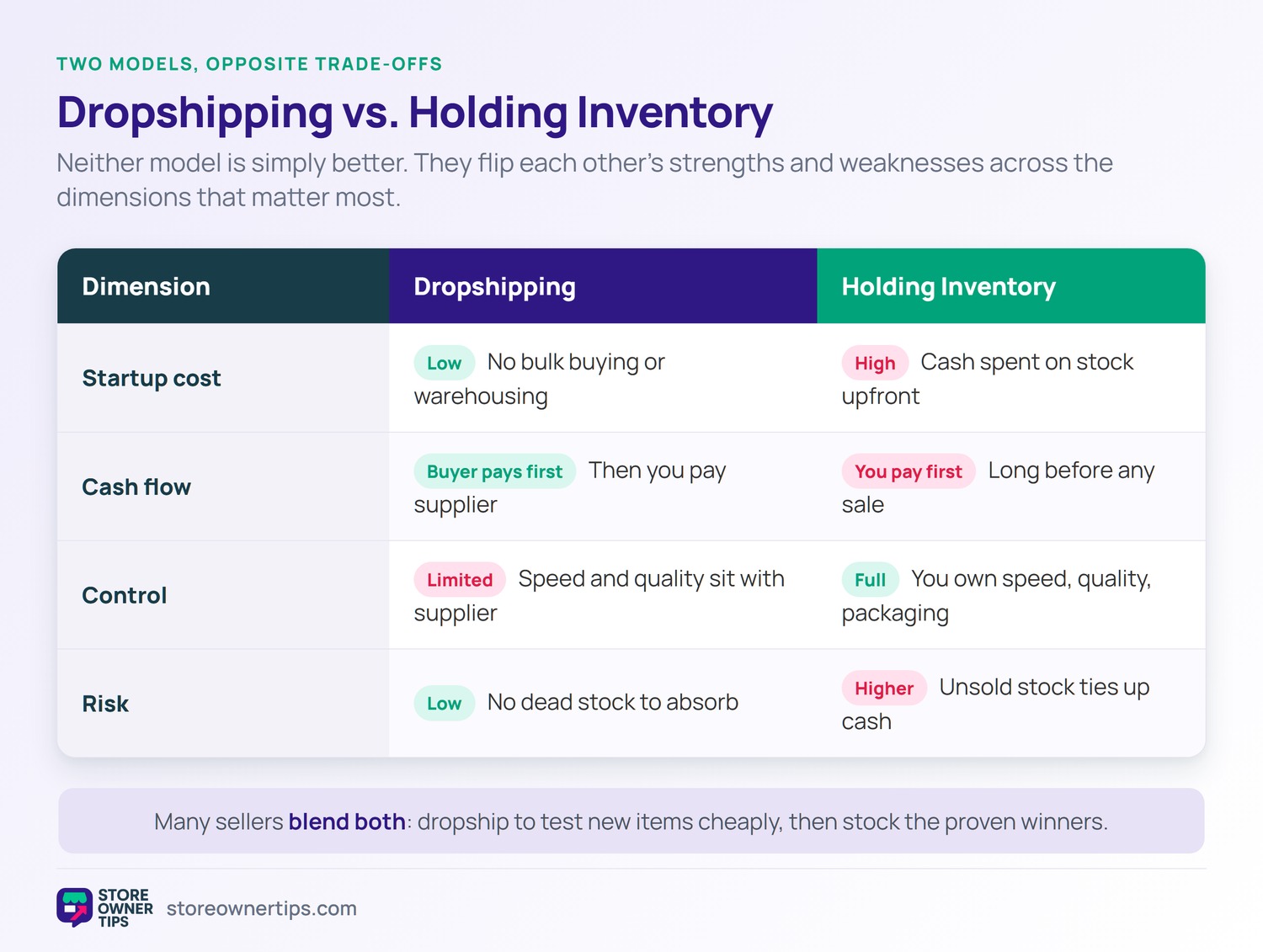
The direct opposite of dropshipping is holding your own stock. With inventory, you buy products in bulk and store them yourself. Then you pack and ship every order from your own space.
Holding inventory gives you control. You set the shipping speed, check the quality, and brand the packaging. The trade-off is cost and risk, since unsold stock ties up your cash.
Cash flow is the deepest difference between the two models. With dropshipping, the customer pays you before you pay the supplier. By contrast, inventory spends your money long before any sale arrives.
Dropshipping flips those trade-offs around. You gain low risk and a low startup cost. However, you lose control over speed, quality, and stock levels. Neither model is simply “better,” since they fit different goals.
Many sellers blend both models over time. They dropship to test new items cheaply, then stock the proven winners. That hybrid approach lifts margins and shipping speed where it matters most.
Yes, but the margins are thin. Most sellers profit by picking products with strong demand and low competition. A focused niche also helps you stand out from copycats. Success leans on smart marketing and reliable suppliers, not just low prices.
You can start small. You mainly pay for a domain, hosting, a WooCommerce store, and ads. Since you buy stock only after a sale, you skip large upfront inventory costs.
Shipping speed and supplier reliability top the list. Long delivery times frustrate buyers who expect fast arrival. So vetting suppliers carefully is the best way to protect your store’s name.
Dropshipping lets you run a real store without the cost and risk of holding stock. It rewards sellers who choose reliable suppliers and stay honest about shipping. Treat it as a lean way to test and grow, not a shortcut to easy money. Done well, it can become the launchpad for a much bigger brand.
Copyright © StoreOwnerTips.com. All Rights Reserved.
