Weekly ecommerce tips, deals & news.
Email segmentation is the practice of splitting your email list into smaller groups that share a trait. You might group by location, past purchases, or how active a subscriber is. Then you send each group a message built for them. The result is far more relevant email, which means more opens, clicks, and sales.
Email segmentation sorts your subscribers into focused groups. Each group shares something useful in common. You then speak to each group on its own terms.
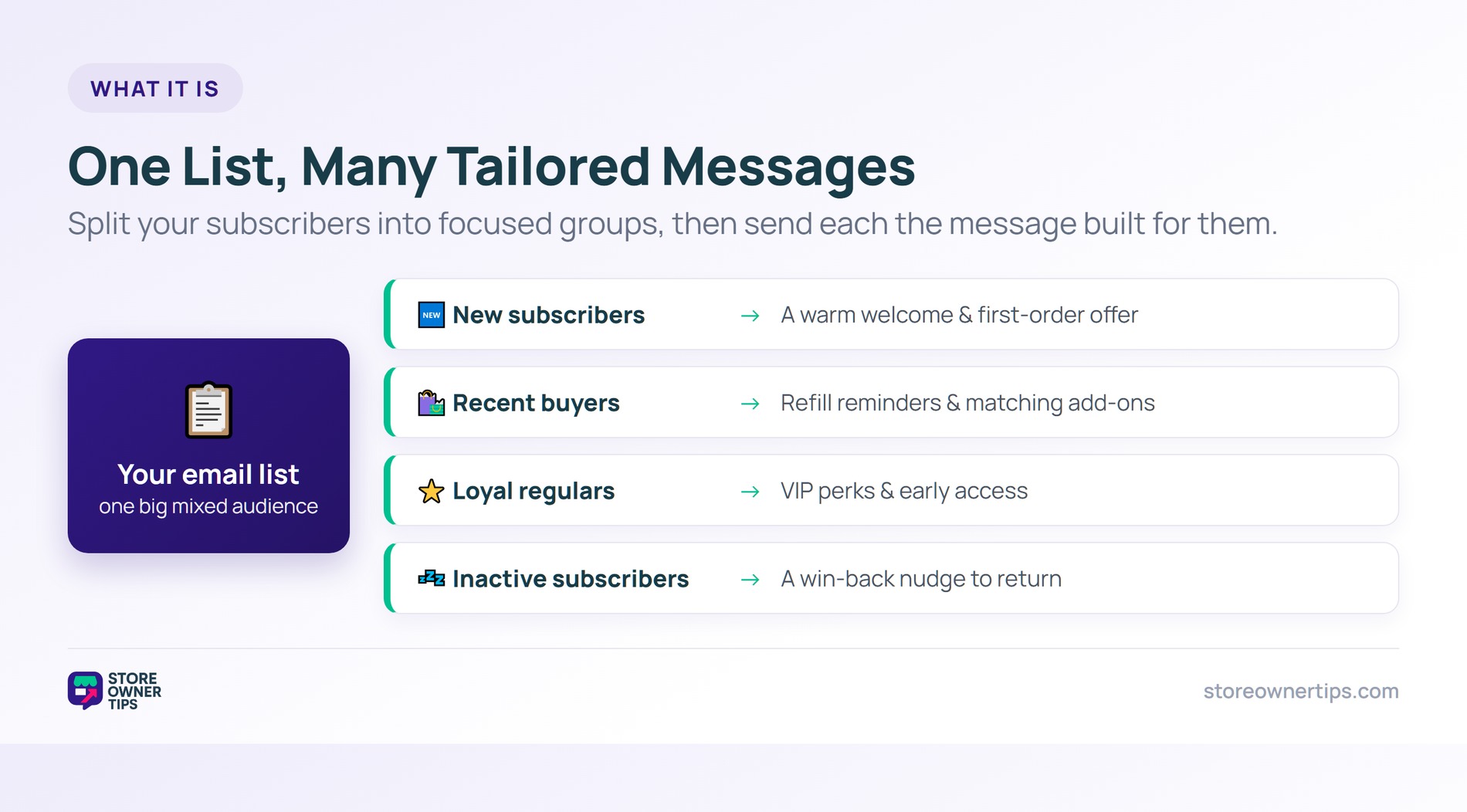
Think of it like greeting guests at a party. You talk to old friends differently than new ones. Shouting one message to the whole room reaches no one well.
The goal is relevance, not just neatness. A fitting message gets read and acted on. A generic blast gets ignored or deleted.
Segments can overlap, and that is fine. A loyal customer can also be local. Each email just targets the trait that matters most.
Segmentation starts with the data you already hold. Your email tool stores traits like location and purchase history. You build segments from those fields.
A segment is just a rule applied to your list. For example, buyers in the last 30 days form one group. New subscribers who never bought form another.
Each segment then gets its own message. That tailoring is the core of targeted email marketing. The right message reaches the right people.
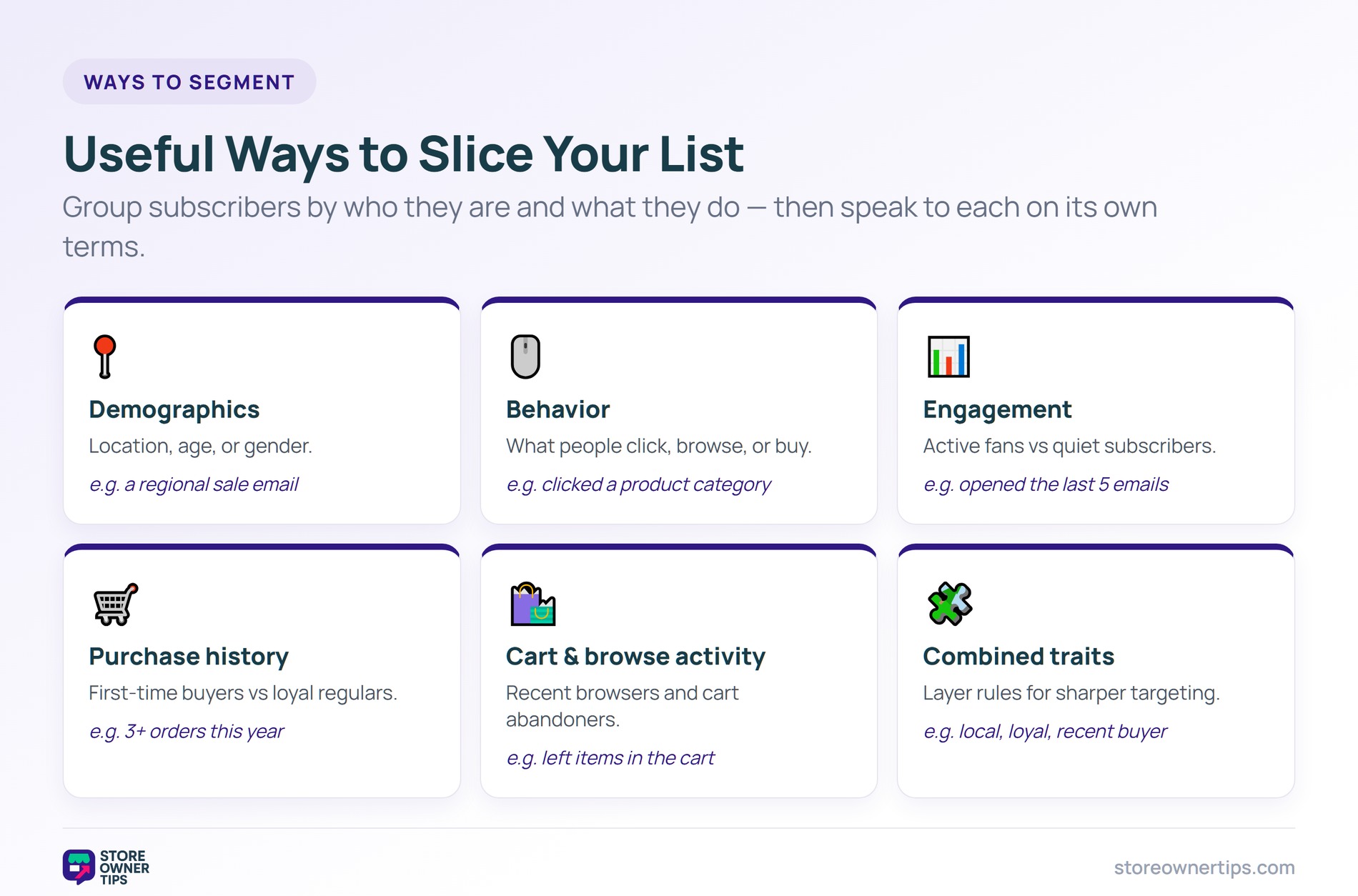
Demographics are the simplest starting point. You can group by location, age, or gender. A regional sale email fits a location segment.
Behavior is even more powerful. Group by what people click, browse, or buy. Reading customer intent in those actions guides the message.
Engagement and purchase history matter too. Separate active fans from quiet subscribers. Split first-time buyers from loyal regulars.
Cart and browse activity segment well too. A recent browser gets a gentle nudge. An abandoner gets a recovery message.
Combine a few traits for sharper targeting. A local, loyal, recent buyer is a rich segment. Layered rules reach exactly the right people.
A relevant email simply works better. It speaks to what the reader actually cares about. That fit lifts opens, clicks, and conversions.
The payoff shows in the channel’s strength. Email returns about $36 for every $1 spent. Segmentation squeezes even more from that return.
It also protects your list health. The average open rate hovers near 35.63%, and relevant emails beat it. Irrelevant blasts drive unsubscribes instead.
Relevance also builds trust over time. Subscribers learn your emails are worth opening. That habit lifts every future send.
Segmentation is a quiet retention powerhouse. It lets you treat loyal buyers differently. That recognition keeps your best customers close.
Retention pays off in a big way. Acquiring a new customer costs five to 25 times more than keeping one. Segments help you nurture the buyers you already have.
You can also win back the quiet ones. A segment of inactive subscribers gets a special nudge. That targeted care revives sleeping relationships.
Segmentation powers your automated flows. A drip or welcome series targets a segment. Without segments, automation has no aim.
The two work hand in hand. A segment defines who, and a flow defines what. Together they deliver the right message automatically.
So good segments multiply your automation. One clean list feeds many targeted flows. Clean data keeps every segment accurate.
A new signup can flow straight into a welcome segment. A first purchase moves them to a buyer group. The right flow follows each step.
Segments come in two flavors. A static segment is a fixed snapshot in time. A dynamic segment updates itself as people change.
A dynamic segment is usually smarter. A buyer joins the recent-buyers group automatically. They leave it just as automatically later.
Static segments still have a place. A one-time export for a single campaign works fine. But dynamic groups keep your targeting fresh.
Most modern email tools build dynamic segments. You set the rule once and it maintains itself. That saves hours of manual list work.
Begin simple, with just a few segments. New subscribers, recent buyers, and inactive folks is plenty. You can refine from there.
Use the data you already collect. Signup source, purchases, and clicks are easy starts. No fancy setup is needed to begin.
Then send one tailored email per segment. Compare the results to a generic blast. The lift will show segmentation’s worth fast.
Add segments as your list grows. New data unlocks new groupings. The system scales with your store.
Compare each segment to your list average. A segment should beat the generic numbers. If it does not, rethink the grouping.
Watch opens, clicks, and sales per segment. The data shows which groups respond best. Double down on the winners.
Watch the unsubscribe rate per segment too. A spike flags an off-target message. Adjust the content for that group.
Test a segmented email against a blast. The lift proves the effort is worth it. Let the numbers settle any doubt.
The first mistake is no segmentation at all. One blast to everyone wastes most of your list. A little grouping beats none by a mile.
Another trap is over-segmenting too soon. Dozens of tiny groups become impossible to manage. Start broad, then split as you learn.
A third slip is stale segments. People move between groups over time. Refresh your segments so they stay accurate.
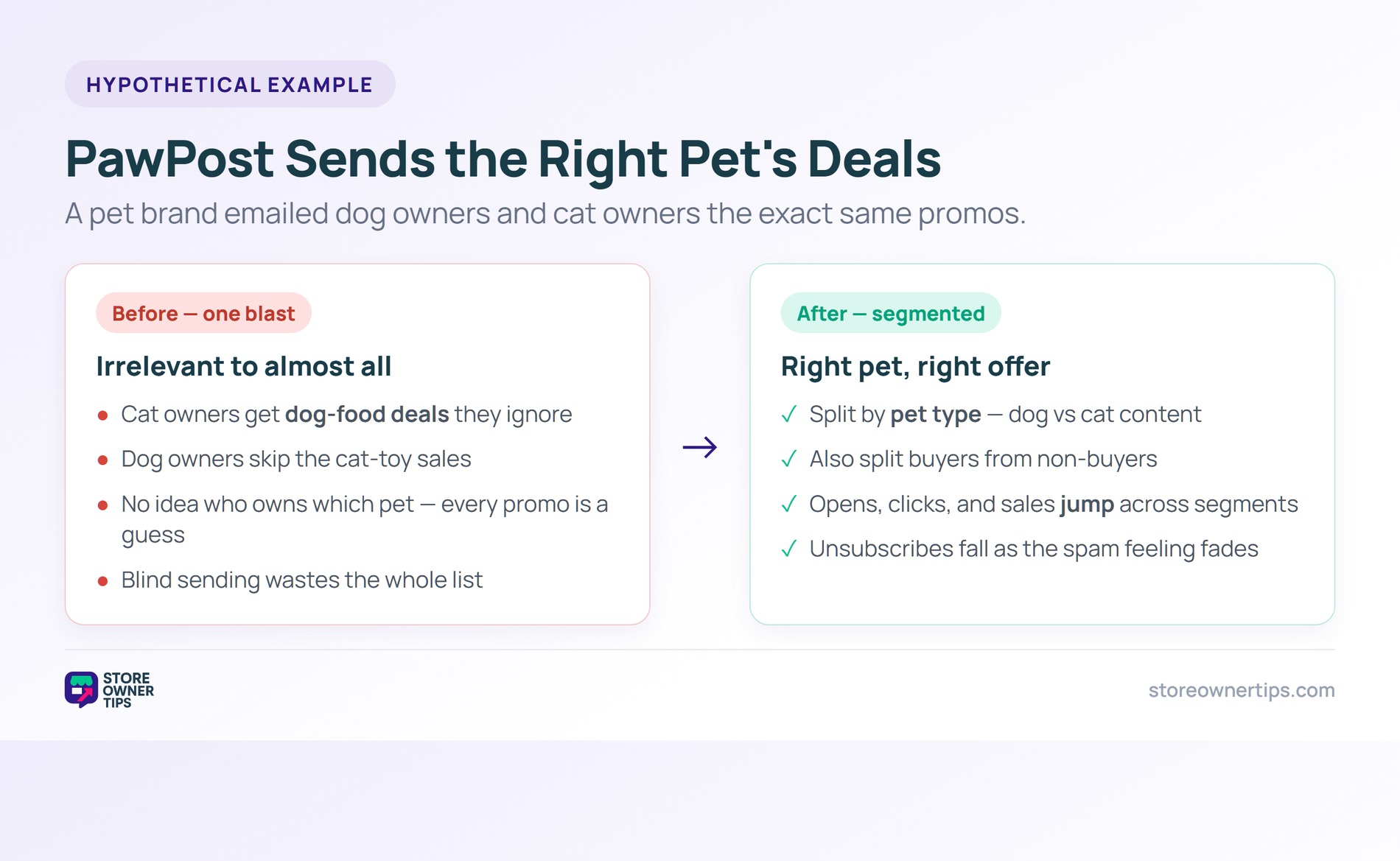
Imagine a pet brand called PawPost on WooCommerce. It emails its whole list the same message. Dog owners and cat owners get identical promos.
Cat owners get dog-food deals they ignore. Dog owners skip the cat-toy sales. The mismatched offers feel irrelevant to nearly everyone.
PawPost also has no idea who owns which pet. It guesses at every promo. The blind sending wastes its whole list.
PawPost segments the list by pet type. Dog owners now get dog products and tips. Cat owners get content built just for them.
It also splits buyers from non-buyers. Each group gets a fitting message. The emails finally match the reader.
Opens and clicks jump across every segment. Relevant offers drive far more sales. Unsubscribes fall as the spam feeling fades.
PawPost also revives quiet subscribers with a tailored win-back. It tracks each segment’s opens to guide the next campaign. Targeting gets sharper every send.
The list grows healthier and more profitable. Email finally pulls its weight. The lesson is clear: relevance beats reach.
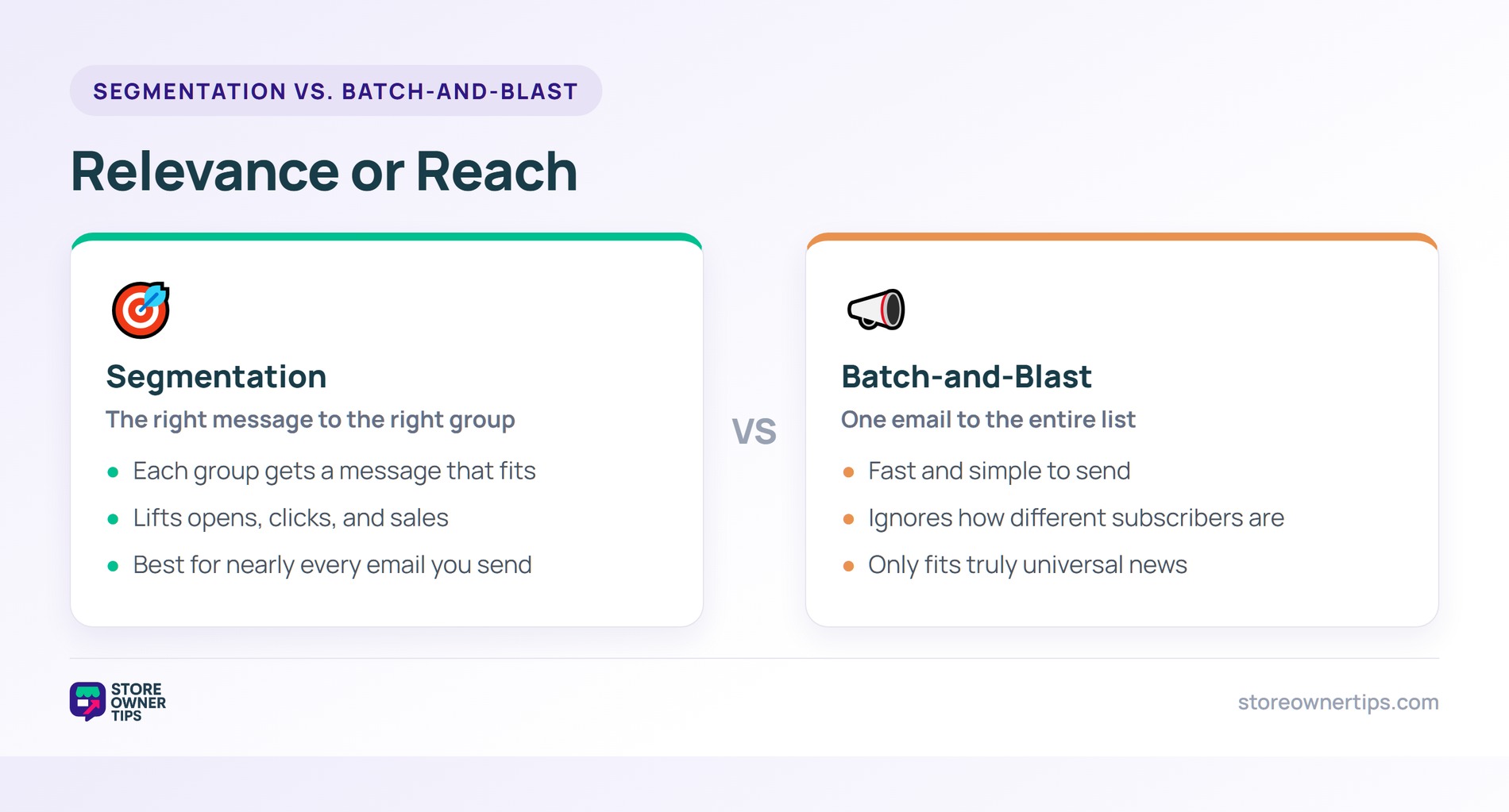
Batch-and-blast sends one email to your entire list. It is fast and simple to do. But it ignores how different your subscribers are.
Segmentation trades that speed for relevance. Each group gets a message that fits. The extra effort pays off in better results.
A blast can suit truly universal news. A store-wide closure or major launch fits all. There, one message genuinely serves everyone.
For most emails, though, segments win. Relevance lifts every metric that matters. So segment by default and blast only when it fits.
Begin with a few broad, useful groups. New subscribers, recent buyers, and inactive subscribers work well. Refine from there as you learn.
Yes, because relevant emails get opened and acted on. A fitting message converts far better than a blast. Even basic segments beat no segments.
Start with just a handful, not dozens. Too many tiny segments are hard to manage. Let results, not vanity, decide when to add more.
Email segmentation splits your list into groups so each gets a relevant message. That relevance lifts opens, clicks, sales, and list health all at once. Start with a few simple segments, send each a tailored email, and watch your email results climb. Group smart, and every email lands better.
Copyright © StoreOwnerTips.com. All Rights Reserved.
