Weekly ecommerce tips, deals & news.
A flash sale is a short, deep discount that runs for a limited time, often just hours. The goal is to spark urgency and drive a fast spike in sales. Shoppers buy quickly because they fear missing the deal. Stores use flash sales to clear stock, attract new buyers, or lift a slow day.
A flash sale has two key ingredients. The first is a deep discount, often 30% or more. The second is a short deadline, sometimes only a few hours. Together, they create pressure to act fast.
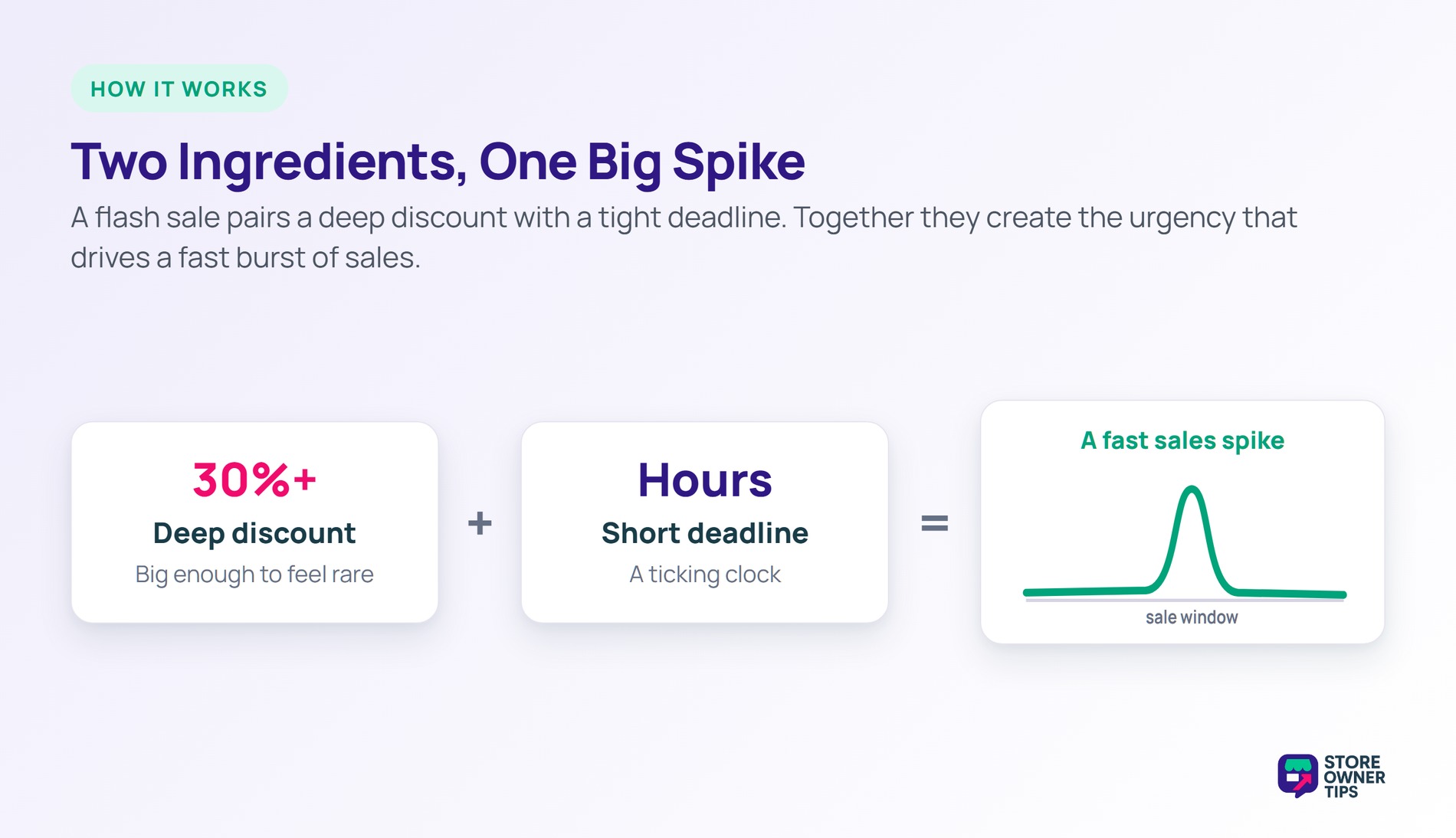
For example, think of a fire drill for shopping. The alarm rings, and everyone moves quickly. A flash sale rings that same bell for your store. The short window is the whole point.
You announce the sale, then watch traffic spike. Most stores promote it by email and alerts. Email drives the biggest share of flash sale traffic. So your email list is your best launch tool.
Flash sales come in a few flavors. Some cover the whole store, others just one category. A single hero product can also anchor the sale. The tighter the focus, the clearer the message.
The best flash sales feel like an event. A clear theme gives shoppers a reason to care. A name like “Midnight Madness” adds energy. That framing makes the deal memorable.
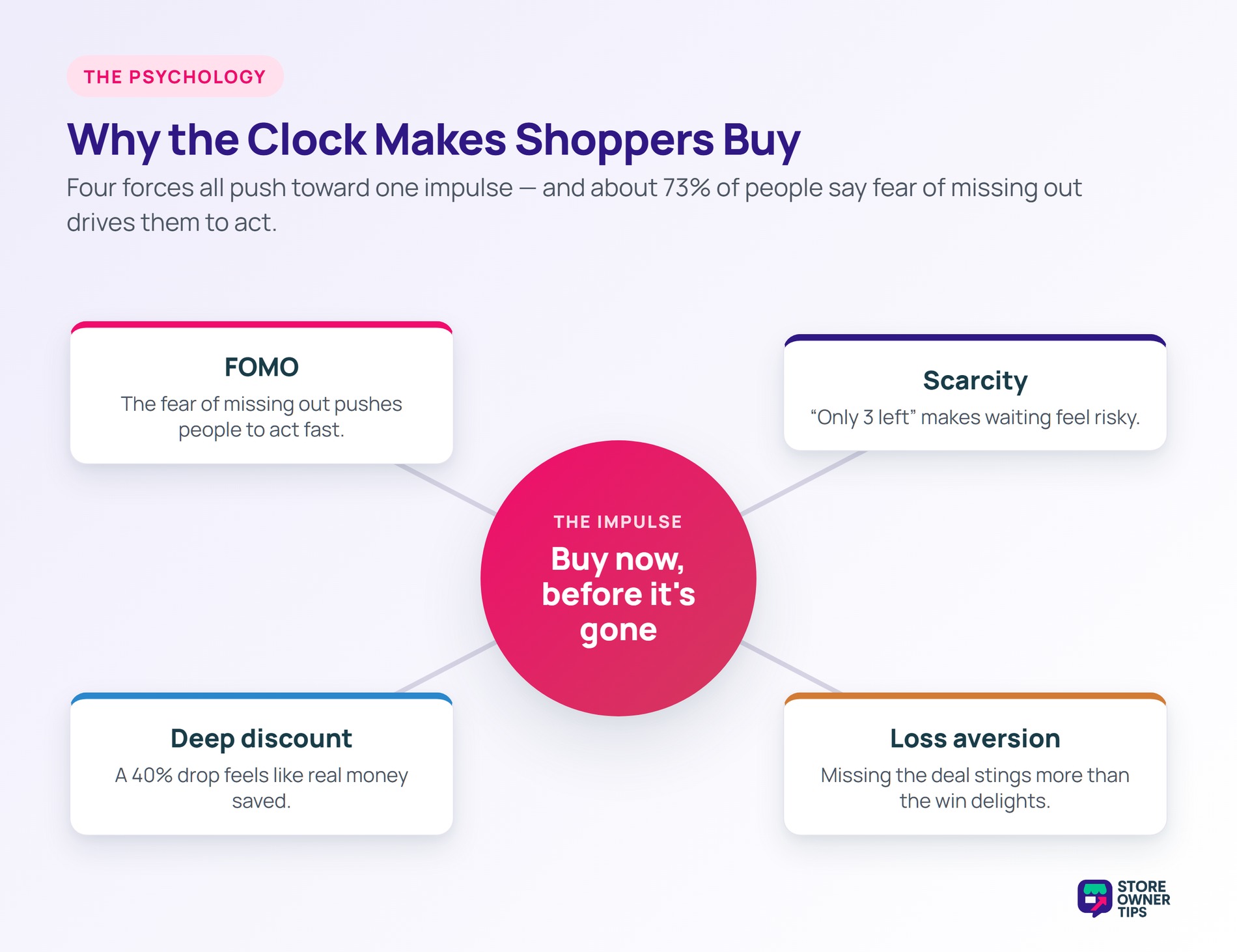
Flash sales run on a feeling called FOMO. That’s the fear of missing out on a good deal. It pushes people to act before the clock runs out. The shorter the window, the stronger the pull.
This urgency is powerful. Around 73% of people say that fear of missing out drives them to act. A flash sale turns that fear into fast sales. The deadline does the persuading for you.
Deep discounts also trigger an impulse purchase. Shoppers buy on emotion, not careful thought. The low price plus the deadline removes hesitation. That mix is what makes flash sales convert.
Limited stock adds a second layer of pressure. Phrases like “only 3 left” push shoppers to act. Scarcity and a deadline work hand in hand. Together they make waiting feel risky.
The discount itself signals a rare chance. A 40% drop feels like real money saved. Shoppers compare it to the normal price fast. That gap is what tips them to buy.
Missing a deal feels like a loss, not a neutral pass. People tend to hate losing more than they like winning. A flash sale plays on that very instinct. So the fear of regret nudges the click.
You don’t need fancy tools to run one. On WooCommerce or Shopify, you can schedule a sale price with start and end times. WooCommerce owners can set coupons that work only during set hours. Countdown timers then add visible pressure on the page.
It helps to plan everything before you launch. Pick the products, the discount, and the exact window first. Many store owners follow a clear playbook to run a flash sale end to end. That prep work is what keeps the rush smooth.
Promotion is half the battle with a flash sale. Tease it early so shoppers can mark the time. Use email, banners, and push alerts to spread the word. Then send a reminder as the deadline nears.
Flash sales shine in specific moments. They clear slow-moving or seasonal stock fast. They also pull in new shoppers hunting for a deal. By contrast, they lose power if you run them too often.
Used too much, a flash sale trains shoppers to wait. They stop paying full price and expect the next deal. So save flash sales for real occasions. Scarcity is what keeps them effective.
Good timing makes a flash sale land harder. Slow sales periods are a natural fit. So are holidays, product launches, and clearance moments. Match the sale to a reason shoppers understand.
Avoid stacking flash sales too close together. Back-to-back deals blur into one long discount. Space them out so each one feels fresh. Rarity is a big part of the appeal.
A few basics separate a smooth sale from a mess. Check your stock levels before you launch. Make sure your site can handle a traffic spike. A crash during the rush wastes the whole effort.
Keep the offer and the rules crystal clear. State the discount, the deadline, and any limits upfront. Confusion kills urgency and sparks complaints. So simple terms protect both sales and trust.
Plan the follow-up before the sale even ends. Thank your buyers and invite them back soon. Send non-buyers a gentle last-chance note. The work after the sale protects its value.
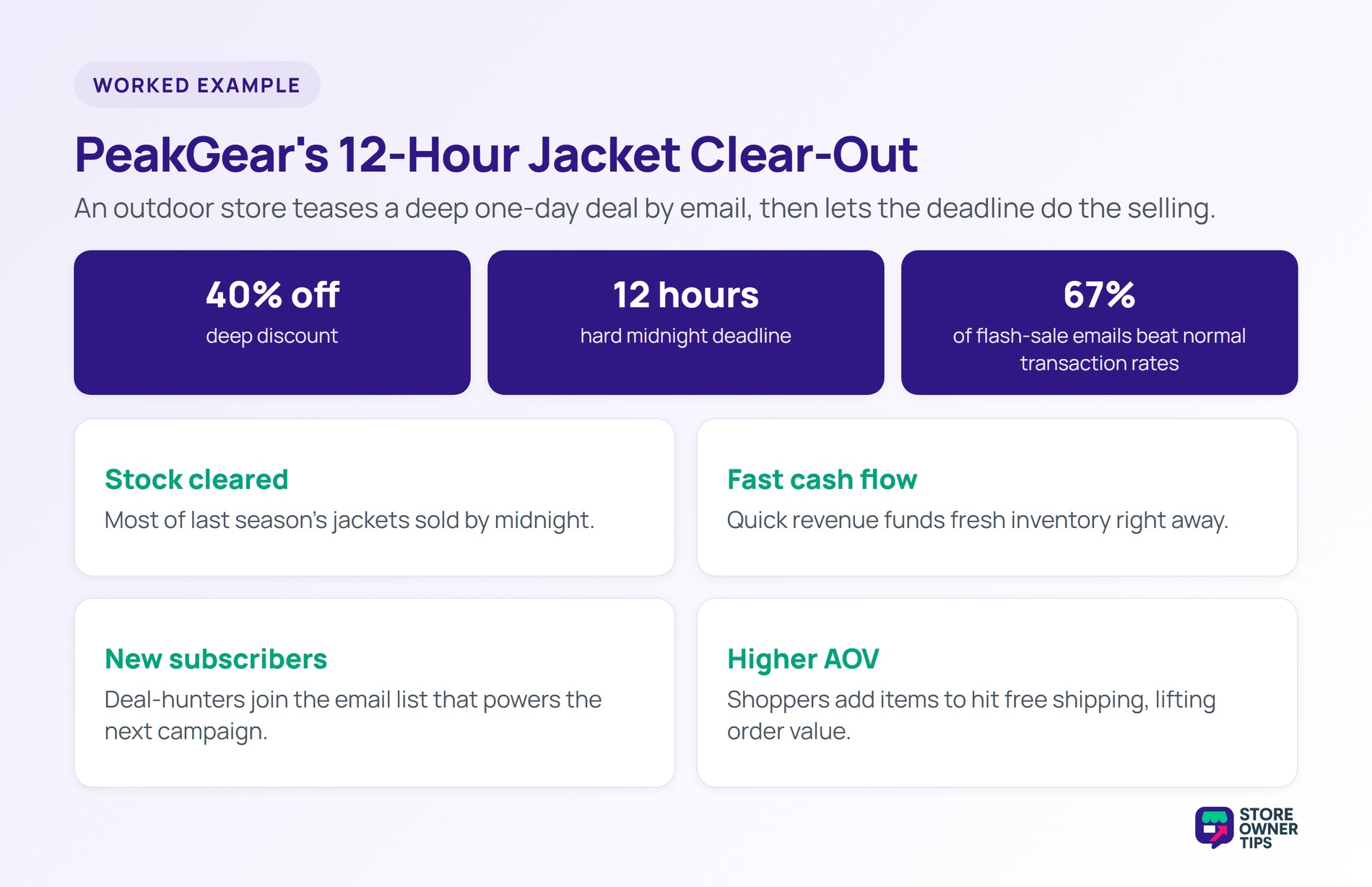
Imagine a WooCommerce store called PeakGear selling outdoor kit. They want to clear last season’s jackets fast. PeakGear plans a 12-hour flash sale at 40% off. They tease it by email the day before.
The goal is a quick spike, not long-term margin. A deep discount draws clicks and fast checkouts. PeakGear knows urgency will do the heavy lifting. So they set a hard midnight deadline.
PeakGear also checks its stock before going live. They confirm enough jackets to meet the rush. Their team preps support for a wave of questions. Good prep keeps the sale from backfiring.
At 8am, PeakGear sends the launch email. Traffic spikes within minutes of the send. Flash sales are proven email winners. In one study, 67% of senders saw higher transaction rates than usual.
Shoppers rush to grab the discount before midnight. The countdown timer keeps the pressure on. Cart abandonment still happens, of course. It averages 70.22% across e-commerce, even during sales.
PeakGear sends a reminder two hours before close. That second nudge sparks a final wave of orders. Late shoppers rush in before the clock stops. The deadline pulls in the stragglers.
By midnight, PeakGear has cleared most of the jackets. The fast cash flow funds fresh stock. Some new buyers also join their email list. That list then powers the next campaign.
Many shoppers add extra items to hit free shipping. Those add-ons lift the store’s average order value. So a single flash sale does double duty. It clears stock and grows the customer base.
PeakGear keeps emailing those new buyers later. Winning them back costs far less than first contact. A flash sale buyer can become a regular. The quick sale seeds a longer relationship.
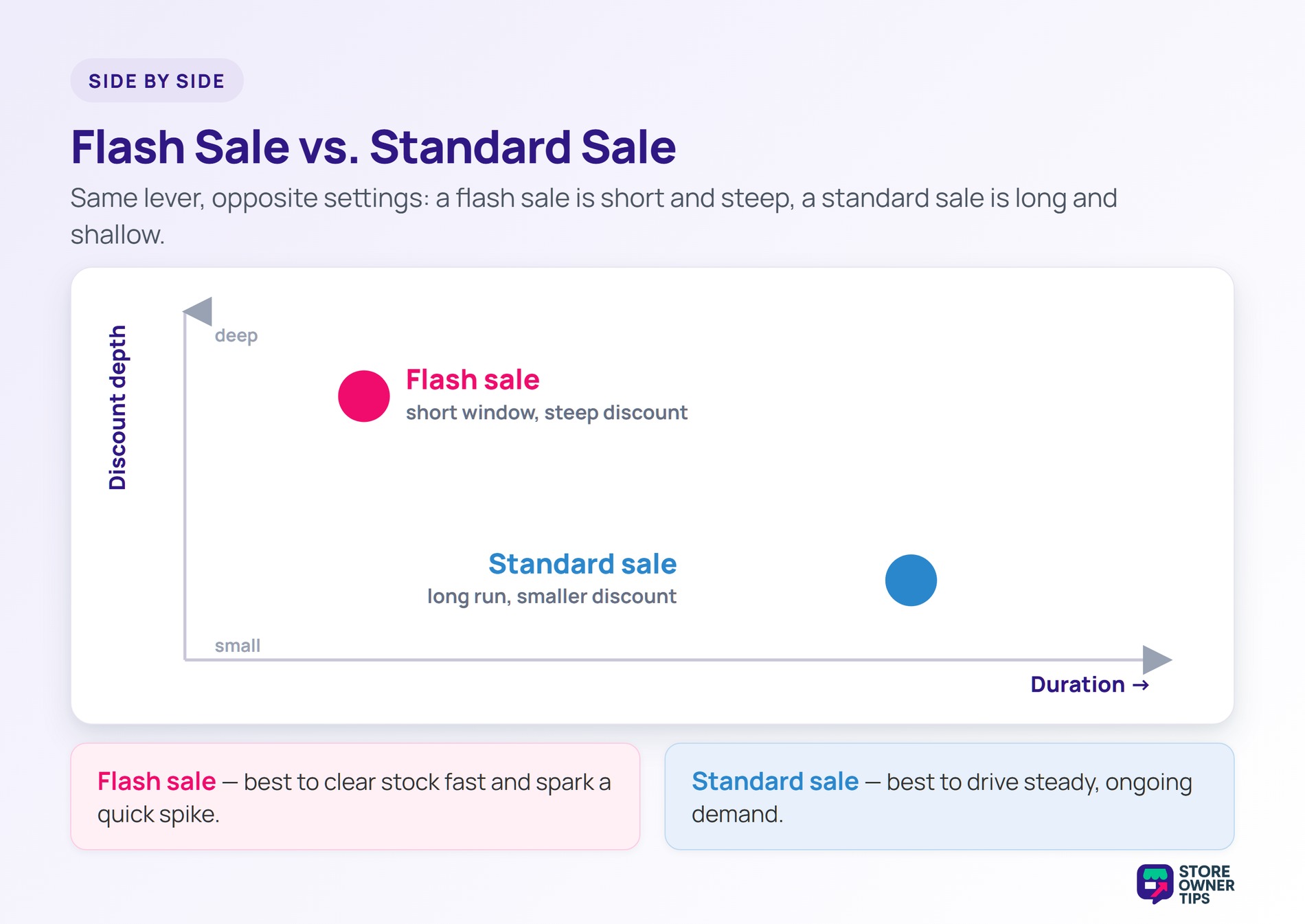
A flash sale isn’t the same as a standard sale. The difference comes down to time and depth. A flash sale is short and steep. A standard sale runs longer with a smaller discount.
Both rely on a clear discount code or sale price. The right choice depends on your goal. Need a fast spike? Run a flash sale. Want steady sales? A standard sale fits better.
Most flash sales run from a few hours up to 48 hours. Shorter windows create stronger urgency. Many stores find a single day works well. The key is a clear, firm deadline.
Less often is usually better. Frequent sales train shoppers to wait for the next deal. A few well-timed events per year keep them special. So treat flash sales as occasions, not routine.
They can if you overuse them or discount too deeply. Rare, well-run sales tend to help instead. They drive buzz and bring in new buyers. The risk comes from making them a habit, so keep them special and infrequent.
A flash sale is one of the fastest ways to spark demand. It trades margin for speed, urgency, and new customers. Used sparingly, it can clear stock and grow your list at the same time. Plan it well, and the payoff outlasts the deadline.
Copyright © StoreOwnerTips.com. All Rights Reserved.
