Weekly ecommerce tips, deals & news.
Also known as impulse buying or impulse purchasing, an impulse purchase is a sudden, unplanned decision to buy something right before checking out. In the online world, it happens when a shopper visits your store without a specific goal, but buys something anyway because a flashy image, a limited-time discount, or a clever product suggestion caught their eye. Instead of thinking logically about a budget, the shopper buys based on a sudden rush of emotion and the desire for instant gratification.
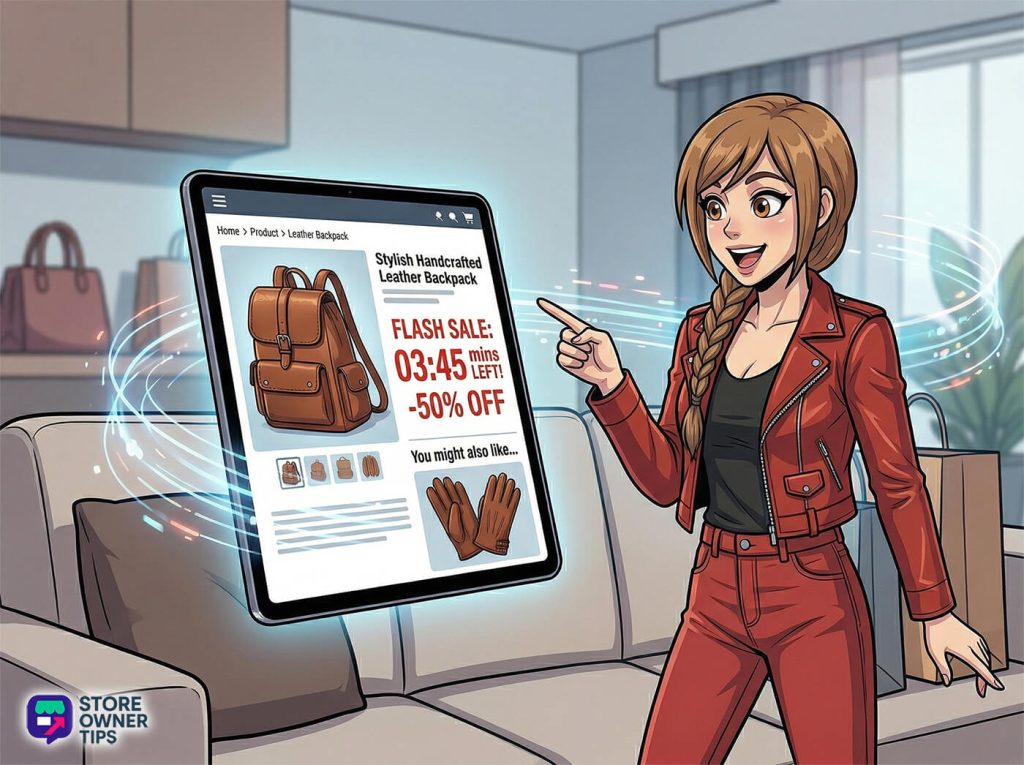
To master impulse buying, you have to understand how it shifted from the physical world to the digital one. In a traditional brick-and-mortar store, a customer has to be physically standing in the checkout aisle to be tempted by a candy bar or a magazine. In e-commerce, your entire website, your social media feeds, and your email newsletters act as a giant, never-ending checkout aisle.
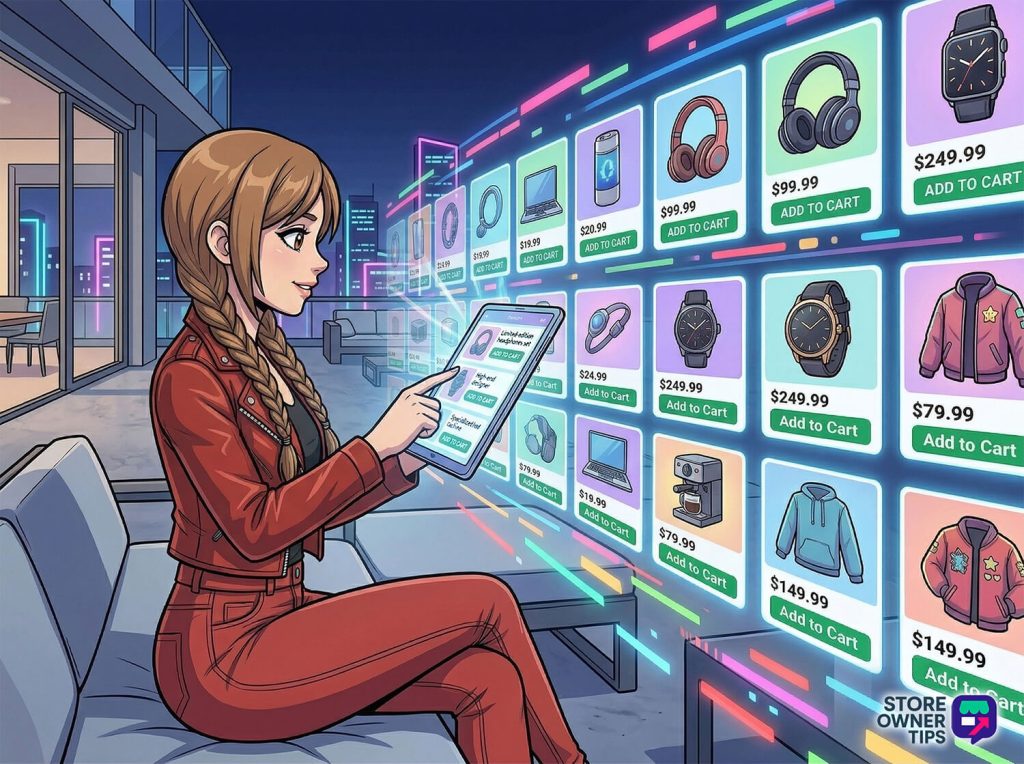
E-commerce treats impulse buying as a highly engineered event. Experts divide this behavior into four specific types:
Psychologists explain this using the “Stimulus-Organism-Response” (S-O-R) model. Think of this like a domino effect. The Stimulus is the trigger on your website—a countdown timer or a beautiful product photo. The Organism is the shopper’s internal brain trying to process the trigger based on their current mood. If they are stressed, they might buy to feel better. The Response is the final action, which is hopefully clicking the “Buy Now” button.
Inside the brain, impulse shopping is a tug-of-war. Your brain’s reward center (the Nucleus Accumbens) lights up when it sees a fun product, releasing feel-good chemicals. However, your brain’s pain center (the Insula) processes the financial reality of spending money. Good e-commerce design overwhelms the pain center. By offering massive discounts or “Buy Now, Pay Later” options, the store turns off the financial pain so the pleasure center can win.

Furthermore, social media creates something called Para-Social Interaction. This is a fancy way of saying a shopper feels a genuine friendship with an influencer they watch on video. Because they feel like friends, the shopper drops their guard and buys whatever the influencer recommends without a second thought.
To turn human psychology into hard cash, e-commerce platforms use specific software tools. The biggest driver is the algorithmic recommendation engine. Using artificial intelligence, platforms analyze massive amounts of past shopping data to figure out exactly what a customer wants. This works like a mind-reading clerk, matching shoppers with complementary items perfectly.
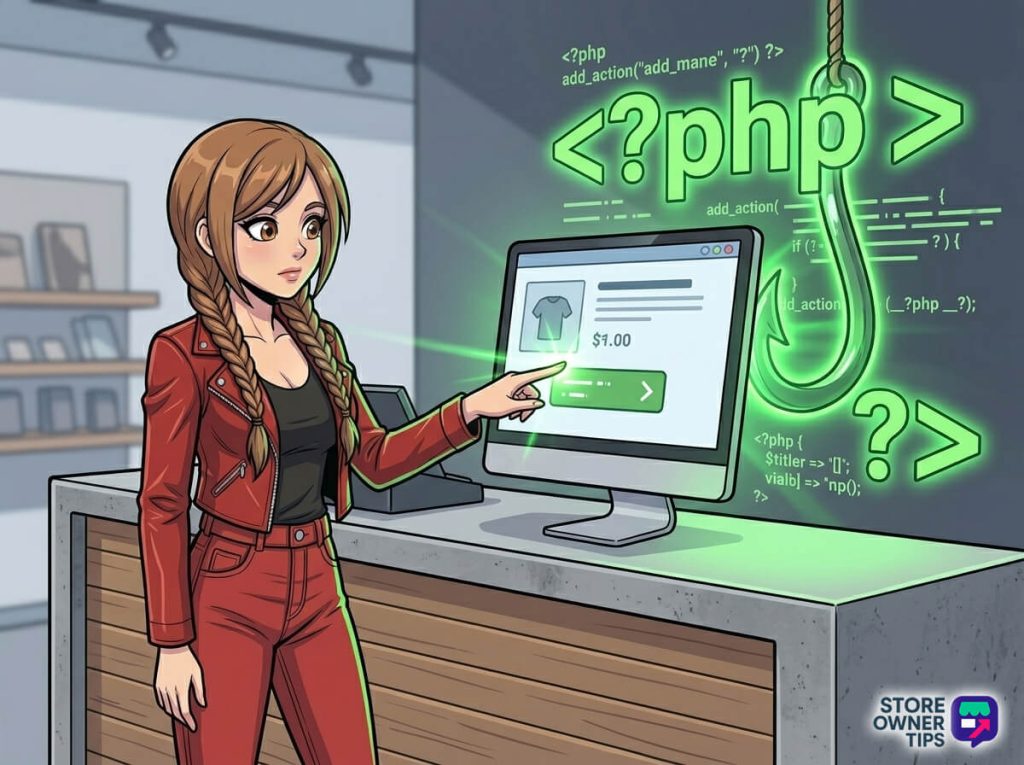
On WordPress and WooCommerce sites, developers use PHP Hooks. Think of hooks as invisible tripwires hidden in your website’s code. When a shopper trips a wire—like adding an item to their cart—the hook automatically triggers a visual trust badge or a low-stock warning right next to the buy button to push them over the edge.
On platforms like Shopify, the real magic happens through vaulted payment tokens. When a customer finishes checking out, the payment system safely holds onto their credit card information for a few minutes. Think of it like leaving your tab open at a bar. An app then shows a special offer on the thank-you page. Because the card is already on file, the shopper can buy the extra item with one single click, without typing out their billing address again.
Imagine a mid-sized online apparel brand called “Urban Trek Gear”. Globally, the fashion and apparel sector sees an average conversion rate of 2.70% to 3.41%. This means out of every 100 visitors, roughly 3 will actually buy something. Urban Trek Gear wants to squeeze more revenue out of those 3 buyers using impulse mechanics.
A shopper named Alex clicks a social media ad for a $100 hiking jacket on his smartphone. Mobile traffic makes up 73% of e-commerce visits, but mobile checkout is clunky. In fact, mobile devices only have an average conversion rate of 1.8%, compared to desktop computers at a much stronger 3.9%. Because Alex is on a phone, his attention span is incredibly short, and any friction will cause him to leave.
Alex adds the $100 jacket to his cart. Instantly, an AI recommendation engine kicks in. Research shows that interacting with AI recommendations can make a shopper 4.5 times more likely to finish the transaction. The AI shows Alex a “Frequently Bought Together” widget featuring a $20 waterproof spray. This triggers a Suggestion Impulse. Alex taps “Add to Cart,” raising the order value to $120.
Next, Alex goes to the checkout page. Urban Trek Gear has placed a dynamic progress bar at the top of the screen that reads: “Add $5 more to unlock FREE Shipping!” Nobody likes paying for shipping—it triggers the brain’s financial pain center. To avoid the shipping fee, Alex quickly grabs a $10 pair of hiking socks from a display right above the checkout button. This is a Reminder Impulse.
Alex completes the $130 purchase, and the payment gateway securely vaults his credit card. He lands on the final thank-you page. His dopamine levels are peaking from the thrill of the buy. Suddenly, a post-purchase upsell app offers him a matching winter beanie at 50% off, but only for the next three minutes. Because his card is vaulted, he clicks “Accept Offer,” and the beanie is instantly added to his order without him typing a single digit.
Through carefully placed triggers, Urban Trek Gear turned a planned $100 jacket purchase into a $145 order, capturing massive profit margins along the way. However, they must be careful. If the jacket and beanie look completely different in real life than they did in the photos, Alex might join the massive wave of online returns.
To truly understand spontaneous buying, you have to look at its exact opposite: planned purchasing. While impulse buying is fast, emotional, and reactive, planned purchasing is slow, rational, and highly structured.
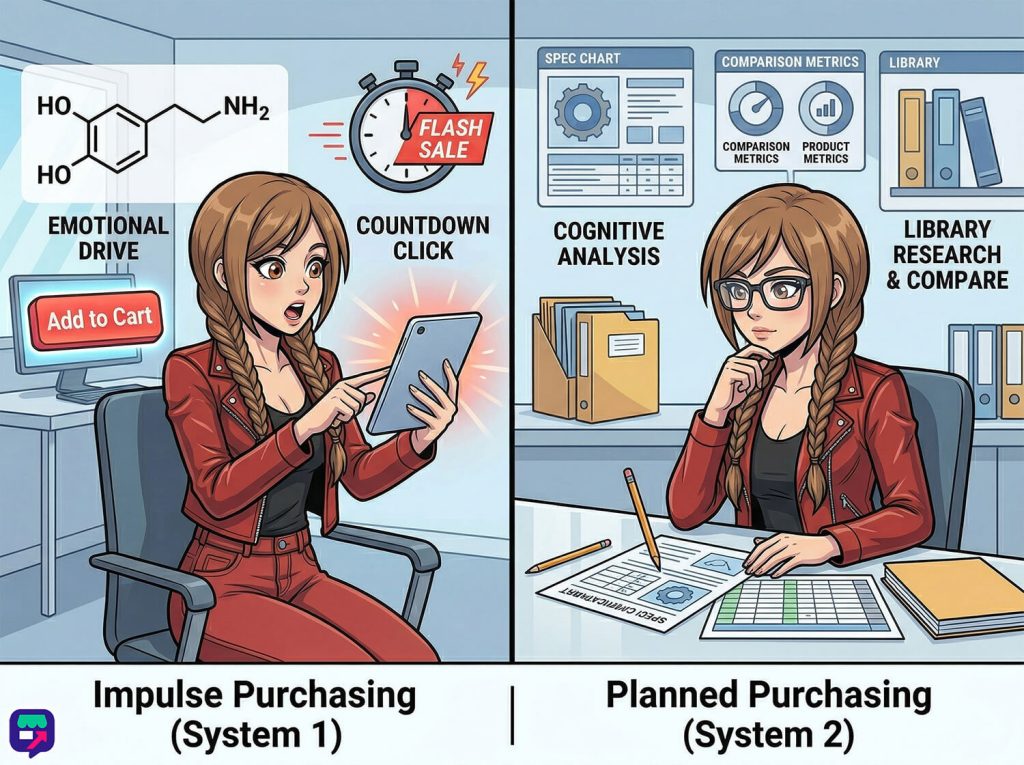
When a customer plans a purchase, they use the analytical part of their brain. They enter your website with a strict budget and a specific goal. They spend hours, days, or even weeks comparing prices, reading deep technical reviews, and checking your return policy. This behavior is incredibly common for high-ticket items like luxury jewelry or home furniture.
Impulse buying relies on instant gratification and a fear of missing out (FOMO). Shoppers making spontaneous buys care very little about the price because they are focused on the thrill of the deal. Interestingly, the rise of 15-minute quick delivery apps has blurred the lines between the two. Items that people used to put on a planned weekend shopping list are now being bought impulsively because delivery is so fast and convenient.
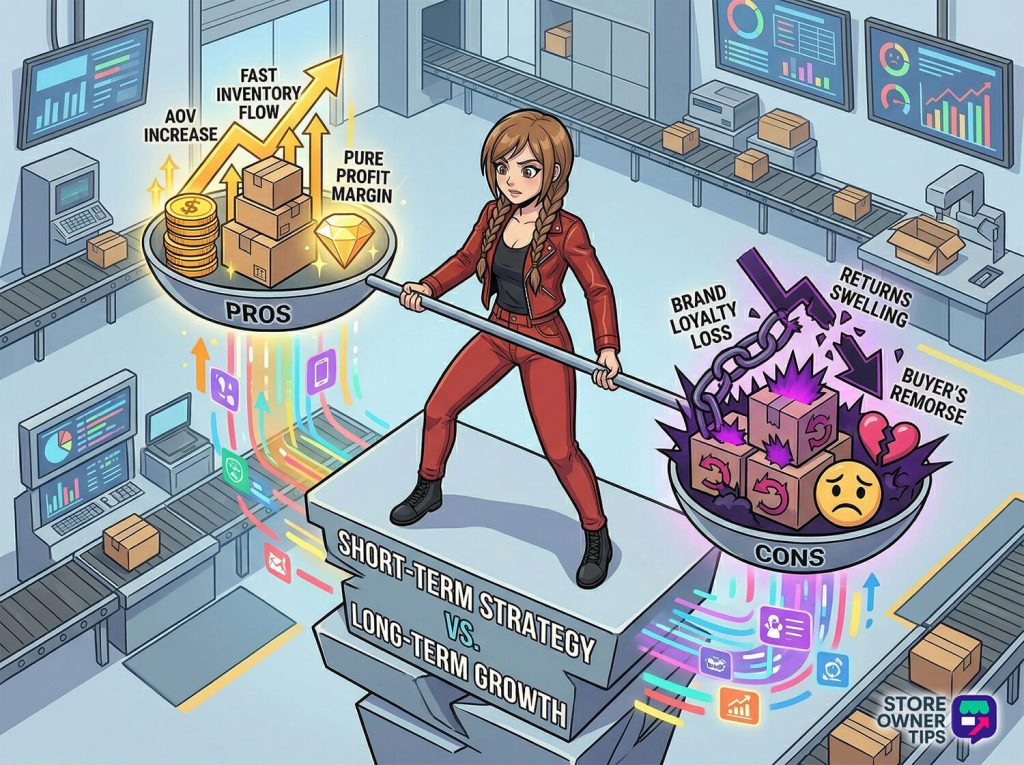
Pushing spontaneous sales through impulse purchasing is an incredible way to grow a business, but it comes with dangerous operational risks.
The most successful strategies feel helpful, not pushy. Avoid aggressive pop-ups that interrupt the shopper. Instead, rely on contextual product placement. Use “Frequently Bought Together” widgets directly on the product page or inside the slide-out cart. Additionally, use visual progress bars that show shoppers how close they are to free shipping. This gamifies the experience, making the customer feel like they are winning a deal rather than being pressured into spending more.
It comes down to a clash between high emotions and physical reality. Over 55% of consumers return spontaneous buys because the item looked materially different in person, and 59% return them due to subpar quality. The emotional thrill of a highly edited social media video fades quickly once the actual product is in their hands. Furthermore, consumers often practice “bracketing”—buying multiple sizes of an item in a frantic rush, fully intending to return the ones that do not fit.
Yes, they are among the highest-ROI tools you can install. These apps catch the customer on the final thank-you page after their primary payment has already gone through safely. Because the app uses the “vaulted” credit card token, the customer can buy the extra item with a single click. There is absolutely zero risk of them abandoning their original cart, and it instantly boosts your average order value.
It depends heavily on the price and the type of product. Low-cost, everyday items in the Food & Beverage or Health & Beauty sectors generate the most impulse purchases, with conversion rates regularly topping 4.5%. On the other hand, expensive items like luxury jewelry or home furniture almost never trigger spontaneous buying, because shoppers need time to research and budget for those big investments.
Artificial intelligence is an incredibly powerful tool for driving spontaneous sales. When stores use AI to personalize product suggestions based on a shopper’s browsing history, these impulse purchases can account for up to 31% of the website’s total revenue. During busy peak shopping seasons, showing the perfect complementary item at the exact right moment can boost a store’s average order value by a massive 369%.
Impulse purchasing is a highly engineered, deeply psychological mechanism that can instantly multiply your store’s average order value when executed correctly. However, for sustainable, long-term growth, store owners must balance these powerful checkout triggers with strict quality control to prevent massive return rates from destroying their hard-earned profits.
Copyright © StoreOwnerTips.com. All Rights Reserved.
