Weekly ecommerce tips, deals & news.
Inventory management is the practice of tracking and controlling your stock so you always know what you have. It covers counting products, watching what sells, and reordering before you run out. The goal is to hold enough to meet demand without tying up cash in excess. Done well, it keeps shelves full and money free.
Inventory management is how you stay on top of your stock. You track every unit from arrival to sale. That visibility tells you what to buy and when.
Think of it like a control tower for your products. The tower knows where every plane is at all times. Good inventory control gives you that same clear view.
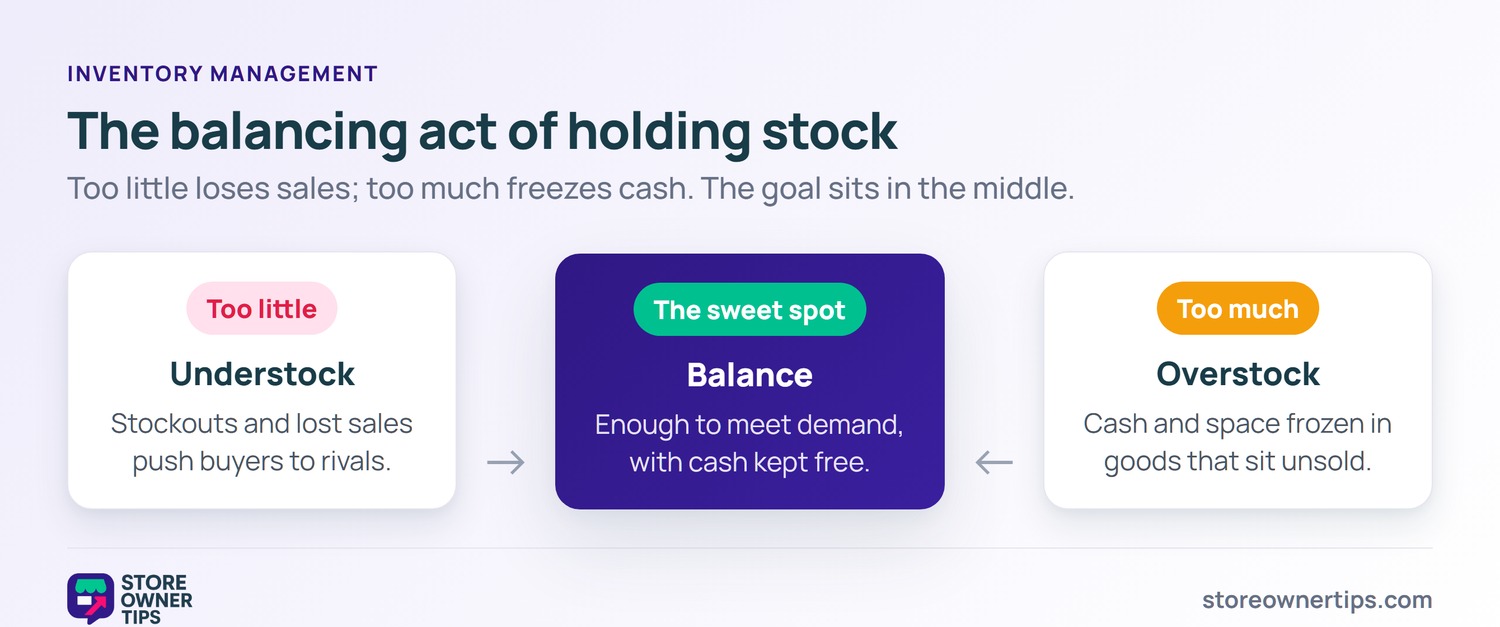
The aim is a careful balance. Too little stock means stockouts and lost sales. Too much means cash frozen in unsold goods.
Strong inventory data also guides your marketing. You can promote what you have in surplus. That moves stock and lifts cash flow.
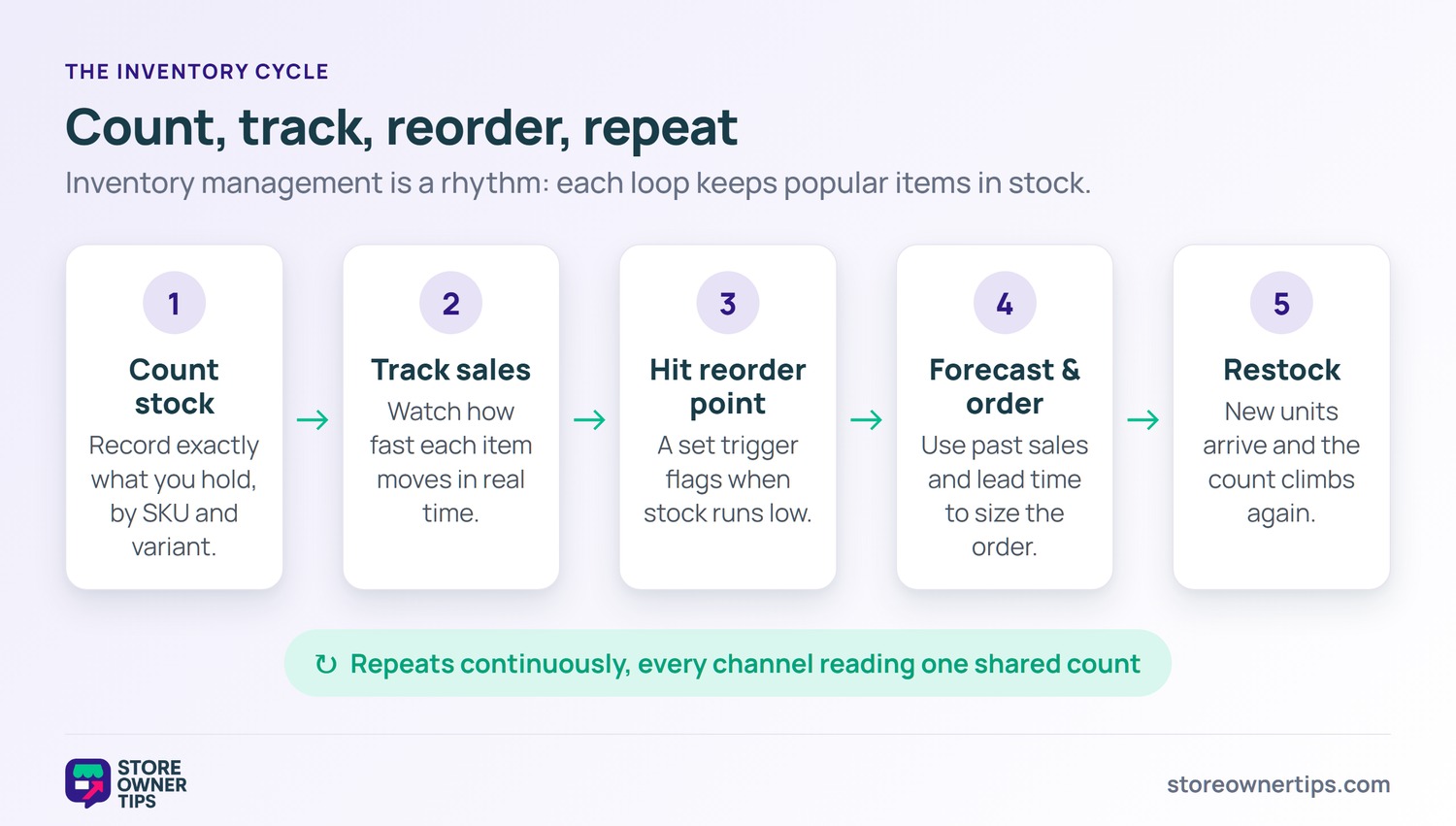
Inventory management blends a few key jobs. First, you count and record what you hold. Then you watch how fast each item sells.
Next, you set reorder points for each product. When stock hits that level, you order more. That rhythm keeps popular items always in stock.
You also handle the messy edges. Returns come back and rejoin your stock. Damaged goods get written off and removed.
You also organize stock for fast picking. A logical layout speeds every order. Smart placement cuts fulfillment time.
On WooCommerce, stock management is built right in. You enable it and set a quantity for each product. The store then counts down with every sale.
You can set low-stock and out-of-stock alerts. WooCommerce can hide or flag items that run out. WooCommerce and Shopify both track stock this way, though setup differs.
For deeper control, tools extend these basics. A solid WooCommerce inventory management setup can export stock data and sync counts. That keeps your numbers accurate as you grow.
Poor inventory control quietly drains your store. Overstock freezes cash in goods that sit unsold. Understock loses sales you could have made.
Both problems hit your thin margins hard. General retailers average a net margin of just 5.61%. Deadstock or lost sales can erase that slim profit fast.
Stockouts also push buyers to rivals. A shopper who cannot buy from you buys elsewhere. Good control keeps that sale on your side.
When something does sell out, plan a recovery. A back-in-stock notification brings buyers back. That recaptures a sale a stockout would lose.
Many stores sell in more than one place. A website, a marketplace, and a shop floor all draw from one pool. Without sync, you oversell the same unit twice.
Real-time tracking solves this headache. A sale anywhere updates the count everywhere. That keeps every channel honest.
Accurate counts also support faster delivery. About 63% of consumers now expect delivery within two days. You can only promise speed for stock you truly have.
A central stock system is the cleanest fix. Every channel reads from one source of truth. That single count ends the double-sell problem.
Smart inventory looks ahead, not just back. You study past sales to predict future demand. That forecast tells you how much to order.
Seasons and trends shape those numbers. A gift item spikes before the holidays. Good forecasting stocks up before the rush.
Returns also feed back into your planning. Retailers expect 16.9% of sales to come back each year. Those returned units rejoin stock and shift your counts.
Lead time matters as much as demand. Order early enough to cover the wait. A long supplier lead time needs an earlier trigger.
Holding stock is never truly free. Storage, insurance, and handling all cost money. Those carrying costs grow with every extra unit.
Deadstock is the sneakiest cost of all. Unsold goods tie up cash and space. The longer they sit, the more they drain you.
Stockouts carry a hidden cost too. You lose the sale and maybe the customer. Lost trust can cost far more than the missed order.
There is also the cost of obsolescence. Trends shift and some stock goes stale. Sell it before it loses all its value.
A few red flags signal trouble. Frequent oversells mean your counts are wrong. Surprise stockouts point to weak reorder rules.
Piles of unsold stock are another warning. They show your buying outran real demand. Tighter forecasting would free that cash.
Hours lost to manual counting is a clear sign. If stock checks eat your week, automate them. Good tools pay for themselves fast.
Margins that keep shrinking are a clue too. Hidden carrying costs often eat the difference. Better control can win that margin back.
Variants make inventory trickier. A variable product holds many separate counts. Each size or color must be tracked alone.
Miss one variant count, and you oversell it. So treat every variant as its own line. Pair variant tracking with clear SKUs for full accuracy.
Accurate variant data also sharpens your buying. You see which size or color really moves. That detail guides smarter restocks.
The first mistake is trusting memory over data. Guesswork leads to both stockouts and overstock. Always count and record instead.
Another trap is ignoring slow movers. Deadstock quietly eats space and cash. Spot it early and discount it to recover money.
A third slip is no reorder system. Without set trigger points, you reorder too late. Popular items then sell out at the worst time.
A fourth mistake is skipping regular counts. Records drift from reality over time. A periodic count keeps your data honest.
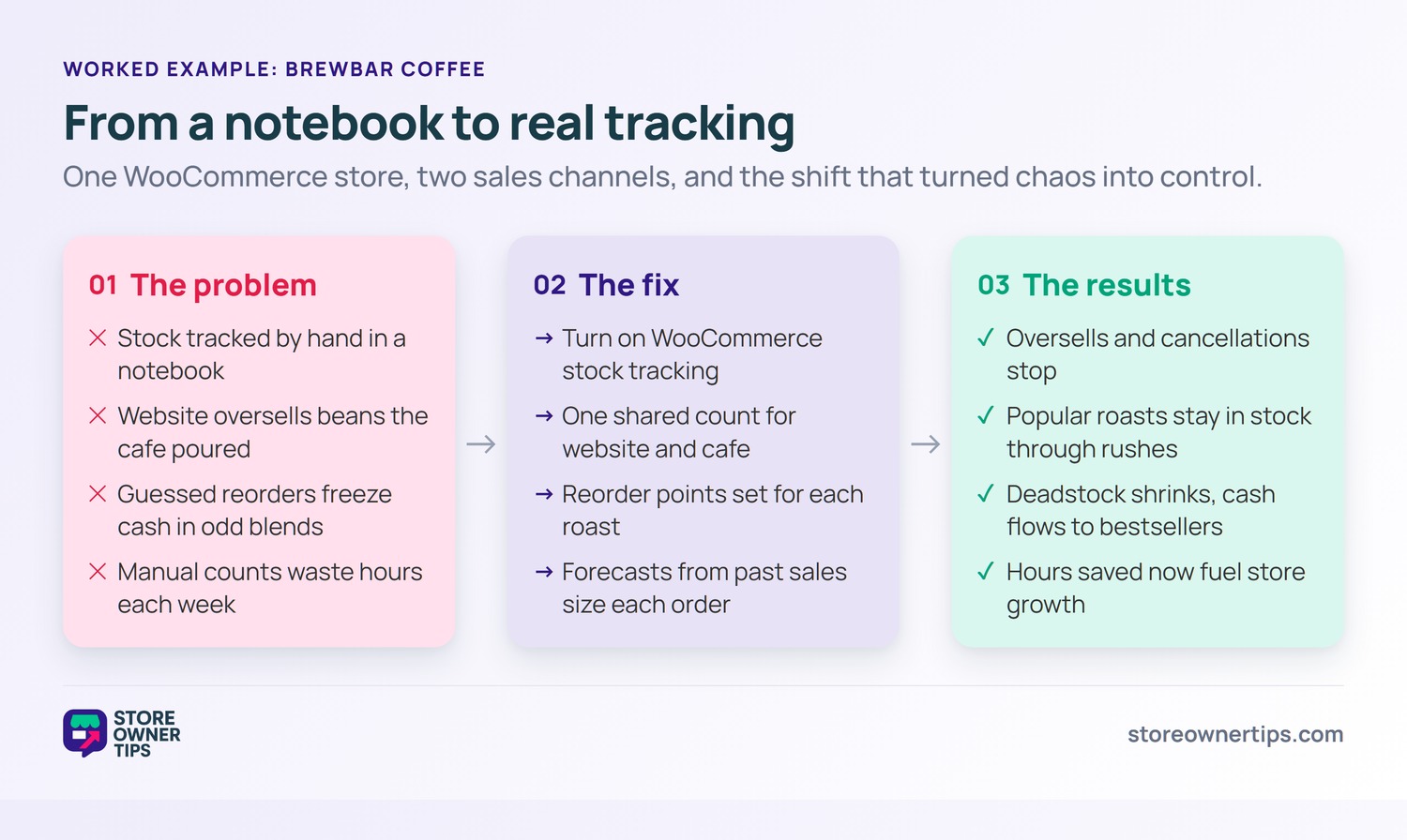
Imagine a coffee brand called BrewBar on WooCommerce. It sells beans online and at a small cafe. Both pull from the same stockroom.
BrewBar tracks stock by hand in a notebook. The website oversells beans the cafe already poured. Buyers get cancellations, and trust takes a hit.
The owner also guesses at reorders. Popular roasts sell out while odd blends pile up. Cash sits frozen in beans no one wants.
The notebook also wastes hours each week. That time should go into growing the cafe. The manual system simply cannot keep up.
BrewBar turns on WooCommerce stock tracking. Now a sale anywhere updates one shared count. The website and cafe finally agree.
The owner sets reorder points for each roast. Low-stock alerts prompt timely orders. Forecasts based on past sales guide the amounts.
Oversells stop once the count is shared and live. Popular roasts stay in stock through the rush. Cancellations and angry emails fade away.
Deadstock shrinks as slow blends get discounted. Cash flows back into bestsellers. BrewBar also forecasts ahead for the holiday rush.
Hours once lost to counting now fuel growth. The whole store runs calmer and leaner. The lesson is clear: real tracking turns chaos into control.
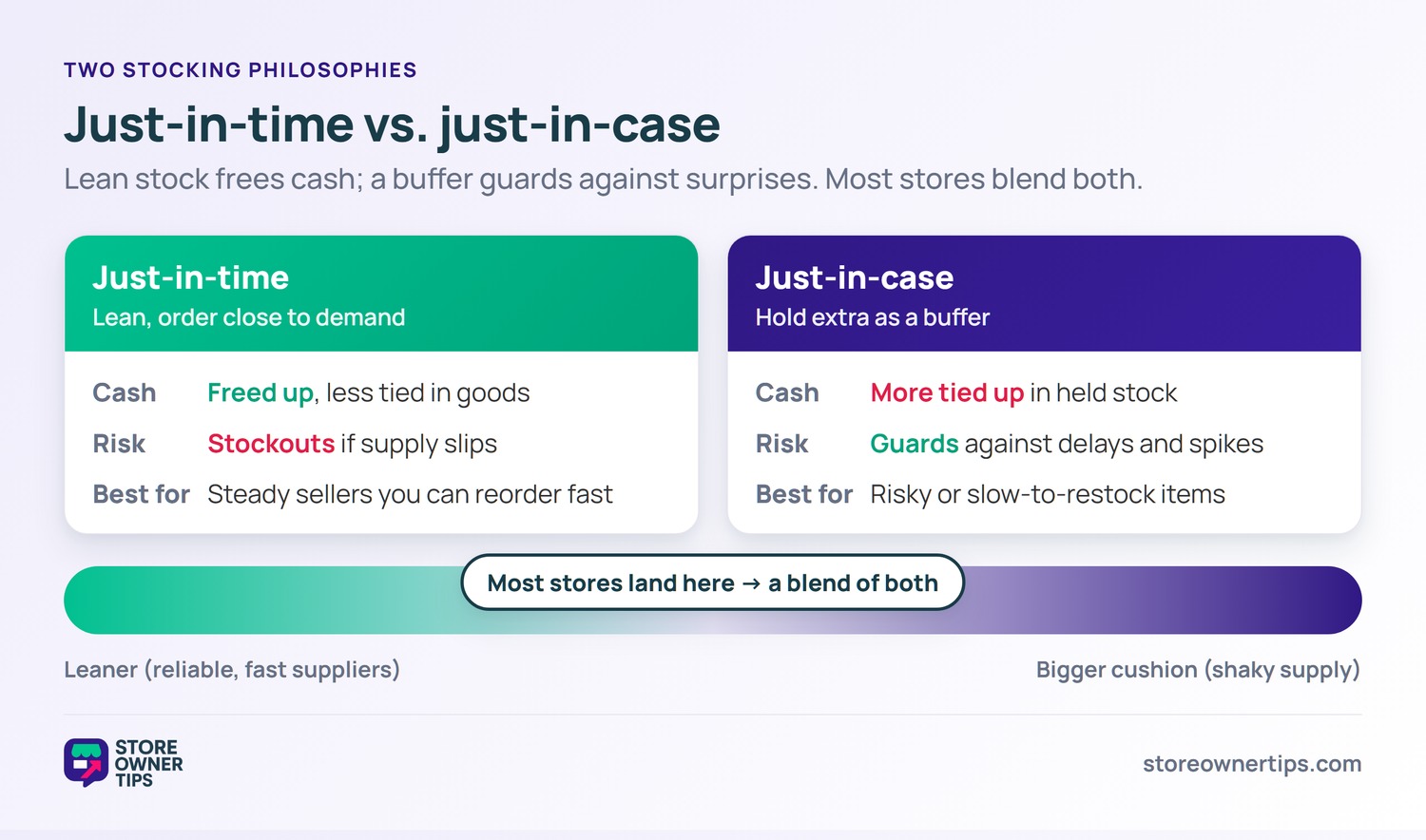
Two stocking philosophies sit at opposite ends. Just-in-time keeps stock lean and orders close to demand. It frees cash but risks stockouts if supply slips.
Just-in-case holds extra stock as a buffer. It guards against surprises and supply delays. The trade-off is more cash tied up in goods.
Most stores land somewhere in the middle. They run lean on steady sellers they can reorder fast. They hold a buffer on risky or slow-to-restock items.
The right mix depends on your suppliers and cash. Reliable, fast suppliers allow a leaner approach. Shaky supply calls for a bigger cushion.
The goal is to hold just enough stock to meet demand. You avoid both stockouts and costly overstock. In short, the right stock at the right time.
Use real-time stock tracking across every channel. A sale anywhere should update one shared count. That keeps you from selling stock you do not have.
It depends on your demand and supplier speed. Faster, reliable suppliers need a smaller buffer. Review the buffer as your sales change.
Inventory management is the balancing act of holding enough stock without holding too much. Strong control prevents stockouts, frees up cash, and keeps customers happy. Track in real time, forecast with data, and your stock becomes a strength instead of a risk. Treat it as a daily habit, not a once-a-year scramble.
Copyright © StoreOwnerTips.com. All Rights Reserved.
