Weekly ecommerce tips, deals & news.
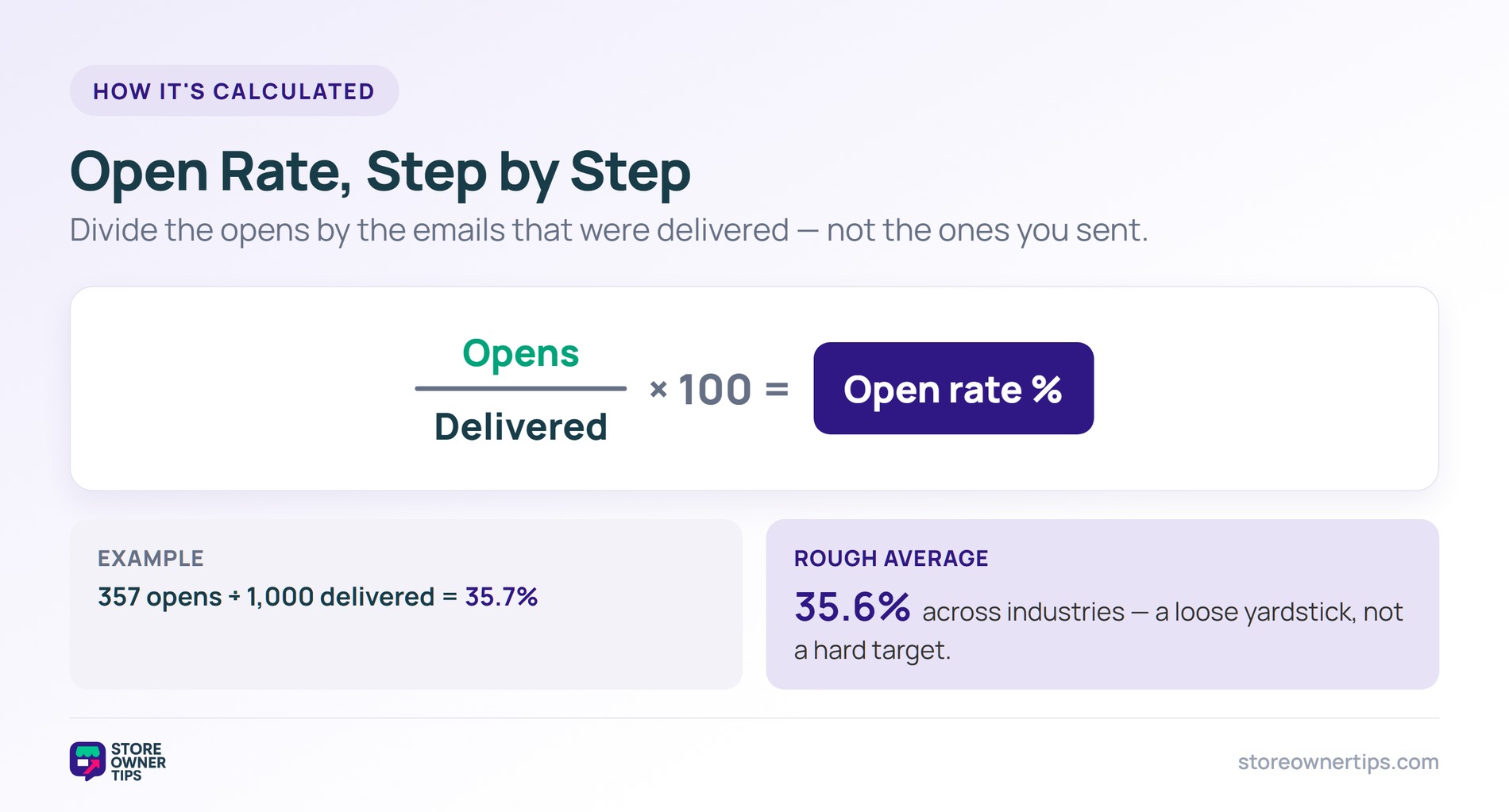
Open rate is the percentage of delivered emails that recipients actually open. You calculate it by dividing opens by emails delivered. It is one of the most-watched email metrics because it shows whether your subject lines work. A healthy open rate means your emails are getting noticed in a crowded inbox.
Open rate measures how many people opened your email. It is the first hurdle every campaign must clear. If no one opens, nothing else can happen.
Think of it like a letter on a doorstep. The open rate is how many people pick it up and tear the envelope. What is inside only matters once they do.
It reflects the strength of your subject and sender. A great email with a dull subject stays unopened. So the open rate is really a test of first impressions.
It is a vanity metric if watched alone. On its own, an open buys nothing. Pair it with clicks to see real value.
The formula is simple. You divide the number of opens by the number of emails delivered. Then multiply by 100 for a percentage.
Note that it uses delivered emails, not emails sent. Bounced messages are removed from the math first. That keeps the rate fair and accurate.
An email counts as opened when its tracking pixel loads. That tiny image signals the open back to your tool. This detail matters for the privacy issue ahead.
Some tools report a unique open rate too. It counts each person once, not every reopen. That gives a cleaner read on reach.
There is no single perfect number. A good rate depends on your industry and list quality. Context matters more than any benchmark.
As a rough guide, the average sits around 35.63% across industries. Some niches run higher, others lower. Use it as a loose yardstick, not a hard target.
Your own trend matters most of all. Compare each campaign to your past sends. A rising rate means your subject lines are improving.
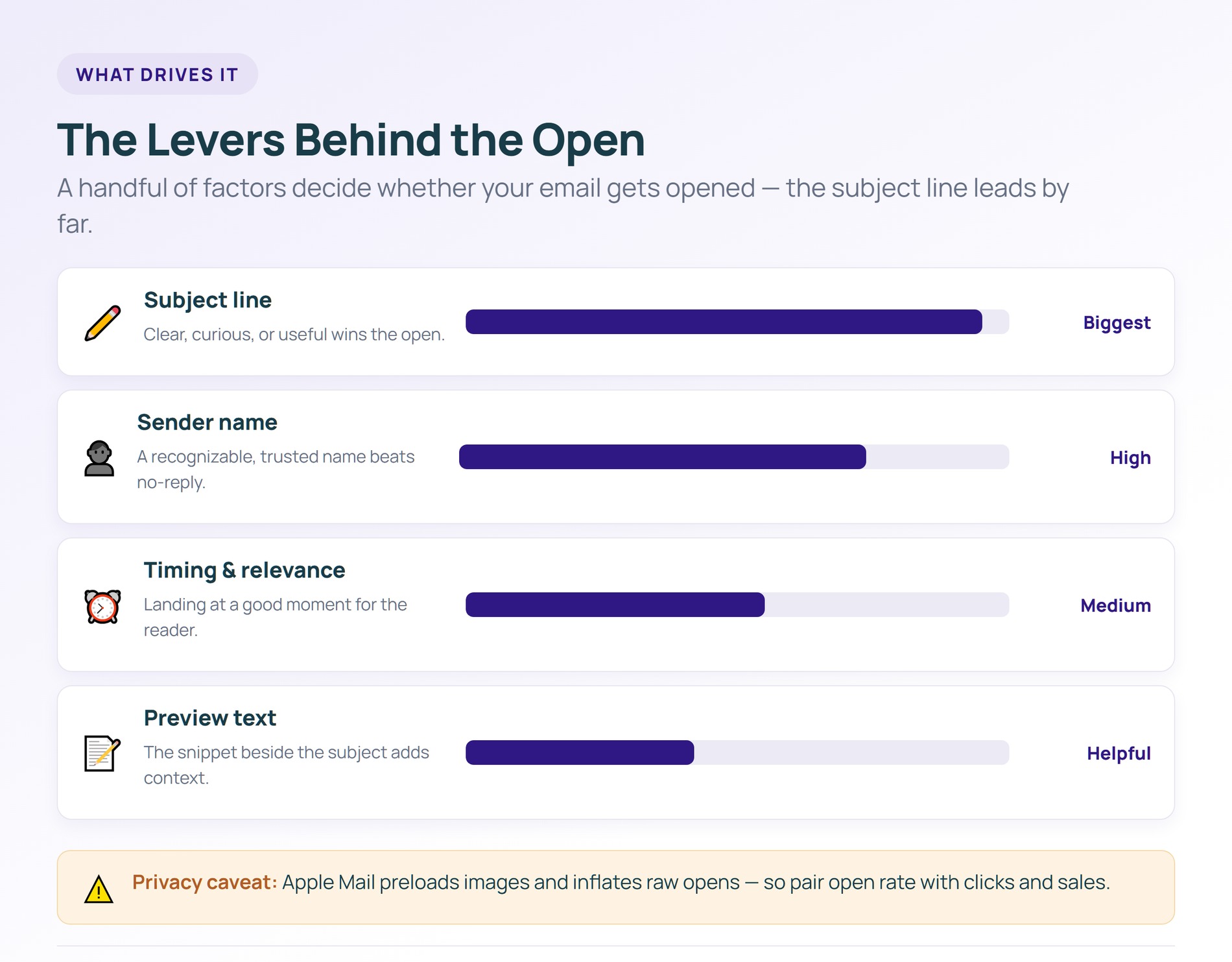
The subject line is the biggest lever by far. A clear, curious, or useful subject earns the open. A vague or spammy one gets skipped.
The sender name matters nearly as much. People open emails from names they trust. A recognizable sender beats a faceless address.
Timing and relevance round it out. An email that lands at a good moment gets opened. Strong targeted email marketing lifts opens too.
Preview text matters too. That snippet beside the subject adds context. A good preview line lifts the open.
The open is where every email result begins. No open means no click, and no sale. So the open rate caps everything downstream.
Email is a high-value channel to begin with. It returns about $36 for every $1 spent. A better open rate unlocks more of that return.
Like conversion rate optimization, improving each step compounds. A small lift in opens flows through to sales. Every stage you sharpen pays off.
A low open rate is an early warning. It often means your list or subjects need work. Catch it before sales slip.
Open rates are not as reliable as they once were. Apple’s Mail Privacy Protection changed the game. It preloads email images, even ones never truly opened.
That preload triggers the tracking pixel automatically. So many opens get counted that never really happened. The result is an inflated, fuzzy open rate.
This does not make open rate useless. It just means you should not trust it alone. Lean on clicks and sales for the real picture.
So shift your focus toward clicks and conversions. Those actions are harder to fake. They show the true health of a campaign.
Keep subject lines short and clear. Many inboxes cut them off on mobile. Front-load the hook so it survives the trim.
Spark curiosity or promise value. A question or a clear benefit pulls the open. Avoid spammy words and all caps.
Personalize where you can. A name or a relevant detail stands out. Tailored subjects beat generic ones.
Test two subjects on a small split. Send the winner to the rest. Emojis can help, but use them sparingly and on-brand.
An open cannot happen if the email never lands. Deliverability decides whether you reach the inbox. A spam-foldered email gets zero opens.
Keep your list clean to protect it. Remove dead addresses and honor unsubscribes. Senders with good habits reach more inboxes.
Engagement feeds deliverability too. Inbox providers favor senders people open. Authenticate your domain to land in the inbox.
Avoid spam-trigger words in the subject. Filters flag aggressive sales language. Plain, honest wording lands better.
Start with the subject line. Test curiosity, clarity, and value-driven angles. Small wording changes can lift opens a lot.
Send from a real, recognizable name. A person feels warmer than a brand alias. Familiarity earns the open.
Then keep your list clean and engaged. Remove dead addresses and segment by interest. A relevant list opens far more often.
Mind your send time as well. Test mornings against evenings. The best window varies by audience.
The first mistake is trusting the number blindly. Privacy changes have inflated it. Treat it as a rough signal, not gospel.
Another trap is chasing opens over clicks. An opened email that no one acts on earns nothing. Focus on the action, not just the glance.
A third slip is ignoring the trend. One campaign tells you little. The pattern over time reveals the truth.
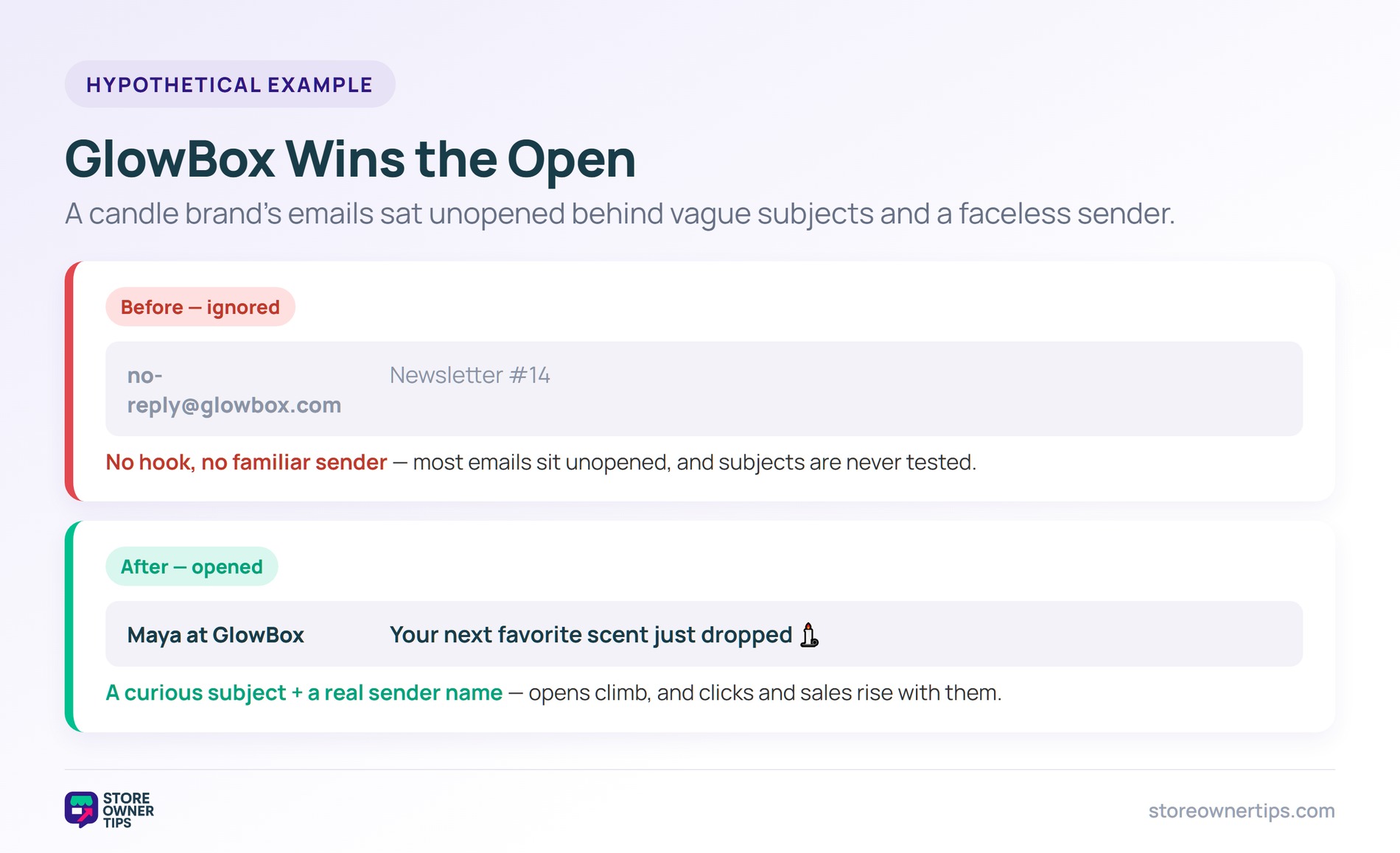
Imagine a candle brand called GlowBox on WooCommerce. Its emails get very few opens. The subject lines are vague and forgettable.
GlowBox uses subjects like Newsletter #14. Nothing about that invites a click. Most emails sit unopened in the inbox.
It also sends from a generic no-reply address. Subscribers do not recognize the sender, so they scroll past. And it never tests its subject lines.
GlowBox rewrites its subject lines with a clear hook. One reads: Your next favorite scent just dropped. Each subject now sparks curiosity or value.
It also switches to a real sender name. Emails now come from a friendly person at the brand. The familiar name earns more opens.
Open rates climb across every campaign. More subscribers see the offers inside. Clicks and sales rise along with the opens.
GlowBox also adds preview text to each email. The extra line reinforces the subject. Together they pull even more opens.
It now watches the trend, not one send. It keeps testing subjects that win. The lesson is clear: the subject line opens the door.
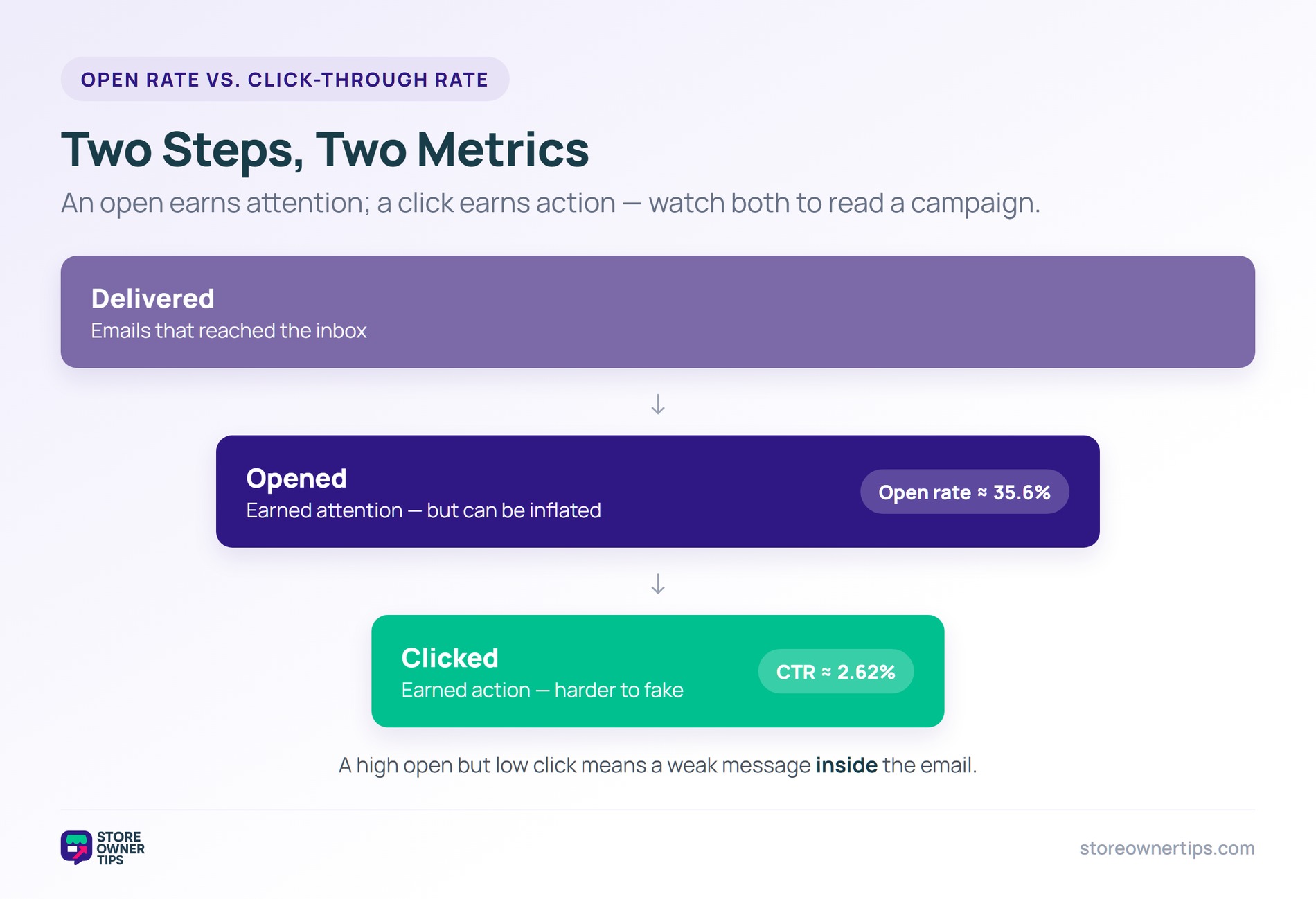
Open rate and click-through rate measure different steps. Open rate counts who opened the email. Click-through rate counts who clicked a link inside.
The open is the first step, the click is the second. An open shows you earned attention. A click shows you earned action.
Click-through rate is often the more honest metric. It is harder to fake than an open. The average click rate sits near 2.62%.
Watch both together for the full story. A high open but low click means a weak message inside. A balanced pair signals a healthy campaign.
There is no universal number, but the average is near 35%. It varies a lot by industry. Compare each campaign to your own past results.
Apple’s privacy feature inflates opens by preloading images. That counts opens that never really happened. So focus on clicks for a truer read.
Focus first on a strong subject line. Send from a recognizable name and keep your list clean. Then test subjects and keep what works.
Open rate is the share of delivered emails that get opened, and the subject line is its biggest driver. Privacy changes have made the raw number fuzzy, so pair it with clicks and sales. Watch your own trend, sharpen your subject lines, and use open rate as one signal among several. Win the open, then earn the click.
Copyright © StoreOwnerTips.com. All Rights Reserved.
