Weekly ecommerce tips, deals & news.
Order fulfillment is everything that happens after a customer clicks the buy button. It covers receiving the order, picking the item, packing it, and shipping it out. The process ends when the package lands safely at the customer’s door. Done well, it turns a single sale into a happy, repeat customer.
Order fulfillment is a chain of steps, each one feeding the next. First, you receive and store inventory in a warehouse or back room. Then a paid order triggers picking, where a worker grabs the right items. Next comes packing, where the goods are boxed with care and a slip.
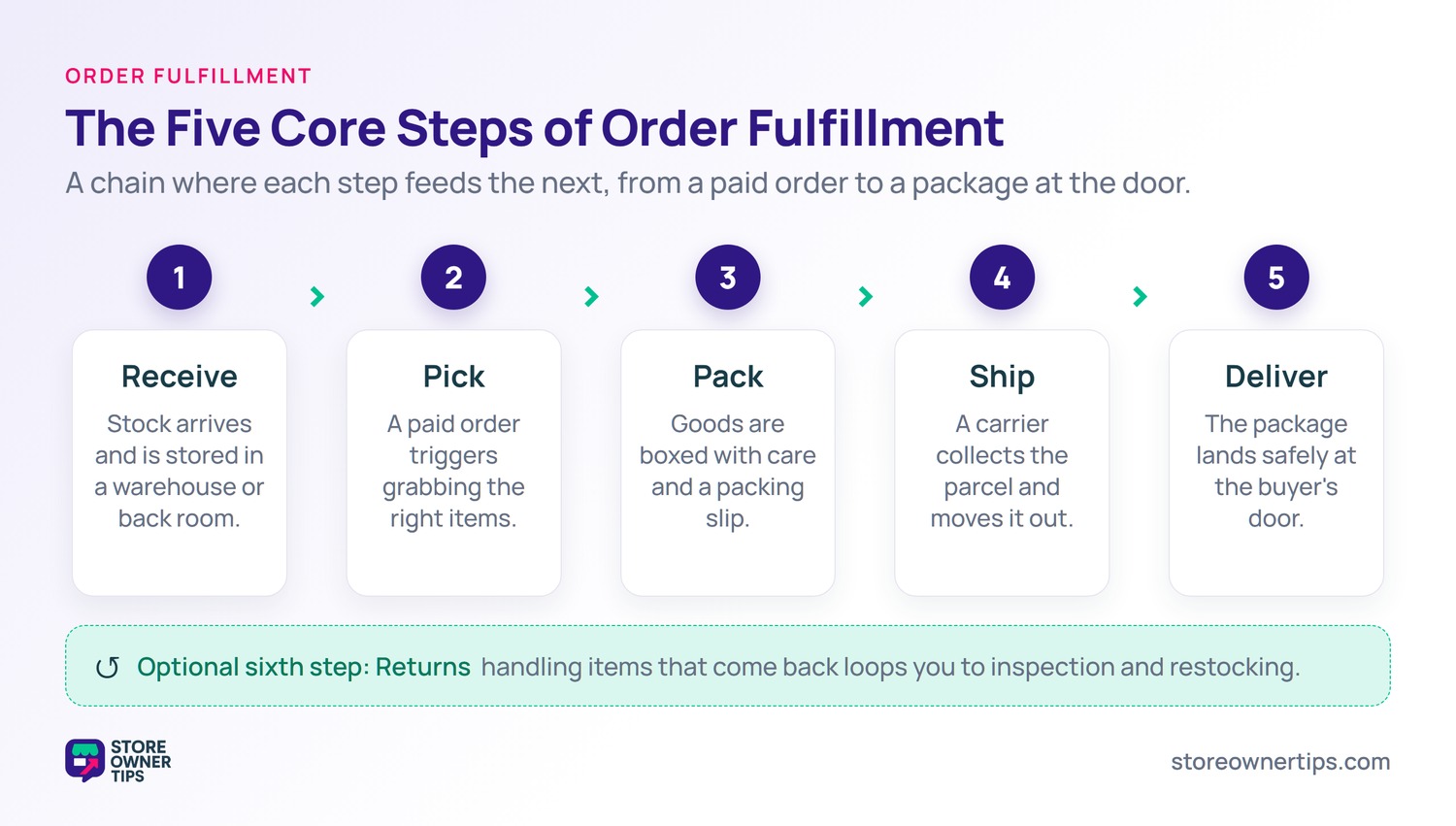
After that, the parcel ships with a carrier and travels to the buyer. Many stores add a sixth step, which is handling returns when an item comes back. Each link in this chain must hold, or the whole order suffers.
Speed matters at every stage, not just at shipping. A slow pick or a missing box can delay the entire order. So smart stores measure the time each step takes.
Accuracy matters just as much as speed here. Picking the wrong item means a return and a refund. So a quick double-check at packing saves money later.
On WooCommerce, fulfillment is tracked through order statuses. A new paid order moves to “processing,” which signals you to pick and pack. Once it ships, you mark the order “completed,” which can email the buyer.
You can run this by hand for a few orders a day. As volume grows, plugins connect your store to carriers, 3PLs, or suppliers. WooCommerce and Shopify both support these integrations, though the setup differs.
These tools can print labels, sync tracking, and update stock counts. That automation cuts errors and frees your time for growth. In short, the right setup turns a manual chore into a smooth flow.
Good records also help you spot problems early. You can see which orders stall in “processing” for too long. That view lets you fix a slow step before buyers complain.
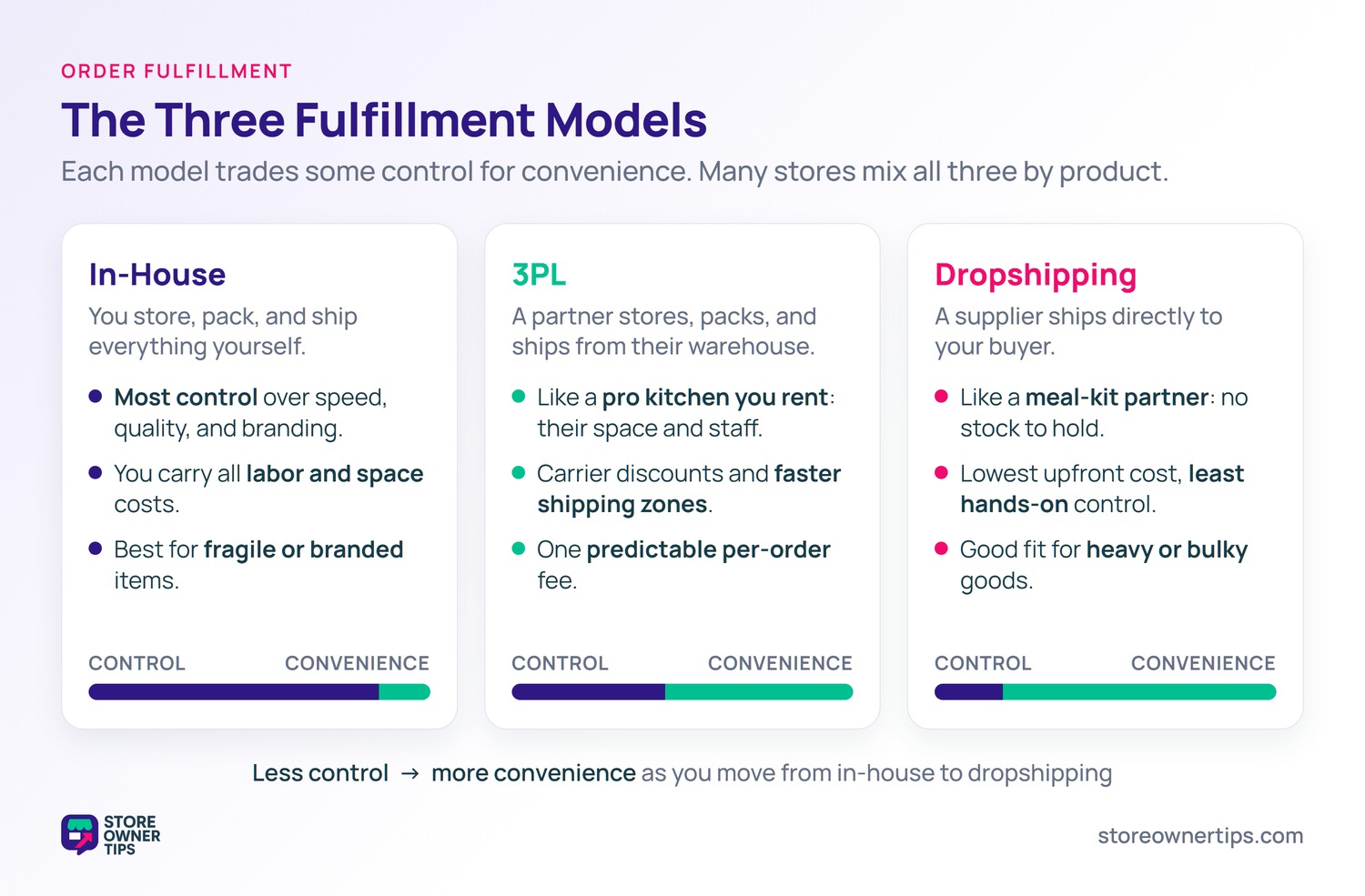
You have three main ways to fulfill orders. In-house means you store, pack, and ship everything yourself. A third-party logistics provider, or 3PL, does all of that for you in their warehouse.
The third model is dropshipping, where a supplier ships directly to your buyer. Think of a 3PL like a pro kitchen you rent, while dropshipping is like a meal-kit partner. Each model trades some control for convenience in its own way.
Many growing stores mix these models together. They might keep bestsellers in-house and dropship bulky items. The goal is to match each product to its best path.
Start with your order volume and your free time. A handful of orders a day is easy to pack yourself. Hundreds a day usually call for a 3PL or automation.
Next, weigh your margins and your product type. Heavy or bulky goods may suit a dropshipping partner. Fragile or branded items often deserve in-house care. In short, let the numbers guide the choice, not guesswork.
Finally, think about your growth plans too. A model that fits today may break at triple the volume. So pick one that can scale alongside you.
Fulfillment is the only part of the sale a customer physically touches. A neat, fast delivery feels like a gift, while a late one feels like a letdown. That single moment shapes whether they ever come back.
It also drives your costs and your reviews. Slow or sloppy delivery leads to refunds, angry emails, and low ratings. By contrast, smooth delivery earns repeat orders and word-of-mouth. So fulfillment is marketing as much as it is logistics.
Think of the unboxing as your final sales pitch. A clean box and a quick arrival seal the relationship. Meanwhile, a crushed box or a long wait undoes your marketing.
Fulfillment is never truly free, even when you pack orders yourself. Your costs include storage, packing materials, labor, and carrier fees. Each one quietly eats into your margin on every sale.
A 3PL bundles many of these into one clear fee. You trade a lower per-task cost for a steady monthly bill. Either way, track your fulfillment cost per order closely. That single number shows whether your pricing still leaves a profit.
Returns add a hidden cost most stores forget. Each return means return shipping, inspection, and restocking. So a generous return policy must still protect your margin.
Many new stores treat fulfillment as an afterthought. They pour energy into ads and forget the part that delights buyers. As a result, they grow sales faster than they can ship.
Hidden shipping fees are another classic trap. Buyers feel tricked when costs jump at the final step. Poor stock tracking also hurts, since it leads to overselling. Each mistake quietly drains trust and repeat business.
Skipping order tracking is a quieter mistake. Buyers grow anxious when they cannot see where a parcel is. So a simple tracking email prevents a flood of worried questions.
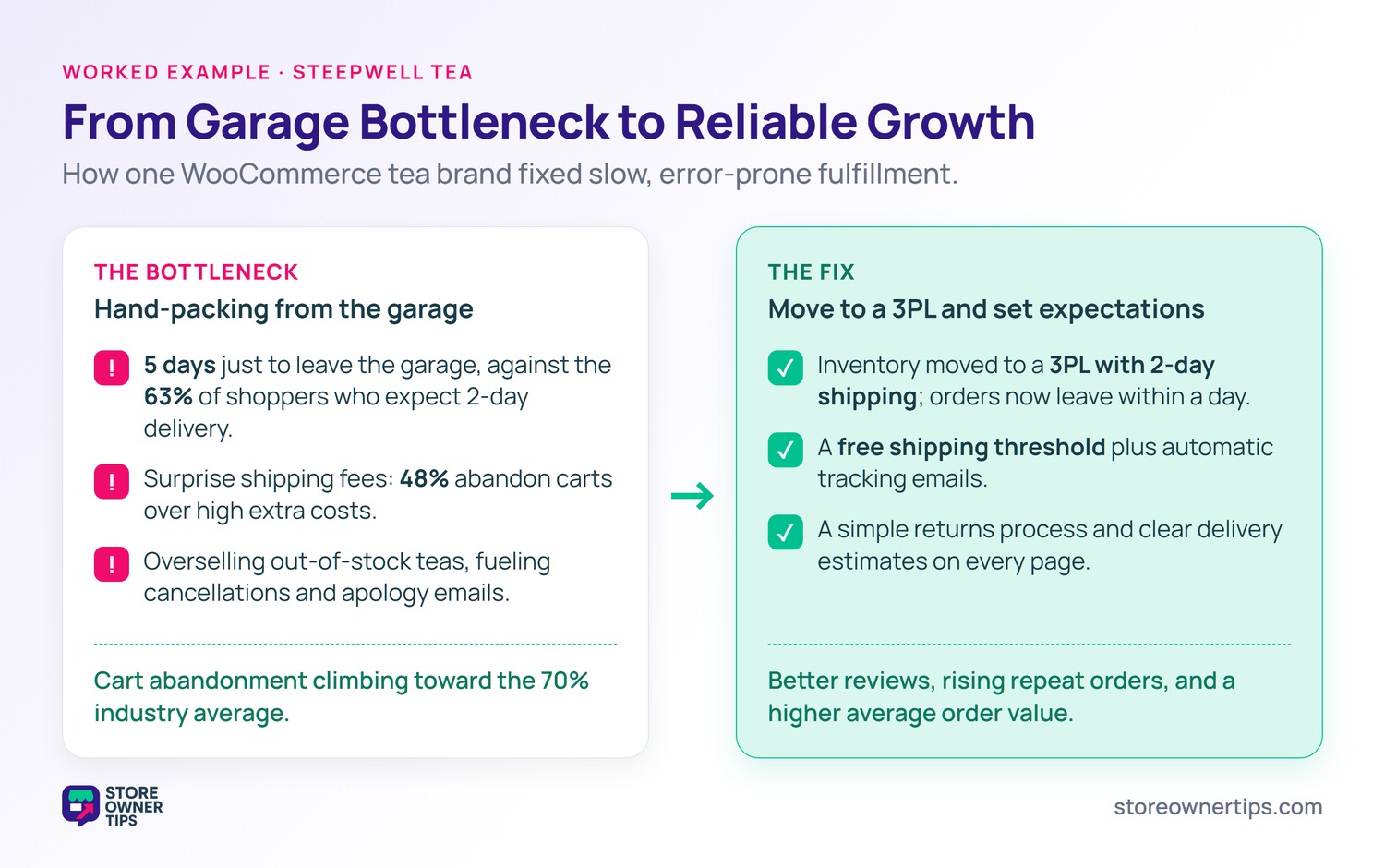
Imagine a small tea brand called SteepWell on WooCommerce. It packs every order by hand from the founder’s garage. Sales are climbing fast, and the garage can no longer keep up.
Orders now take five days just to leave the garage. That delay clashes hard with modern shopper habits. About 63% of consumers expect delivery within two days.
On top of that, surprise shipping fees push buyers away at checkout. In fact, 48% of shoppers abandon carts over high extra costs. SteepWell watches its cart abandonment climb toward the 70.22% industry average.
The founder also keeps overselling teas that are out of stock. Each cancelled order brings a fresh wave of complaints. Her small team is buried in apology emails. Worse, those unhappy buyers rarely come back.
The founder moves her inventory to a 3PL with two-day shipping. She also sets a free shipping threshold to soften delivery costs. Orders now leave within a day, and tracking emails go out on their own.
She also builds a simple returns process, since returns are normal. Retailers expect 16.9% of sales to come back each year. A smooth return policy keeps those shoppers from churning, and her average order value climbs too.
She also adds clear delivery estimates on every product page. Honest timelines set expectations before checkout. That small change alone lifts her conversion rate. Shoppers trust a store that is upfront about timing.
Within months, her reviews improve and repeat orders rise. The lesson is clear: reliable fulfillment fuels real growth.
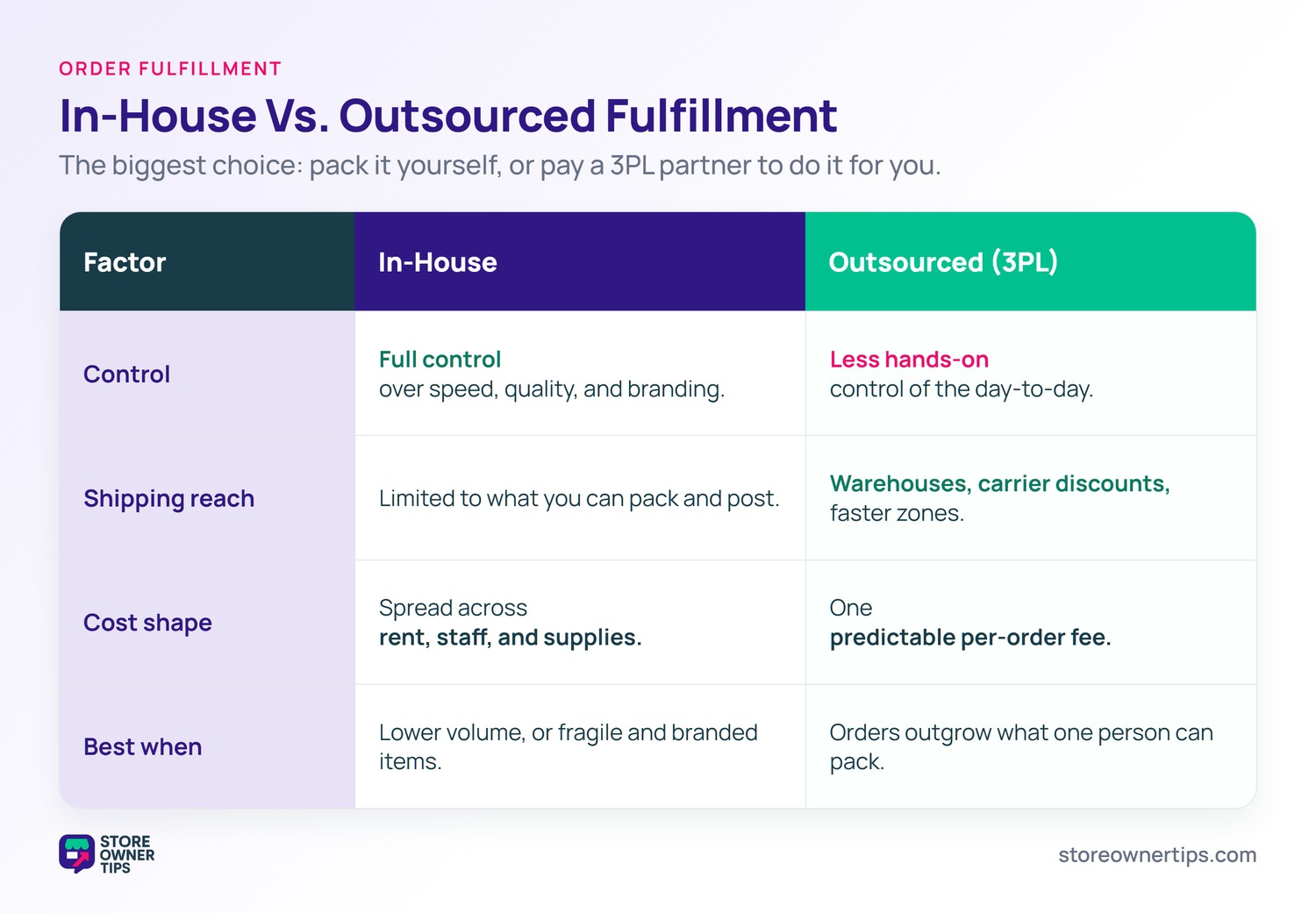
The biggest fulfillment choice is doing it yourself or paying a partner. In-house gives you full control over speed, quality, and branding. You pack each box your way, but you carry all the labor and space costs.
Outsourced fulfillment hands the work to a 3PL instead. You gain their warehouses, carrier discounts, and faster shipping zones. However, the trade-off is less hands-on control and a new monthly cost.
Cash flow also shapes this decision. In-house spreads costs across rent, staff, and supplies. A 3PL turns those into one predictable per-order fee. Predictable costs make it easier to plan your prices.
Smaller stores often start in-house to save cash. As orders grow past what one person can pack, outsourcing usually wins. Many brands blend both, keeping special or fragile items in-house.
Shipping is just one step inside fulfillment. Fulfillment covers storage, picking, packing, shipping, and returns. So shipping is the delivery part, while fulfillment is the whole process.
Outsource when packing orders eats the time you need to grow. A clear sign is steady daily volume you can no longer handle. A 3PL also helps when buyers want faster, cheaper shipping.
Store popular items where they are easy to grab. Use clear pick lists and the same packing steps every time. For real speed, place stock closer to your buyers through a 3PL.
Order fulfillment is where a promise to your customer becomes real. Fast, accurate delivery turns first-time buyers into loyal fans, while delays drive them away. Treat fulfillment as a core part of your brand, not an afterthought. Get it right, and growth becomes far easier to sustain. Your customers will reward that care with their loyalty.
Copyright © StoreOwnerTips.com. All Rights Reserved.
