Weekly ecommerce tips, deals & news.
Price skimming is a strategy where you launch a product at a high price, then lower it over time. The goal is to earn big margins from eager early buyers first. Later, you drop the price to win over more price-sensitive shoppers. It works best for new, innovative, or hard-to-copy products with strong demand.
Price skimming works in stages. You launch at a high price aimed at your most eager buyers. Then you lower the price step by step over time. Each price drop opens the product to a new group of shoppers.
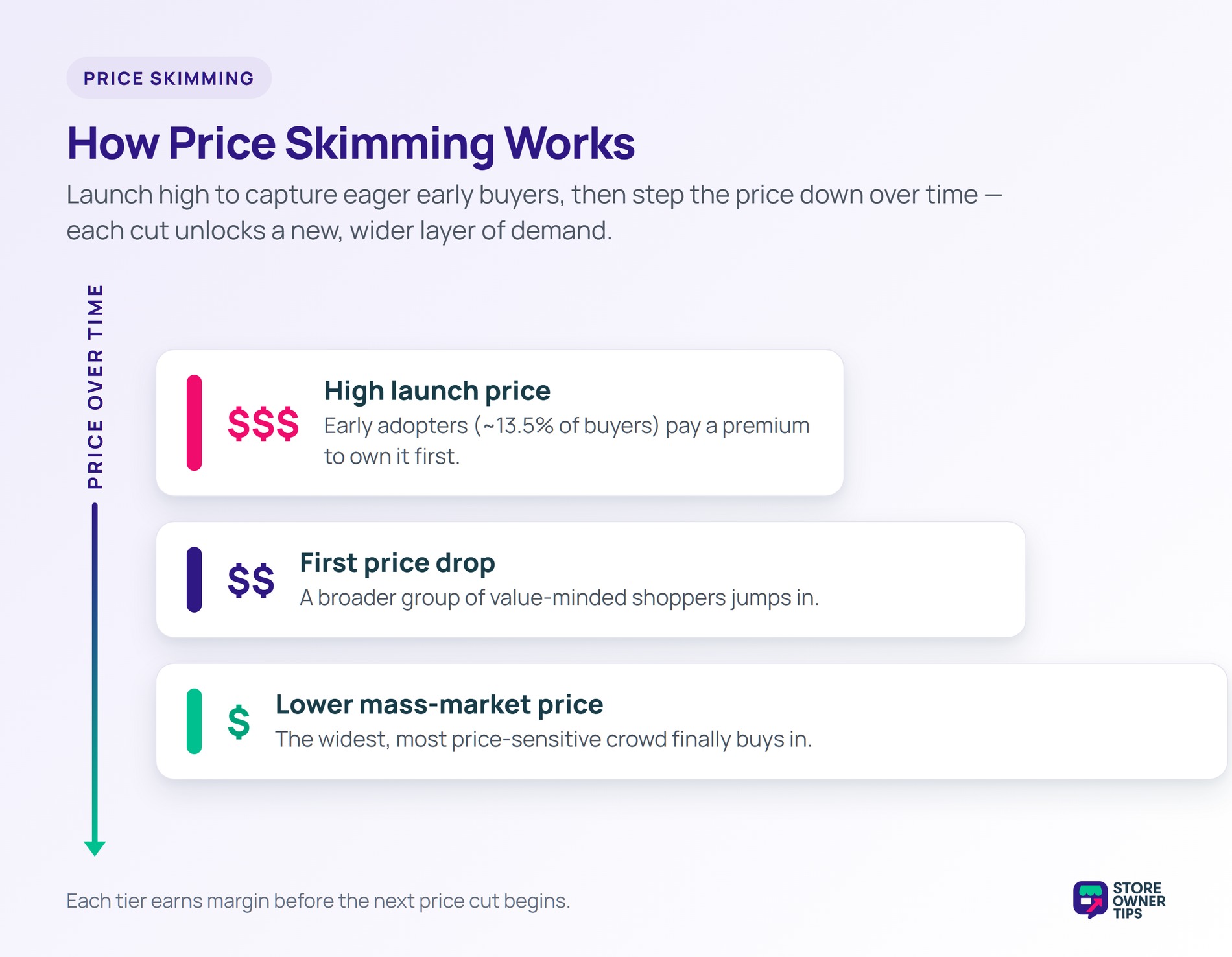
For example, think of a movie’s release path. It starts in pricey theaters, then moves to rentals, then to streaming. Each stage reaches a wider, more price-sensitive crowd. The product earns money at every level along the way.
The name comes from skimming cream off the top of milk. You take the richest layer of demand first. After that, you work your way down to the rest of the market. As a result, you capture value from many price points, not just one.
Launching high also gives you room to fall. You can always lower a price, but raising one stings buyers. Skimming uses that room on purpose. Each planned cut then feels like a deal, not a penalty.
A high price can signal quality and status. Many shoppers assume pricey means premium. Early adopters also love being first to own something new. They happily pay more for that edge.
Status plays a real role here too. Owning a pricey new item can feel like a badge. That feeling pushes early adopters to buy quickly. So the high price becomes part of the appeal.
These eager buyers are a small slice of the market. Early adopters make up only about 13.5% of buyers. But they fund your launch and spread the word. So they matter far more than their numbers suggest.
Their reviews and buzz build social proof for later buyers. By the time the price drops, the product feels proven. That makes the mass market more comfortable buying in. The high price did its job early on.
That first price also sets a mental benchmark. Shoppers judge later prices against that high anchor. So a $110 lamp can feel like a steal after $150. That anchor makes every price cut land harder.
You don’t need special software to skim prices. On WooCommerce or Shopify, you set a high launch price, then schedule reductions. WooCommerce owners can use scheduled sale prices to step the price down. This keeps the drops planned, not random.
Skimming fits neatly into a wider pricing strategy. It pairs well with strong product launches and waitlists. The first high-paying buyers set the stage for everyone after them.
Tracking results matters as you step prices down. Watch how sales volume responds to each cut. Your store reports show which price drove the most orders. That data tells you when to drop the price again.
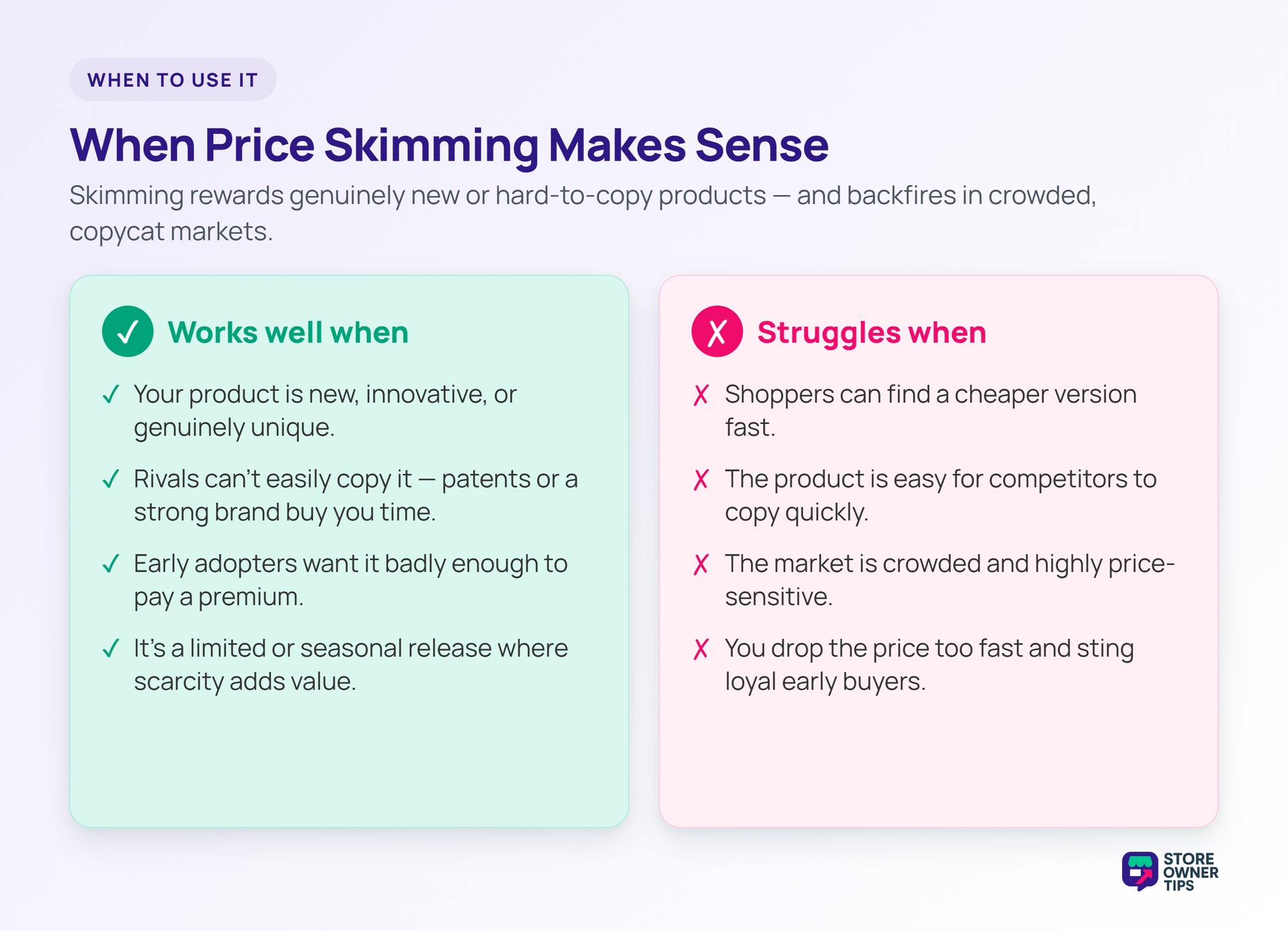
Skimming shines when your product is genuinely new or unique. It needs buyers who care more about features than price. It also helps when rivals can’t quickly copy you. By contrast, it struggles in crowded, look-alike markets.
It’s risky if shoppers can find a cheaper version fast. High prices push price-sensitive buyers away. In fact, 48% of shoppers abandon checkout when costs feel too high. So skimming demands a product worth the premium.
Patents and unique features buy you time at the top. The longer rivals can’t copy you, the longer you skim. A strong brand can stretch that window even further. So protect whatever makes your product hard to match.
Skimming also works for limited or seasonal releases. A short supply makes the high price feel justified. Collectors and fans accept the premium for scarcity. So scarcity and skimming can reinforce each other.
The biggest mistake is dropping the price too fast. Early buyers feel stung when it falls within days. So space your cuts out over weeks or months. That patience protects both trust and margin.
Another trap is skimming a product rivals can copy. If a cheaper clone appears, your high price looks unfair. So watch the market closely during your premium window. Be ready to adjust if a copycat shows up.
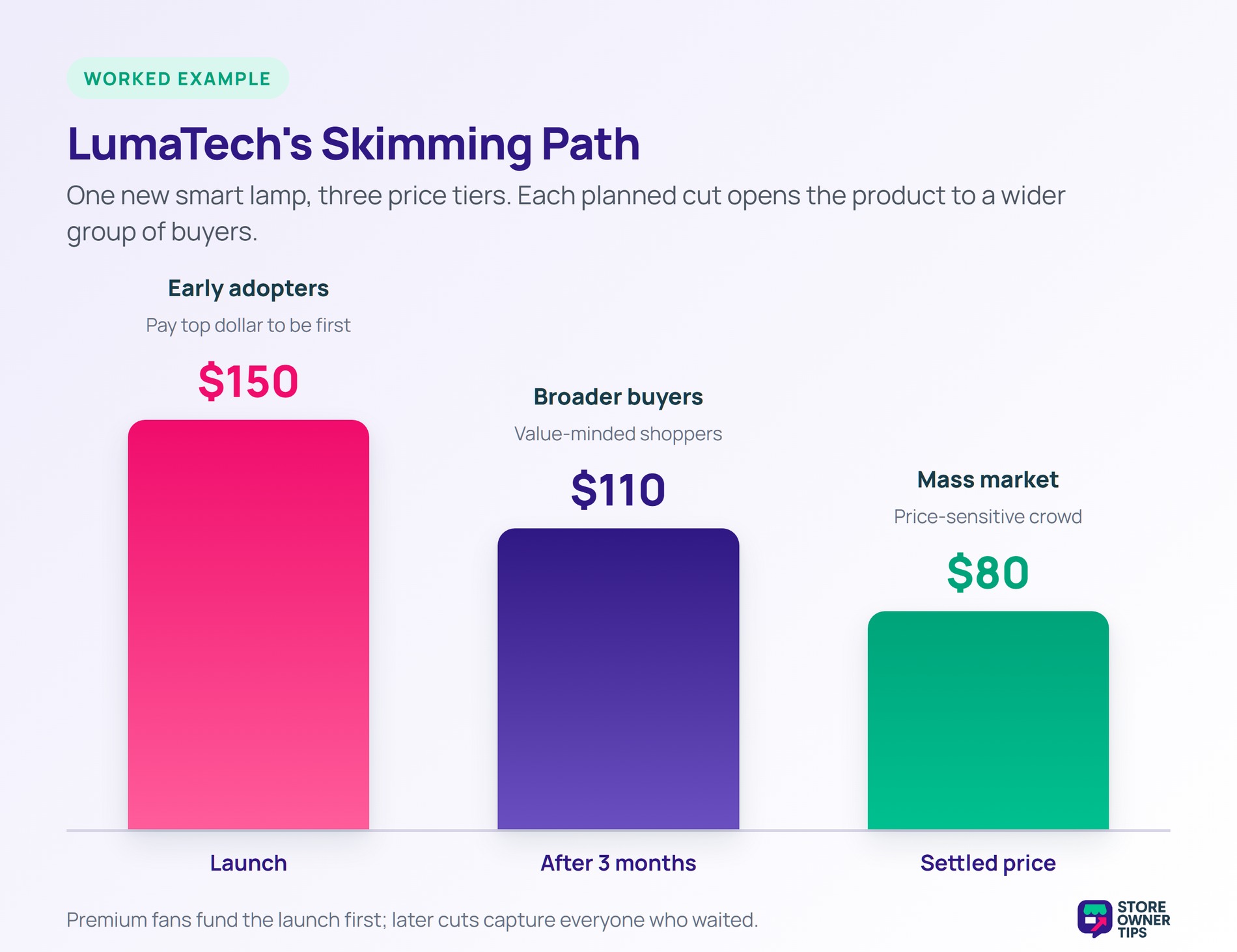
Imagine a WooCommerce brand called LumaTech selling a new smart lamp. No rival sells anything quite like it yet. LumaTech launches the lamp at a premium $150. The price targets gadget lovers who want it first.
At $150, the margin per lamp is healthy. The high price also frames the lamp as top-tier. LumaTech knows only a small group will pay that much now. But that group will fund the launch and spread the word.
LumaTech spent heavily designing the lamp. The premium launch helps repay that cost fast. Those high early margins fund the next product too. So the strategy turns eager fans into early backers.
Early adopters snap up the lamp first at $150. They love being early and don’t mind the price. Their glowing reviews start to build buzz online. That word of mouth pulls in the next wave of shoppers.
After three months, LumaTech drops the price to $110. A broader group of buyers jumps in. Sales volume climbs as the price falls. Each cut unlocks a new layer of demand.
Each price tier targets a different kind of shopper. Bargain hunters simply wait for the lower prices. That patience is fine, since they still buy eventually. So LumaTech earns from the impatient and the patient alike.
Eventually the lamp settles at $80 for the mass market. By then, the premium buyers already paid the high margins. Cart abandonment averages 70.22% across e-commerce. The lower final price helps LumaTech keep more of those shoppers.
Winning new buyers isn’t cheap either. Acquiring a customer can cost five to 25 times more than keeping one. So LumaTech keeps marketing to its early fans too. The staged pricing squeezed value from every segment.
LumaTech also bundles accessories with the lamp later on. Those add-ons lift its average order value over time. The first sale opens a longer relationship. Premium fans often buy the next model too.
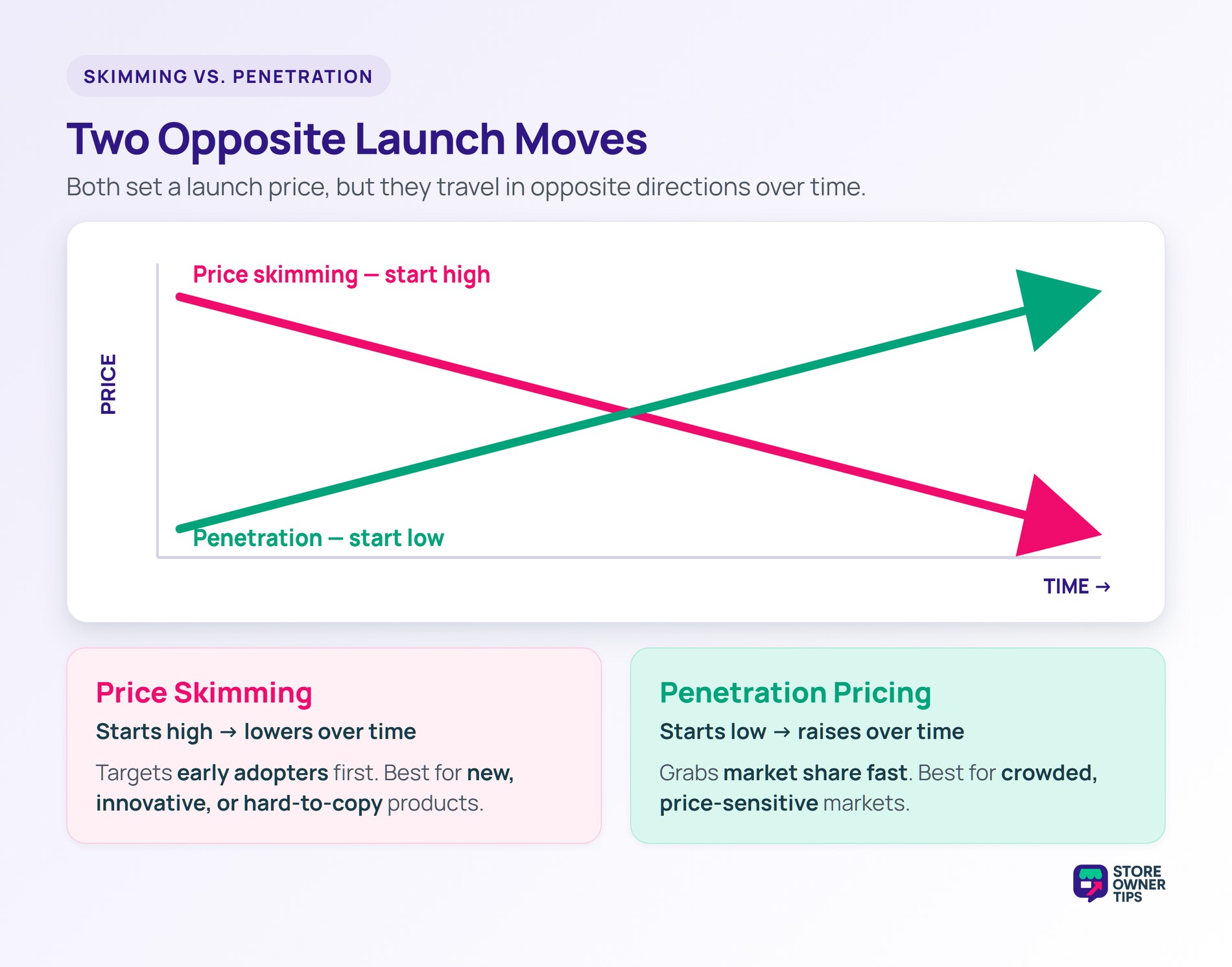
Price skimming has a clear opposite: penetration pricing. Both set a launch price, but they move in opposite directions. With penetration pricing, you launch low to grab market share fast. Skimming launches high to capture premium buyers first.
Skimming also differs from dynamic pricing. Dynamic pricing shifts prices automatically with demand or competition. Skimming follows a planned path of step-downs you set in advance. One reacts in real time; the other is a deliberate schedule.
For instance, new tech gadgets often launch at a high price, then drop later. Early fans pay a premium to own them first. Months on, the price falls to reach more buyers. Many electronics and game consoles follow this exact path.
They’re mirror opposites. Skimming launches high, then lowers the price over time. Penetration pricing launches low, then raises it after winning market share. So one starts premium and the other starts cheap.
Avoid it when rivals sell similar products at lower prices. Price-sensitive shoppers will simply buy the cheaper option. It also fails when your product isn’t truly new or special. In short, skimming needs a product worth the premium.
Price skimming is a way to earn the most from a product over its whole life. It captures premium buyers first, then widens the market with each price cut. Done right, it turns a strong launch into profit at every stage.
Copyright © StoreOwnerTips.com. All Rights Reserved.
