Weekly ecommerce tips, deals & news.
A purchase order (or PO) is a document a buyer sends a seller to officially request goods or services. It lists the items, quantities, agreed prices, and delivery terms. Once the seller accepts it, the PO becomes a binding agreement. Businesses use purchase orders to control spending, approve purchases, and order now while paying later. They are a cornerstone of B2B and wholesale buying.
A purchase order turns a casual request into a formal record. It is a backbone of B2B procurement and wholesale trade. Think of it like a written dinner reservation. You confirm the details in advance, so nobody is surprised later.
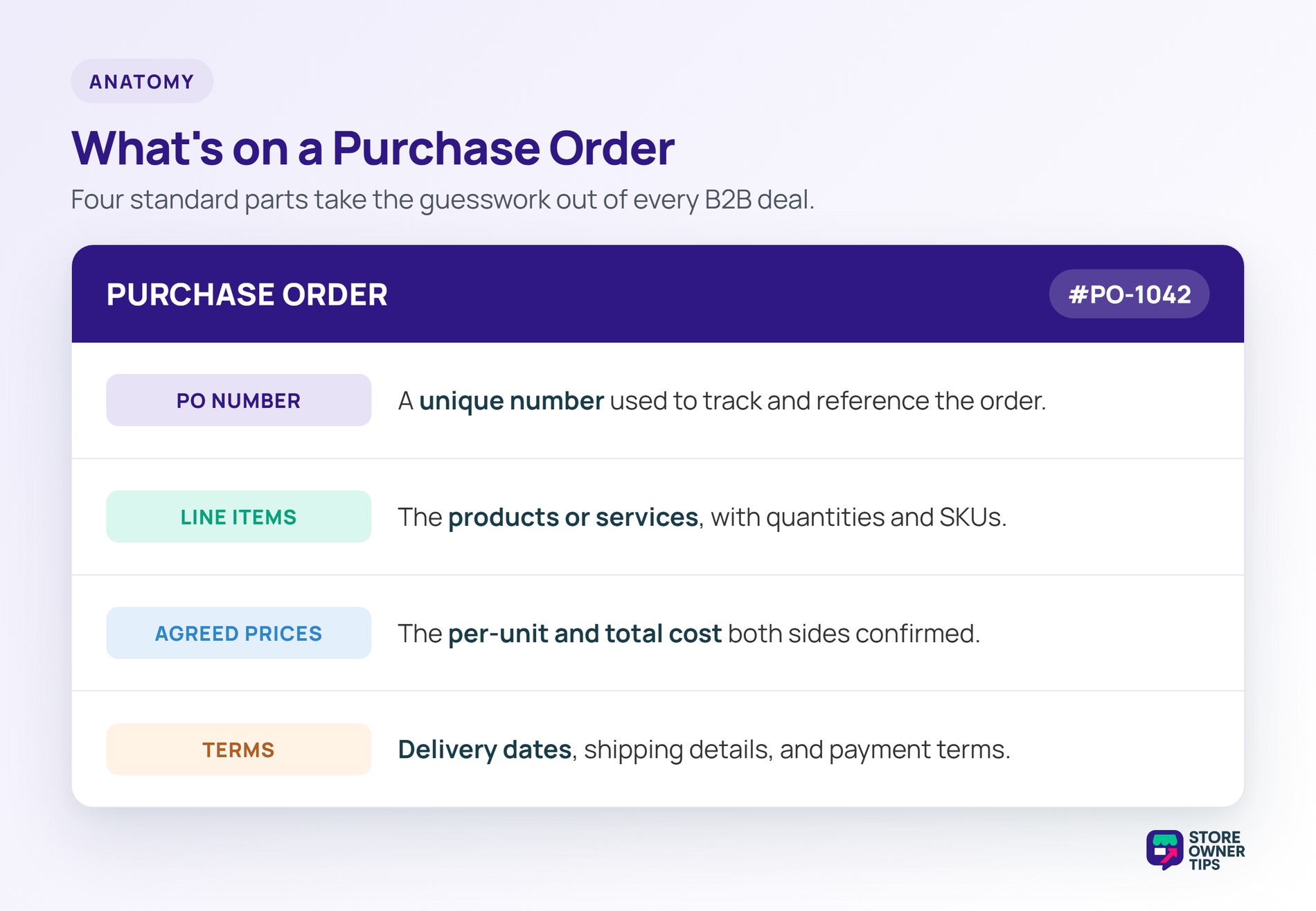
Every PO includes a few standard details. Together, they remove guesswork from the deal.
Not all purchase orders look the same. The right type depends on how often you buy.
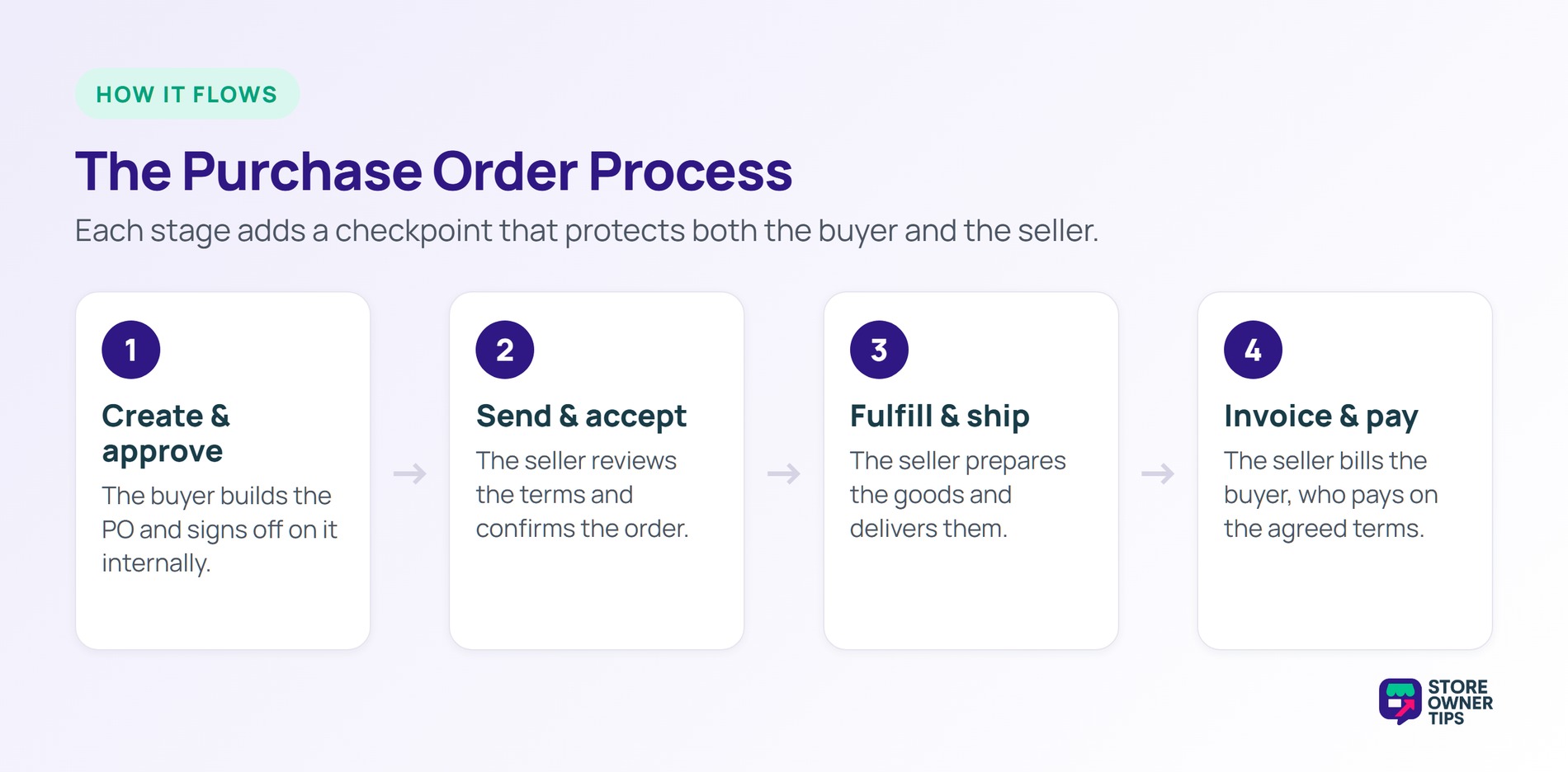
The process moves through a few clear stages. Each step adds a checkpoint that protects both sides.
The PO number is the glue that holds the deal together. When goods arrive, the buyer checks three documents against each other. They match the purchase order, the delivery receipt, and the seller’s invoice. This is called three-way matching, and it catches errors before payment.
Think of it like checking a restaurant bill against what you actually ordered. You confirm you got the right items, at the price you agreed. Only then does the payment go out. This simple check stops overbilling and fraud.
Small stores often handle POs by hand. That means typing details, routing approvals, and matching paperwork. This works at low volume, but it gets slow and error-prone as orders grow. Automation tools can capture POs, match them, and flag mismatches for you.
For a growing wholesale store, this saves real time. Fewer manual steps mean fewer billing mistakes and faster payment. It also frees staff to focus on customers instead of paperwork.
On WooCommerce, a store can add a purchase order option at checkout. A trusted buyer enters a PO number instead of paying right away. This lets the store accept orders without upfront payment. The order then sits on hold until the owner verifies and completes it.
Shopify supports similar purchase order flows on its higher-tier B2B plans. Either way, the core idea is the same. You let approved buyers order on trust, then collect payment later.
Purchase orders solve a trust problem. Two businesses often want to trade before any money changes hands. The PO gives the seller a written commitment to pay. It also gives the buyer proof of the agreed price and terms.
This matters because late payment is common. In the US, about half of all B2B invoices are paid late. As a result, a clear PO with set terms gives sellers a documented basis to chase what they are owed.
POs also make budgeting easier. Each approved order is logged before any money goes out. So finance teams always know what is committed and what is still open. This visibility helps a store avoid overspending and plan its cash flow. It also makes year-end audits far less stressful.
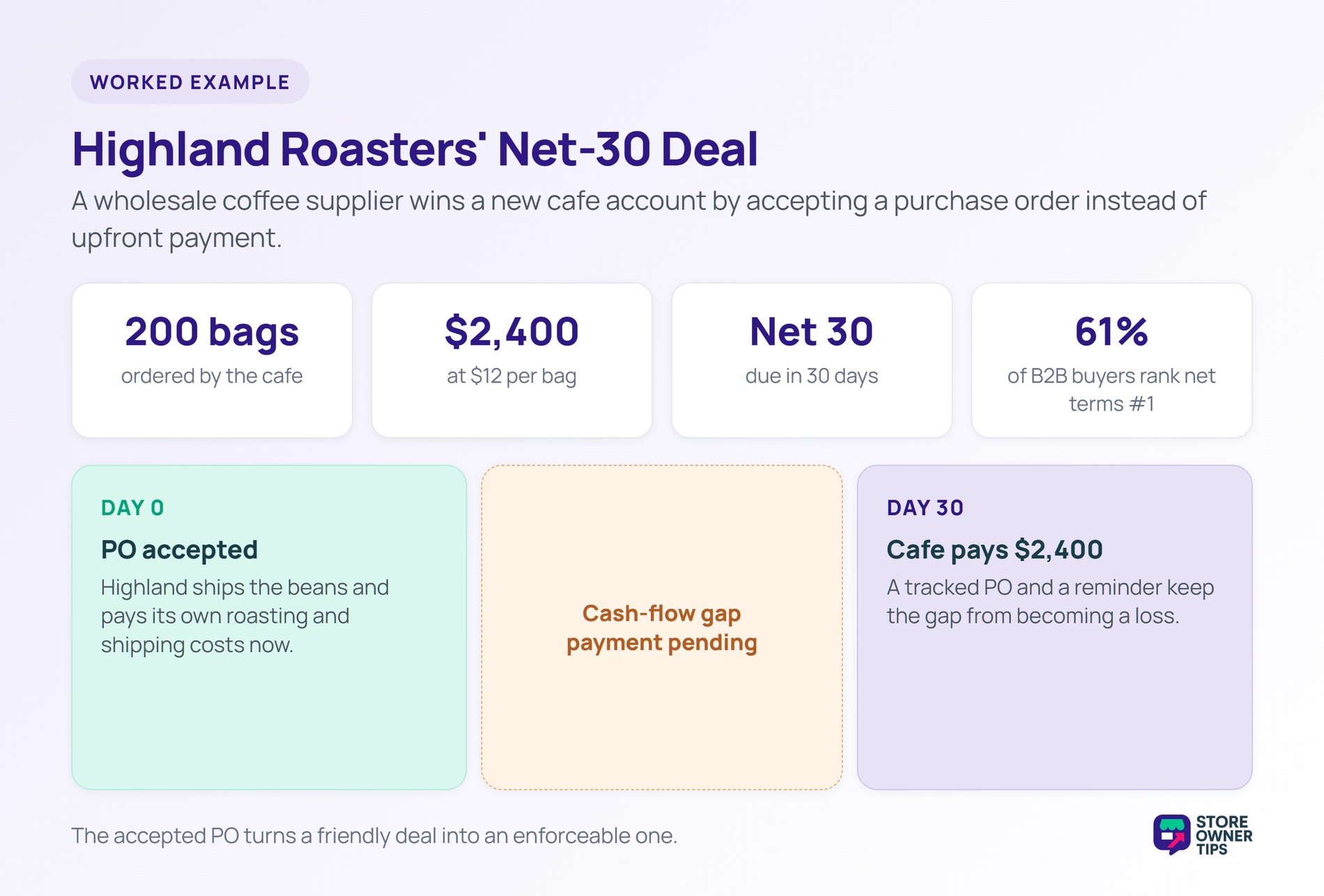
Imagine a mid-sized coffee roasting brand called Highland Roasters. It sells wholesale beans to independent cafes across the country. A new cafe, Maple Street Coffee, wants to stock up for its grand opening.
Instead of paying upfront, Maple Street sends a purchase order. The PO lists 200 bags of beans at an agreed wholesale price of $12 each. That puts the order at $2,400, due in 30 days. Highland reviews the PO and accepts it.
This setup helps Highland win the business. In fact, 61% of B2B buyers say trade credit or net terms is their leading way to pay. Many will even switch suppliers to get those terms. Offering POs makes Highland an easier supplier to choose.
There is a catch, though. Highland pays its own roasters and shipping now, but waits a month for the $2,400. Because many B2B invoices get paid late, that gap is a real risk. So Highland tracks the PO and sends a reminder near day 30.
If Maple Street still pays slowly, the accepted PO backs up every follow-up. The document and its terms turn a friendly deal into an enforceable one. Good record-keeping keeps that gap from becoming a loss.
The bigger reward is loyalty. Smooth PO handling keeps cafes coming back, and repeat buyers are valuable. Acquiring a new customer can cost five to 25 times more than keeping one. So every wholesale account Highland retains protects its margins.
That is why suppliers treat reliable PO buyers as key accounts. They are predictable, they reorder, and they are cheaper to serve. Over time, these accounts become the steady base a wholesale business is built on.
People often mix up purchase orders and invoices. They actually sit at opposite ends of the same deal. The difference comes down to who sends it and when.
A purchase order comes first, and the buyer sends it. It says, “Here is what we want to buy.” An invoice comes later, and the seller sends it. It says, “Here is what you owe us.”
Sometimes a third document sits between them. After accepting the PO, the seller may send an order confirmation. It restates the agreed terms before any goods ship. The invoice only arrives once the order is fulfilled.
In short, the PO opens the order and the invoice closes it. Both reference the same PO number, which links the request to the bill. This pairing is what makes spending easy to audit.
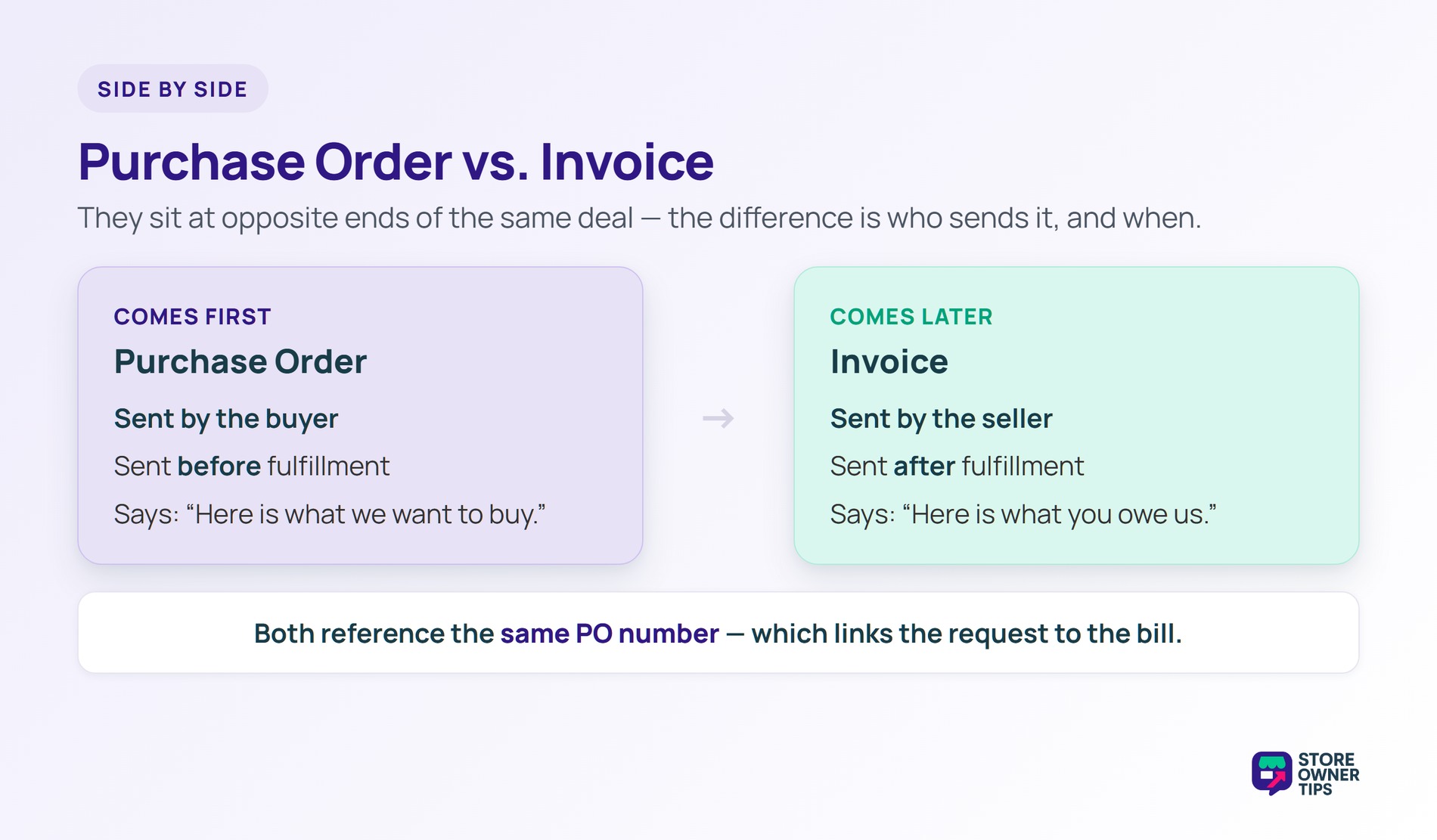
A purchase order is sent by the buyer to request goods. An invoice is sent by the seller to request payment. The PO comes first, and the invoice comes after delivery. Both share the same PO number for easy tracking.
On its own, a PO is just an offer to buy. It becomes legally binding once the seller accepts it. At that point, both sides are committed to the listed terms. Before that, either side can usually walk away without penalty.
Many WooCommerce stores add a purchase order gateway at checkout. The buyer enters a PO number instead of paying upfront. The order then sits on hold until the store owner approves it. You can also email a PDF invoice and collect payment by bank transfer.
A purchase order is more than paperwork. It brings trust, structure, and accountability to business buying. For any store selling wholesale or B2B, accepting POs turns one-off orders into lasting, trackable relationships that protect your revenue. The small effort of issuing one pays off for years.
Copyright © StoreOwnerTips.com. All Rights Reserved.
