Weekly ecommerce tips, deals & news.
Returns management is the full process of handling products that customers send back. It covers the return request, the approval, the shipping label, the inspection, and the refund or exchange. A smooth system turns a frustrating moment into a reason to trust your brand. The approval step is often called an RMA, short for return merchandise authorization.
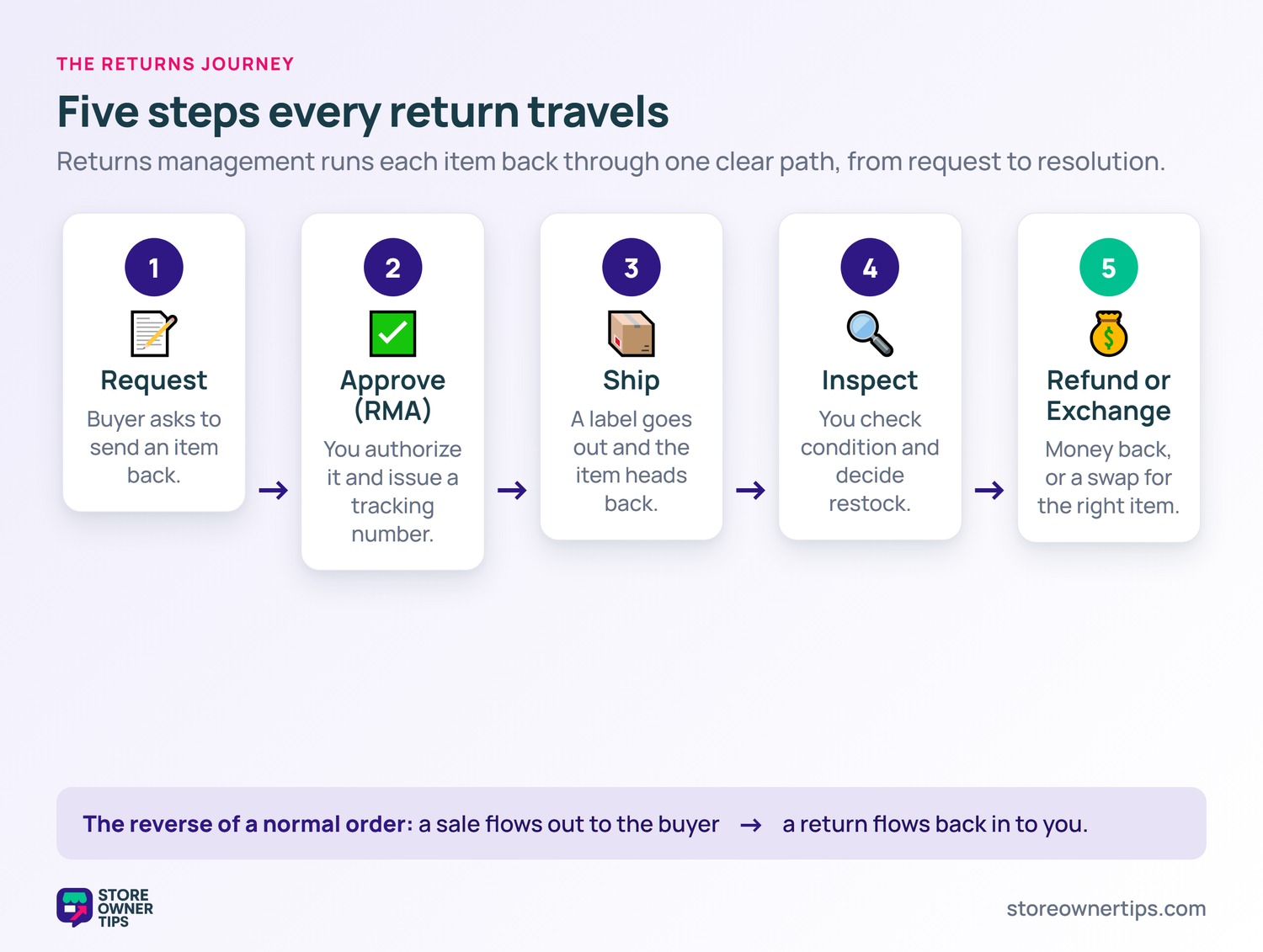
Returns management is how you handle items coming back to your store. A buyer asks to return something, and your system takes over. You approve the return, send a label, and wait for the item. Then you inspect it and issue a refund or exchange.
Think of it like the reverse of a normal order. A normal order flows out to the customer. A return flows back in to you. Returns management keeps that backward trip smooth and clear.
Returns are a normal part of online retail, not a rare event. Retailers expect 16.9% of sales to come back each year. So a solid return process is a must, not a luxury.
A return is not a failure on its own. It is simply part of doing business online. How you handle it decides what happens next.
RMA stands for return merchandise authorization. It is the approval a buyer gets before sending an item back. The RMA usually comes with a unique number to track the return.
Think of an RMA like a hall pass for a package. The pass proves the return is approved and expected. When the item arrives, your team knows exactly what it is.
This step prevents random, unexpected packages from piling up. It links each return to its order and reason. As a result, refunds and restocks move much faster.
The RMA also captures the reason for the return. Those reasons become useful data over time. They show you what to fix in your store.
On WooCommerce, you can process refunds right from the order screen. You open the order, choose refund, and set the amount. The system records the refund against that order.
For a fuller flow, returns plugins add an RMA system. Buyers request a return from their account, and you approve it. WooCommerce and Shopify both support returns this way, though the setup differs.
A good setup also sends clear status emails. The buyer learns when the return is approved and refunded. That visibility cuts down on worried support messages.
You can also set rules for who pays return shipping. Some stores cover it to win loyalty. Others ask the buyer to share the cost.
Returns hit your bottom line in a real way. Each return means return shipping, inspection, and restocking. On thin margins, those costs add up fast.
General retailers average a net margin of just 5.61%. So a messy return process can quietly erase your profit. A tight system protects both time and money.
Return shipping fees also shape buyer behavior. In fact, 48% of shoppers abandon carts over high extra costs. A clear, fair return policy eases that worry before they buy.
A clear policy is the heart of returns management. Spell out the window, the condition, and who pays return shipping. Plain language here prevents fights later.
Make the policy easy to find before checkout. Many buyers read it before they commit to a purchase. A fair, visible policy can actually boost conversion.
Keep the rules simple and consistent for every order. Confusing exceptions create angry emails and lost trust. Simple beats clever when it comes to returns.
Free returns can be a powerful trust signal. Many shoppers check the return policy before buying. A generous policy can tip a hesitant buyer over the edge.
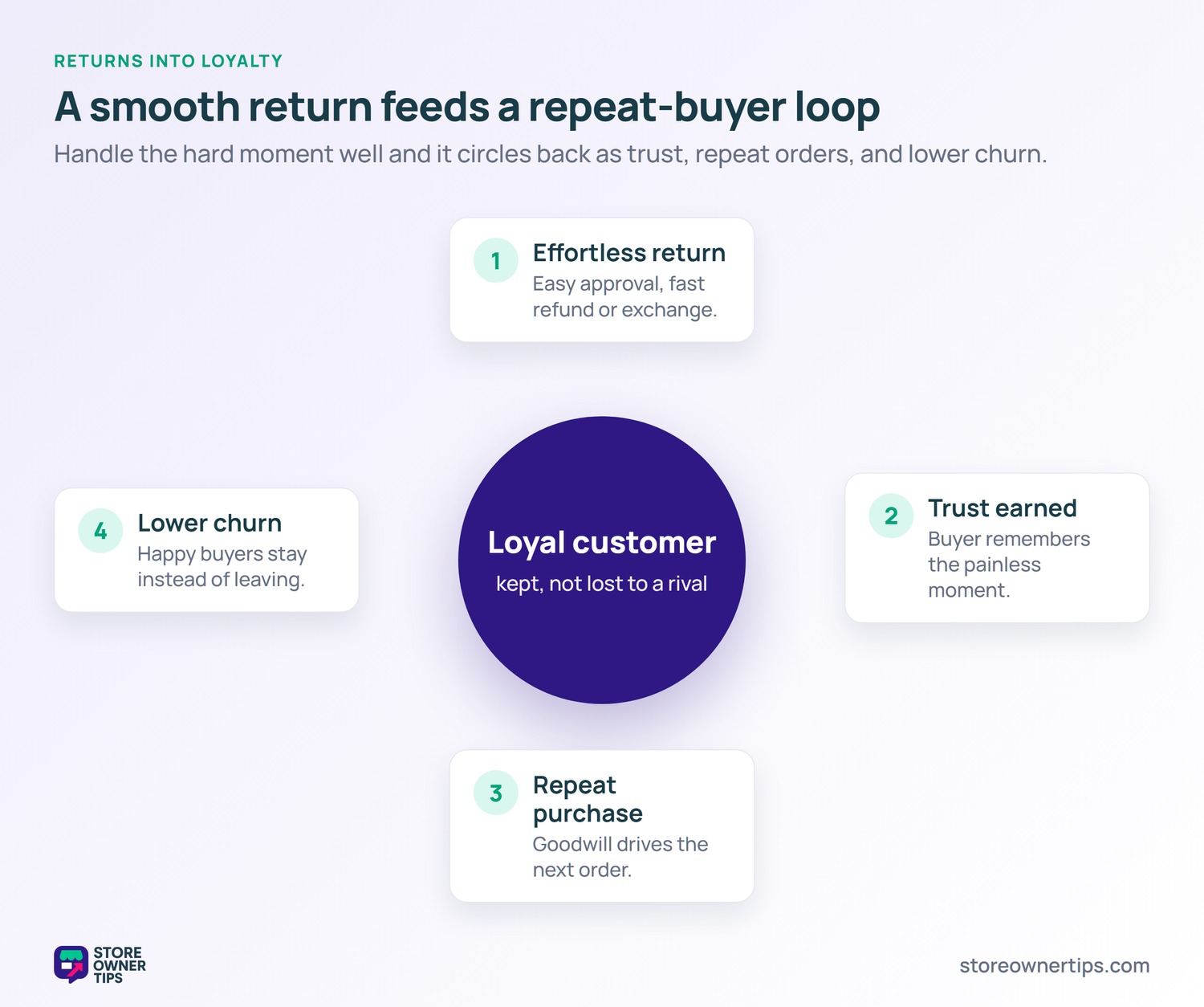
A smooth return can win a customer for life. People remember how easy you made a hard moment. That goodwill often leads to another order.
A painful return does the opposite to your brand. It can push a shopper toward a competitor for good. So treat each return as a chance to keep a customer.
A smooth return lifts your repeat purchase rate over time. It also lowers your churn rate by keeping buyers happy. Many brands tie returns into a loyalty program to reward patience.
Offering an instant exchange can save the sale entirely. The buyer keeps shopping instead of asking for cash back. That keeps revenue in your store and lifts loyalty.
You cannot stop returns, but you can lower them. Clear photos and sizing charts set honest expectations. When buyers know what they get, fewer items come back.
Detailed descriptions also cut surprise returns. List size, material, and key features plainly. Honest pages mean fewer let-down buyers.
Track which products come back the most. A high return rate flags a real problem. Fixing it saves money on every future order.
Not every return can go straight back on the shelf. Your team inspects each item for damage and wear. Good items get restocked, and others are set aside.
Some returns can be resold as open-box or refurbished. That recovers value you would otherwise lose. So inspection is where returns protect your margin.
The first mistake is a vague or hidden return policy. Buyers feel tricked when rules appear after purchase. So show the policy clearly and early.
Another trap is a slow refund after the item arrives. Long waits frustrate buyers and spark chargebacks. Refund quickly once you have the product back.
A third slip is ignoring return data entirely. Patterns in returns reveal product or sizing problems. Fixing the root cause cuts future returns.
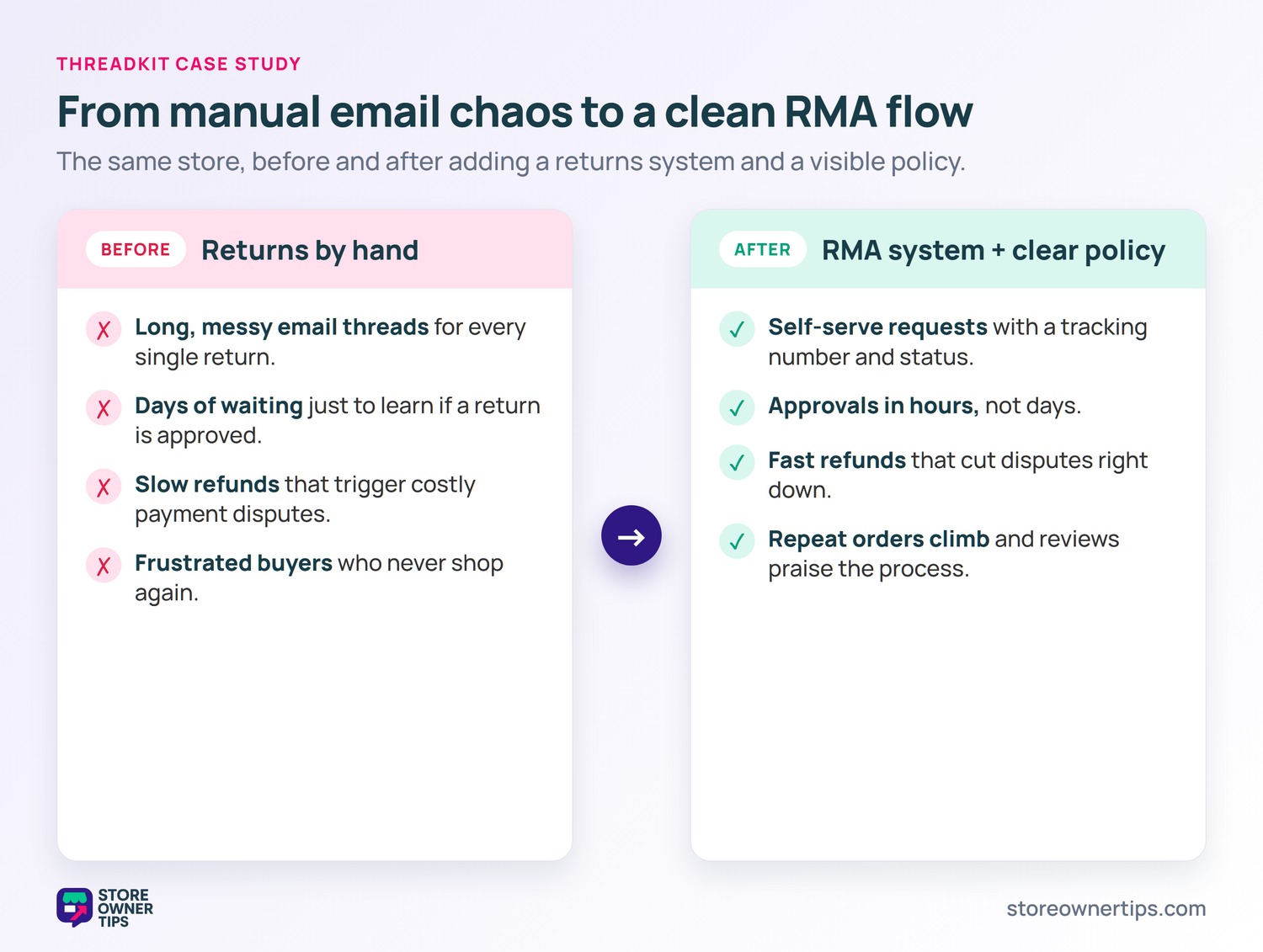
Imagine a clothing brand called ThreadKit on WooCommerce. Sizing questions make returns common for its shirts. The owner handles each return by hand over email.
Every return becomes a long, messy email thread. Buyers wait days just to learn if a return is approved. Many leave frustrated and never shop again.
Slow refunds also trigger payment disputes. Those disputes cost ThreadKit time and fees. The clumsy process is quietly burning loyalty and cash.
ThreadKit adds an RMA system to its store. Buyers now request returns from their own account. Each request gets a tracking number and a clear status.
The brand also writes a simple, visible return policy. It states the window, the condition, and the steps. Buyers read it before they buy and feel reassured.
Approved returns now move in hours, not days. Refunds go out fast once items arrive. Disputes drop, and repeat orders climb again.
Buyers now praise the easy return process in reviews. That social proof reassures the next shopper. Trust grows, and so do sales.
ThreadKit also spots a sizing issue from return data. It updates the size chart to fix the root cause. The lesson is clear: good returns management protects loyalty and profit.
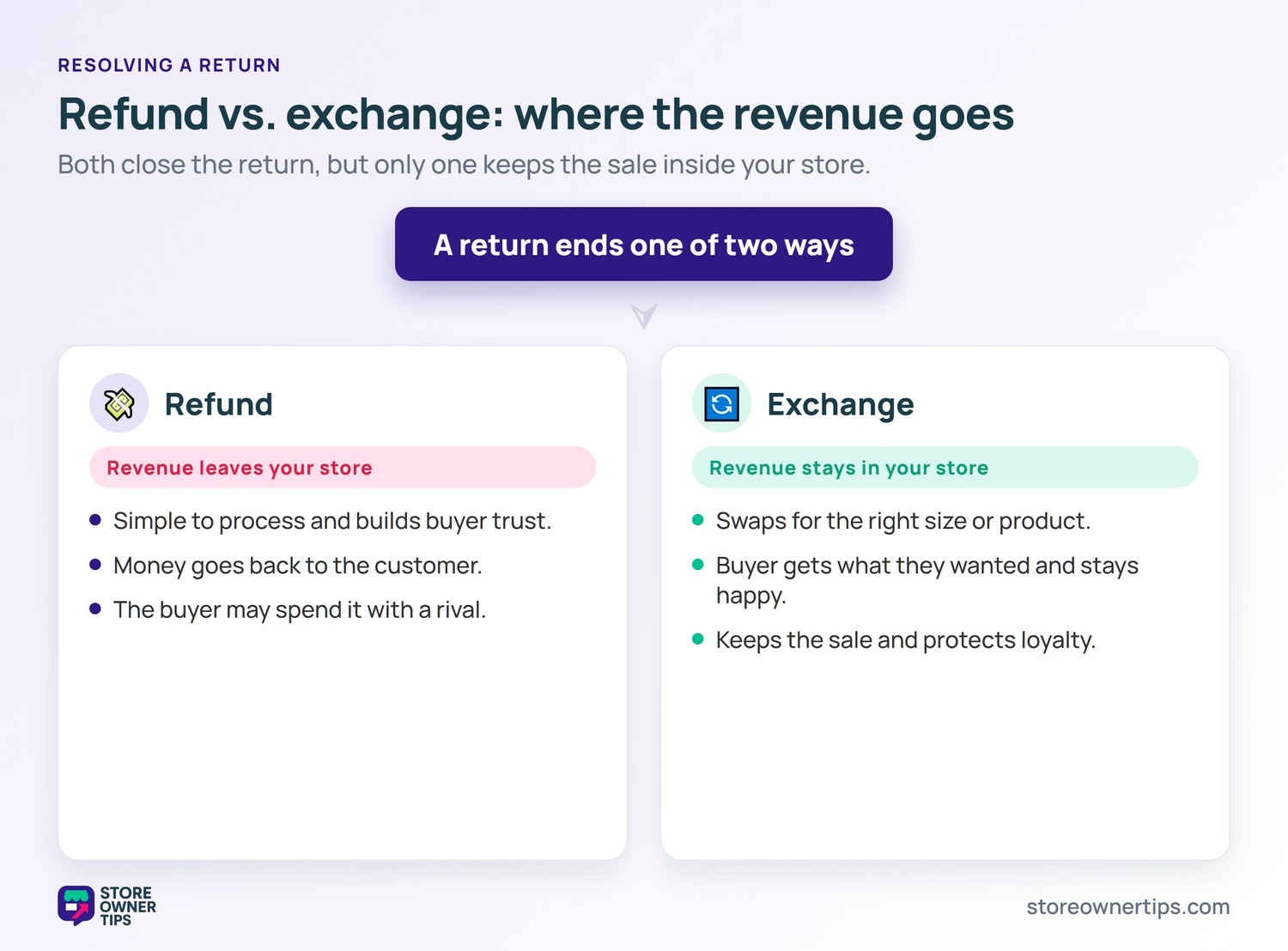
A return usually ends in a refund or an exchange. A refund gives the buyer their money back. An exchange swaps the item for a different size or product.
Refunds are simple and build buyer trust. However, they send revenue out of your store. The buyer may take that money to a rival.
Exchanges keep the sale inside your store. The buyer gets what they wanted and stays happy. So offering easy exchanges can protect your revenue.
Many stores offer both and let the buyer choose. The right mix depends on your products and margins. Either way, make the choice quick and clear.
A return is the act of sending an item back. An RMA is the approval that allows that return. The RMA number tracks the return through your system.
Thirty days is a common and fair window. Some brands offer longer windows to build trust. A longer window can even reduce returns, oddly enough.
Yes, a smooth return often wins a repeat buyer. A painful one can lose them for good. So aim to make returns as easy as buying.
Returns management is how you handle the journey of products coming back. Done well, it protects your margin and turns a hard moment into loyalty. Treat a clear policy and a smooth RMA flow as core parts of your store. Get it right, and even a return can deepen a relationship.
Copyright © StoreOwnerTips.com. All Rights Reserved.
