Weekly ecommerce tips, deals & news.
Safety stock is the extra inventory you hold as a buffer against surprises. It cushions you when demand spikes or a supplier ships late. The goal is to avoid running out during the gap before new stock arrives. Think of it as an emergency fund, but made of products instead of cash.
Safety stock is a cushion of extra units beyond normal need. You hold it on top of the stock you expect to sell. It sits in reserve for when things go sideways.
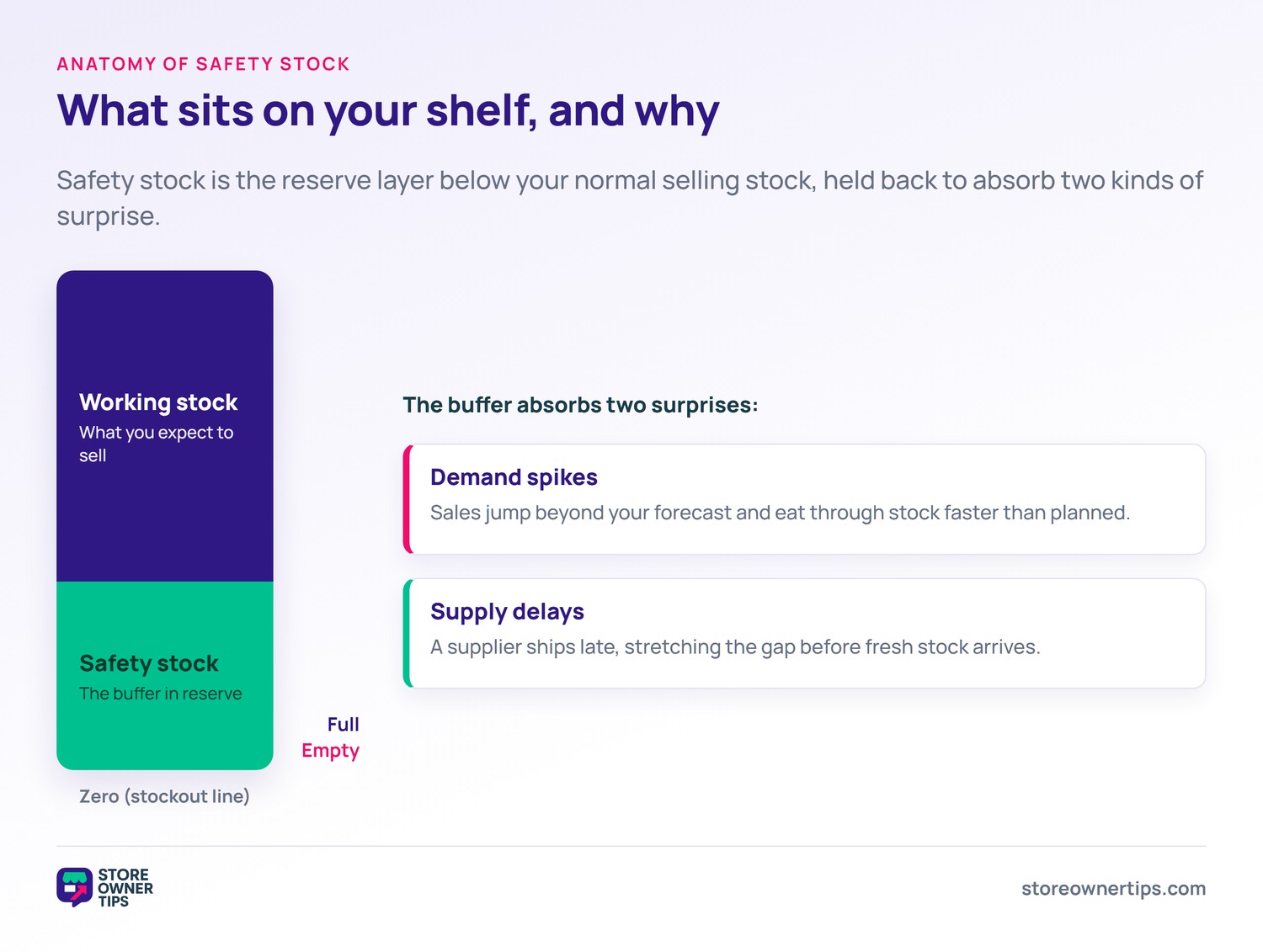
Think of it like a spare tire in your trunk. You hope you never need it, but you are glad it is there. Safety stock plays that same backup role.
The buffer covers two main surprises. Demand might suddenly spike beyond your forecast. Or a supplier might deliver later than promised.
A return can also feed the buffer back. A returned unit rejoins your usable stock. So returns slightly soften your safety needs.
Safety stock is not just a random guess. The simplest method weighs two things. It looks at how much demand varies and how long restocks take.
A bigger swing in demand calls for more buffer. A longer or shakier lead time does too. Steady demand and fast suppliers need less.
You do not need a perfect formula to start. Begin with a sensible buffer for your bestsellers. Then adjust as you watch real demand unfold.
On WooCommerce, you bake safety stock into your thresholds. You set a low-stock alert above zero, not at it. That alert fires while a buffer still remains.
The gap between the alert and zero is your safety stock. It gives you time to reorder before you run dry. A good WooCommerce inventory management setup makes those thresholds easy to track.
WooCommerce and Shopify both support low-stock alerts. You decide the trigger level per product. That control lets you size each buffer to its risk.
If the buffer ever does run out, plan a backup. A back-in-stock notification re-engages waiting buyers. That recovers some sales a rare stockout would lose.
Safety stock is your defense against the costly stockout. Running out sends an eager buyer straight to a rival. That stockout fuels the wider abandonment problem, which averages 70.22%.
It also protects your delivery promises. About 63% of consumers expect delivery within two days. You can only ship fast from stock you actually hold.
But the buffer is not free to keep. General retailers average a net margin of just 5.61%. Too much safety stock ties up cash and eats that thin profit.
A reliable buffer also calms your operations. You reorder on a steady rhythm, not in a panic. That calm prevents rushed, costly orders.
The right amount balances two risks. Hold too little, and a surprise causes a stockout. Hold too much, and cash sits frozen on the shelf.
Start by ranking products by importance. Bestsellers and hard-to-restock items deserve a bigger buffer. Slow or easy-to-reorder goods need less.
Then watch and adjust over time. If you never dip into the buffer, trim it. If you keep running out, raise it.
Use your sales data to guide the size. Past spikes show how big a surprise can get. Let real numbers, not fear, set the buffer.
Safety stock always carries a cost. Every buffered unit is cash off the table. That money cannot fund ads or new products.
So the buffer is a trade-off, not free insurance. You weigh the cost of holding against the cost of a stockout. The bigger the lost-sale risk, the more buffer is worth it.
Lean buffers free cash for growth. Just keep them large enough to cover real swings. The sweet spot protects sales without starving the business.
Track how often you actually use the buffer. If it never moves, your cash is over-parked. If it empties often, raise it a notch.
Some situations call for a bigger cushion. A long supplier lead time is one. The longer the wait, the more you must hold.
Unpredictable demand is another trigger. A product prone to viral spikes needs a buffer. Steady sellers can run much leaner.
Peak seasons also raise the bar. Holiday demand can dwarf a normal month. Build the buffer up before the rush, then ease it after.
New or unproven suppliers also warrant caution. You do not yet know their reliability. So start with a bigger buffer until they prove steady.
Not every product deserves the same buffer. Rank items by sales and restock difficulty. Then assign buffers that match each tier.
Your bestsellers earn the largest cushion. A stockout there costs the most. Slow movers can run nearly buffer-free.
This tiered approach saves real cash. You protect what matters and trim the rest. Smart buffers beat one blanket rule.
The first mistake is holding the same buffer for everything. A flat rule wastes cash on steady sellers. Size each buffer to its real risk instead.
Another trap is never updating the numbers. Demand and lead times shift over the year. A stale buffer drifts out of step with reality.
A third slip is ignoring supplier reliability. A flaky supplier needs a bigger cushion. A dependable one lets you run leaner.
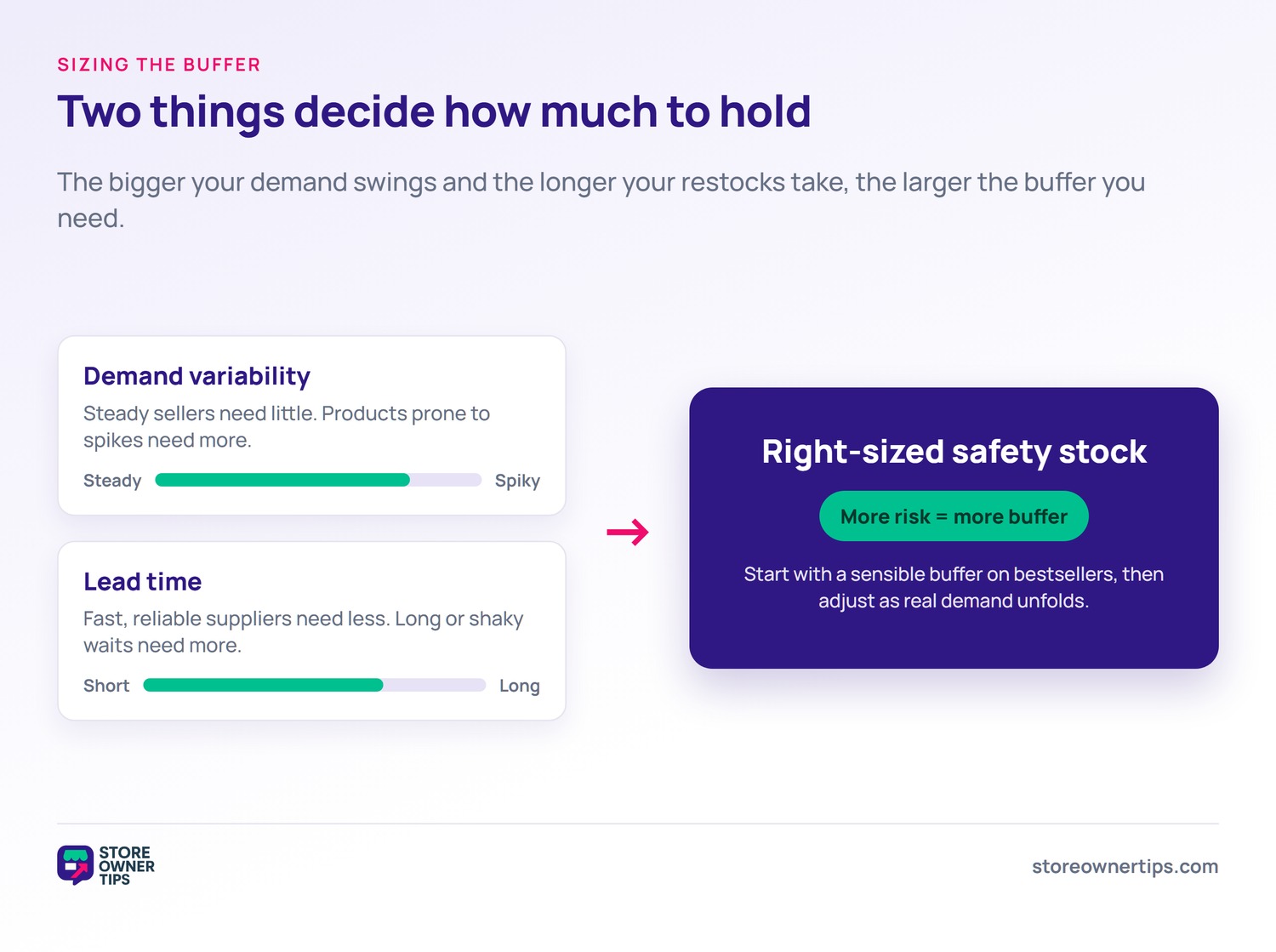
Imagine a skincare brand called PureGlow on WooCommerce. Its hero serum sells steadily all year. But its supplier sometimes ships weeks late.
PureGlow holds no buffer on the serum. When the supplier slips, the serum sells out. Loyal buyers find it gone and shop elsewhere.
Each stockout costs steady, repeat sales. PureGlow also watches its cart abandonment spike during stockouts. The thin buffer is quietly bleeding revenue.
PureGlow adds a safety stock buffer on the serum. The size reflects its slow, unreliable supplier. A low-stock alert now fires while a cushion remains.
That alert gives time to reorder early. The serum stays in stock even when shipments slip. Buyers never see an empty page.
Stockouts on the hero product disappear. Loyal buyers always find their serum ready. Repeat sales and trust both climb.
PureGlow keeps the buffer lean on steady items. Cash is not wasted where risk is low. The lesson is clear: a smart buffer beats both extremes.
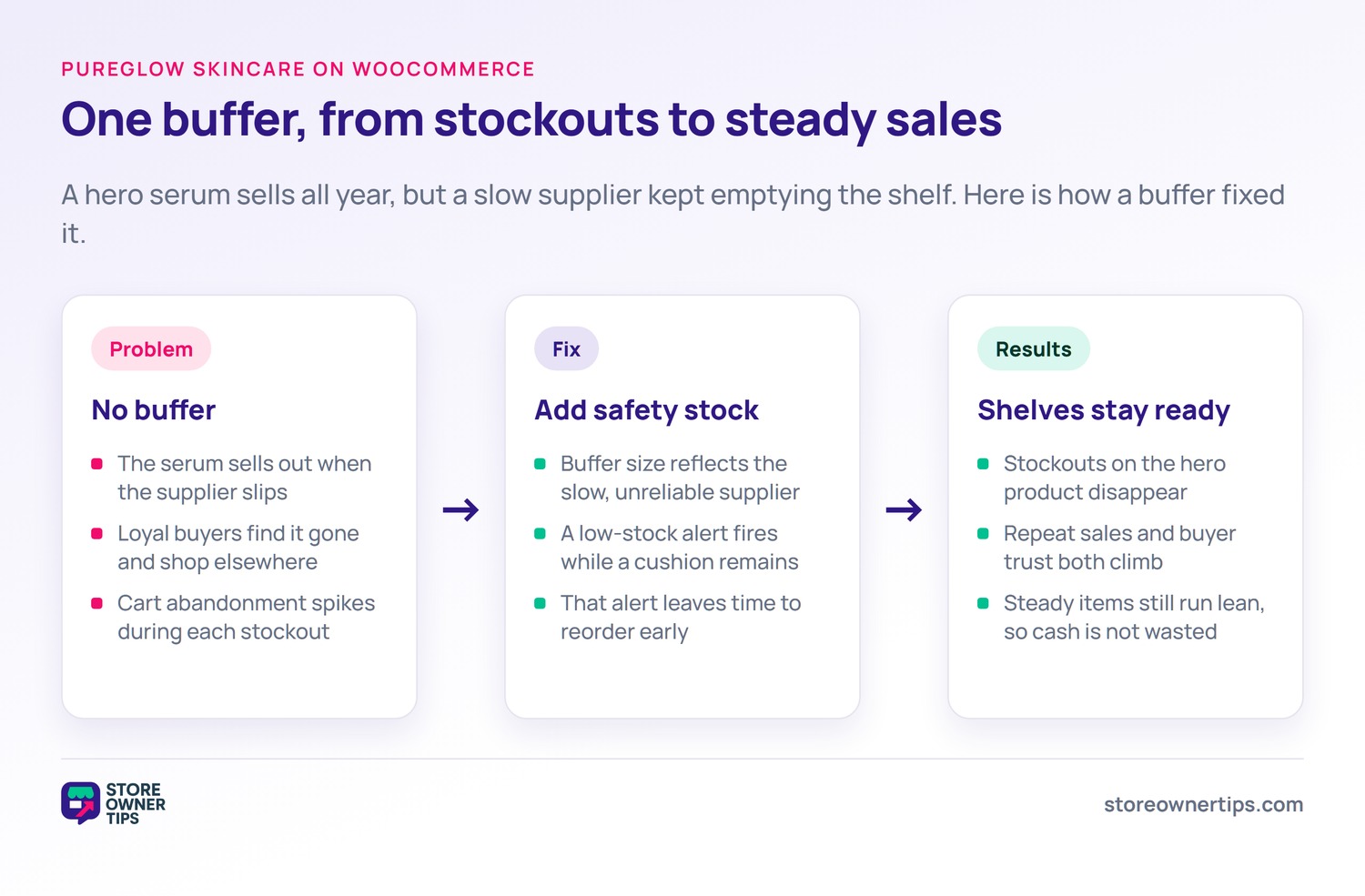
Safety stock and the reorder point work closely together. They are related but not the same thing. One is a cushion, the other is a trigger.
Safety stock is the buffer you never plan to touch. It waits in reserve for surprises. It is a quantity held back, not a signal.
The reorder point is the stock level that says order now. It usually includes the safety stock plus expected demand during lead time. When stock hits it, you place a new order.
So safety stock is built into the reorder point. The buffer sets the floor you protect. The reorder point tells you when to act.
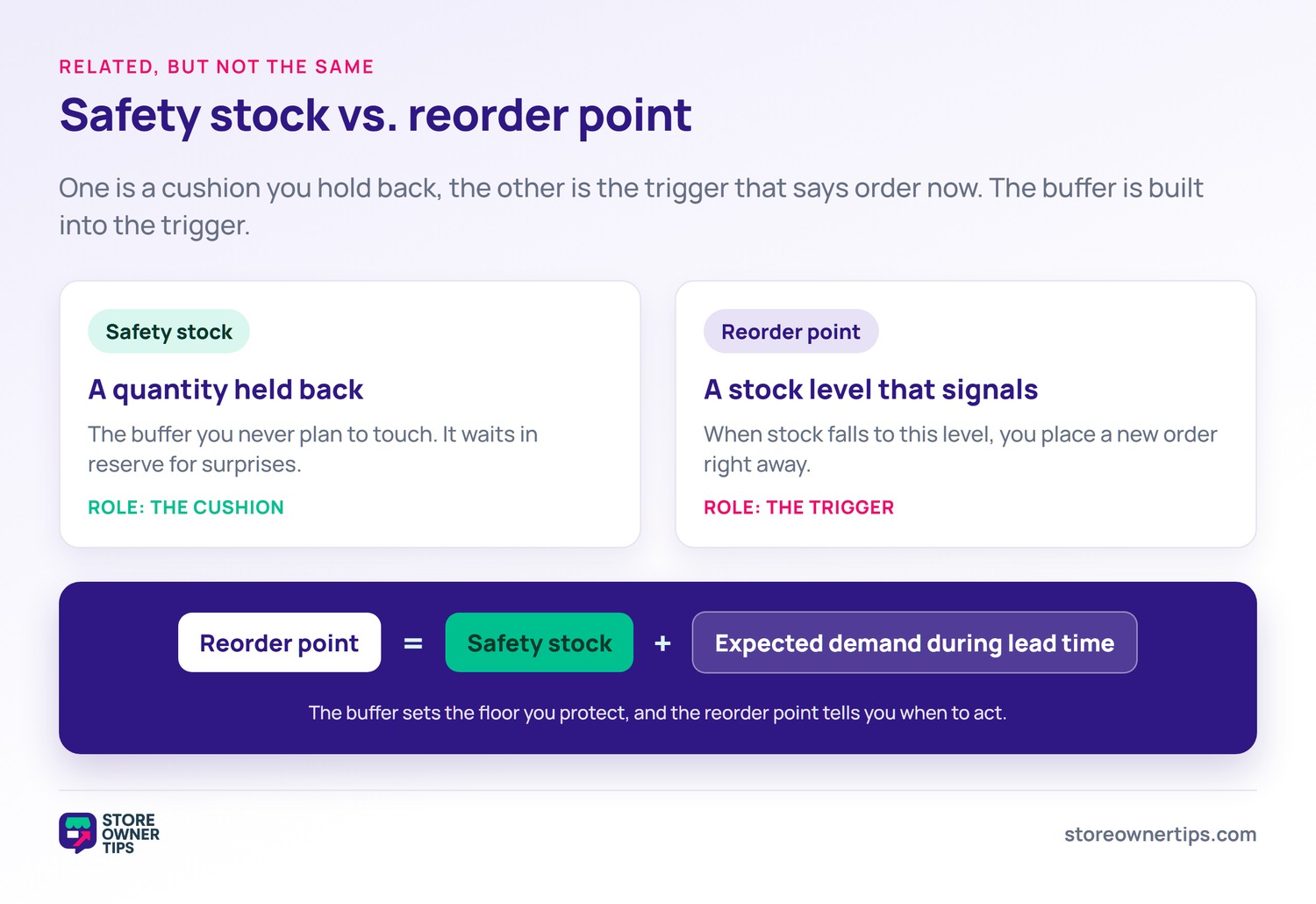
Weigh how much your demand varies against your lead time. Bigger swings and longer waits call for more buffer. Then round up a little for peace of mind.
No, too much ties up cash and adds carrying cost. The goal is a balanced buffer, not a giant one. Match it to risk, not to worry.
Safety stock is the buffer you hold in reserve. The reorder point is the level that triggers a new order. The reorder point usually includes your safety stock.
Safety stock is the inventory cushion that keeps you selling when surprises hit. It prevents costly stockouts without freezing too much cash in reserve. Size each buffer to its risk, review it often, and your shelves stay ready for the unexpected. Treat the buffer as planned insurance, not dead weight.
Copyright © StoreOwnerTips.com. All Rights Reserved.
