Seasonal inventory is stock a store buys for one season or event, like Halloween or Christmas. It sells fast while the event is near, then loses most of its value once the date passes. Good planning means buying enough to meet demand without getting stuck with leftovers.
Seasonal inventory works as a four-step cycle: forecast demand, buy and receive stock, sell through it, then clear what’s left. Each step has a deadline tied to the event. Miss one, and the next step gets harder and more expensive.
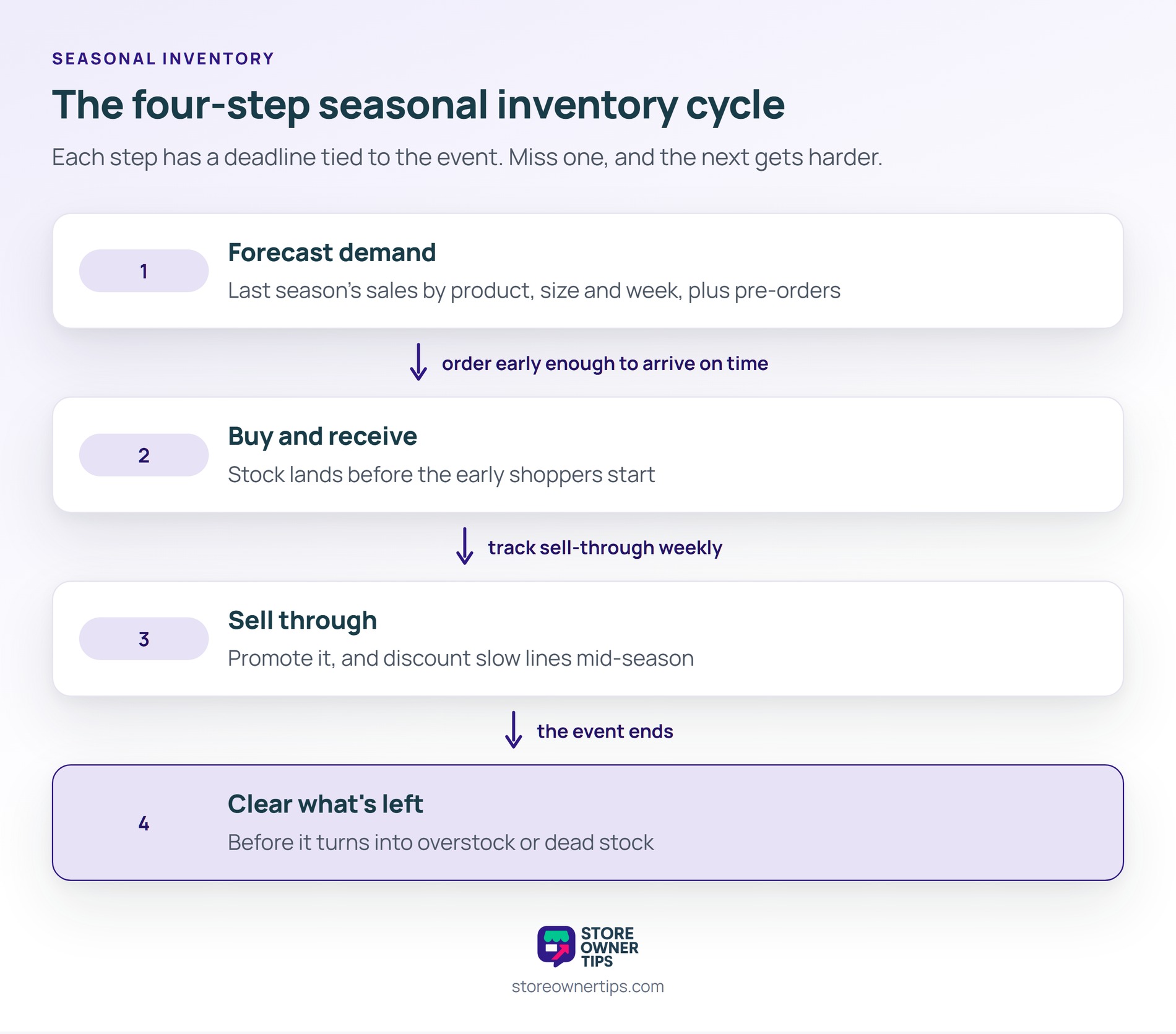
Seasonal inventory planning starts with last season’s sales, broken down by product, size and week. That history shows which items sold out early and which ones sat on the shelf. Visser suggests you stock 1.5 to 2 times your average monthly sales for Black Friday. Check that figure against your own sales history.
Pre-orders add a second signal. When shoppers reserve a costume before it arrives, you learn what’s popular while you can still reorder. Think of it like a restaurant taking bookings: the reservations tell the kitchen how much food to prep.
Arrival timing is the next decision, because shoppers start early. NRF found that 49% of Halloween shoppers began in September or earlier. For the winter holidays, 43% of holiday shoppers planned to start before November. An ecommerce holiday sales calendar helps you work backward from each event to an order date.
Selling through seasonal inventory means turning it into sales by the time the event ends. Your sell-through rate (units sold divided by units received) is the gauge to check each week. If a line is moving slowly by mid-season, act then rather than after the holiday. A small early discount costs far less than a deep clearance later.
Promotion keeps seasonal stock moving. Themed emails, homepage banners and Halloween marketing ideas all push traffic to in-season products. Product feed filters can also focus your shopping ads on Halloween products while the season lasts.
Christmas works the same way, with ornaments, gift sets and advent calendars. Christmas promotion ideas such as gift bundles help clear stock by December 25. Sold-out seasonal items need a fast call on out-of-stock products. You can hide them, take pre-orders, or suggest a close match.
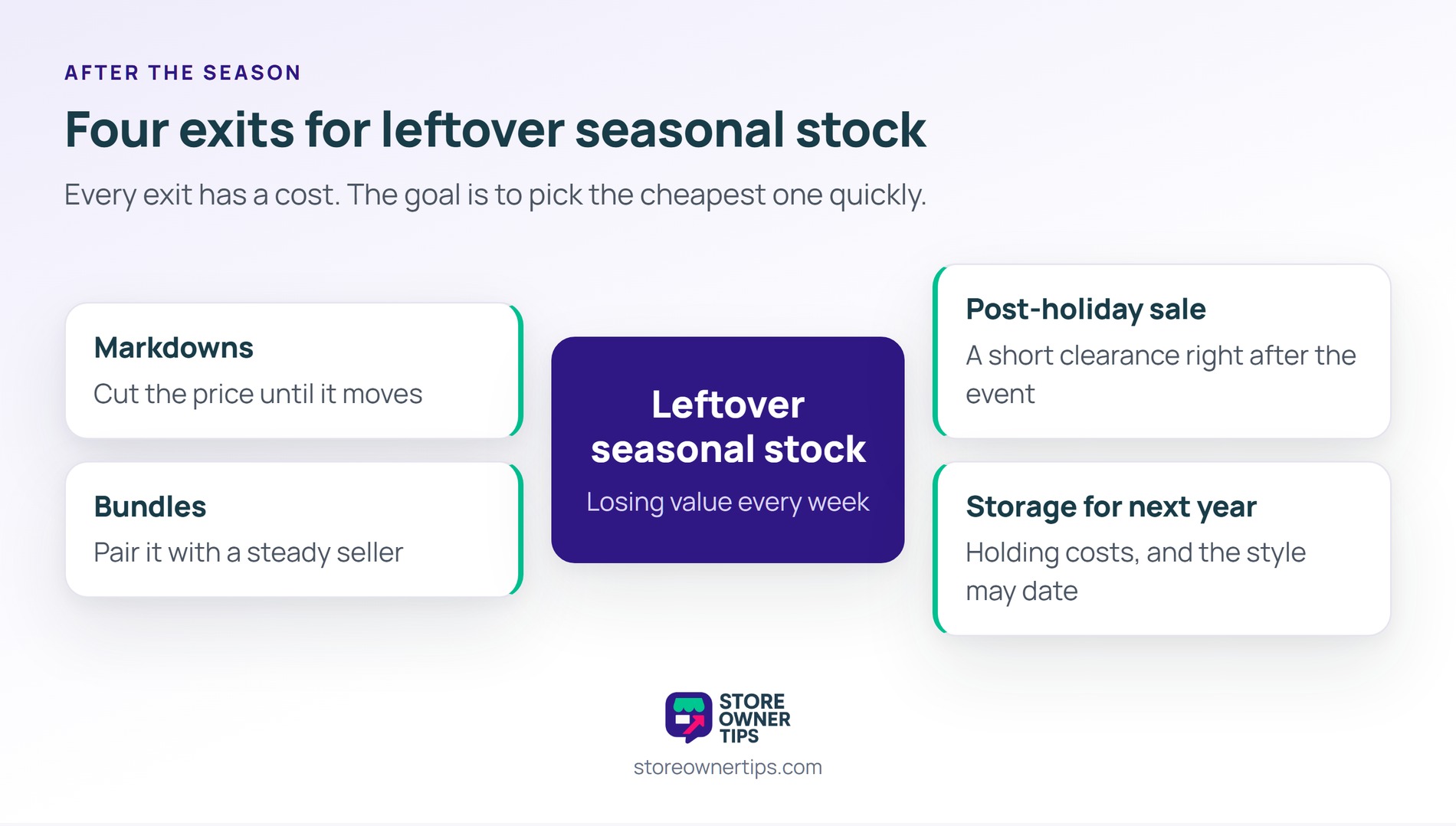
Leftover seasonal inventory has four main exits, and each one has a cost:
Seasonal stock that isn’t cleared quickly turns into overstock. Left long enough, it becomes dead stock that ties up money and shelf space.
Seasonal inventory carries real weight in a retail year. The St. Louis Fed reports that November and December make up about 20% of annual retail sales. Hobby, toy and game stores rely on the season most, at about 30%.
Halloween is a smaller season with big numbers. NRF expects Halloween spending to reach $13.1 billion, including $4.3 billion on costumes and $4.2 billion on decorations. Those are exactly the products that lose value on November 1. For the full winter season, NRF forecasts November and December sales of $1.013 trillion.
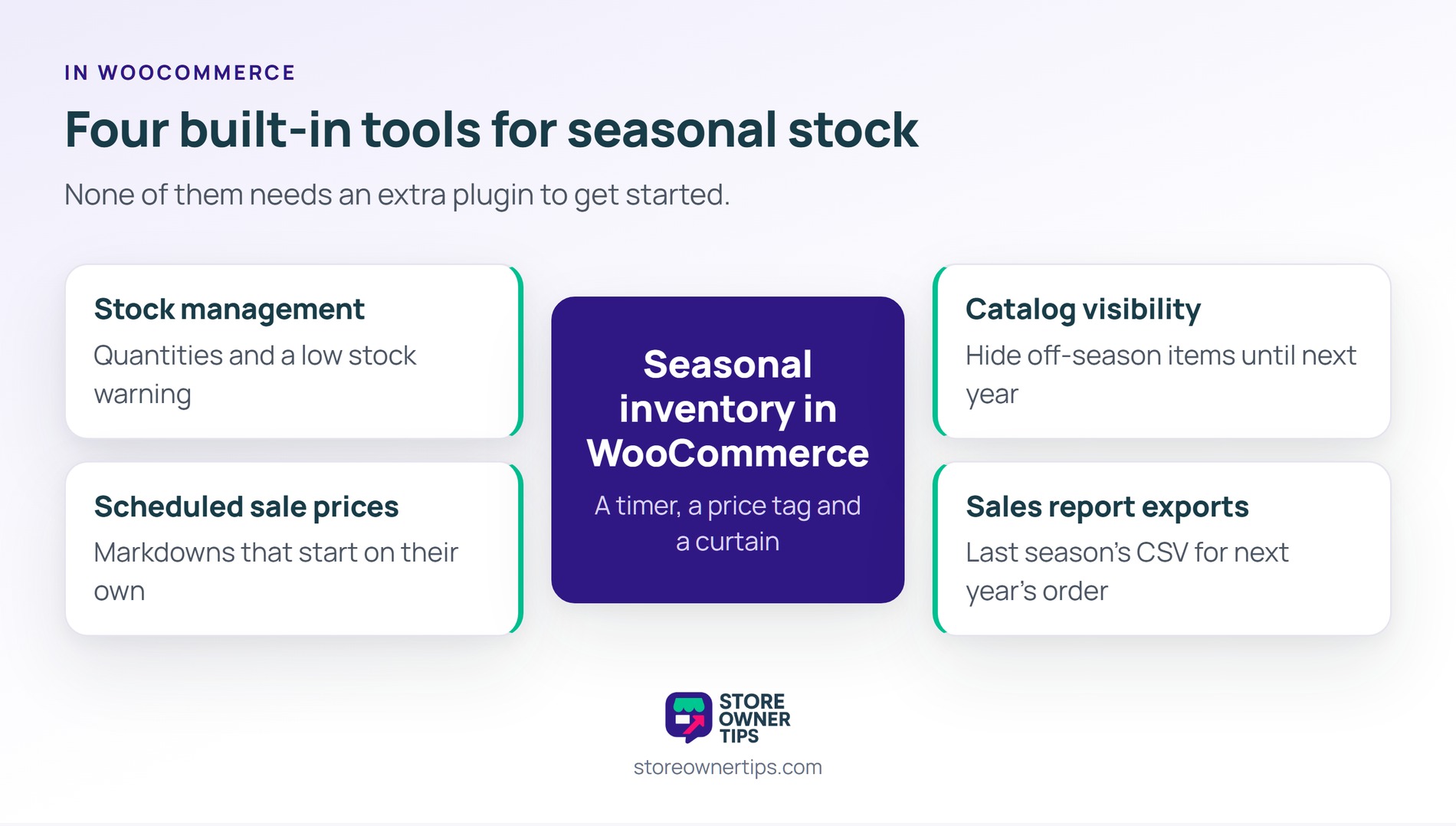
You manage seasonal inventory in WooCommerce with four built-in tools: stock tracking, scheduled sale prices, catalog visibility and sales reports. None of them needs an extra plugin to get started.
Think of these tools as a timer, a price tag and a curtain. The timer tracks what’s left, the price tag drops on schedule, and the curtain hides what’s out of season.
Here’s a hypothetical example of seasonal inventory from forecast to clearance. Imagine a small online store called Hollow Lantern Co. that sells Halloween costumes and decor. Its top costume line sold 400 units last season at $40 each, and each unit costs $16.
Pre-orders open in August and reach 60 units, compared with 40 at the same point last year. That’s 50% more early interest, so the owner plans for about 30% more sales overall. She orders 520 units and schedules delivery for mid-August. The costumes go live on September 1, ahead of the early shoppers.
By October 15, the store has sold 286 costumes, a sell-through rate of 55%. However, a matching decor line sits at just 30%. The owner adds a 10% discount on the decor and features it beside the costumes. By October 31, the store has sold 470 costumes and has 50 left.
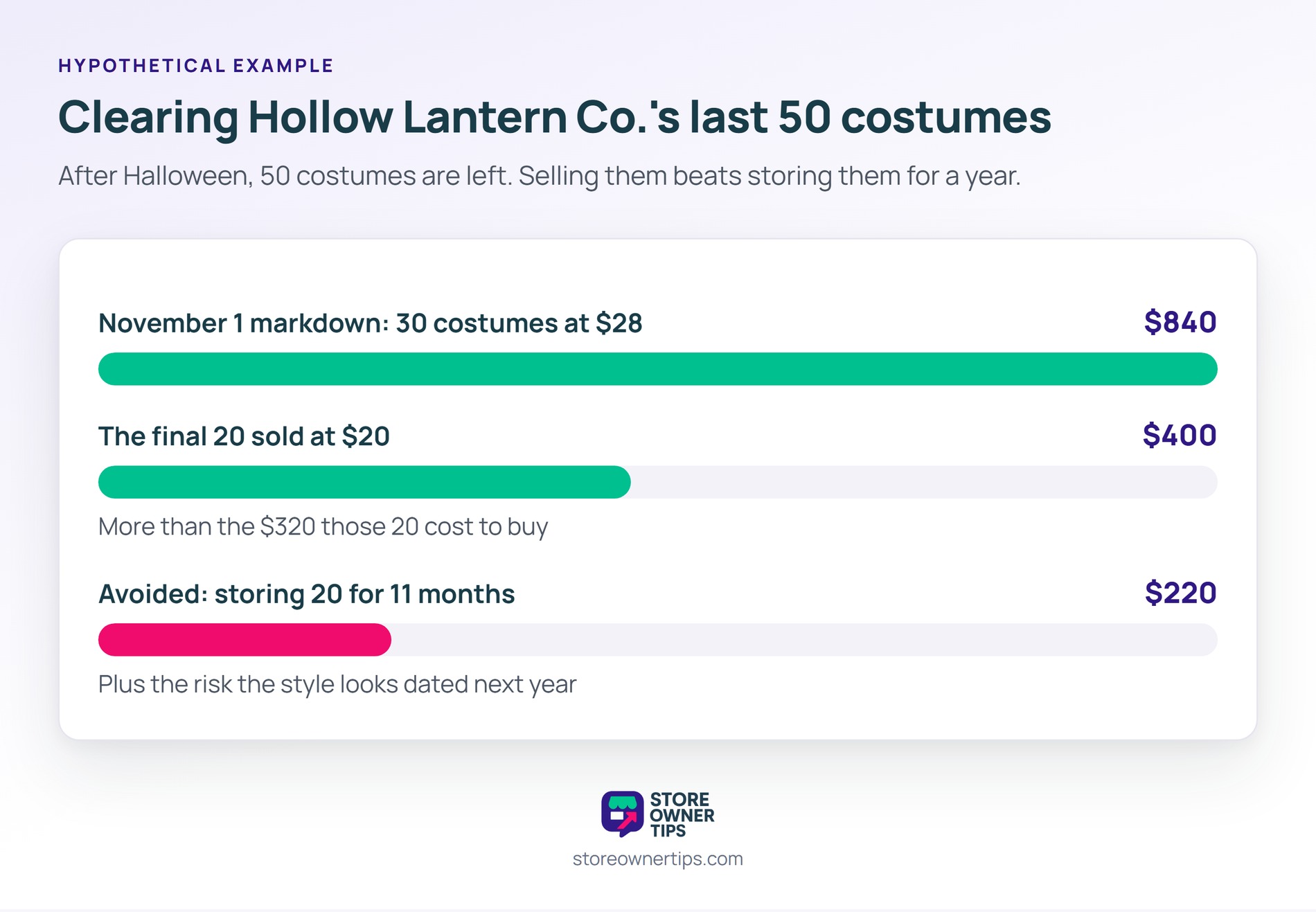
On November 1, a scheduled sale price drops the costumes 30%, from $40 to $28. Thirty units sell that week, bringing in $840. That leaves 20 costumes, which cost the store $320 to buy.
Storing them would cost about $1 per unit each month for 11 months. That’s $220 in holding costs, with the risk that the style looks dated next year. Instead, the owner drops them to $20 and sells all 20 for $400. As a result, she recovers more than their cost and frees up the space.
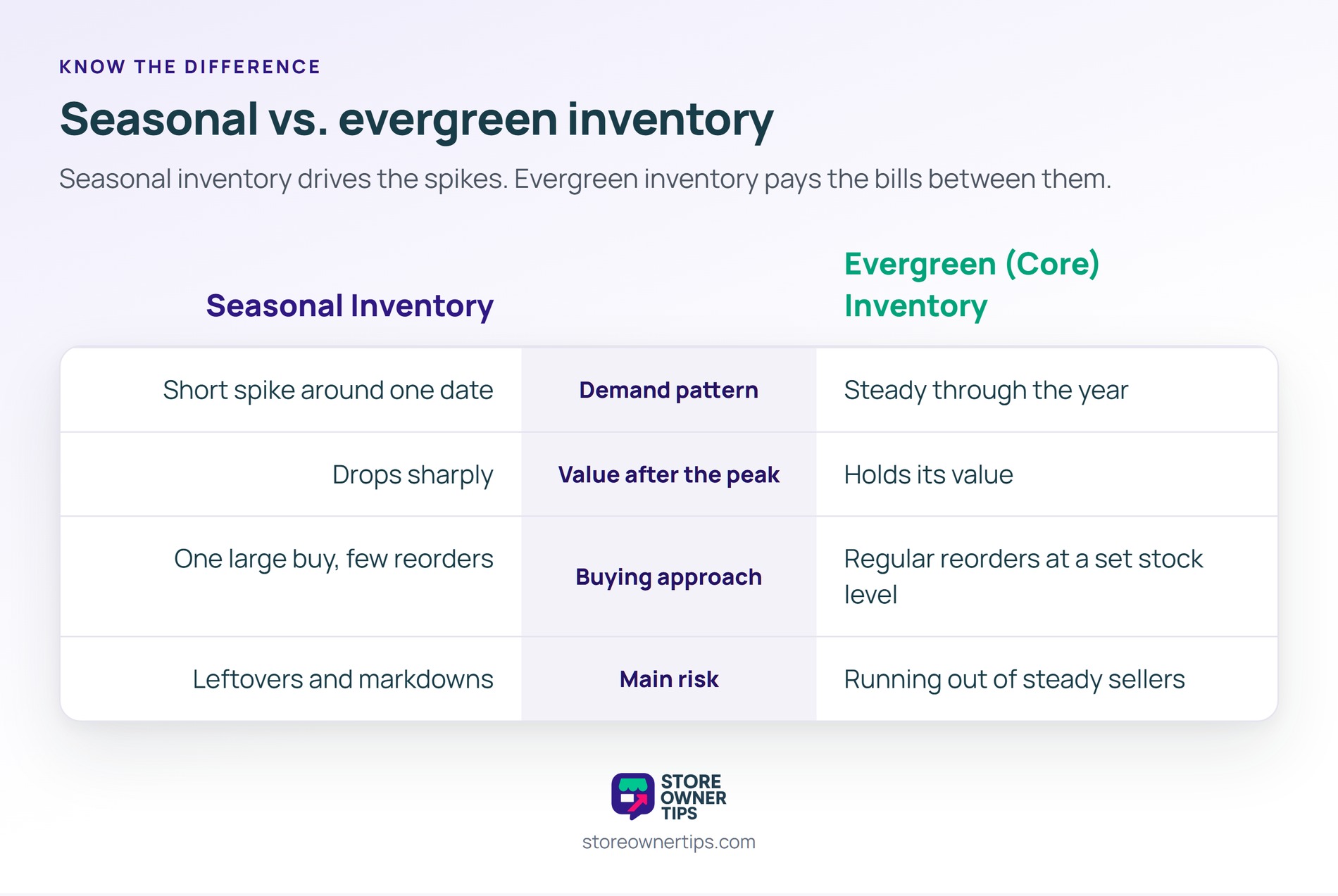
| What you’re comparing | Seasonal inventory | Evergreen (core) inventory |
|---|---|---|
| Demand pattern | Short spike around one date | Steady through the year |
| Value after the peak | Drops sharply | Holds its value |
| Buying approach | One large buy, few reorders | Regular reorders at a set stock level |
| Main risk | Leftovers and markdowns | Running out of steady sellers |
Seasonal inventory drives spikes, while evergreen inventory pays the bills between them. Most stores need both. Keep your core lines on regular reorders, and treat seasonal buys as one-off bets with a clear exit plan.
Leftover seasonal inventory is usually best cleared quickly with a markdown, a bundle or a short post-holiday sale. Start the discount the day after the event, while shoppers still remember it. If an item is timeless, like plain red ornaments, storing it for next year can make sense. Even so, count the holding costs before you decide.
Order seasonal inventory based on last season’s sales for the same products, then adjust for growth and early signals. Pre-orders, wishlist adds and email clicks all hint at demand early. New products have no history, so buy smaller and plan a reorder if they sell well.
Store seasonal inventory only when it won’t date and the holding costs stay below the markdown loss. Storage space, damage and cash tied up all add up over 11 months. Trend-driven items, like costumes based on this year’s hit movie, rarely sell well a year later. Basic decor and evergreen colors are safer to keep.
Seasonal inventory matters because it can make or break a store’s best months of the year. Buy too little and you miss the spike, but buy too much and the profit disappears into markdowns. A simple cycle of forecast, buy, sell through and clear keeps each season profitable.
Copyright © StoreOwnerTips.com. All Rights Reserved.
