Small Business Saturday is the Saturday after Black Friday, when shoppers are encouraged to buy from small and independent businesses. American Express started it to steer holiday spending toward local shops and restaurants. Independent online stores take part too, using shop-small messaging and their own offer to stand apart from the big-box sales.
Small Business Saturday works as a shared calendar moment that steers holiday shoppers toward independent businesses for one day. Nobody has to register or pay to take part. A store simply tells its customers it’s a small business and gives them a reason to buy that Saturday.
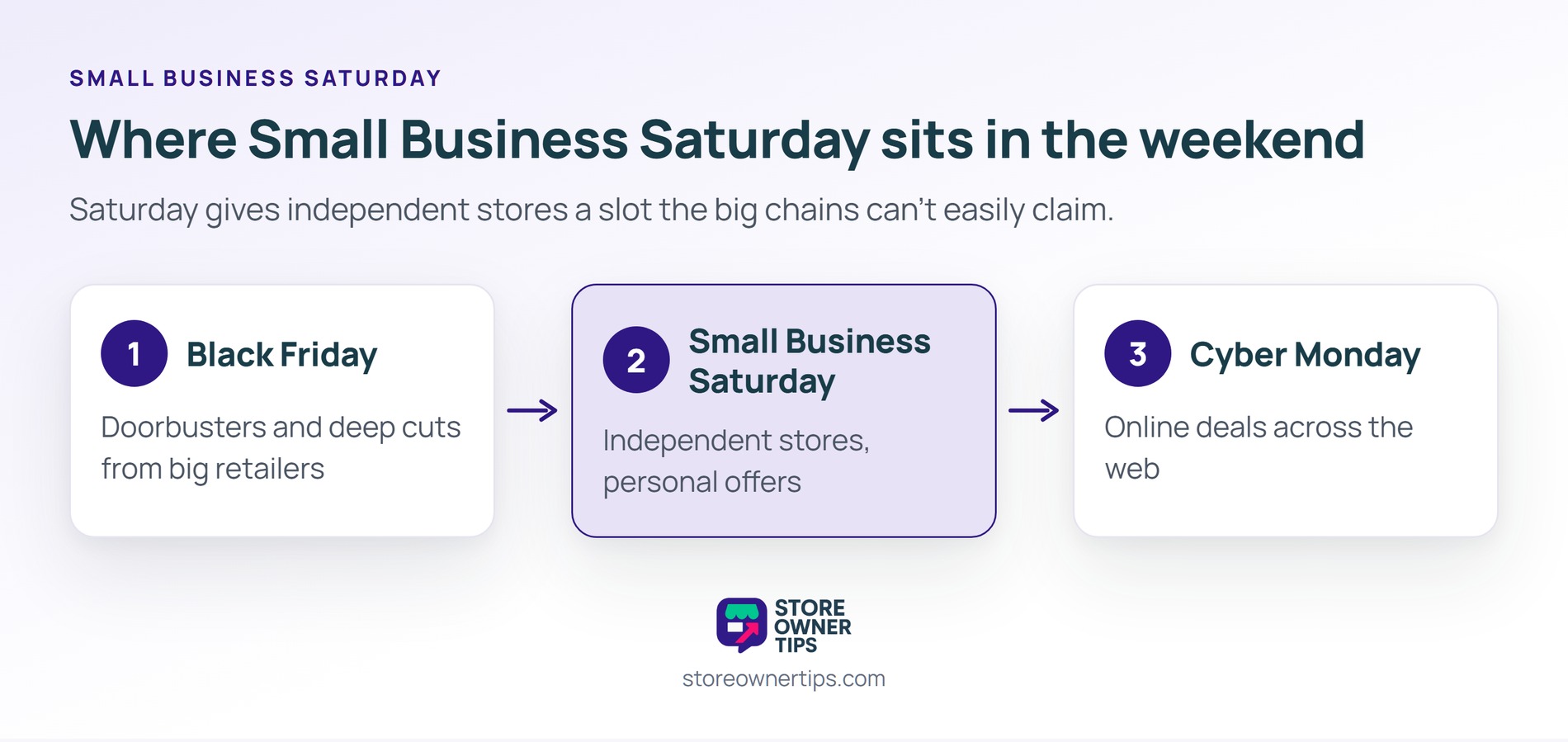
Small Business Saturday falls between Black Friday and Cyber Monday, in the busiest shopping stretch of the year. Black Friday belongs to doorbusters and deep cuts from big retailers. Cyber Monday belongs to online deals. Saturday gives independents a slot that the chains can’t easily claim.
Think of the weekend like a farmers’ market sitting between two supermarkets. Shoppers come for the big stores, but plenty stop at the market stall because it feels personal. Smart stores plan the whole weekend early. November promotion ideas that lead into Black Friday warm up the list before Saturday arrives.
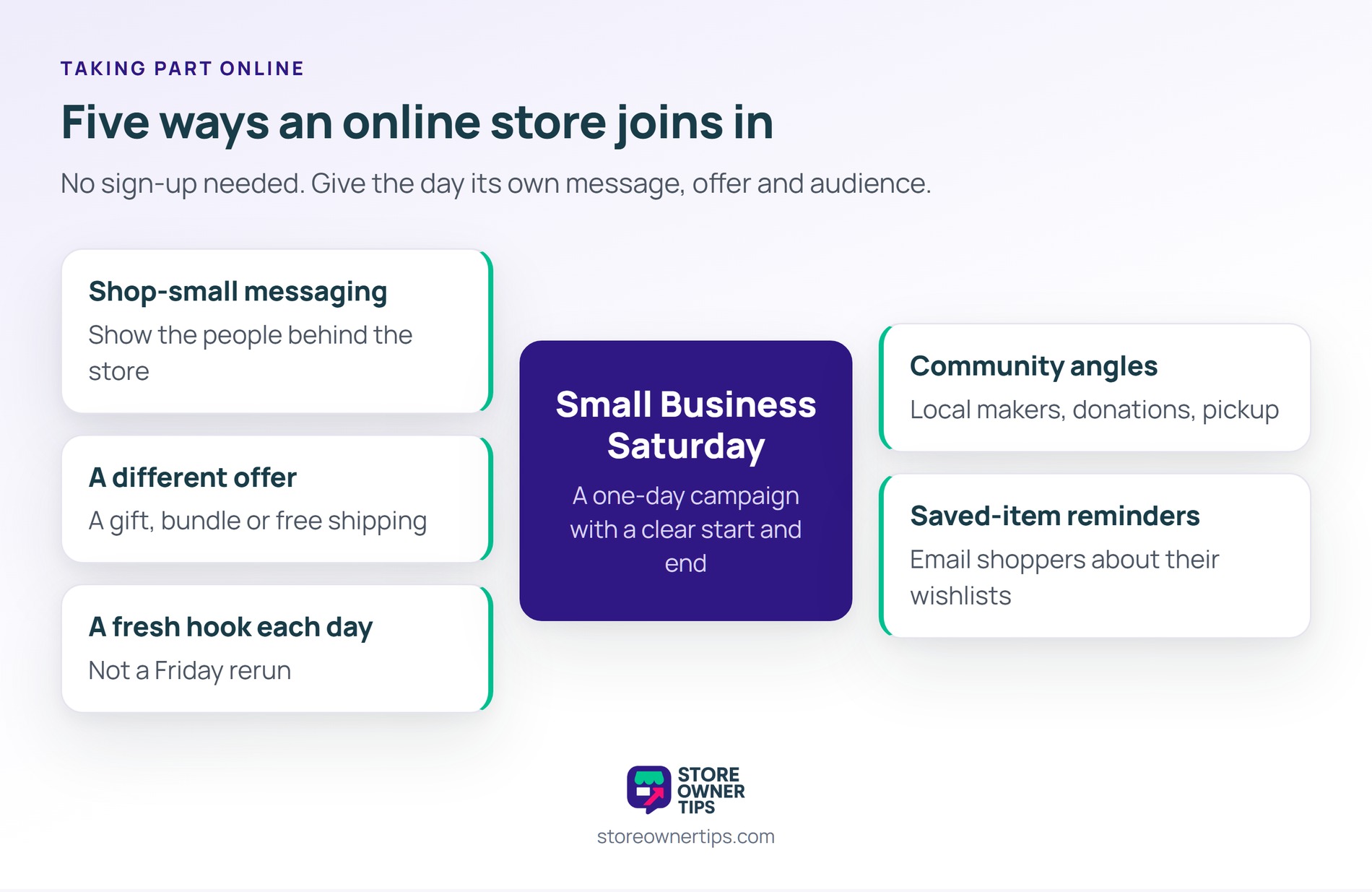
An online store joins Small Business Saturday by giving the day its own message, offer, and audience. The mechanics live in your normal WooCommerce setup: a coupon, a banner, an email, and a product collection. In practice, most stores run it as a one-day campaign with a clear start and end.
Setting up Small Business Saturday in WooCommerce takes little more than a coupon and a collection. Create a coupon that expires at the end of Saturday, or schedule a sale price with the same end date. Group the Saturday products into one category and link it from a homepage banner. Test the checkout on a phone before Friday, because the weekend leaves no time for fixes.
Small Business Saturday sells on identity more than on price. Shoppers want to see themselves as people who keep their neighbourhood alive. A purchase becomes a small vote for the kind of community they want. That’s why a story about the owner often outperforms another percentage off.
Shopping small also leans on social proof. When friends post about supporting local shops, joining in feels normal and rewarding. As a result, a short note about the founder can do more work than a bigger banner.
Small Business Saturday draws a crowd both in stores and online. The National Retail Federation counted 62.7 million in-store and 63 million online shoppers on the 2025 Thanksgiving weekend Saturday. Online turnout matched the in-store crowd, which matters for WooCommerce stores without a physical shop.
Motive matters too. In NRF’s pre-holiday survey, 80% of potential Saturday shoppers were considering shopping to support local businesses. Meanwhile, the 2025 American Express Shop Small Impact Study found 86% of consumers were likely to shop small that season. Small business owners in the same Amex study expected nearly 20% of annual revenue from Small Business Saturday alone.
Small Business Saturday in practice looks like a small store running a focused campaign beside its Black Friday sale. Here’s a hypothetical example. Picture an independent WooCommerce store called Fernhill Goods that sells hand-poured candles and gift sets.
Fernhill Goods runs 25% off sitewide on Black Friday, like most of its competitors. For Saturday, the owner wants something that feels different.
Rather than a deeper discount, she offers a free matchbox and handwritten card with every order over $60. She also adds a small-batch gift set that’s only available that day. The gift set works like a mini flash sale, since it disappears when Saturday ends.
On Saturday morning, she emails her list with a short story about pouring candles in her garage. The email also reminds shoppers about the items they saved earlier in the month. A homepage banner reads “Shop small this Saturday” and links to the gift set.
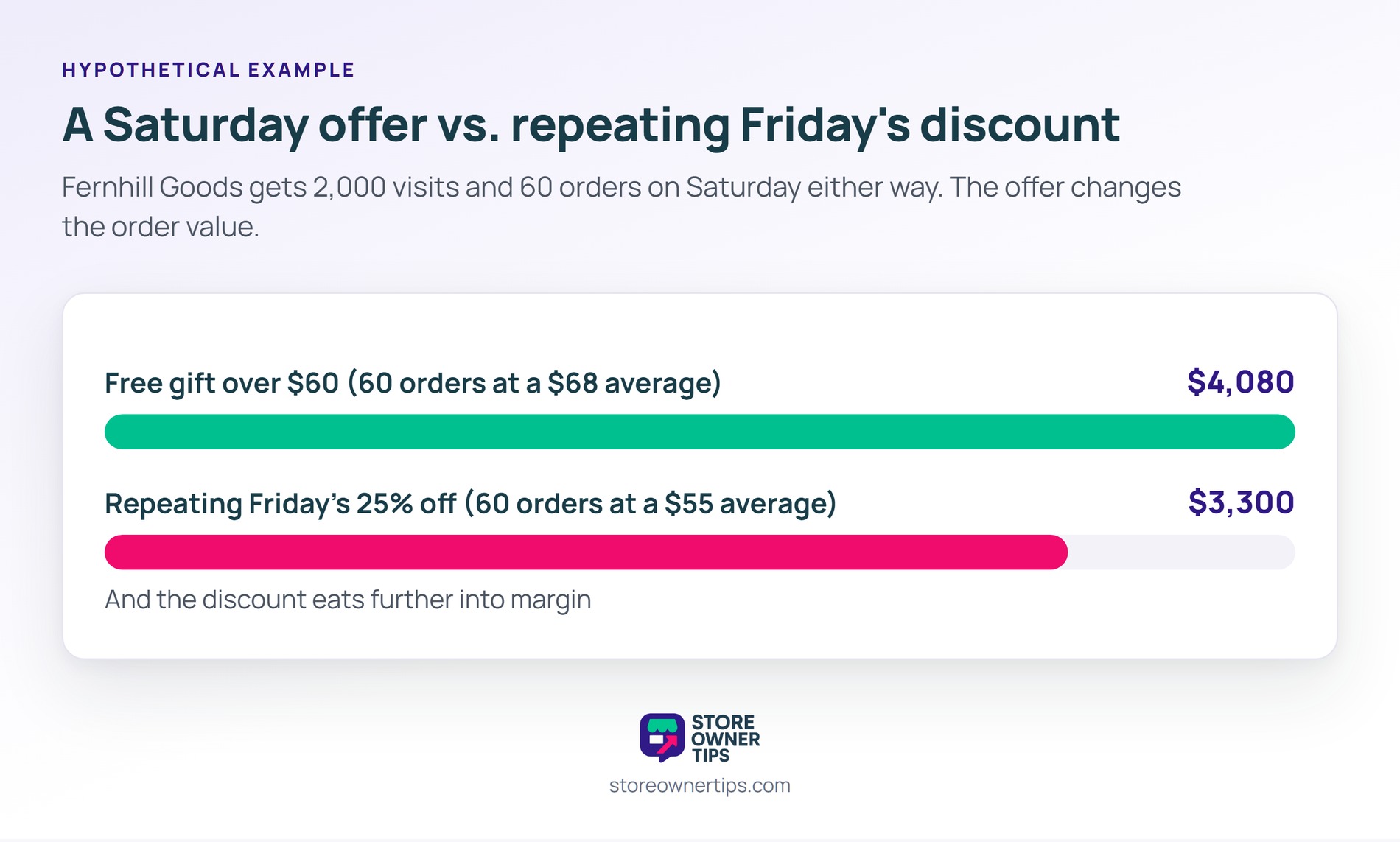
Picture the store’s numbers for the day. Fernhill Goods gets 2,000 visits and converts 3% of them, so it takes 60 orders. The $60 threshold nudges the average order to $68, which brings in $4,080 for the day.
Compare that with simply repeating Friday’s 25% off. The same 60 orders at a $55 average would bring in $3,300 before the discount eats further into margin.
On top of that, the shop-small story gives first-time buyers a reason to come back. Several of them join the store’s loyalty program before checkout. After the weekend, she works through her after-Black Friday tasks and thanks every Saturday buyer by email.
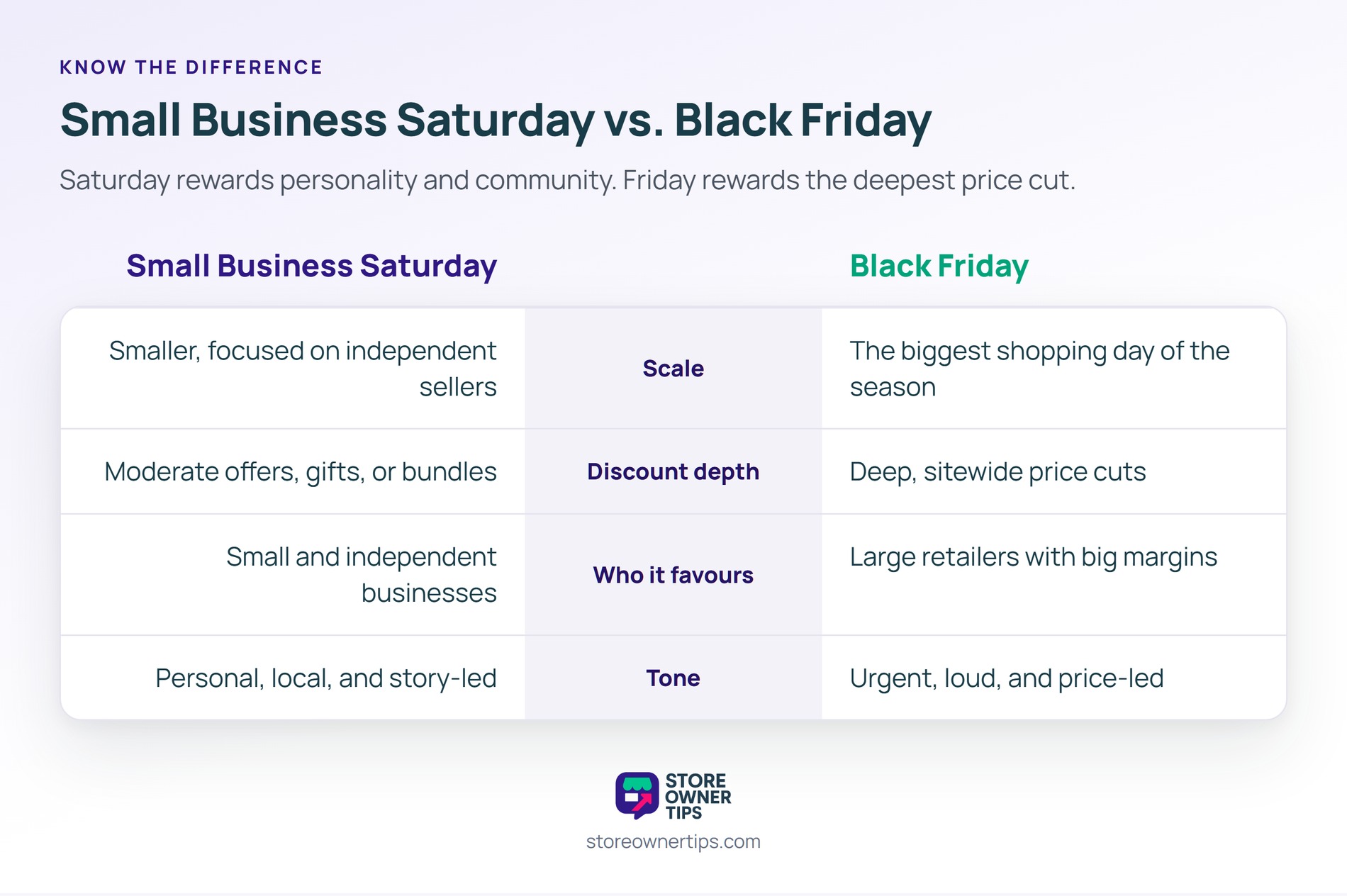
Small Business Saturday rewards personality and community, while Black Friday rewards the deepest price cut. The table shows how the two days differ for an independent store.
| What you’re comparing | Small Business Saturday | Black Friday |
|---|---|---|
| Scale | Smaller, focused on independent sellers | The biggest shopping day of the season |
| Discount depth | Moderate offers, gifts, or bundles | Deep, sitewide price cuts |
| Who it favours | Small and independent businesses | Large retailers with big margins |
| Tone | Personal, local, and story-led | Urgent, loud, and price-led |
Black Friday is the heavier hitter, with Adobe recording $11.8 billion in U.S. online spending on Black Friday alone. A small store can’t win a price war against that. Running both days works best: compete on Friday if your margins allow, then give Saturday a softer, more personal offer. That way, your Black Friday marketing plan covers the whole weekend instead of a single day.
Small Business Saturday gives independent stores a built-in reason to stand out. It also adds one more campaign to a crowded weekend.
Yes, an online store can take part in Small Business Saturday. The day celebrates independent businesses, not just shops with a street address. Use shop-small messaging, a distinct offer, and a clear story about who runs the store.
Photos of the team, a packing station, or a local supplier make the claim feel real. Email is usually the strongest channel, because your list already knows you’re independent.
You don’t need a deep discount on Small Business Saturday. Many independent stores do better with a gift with purchase, a bundle, or free shipping. Those offers protect margin and still give shoppers a reason to buy that day.
A limited gift set or a product only sold on Saturday works well. If you already ran a deep discount on Friday, avoid a deeper one on Saturday. Otherwise shoppers learn to wait for your last sale.
Small Business Saturday in the United States is the Saturday after Thanksgiving, the day after Black Friday. It falls between Black Friday and Cyber Monday. The UK runs its own Small Business Saturday on a different date in early December.
Check which version your customers know before you schedule emails. A store selling to both countries can run two campaigns on two dates.
Small Business Saturday matters because it gives independent stores a day built for them inside the season’s biggest weekend. It lets a small WooCommerce store compete on story and service instead of price alone. Stores that treat it as their own day often turn holiday shoppers into long-term customers. Those repeat buyers raise customer lifetime value well beyond the weekend itself.
Copyright © StoreOwnerTips.com. All Rights Reserved.
