Weekly ecommerce tips, deals & news.
A split payment divides one customer payment among several parties at checkout. On a marketplace, that means the platform and its vendors each get their share automatically. Think of it like a vending machine that drops coins into separate trays. The buyer pays once, and the money lands in the right accounts.
On a multi-vendor marketplace, one order can include items from several sellers. The customer still pays one total at a frictionless checkout. A split payment then divides that total behind the scenes. Each vendor gets their cut, and the platform keeps its fee.
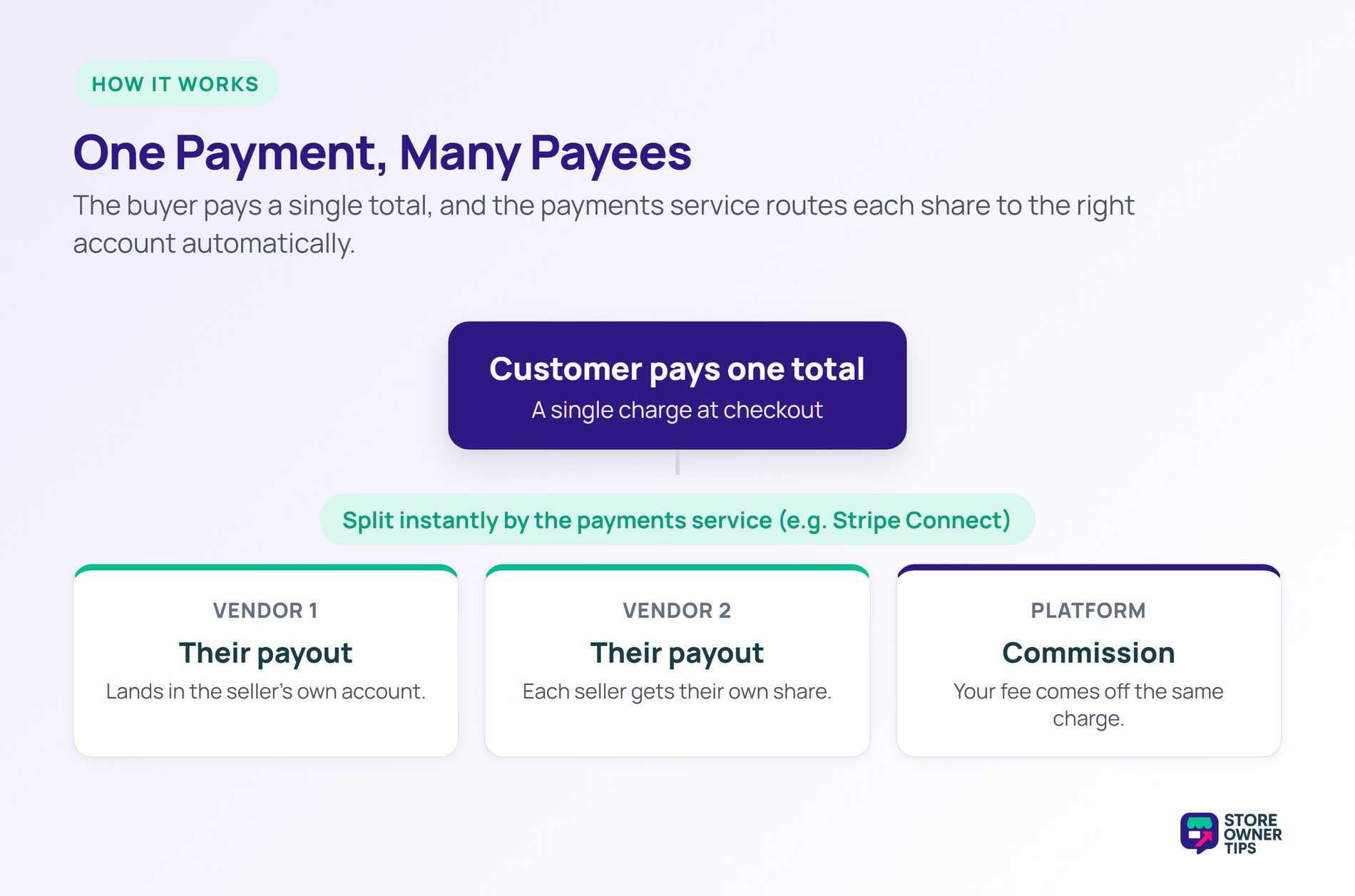
Without splitting, the owner would collect everything first. Then they would pay each vendor by hand, order by order. That is slow, error-prone, and hard to scale. Splitting fixes that by doing the math for you.
WooCommerce does not split payments across sellers on its own. A marketplace plugin adds that ability on top. Most rely on a connected-payments service like Stripe Connect. That service moves each share to the right account at the point of sale.
Think of a cash register that sorts coins as they drop in. One coin goes to the store, and the rest go to the seller. A well-built split payment does that instantly with digital money.
The split can happen the moment a customer checks out. Or it can run on a schedule the owner sets. Either way, no one moves money by hand.
This also keeps sensitive card data with the payments service. Your store never has to store or handle it directly.
Reliable payouts are the heart of vendor trust. Sellers who get paid on time keep listing and shipping. Sellers who chase late payments tend to leave. And replacing a vendor is expensive.
Finding a new seller can cost 5 to 25 times as much as keeping one. So smooth payouts protect both trust and money. Happy vendors also tell other sellers about your platform. Reliable pay is the simplest loyalty tool you have.
Split payments also make the platform’s fee automatic. For example, one large handmade-goods marketplace takes a 6.5% transaction fee. That cut comes off the top before the vendor is paid. You never have to chase a vendor to collect it.
In short, split payments tie payment, trust, and growth together. Get the money right, and the rest tends to follow.
Most marketplaces offer a few ways to time the split:
Automatic splitting saves the most time. Scheduled payouts give vendors a steady, predictable rhythm. Manual splitting gives the owner the most control over disputes. The best choice depends on your size and risk tolerance.
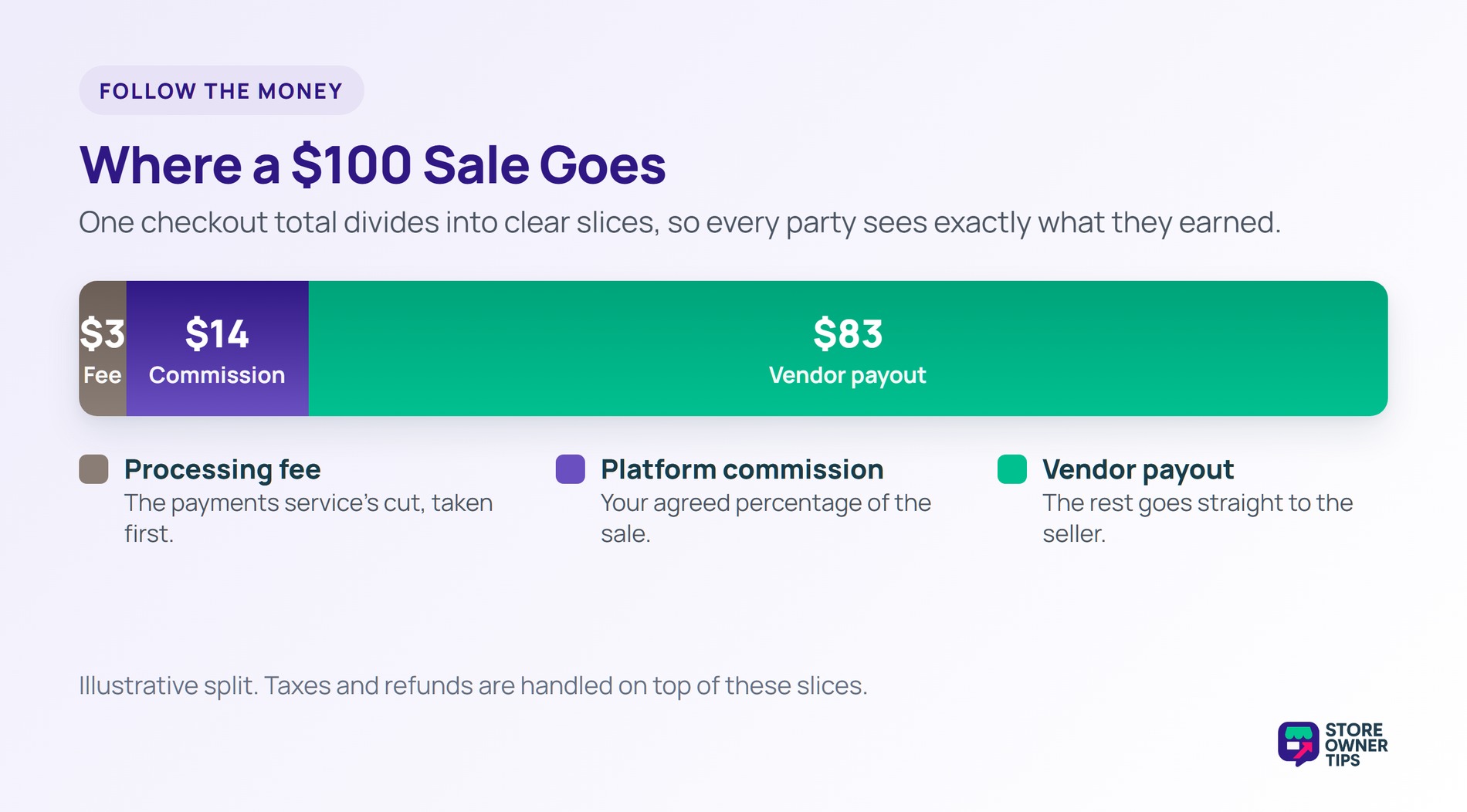
It helps to follow a single order through the split. Picture a $100 sale from one vendor. The customer pays the full $100 at checkout. From there, the money divides into clear slices.
A typical split looks like this:
Every party sees exactly what they earned. There is no mystery about who got paid what. Transparency like that keeps everyone aligned.
Even automatic splits can go wrong without care. The most common issue is a vendor who has not connected a payout account. Refunds can also get tricky once money is already split. Watch for these snags as you grow:
Clear rules up front prevent most of these problems. A short payout policy saves a lot of confusion later. A little planning protects both you and your sellers.
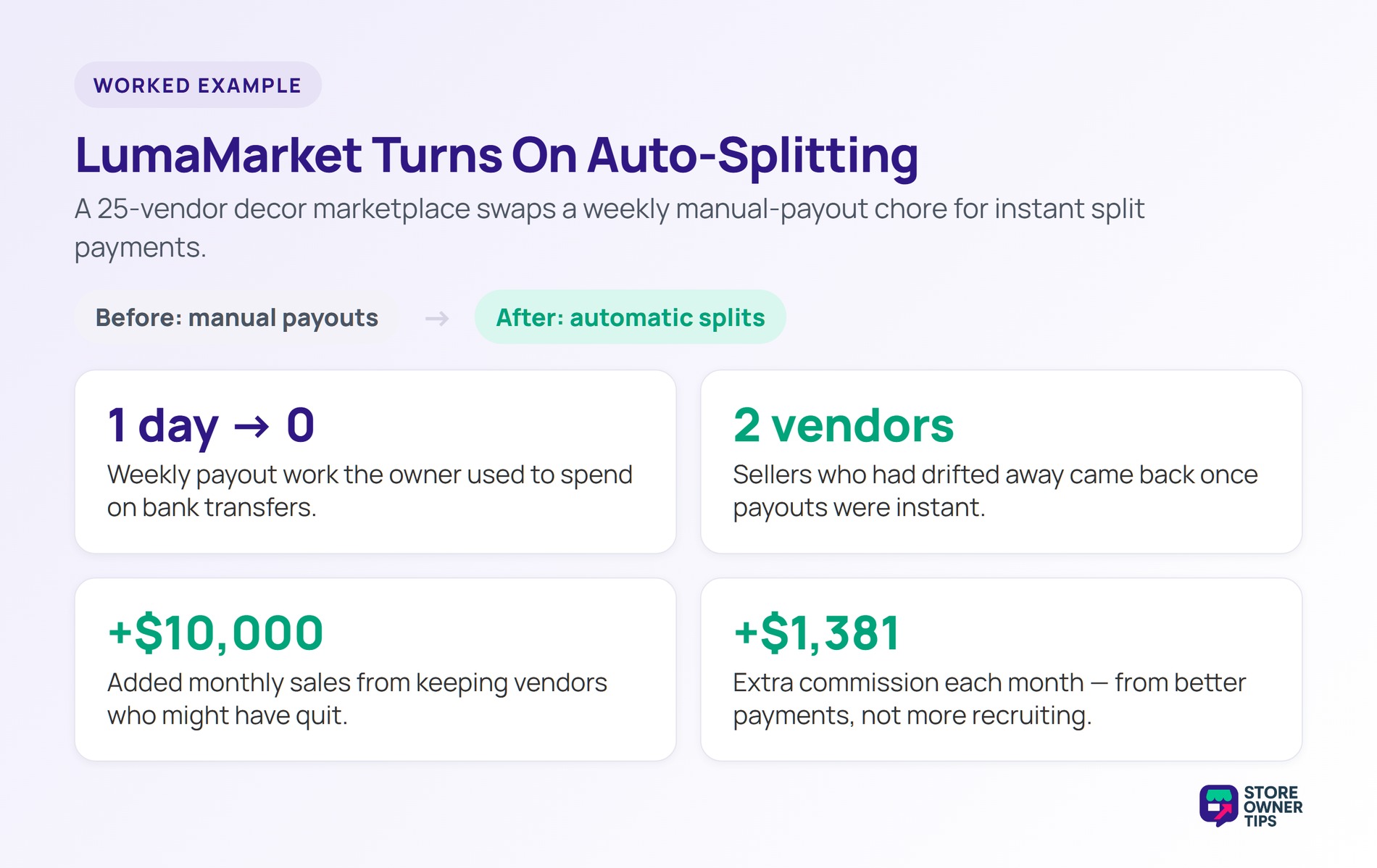
Imagine a home-decor marketplace called LumaMarket. It has 25 vendors and a steady flow of orders. At first, the owner pays every vendor by hand. She senses the system will buckle as she scales.
Each week she exports orders and sends bank transfers. The work eats a full day and invites mistakes. Vendors complain when a payout arrives late. A few start listing on other platforms instead.
The manual process also tied up the owner’s own cash flow. Money sat in one account before reaching the people who earned it.
Then LumaMarket turns on automatic split payments. Now each checkout splits the money in real time. Vendors see their share land without waiting for payday. The owner’s weekly payout chore disappears overnight.
Vendors trust the platform more once payouts are instant. Two sellers who had drifted away come back. Word spreads that LumaMarket pays fast and fairly.
Support messages about missing payouts nearly vanish. The owner finally trusts her own payout system.
She reinvests the saved time into finding new vendors. The marketplace grows instead of just treading water.
The math is simple but powerful. Say each vendor sells $2,000 a month at a healthy average order value. LumaMarket keeps a commission near the 13.81% take rate a major auction marketplace reports.
Splitting that fee automatically removes hours of admin work. Keeping five vendors who might have quit adds $10,000 in monthly sales. That is about $1,381 in extra commission each month. Better payments, not more recruiting, drove the gain.
The gain did not come from spending more. It came from removing friction and keeping promises. Vendors stayed because they trusted the payouts. Buyers never even noticed the split happening.
That is the quiet power of good payment plumbing. It works best when no one has to think about it. Reliable money quietly powers everything else.
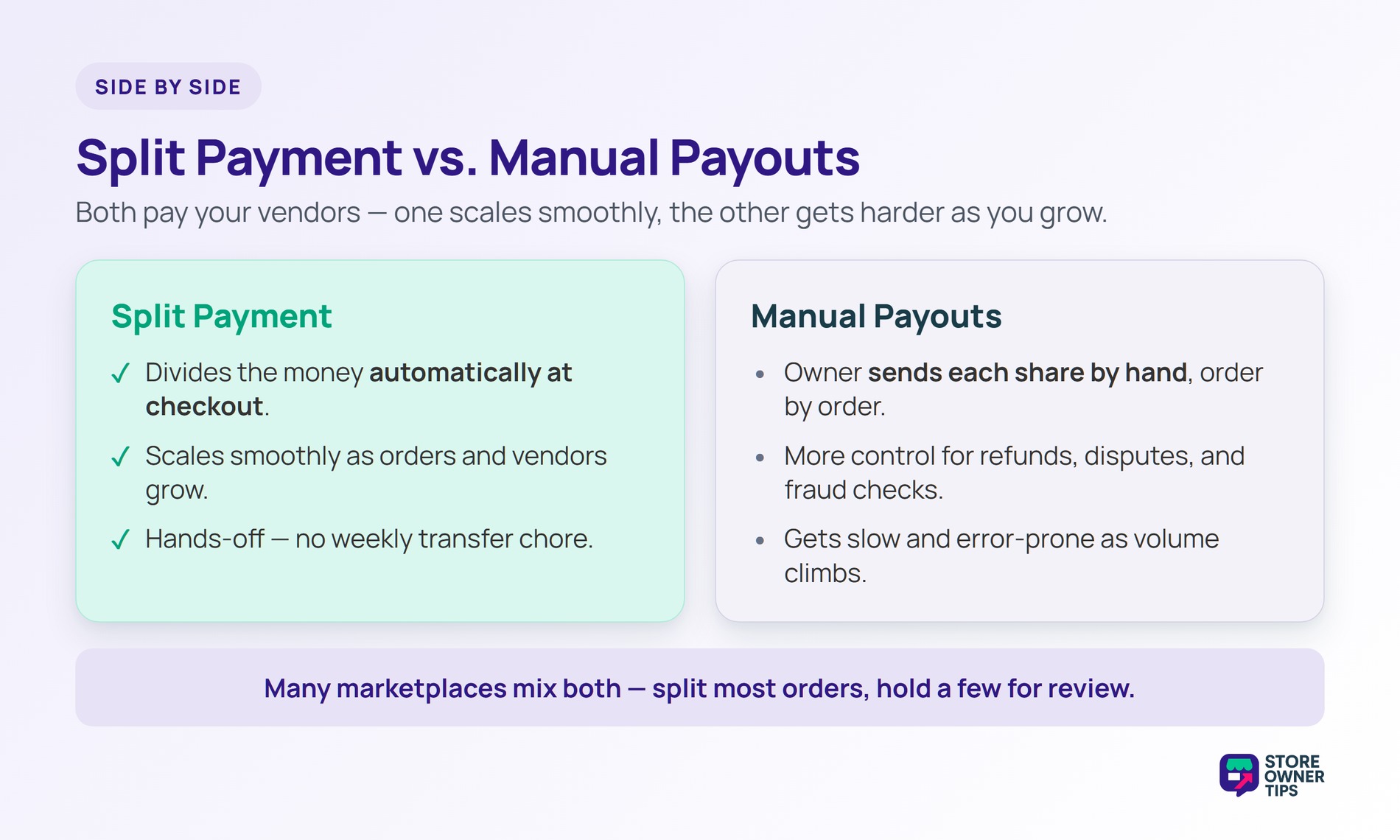
These two solve the same problem in very different ways. A split payment divides the money automatically at checkout. A manual payout means the owner sends each share later. One scales smoothly, while the other gets harder as you grow.
Manual payouts give the owner a chance to review each order. That helps with refunds, disputes, and fraud checks. By contrast, automatic splits trade some control for huge time savings. Many marketplaces mix both, splitting most orders and holding a few.
Manual payouts can work for a tiny marketplace. They quickly become a burden once orders grow. At that point, splitting is almost always the better choice.
The good news is that switching later is straightforward. Most plugins let you turn on splitting whenever you are ready. It is a low-risk upgrade for a growing marketplace.
The customer pays one total for their whole order. A connected-payments service then divides that total instantly. Each vendor’s share goes to their own account. The platform keeps its commission from the same charge.
No, those are two different ideas that share a name. Here, split payment means dividing one charge among sellers. Paying with two cards means a shopper splits their own bill. This entry covers the marketplace version.
Usually yes, each vendor connects their own payout account. The service then routes their share directly to them. That keeps the marketplace from holding vendor funds. It also speeds up how fast sellers get paid.
Split payments turn a messy payout chore into an automatic process. They pay vendors fast, keep your fee clean, and scale with you. That reliability is what keeps good sellers on your platform. Vendors notice fast, fair pay more than almost anything.
So treat split payments as core marketplace plumbing. Get them right, and growth gets much easier. Get them wrong, and even great vendors will walk away. Few things damage a marketplace faster than unreliable pay.
Copyright © StoreOwnerTips.com. All Rights Reserved.
