Weekly ecommerce tips, deals & news.
X-Sell is industry shorthand for cross-selling. It is the practice of suggesting a related product to someone who is already buying. The “X” simply stands for “cross,” the same way “X-ref” means cross-reference. You will see the term inside CRM tools, point-of-sale reports, and sales dashboards.
X-sell is a writing convenience first and a strategy second. The full term is cross-selling, which means offering a buyer something that pairs with their purchase. Think of a phone case suggested next to a new phone. The shorthand exists because people who track sales need a short, tidy word.
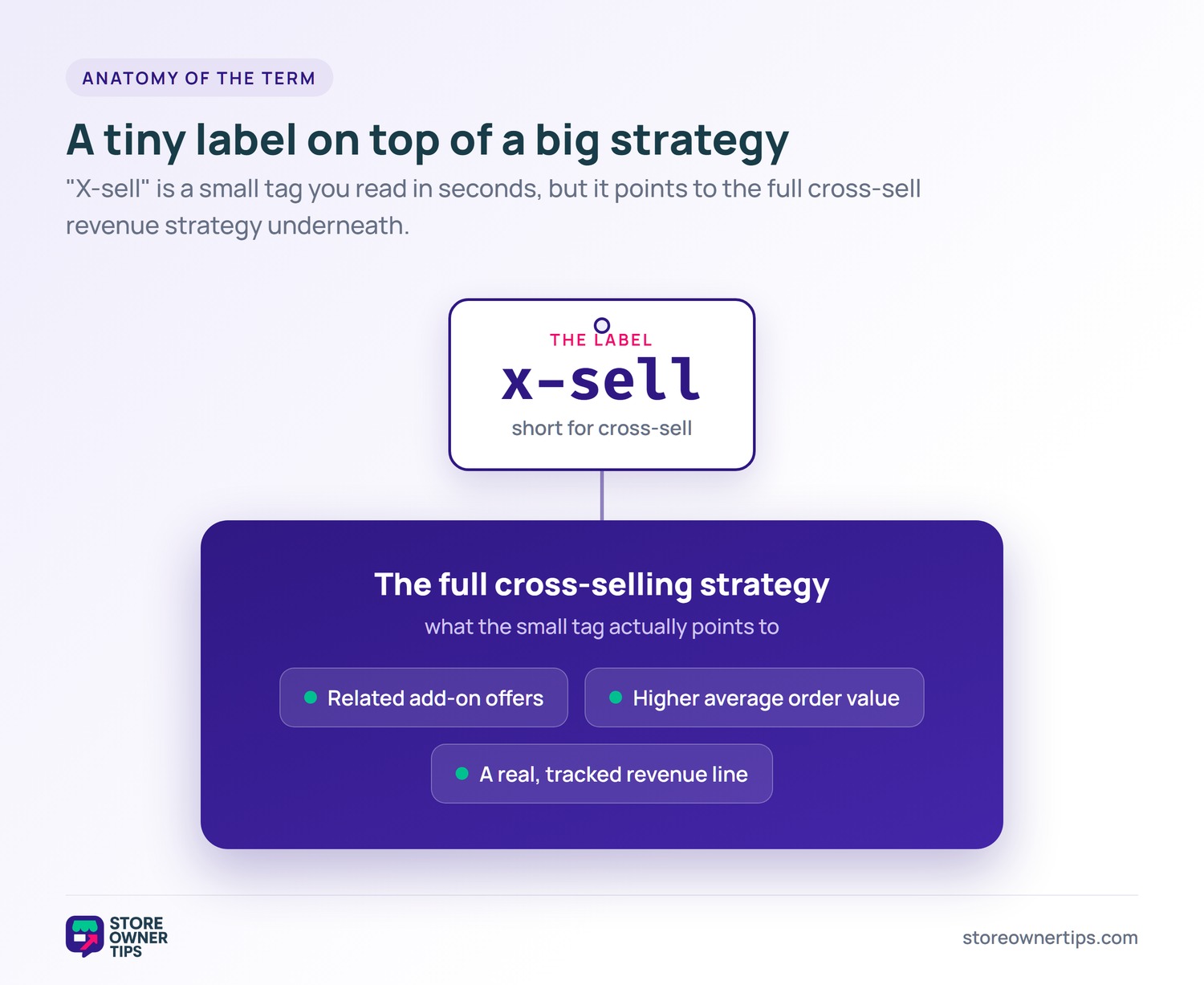
It helps to picture the abbreviation as a luggage tag. The tag is small and quick to read. Yet it points to a much bigger bag underneath. In the same way, “x-sell” is a tiny label sitting on top of a full revenue strategy.
The “X” is borrowed from the way we shorten “cross” in everyday writing. A railroad crossing sign reads “Xing.” A cross-reference is often typed “X-ref.” So “cross-sell” naturally became “x-sell” in fast notes. It is the same instinct that turns “Christmas” into “Xmas.”
This habit took hold in banking and software long before online stores existed. Bank teams measured how many products each customer held. They needed a label that fit neatly in a spreadsheet cell. “X-sell” did the job, and the shorthand spread across the wider sales world.
From there it traveled into modern e-commerce reporting. The word was already familiar to analysts and managers. So when online dashboards needed a column name, “x-sell” was the obvious pick. That is how a banking shorthand ended up in your store’s analytics.
Today the term lives inside the tools you already use. A CRM might show an “x-sell opportunity” flag on a contact. A point-of-sale report might split revenue into “primary” and “x-sell” lines. A WooCommerce or Shopify analytics view might label related-product sales the same way.
You will also hear it spoken in meetings. A manager might ask, “what is our x-sell rate this month?” That phrase points to a real metric. It measures the share of orders that included an extra, related item.
The shorthand also shows up in report exports and forecast notes. A finance file might list “x-sell revenue” as its own row. A planning doc might set an “x-sell target” for the quarter. The label is casual, but the number behind it is serious money.
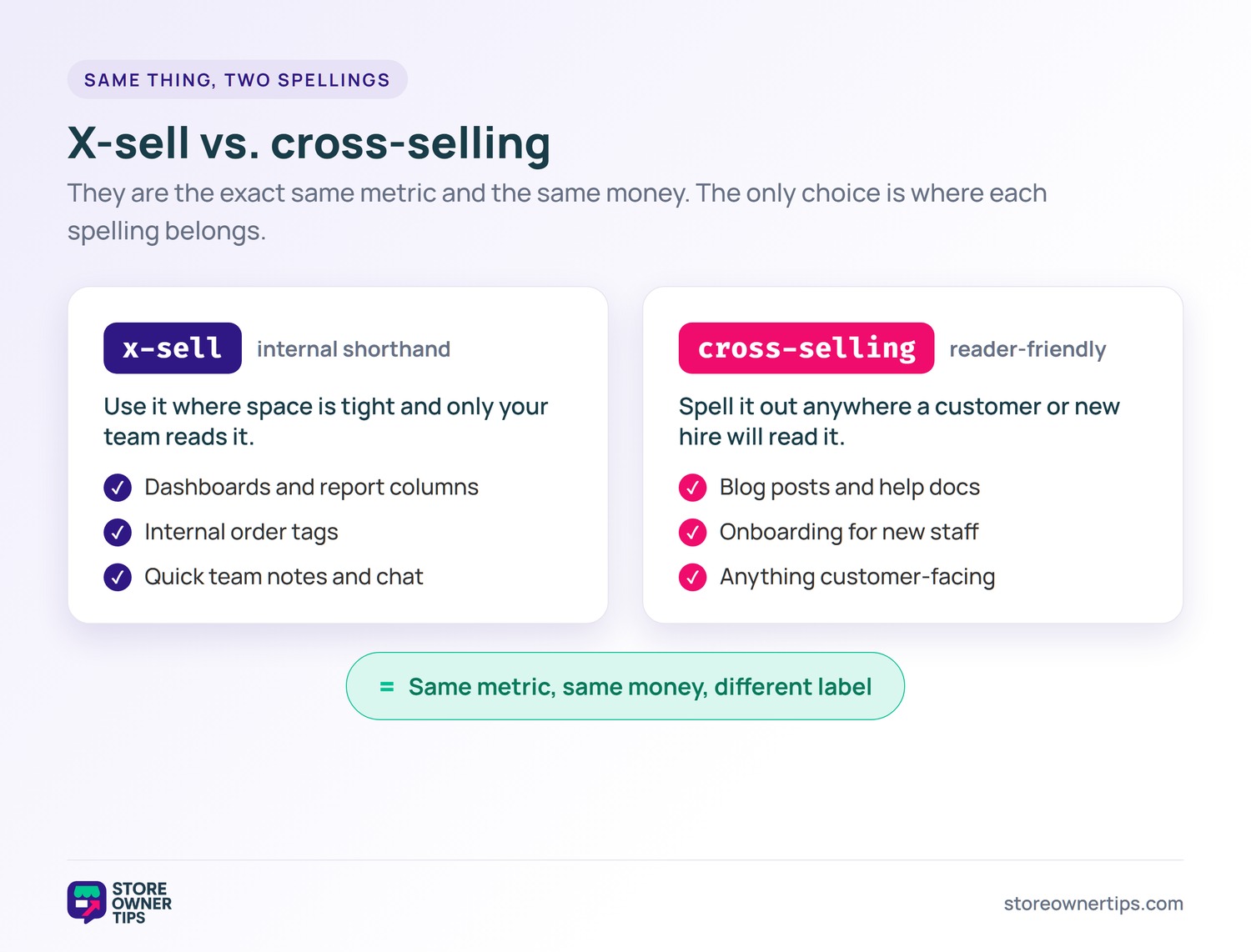
In WooCommerce, the feature behind the label is the “cross-sells” field. You set it per product, often on the cart page. Shopify and other platforms offer similar related-product settings. The dashboard then rolls those sales into one “x-sell” figure.
So the term maps to a real control panel, not just a report. When you assign a “frequently bought together” item, you are feeding the x-sell number. The label and the setting are two ends of the same lever.
This link between setting and label is worth remembering. If your x-sell number is flat, check whether products even have pairings assigned. An empty setting always produces an empty column. The fix often starts at the product editor, not the report.
Tracking it well pays off. HubSpot found that 74% of sellers who cross-sell say it drives part of their revenue. A clear x-sell column is how you confirm that for your own store.
A concept only gets a shorthand when people use it constantly. Cross-selling clears that bar easily. HubSpot reports that 87% of salespeople try to cross-sell during the sales process. That much daily use demands a quick word.
The money involved is large too. The same research finds cross-selling makes up 21% of organizations’ revenue on average. When a fifth of your revenue rides on one tactic, you name it. The “x-sell” label is simply that name in its shortest form.
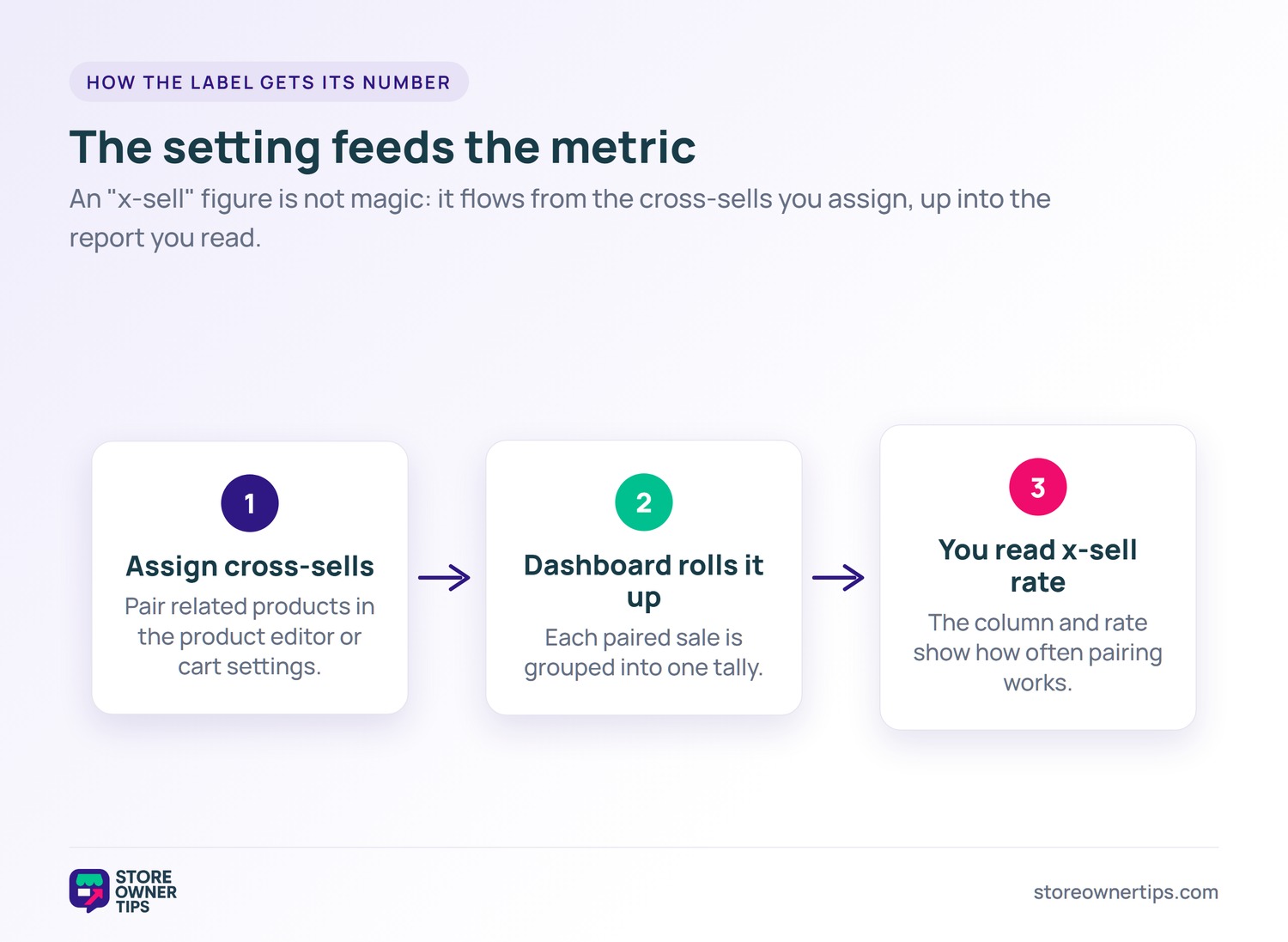
These two refer to the exact same thing. The only difference is where and how you write them. One is a compact internal label. The other is the full, reader-friendly phrase.
A simple rule keeps you consistent. If a stranger might read it, spell out cross-selling. If only your team will read it, x-sell is fine. This avoids confusing shoppers who have never seen the abbreviation.
It also pays to define the term once in any shared report. A short note next to the column header removes all doubt. New team members then read the dashboard correctly from day one.
Keep the spelling steady within each document too. Mixing “x-sell” and “cross-sell” in one report looks sloppy. Pick one short form and use it everywhere inside that file.
Imagine a mid-sized coffee roasting brand called Hillside Roasters. Their analytics dashboard has a column simply labeled “x-sell.” The owner is not sure what it means at first. Then she learns it tracks every order that included a related add-on.
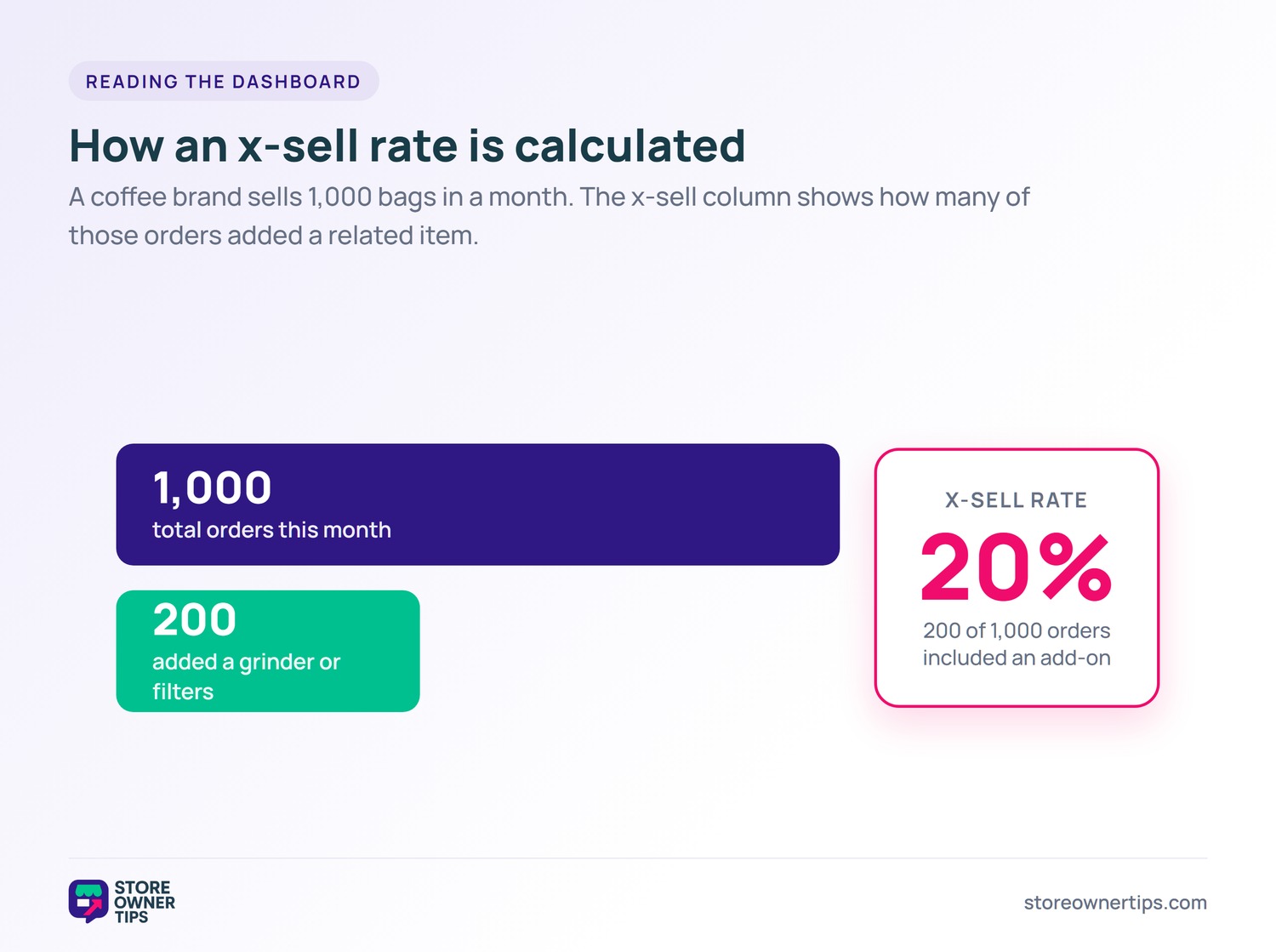
Hillside sells 1,000 bags of coffee in a month. The “x-sell” column shows that 200 of those orders also added a grinder or filters. So their x-sell rate is 20%. That single number tells her how often pairing works.
Before learning the term, she ignored that column entirely. It looked like jargon she did not need. Once she knew “x-sell” meant cross-selling, the data turned useful. A confusing label became a clear monthly signal.
This matters because cross-selling is a proven revenue lever. McKinsey research, cited by HubSpot, found cross-selling can lift sales by 20% and profits by 30%. Hillside’s owner now watches that “x-sell” column closely.
She decides to nudge that rate higher. She adds a “pairs well with” suggestion on each coffee page. The label in her reports stays the same, but the figure starts climbing. Her team now talks about “growing x-sell” as a shared monthly goal.
She also pairs the metric with her repeat purchase rate. Together they show whether add-ons bring buyers back. The shorthand made both numbers easy to name and discuss.
That is the quiet value of the term. It gives a fuzzy idea a short, repeatable handle. The whole team can then rally around a single, shared word.
Notice that nothing technical changed for her. She simply learned what one column header meant. Sometimes the biggest unlock is understanding the label, not adding a new tool.
X-sell is shorthand for cross-selling. It means suggesting a related product to a buyer. The “X” stands for the word “cross.” You mostly see it inside reports and CRM tools, not on customer pages.
No, they are different. X-sell suggests a related extra item, like filters with coffee. Upselling nudges you toward a pricier version of the same item. Many tools track both metrics side by side.
An x-sell rate is the share of orders that included a related add-on. If 200 of 1,000 orders added an extra item, the rate is 20%. It is identical to a cross-sell rate, just labeled shorter.
Usually not. Keep “x-sell” for internal reports and team chat. On product pages and emails, use plain words like “goes well with.” Shoppers respond to clear language, not insider shorthand.
X-sell is just a tidy nickname for cross-selling that lives inside your tools and reports. Knowing the term helps you read dashboards and talk shop with confidence. The label is small, but the revenue strategy behind it drives real, repeatable growth.
Copyright © StoreOwnerTips.com. All Rights Reserved.
