Weekly ecommerce tips, deals & news.
Yield management is a pricing strategy that adjusts prices based on demand, timing, and remaining stock. The goal is simple: squeeze the most revenue out of every unit before its value drops. It started with airlines filling seats, and now online stores use it to price products smarter as demand shifts.
Yield management answers one question for store owners. What is the most a shopper will pay for this item right now? Instead of one fixed price all year, you flex the price to match real demand. The strategy targets total revenue rather than total units sold.
Think of it like an airline selling seats on one flight. An empty seat at takeoff earns nothing, so its value expires the moment the plane leaves. The airline raises fares when demand is hot and drops them to fill the last empty rows. You are doing the same thing with product stock that ties up cash.
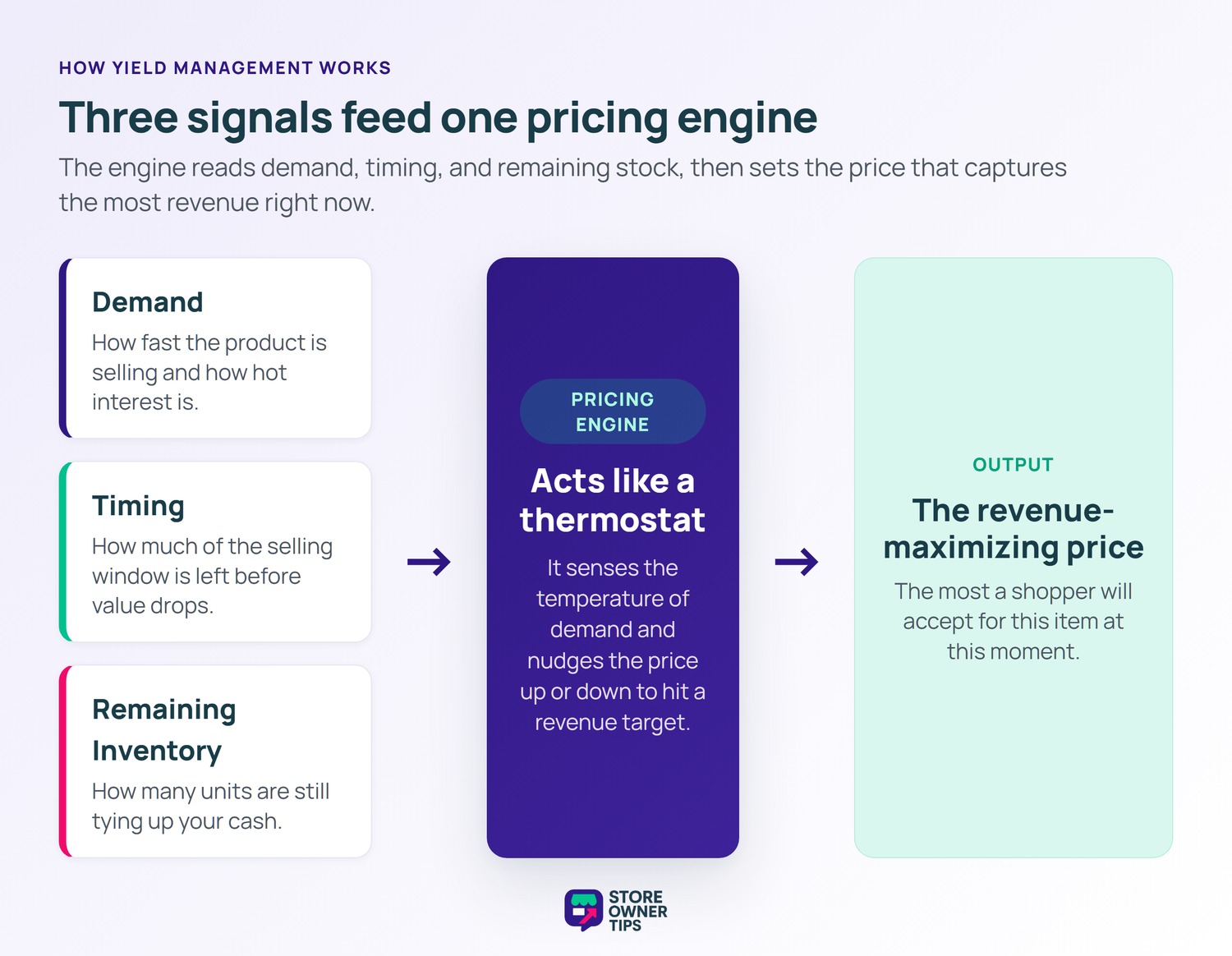
Yield management runs on three inputs: demand, timing, and remaining inventory. You watch how fast a product sells, then set the price to capture peak willingness to pay. A pricing engine acts like a thermostat here. It senses the “temperature” of demand and nudges the price up or down to hit a revenue target.
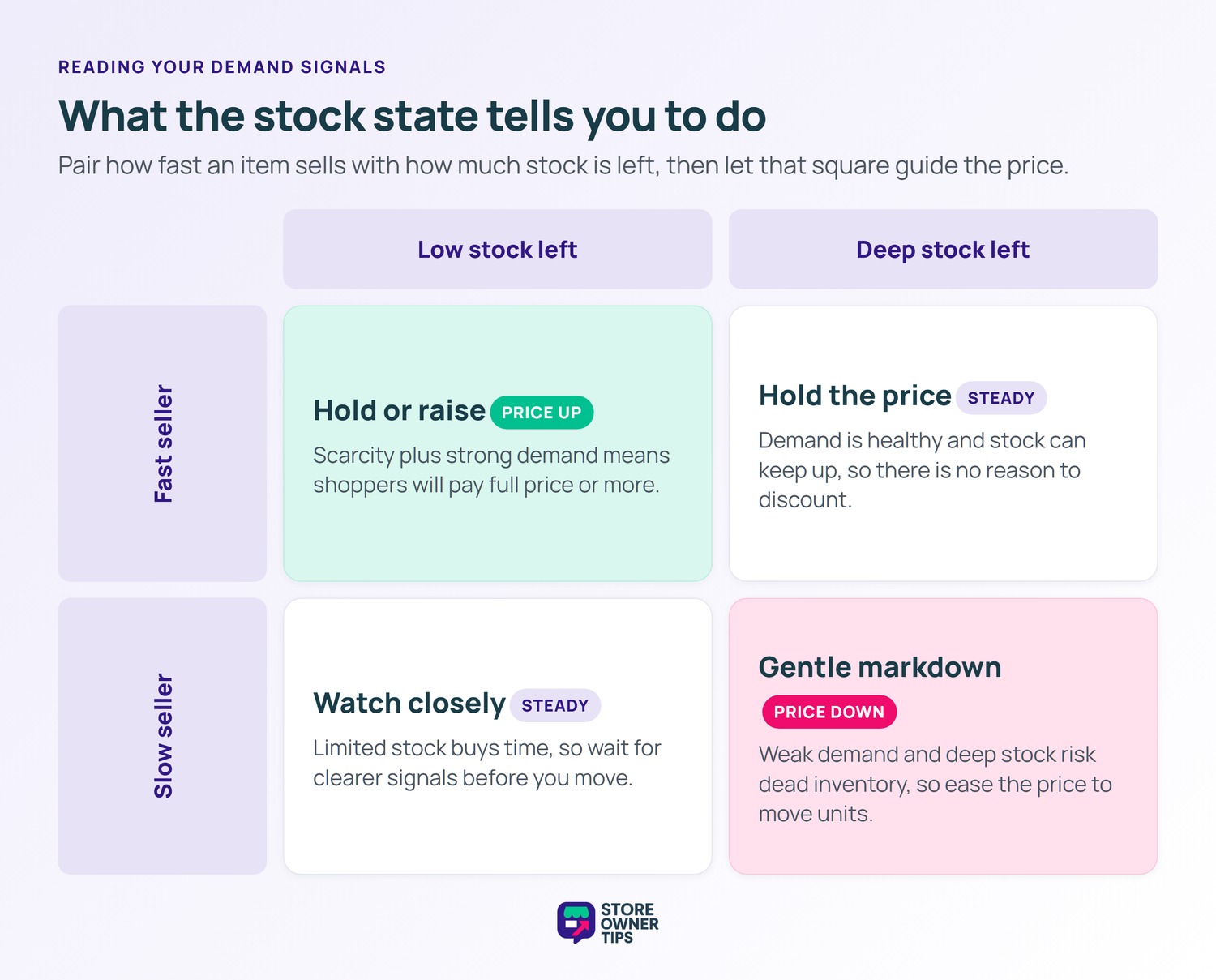
On WooCommerce or Shopify, you can map prices to demand signals you already track. Those signals include traffic, sell-through rate, and stock levels. A slow-moving item with deep stock might get a gentle markdown. A fast seller with low stock can hold or raise its price.
Strong inventory management is the engine room of this whole strategy. You cannot price by scarcity if you do not know what is scarce. Clean stock data turns guesswork into informed pricing decisions.
In a WooCommerce or Shopify store, you do not need to change every price daily. Most owners start with rules tied to a season or a stock threshold. For example, you might step a price down once stock crosses a set point. That keeps the system simple while still capturing the upside.
Shoppers accept changing prices when the change feels fair. A higher price during peak demand reads as normal, like a hotel charging more on a holiday weekend. The key is that the price reflects genuine demand or scarcity, not random spikes.
This taps into the scarcity principle. When stock runs low, perceived value climbs, and shoppers act faster. Yield management uses that urgency while still protecting your margin on the units that matter most.
Yield management was born in the airline industry after deregulation opened the doors to fare competition. Carriers needed a way to fill seats without giving them all away cheaply. So they built models that shifted seat prices by how soon the flight was and how full it was.
The results were huge, and they made the rest of the travel world pay attention. One major carrier credited these systems with $1.4 billion over three years in added value. Hotels, rental cars, and event venues quickly copied the approach for their own perishable inventory.
Online stores were the natural next step for the same logic. A product that ties up cash on a shelf behaves a lot like an unsold seat. The price you set today shapes whether that stock becomes profit or a markdown headache later.
Imagine a mid-sized brand called Summit Trail Gear that sells hiking jackets online. They stock a seasonal jacket that loses value fast once warm weather hits. Like most stores, they battle high cart abandonment, which averages 70.22% across e-commerce. Their challenge is moving stock before the season ends without dumping it too cheap.
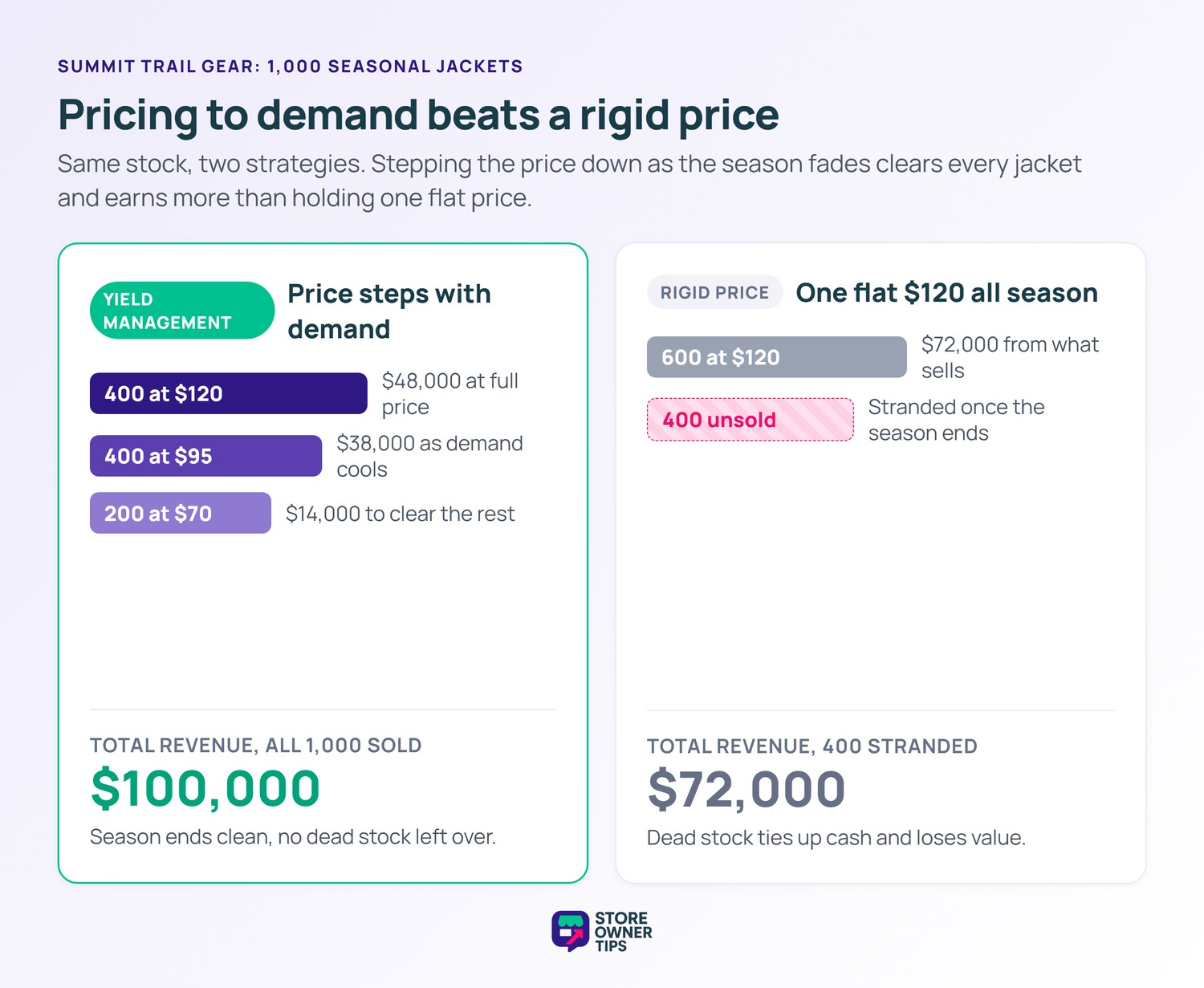
Summit Trail Gear holds 1,000 jackets with a list price of $120 each. Early in the cold season, demand is strong and stock is plentiful. They hold the full $120 price because shoppers happily pay it. The first 400 jackets sell at full price, earning $48,000.
Midway through, demand cools and 600 jackets remain. A flat year-round price would leave many unsold past the season. So the team treats each jacket like an expiring airline seat that earns nothing once spring arrives.
They watch their demand signals to time the change. Traffic to the jacket page slows, and the sell-through rate flattens. Those two clues tell the team that full price is no longer the revenue-maximizing choice.
The store steps the price down as the season fades. They sell 400 jackets at $95 and the final 200 at $70 to clear them. That stage adds $38,000 plus $14,000, for $52,000 more. Total revenue reaches $100,000 across all 1,000 units.
A rigid $120 price might have sold only 600 jackets, leaving 400 stranded. That path earns $72,000 and ties up dead stock. By pricing to demand and timing, Summit Trail Gear earns more and ends the season clean.
The lesson is not “discount everything” at all. The store held full price while demand was hot and stock was deep. It only stepped prices down as the selling window closed and the risk of dead stock grew.
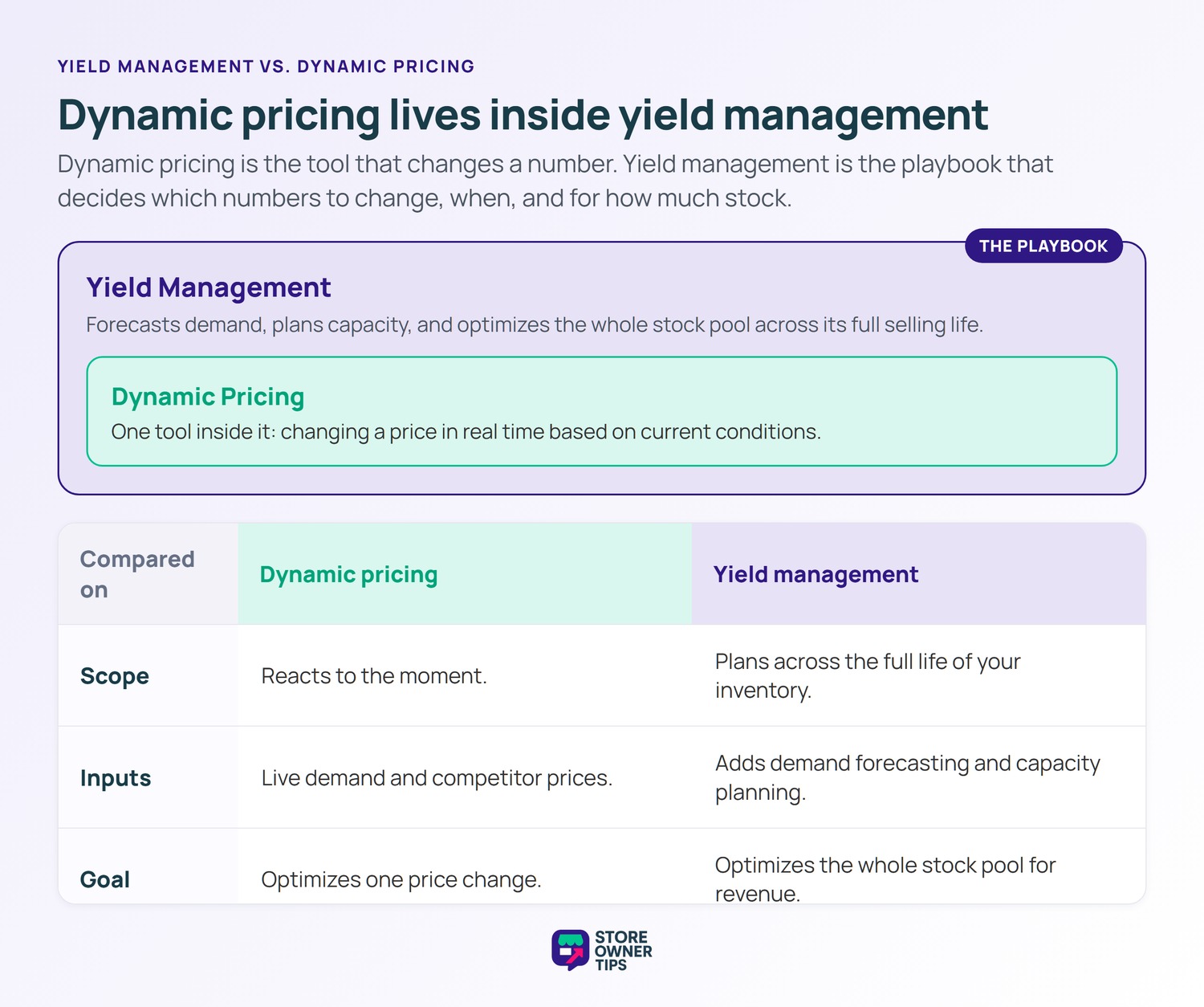
People often use these terms as if they mean the same thing. They are related, but they are not identical. Dynamic pricing is the act of changing a price in real time based on current conditions.
Yield management is the bigger strategy. It includes dynamic pricing, but it also forecasts demand and manages how much inventory to sell at each price level. Dynamic pricing is the tool, and yield management is the playbook that decides how to use it.
Here is a simple way to keep them straight. Dynamic pricing changes a number on a page right now. Yield management decides which numbers to change, when, and for how much of your stock.
Revenue management is the widest term of the three. It covers pricing, bundling, channel mix, and customer segments across your whole business. Yield management is the part focused on pricing fixed, time-sensitive stock by demand. In short, yield management lives inside revenue management. So every yield decision is a revenue decision, but not the other way around.
Yes, it works well for products with limited stock or a short selling window. Seasonal goods, event tickets, and perishables are strong fits. The strategy first proved itself in airlines and then spread to hotels and venues. Online stores apply the same demand-and-timing logic to physical inventory.
It can, if the changes look random or unfair. Shoppers accept price shifts when they reflect real demand or scarcity. A holiday markup feels normal, while a surprise spike feels like a trick. Clear timing and honest reasons keep trust intact.
Yield management turns your prices into a living tool instead of a fixed label. By matching price to demand, timing, and stock, you protect margin and clear inventory before it loses value. For stores with seasonal or limited products, it is one of the surest ways to grow revenue without growing traffic.
Copyright © StoreOwnerTips.com. All Rights Reserved.
