Store Owner Tips

Subscribe to our newsletter

Weekly ecommerce tips, deals & news.

Thank You, we'll be in touch soon.

Latest News

Best WooCommerce Themes For Stores That Convert (2026)

Best WooCommerce Themes For Stores That Convert (2026)

Most “Best WooCommerce Themes” articles rank themes by how they look in marketing screenshots. Unfortunately, that’s the wrong starting point. After all, the theme that wins design awards often ranks last on Core Web Vitals, which means it loses sales you’ll never know about.

After installing and testing seven WooCommerce WordPress themes on real stores, I found the three that consistently outperformed. Not the prettiest. The fastest, most conversion-optimized, and most flexible for future growth. Here’s the honest breakdown of the best WooCommerce themes in 2026, what they’re actually good at, and how to pick the right one for your store.

Table of Contents


What Makes A WooCommerce Theme “Good”?

Pretty design is the smallest factor. When I evaluate the best WooCommerce themes, I look at five things in this order:

  • Speed out of the box: Themes that ship with bloated page builders and animations drop your Lighthouse score before you install a single plugin.
  • Native WooCommerce templates: Quality of the default shop, category, product, cart, and checkout pages before any customization.
  • Block editor compatibility: Themes that work natively with the WordPress block editor (Gutenberg) age better than themes tied to proprietary builders.
  • Child theme workflow: Can you safely customize without breaking updates?
  • Support and community: Active development matters more than initial polish. A stagnant theme becomes a liability.

One thing we commonly see: store owners spend $59 on a theme, invest 40 hours customizing it, then can’t update it because their customizations broke everything. If you plan to customize extensively, pick a theme with a proper child theme workflow. Also, don’t edit the parent theme directly.


Quick Comparison Table

Here’s the short version comparing the 7 best WooCommerce themes:

ThemeStarting PriceSpeed Score (Approx.)WooCommerce TemplatesBlock Editor Native
AstraFree / $59/yr ProExcellentYesYes
KadenceFree / $129/yr ProExcellentYesYes
BlocksyFree / $49/yr ProExcellentYesYes
Divi$89/yrGoodYesPartial
Flatsome$59 (one-time)GoodYesPartial
Shoptimizer$89/yrGoodYesYes
StorefrontFreeGoodYesYes

Pricing shown is approximate as of early 2026. Check each theme’s website for current rates.

1. Astra

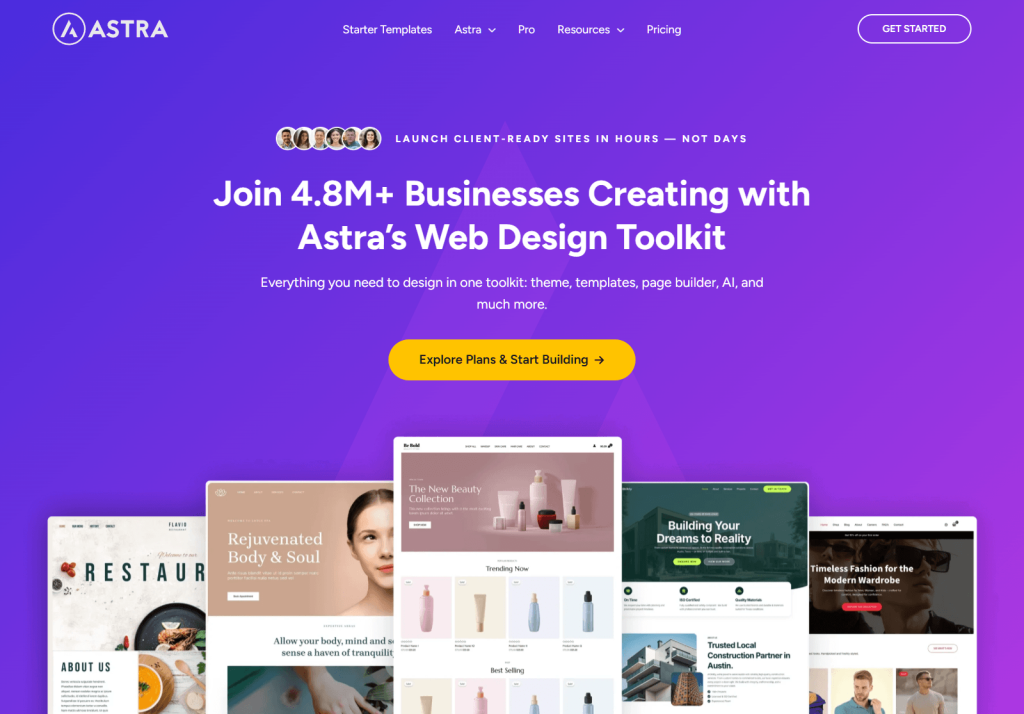
Purple Astra homepage showcasing bold headline inviting 4.8M+ businesses to use its web design toolkit, with templates and a yellow call-to-action.
Astra gives you hundreds of starter templates so you don’t have to build your store from scratch.

When looking at the best WooCommerce themes, Astra is the most popular on the market for a reason. With over 1 million verified active installs (and often cited as powering over 2 million sites), it’s genuinely fast, extensively customizable, and works with every page builder.

Astra Pro starts at $59/year and unlocks features like an off-canvas cart and distraction-free checkout. If you want the full agency experience and access to all premium templates, you’ll need to grab the Essential or Business Toolkit, which carry a higher price tag.

What I noticed in practice:

  • The WooCommerce checkout templates in Astra Pro remove the sidebar and distractions automatically. This helps keep buyers focused on paying, which is a smart best practice for improving your checkout flow.
  • Astra’s Starter Templates library gives you over 300 professionally designed templates you can import in one click. Just keep in mind that over 145 of these require a premium toolkit plan to use.

Pros:

  • Blazing fast: Consistently scores 95+ on mobile Lighthouse tests.
  • Page builder agnostic: Works well with Elementor, Beaver Builder, Brizy, and the WordPress block editor.
  • Extensive template library: Starter Templates include complete WooCommerce stores for niches like fashion, food, and digital products.

Cons:

  • Pro is annual: If you stop paying, you lose access to updates.
  • Customization requires Pro: The free version’s design controls are limited.

Best for: Most WooCommerce stores. If you’re not sure where to start, start here.

2. Kadence

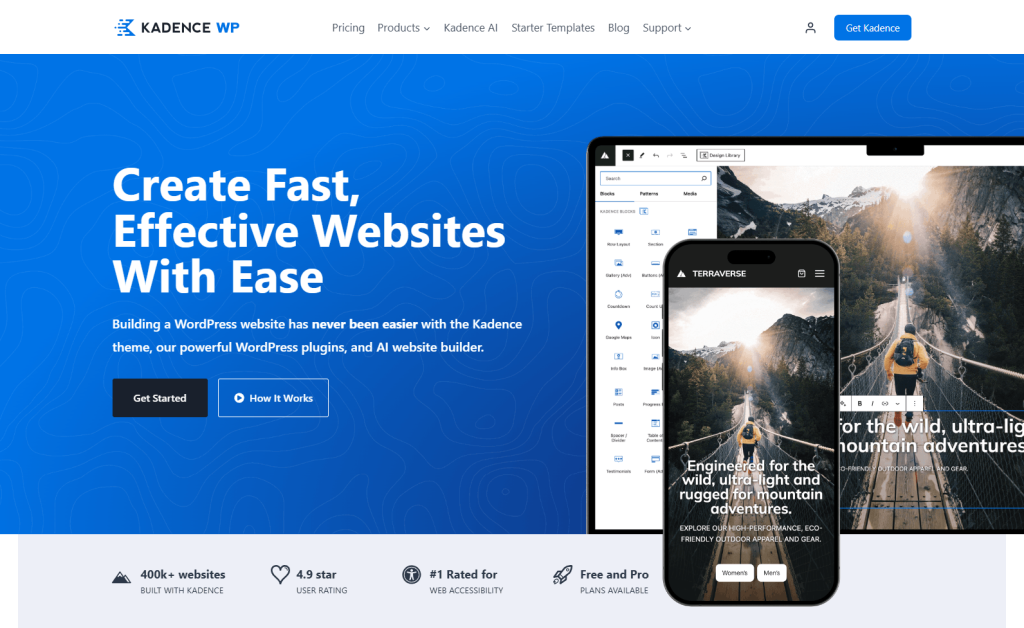
Website hero showcasing Kadence WP branding, with bold blue headline and device mockups (tablet and smartphone) displaying a mountain adventure site.
Kadence uses the native WordPress block editor so you don’t have to rely on extra page-builder plugins.

Among the best WooCommerce themes, Kadence is the one I’d pick if I were building a new store today. It’s fast and uses the WordPress block editor natively. Furthermore, it includes WooCommerce-specific features in its free version that competitors charge for.

Kadence’s approach is different from Astra. Rather than relying on external page builders, it uses the WordPress block editor combined with its own Kadence Blocks plugin. The result is a theme that feels built for where WordPress is heading.

What I noticed in practice:

  • The built-in header and footer builder is more intuitive than any page builder I’ve used. No drag-and-drop learning curve.
  • Kadence Starter Templates include a solid set of WooCommerce demos that work out of the box with the block editor.

Pros:

  • Block editor native: Works with Full Site Editing without fighting it.
  • Feature-rich free version: Header/footer builder, hooks, element targeting, all free.
  • Excellent performance: Minimal bloat, conditional CSS loading.

Cons:

  • Smaller community than Astra: Fewer YouTube tutorials and third-party extensions.
  • Site limits and AI caps: Kadence plans now range from $69 to $299 per year. These plans put strict limits on how many sites you can build and use a credit system to limit your AI content generation.

Best for: Store owners committed to the block editor, or anyone building a store that needs to scale over years.

3. Blocksy

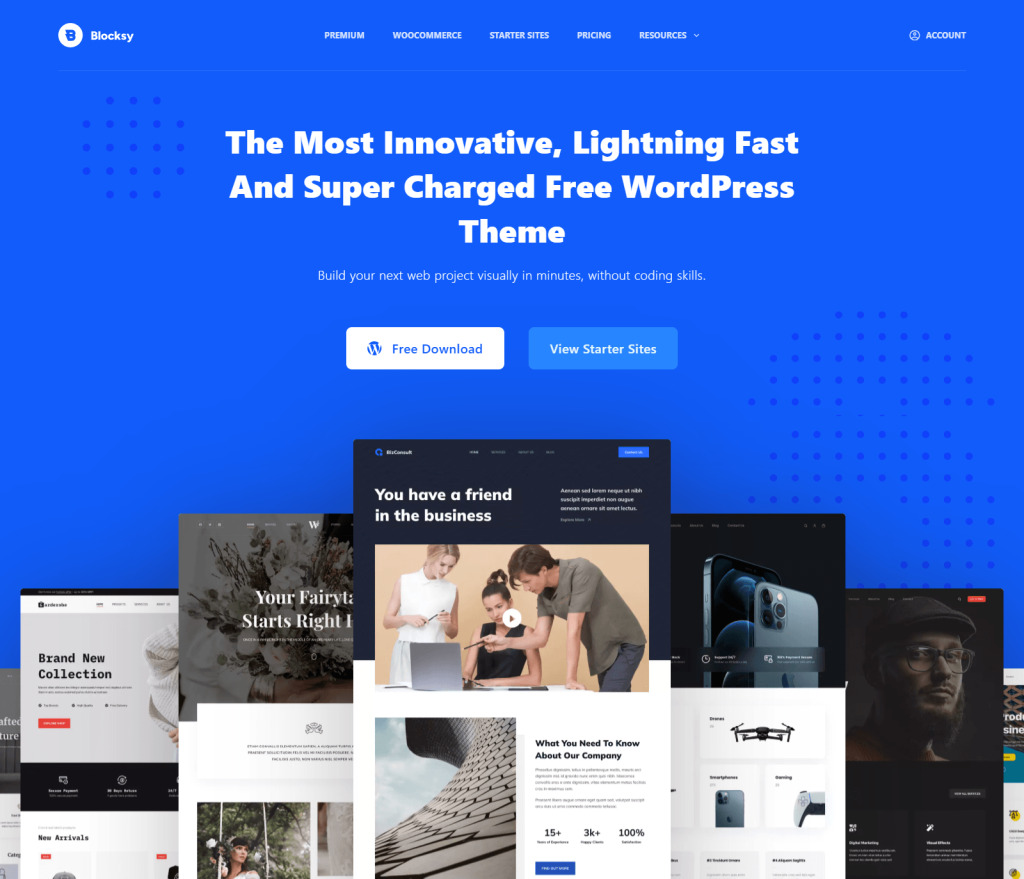
Bright blue Blocksy WordPress theme hero promoting a fast, innovative free theme with call-to-action buttons and overlapping starter-site previews.
Blocksy delivers extremely fast page speeds and gives you a highly organized menu for your settings.

Blocksy is the quiet performer on this list. It doesn’t have Astra’s market share or Divi’s marketing budget. However, it might be the fastest theme here.

Like many of the best WooCommerce themes, Blocksy is fully block-editor native. Moreover, its free version is packed with features. If you upgrade, Pro starts at $49/year for a single site. They also offer a neat prorated system, meaning if you upgrade to a bigger plan later, you only pay the difference.

What I noticed in practice:

  • The theme options panel is the cleanest of any theme I’ve tested. Settings are organized logically, not dumped into one giant list.
  • Performance was consistently in the 95-99 range on Lighthouse without any optimization plugins.

Pros:

  • Extremely fast: It scores incredibly well on speed tests, though specialized themes like Shoptimizer sometimes edge it out on strict mobile performance.
  • Modern UI: The customizer feels like a polished modern app.
  • Generous free version: Options that cost extra elsewhere are included.

Cons:

  • Newer ecosystem: Fewer starter templates and third-party integrations than Astra.
  • Learning curve if you’re coming from page builders: Block editor workflow takes adjustment.

Best for: Performance-focused stores that value speed over design templates.

4. Divi

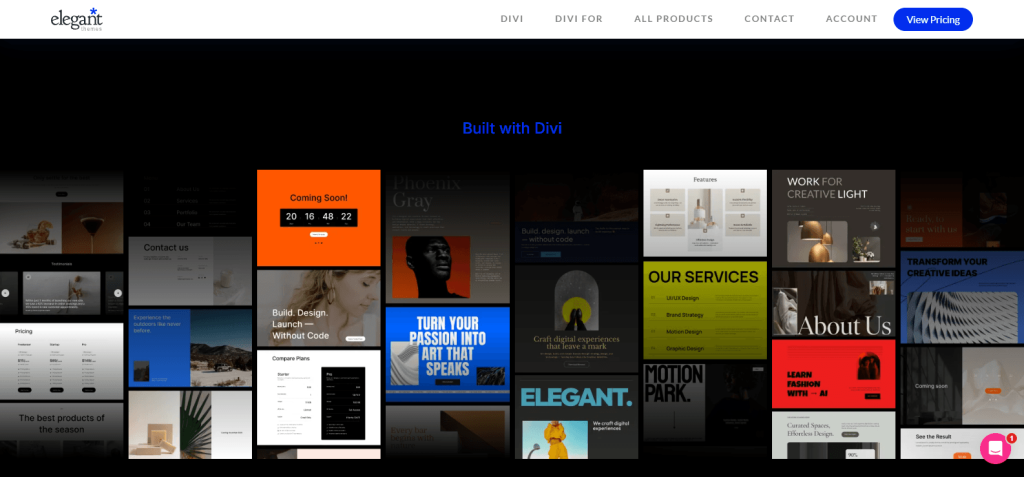
Elegant Themes webpage showing a dark gallery of colorful website thumbnails beneath a centered 'Built with Divi' heading, showcasing template designs.
Divi features a powerful visual builder that lets you customize every single part of your shop’s design.

Divi consistently ranks among the best WooCommerce themes. For starters, it has a dedicated fan base. It also boasts a massive template library. Moreover, it uses the Divi Builder, a drag-and-drop visual editor that lets you customize anything without touching code.

Divi used to have a reputation for slowing down sites. However, the massive Divi 5 update changed that. Now, it runs on a modern, native block structure that outputs clean code. Thus, it can run just as fast as block-based themes with a good server setup.

What I noticed in practice:

  • Divi’s WooCommerce modules (product tabs, cart, checkout) give you granular control over layout without needing a separate plugin.
  • Thanks to the recent Divi 5 update, performance gaps have nearly vanished. It’s no longer noticeably slower than its competitors.

Pros:

  • Powerful visual builder: Unmatched design flexibility without code.
  • Flexible pricing: You can get lifetime access for a one-time $249 fee. Or, you can grab the new Divi Pro tier for $277/year, which adds unlimited AI content generation and cloud storage.
  • Huge template library: Thousands of pre-built layouts for every niche.

Cons:

  • Slightly larger un-cached size: Divi 5 is fast with a good server cache. However, bare-bones themes might still have a tiny edge in raw code size.
  • No more lock-in: The Divi 5 update fixed old bugs. Thanks to the new Divi Layout Block, your content plays nicely with standard WordPress tools and transfers easily if you ever switch themes.

Best for: Stores that prioritize design flexibility over raw speed, especially if you already know the Divi ecosystem.

5. Flatsome

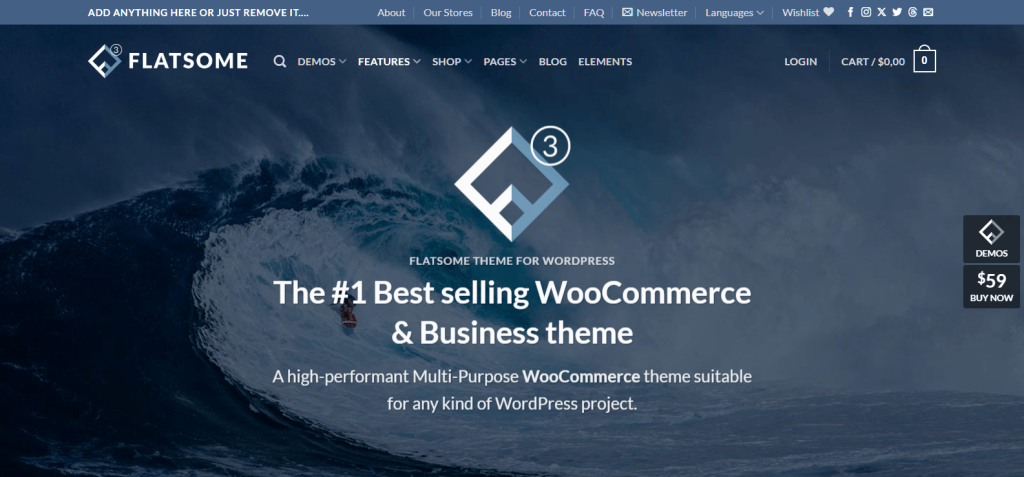
Hero website banner for Flatsome WordPress theme showing logo and headline over a dramatic blue ocean wave, promoting WooCommerce.
Flatsome provides its own custom UX builder to help you create a highly reliable, dedicated ecommerce store.

Flatsome is the WooCommerce-specific theme that’s been around longest. You can buy it on ThemeForest for $59. This includes lifetime code updates, but watch out: you only get 6 months of tech support. After that, you must pay a recurring fee if your site breaks and you need help.

What I noticed in practice:

  • The UX Builder (Flatsome’s custom page builder) is fast and intuitive once you learn it. The WooCommerce-specific blocks are genuinely well-designed.
  • The product page templates include upsells, cross-sells, variant swatches, and product bundles without needing extra plugins.

Pros:

  • Lifetime updates: Your $59 gets you future code updates. However, take note that active tech support runs out after 6 months.
  • WooCommerce-first design: Product pages feel native to ecommerce, not adapted from a blog theme.
  • Popular on ThemeForest: Decades of stores running it, large community.

Cons:

  • Proprietary builder: UX Builder content doesn’t easily migrate to other themes.
  • Updates can break customizations: If you’ve modified the theme heavily.

Best for: Stores that want a dedicated ecommerce theme and aren’t planning to switch themes in the foreseeable future.

6. Shoptimizer

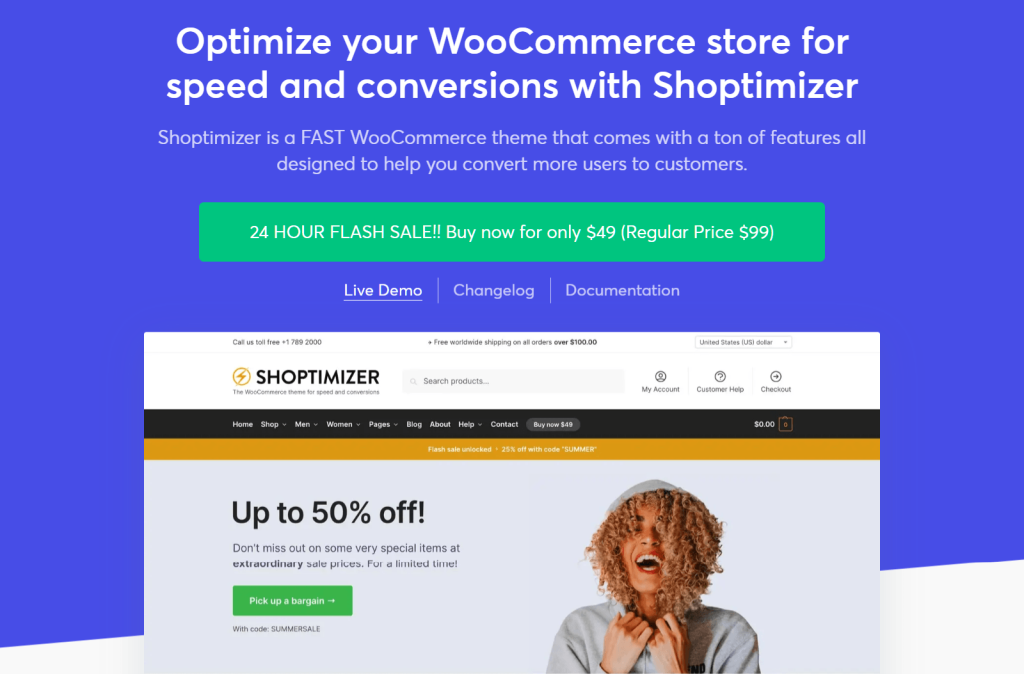
Website hero advertising Shoptimizer WooCommerce theme, bold purple background, green flash sale banner and screenshot showcasing up to 50% off promotion.
Shoptimizer includes built-in conversion features like a streamlined one-page checkout to help you sell more products.

Shoptimizer is built specifically for conversion optimization. Every design decision is aimed at reducing friction in the checkout flow.

It stands out from other best WooCommerce themes because it’s an ecommerce-only theme. As such, its WooCommerce templates are genuinely excellent. However, blog-style layouts are limited.

What I noticed in practice:

  • The one-page checkout template is one of the best I’ve tested. It combines customer info, shipping, and payment on a single view without feeling cramped.
  • Features like “frequently bought together” are powered by an included plugin called CommerceKit. Because it’s separate, you can easily turn off features you don’t use to keep your site blazing fast.

Pros:

  • Conversion-optimized: Every default template is built for checkout conversion.
  • Fast: Lightweight compared to Flatsome or Divi.
  • Good documentation: Setup guides are thorough and store-owner-focused.

Cons:

  • Narrow focus: Great for product stores, less suited for content-heavy sites.
  • Smaller template library: Fewer starter sites than Astra or Kadence.

Best for: Stores where conversion rate is the #1 priority, especially single-product and DTC brands.

7. Storefront

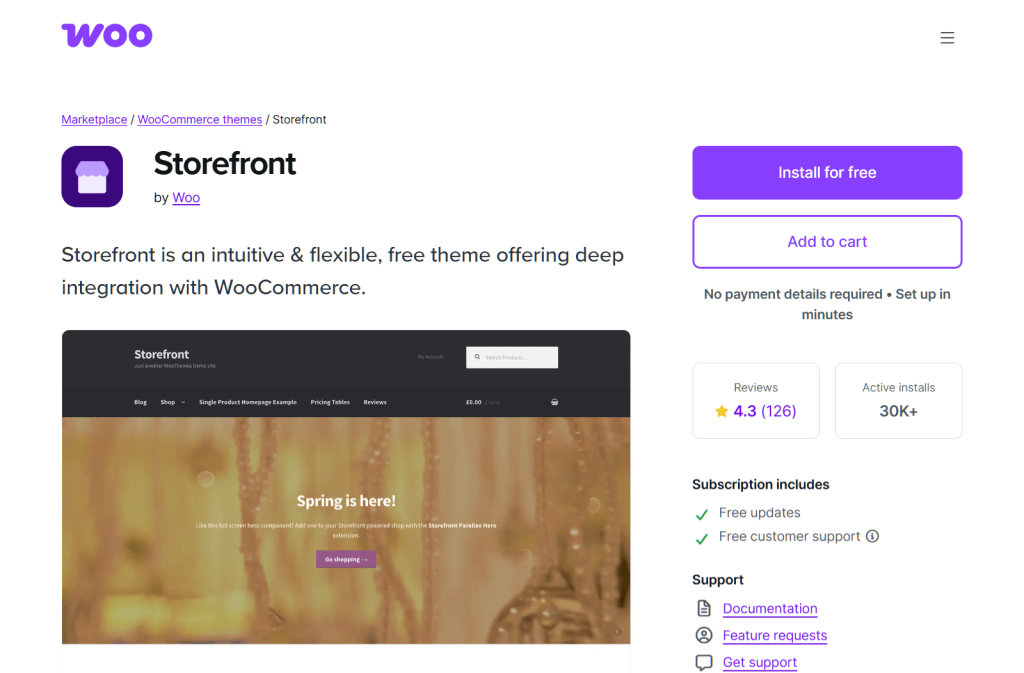
Website product page for WooCommerce's free Storefront theme, showing description, install and add-to-cart buttons, ratings, and preview screenshot.
Storefront gives you a reliable, rock-solid foundation since the official WooCommerce team built it themselves.

While researching the best WooCommerce themes, you can’t ignore Storefront. After all, it’s the official free theme developed by the same team that builds WooCommerce itself. Therefore, it’s the safest compatibility choice and genuinely free.

The tradeoff? Basically, Storefront prioritizes compatibility over design. Out of the box, it looks dated compared to modern themes. Customization requires child themes or Storefront add-ons.

What I noticed in practice:

  • Every WooCommerce feature works perfectly. No compatibility issues because the same team built both.
  • The design is completely bare-bones on purpose. Storefront is built to be a blank canvas for developers. It gives you a rock-solid, stable foundation to build custom themes without fighting pre-set styles.

Pros:

  • Official WooCommerce theme: First to be updated when WooCommerce releases changes.
  • Truly free: No upsells or premium tier pressure.
  • Rock-solid compatibility: Never fails with WooCommerce updates.

Cons:

  • Developer-focused: It’s meant as a foundation for custom child themes. Therefore, don’t expect a flashy design right out of the box.
  • Add-on ecosystem costs add up: Official Storefront extensions are individually priced.

Best for: Stores that prioritize compatibility and stability over aesthetics, especially technical store owners who’ll customize via child theme.


How To Choose: Decision Tree By Store Type

The right WooCommerce theme for your store depends on what you’re building and how technical you are.

  • New store, want to launch fast: Astra (free version) + a Starter Template. You can be live in a weekend.
  • Growing store, commit to block editor: Kadence or Blocksy. Both future-proof for WordPress direction.
  • Conversion-focused DTC brand: Shoptimizer. Built for single-product stores and checkout optimization.
  • Design-first with modern power: Divi. Unmatched visual flexibility without the old penalty of slower page speeds.
  • Want a proven ecommerce workhorse: Flatsome. Battle-tested on millions of stores.
  • Want safety and simplicity: Storefront. Official WooCommerce theme with zero compatibility risk.

Before picking from the best WooCommerce themes, run a store health check to see which performance issues you’ll need to address. Also, pair your theme choice with the right WooCommerce plugins so your stack stays cohesive.


Frequently Asked Questions

Is there a best free WooCommerce theme?

Yes. Astra’s free version is the most capable free WooCommerce theme for general stores. Kadence and Blocksy are also strong free options, especially for stores built around the WordPress block editor.

Do I need a premium theme for WooCommerce?

Not necessarily. Free versions of Astra, Kadence, and Blocksy are powerful enough for most small stores. You’d upgrade to Pro when you need advanced WooCommerce templates (custom product layouts, off-canvas cart, distraction-free checkout) or want more design control.

Which of the best WooCommerce themes is the fastest?

Specialized themes like Shoptimizer often take the top spot in strict mobile tests (scoring 88/100 with WP Rocket). Astra and Blocksy are right behind it. Even Divi is now highly competitive thanks to its fully rebuilt Divi 5 engine.

Can I switch themes later without breaking my store?

Yes, but migration gets harder the more you’ve customized. Content built with the WordPress block editor transfers cleanly between themes. Thanks to recent updates, Divi 5 content transfers smoothly to other themes. However, older proprietary builders like UX Builder (Flatsome) can still cause headaches if you try to switch.

Do I need a page builder with these themes?

Not anymore. Block-editor-native themes (Kadence, Blocksy, Astra) can do everything a page builder used to do. External page builders like Elementor are optional, not required.

What’s the best theme for a one-product store?

Shoptimizer is purpose-built for single-product DTC brands. Meanwhile, Kadence and Astra Pro also work well if you want more design flexibility.

Where is the safest place to buy the best WooCommerce themes?

You can find many options on huge marketplaces like ThemeForest. However, it’s usually safest to buy the best WooCommerce themes directly from the official developer’s website (like getting Astra from Brainstorm Force). Basically, this ensures you get the real files and direct technical support if something breaks.


Choose The Best WooCommerce Theme For Your Store

The best WooCommerce theme for your store isn’t the one with the fanciest homepage demo. It’s the one that’ll still be fast, flexible, and well-supported in two years.

Here’s what to do next:

For most store owners, the best WooCommerce theme is going to be Astra, Kadence, or Blocksy. All three are fast, flexible, and future-proof. Download the free version, test-drive it on a staging site, and upgrade to Pro only when you need the advanced features.

author avatar
Michael Logarta

Share article

Subscribe to our newsletter

Weekly ecommerce tips, deals & news.

Nice – You're in!

Copyright © StoreOwnerTips.com. All Rights Reserved.