Weekly ecommerce tips, deals & news.
Conversion Rate Optimization (CRO) is the practice of getting more of your existing visitors to take action. That action might be a purchase, a signup, or an added item in the cart. Instead of chasing more traffic, you make the traffic you already have work harder. In short, CRO squeezes more sales out of the same number of clicks.
Think of your store like a leaky bucket. Traffic pours in at the top, but sales only count the water that stays in. CRO is the work of patching the holes so less water escapes. The more holes you seal, the more every visit is worth.
Your conversion rate is simple to figure out. You divide the number of conversions by the number of visitors, then multiply by 100. So 50 sales from 2,000 visitors is a 2.5% conversion rate. CRO is the ongoing effort to push that percentage higher.
Most online stores convert somewhere in the low single digits. That sounds small, but it leaves enormous room to grow. Even a jump from 2% to 3% is a 50% increase in sales. That is why store owners obsess over every fraction of a point.
A conversion is any action you want a visitor to take. A sale is the obvious one, but it is not the only goal. Email signups, account creations, and add-to-cart clicks all count too. These smaller steps often lead to a purchase later on.
Smart CRO also watches your average order value, not just the rate. Getting people to buy is great, but getting them to spend more is even better. A higher rate and a bigger basket together drive real growth. So track both numbers side by side.
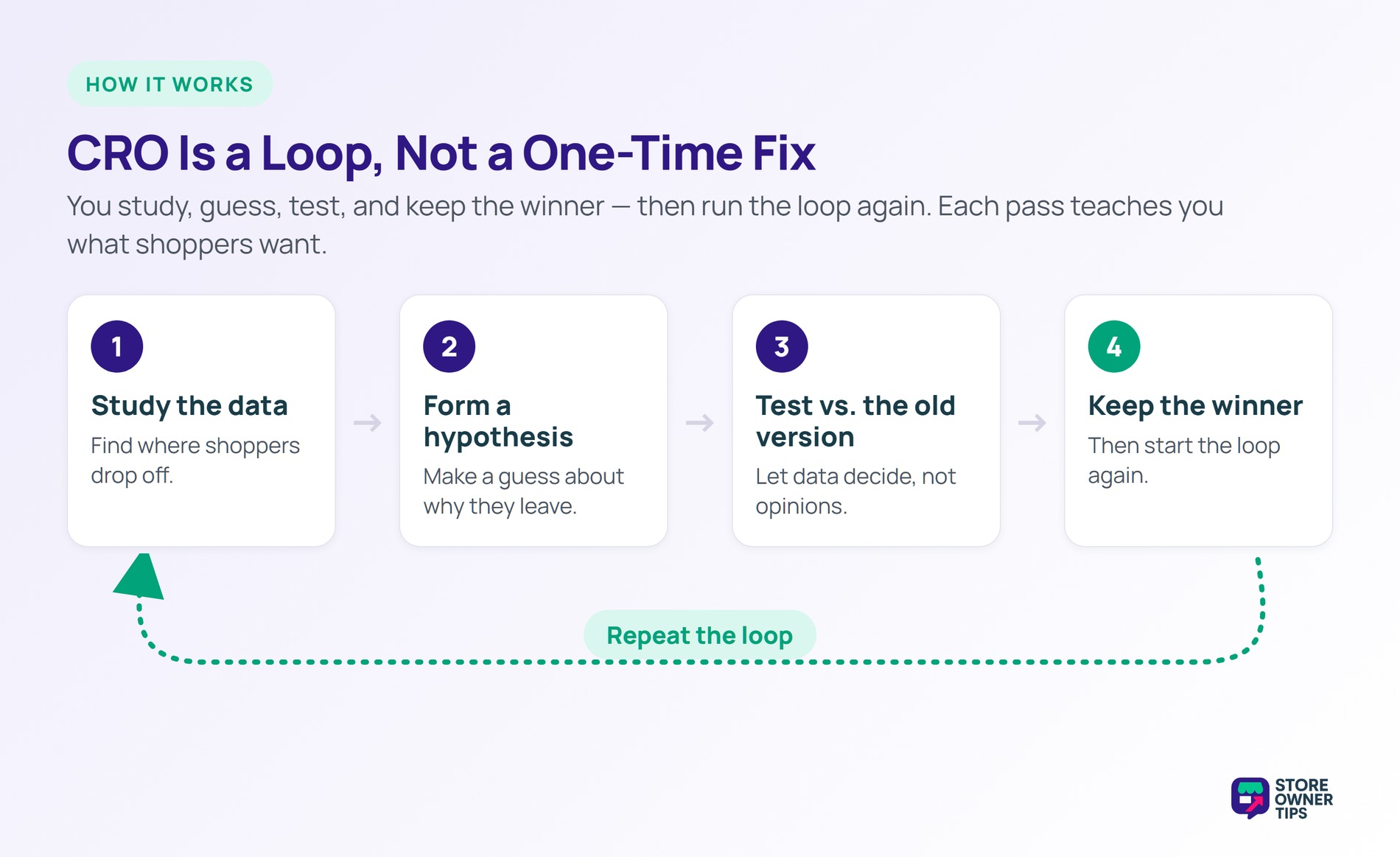
CRO is a loop, not a one-time fix. First, you study the data to find where shoppers drop off. Next, you form a guess about why, then test a change against the old version. Finally, you keep the winner and start the loop again.
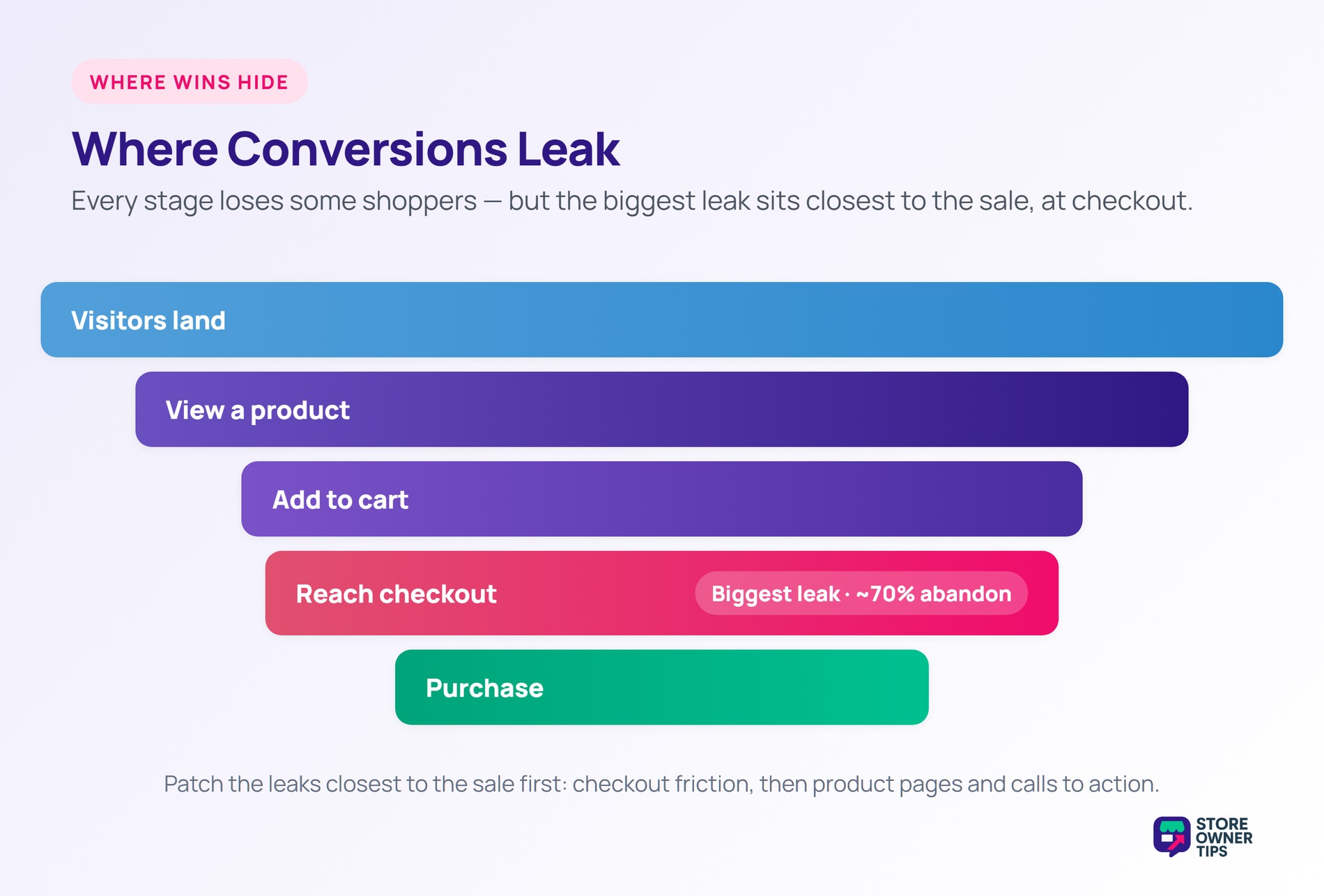
The biggest leak usually sits at checkout. Cart abandonment averages 70.22% across e-commerce, so that is where the money hides. On WooCommerce or Shopify, trimming form fields and surprise fees often moves the needle fast. Small frictions add up to lost sales.
The golden rule is to let data decide, not opinions. It is tempting to redesign based on what you personally like. But your taste is not your customer’s taste, and guesses are expensive. So test your idea against the current version before rolling it out.
This is why CRO favors small, controlled changes over big rebuilds. Change too much at once, and you cannot tell what helped. Change one thing, and the result is crystal clear. Over time, those clear answers teach you exactly what your shoppers want.
People do not buy from stores they do not trust. That is why social proof is one of the strongest CRO levers around. Purchase likelihood for a product with five reviews is 270% greater than for one with none. Adding reviews, ratings, and clear guarantees can lift conversions without touching your design.
Some pages matter far more than others for CRO. A few spots tend to hide the biggest, fastest wins. Start your search where the most shoppers slip away.
Reducing cart abandonment usually delivers the fastest payoff of all. Even a small drop there frees up real revenue. So fix the leaks closest to the sale first.
Imagine a mid-sized brand called Trailhead Gear that sells hiking packs on WooCommerce. They get plenty of traffic but feel stuck on sales. Rather than buy more ads, they decide to fix what they already have.
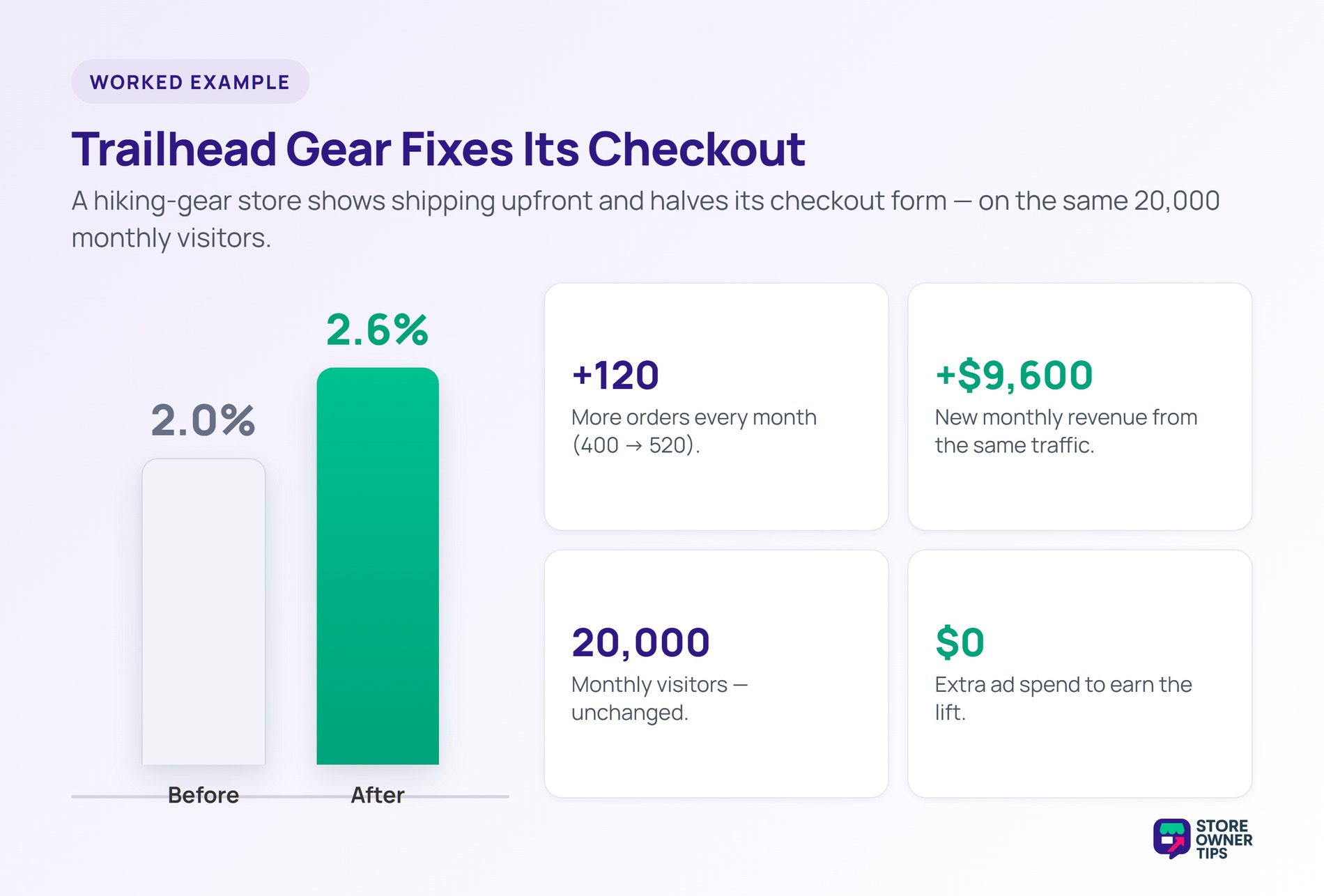
Trailhead Gear gets 20,000 visitors a month and converts at 2%. That works out to 400 orders, with an average order value of $80. So the store pulls in about $32,000 in monthly sales. Their analytics show most shoppers quit on the checkout page.
The team studies the checkout and spots three problems. Shipping costs appear too late, the form is long, and there is no guest checkout. They cut the form in half and show shipping upfront. Then they run the new checkout against the old one to compare.
A smoother checkout can lift conversions by up to 35% on large stores. Trailhead Gear captures part of that and climbs from 2% to 2.6%. That single change adds 120 orders a month, or nearly $9,600 in new revenue. Best of all, they spent nothing extra on ads to earn it.
Trailhead Gear did not guess its way to better numbers. They followed the data straight to the leak and tested a fix. Showing shipping early removed the nasty surprise that scared buyers off. A shorter form then made finishing the order feel effortless.
The win did not stop with one test, either. With proof that small changes pay off, the team kept going. Next they added reviews to product pages and a clearer return policy. Each round nudged the rate higher and made the whole store more profitable.
None of it required a bigger ad budget, only a sharper focus on the visitors already arriving.
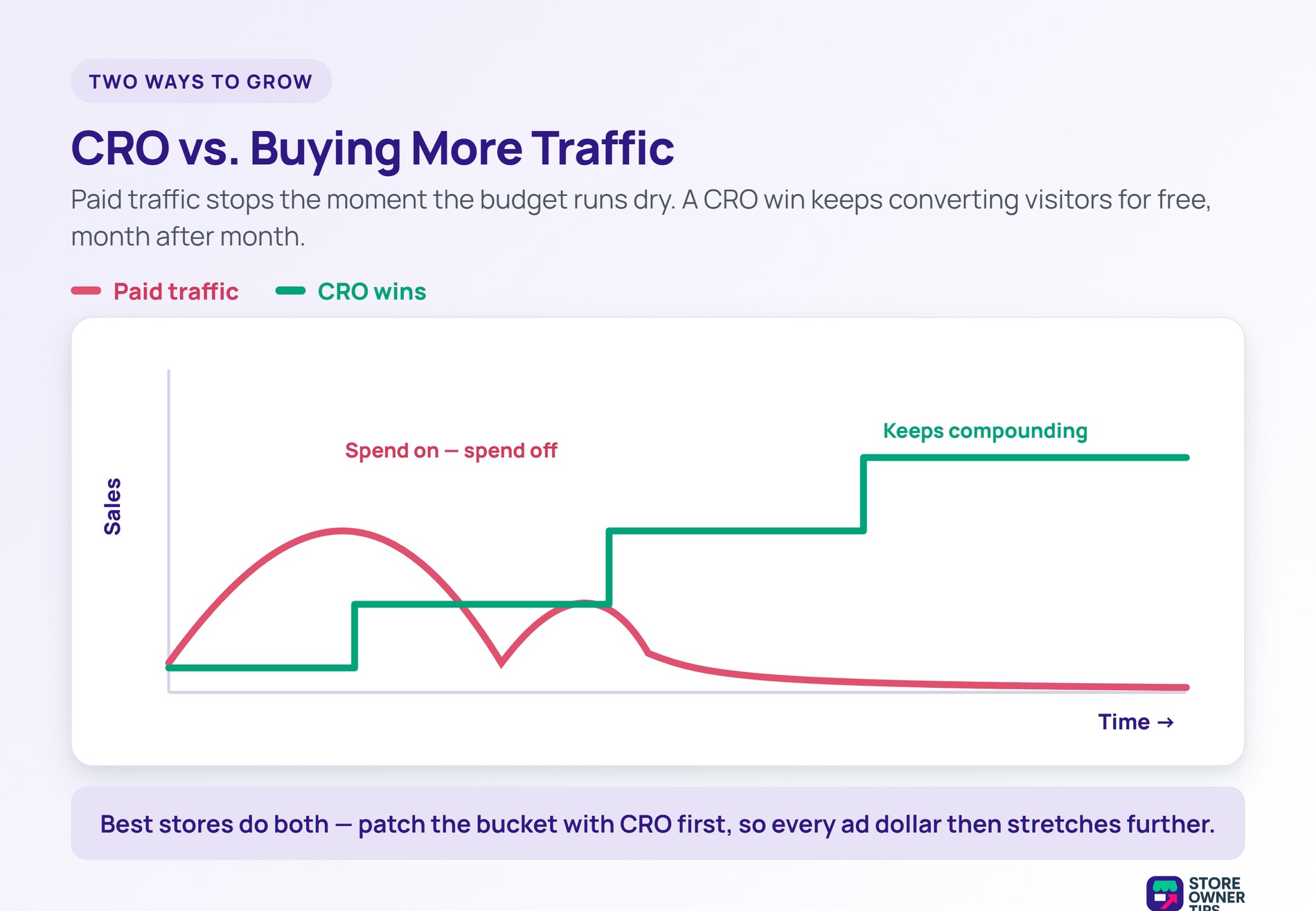
There are two ways to grow online sales. You can buy more traffic, or you can convert more of the traffic you already have. Both work, but they cost very differently. Buying traffic gets pricier every year, while CRO keeps paying off long after the work is done.
The smartest stores treat them as partners, not rivals. More traffic with a weak site just pours more water into a leaky bucket. CRO patches the bucket first, so every new visitor is worth more. As a result, your ad budget stretches further once conversions improve.
There is also a timing difference worth knowing. Paid traffic stops the moment your budget runs dry. A CRO win, by contrast, keeps converting visitors month after month for free. That lasting payoff is what makes the work so valuable.
Most e-commerce stores convert in the low single digits, often near 2% to 3%. A good rate depends on your industry, price point, and traffic source. Rather than chase a magic number, focus on beating your own past results. Steady improvement matters more than any benchmark.
A store moving from 1.5% to 2% has won, even if rivals sit higher.
Start by finding where shoppers drop off, usually the product page or checkout. Fix the most obvious friction first, like hidden costs that block a frictionless checkout. Add trust signals such as reviews and clear return policies. Then test one change at a time so you know what truly works.
They solve different problems, so the best answer is usually both. Ads bring people in, while CRO makes sure those people buy. If your site converts poorly, more ads just waste money. So fixing conversions first often gives you the bigger return.
After all, a higher rate makes every future ad dollar work harder too.
Conversion rate optimization is one of the highest-leverage moves in e-commerce. It turns traffic you already paid for into more sales, more profit, and more knowledge of your customers. Patch the leaks, build trust, and test relentlessly, and your store grows without spending a cent more on ads. Better still, every win you bank keeps paying you back long after the test ends.
Copyright © StoreOwnerTips.com. All Rights Reserved.
