Weekly ecommerce tips, deals & news.
Flat-rate shipping is a single, fixed delivery fee that stays the same no matter what the customer orders. Whether they buy one item or ten, the shipping price does not change. It keeps checkout simple and easy for buyers to predict. Many stores set one flat rate per region to avoid confusing math.
Flat-rate shipping means one set fee for delivery. That fee does not change with weight, size, or item count. A customer buying a keychain pays the same as one buying five mugs. The price is fixed and clear from the start.
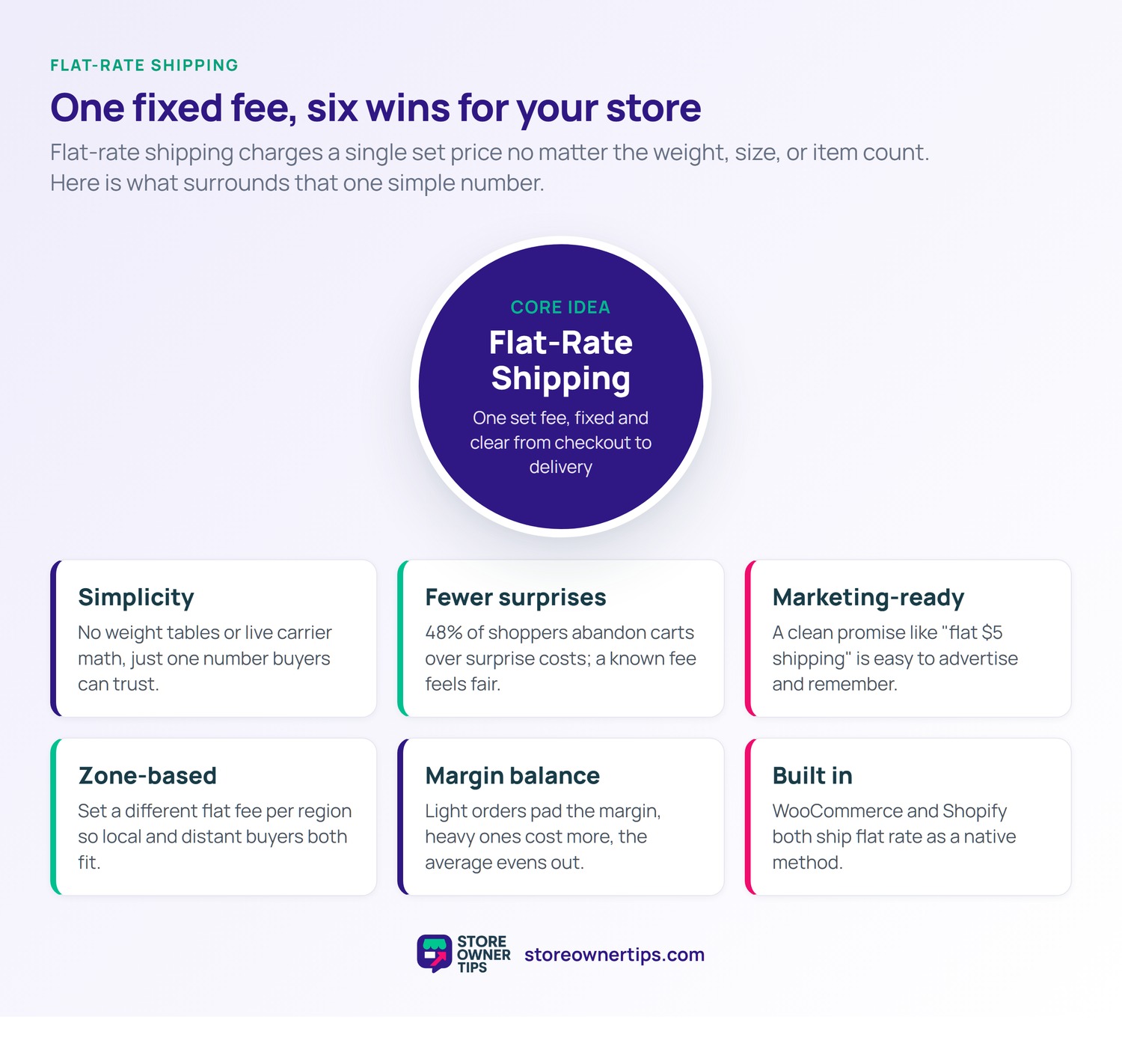
Think of it like a buffet price for shipping. You pay one amount and fill your plate as you like. The restaurant wins on light eaters and loses a little on big ones. Over many guests, the average keeps the buffet profitable.
Flat-rate shipping works the same way for your store. Some orders cost you more to ship than the fee. Others cost less, and the average balances out. The trick is setting a rate that covers your typical order.
Flat rates usually live inside a shipping zone. So you can set a different flat fee per region. That mix keeps local buyers happy and distant ones covered.
On WooCommerce, flat rate is a built-in shipping method. You add it inside a shipping zone and set the fee. Every buyer in that zone then sees the same flat price.
You can also add small cost rules to the flat rate. For example, you might add a little fee per item. WooCommerce and Shopify both support flat-rate methods, though the setup differs.
The fee shows up clearly at checkout before payment. Buyers see one shipping line with one simple number. That clarity removes the fear of a surprise charge later.
The first reason is simplicity for everyone. You skip complex weight tables and live carrier math. Buyers get one clear number they can trust.
The second reason is fewer checkout surprises. Surprise fees are a top reason buyers quit. In fact, 48% of shoppers abandon carts over high extra costs. A known flat fee feels fair and expected.
Speed expectations also favor a simple promise. About 63% of consumers expect delivery within two days. A clear flat fee pairs well with a fast, reliable option.
Flat rates also pair well with marketing. You can advertise a simple line like flat $5 shipping. That clean promise is easy for shoppers to remember.
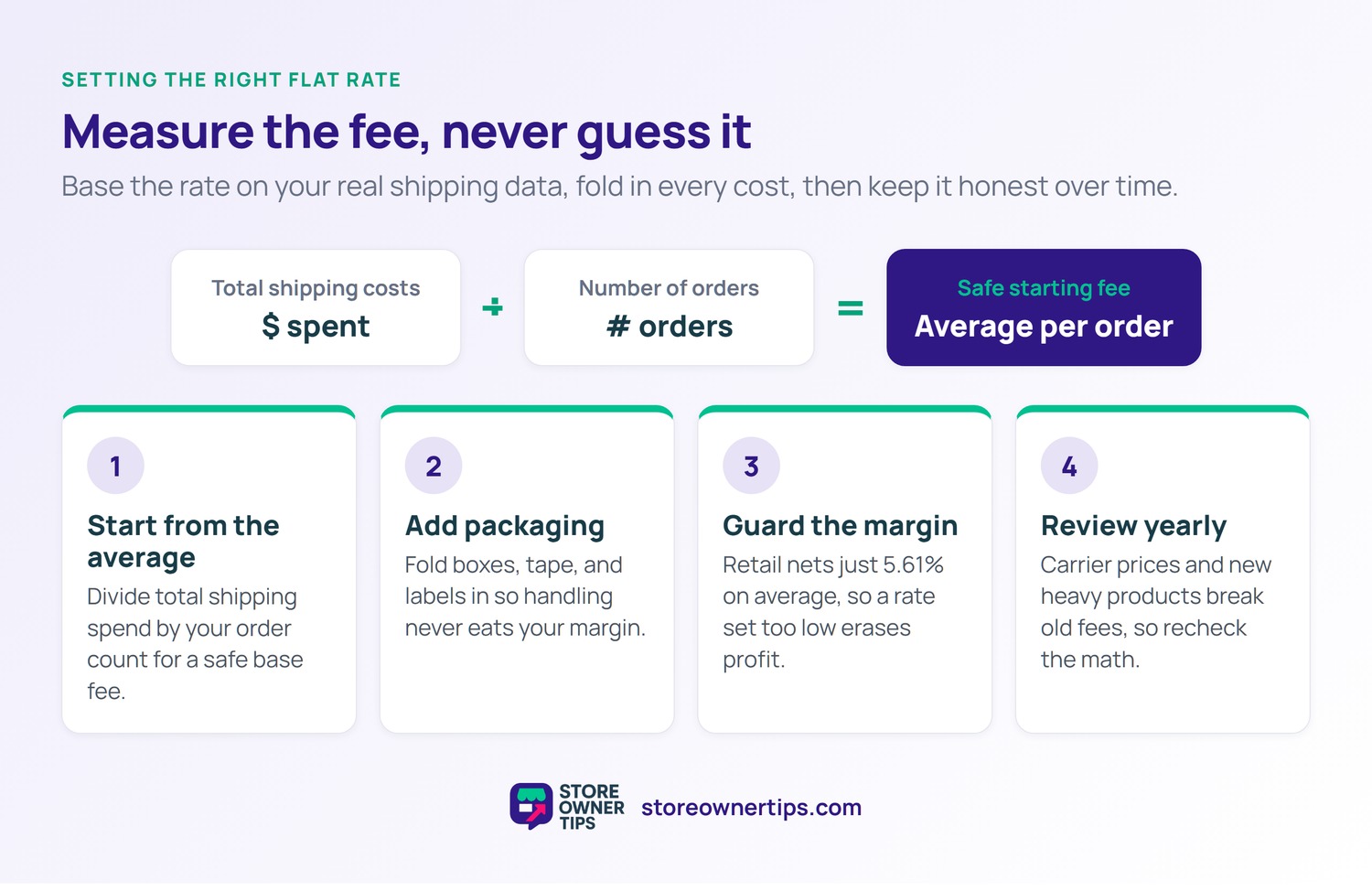
The key is to base the rate on your average order. Add up your shipping costs and divide by your orders. That average gives you a safe starting flat fee.
Watch your margin closely as you set the price. General retailers average a net margin of just 5.61%. A flat rate set too low can quietly erase that thin profit.
Do not forget packaging and handling costs. Boxes, tape, and labels add up fast. Fold those into your flat rate so they never eat your margin.
Review the rate as your products or costs change. A new heavy product can break an old flat fee. So check the math whenever your catalog shifts.
A flat rate does not have to be one single number. You can set tiers, like one fee for small carts and another for large. This keeps things simple while fitting different order sizes.
For example, orders under a set weight pay one fee. Heavier orders pay a slightly higher flat fee. Buyers still see a clear number, just one that fits their cart.
Tiered flat rates blend simplicity with fairness. They protect your margin on bigger orders. Yet they keep the math easy for shoppers to grasp.
Flat rate and free shipping can work as a team. You might charge a flat fee below a cart value and free above it. That free shipping threshold nudges buyers to add more.
This combo can lift your average order value nicely. Buyers add an extra item to cross the free line. So a smart threshold turns shipping into a sales tool.
Just make sure the free line still leaves you a profit. Set it above your average order value, not below. That way each free-shipping order still earns its keep.
The biggest mistake is guessing the rate instead of measuring it. A random number can lose money on heavy orders. Always base the fee on real shipping data.
Another trap is using one flat rate worldwide. Distant orders often cost far more to ship. So pair flat rates with zones for fair pricing.
A third slip is never revisiting the rate. Carrier prices rise over time and quietly squeeze you. Review your flat fee at least once a year.
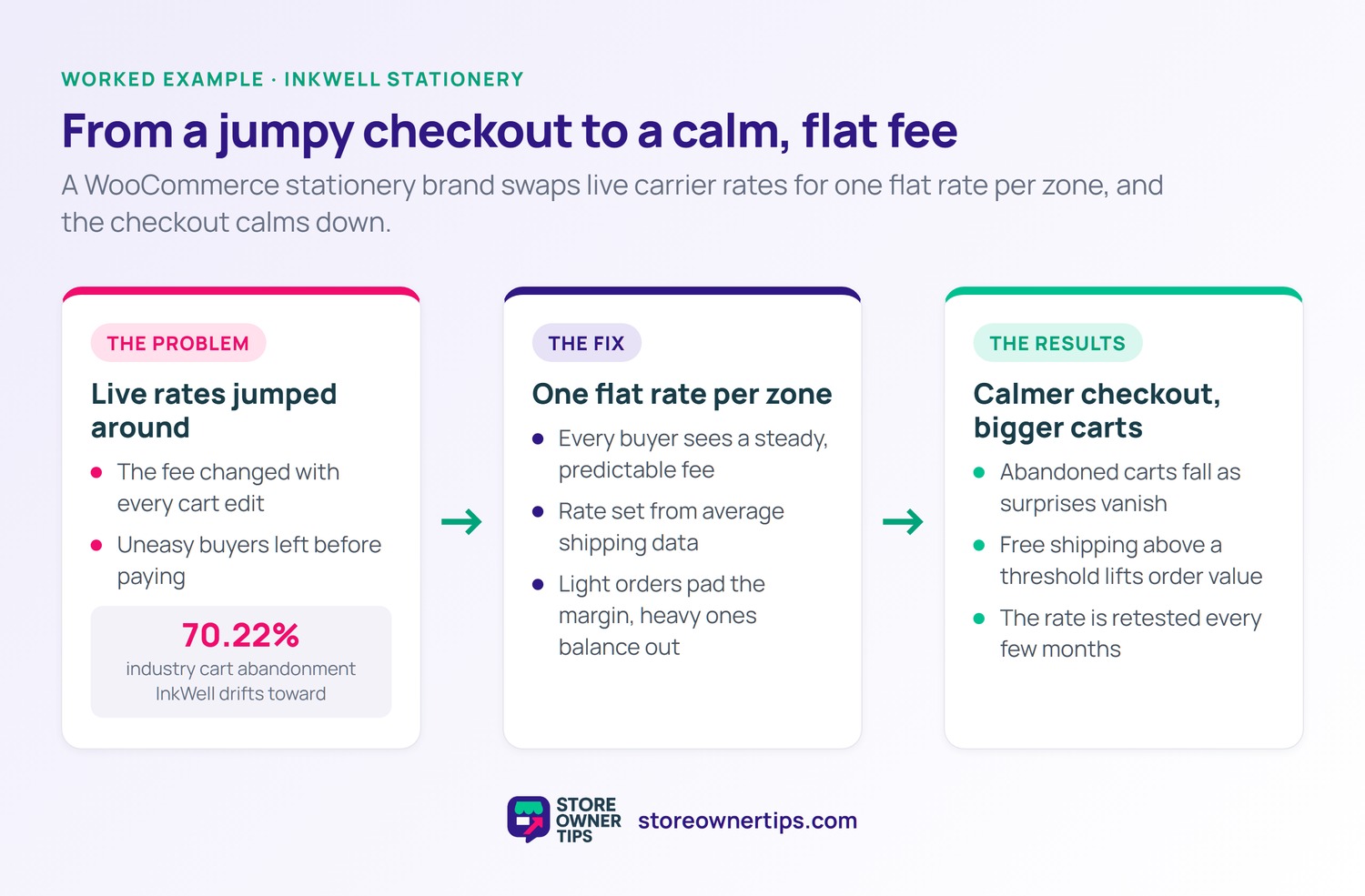
Imagine a stationery brand called InkWell on WooCommerce. It sells notebooks, pens, and small gift sets. Shipping costs vary a lot by order, which confuses buyers.
InkWell once charged live carrier rates at checkout. The number jumped around with every cart change. Buyers grew uneasy and many left before paying.
InkWell watches its cart abandonment climb toward the 70.22% industry average. The shifting shipping cost is the clear culprit. The owner wants a simpler, calmer checkout.
InkWell switches to one flat rate per zone. Now every buyer sees a steady, predictable fee. The checkout feels calm and trustworthy again.
The owner sets the rate from average shipping data. Light orders pad the margin a little. Heavier orders cost a bit more, but the average holds.
Abandoned carts fall as the surprise factor disappears. Buyers like knowing the fee before they shop. InkWell also adds free shipping above a cart value.
That free line lifts the average order value over time. Shoppers add one more notebook to qualify. The owner also tests the rate every few months to keep it accurate.
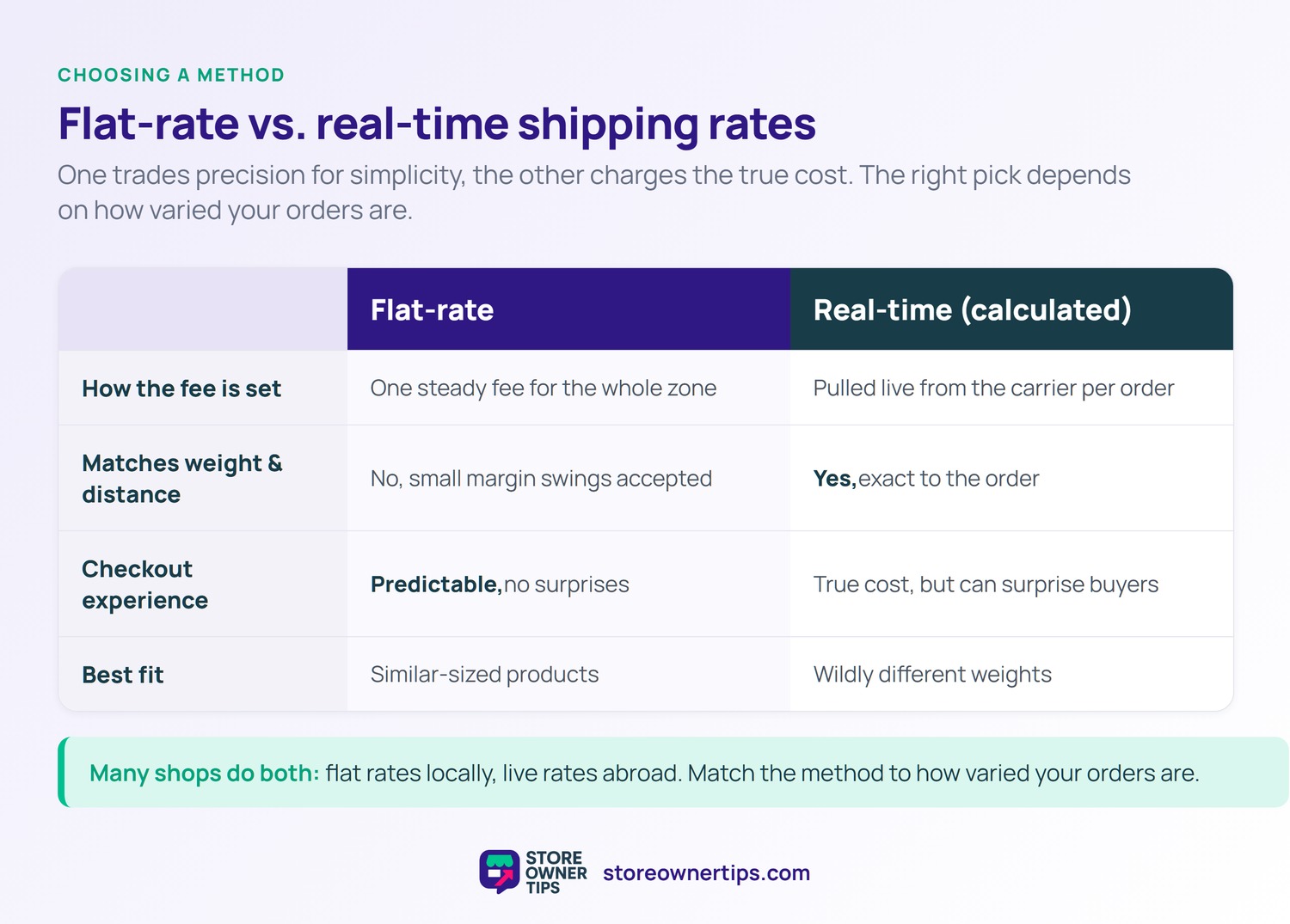
The main alternative is real-time, or calculated, shipping. Real-time rates pull the exact cost from the carrier at checkout. The fee then matches the order’s weight and distance.
Flat-rate trades that precision for simplicity. You charge one steady fee and accept small swings in margin. Real-time charges the true cost but can surprise buyers.
Flat rates suit stores with similar-sized products. Real-time rates suit stores with wildly different weights. Many shops use flat rates locally and live rates abroad.
There is no single right answer here. The best fit depends on your products and your margins. So match the method to how varied your orders are.
Base it on your average shipping cost per order. Add up recent shipping fees and divide by your orders. That average gives you a fair, safe rate. Then adjust it as your real costs change.
They serve different goals and often work together. Flat rate covers your cost on every order. Free shipping above a threshold can lift order size.
It can, but only if the rate covers their cost. Very heavy items often need their own rate or zone. Tiered flat rates can also help when weights vary widely.
Flat-rate shipping keeps checkout simple with one fair, predictable fee. It cuts surprises, builds trust, and is easy to advertise and manage. Set the rate from real data, review it often, and it becomes a quiet profit protector. Done right, it makes shipping one less thing to stress about.
Copyright © StoreOwnerTips.com. All Rights Reserved.
