Weekly ecommerce tips, deals & news.
Geo-based pricing is the practice of charging different prices based on a shopper’s location. A visitor in one country may see a different price than someone elsewhere. Stores use it to match local buying power, currencies, and costs. The goal is a fair, locally relevant price for every market.
Geo-based pricing starts by detecting where a shopper is. The store reads their location from an IP address or billing address. It then shows a price set for that region. Each market can have its own number.
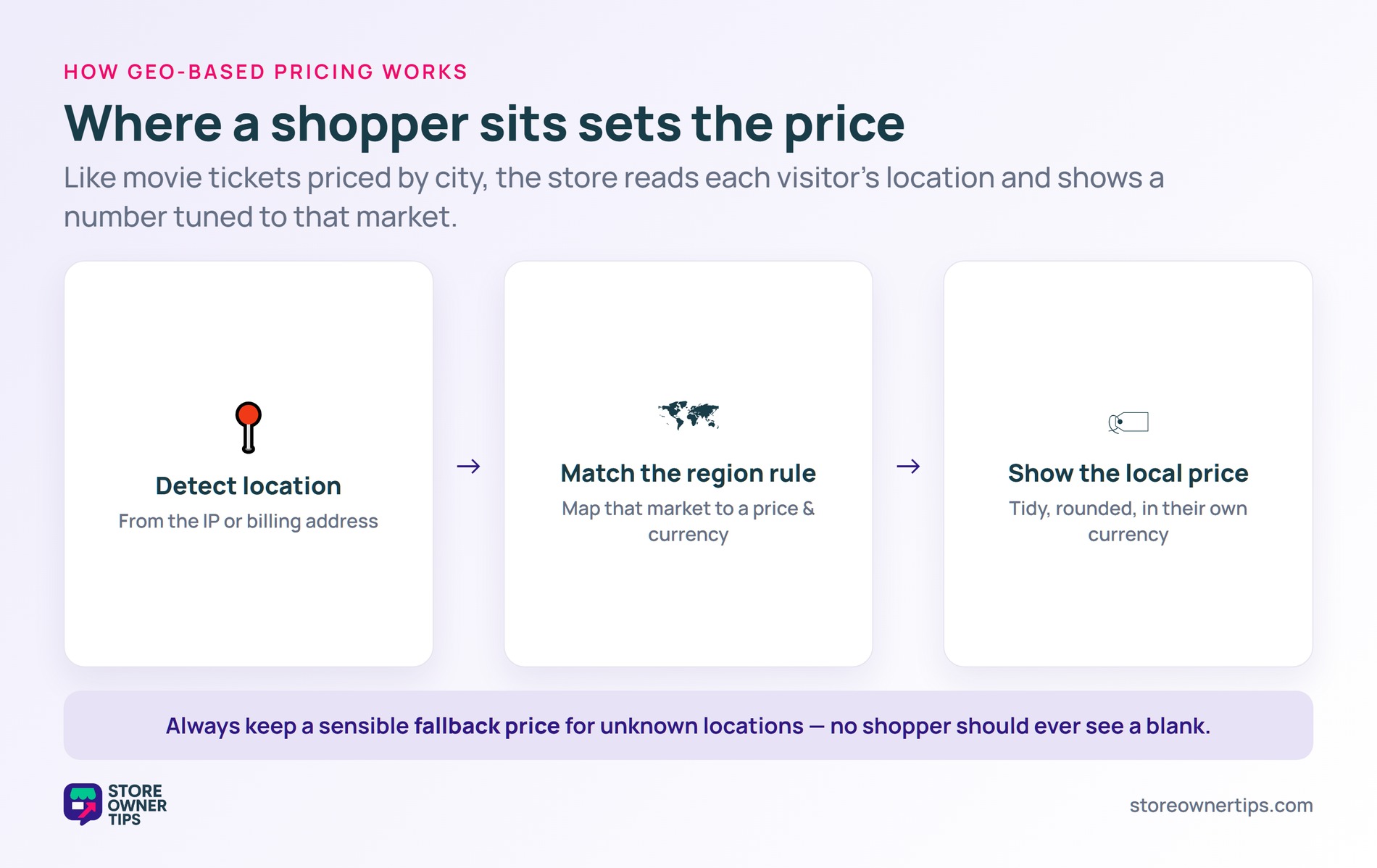
For example, think of movie tickets priced by city. A ticket in a big city costs more than in a small town. Geo-based pricing applies that same logic online. Local conditions shape the price each shopper sees.
The price change can take a few forms. Some stores adjust the raw number per country. Others simply switch the currency on display. Many do both to feel truly local.
It’s also called geographic or location-based pricing. The name varies, but the idea stays the same. Where a shopper sits helps set what they pay. That single signal drives the whole system.
Shipping and taxes can shift by region too. Geo-based pricing often folds these in. The displayed price then reflects the true local cost. Shoppers face fewer surprises at checkout.
Some stores show a region picker as well. Shoppers can confirm or change their location. That keeps control in the buyer’s hands. It also fixes any wrong detection.
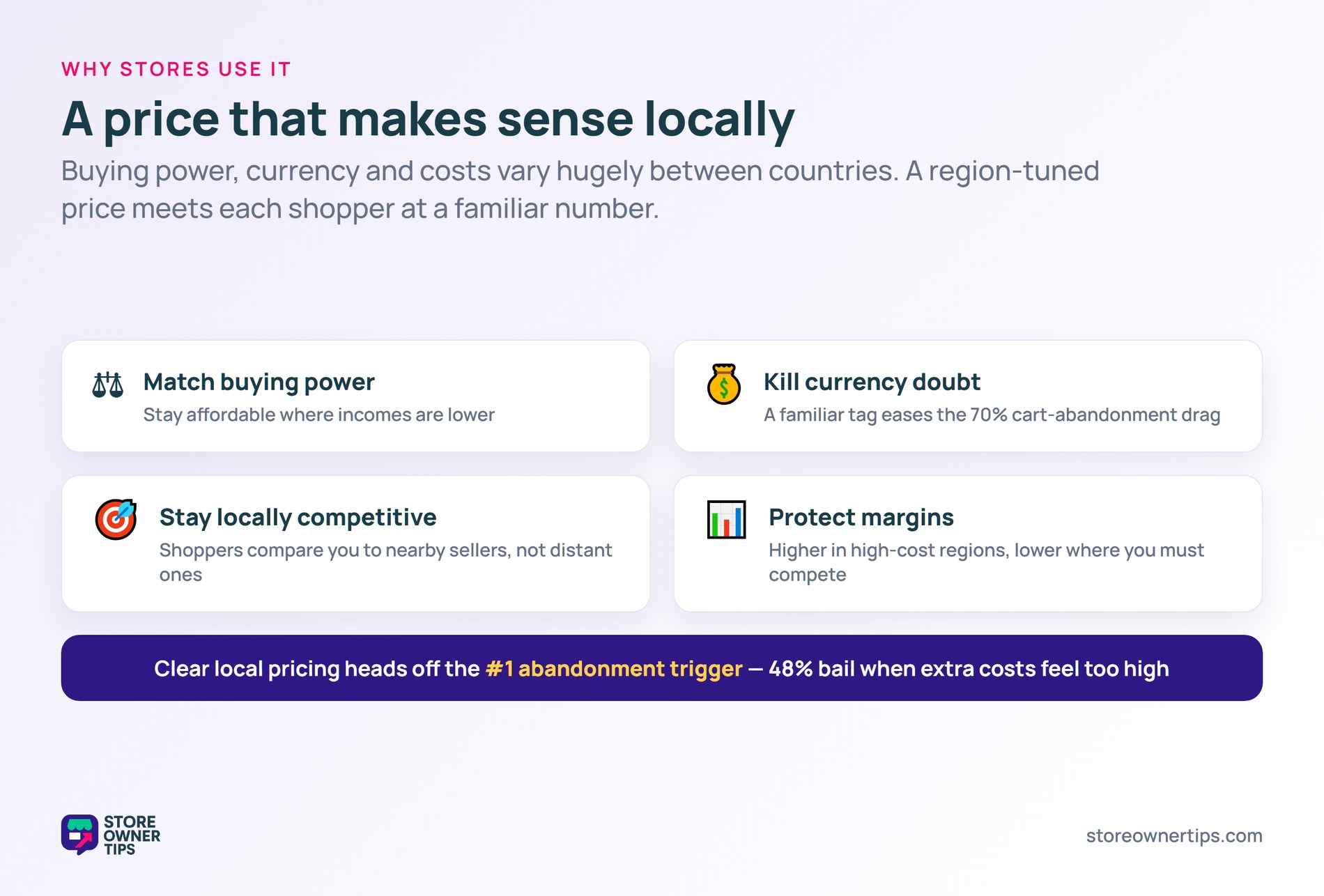
Buying power varies hugely between countries. A price that feels fair in one market feels steep in another. Geo-based pricing closes that gap. It keeps your product affordable where incomes are lower.
Unexpected costs also scare shoppers off. Nearly half, 48%, abandon when extra fees feel too high. Showing a clear local price avoids that shock. So buyers see a number that makes sense to them.
Local currency matters more than many expect. A foreign currency adds doubt at checkout. That doubt feeds into the 70.22% average cart abandonment rate. A familiar price tag keeps shoppers moving.
Local rivals shape expectations as well. Shoppers compare you to nearby sellers, not distant ones. A region-tuned price keeps you competitive there. It helps you win on the shopper’s home turf.
Duties and import costs also vary by country. A smart local price can account for them. Shoppers then avoid a nasty surprise fee. That keeps the final total predictable.
Geo-based pricing can also protect your margins. High-cost regions can carry a higher price. Low-cost ones can go lower to compete. You balance reach and profit market by market.
WooCommerce includes built-in geolocation features. On WooCommerce or Shopify, you can detect a visitor’s country automatically. From there, location-based pricing tools set the right price. Most run without any manual work per visit.
You’ll usually map each region to a price or currency. The store then applies the match on the fly. It pairs well with a clear discount code for local promotions. The setup is mostly one-time, then it runs itself.
Accuracy depends on good location data. A reliable geolocation source keeps prices correct. Test a few regions before you go live. A quick check prevents an embarrassing mismatch.
Clean, rounded prices matter in each currency. A raw conversion can look odd, like 9.37. Round it to a familiar local figure. Tidy prices feel intentional, not automated.
Keep a fallback price for unknown locations. If detection fails, the store needs a default. A sensible global price covers that case. No shopper should ever see a blank.
Geo-based pricing fits stores that sell internationally. It helps most when buying power differs across your markets. It also suits products with region-specific costs. By contrast, a local-only store rarely needs it.
It can backfire if shoppers spot the difference. Someone may notice a lower price in another country. So keep your logic fair and easy to defend. Transparency protects trust.
It also powers cross-border growth plans. Entering a new country gets easier with local prices. You meet shoppers at a number they expect. That lowers the barrier to your first sales there.
Subscription and digital sellers gain a lot here. Their global audience spans many income levels. A tuned price keeps each region viable. It widens the paying base worldwide.
Th
Watch out for VPNs and travelers too. Location data isn’t always right. A shopper abroad may see the wrong price. So offer an easy way to switch regions.
Don’t set and forget your regional prices. Exchange rates and costs drift over time. Review them on a regular schedule. Stale prices quietly erode your margins.
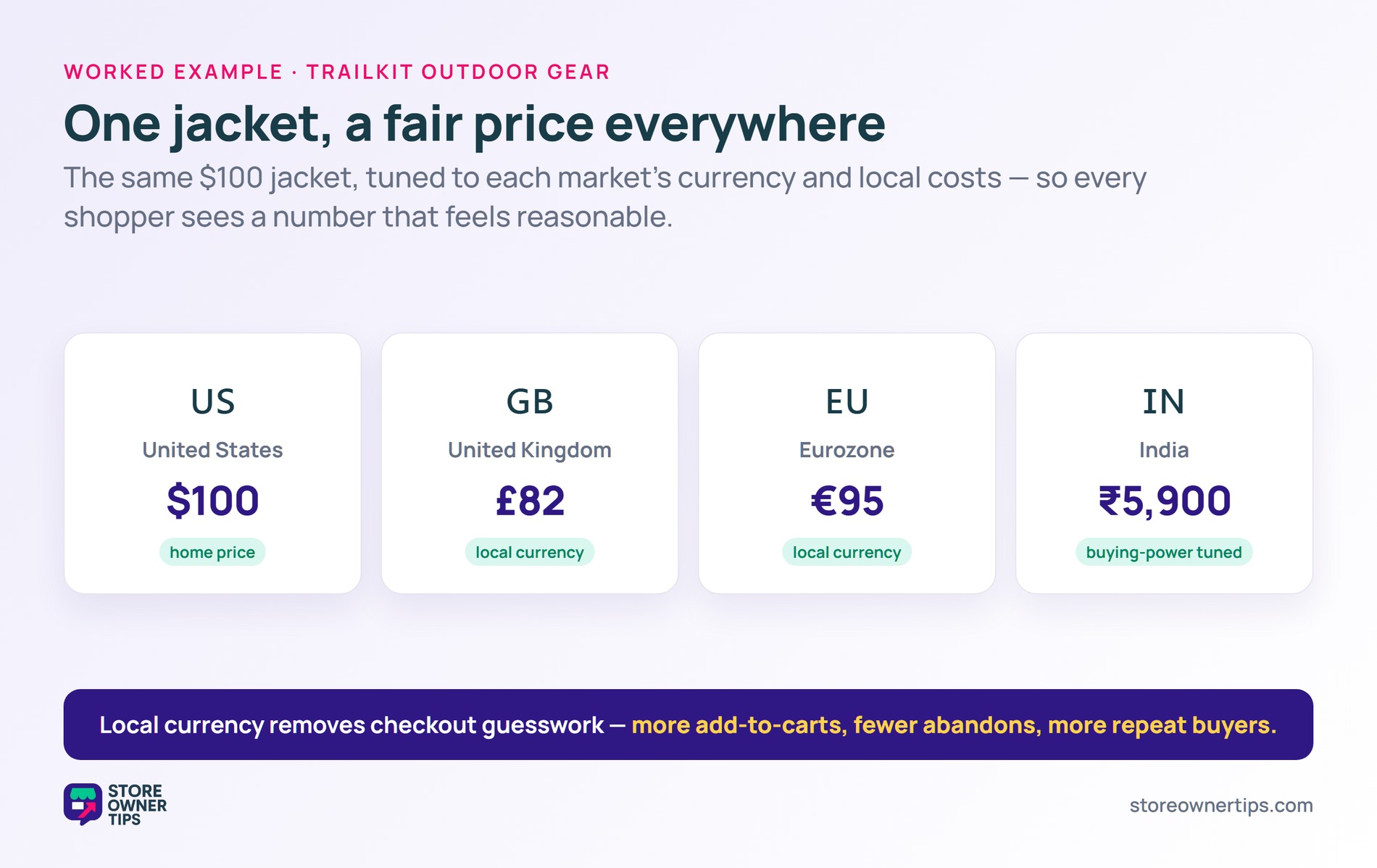
Imagine a WooCommerce brand called TrailKit selling gear worldwide. A $100 jacket feels fair to US shoppers. But that same price feels high in lower-income markets. TrailKit wants to sell well everywhere.
So TrailKit turns on geo-based pricing. It sets a tuned price for each major region. Shoppers also see their own local currency. The store feels native in every market.
TrailKit ties each price to local data. It uses currency and regional costs, not guesswork. That keeps every price fair and defensible. The logic holds up if a buyer asks.
A shopper in the US sees the jacket at $100. A visitor elsewhere sees a price set for their market. Each one views a number that feels reasonable. So more of them add the jacket to the cart.
Local currency removes a big checkout worry. Buyers don’t have to guess the conversion math. That clarity lifts conversions across regions. Fewer shoppers abandon over a confusing price.
TrailKit also rounds each local price cleanly. A jacket shows as a tidy local figure. That polish makes the store feel trustworthy. Small details build big confidence.
Word spreads in each local market too. Happy buyers recommend a fair-priced store. That referral effect compounds over time. So local trust becomes local growth.
TrailKit now wins customers in many countries. Reaching each new market took real effort. Acquiring a customer can cost five to 25 times more than keeping one. Fair local pricing helps those hard-won buyers return.
Repeat buyers lift the store’s average order value over time. A locally fair price builds long-term trust. That trust turns one sale into many. So geo-based pricing pays off well beyond the first order.
TrailKit tracks sales by region over time. The data shows which markets respond best. They then refine prices where needed. Geo-based pricing improves with every cycle.
Geo-based pricing has a clear opposite: flat pricing. Flat pricing charges everyone the same, everywhere. Geo-based pricing tunes the number to each location. The choice depends on where and how you sell.
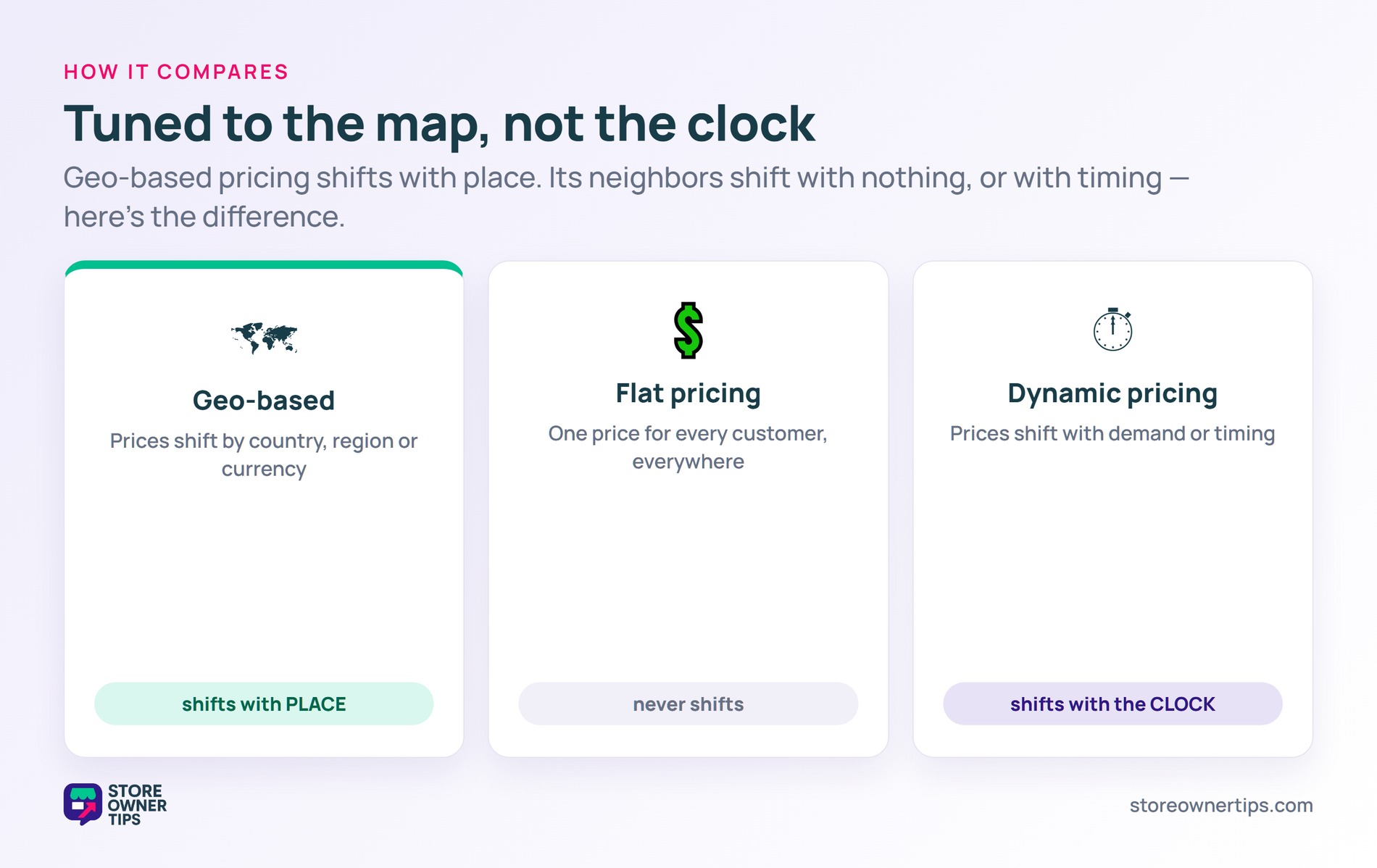
Geo-based pricing also differs from dynamic pricing. Dynamic pricing shifts with demand or timing. Geo-based pricing shifts with place instead. One reacts to the market clock, the other to the map.
Most stores read the visitor’s IP address. That points to a likely country or region. Some also use the billing or shipping address. WooCommerce includes built-in geolocation for this.
In most places, yes, with limits. You generally can’t price unfairly based on protected traits. Pricing by country or currency is widely accepted. Still, check the rules in the markets you serve. A quick look at local consumer law keeps you safe.
Some might, especially savvy global buyers. That’s why fair, defensible logic matters. Tie prices to currency and local costs, not guesswork. Clear reasoning protects your brand’s trust. Honest pricing rarely costs you a sale.
Geo-based pricing helps you sell fairly across very different markets. It meets each shopper with a price that fits their local reality. Done transparently, it widens your reach and builds lasting global trust.
Copyright © StoreOwnerTips.com. All Rights Reserved.
