Weekly ecommerce tips, deals & news.
Internal linking is the practice of connecting one page on your site to another page on the same site. These links help visitors navigate and help search engines understand your content. They also pass authority from strong pages to weaker ones. Done well, internal linking lifts both rankings and sales.
An internal link points from one of your pages to another. A blog post might link to a product page. A category page might link to a buying guide.
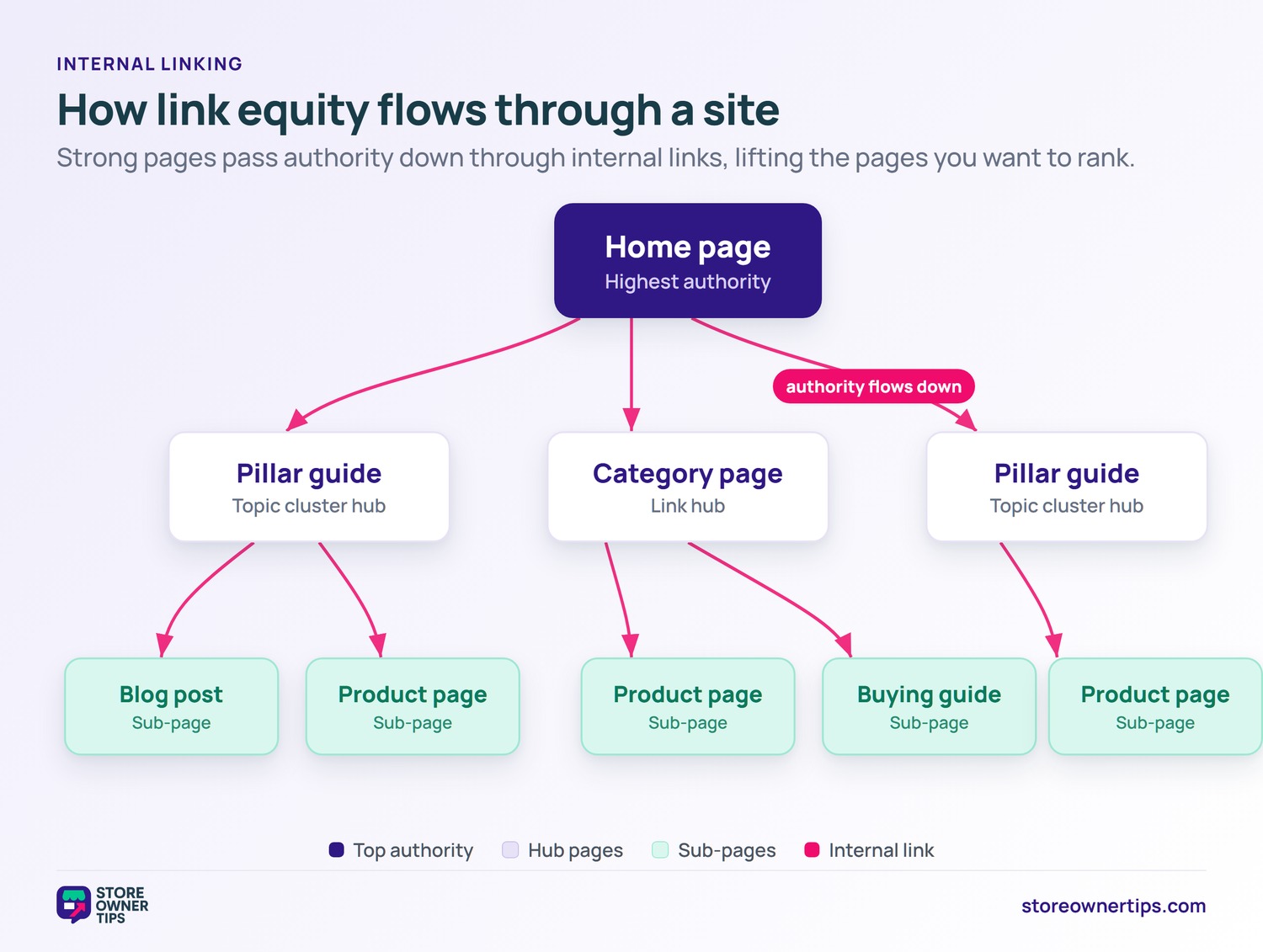
Think of internal links as hallways in a store. They guide shoppers from room to room. Without them, visitors get stuck and leave.
They differ from external links, which point to other sites. Internal links keep visitors on your own domain. That makes them a tool you fully control.
Navigation menus are internal links too. So are footer links and breadcrumb trails. Every one helps shape your site’s structure.
Internal links do three jobs for search engines. First, they help crawlers find and index your pages. A page with no links in can stay invisible.
Second, they pass authority between pages. A strong page shares some ranking power through its links. That lift can push a weaker page up the results.
Higher rankings mean far more clicks. The top organic result earns about 27.6% of clicks. The top three together take over 54%.
Links also share context between pages. They tell engines which pages relate. That web of meaning sharpens your relevance.
Anchor text is the clickable wording of a link. It tells both readers and engines what waits on the other side. Clear anchor text is a strong relevance signal.
Use descriptive, natural phrases as anchors. A link reading blue running shoes beats one reading click here. The words should match the target page’s topic.
Avoid stuffing the same exact anchor everywhere. Vary the wording so it reads naturally. Forced, repetitive anchors look spammy to engines.
On WooCommerce, internal links tie your catalog together. A product page can link to related items. A buying guide can link straight to the products it mentions.
Category pages are powerful link hubs. They gather related products under one roof. That structure helps both shoppers and crawlers.
Blog content is your linking engine. A helpful article can link to several products and guides. Those links turn readers into buyers.
A good structure is shallow and logical. Every important page should be a few clicks from the home page. Deep, buried pages rarely get found.
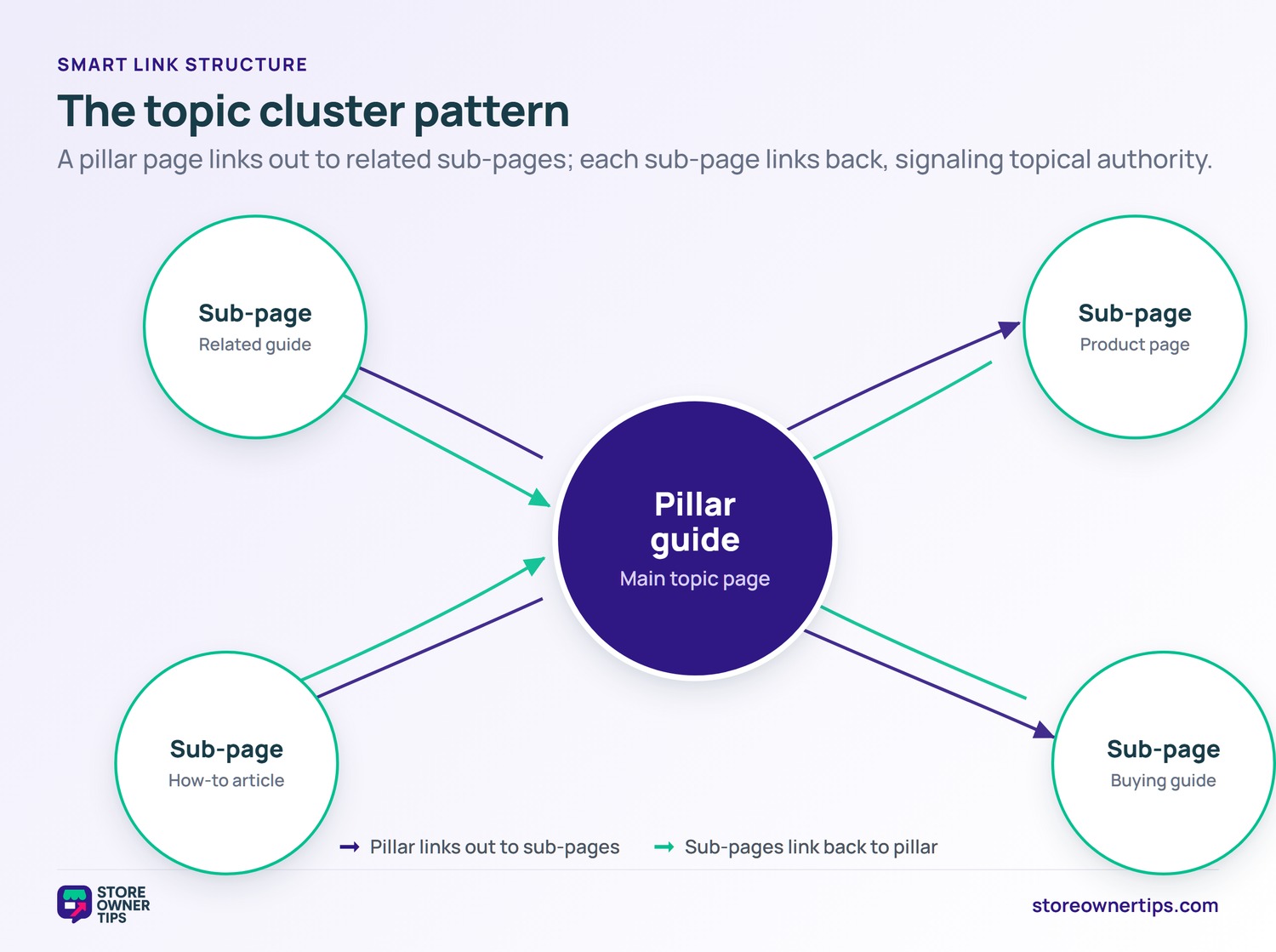
Group content into clear topic clusters. A main pillar page links out to related sub-pages. Each sub-page links back to the pillar.
This web of links signals topical authority. Engines see you cover a subject deeply. For example, a guide can link to your page on product schema for more detail.
Link new pages from old, strong ones. A fresh page with no links struggles. A boost from an established page speeds its rise.
Internal links do more than help SEO. They guide a shopper along the buying path. A guide can lead a reader to the right product.
Smart links anticipate the next question. After explaining a topic, point to the obvious next step. That smooth flow keeps visitors engaged.
Each extra page deepens the visit. More pages viewed often means more trust. And more trust often means more sales.
Each helpful link is also a gentle nudge forward. It moves the reader one step closer to buying. The path feels natural, not pushy.
Internal links quietly grow your organic traffic. They push authority to the pages you want to rank. Those stronger pages then climb the results.
Organic search drives 53.3% of all site traffic. So lifting rankings lifts a huge share of visits. Internal links are a free way to do it.
The links also keep visitors longer on site. Each click to a related page adds a view. Longer visits hint to engines that you satisfy searchers.
The effect compounds across the site. Every good link strengthens the whole web. Small links add up to real traffic gains.
Clear internal links help AI engines too. They map how your topics connect. That structure makes your expertise easy to read.
A well-linked site signals real depth on a subject. Engines reward that with visibility. It supports your generative engine optimization work.
Descriptive anchors help machines most. They label each link with clear meaning. That clarity makes your site easy to parse.
So a tidy link structure pays off everywhere. It guides humans, classic crawlers, and AI alike. One smart web of links serves them all.
A quick audit reveals weak spots. Look for orphan pages with no links in. Then add a link from a relevant page.
Check that key pages get the most links. Your bestsellers deserve the strongest support. Point internal links toward what matters most.
Fix broken internal links too. A dead link wastes authority and annoys readers. A regular check keeps the web healthy.
Update old posts with links to new ones. Your best content keeps earning that way. A monthly pass keeps links fresh.
The first mistake is too few links. Orphan pages with no links in get ignored. Every page deserves a path to reach it.
Another trap is vague anchor text. Click here tells engines nothing useful. Describe the target page instead.
A third slip is over-linking a page. Cramming dozens of links dilutes each one. Link only where it truly helps the reader.
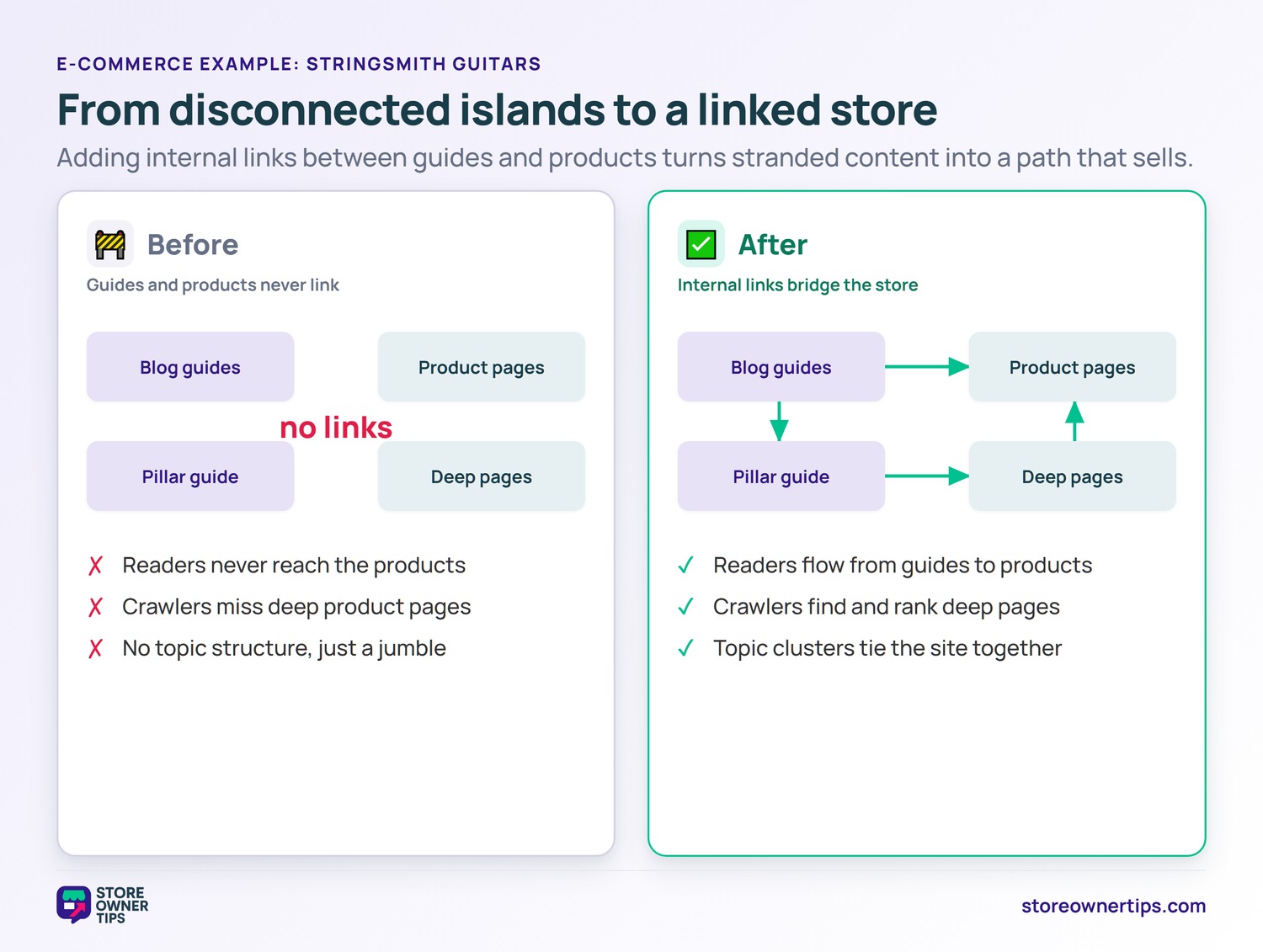
Imagine a guitar brand called StringSmith on WooCommerce. It has great blog guides and strong product pages. But the two never link to each other.
StringSmith’s guides rank and draw readers. Yet those readers never reach the products. The guides are islands with no bridge to the store.
Its deep product pages also sit unlinked. Crawlers struggle to find and rank them. The store wastes the authority it has built.
StringSmith also has no topic structure at all. Related guides sit scattered and disconnected. Search engines see a jumble, not expertise.
StringSmith adds internal links across the site. Each guide now links to the gear it discusses. Product pages link out to related guides and items.
It also builds topic clusters around each instrument. A pillar guide links to every related sub-page. The structure ties the whole site together.
Readers now flow from guides to products. Sales from blog traffic climb steadily. The bridge between content and catalog finally exists.
Crawlers also find the deep pages with ease. Those products start ranking and earning clicks. StringSmith also points links to its top products.
Those bestseller pages now rank for buying terms. The catalog finally pulls its weight. The lesson is clear: internal links turn content into revenue.
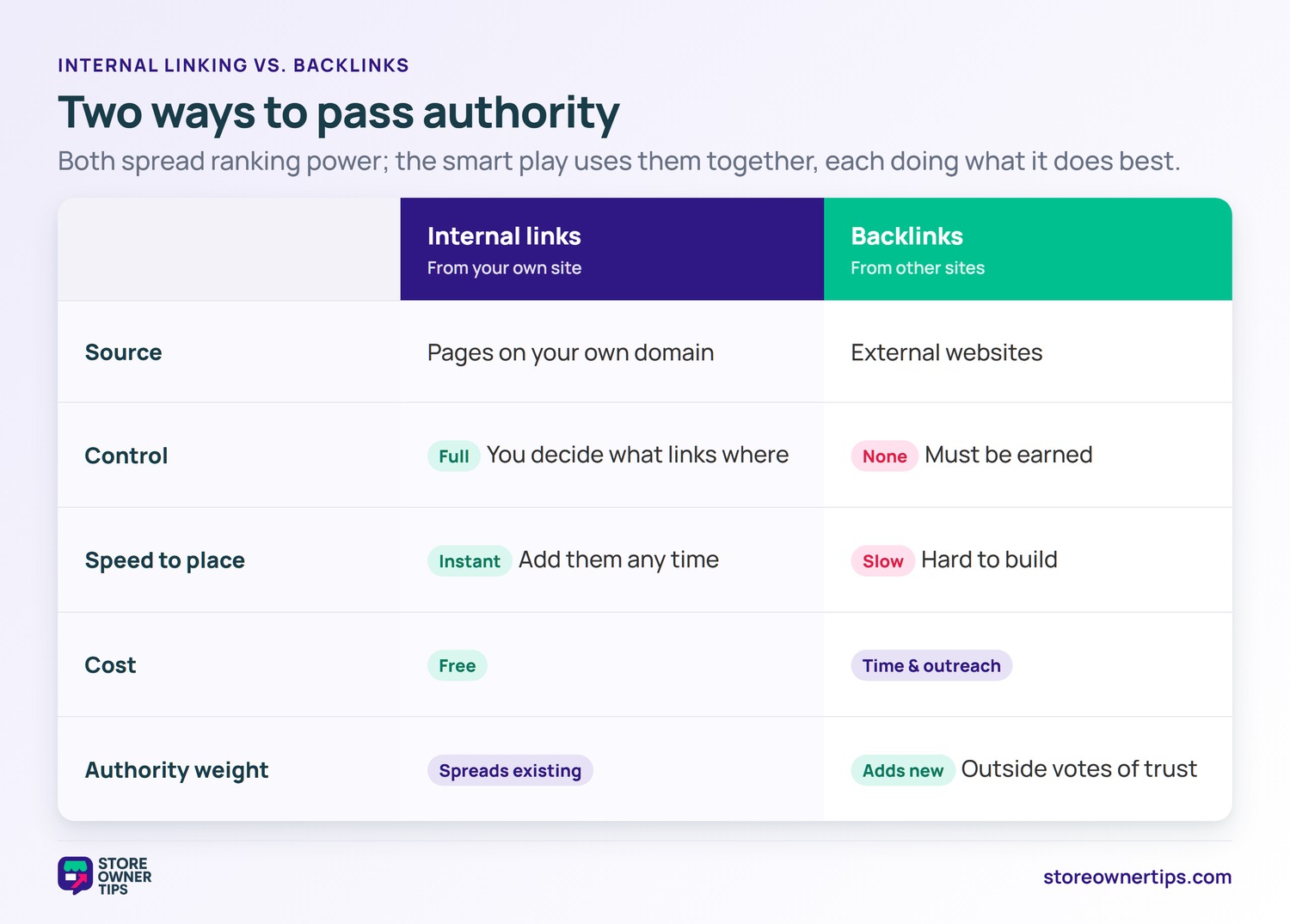
Internal links and backlinks both pass authority. The difference is where they come from. Internal links come from your own site, backlinks from others.
You fully control your internal links. You decide what connects to what, and when. Backlinks must be earned from outside sites.
Backlinks carry more weight as outside votes of trust. But they are hard to get and slow to build. Internal links are free and instant to place.
The smart play uses both together. Earn backlinks to build site-wide authority. Then use internal links to spread it where you want.
There is no strict number, so let the content guide you. Link where it genuinely helps the reader. Quality of placement beats sheer quantity.
Use clear, descriptive words that match the target page. A phrase like wireless earbuds guide works well. Avoid vague anchors like click here.
Yes, they help crawlers find pages and spread authority. That lift can raise your rankings. They are one of the easiest SEO wins.
Internal linking connects your pages to aid navigation, crawling, and ranking power. It is a free SEO lever you fully control, unlike backlinks. Link your content and products with clear anchors, and you turn a pile of pages into a connected, selling machine. Connect the dots, and the whole site rises.
Copyright © StoreOwnerTips.com. All Rights Reserved.
