Weekly ecommerce tips, deals & news.
Last-mile delivery is the final step that brings a package from a local hub to the customer’s door. It is the shortest leg of the journey but often the most expensive and tricky. This stage shapes how fast and how smoothly an order arrives. For shoppers, the last mile is the moment that defines the whole buying experience.
Last-mile delivery is the very end of the shipping journey. A package travels far across the country in big batches. Then it reaches a local hub near the customer. The last mile is the trip from that hub to the door.
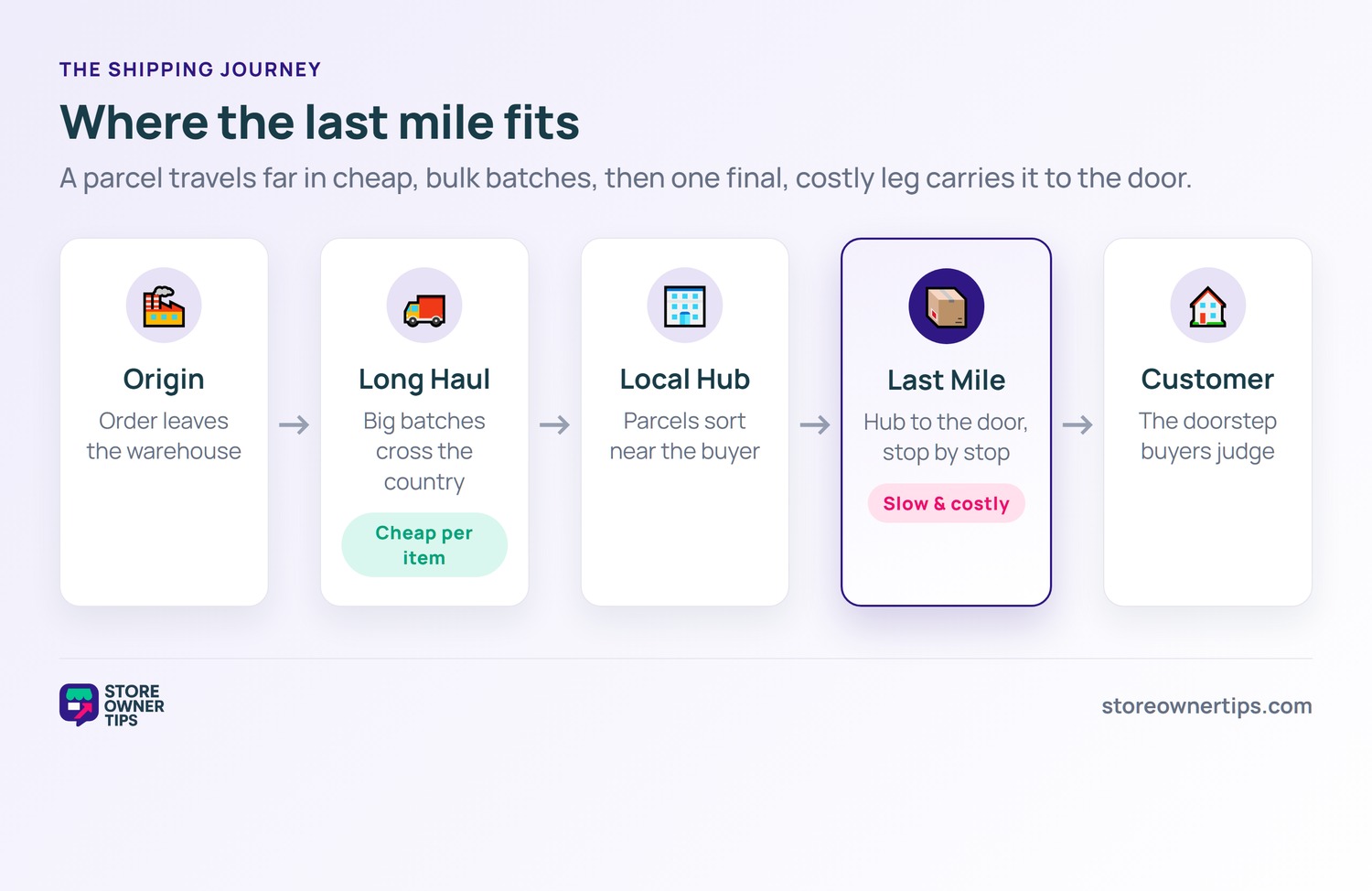
Think of it like a relay race with a final runner. The early legs cover huge distances quickly and cheaply. The final runner must weave through streets to each home. That last leg is slow, detailed, and costly.
This stage is where shipping gets personal. The buyer waits, watches tracking, and greets the parcel. So the last mile carries the most emotional weight.
The term comes from telecom and logistics history. It always means that final stretch to the user. In e-commerce, that user is your paying customer.
The last mile is expensive because it is inefficient. A truck might drive to many homes far apart. Each stop adds time, fuel, and labor for a single box.
Traffic, parking, and missed deliveries make it worse. A buyer who is not home can delay the whole route. These small snags pile up into big costs.
Cities and rural areas each bring their own pain. Dense cities mean traffic and hard parking. Rural routes mean long drives between far-flung homes.
Returns make the last mile even trickier. A failed delivery or a return doubles the trips. Each round trip adds cost and complexity.
Last-mile problems land on your brand, not the carrier. A late parcel makes the buyer blame your store. So the last mile shapes your reviews and repeat sales.
Speed expectations make this even more intense. About 63% of consumers now expect delivery within two days. A slow last mile breaks that promise and loses trust.
Delivery cost also shapes whether buyers even check out. In fact, 48% of shoppers abandon carts over high extra costs. Much of that cost comes from the pricey last mile.
A smooth last mile can even lift your average order value. Happy buyers trust you with bigger carts next time. So delivery quality feeds long-term growth.
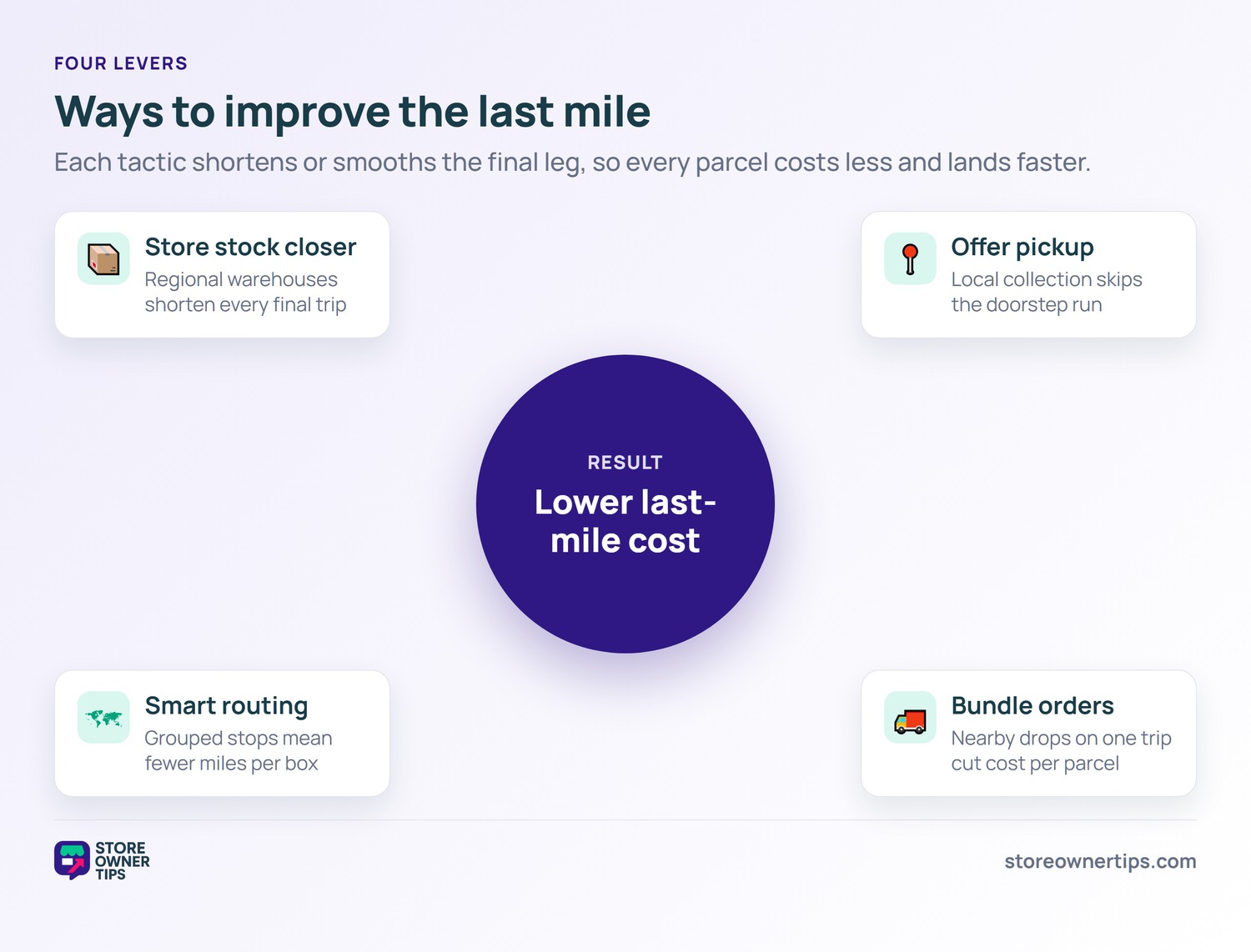
The first fix is storing stock closer to buyers. Shorter final trips cost less and move faster. That is why many brands use regional warehouses.
Offering pickup options also eases the last mile. A local pickup skips the doorstep trip entirely. That saves money and delights nearby buyers.
Smart route planning helps carriers do more per trip. Grouping nearby stops cuts driving time. Fewer miles per parcel means lower last-mile cost.
Bundling nearby orders into one trip helps too. Fewer separate runs mean lower cost per box. So density is a quiet last-mile superpower.
Stores have several ways to handle the last mile. The simplest is a major carrier like a national post. They are reliable but can be slow and pricey.
Local couriers can be faster for nearby drops. Some brands even use crowdsourced drivers for speed. Each option trades cost against control and speed.
Lockers and pickup points offer another path. The buyer collects the parcel on their own time. That skips the doorstep drop and cuts cost.
Match the option to the order and the area. Cheap ground works for patient, distant buyers. Fast couriers fit urgent, nearby ones.
Same-day delivery has reset shopper expectations. Big retailers trained buyers to expect speed. Now even small stores feel that pressure.
You do not have to match giants on every order. A fast local option for nearby buyers is enough. It signals speed without breaking your budget.
Reserve same-day for items and areas that justify it. Perishables and gifts are natural fits. Elsewhere, clear timelines matter more than raw speed.
Clear tracking is half the last-mile battle. Buyers relax when they can watch a parcel approach. Good updates cut down on anxious support messages.
A simple delivery window builds real trust. Telling a buyer the day and time eases worry. It also helps them be home to receive the box.
Photo proof of delivery adds another layer of trust. A snapshot at the door settles where-is-my-order disputes. That small feature saves hours of support work.
A few simple metrics show how your last mile performs. On-time rate tracks how often parcels arrive as promised. A high rate means happy, loyal buyers.
First-attempt success is another key number. It counts deliveries that land on the first try. Low scores point to bad windows or addresses.
Cost per delivery rounds out the picture. It shows what each doorstep drop really costs. Watching it helps you spot waste early.
Reviews also reveal last-mile health in real words. Buyers mention late or damaged parcels fast. So read them as a free delivery audit.
The first problem is the failed first attempt. A buyer who is not home forces a costly redelivery. Clear delivery windows help avoid this trap.
Another issue is poor or missing tracking. Silence makes buyers anxious and floods your inbox. Always pass tracking through to the customer.
Porch theft is a growing worry as well. A parcel left in the open can vanish fast. Photo proof and pickup options both help here.
Imagine a gourmet coffee brand called RoastRun on WooCommerce. It ships beans nationwide from one roastery. Distant deliveries arrive slowly and sometimes late.
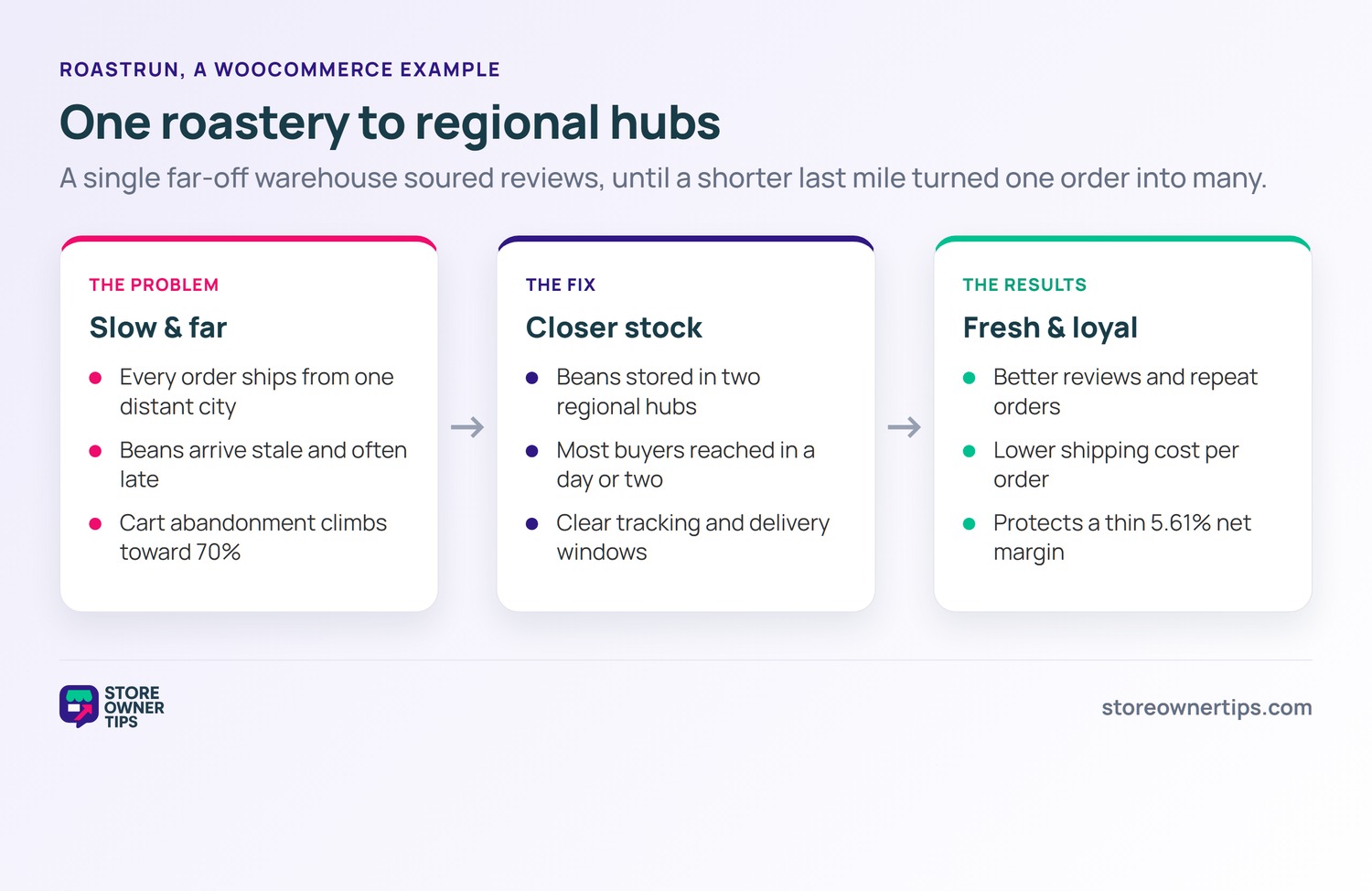
RoastRun ships every order from a single far-off city. The last mile to distant buyers takes many days. Beans arrive stale, and reviews turn sour.
Late, costly deliveries push buyers away at checkout. RoastRun watches its cart abandonment climb toward the 70.22% industry average. The slow last mile is clearly to blame.
RoastRun stores beans in two regional hubs. Now the last mile to most buyers is short. Orders arrive fresh within a day or two.
The brand also adds clear tracking and delivery windows. Buyers see exactly when their coffee will land. That visibility calms nerves and builds trust.
Fresh, fast delivery lifts reviews and repeat orders. Buyers trust the brand to deliver on time. The shorter last mile also trims shipping cost per order.
Thin margins make those savings matter a lot. General retailers average a net margin of just 5.61%. A leaner last mile protects more of every sale.
RoastRun also pairs fast delivery with a frictionless checkout. Buyers move from cart to confirmation in seconds. The lesson is clear: a short, smooth last mile turns one order into many.
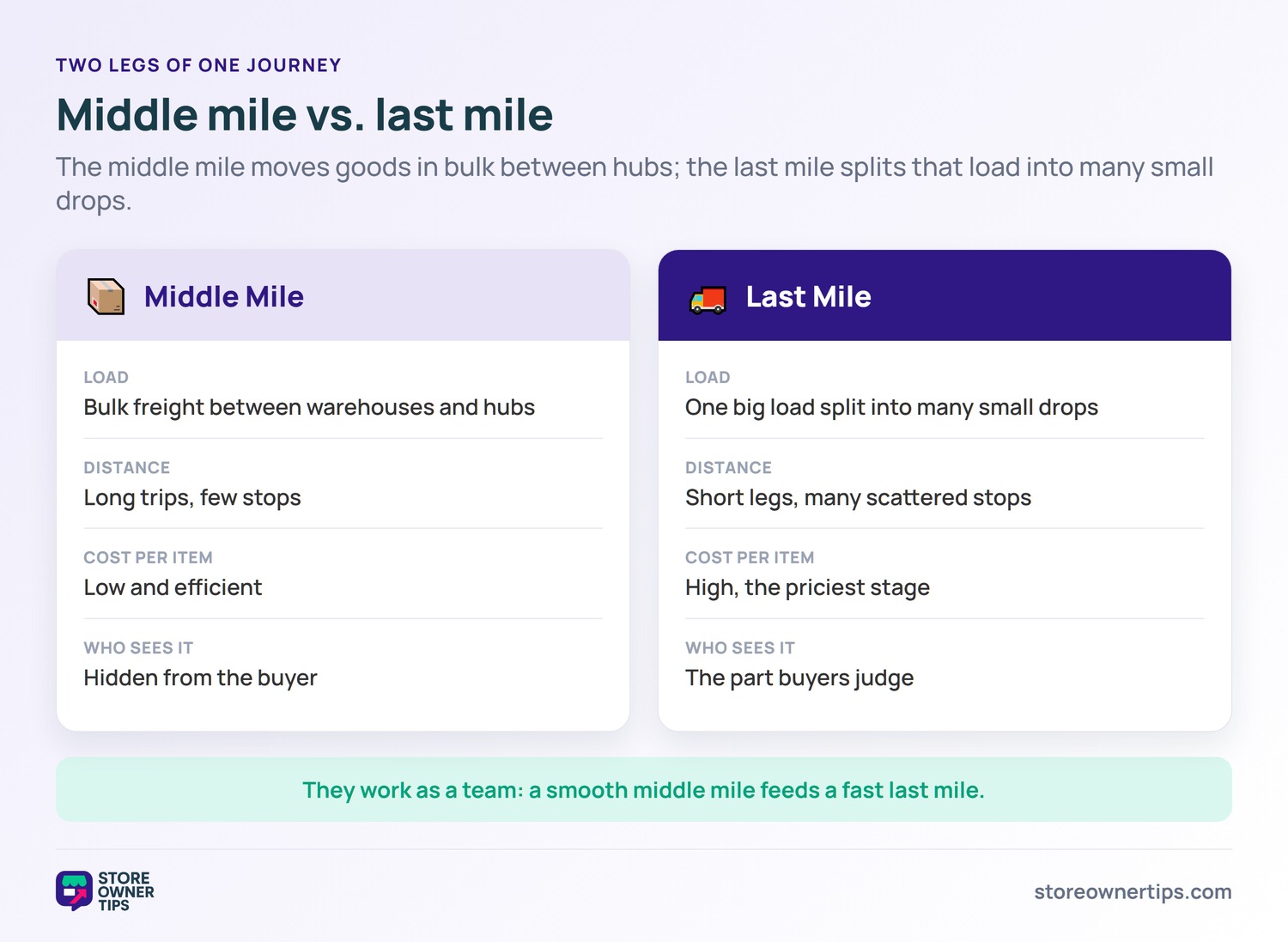
The middle mile is the leg before the last one. It moves goods in bulk between warehouses and hubs. Those trips are long but efficient and cheap per item.
Last-mile delivery is the final, personal leg. It splits one big load into many small drops. That is why it costs so much more per parcel.
The two legs work as a team in every shipment. A smooth middle mile feeds a fast last mile. Weakness in either one slows the whole journey.
Most stores focus their energy on the last mile. It is the part buyers see and judge. So small gains there pay off in loyalty.
It splits one shipment into many small, scattered drops. Each stop adds time, fuel, and labor for one box. Density and smart planning are the best ways to fight it.
Store stock closer to your buyers when you can. Offer local pickup to skip the doorstep trip. Always share clear tracking and delivery windows.
The middle mile moves goods in bulk between hubs. The last mile carries each parcel to the door. The last mile is slower and costs more per item.
Last-mile delivery is the final, personal step that defines the buyer’s experience. It is the costliest, hardest stage, yet the one shoppers judge most. Shorten it with local stock and clear tracking, and it becomes a real edge. Done well, the last mile turns one order into many.
Copyright © StoreOwnerTips.com. All Rights Reserved.
