A mystery box is a one-off product where shoppers pay a set price for items they can’t see first. Online stores sell mystery boxes mostly around the holidays and at the end of a season. The box moves surplus stock without a public markdown. The surprise itself becomes part of what the buyer pays for.
A mystery box works by packing several unrevealed items into one product with a fixed price. In WooCommerce, it’s usually set up as a simple product with its own SKU, price, and stock count. The store then picks the contents from its own inventory when it packs each order.
Mystery box pricing starts with two numbers: the box price and the stated value of what’s inside. The stated value is the total of the items’ regular prices. The box price is lower, so the buyer feels they’re getting more than they paid for.
There’s no fixed rule for the gap between the two numbers. The store’s real floor is its cost of goods, plus packing materials and any shipping it absorbs. Think of it like a restaurant’s chef’s-choice plate. The diner pays one price, and the kitchen builds the plate from what it has.
Many stores also promise a value floor, such as at least $60 worth of items. That promise gives the buyer a safety net. It also gives the packing team a clear rule for every order.
Mystery box themes shape pricing too. A tightly themed box, like “winter knitting,” feels curated and supports a higher price. A random grab bag feels riskier to the buyer, so it usually needs a bigger gap between price and value.
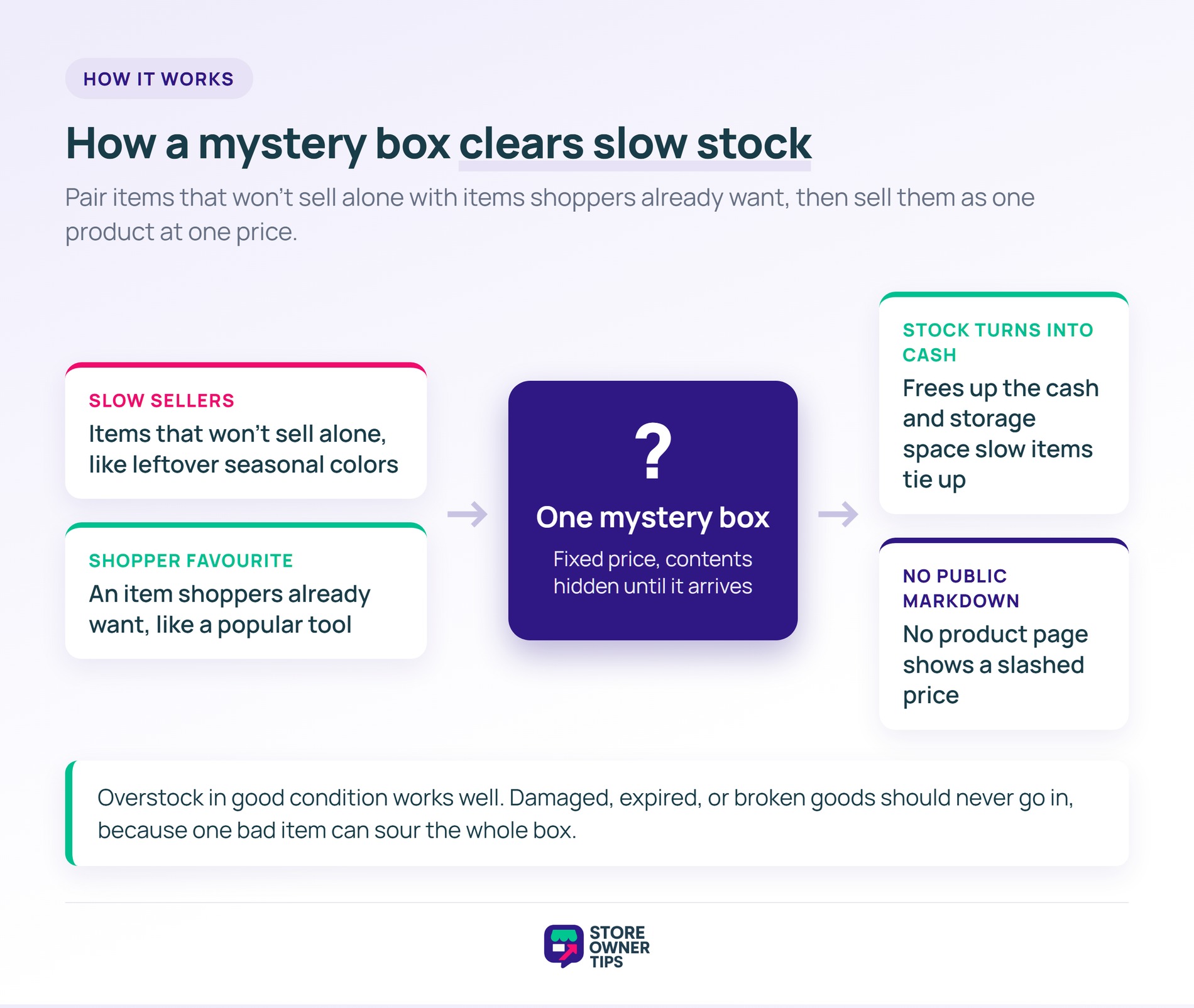
A mystery box clears slow stock by pairing items that won’t sell alone with items shoppers already want. A craft store might add a popular tool to every box, then fill the rest with leftover seasonal colors. Slow items tie up cash and storage space. Turning them into revenue frees both.
Mystery boxes suit overstock that is still in good condition, just in the wrong quantity. Leftover holiday items work well as mystery gifts that clear shelf space. Damaged, expired, or broken goods should never go in. One bad item can sour the whole box.
The bigger benefit is that no product page shows a slashed price. Holiday markdowns run deep: Adobe Analytics found online toy discounts peaked at 29.6% off listed prices in one recent season. A mystery box sidesteps that race, because the items never appear individually discounted. Plus, regular customers who paid full price don’t see the same product suddenly sitting at half off.
Mystery box buyers are paying partly for excitement, not just for the goods inside. Researchers from the University of Chicago and a Hong Kong university ran four studies with real rewards on this idea. People put in more effort for an uncertain reward than for a certain one worth more.
That effect held only when people focused on the chase, not on the final prize. A separate survey of 375 blind box buyers found uncertainty raised purchase intent mainly through emotional value. In plain terms, the unboxing moment does a lot of the selling.
A mystery box’s “worth” claim is a price comparison, so pricing rules can apply to it. In the United States, the Federal Trade Commission’s Guides Against Deceptive Pricing cover advertised price comparisons. They say a higher comparison price must be based on fact, not fictitious or misleading.
The guides are federal guidance for U.S. advertisers, and state or other national rules may add their own requirements. The safest habit is simple. Base any stated value on prices the store actually charged for a meaningful stretch of time.
A mystery box in practice is a small, planned product launch built around leftover stock. Here’s a hypothetical example. Imagine Otterbrook Craft Supply, an online shop selling yarn, ribbon, and paper craft kits.
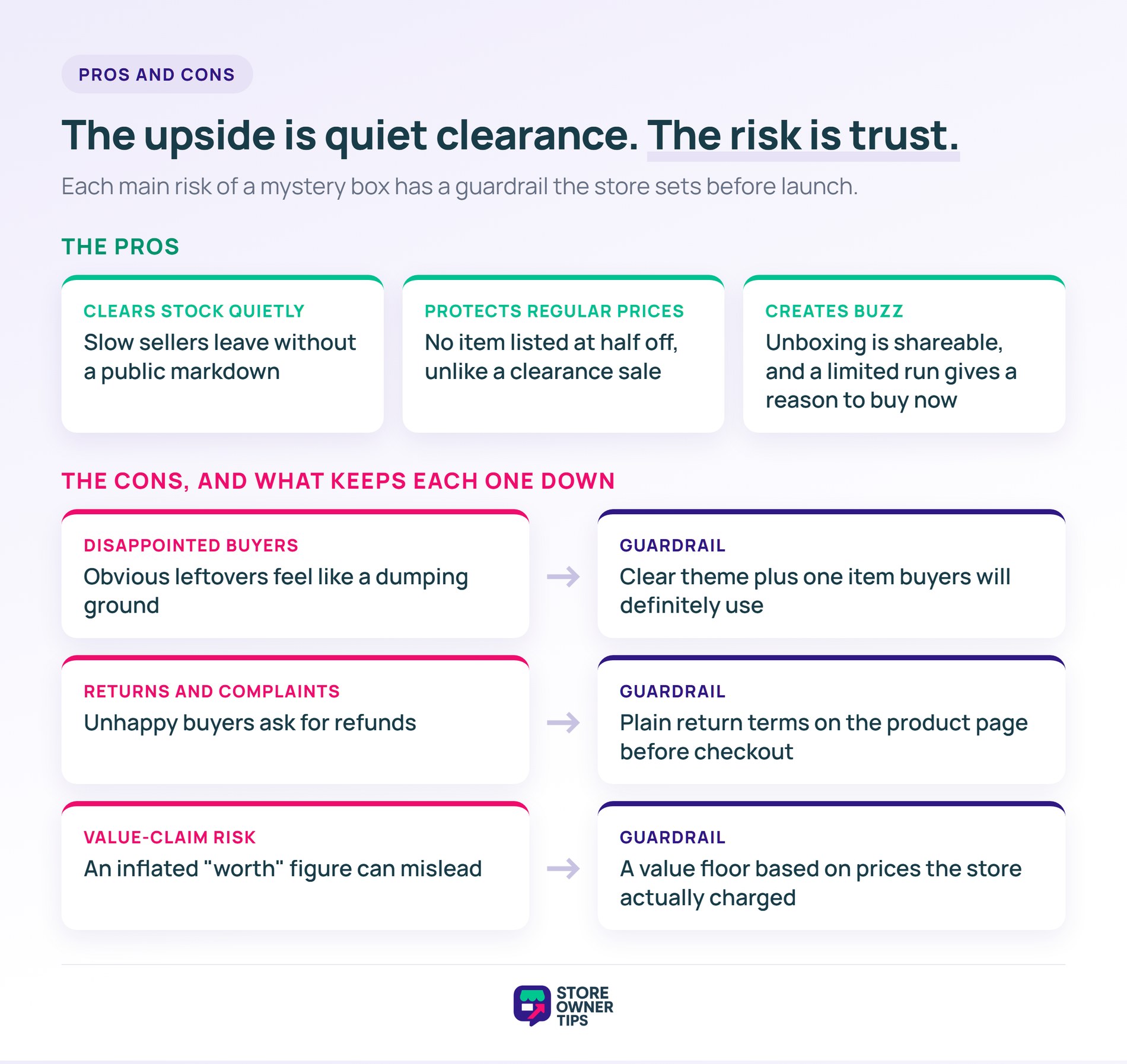
While working through its post-sale stock update, Otterbrook Craft Supply finds a problem. It still holds a pile of red and green yarn and festive ribbon. Rather than mark everything down, the owner builds 150 “Winter Maker” mystery boxes. Each box sells for $35 and promises at least $70 of items at Otterbrook’s regular prices.
Every box includes one best-selling crochet hook set, so each buyer gets something they’ll definitely use. The rest is seasonal yarn, ribbon, and a paper kit. The goods inside cost Otterbrook about $24 per box, and packing adds $3.
The owner also writes clear terms on the product page. The page lists the theme, the value floor, the general item types, and the return terms before checkout.
Otterbrook announces the boxes to its email list first, a week before they go on the public shop. The email shows a photo of a packed sample box, with a few items blurred out. The owner borrows a page from common holiday marketing ideas and caps the run at 150. A visible stock count on the product page shows how many boxes are left.
If all 150 boxes sell, Otterbrook brings in $5,250. Each box leaves $8 after goods and packing, so gross profit is $1,200. More importantly, the store has turned slow seasonal yarn into cash without a public sale.
The owner also plans for returns. Retailers expect 17% of holiday sales to be returned, according to NRF and Happy Returns. Using that as a rough guide, Otterbrook budgets for about 25 boxes coming back. Even then, the clearance goal still holds, and returned items can go into a later box.
Next season, the owner adds a short survey card to every box. The answers show which item types delight buyers and which ones feel like filler.
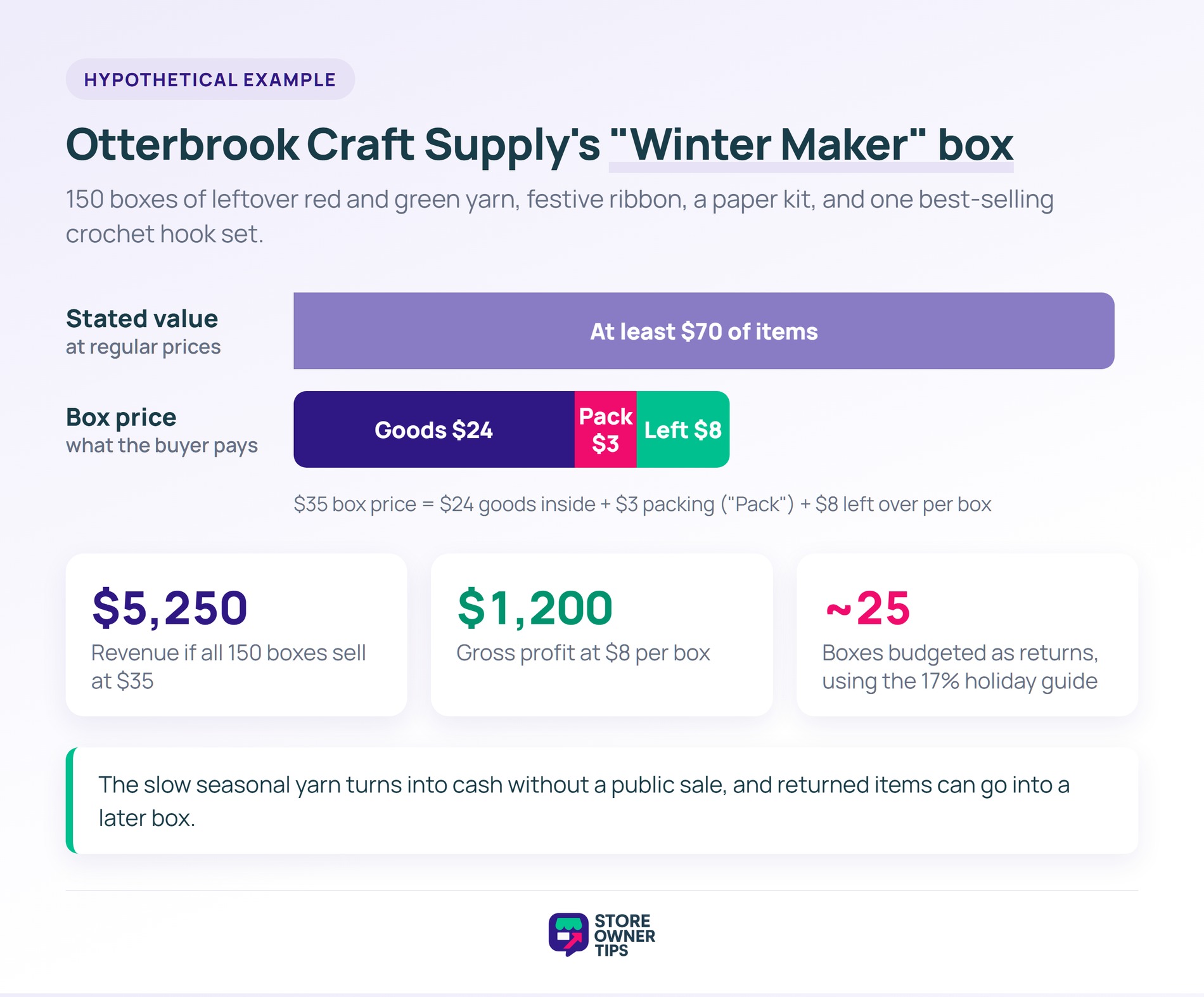
| What you’re comparing | Mystery Box | Subscription Box |
|---|---|---|
| Purchase type | One-off purchase | Recurring billing until cancelled |
| Main goal for the store | Clear surplus or seasonal stock | Build steady recurring revenue |
| Contents source | Existing inventory, often slow sellers | Items planned or bought for each cycle |
| Typical timing | Holidays and end of season | Year-round, on a fixed schedule |
A mystery box is a one-time sale, while a subscription box bills the same customer on a schedule. Pick a mystery box when the goal is clearing specific stock fast. Pick a subscription when you want predictable monthly revenue and can plan contents ahead.
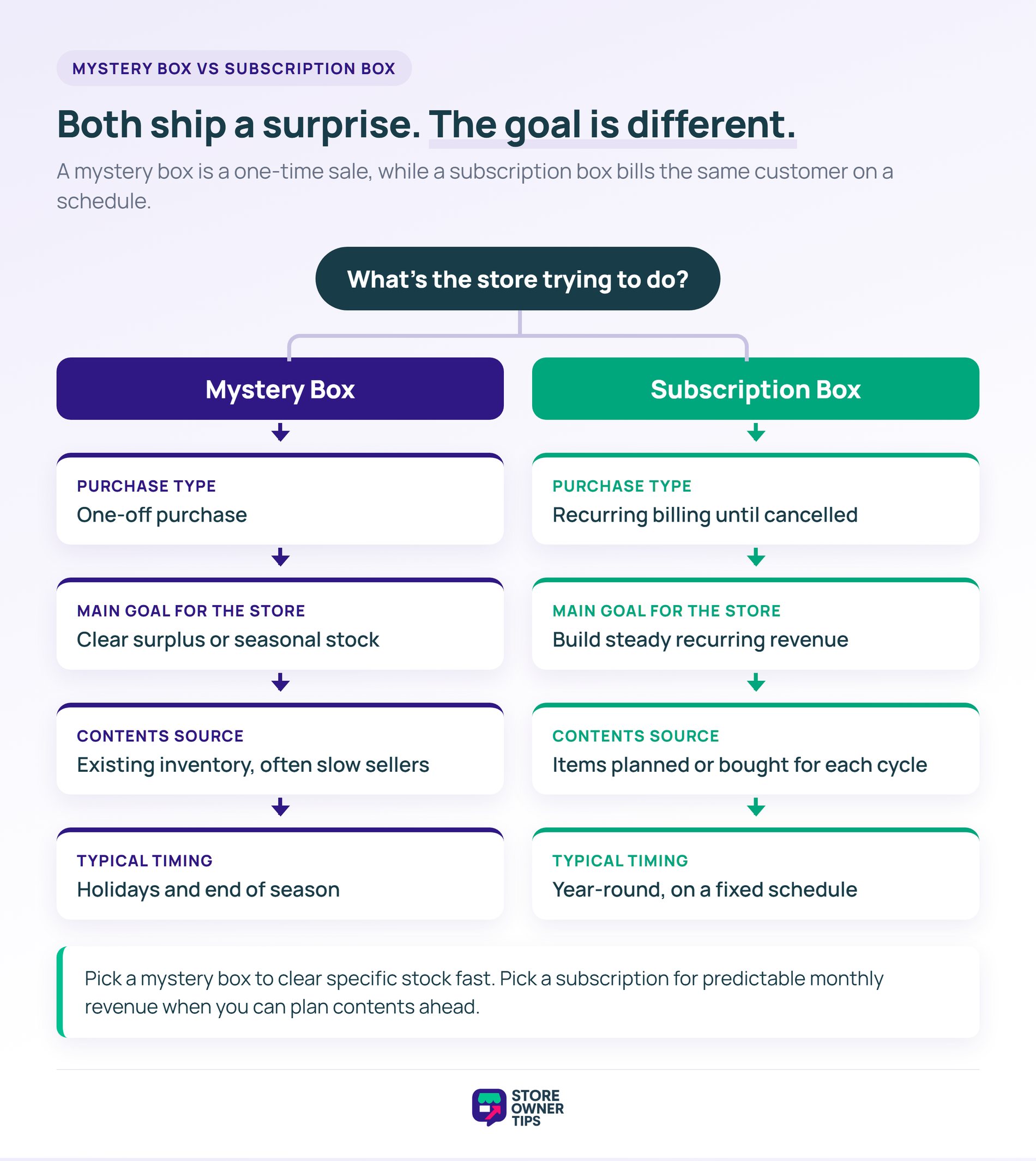
A mystery box offers fast stock clearance and fun, but it carries real trust and returns risks.
Price a mystery box by adding up the cost of the goods, packing, and any shipping you cover. Then set a price that leaves a margin but still sits well below the stated value. The stated value should use your real regular prices, not inflated ones. A value floor printed on the product page helps buyers trust the deal.
Customers can return a mystery box if your policy allows it, so decide the rule before launch. Some stores accept returns of the whole unopened box only. Others offer store credit instead of cash. Whatever you choose, show it on the product page and check your holiday return policy matches.
Mystery boxes can be a good way to clear old stock if every box still feels worth the money. Mix slow items with at least one popular product, and leave out anything damaged. For truly dead stock, a write-off or donation may be the better call.
A mystery box matters because it turns surplus stock into revenue without teaching shoppers to wait for markdowns. Done honestly, with real value claims and clear terms, it can become a seasonal tradition. Customers start to look forward to it each year, and the store gets a reliable way to reset its shelves.
Copyright © StoreOwnerTips.com. All Rights Reserved.
