A holiday return policy is an extended return window for orders placed during the holiday season. A typical version lets orders from early November come back until late January. That way, gifts can be returned after the holidays instead of expiring under the tree.
A holiday return policy works by giving seasonal orders a later return deadline than everyday orders. Think of it like a library that extends due dates over the holidays. The rules for borrowing stay the same, but nobody gets fined for being away in late December.
The business logic is simple. Gift buyers worry about choosing the wrong size, color, or style for someone else. A long return window removes that worry, so they buy sooner and with more confidence.
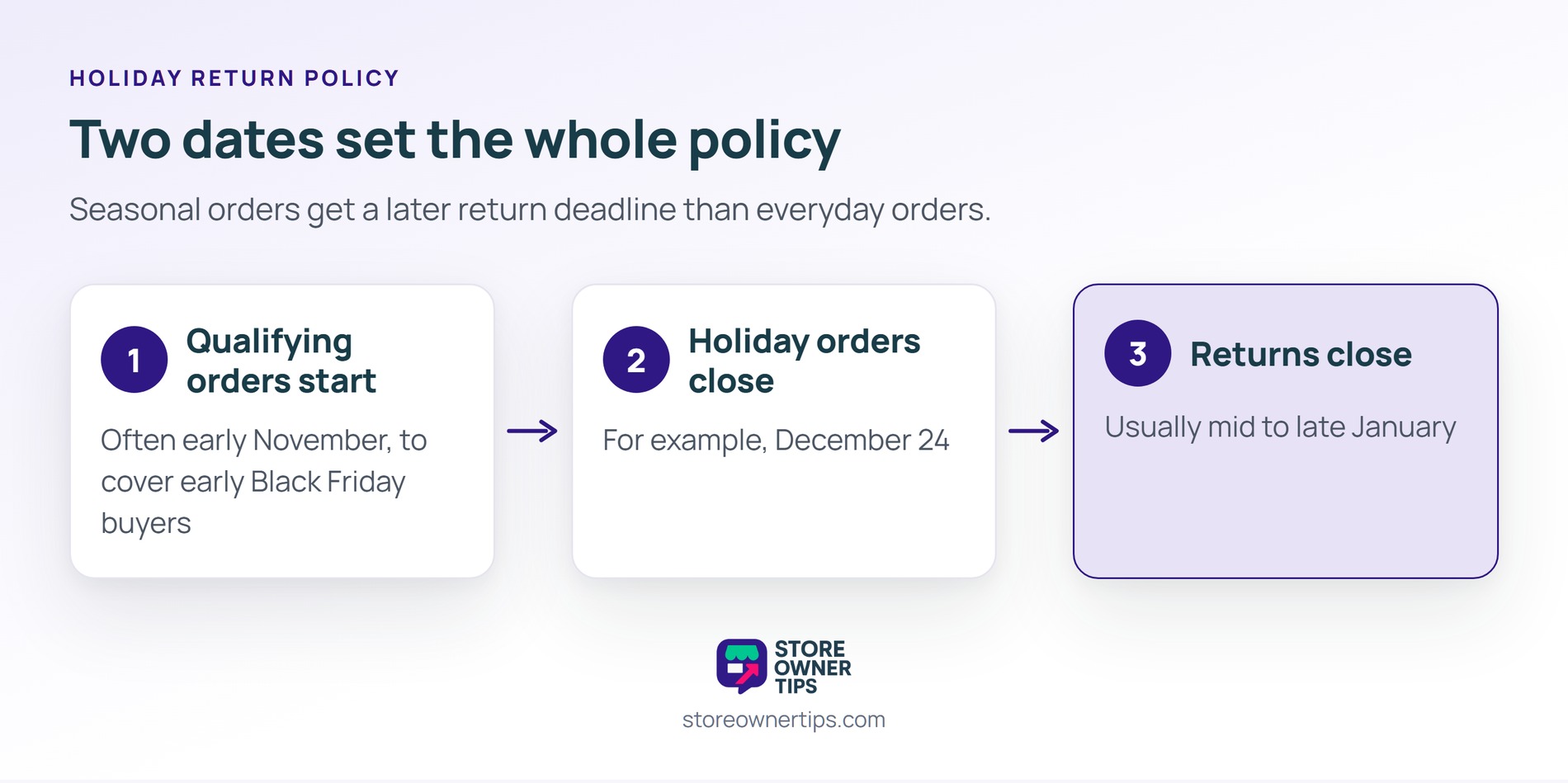
A holiday return policy starts with two dates: when qualifying orders begin and when returns close. Many stores pick early November as the start, so early Black Friday shoppers are covered. The end date usually lands in mid to late January.
WooCommerce doesn’t have a built-in return window setting. Instead, the window lives in your written policy, and your team checks order dates when a return request arrives. Some stores add a returns plugin that blocks requests outside the allowed dates automatically.
Set the dates before the rush, alongside your other after-Black Friday tasks. Write them in plain words, such as “Orders from November 1 to December 24 are returnable until January 31.”
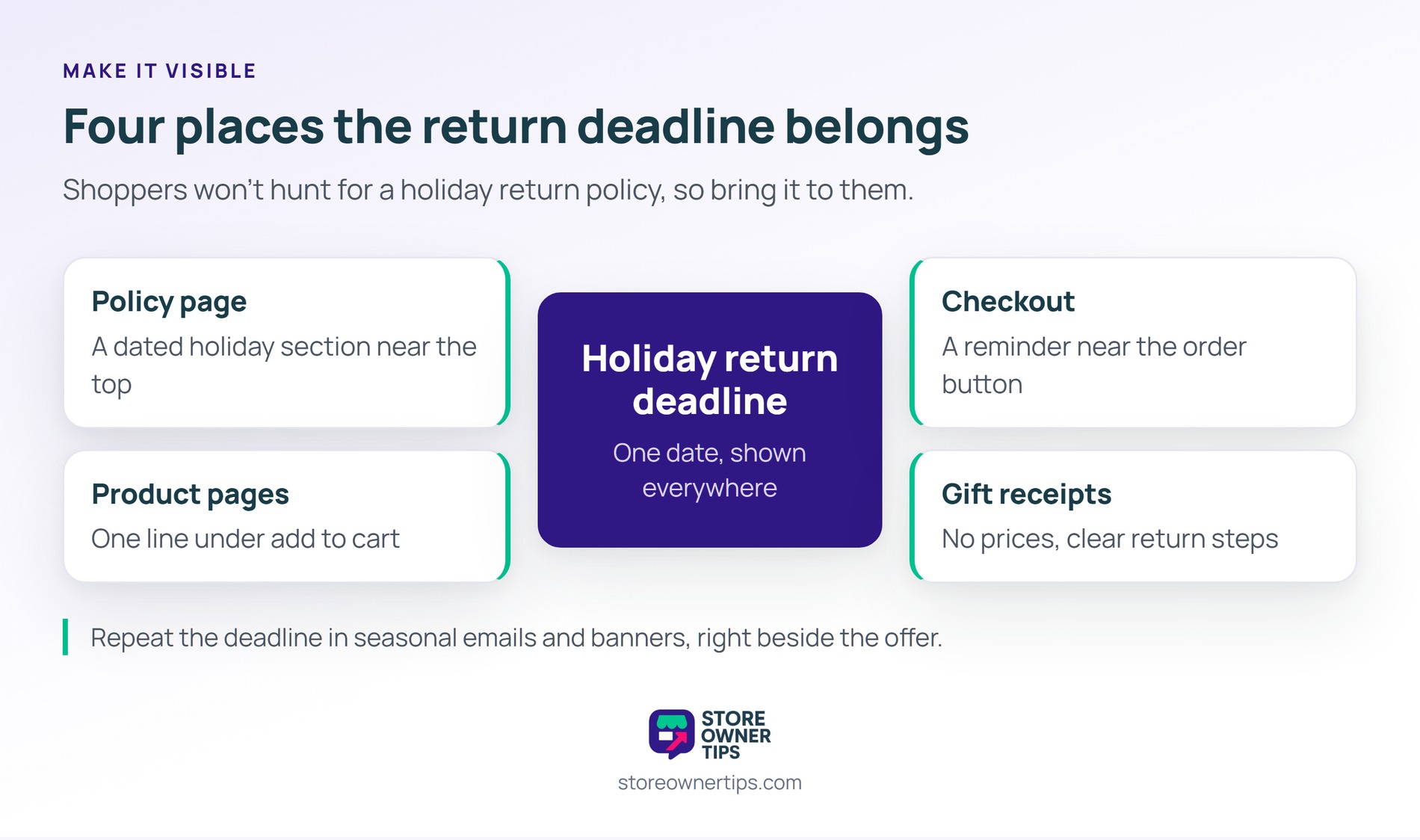
A holiday return policy needs to appear in at least four places to do its job. Shoppers won’t hunt for it, so bring it to them.
Gift receipts deserve extra care. The person returning the item is often not the buyer, so they need instructions that make sense without an account. Pair the receipt with your other gift options, like gift wrap and gift messages.
Repeat the deadline in your seasonal emails and banners. Any Christmas promotion converts better when the refund rules sit right beside the offer. A shopper who sees “Returns until January 31” beside a discount has one less reason to wait.
A holiday return policy should also say what the returner gets back. There are three common outcomes: a refund, store credit, or an exchange. Refunds go to the original payment method, which usually belongs to the gift giver, not the recipient.
For that reason, many stores offer gift recipients store credit or an exchange instead. The recipient gets something they actually want, and the revenue stays in your store. In WooCommerce, refunds are issued from the order screen, either manually or through the payment gateway.
Holiday return volume is large and steady, according to the National Retail Federation (NRF). In its returns research, retailers expected 17% of holiday sales to be returned. That same NRF report found 37% of retailers planned to extend return windows to manage holiday returns.
Fraud is the cost that rises with volume. In an earlier NRF and Appriss Retail study, retailers lost $13.70 to return fraud for every $100 in returned merchandise. The same study put fraudulent returns at 16.5% of expected holiday returns.
Staffing is the other cost. In NRF’s 2022 returns survey, nearly 44% of respondents planned to hire more staff to handle holiday returns.
A holiday return policy in practice is a set of dates, a few visible messages, and a plan for January. Here’s a hypothetical example. Imagine a small WooCommerce store called Ember & Oak that sells candles, mugs, and gift boxes.
Ember & Oak normally allows returns within 30 days. For the holidays, orders placed from November 1 to December 24 can be returned until January 31. The owner adds a holiday section to the returns page and a short line under every add-to-cart button.
Each gift order ships with a gift receipt that hides prices. It lists the January 31 deadline and offers store credit or an exchange without needing the buyer’s account. Refunds to the original card are still available, but only to the person who placed the order.
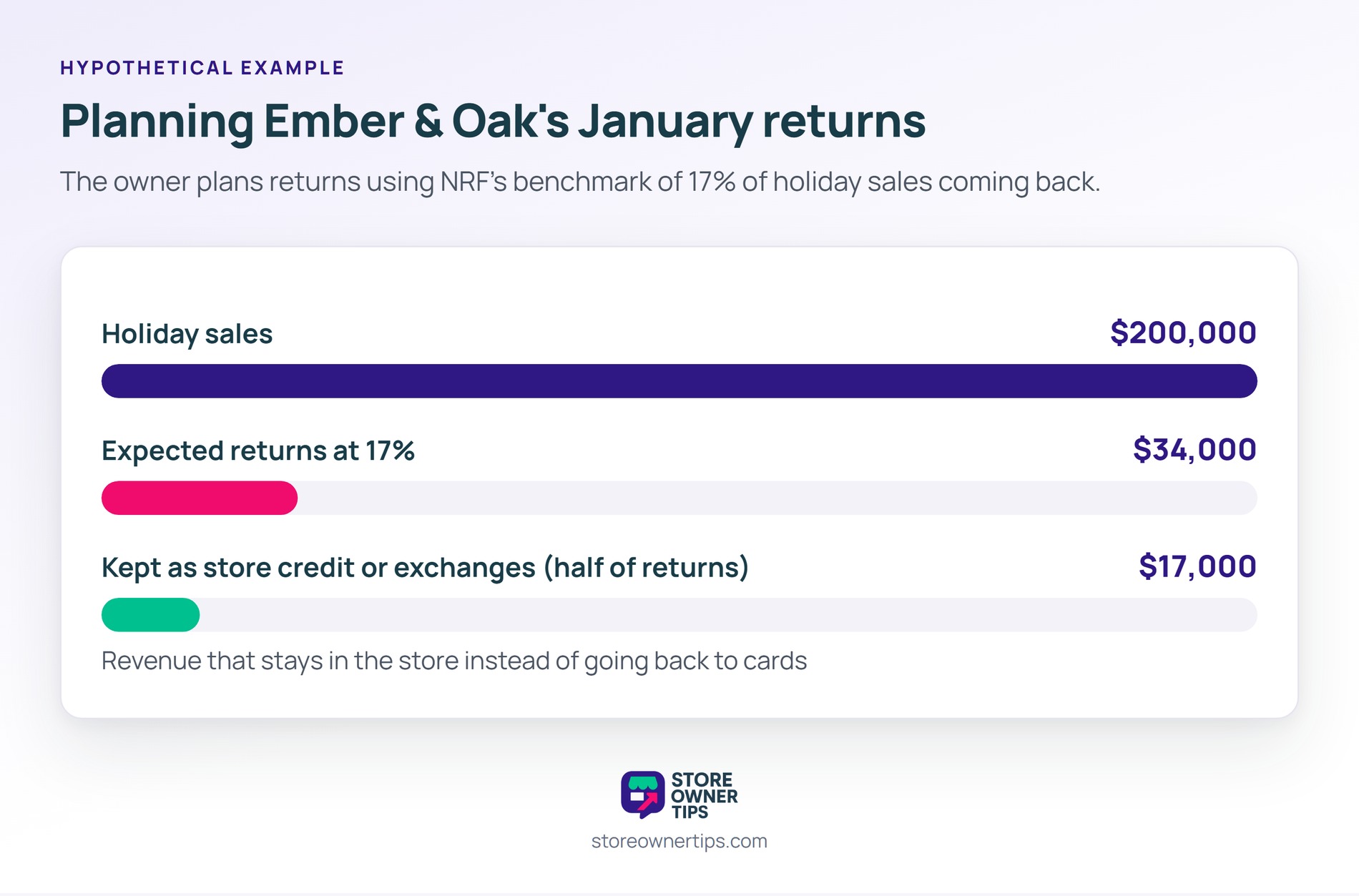
Say Ember & Oak makes $200,000 in holiday sales. Using NRF’s benchmark of 17% of holiday sales returned, the owner plans for about $34,000 in returns. Most of those arrive in the opening three weeks of January.
Now suppose half of those returns become store credit or exchanges instead of refunds. That keeps about $17,000 in the business rather than sending it back to cards. Many recipients also spend a little more than their credit, which adds new January revenue.
Meanwhile, the owner budgets for fraud. NRF’s research suggests some returns will be fraudulent, so the team inspects every item before issuing credit. Ember & Oak also books extra packing help for January, so returns don’t pile up for weeks.
Ember & Oak treats every January return as a fresh sale. Each recipient who takes credit gets a welcome email with the credit balance and a few product picks. The owner uses the store credit refund button from the Christmas sale setup to issue credit quickly.
Some returns come with complaints, like a late package or a damaged mug. Ember & Oak answers those within a day with a clear fix and a small goodwill credit. A prompt, sincere reply is the core of good customer recovery. It keeps an annoyed recipient from leaving a bad review.
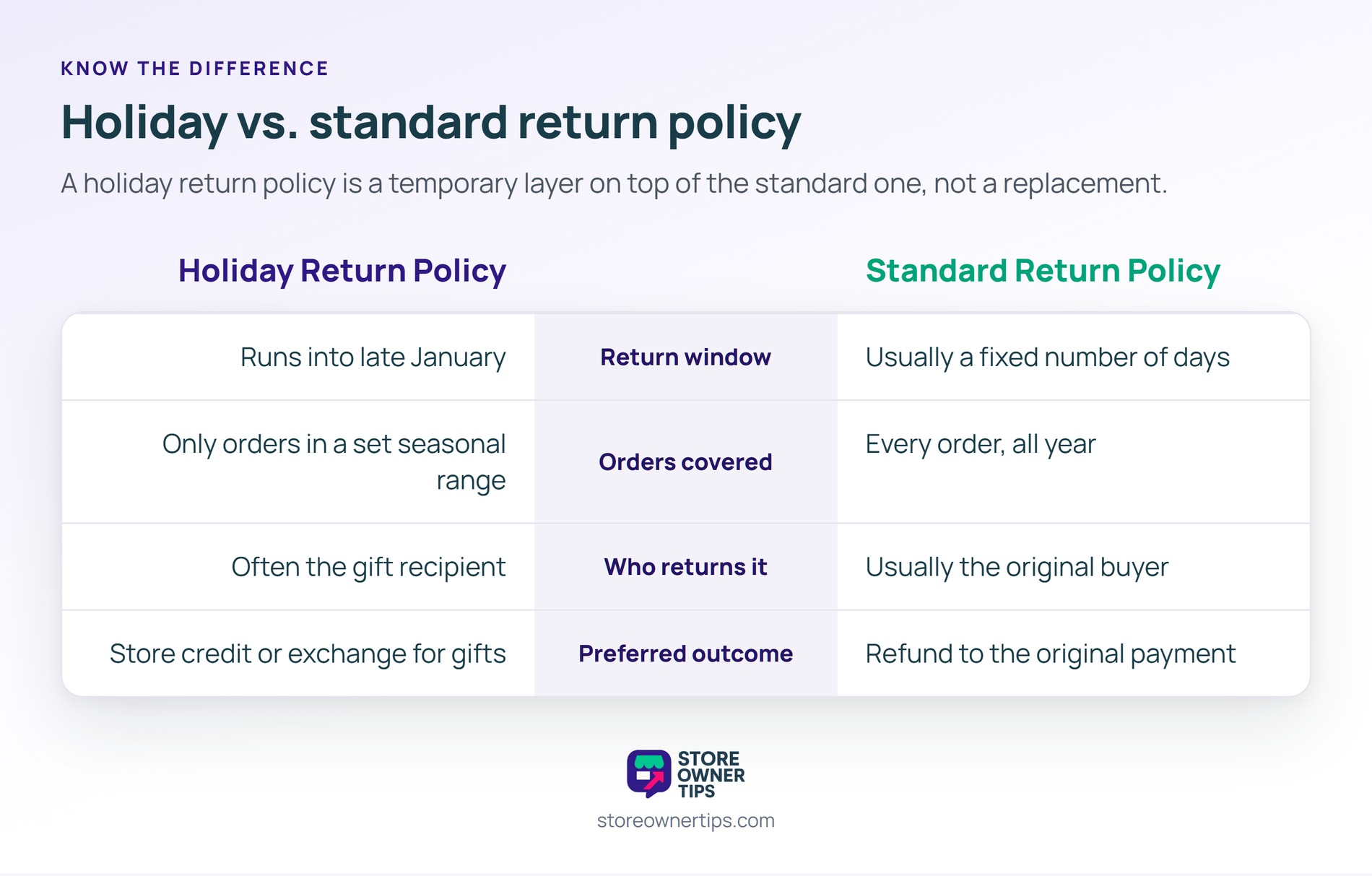
| What you’re comparing | Holiday Return Policy | Standard Return Policy |
|---|---|---|
| Return window | Runs into late January | Usually a fixed number of days |
| Orders covered | Only orders in a set seasonal range | Every order, all year |
| Who returns it | Often the gift recipient | Usually the original buyer |
| Preferred outcome | Store credit or exchange for gifts | Refund to the original payment |
A holiday return policy is a temporary layer on top of a standard return policy, not a replacement. Most stores should keep their standard policy all year and switch on the holiday window for gift season. If you sell few giftable products, the standard policy alone may be enough.
A holiday return policy usually covers orders from early November and accepts returns until mid or late January. That gives gift recipients a few weeks after the holidays to decide. Choose an end date your team can actually handle, then state it clearly everywhere.
A window that ends too early defeats the purpose. A window that runs into March ties up stock and cash for months.
Yes, you can offer store credit or exchanges for holiday returns, as long as your policy states it upfront. Many stores give gift recipients credit while still letting the original buyer request a refund. Check your local consumer laws, since some places require a cash refund option.
Gift recipients usually need a gift receipt or order number to return a holiday gift. The receipt proves the purchase without showing the price. Without one, many stores offer only store credit at the current selling price.
Printing the order number on every gift receipt avoids most of these disputes. It lets your team find the original order in seconds.
A holiday return policy matters because gift buyers spend more freely when the risk of a wrong choice disappears. It also turns each unwanted gift into a chance to win a new customer. Plan your returns management for January before the season starts. A store that sets clear dates and messaging early sells more gifts with fewer surprises.
Copyright © StoreOwnerTips.com. All Rights Reserved.
