Weekly ecommerce tips, deals & news.
A reorder point is the stock level that tells you it is time to order more. When a product drops to that number, you place a new order. It is set so fresh stock arrives just before you run out. Think of it like the low-fuel light on your dashboard, a signal to refill before empty.
The reorder point is a simple but powerful number. It marks the moment to reorder a product. Hit it, and you place your next order.
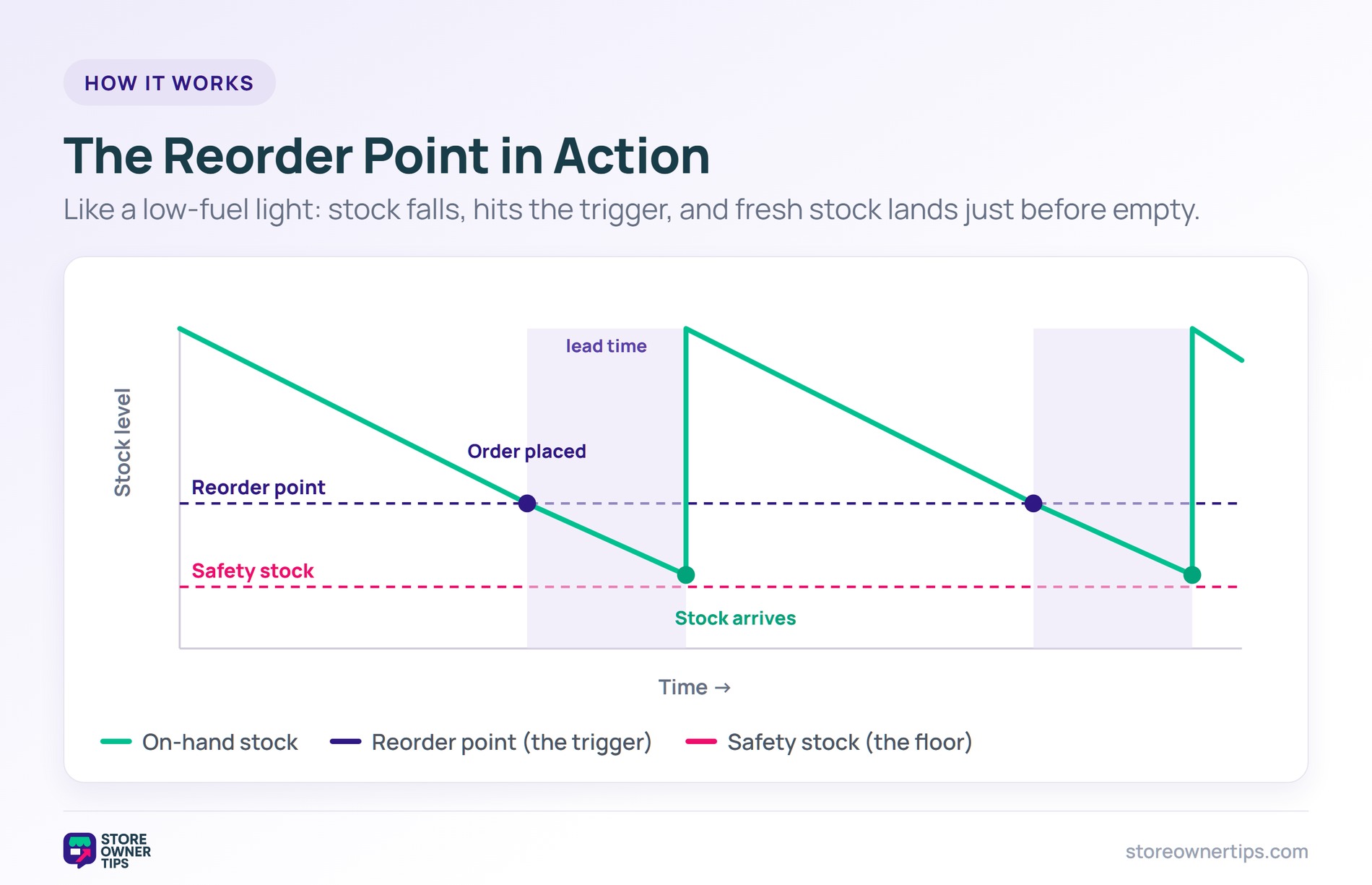
Think of it like the low-fuel light in a car. The light comes on with enough gas to reach a station. The reorder point works the same way for stock.
The aim is smooth, just-in-time restocking. New stock should arrive right as the old runs low. Get it right, and you never sit empty.
A reorder point is not a one-time setting. It shifts as your sales and suppliers change. Treat it as a living number, not a fixed one.
The reorder point blends two simple pieces. First is the demand you expect during the restock wait. Second is your safety stock buffer.
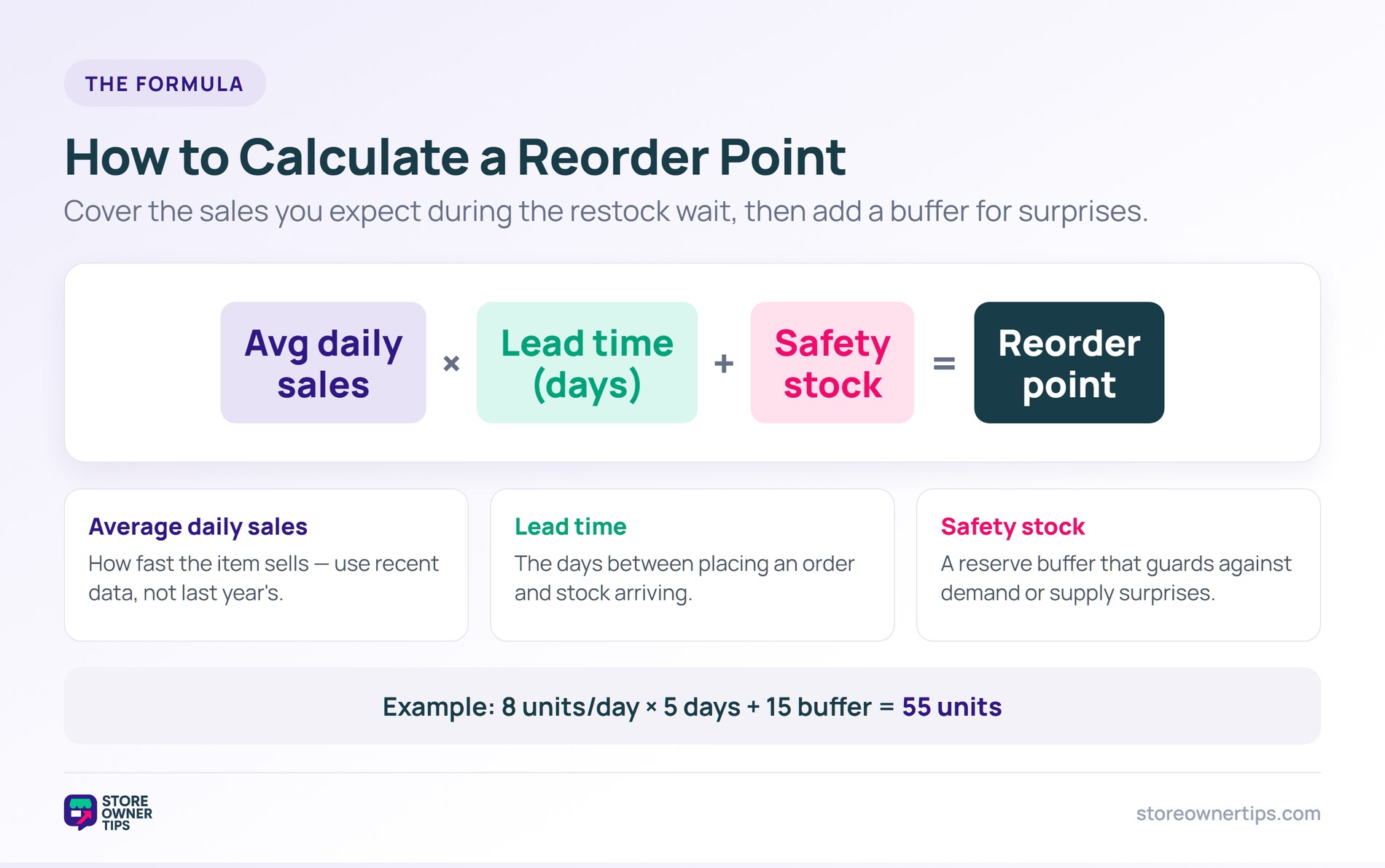
The math is straightforward. Multiply your average daily sales by the lead time in days. Then add your safety stock on top.
That total is your reorder point. It covers normal sales during the wait. The buffer guards against any surprise on top.
Keep your inputs honest for an accurate point. Use recent sales, not last year’s. Fresh data keeps the trigger on target.
On WooCommerce, the reorder point lives as a low-stock alert. You set the alert level to your reorder number. The store then warns you the moment stock hits it.
That alert is your cue to place an order. You act while stock still covers the lead time. A good WooCommerce inventory management setup tracks these levels for you.
WooCommerce and Shopify both support low-stock alerts. You set a threshold for each product. That makes the reorder point easy to automate.
A good reorder point prevents both extremes. Order too late, and you stock out and lose sales. Order too early, and cash piles up in excess stock.
Stockouts are especially costly. A sold-out item pushes buyers toward the 70.22% who abandon. A timely reorder keeps that sale yours.
It also protects fast delivery promises. About 63% of consumers expect delivery within two days. You can only ship quickly from stock you have.
A back-in-stock notification can backstop a miss too. If a point fails and stock runs out, alert waiting buyers. That recovers some sales while you restock.
One reorder point cannot fit every item. A fast seller hits its point quickly. A slow mover sits far above its trigger for weeks.
So calculate a point for each product. Use that item’s own sales speed and lead time. The number should reflect its real behavior.
Review the points as conditions change. A surge in sales lifts the trigger. A faster supplier lowers it.
Lead time is the heart of the reorder point. It is the wait between ordering and receiving stock. The longer that wait, the higher your point must be.
A short lead time lets you reorder later. Stock arrives fast, so you need less in reserve. A long lead time forces an earlier trigger.
Unreliable lead times demand extra caution. If a supplier varies, lean on a bigger buffer. That keeps a late shipment from causing a stockout.
Track your actual lead times over time. Suppliers rarely hit the exact same day. An average of recent deliveries works best.
The reorder point also shapes your cash flow. Order too early, and cash locks up in stock. Order too late, and you lose sales.
A well-set point hits the sweet spot. You hold just enough to bridge the lead time. Cash stays free until you truly need stock.
This timing matters most for pricey items. A high-value product ties up lots of cash, and with margins near 5.61%, that bite stings. A tight reorder point keeps that money working.
Balance the reorder size too. Bigger orders cut per-unit cost but lock up cash. Find the order size that fits your budget.
Manual reorder checks waste hours each week. Automated alerts do the watching for you. The system flags each item as it hits its point.
Some setups can even draft the purchase order. You review and approve instead of calculating. That speed keeps restocks from slipping.
Automation also reduces human error. No more forgotten counts or missed triggers. The reorder happens like clockwork.
Even simple automation pays off fast. A basic alert beats a manual count. Start small, then add smarts over time.
A reorder point can drift out of date fast. A sales spike makes an old point too low. A new supplier changes the lead time.
So recalculate when key inputs shift. A seasonal surge is one clear trigger. A supplier change is another.
A quick review each quarter keeps points sharp. You catch drift before it causes a stockout. Small tune-ups beat big surprises.
The first mistake is using a flat number for all items. That ignores each product’s unique demand. Tailor the point to every item instead.
Another trap is forgetting the lead time. A point with no lead-time math reorders too late. Always build the wait into the number.
A third slip is never revisiting the points. Sales and suppliers shift over time. A stale trigger soon misfires.
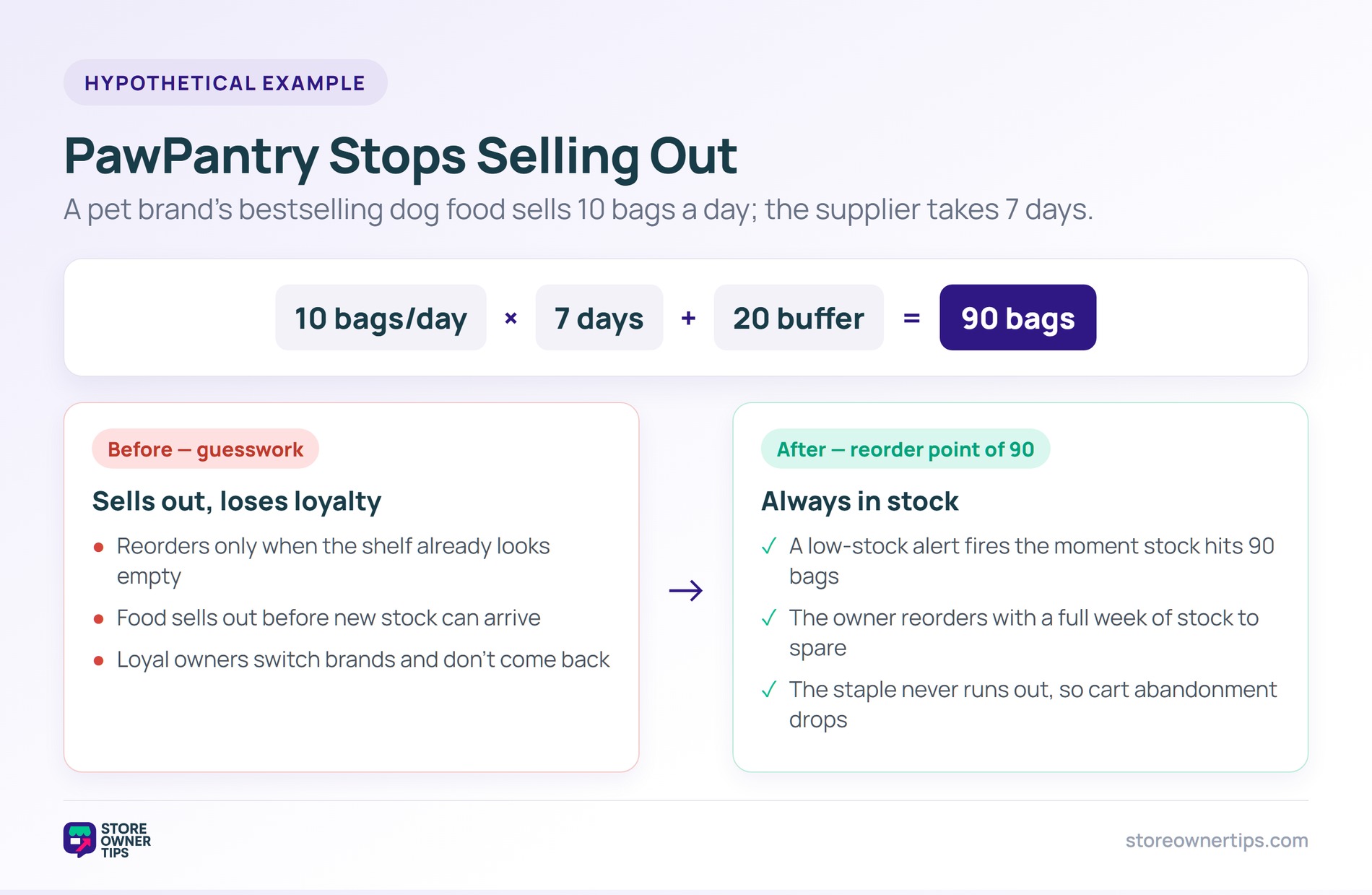
Imagine a pet brand called PawPantry on WooCommerce. Its top dog food sells about ten bags a day. The supplier takes seven days to deliver.
PawPantry reorders only when the shelf looks empty. By then, it is already too late. The food sells out before new stock arrives.
Each gap means lost sales of a staple item. Loyal owners switch brands when it is gone. The store keeps bleeding repeat revenue.
PawPantry sets a real reorder point for the food. Ten bags a day over seven days is seventy bags. It adds a twenty-bag buffer for safety.
So the reorder point becomes ninety bags. A low-stock alert now fires at that level. The owner reorders with a week of stock to spare.
The dog food never runs out again. New stock lands just as the shelf gets low. Loyal owners always find their staple ready.
PawPantry also sees its cart abandonment drop on the food. The page is always ready to buy. The lesson is clear: a smart reorder point keeps stock just right.
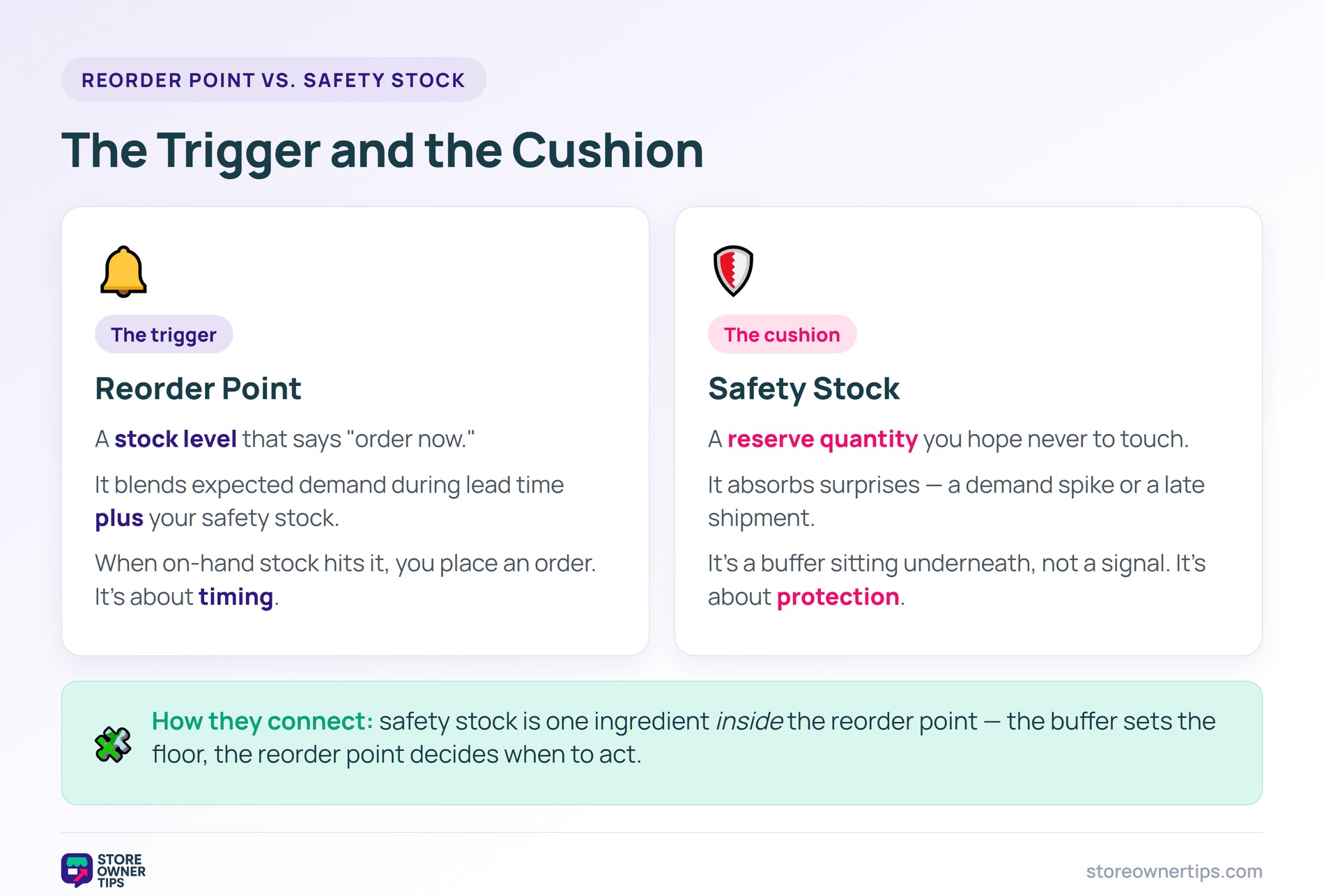
The reorder point and safety stock are easy to confuse. They work together but play different roles. One is a trigger, the other is a cushion.
The reorder point is a stock level that says order now. It includes demand during lead time plus the buffer. When stock hits it, you act.
Safety stock is the buffer sitting underneath. It is the reserve you hope never to touch. It is a quantity, not a signal.
So safety stock is one ingredient in the reorder point. The buffer protects the floor. The reorder point decides the timing.
Multiply your average daily sales by the lead time in days. Then add your safety stock to that figure. Recheck the math whenever sales shift.
No, each item sells at its own speed. Lead times also vary by supplier. Group similar items to keep the work manageable.
Safety stock is the buffer you hold in reserve. The reorder point is the level that triggers an order. The reorder point includes that safety stock.
A reorder point is the trigger that tells you exactly when to restock. Set it from your demand, lead time, and safety stock, and new stock arrives right on time. Tune each product’s point, review it often, and you avoid both stockouts and waste. Done well, restocking runs on autopilot.
Copyright © StoreOwnerTips.com. All Rights Reserved.
