Weekly ecommerce tips, deals & news.
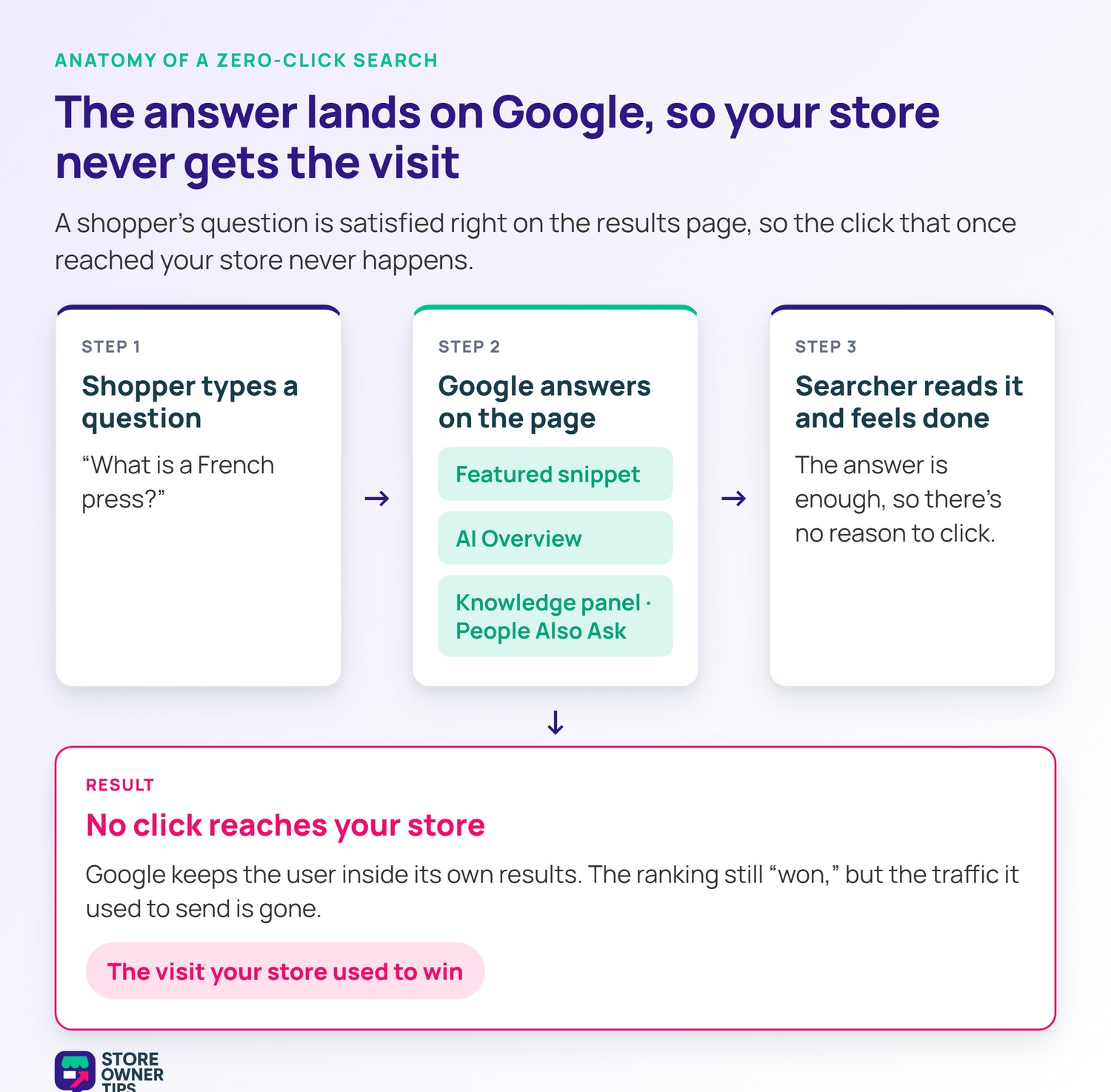
A zero-click search is a search that gets answered right on the results page. The shopper types a question and reads the answer in a featured snippet, an AI Overview, or a knowledge panel. Then they move on, and no website gets a visit. Google keeps the user inside its own results, so your store never sees that traffic.
Think of Google like a helpful librarian. You used to ask a question, and the librarian pointed you to a book. Now the librarian just reads you the answer out loud. You never walk to the shelf, and the book never gets opened. That is a zero-click search in a nutshell.
This is not the same thing as zero-click commerce. That term describes buying something without leaving a platform. Zero-click search is about search behavior, where the answer is served before any click happens. One is about transacting, and the other is about finding information.
Google fills the top of its results with answer boxes. A featured snippet pulls a paragraph or list straight from a page. A knowledge panel shows facts about a brand or product. People Also Ask boxes expand to reveal more answers.
AI Overviews go even further. They write a fresh summary by blending several sources into one block. The searcher reads it and feels done. As a result, the link below it gets ignored, and your store loses a visit it once owned.
These answers tend to win on simple, factual queries. Think “what is a French press” or “how many grams in a cup.” Those informational searches used to feed your blog traffic. Now Google often handles them in-house.
Shoppers want answers fast, with the least effort possible. Psychologists call this the path of least resistance. If Google hands over the answer instantly, clicking a link feels like extra work.
This is great for the searcher and tricky for store owners. The same convenience that pleases your customer can starve your store of visits. So the smart play is to be the brand inside that answer, not the link that gets skipped.
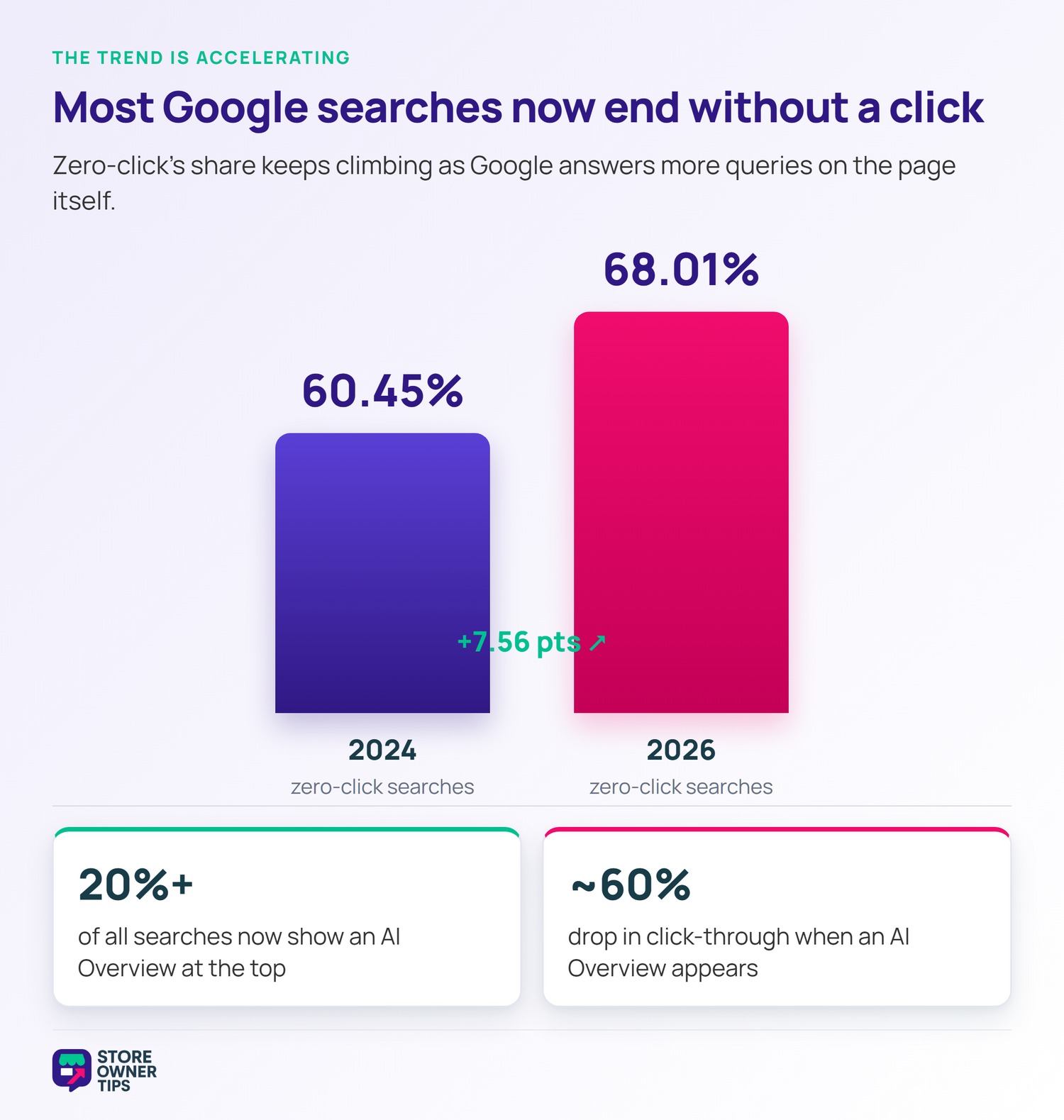
The numbers tell a clear story. In early 2026, a striking 68.01% of Google searches ended without a click. That figure stood at 60.45% just two years earlier.
AI Overviews are a big reason why. They now show up on more than 20% of all searches. When one appears, click-through rates fall by nearly 60%. For store owners, that means less free organic traffic from the same rankings.
The trend has been climbing for years, not months. Google keeps adding new ways to answer queries on the page. Each new feature trims a little more traffic from the open web. For a WooCommerce store, that slow squeeze adds up across every product and blog page you rank for.
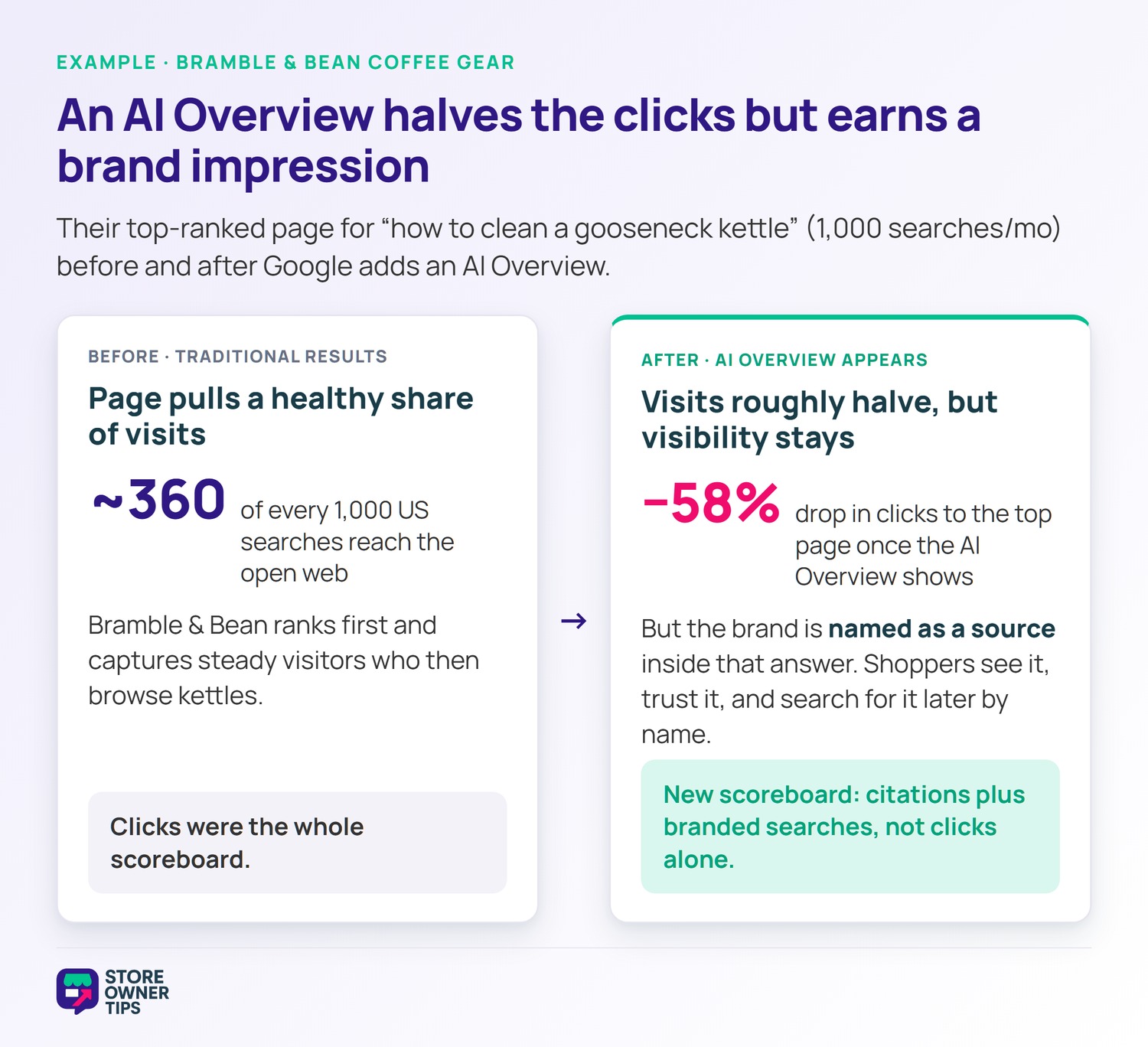
Imagine a mid-sized brand called Bramble & Bean that sells pour-over coffee gear. Their blog ranks first for “how to clean a gooseneck kettle.” For years, that page pulled steady visitors who then browsed kettles.
Say that keyword brings 1,000 searches a month. Under older patterns, only about 360 of every 1,000 US searches reached the open web. Bramble & Bean still captured a healthy share of those visits.
Then Google starts showing an AI Overview for that query. It summarizes the cleaning steps right on the page. Because an AI Overview can cut the top page’s clicks by about 58%, Bramble & Bean’s visits roughly halve.
Here is the upside, though. Bramble & Bean is named as a source inside that AI Overview. Shoppers see the brand, trust it, and search for it later by name. The click did not come today, but the brand impression did.
Bramble & Bean stops measuring that page by clicks alone. Instead, they track how often the brand gets cited and how branded searches grow over time. They also shift the page to answer deeper questions a quick summary cannot cover.
The lesson is steady, not dramatic. They lost some easy clicks but kept their visibility. Over time, the brand exposure feeds repeat shoppers who skip search entirely and come straight to the store.
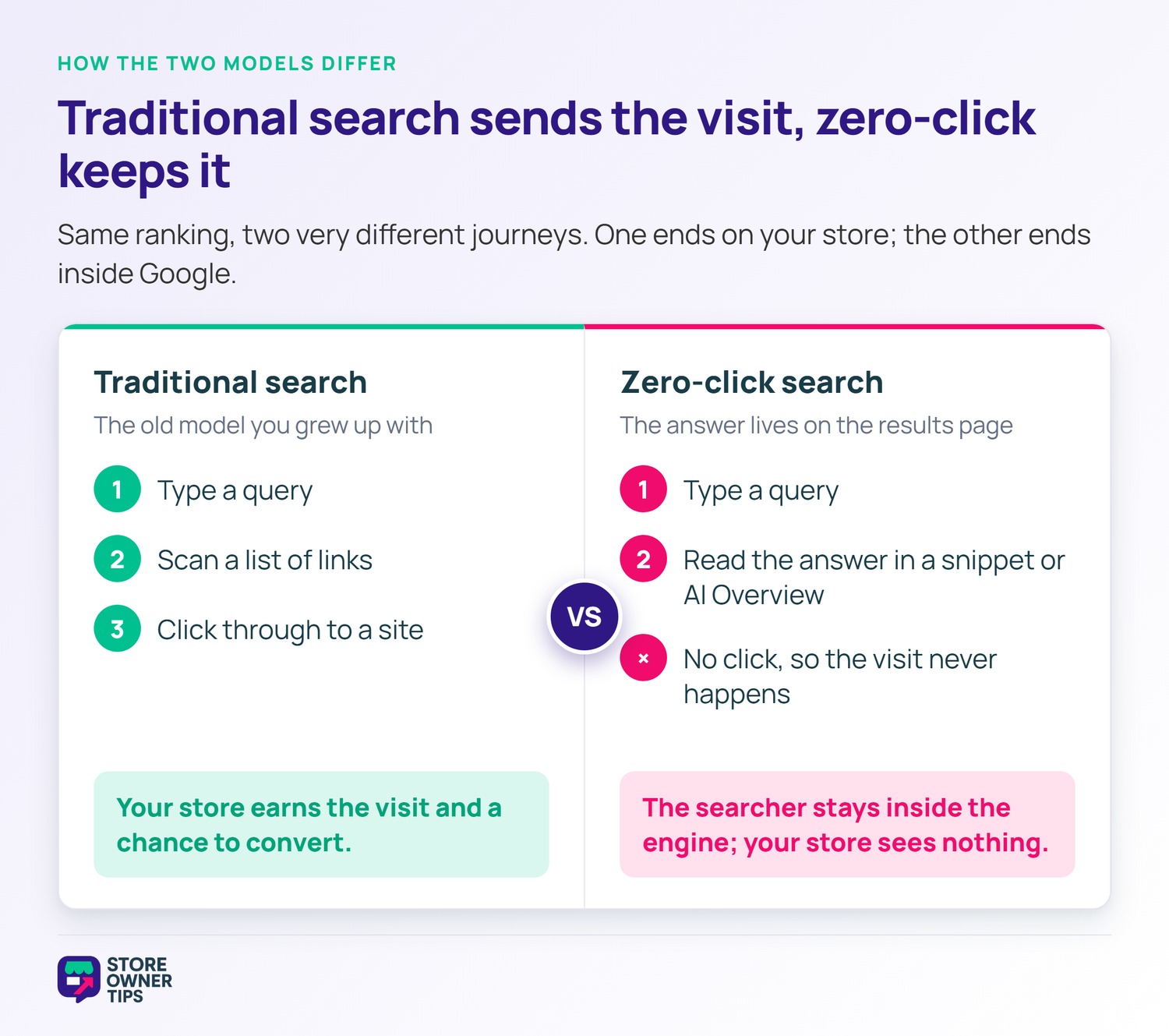
Traditional search is the old model you grew up with. You type a query, scan a list of links, then click through to a site. The website earns the visit and the chance to convert.
Zero-click search flips that. The answer lives on the results page, so the visit never happens. The core difference is simple. Traditional search sends people to your store, while zero-click search keeps them inside the engine.
This matters for your strategy. You cannot only chase the click anymore. You also have to win the on-page answer, so your brand shows up even when nobody leaves Google.
It also reshapes how you plan content. Pure fact-based posts may earn fewer visits now. Pages that solve a real problem or sell a product still tend to pull the click. So aim your effort at the deeper content a quick answer box cannot replace.
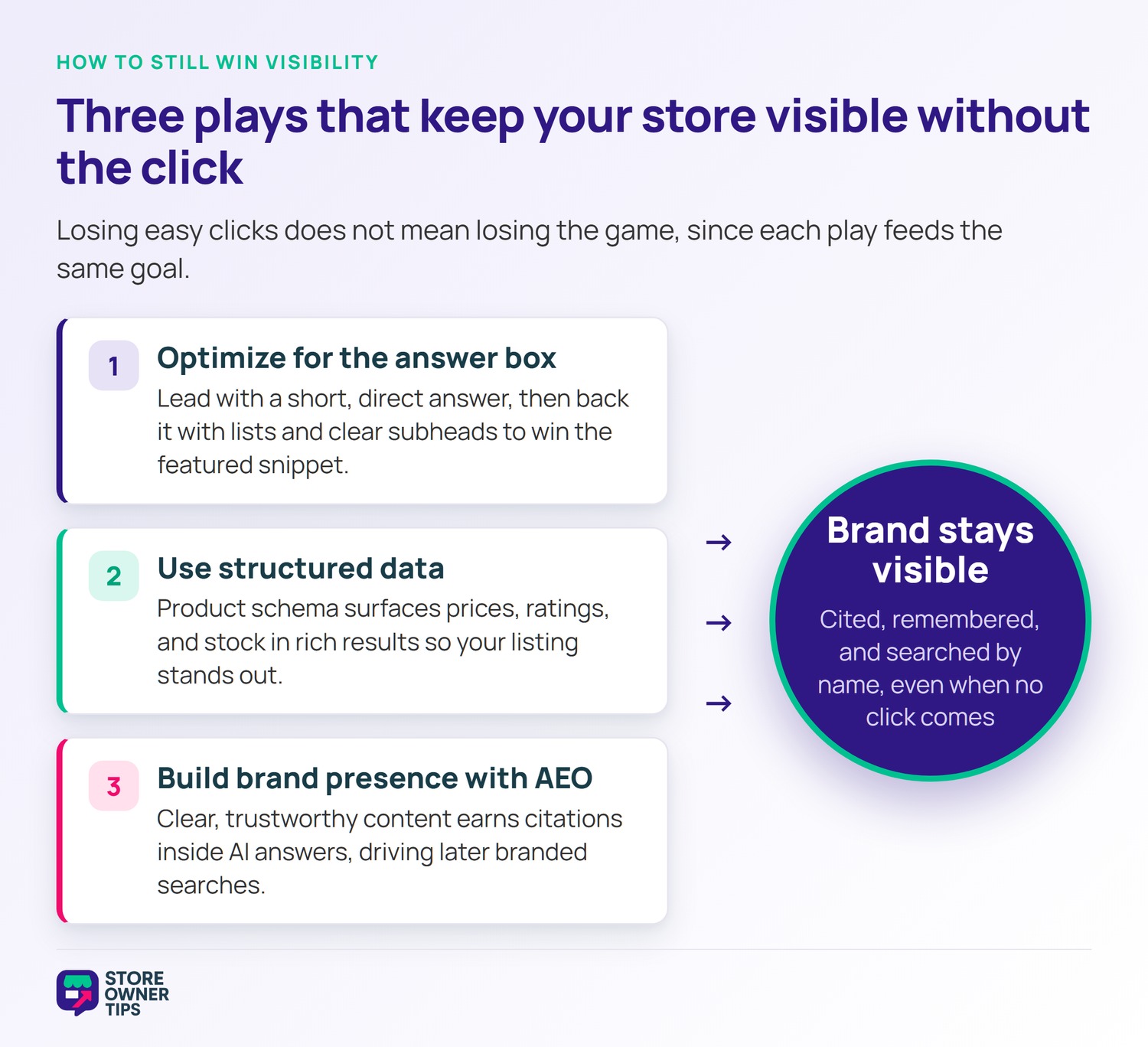
Losing easy clicks does not mean losing the game. It means changing how you measure a win. Here are three plays that keep your WooCommerce store visible in a zero-click world.
Snippets reward content that answers a question cleanly. So lead each page with a short, direct answer of two to three sentences. Then back it up with lists, tables, and clear subheadings the engine can lift.
This is how you earn a featured snippet instead of getting buried. On WooCommerce, your product and category pages can do this too. Add concise FAQ blocks that match how shoppers actually phrase their questions.
Structured data is a label system for your content. Think of it like a nutrition label on food packaging. It tells the engine exactly what each part of your page means.
Adding product schema helps your prices, ratings, and stock show in rich results. That makes your listing stand out, which can earn the click even on a crowded page. Most WooCommerce SEO plugins handle this for you.
The newest play is getting cited inside AI answers. This is the heart of answer engine optimization. You write clear, factual, trustworthy content that engines feel safe quoting.
Strong brand presence pays off twice. First, shoppers see your name in the answer. Then they remember it and search for you directly, which skips the zero-click problem entirely.
It happens when Google answers the query on the results page itself. Featured snippets, AI Overviews, knowledge panels, and People Also Ask boxes all supply the answer. The searcher feels satisfied, so they never click a link. Simple factual questions trigger this most often.
Focus on the answers Google shows, not just the rankings. Structure content to win featured snippets and earn citations. Lean into answer engine optimization so your brand surfaces inside generated results.
No, they are different ideas. Zero-click search is about finding answers without leaving the results page. Zero-click commerce is about buying without leaving a platform. One is search behavior, and the other is a purchase flow.
Zero-click search has changed what a top ranking is worth. The goal is no longer just the click, it is the presence inside the answer. Store owners who optimize for snippets, schema, and brand mentions stay visible. They keep showing up even as the open web keeps losing clicks. Treat visibility as the new currency, and your WooCommerce brand stays in the game.
Copyright © StoreOwnerTips.com. All Rights Reserved.
