Weekly ecommerce tips, deals & news.
Zero-party data is information your customers choose to share with you on purpose. Think quiz answers, style preferences, birthdays, or items they save to a wishlist. They hand it over willingly, often in exchange for a better experience. That makes it the most honest, accurate signal a store owner can collect about what shoppers actually want.
The term was coined by analyst firm Forrester. They define it as data a customer intentionally and proactively shares with a brand. In plain terms, it’s what shoppers tell you on purpose. It is not guessed, tracked, or bought from somewhere else.
Picture a tailor measuring you before making a suit. You stand still and give them your exact measurements willingly. That is zero-party data. Compare that to a tailor guessing your size from across the room, which is what tracking-based data really does.
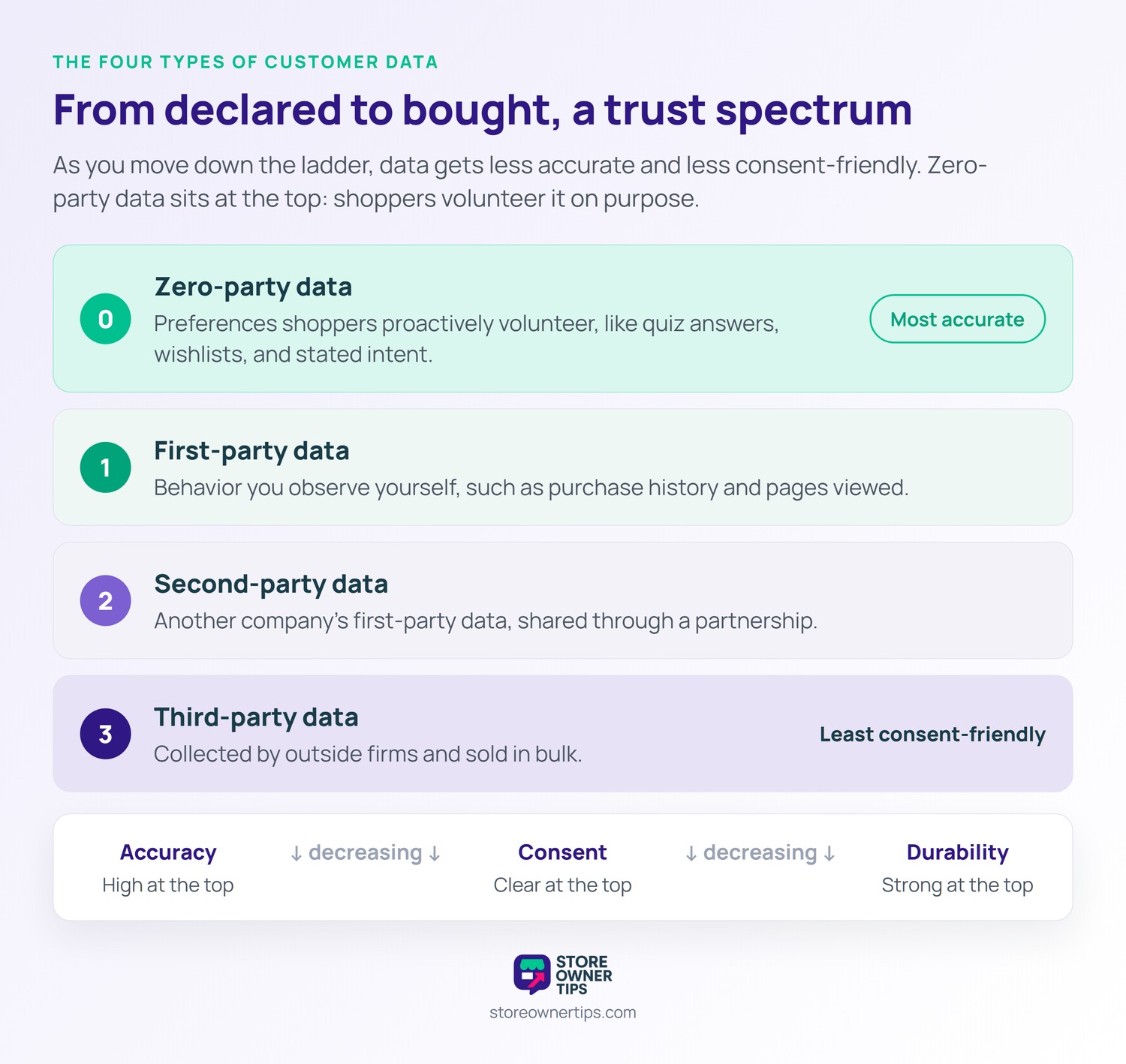
Marketers usually sort data into four buckets. Zero-party data is what shoppers proactively volunteer about their preferences and intentions. First-party data is behavior you observe, like purchase history or pages viewed.
Second-party data is another company’s first-party data, shared through a partnership. Third-party data is information collected by outside firms and sold in bulk. The further down that list you go, the less accurate and the less consent-friendly the data gets.
For years, stores leaned on third-party cookies to follow shoppers around the web. That era is fading fast. Major browsers now block or limit those cookies by default, and privacy laws keep tightening. As a result, the old playbook of buying data and tracking strangers no longer delivers.
Trust is also on the line. In one global survey, 75% of consumers said they won’t buy from companies they don’t trust with their data. Zero-party data flips the script, since the customer is the one offering it. That consent makes it both safer and more accurate.
Shoppers don’t share data for free. They expect something back, like a better fit, a perk, or a smoother experience. Marketers call this the value exchange. The cleaner and fairer the trade feels, the more honestly people tend to answer your questions.
How you handle that data shapes the whole relationship. In one privacy survey, 81% said how a company treats data shows how it respects customers. So a clumsy ask can cost you dearly.
The flip side is loyalty. Treat the data well, and shoppers reward you with repeat visits and bigger baskets. Treat it badly, and they leave. In that same study, 37% of consumers had already switched companies over data practices.
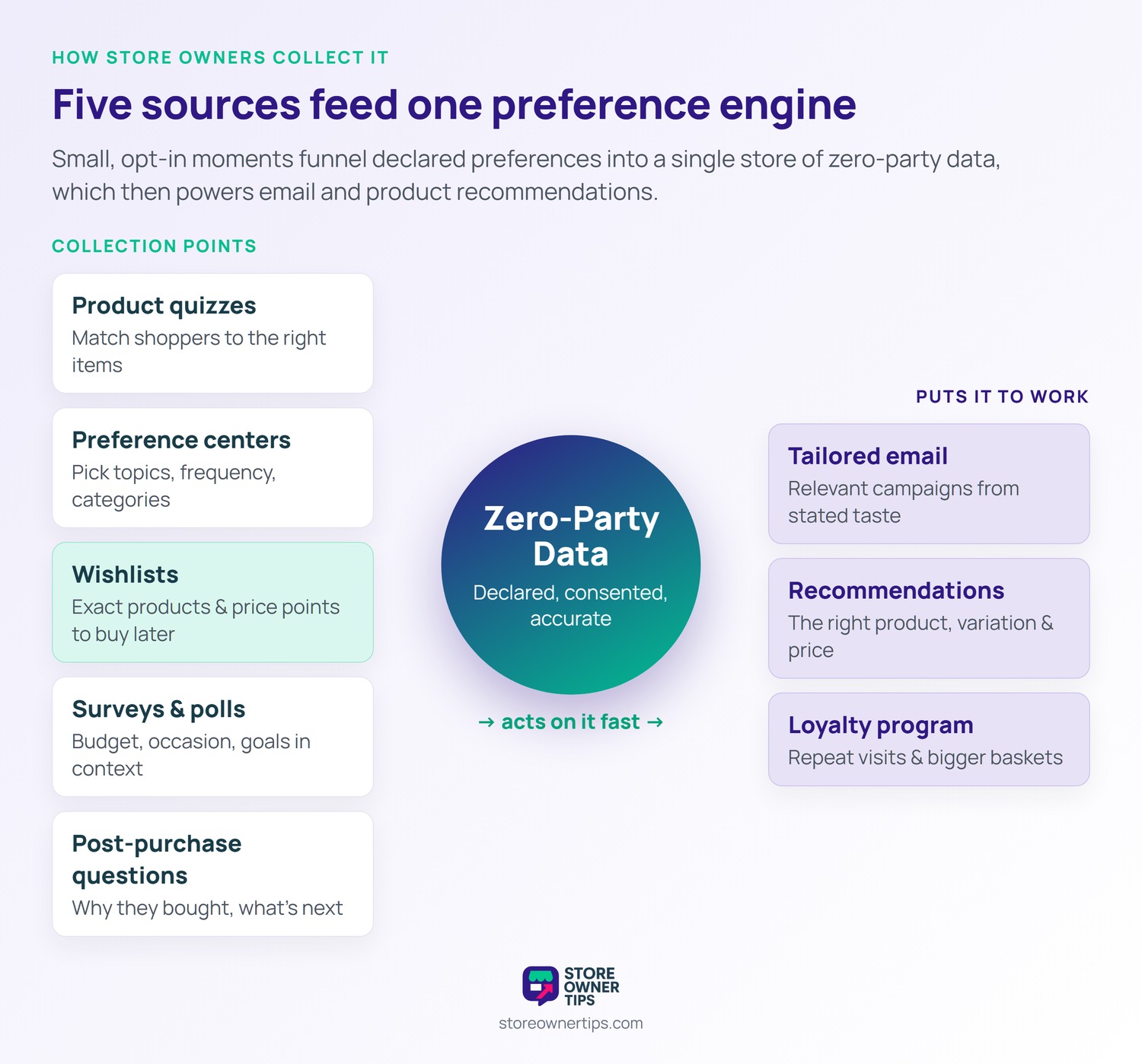
On WooCommerce or Shopify, you gather this data through small, deliberate moments. The most common tools are product quizzes, preference centers, short surveys, and post-purchase questions. Each one asks the shopper to tell you something useful in return for a better fit.
Wishlists are one of the cleanest sources of all. When a shopper saves an item, they’re declaring a future intent, not just browsing. A WooCommerce store can turn those saved items into rich preference profiles. That signal tells you the exact product, variation, and price point they want.
Here are the most reliable ways stores collect it:
Once collected, the data flows into your email and recommendation tools. From there, it powers tailored campaigns and a tighter loyalty program. The key is acting on what shoppers told you quickly.
Imagine a mid-sized WooCommerce brand called Hearth & Hue that sells home decor. They have plenty of traffic but struggle to send relevant emails. So they decide to lean into zero-party data.
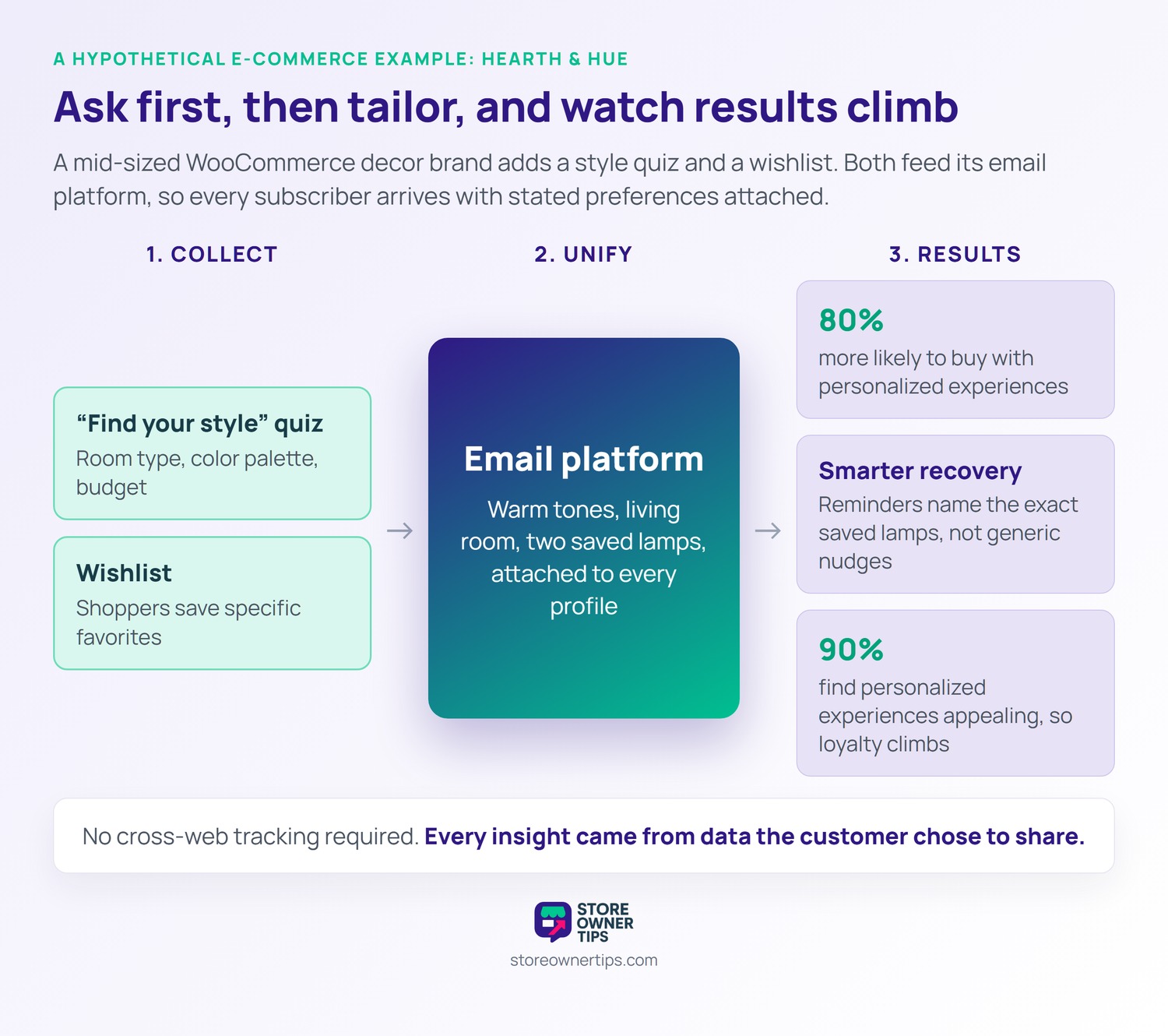
First, they add a short “find your style” quiz on the homepage. It asks three questions about room type, color palette, and budget. They also turn on a wishlist so shoppers can save favorites for later.
Both tools feed directly into their email platform. Now every new subscriber arrives with stated preferences attached. The store knows a shopper likes warm tones, decorates a living room, and saved two specific lamps.
This matters because personalization pays off. Epsilon research found that 80% of consumers are more likely to buy when brands offer personalized experiences. Hearth & Hue uses the quiz and wishlist data to recommend matching pieces.
The payoff also shows up in recovery. Across e-commerce, about 70% of carts get abandoned on average. Because the store knows exactly which lamps a shopper saved, its reminder emails feel helpful instead of generic. That relevance nudges more of those saved items toward checkout.
Loyalty climbs too. Personalization isn’t just appealing, it’s expected by most shoppers today. In fact, 90% of consumers find personalized experiences appealing. By asking first and tailoring later, Hearth & Hue turns one-time buyers into regulars.
None of this required tracking shoppers across the web. Every insight came from data the customer chose to share. That is the quiet power of a zero-party approach for a growing store.
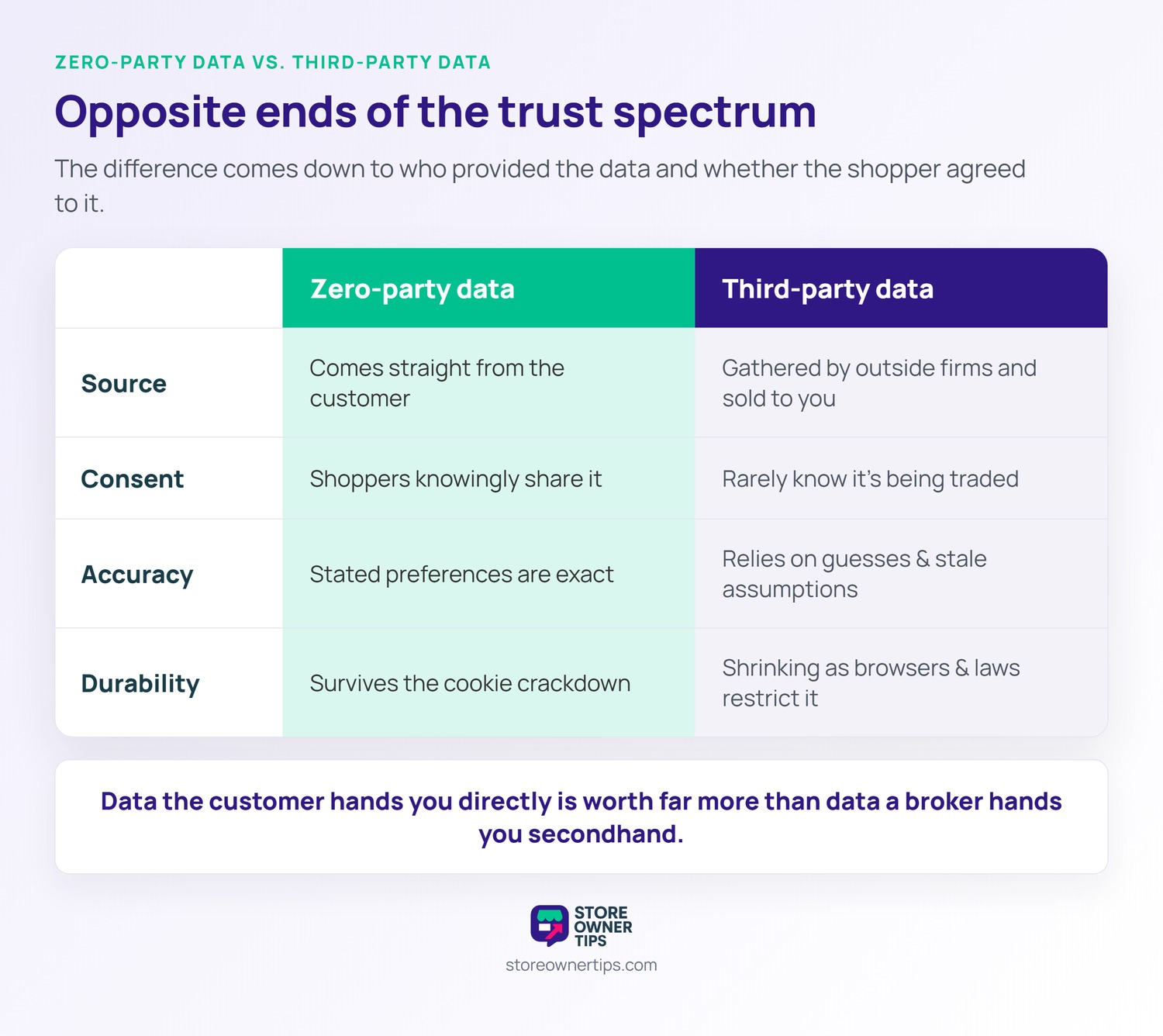
These two sit at opposite ends of the trust spectrum. The difference comes down to who provided the data and whether the shopper agreed to it.
For a store owner, the practical takeaway is simple. Data the customer hands you directly is worth far more than data a broker hands you secondhand. The first kind keeps working as privacy rules tighten. The second keeps shrinking.
That said, the two aren’t true rivals in practice. Most stores never had much quality third-party data anyway. The smarter move is to build your own zero-party engine and lean on it.
Zero-party data is what shoppers tell you on purpose, like quiz answers or saved wishlist items. First-party data is behavior you observe yourself, like what they clicked or bought. One is declared, the other is watched. Both are valuable, and they work best together.
Use small, opt-in moments that give the shopper something back. Product quizzes, preference centers, surveys, and wishlists all work well. A wishlist is especially easy, since saving an item already signals strong customer intent. Feed that data into your email tool to act on it.
Yes, in most cases. The customer hands it over knowingly, so consent is built into the exchange. That makes it far cleaner than data tracked or bought without clear permission. It still needs careful, transparent handling to keep that trust.
Zero-party data is the most trustworthy fuel for personalization, and it only grows more important as tracking fades. When you ask shoppers directly and deliver real value back, you build both better campaigns and deeper loyalty. For WooCommerce stores, tools like quizzes and wishlists turn that willing data into smarter email segmentation and lasting growth. Start small, ask honestly, and let your customers tell you what they want.
Copyright © StoreOwnerTips.com. All Rights Reserved.
