A Halloween sale is a time-limited promotion that runs in October and uses Halloween themes to drive orders. Stores offer spooky discounts, mystery deals, or themed bundles for a short window, usually the last week of October. It works for any store, not just costume and candy shops. Many WooCommerce stores also use it as a warm-up before Black Friday.
A Halloween sale works by attaching a discount to a fixed October window and dressing it in Halloween themes. The discount itself is ordinary. The timing, the theme, and the deadline are what make shoppers act.
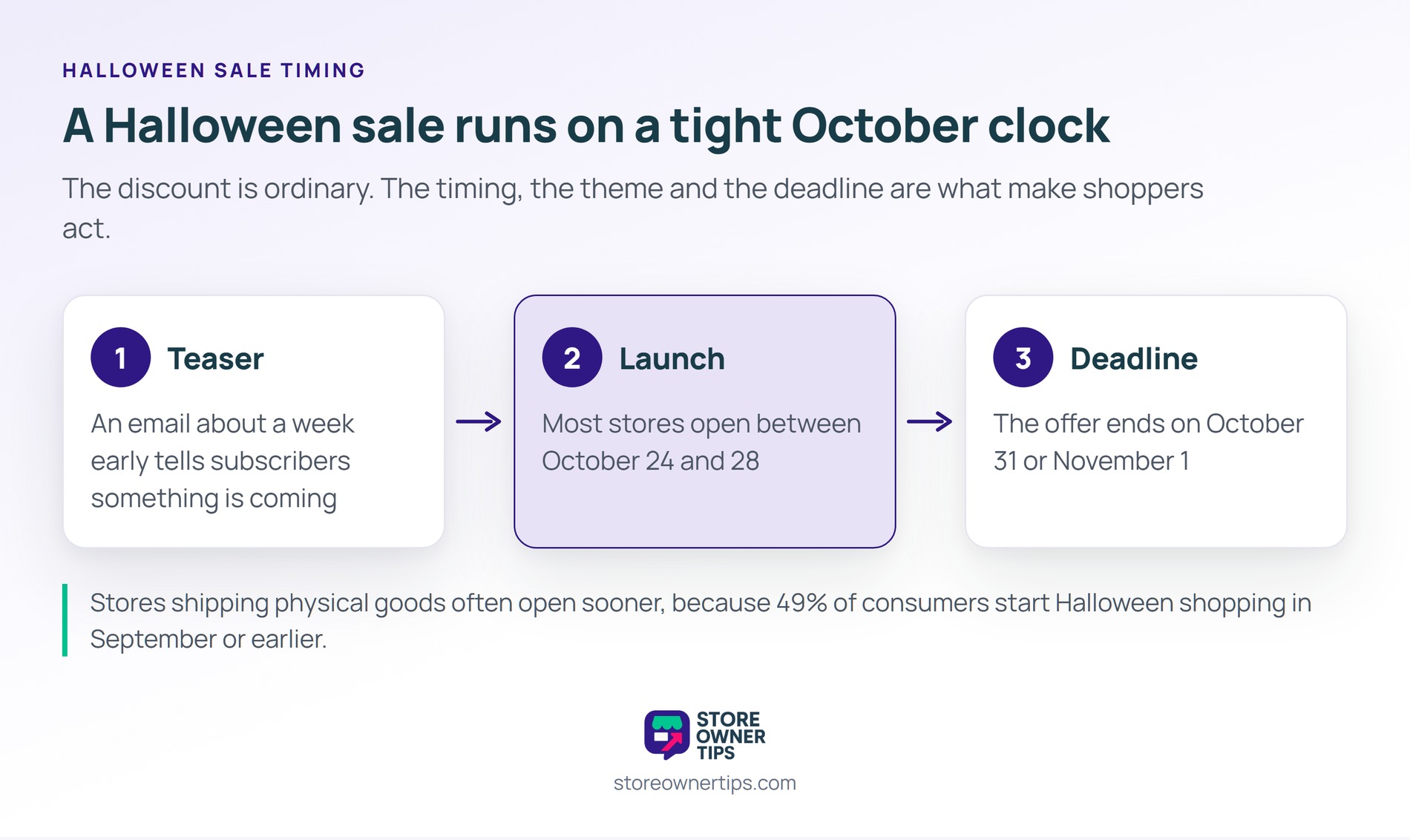
A Halloween sale usually runs during the last week of October. Most stores launch between October 24 and October 28, then end the offer on October 31 or November 1. Some stores send a teaser email a week earlier so subscribers know something is coming.
Shoppers start thinking about Halloween early, though. According to the National Retail Federation, 49% of consumers plan to begin Halloween shopping in September or earlier. As a result, stores that ship physical goods often open their sale sooner. Digital stores have more freedom, since a license key or download arrives instantly.
In WooCommerce, the clean way to handle the dates is a scheduled discount. Think of it like the timer on a coffee maker. You set the start and end once, and it runs without you. Coupons can also carry an expiry date, so the offer shuts off on its own.
Many stores keep the window tight on purpose. A two-day Halloween sale behaves like a flash sale. The short clock is the main selling point.
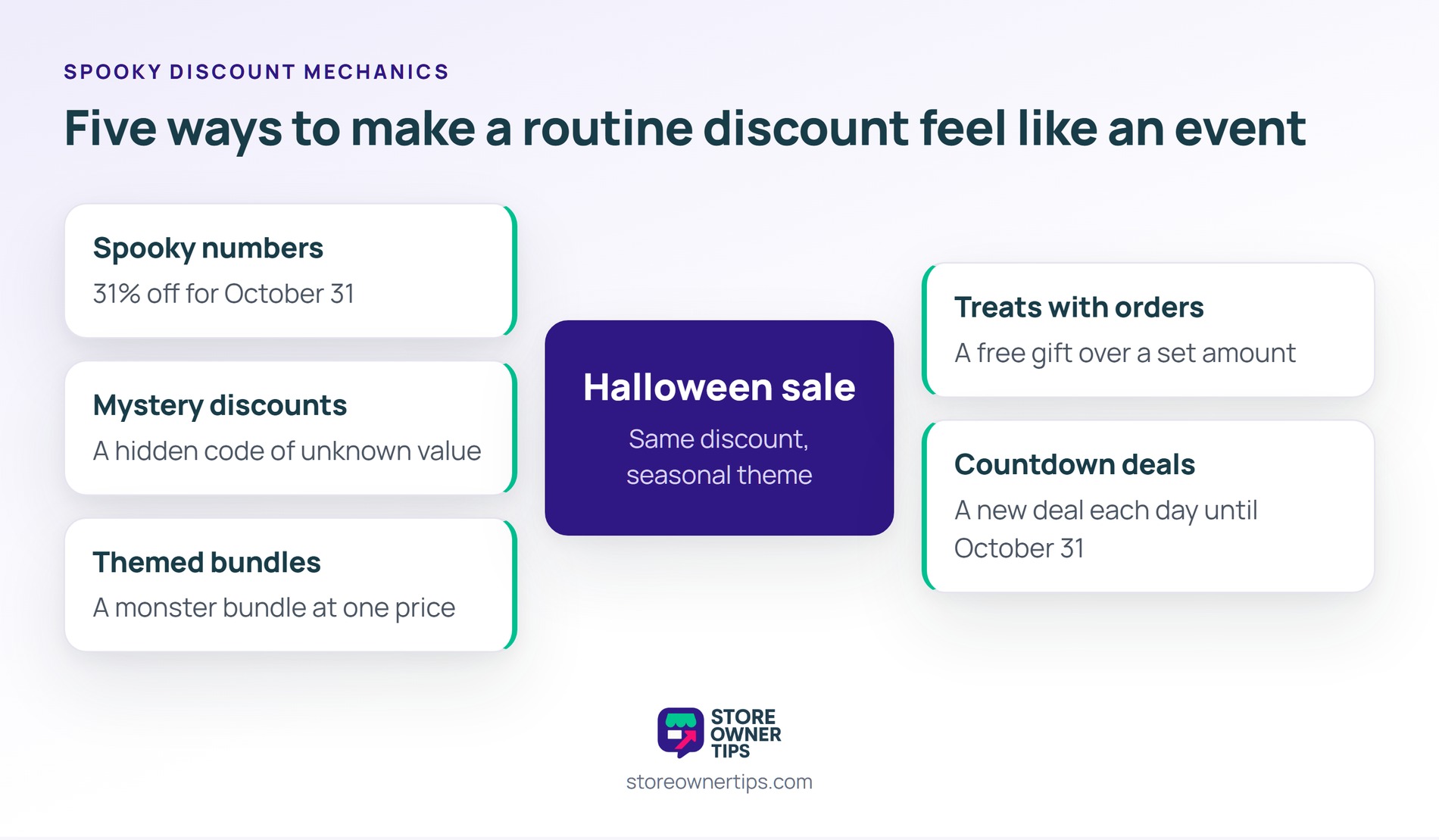
Halloween sale mechanics lean on playful themes rather than plain percentages. The goal is to make a routine discount feel like a seasonal event. Common formats include:
Mystery discounts work because of curiosity and a small gamble. The shopper doesn’t know the prize, so the reveal itself feels rewarding. That said, keep the odds honest and the terms clear, so nobody feels tricked. Plenty of other Halloween promotion ideas follow the same playful pattern.
Delivery matters too. A discount code in an email is simple and familiar. A URL coupon applies the deal from a single click. An auto-apply coupon removes friction completely, since the discount appears in the cart without typing.
A Halloween sale gives non-Halloween stores a timely reason to discount without looking desperate. A plugin shop, an online course, or a stock photo site has nothing to do with costumes. Even so, the date is on everyone’s calendar, so the offer feels natural.
For digital products, the theme lives in the messaging, not the product. A plugin seller might call it “Scary Good Savings” and add a dark, pumpkin-colored banner. The license, the download, and the support stay exactly the same.
The hard deadline also creates urgency. FOMO kicks in when shoppers see the offer vanish on October 31. Similarly, the scarcity principle explains why a limited window makes the same price feel more valuable.
Halloween sale demand rests on a big, steady holiday. The National Retail Federation runs an annual survey with Prosper Insights & Analytics. Its latest edition polled 7,889 consumers in early September. NRF projects Halloween spending will reach $13.5 billion, or about $115.14 per person.
The same NRF survey shows that 74% of consumers plan to celebrate. Discount hunting is part of the season, with 26% of shoppers planning to look for coupons or sales. On top of that, 27% plan to shop online. An online Halloween sale reaches a real slice of buyers.
Halloween also overlaps with early holiday shopping. NRF’s winter holiday research found that 43% of holiday shoppers generally start before November. A late-October sale lands right where those early shoppers are already browsing.
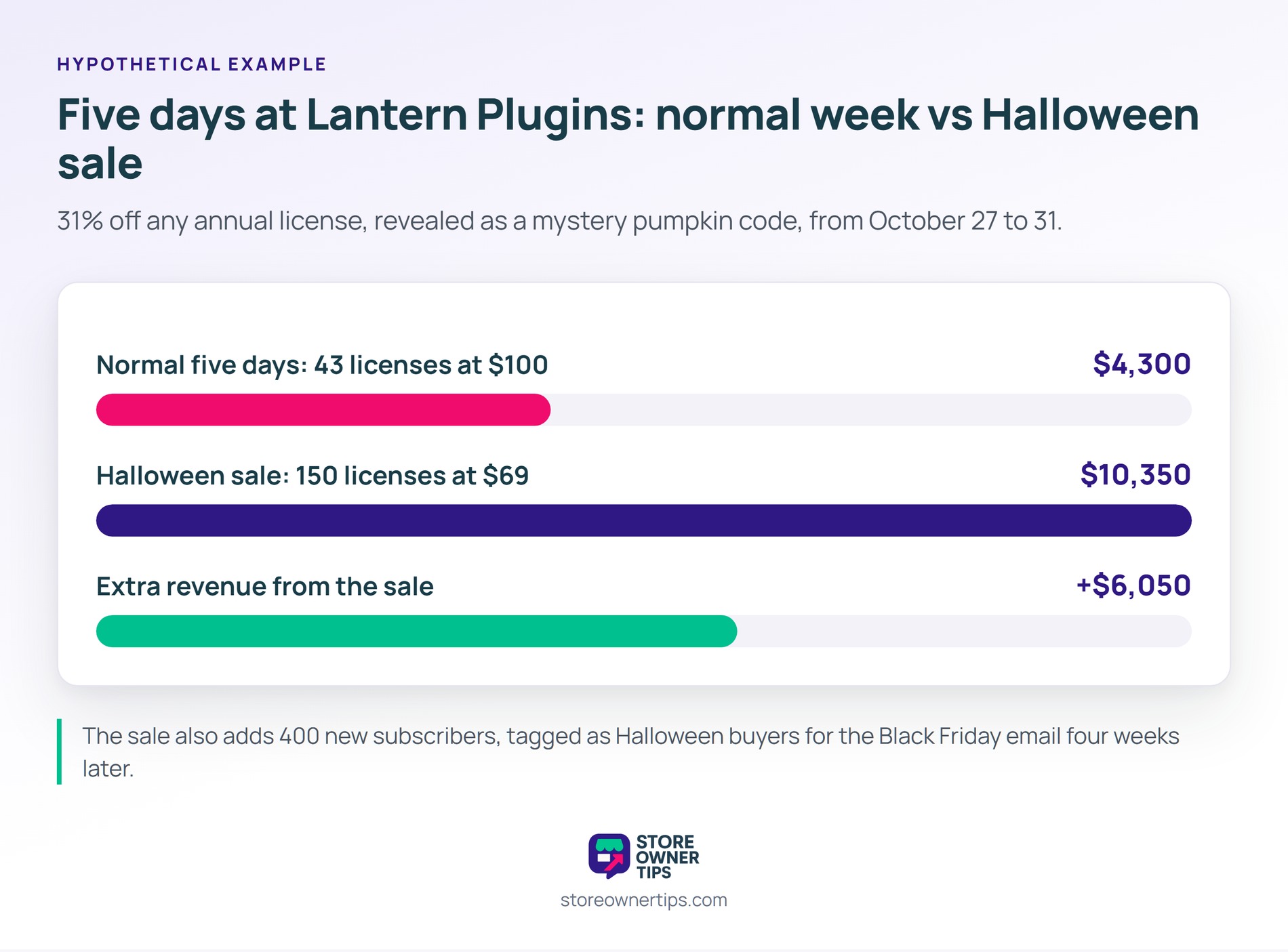
A Halloween sale in practice is a short, themed campaign with a clear deadline and one simple offer. Here’s a hypothetical example.
Imagine a small WooCommerce store called Lantern Plugins that sells three premium WordPress plugins. Its email list has 8,000 subscribers. In a normal week, it sells about 60 annual licenses at $100 each. The owner wants an October boost without training customers to wait for discounts.
The plan runs for five days, from October 27 to October 31:
Five normal days would bring Lantern Plugins about 43 licenses, or roughly $4,300 at full price. During the Halloween sale, the store sells 150 licenses at the discounted $69. That’s $10,350 in revenue, or about $6,050 more than a normal stretch.
Just as important, 400 new shoppers join the list through the landing page signup box. The owner tags them as Halloween buyers using email segmentation. Those subscribers will get their own Black Friday email four weeks later.
The owner also learns which subject line got the most opens and which plugin sold best. That data shapes the bigger November campaign. In short, the Halloween sale paid for itself and warmed up the Black Friday audience.
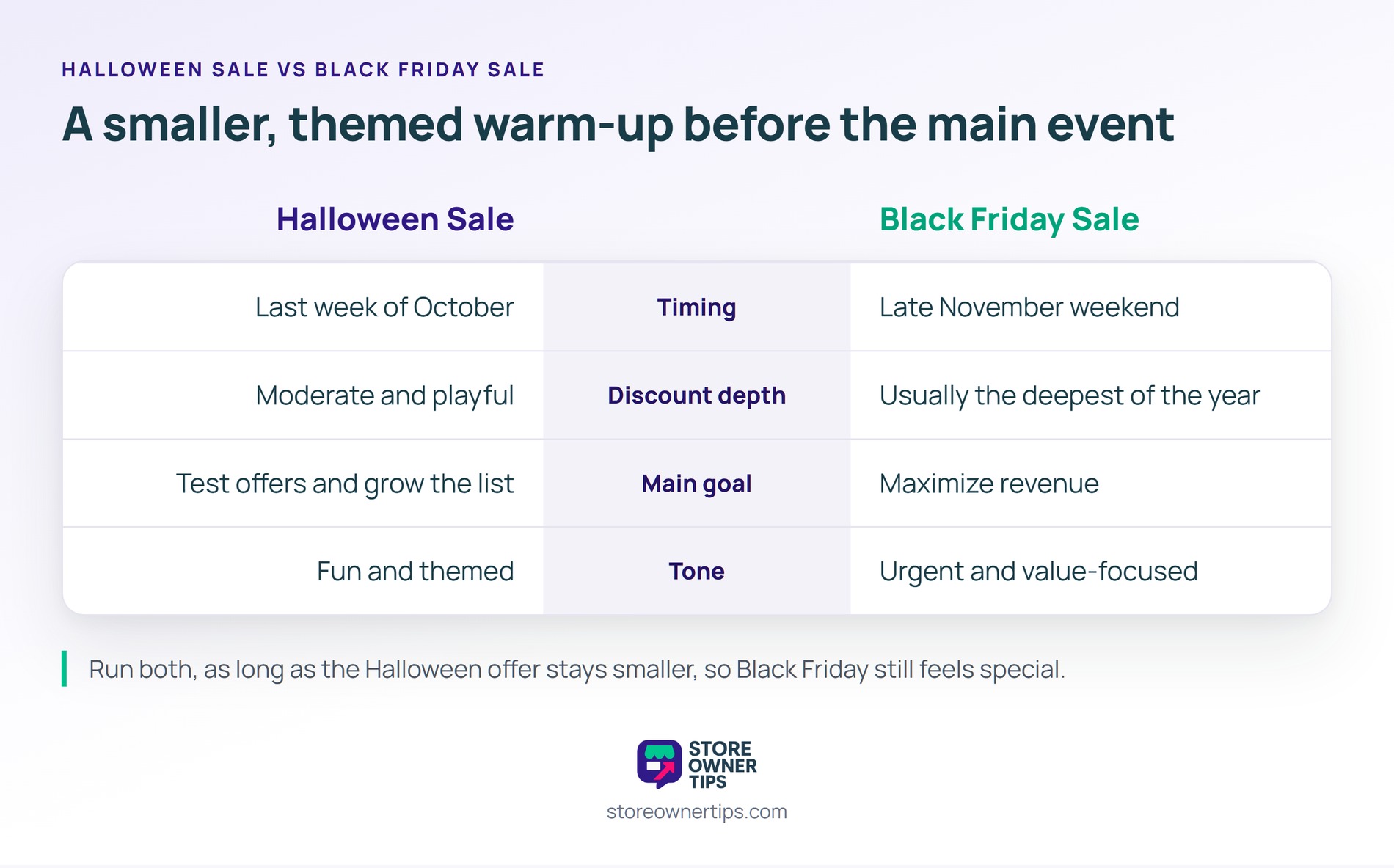
A Halloween sale is a smaller, themed warm-up. A Black Friday sale is the main event of the season.
| What you’re comparing | Halloween Sale | Black Friday Sale |
|---|---|---|
| Timing | Last week of October | Late November weekend |
| Discount depth | Moderate and playful | Usually the deepest of the year |
| Main goal | Test offers and grow the list | Maximize revenue |
| Tone | Fun and themed | Urgent and value-focused |
Most stores benefit from running both, as long as the Halloween offer stays smaller. That way, Black Friday still feels special. If you only have time for one, Black Friday usually reaches more buyers.
A Halloween sale brings an October revenue bump and a free test run. However, it can teach shoppers to wait for deals.
Start your Halloween sale in the last week of October and end it on October 31 or November 1. A teaser email about a week earlier helps build interest. Stores shipping physical goods should start sooner so orders arrive before the holiday. Digital products can launch later because delivery is instant.
Yes, you can run a Halloween sale without selling any Halloween products. Plugin shops, course creators, and software stores do it often. The theme lives in your subject lines, banners, and code names, not the products. Just keep the discount itself simple and clearly explained.
A Halloween sale won’t hurt Black Friday if the Halloween discount stays smaller. Save your best offer for November so shoppers still have a reason to come back. Also, avoid discounting the exact same bundle twice. Use Halloween to grow your list, then sell to that list on Black Friday.
A Halloween sale matters because it turns a date everyone already knows into a reason to buy. It gives stores an October revenue bump and a low-risk test run before Black Friday. Paired with a year-end sale, it becomes part of a seasonal rhythm customers look forward to.
Copyright © StoreOwnerTips.com. All Rights Reserved.
