A price match guarantee is a store’s promise to match a lower price found elsewhere for the same item. The shopper shows proof of the competitor’s price, and the store matches it or refunds the difference. Written rules decide which competitors count, which products qualify, and how long the promise lasts.
A price match guarantee works through a simple request. The shopper shows a lower price, and the store checks it against its policy. If the request passes, the store charges the lower price or refunds the gap. If it fails a rule, the store declines and the original price stands.
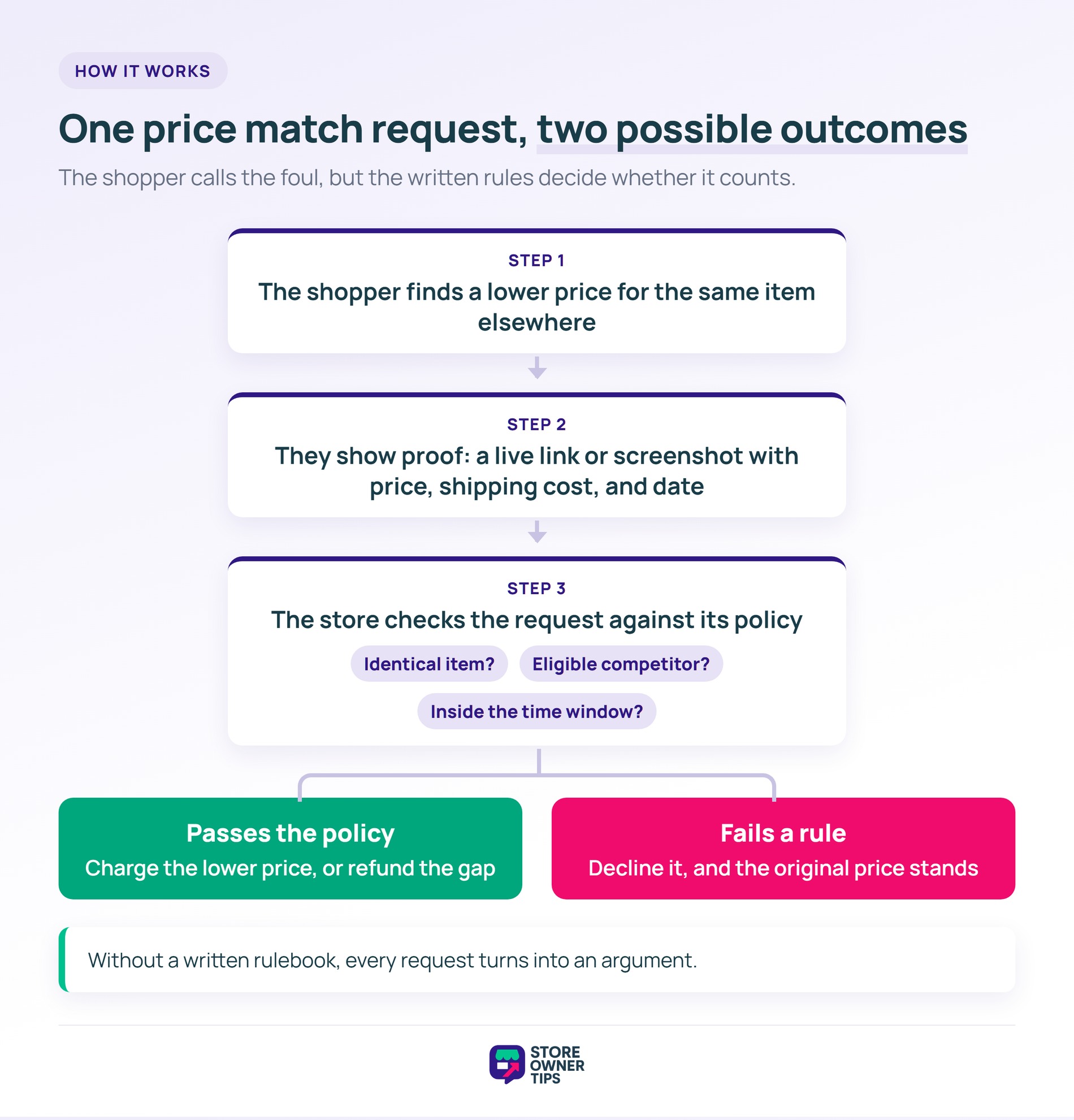
Think of it like a referee with a rulebook. The shopper calls the foul, but the written rules decide whether it counts. Without that rulebook, every request turns into an argument.
Shopper psychology plays a big part too. The promise tells shoppers their search for a better deal can stop here. For a busy gift buyer juggling a long list, that reassurance can matter as much as the price itself.
A price match guarantee needs a written policy page before it goes live. That page should answer four questions: what qualifies, which stores count, when it applies, and how shoppers claim it. Most small stores link the policy from product pages and the checkout.
WooCommerce has no built-in price match button, so most stores handle requests by hand. A common setup is a one-time coupon for the price difference. Restrict it to the shopper’s email and set a usage limit of one.
For orders already paid, WooCommerce lets you issue a partial refund straight from the order screen. Some stores give store credit for the gap instead, which keeps the money in the shop.
A price match guarantee stays affordable because of its exclusions. These rules stop the promise from turning into an open invitation to undercut yourself. The most common exclusions are easy to explain to shoppers:
Many stores also pause matching during big sale events. During Black Friday Cyber Monday, competitor prices can change several times a day. If you pause it, say so plainly on the policy page so nobody feels tricked.
A price match guarantee costs you the full gap on every approved request. If a product earns $30 profit and you match a $12 lower price, you keep $18. That math gets tighter in November and December, when competitors cut deepest.
Holiday shoppers are also checking more prices than usual. Among NRF survey respondents whose spending is shaped by the economy, 31% plan to comparison shop online more often. Deloitte found 68% of holiday shoppers plan to use digital tools, including to compare prices. Adobe reported electronics discounts peaking at 30.9% off listed price across the season.
Your prices are also easier to compare than ever. If you send products to comparison shopping feeds, shoppers see your price beside other sellers in one search. A visible price match promise gives them a reason to pick your listing anyway.
That’s why the guarantee needs a price floor. Know your gross margin on every eligible product before you promise anything.
A price match guarantee in practice is a short policy, a request form, and quick checks per claim. Here’s a hypothetical example. Imagine Larkspur Home Goods, a small WooCommerce store selling bedding, throws, and table linens.
Larkspur’s owner noticed shoppers adding items to the cart, then leaving to check other stores. Many of them were showrooming, browsing at Larkspur and buying wherever the price was lowest. So before the holidays, the owner wrote a price match policy and linked it from every product page.
The rules were tight. Matches covered identical new items from established online stores, with shipping included in the comparison. Marketplace sellers, clearance items, and code-only prices were excluded. Shoppers had seven days after purchase to claim a match.
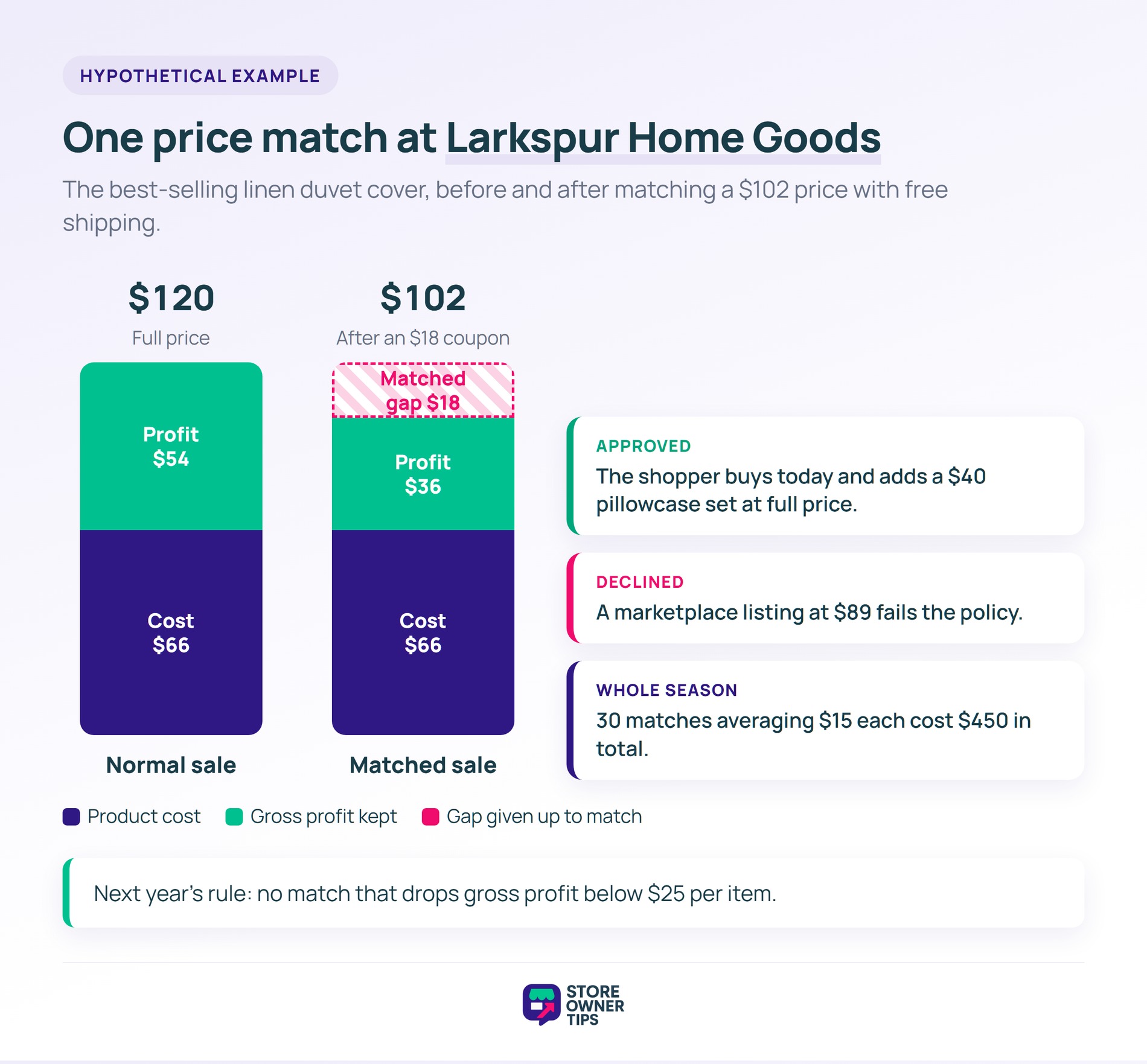
Larkspur’s best seller is a linen duvet cover priced at $120. It costs the store $66, leaving $54 of gross profit per sale. In early December, a shopper sends a link showing the same cover at $102 with free shipping.
The owner checks the link, confirms the color and size match, and sends a one-time coupon for $18. The sale now earns $36 instead of $54. However, the shopper buys today instead of leaving, and adds a $40 pillowcase set at full price.
A second request points to a marketplace listing at $89. That one fails the policy, and the owner replies with a polite link to the rules. Across the season, Larkspur approves 30 matches averaging $15 each, a total cost of $450.
For Larkspur, $450 bought 30 sales that might have gone elsewhere. The owner also sets a rule for next year: no match that drops gross profit below $25 per item.
Most approved matches came from just two rival stores. The owner plans to check those two stores’ prices every week in November. Larkspur can then adjust a few prices early and handle fewer requests one by one.
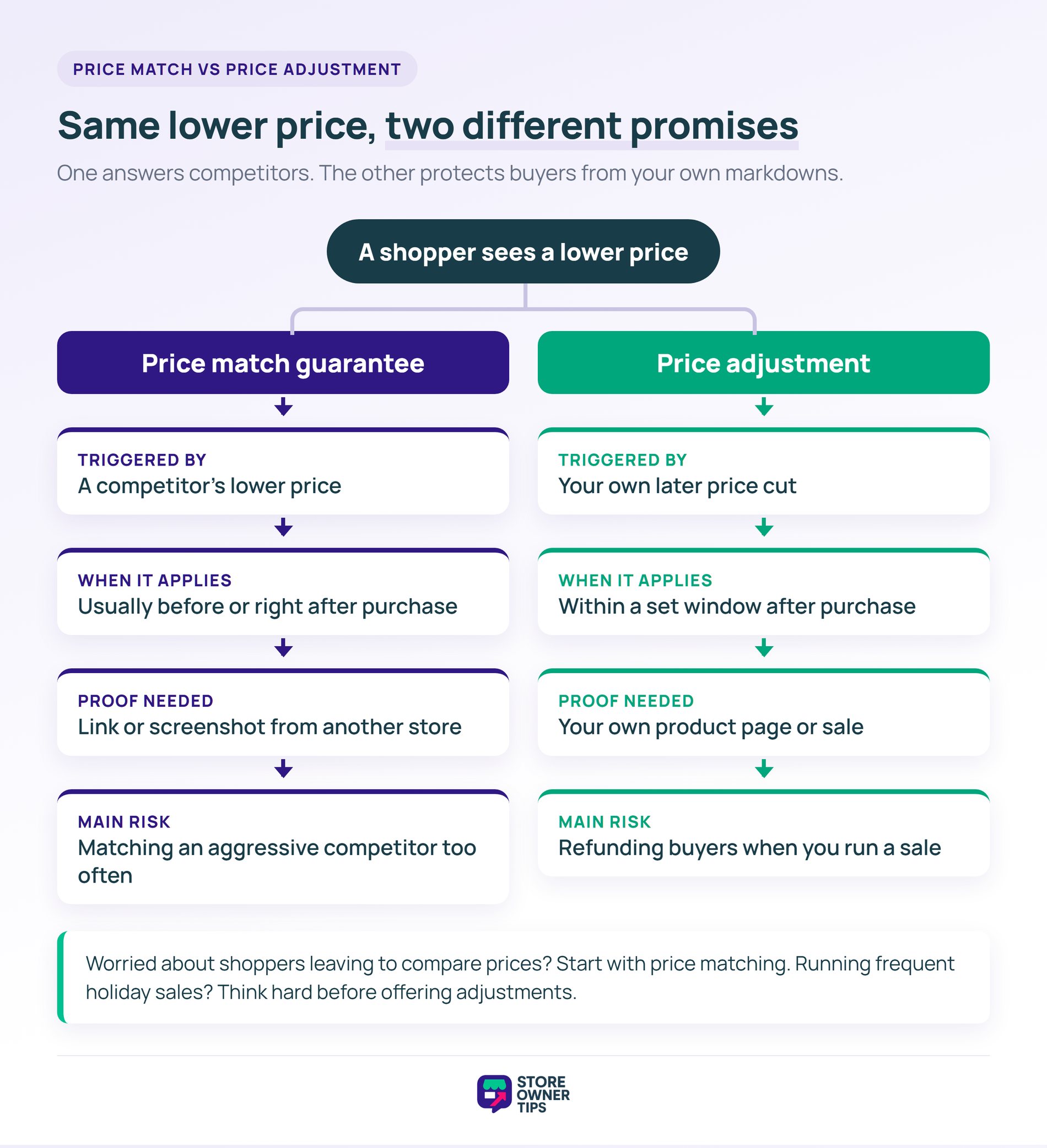
| What you’re comparing | Price Match Guarantee | Price Adjustment |
|---|---|---|
| Whose price triggers it | A competitor’s lower price | Your own later price cut |
| When it applies | Usually before or right after purchase | Within a set window after purchase |
| Proof needed | Link or screenshot from another store | Your own product page or sale |
| Main risk | Matching an aggressive competitor too often | Refunding buyers when you run a sale |
A price match guarantee answers competitors, while a price adjustment protects buyers from your own markdowns. A store worried about shoppers leaving to compare prices should start with price matching. A store running frequent holiday sales should think hard before offering adjustments, since every sale can trigger refunds.
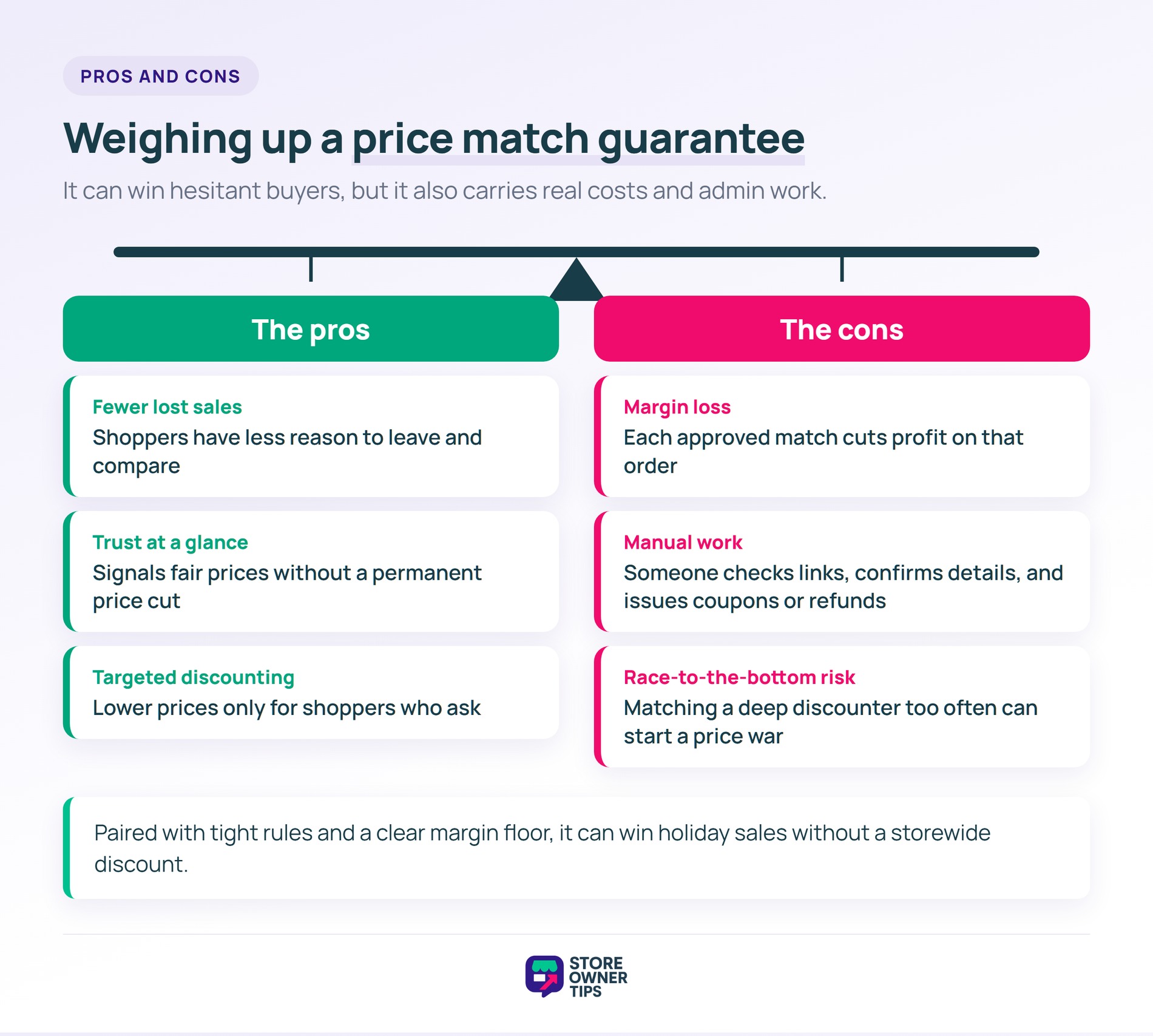
A price match guarantee can win hesitant buyers, but it also carries real costs and admin work.
Price match guarantees apply to Black Friday deals only if the store’s policy says so. Many stores exclude doorbusters and limited-quantity deals, or pause matching for the whole sale weekend. If you plan a pause, add it to your Black Friday preparation checklist and update the policy page early.
A store verifies a price match request by opening the competitor’s live product page. Staff confirm the item is identical, in stock, and priced as claimed, including shipping. A screenshot helps when prices change fast, but a live link is stronger proof.
A price match guarantee should compare the total delivered price, not just the item price. A competitor’s lower sticker price can disappear once shipping is added. State this rule on your policy page so shoppers compare fairly. Some stores also exclude prices that need a paid membership for free shipping.
A price match guarantee matters because it keeps price-checking shoppers from leaving at the moment they’re ready to buy. Paired with tight rules and a clear margin floor, it can win holiday sales without a storewide discount. Plan it alongside your holiday sales calendar so the policy is ready before November.
Copyright © StoreOwnerTips.com. All Rights Reserved.
