Weekly ecommerce tips, deals & news.
A cart abandonment discount is a special offer sent to shoppers who left items in their cart. It nudges them to come back and finish the purchase. The offer usually arrives by email, often as a small percentage off or free shipping. Stores use it to recover sales that would otherwise be lost.
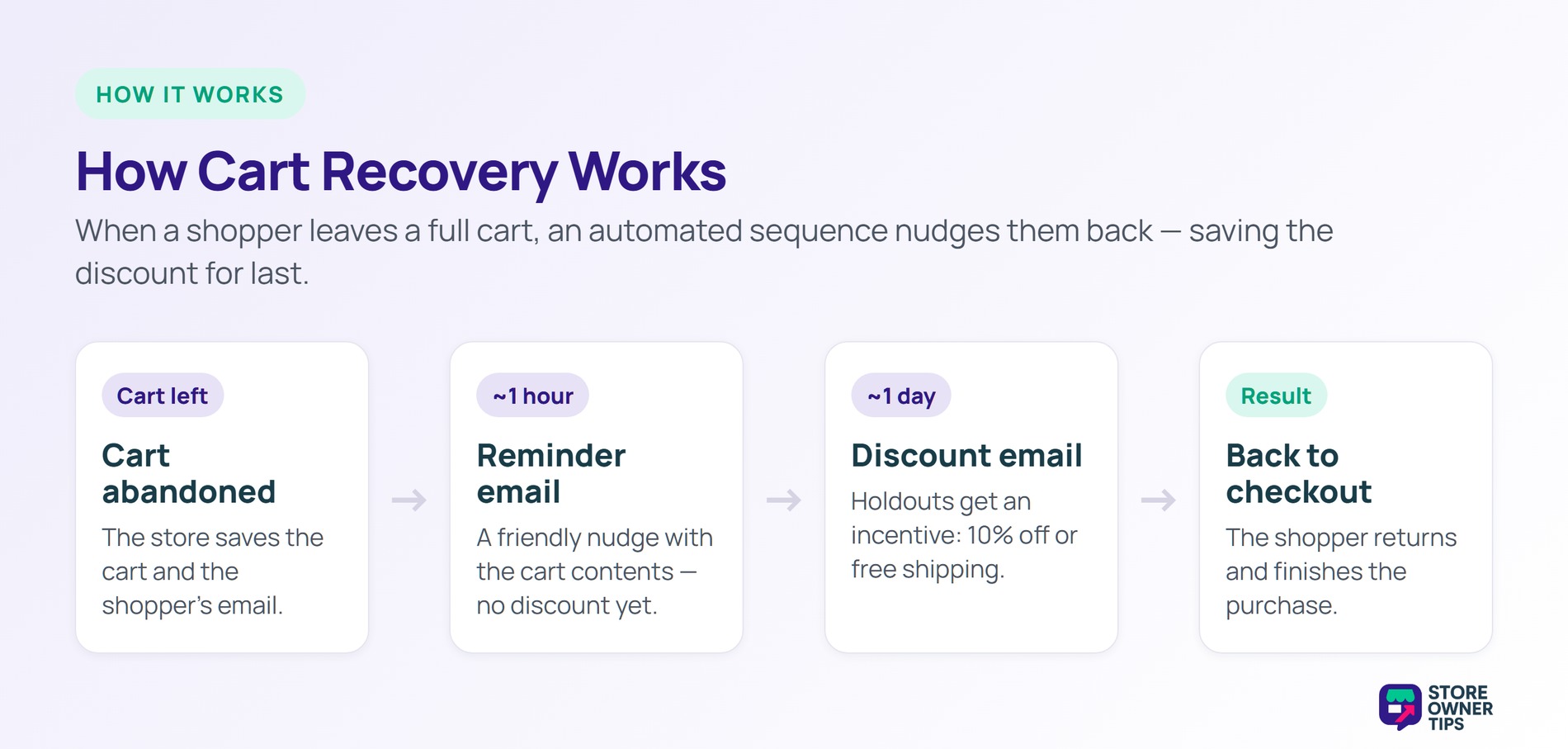
The process starts when a shopper leaves a full cart. The store records the cart and the shopper’s email. A short while later, a follow-up email goes out. It often carries a discount code to tempt them back.
For example, think of a shop assistant catching you at the door. You almost bought something, then changed your mind. They offer a small deal to seal it. The discount plays that same role online.
Timing matters a lot here. The first email usually goes out within an hour or two. A gentle reminder may come first, with the discount later. That sequence avoids giving away margin too soon.
A cart counts as abandoned after a set idle time. Most stores wait 30 to 60 minutes. After that, the recovery sequence kicks in. The shopper still has the items waiting for them.
The email itself does much of the work. A clear subject line earns the open. A photo of the cart pulls them in. A single button takes them back to checkout.
Most online carts never reach checkout. Cart abandonment averages 70.22% across e-commerce. That’s a huge pool of near-sales sitting unfinished. A well-timed offer can rescue a chunk of them.
Cost is the top reason people bail. Nearly half of shoppers, 48%, abandon when extra fees feel too high. A discount or free shipping directly answers that objection. So it targets the exact reason they left.
Other reasons include just browsing or comparing prices. Some shoppers save a cart to think it over. A reminder brings the cart back to mind. The discount then tips a fence-sitter into buying.
Checkout friction also drives shoppers away. A forced account or slow form loses people fast. A frictionless checkout plus a discount tackles both. One smooths the path, the other sweetens it.
Some shoppers simply get distracted mid-purchase. A phone call or a closing tab ends the session. They meant to buy but never came back. A reminder simply finishes what they started.
You don’t need to build this by hand. On WooCommerce or Shopify, tools can track carts and send emails. WooCommerce store owners can trigger a coupon automatically after a cart is left. The whole flow then runs on autopilot.
The offer itself is just a discount code tied to the email. Many owners pick from proven abandoned cart coupon ideas. A percentage off or free shipping both work well. You can cap the coupon so only that shopper uses it.
You can also personalize the message. Use the shopper’s name and the exact items left behind. A relevant email feels less like spam. That lifts the odds they click back.
Segmenting helps you target the right carts. High-value carts may deserve a richer offer. Low-value ones might get just a reminder. Matching the offer to the cart protects margin.
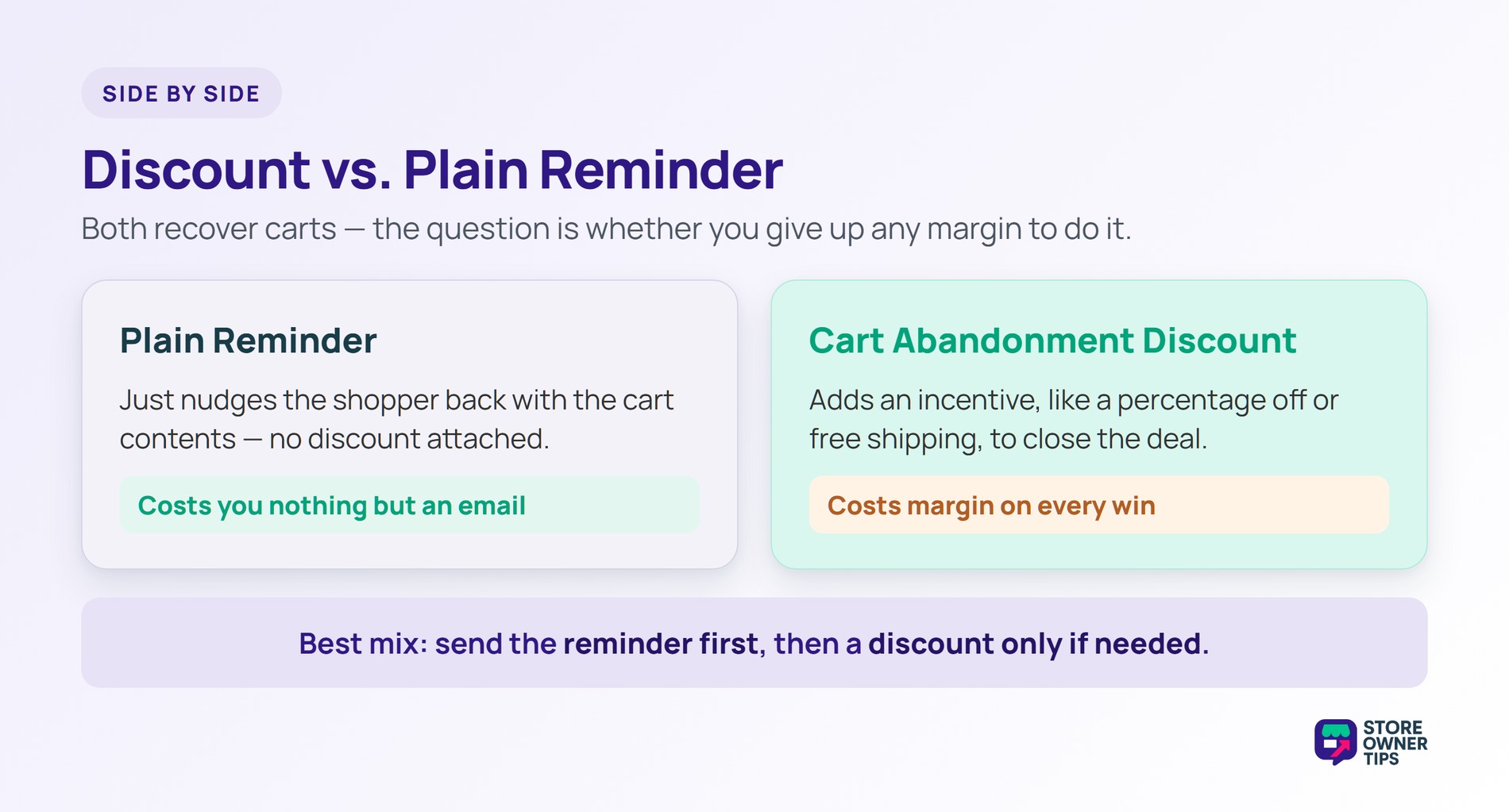
Start with a reminder before any discount. Some shoppers return without a deal at all. Saving the discount protects your margin. Offer it only if the reminder doesn’t work.
Add a deadline to the coupon too. A short expiry creates gentle urgency. It nudges the shopper to act now. An open-ended offer is easy to ignore.
Test different discount levels over time. Watch which one recovers the most carts. Sometimes free shipping beats a percentage off. Let the data pick your default offer.
Keep the email short and the link obvious. One clear button should return them to checkout. Too many choices slow the decision. Make finishing the purchase the easy path.
Don’t overdo the number of emails either. Two or three messages is usually plenty. More than that feels pushy and annoys people. A light touch keeps your brand likeable.
Match the tone to your brand voice too. A friendly nudge beats a pushy sales pitch. Helpful framing keeps goodwill intact. People return to stores they trust.
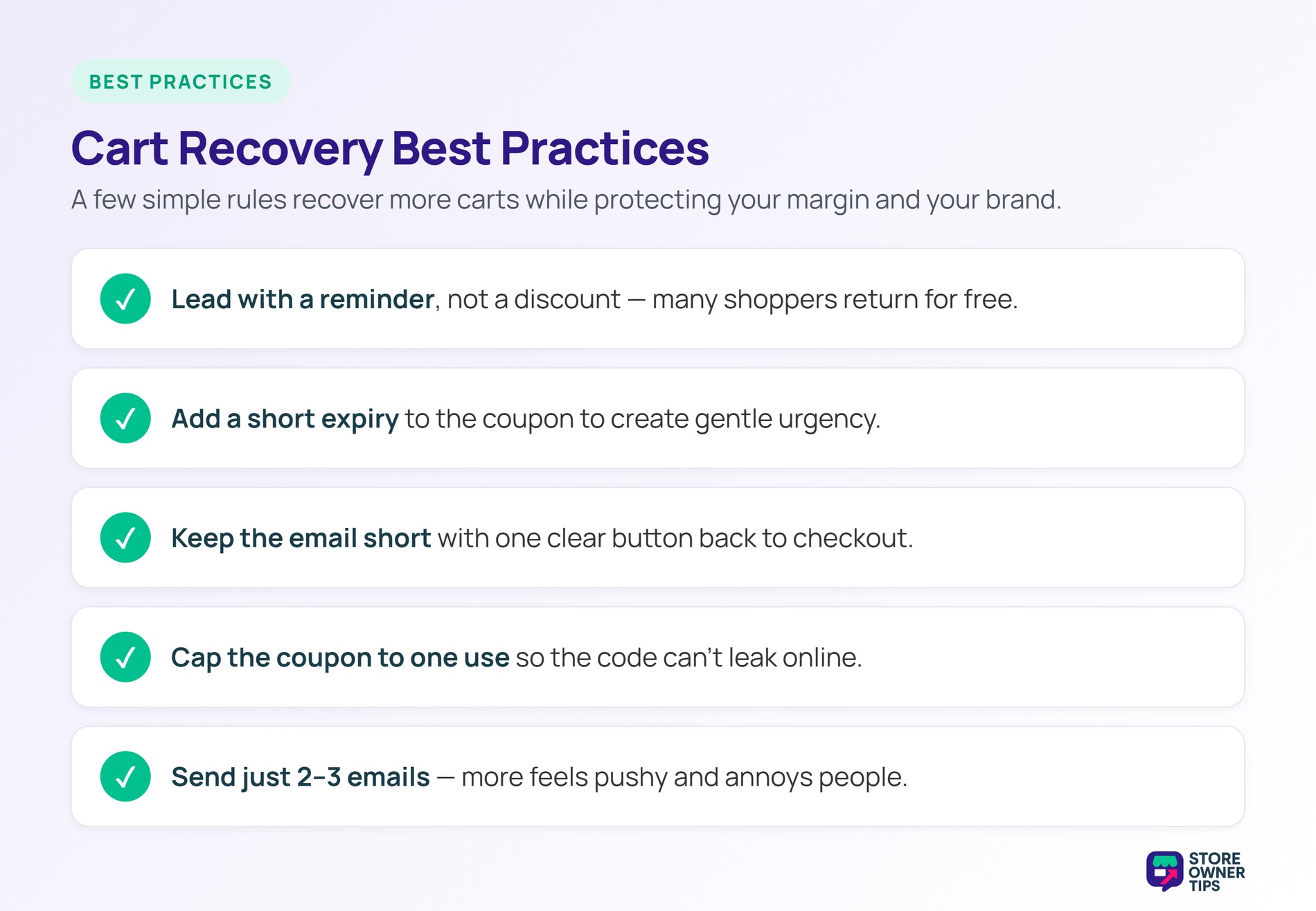
Imagine a WooCommerce store called NestHome selling decor. A shopper fills a cart with $120 of items. Then they leave without checking out. NestHome captures the cart and the email.
NestHome has a recovery sequence ready to go. The first email is a simple reminder. The second adds a 10% discount. Each one goes out on a set schedule.
NestHome also personalizes each email. It shows the exact decor items left behind. A photo of the cart jogs the memory. That personal touch lifts the click rate.
An hour later, the reminder email lands. It shows the cart and a friendly nudge. Many shoppers return from this alone. No discount is needed for them.
A day later, the holdouts get the 10% offer. The discount answers their hesitation about price. Some click through and finish the order. So NestHome recovers sales it nearly lost.
NestHome caps the coupon to a single use. Only the shopper who left the cart can redeem it. That stops the code from leaking online. The offer stays exclusive and controlled.
Say NestHome recovers one in ten abandoned carts. On a busy store, that adds up fast. Each recovered cart is near-pure upside. The shopper was already halfway to buying.
These buyers are also worth keeping. Acquiring a new customer can cost five to 25 times more than retaining one. So NestHome adds them to its email list. The recovery offer starts a longer relationship.
Free shipping offers can lift the order too. Shoppers often add an item to qualify. That nudges up the store’s average order value. So one recovery email can do double duty.
NestHome reviews which email won each sale. Often the plain reminder does the job. The discount only goes to true holdouts. So the store protects margin while recovering carts.
Over a month, these recovered carts add real revenue. The effort was mostly a one-time setup. After that, the sequence runs on its own. Recovery becomes a steady, passive win.
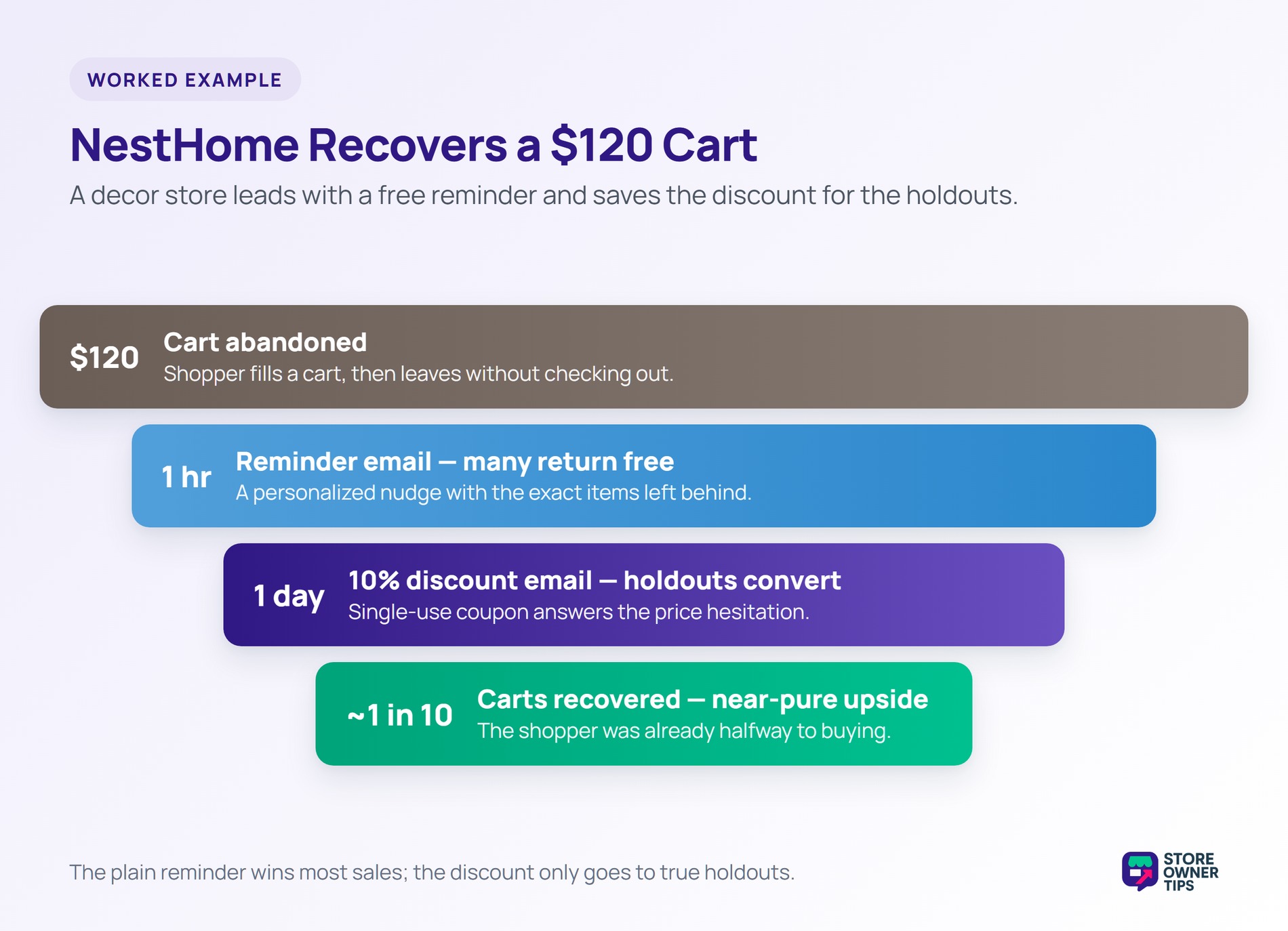
A cart abandonment discount isn’t the only way to recover a cart. A plain reminder email skips the discount entirely. The difference is whether you give up any margin. Each has its place in a recovery plan.
The smartest plan blends both. A reminder recovers free sales first. The discount then mops up the holdouts. It pairs well with broader cart abandonment recovery work.
Cost decides which lever to pull. A reminder costs you nothing but an email. A discount costs margin on every win. So lead with the free option whenever you can.
A small discount usually does the trick. Many stores offer 10% off or free shipping. Bigger discounts can train shoppers to abandon on purpose. So start small and go deeper only if needed.
Timing is key to recovery. The first email often goes out within an hour or two. A discount usually follows a day later. That gives the plain reminder a chance to work first. You can also test the gap to see what converts best.
They can if you lead with a discount every time. A reminder-first approach protects your profit. Save the discount for shoppers who don’t return. Used that way, the offer adds revenue instead of eating into it.
A cart abandonment discount is a low-effort way to recover near-lost sales. It targets shoppers who already wanted to buy, then removes their last hesitation. Used with care, it boosts revenue without training everyone to wait for a deal.
Copyright © StoreOwnerTips.com. All Rights Reserved.
