Weekly ecommerce tips, deals & news.
Click-through rate (CTR) measures how often people click a link after they see it. You calculate it by dividing clicks by impressions, then multiplying by 100. It is a core metric for search results, ads, and email. In short, it shows how well your message earns attention.
Your click-through rate answers one plain question. Of everyone who saw your link, how many actually clicked it? Think of a billboard on a busy road. Thousands of cars pass it, but only some drivers pull off at your exit. Click-through rate is that pull-off rate for your digital storefront.
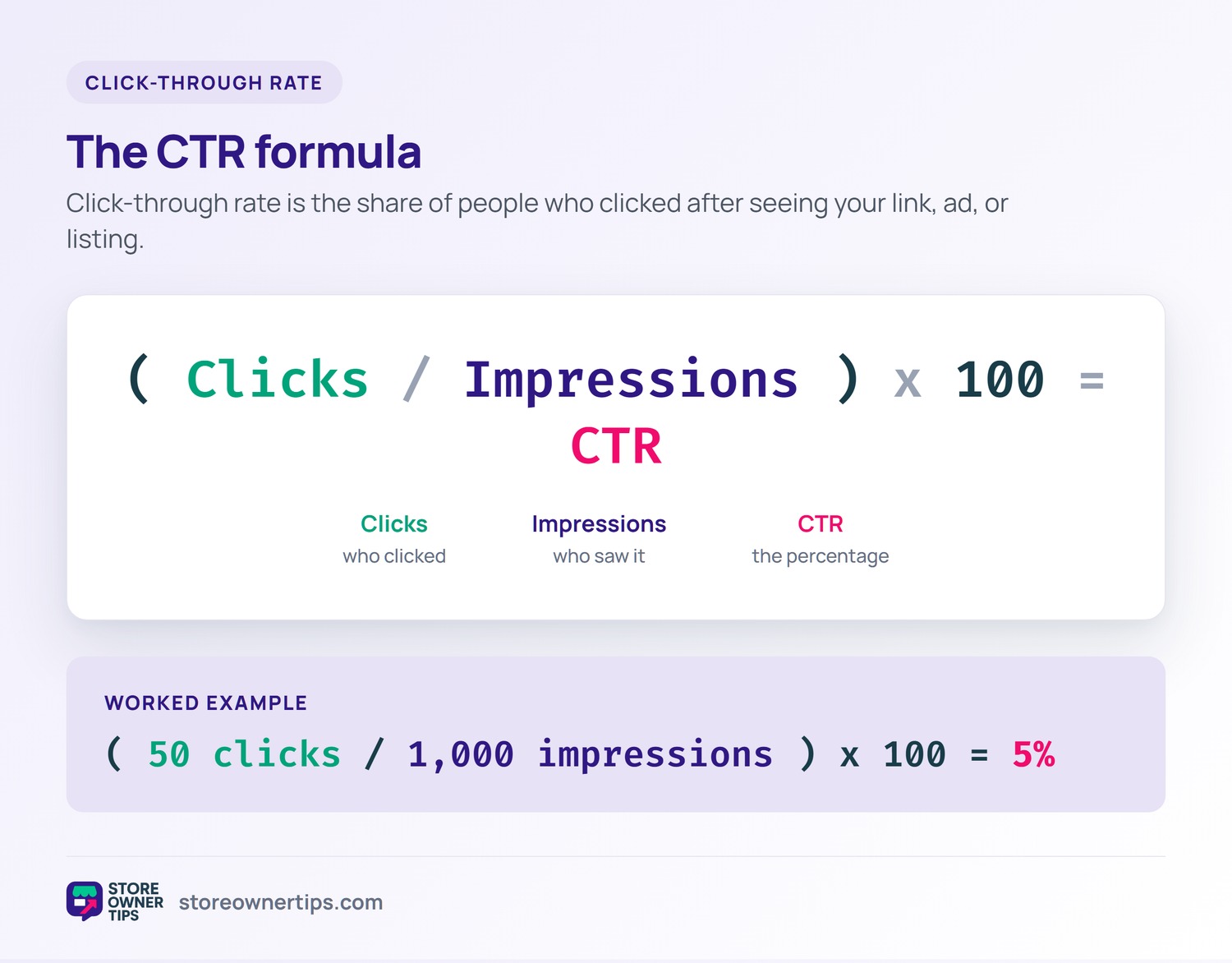
An impression happens each time your link is shown. A click happens when someone taps or selects it. So if 1,000 people see your product listing and 50 click, your click-through rate is 5%. The formula stays the same across every channel you use.
This metric shows up in many places. For example, you will see it in Google Search results, paid ad campaigns, and email sends. In your WooCommerce or Shopify store, it also appears in product feeds and on-site promo banners. Each spot tells you whether your wording is pulling its weight.
A strong click-through rate is a vote of confidence from your audience. It tells search engines and ad platforms that your content fits the query. As a result, you can earn more organic traffic without paying for it. Position on the page matters a lot too.
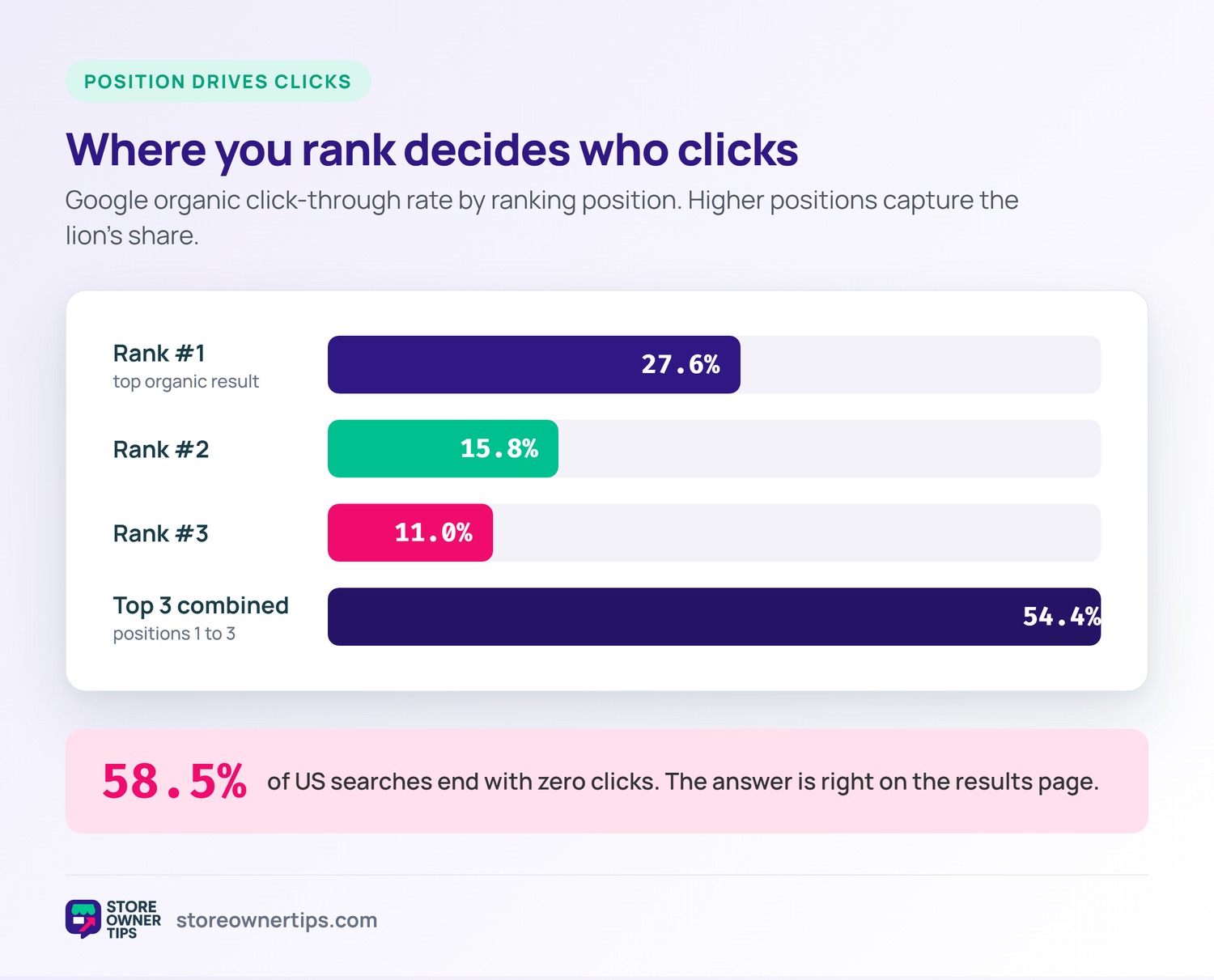
The gap between ranks is huge. For example, the #1 organic result earns 27.6% of clicks on average. Meanwhile, the top three results pull 54.4% combined. So small ranking gains can lift your clicks sharply.
Search behavior has shifted in recent years. Many people now get their answers right on the results page. In fact, 58.5% of US Google searches end without any click. That trend leaves a smaller pool of clicks up for grabs.
This makes every click harder to win. A sharp title and a strong title tag become even more valuable. They are what convince a searcher to choose your result over a quick on-page answer. So click-through rate optimization is no longer optional for serious stores.
The same study frames the scale of the shift. Just over 360 clicks now leave Google for every 1,000 searches. So the open clicks are fewer, but they are still there. Your job is to claim a bigger slice of that shrinking pool.
There is no single click-through rate target to chase. A click rate that looks weak in one channel may shine in another. So you should always judge your numbers against the right benchmark. Here is how the common channels tend to compare.
A few levers shift your click rate more than the rest. Position is the biggest one in organic search. The closer you sit to the top, the larger your share of clicks. That is why rank one alone pulls 27.6% of clicks.
Your wording does the next heaviest lifting. A clear title tag and a tight meta description sell the click before anyone lands. Rich results help as well. Star ratings, prices, and FAQ snippets make your listing stand out in a crowded page.
Search intent ties it all together. A listing that matches what the searcher wants earns the click with ease. One that misses the intent gets skipped, even from a high spot. So always write for the person behind the query, not the algorithm.
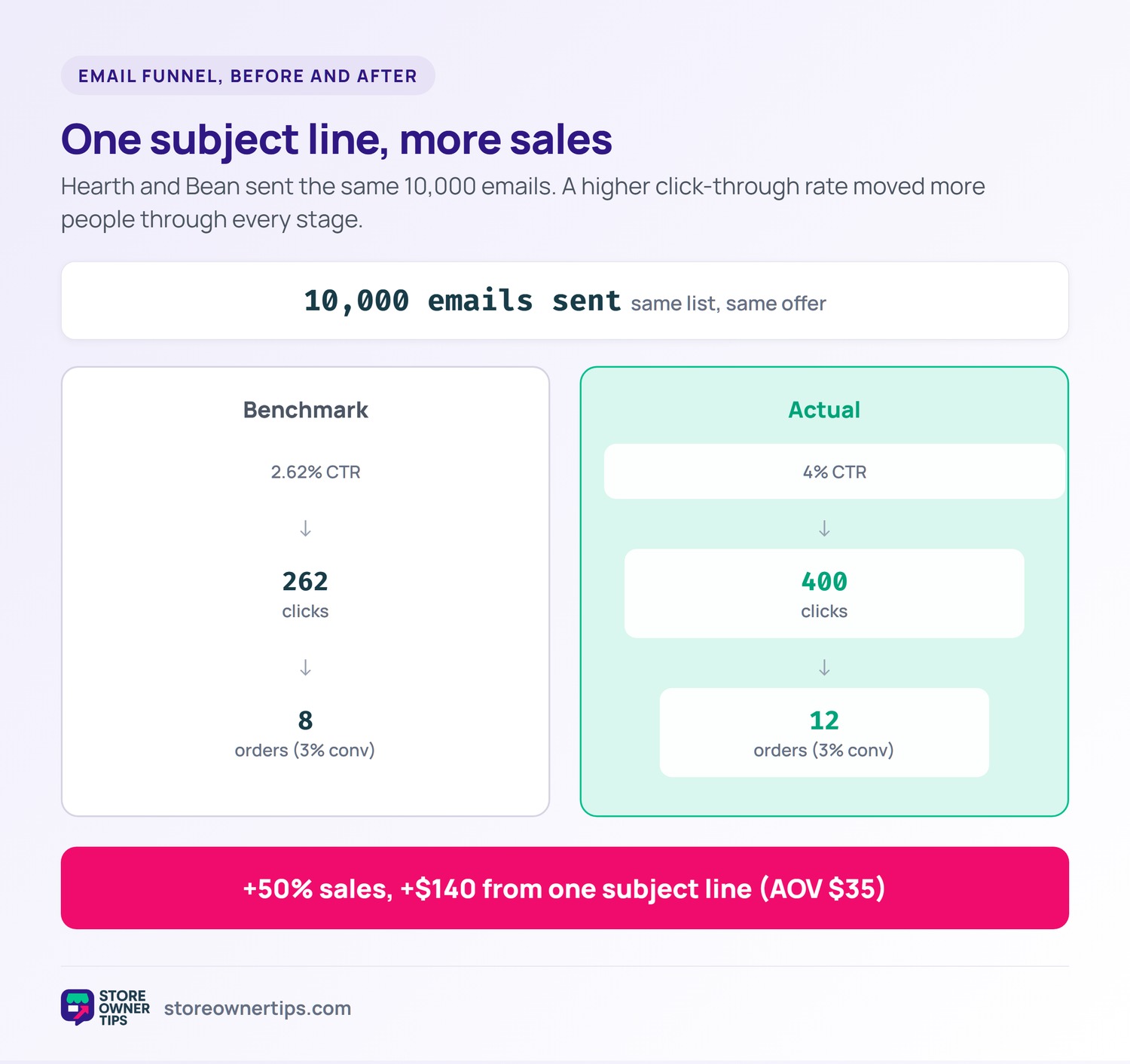
Imagine a mid-sized coffee roasting brand called Hearth & Bean. They run an email campaign to 10,000 subscribers about a new blend. They want to know if their subject line is doing its job. So they decide to measure click-through rate.
The email reaches all 10,000 inboxes, so that is the impression count. Industry data sets the average email click rate at 2.62%. Hearth & Bean uses that figure as their baseline goal. Then they write a clear, benefit-led subject line and one strong button.
At the 2.62% benchmark, they would expect about 262 clicks. Their tighter copy beats it, landing 400 clicks instead. That works out to a 4% click-through rate, well above the average. Those 400 visitors now hit the product page, where the next metric takes over.
Now follow the clicks down the funnel. Say the product page converts at a steady 3%. The 262 expected clicks would yield about 8 orders. The 400 actual clicks yield 12 orders instead.
That is a 50% lift in sales from one subject line. The average order value is $35, so the gap is real money. Four extra orders add $140 from a single send. Scale that across a year of campaigns and the math gets serious.
Notice that the conversion rate never changed here. The same product page did the same job both times. Only the CTR moved, yet the revenue followed it up. That is the quiet power of the top of the funnel.
This is why store owners track CTR so closely. A one-point lift in click rate sent far more shoppers to the store. The clicks alone do not pay the bills, but they fill the top of the funnel. From there, the product page must do its part to close the sale.
The lesson scales to any channel you run. Whether it is search, ads, or email, a higher CTR stretches the same audience further. In practice, that means more visitors from the traffic you already have. That is free leverage no store owner should ignore.
Small tests compound over time as well. Hearth & Bean could try a new subject line each week. Then they keep the winners and drop the losers. Over a quarter, those steady gains add up to thousands of extra clicks. That is the power of treating CTR as a habit, not a one-off check.
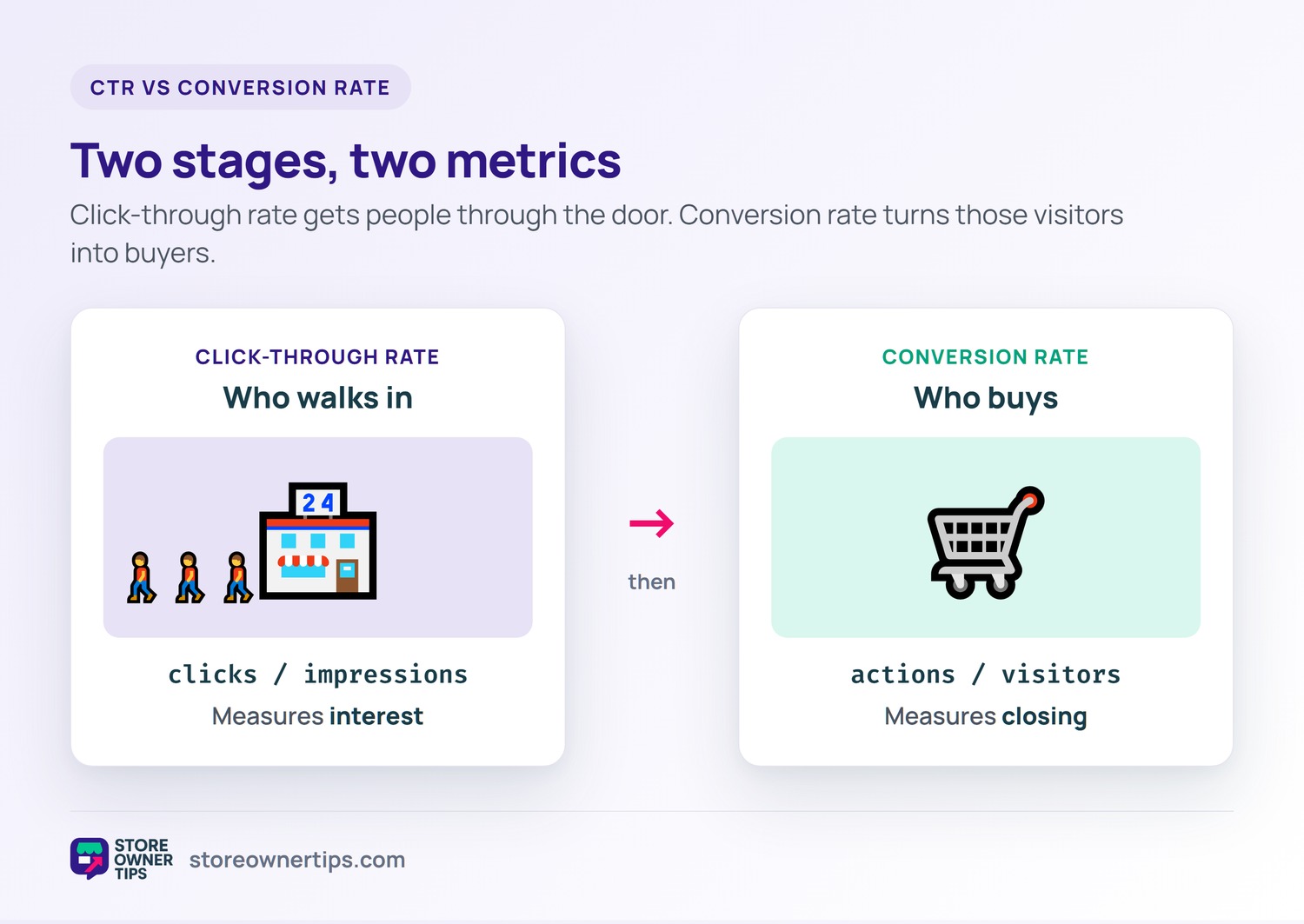
These two metrics often get mixed up. Click-through rate measures clicks against impressions, so it tracks interest in your message. By contrast, conversion rate measures actions against visitors. So it tracks what happens after the click.
Picture a shop window and a cash register. CTR is how many people walk through the door from the sidewalk. Conversion rate is how many of those visitors actually buy. You need both working together, which is the heart of conversion rate optimization.
Watching one without the other can mislead you. A high CTR with low conversions points to a weak landing page. A low CTR with high conversions points to a weak headline. Reading them as a pair tells the real story.
Chasing a higher click-through rate brings clear upside, but it has limits. It pays to know both sides before you tune your titles. That way you push for clicks without hurting the rest of the funnel.
The upside is strong. A better CTR squeezes more visitors from the same reach. It also feeds a relevance signal that search and ad platforms reward. Over time, that can lift your rankings and lower your ad costs.
The risk is real too. CTR can be gamed with clickbait that overpromises. Those clicks spike your rate but rarely convert. Worse, mismatched titles raise bounce rates and erode trust. So always tie click goals to genuine relevance, not shock value.
It depends entirely on the channel. For email, the average click rate sits near 2.62%, so beating that is solid. For organic search, top positions can pull well over 25%. Always compare your CTR to channel benchmarks, not a single magic number.
Start with your headline, since it does most of the work. Write clear titles that match what people actually search for. For search results, an SEO plugin like AIOSEO or Yoast helps you tune titles and snippets. Strong calls to action and relevant images lift click-through rates too. Then test one change at a time so you know what works.
No, they measure different steps in email. The open rate tracks how many people open your email. CTR then tracks how many click a link inside it. So an email can have a high open rate but a low CTR.
Click-through rate is the first signal that your marketing connects with people. It shows whether your titles, ads, and emails earn the click that starts every sale. Track it by channel, improve it steadily, and pair it with conversion work for lasting growth.
Copyright © StoreOwnerTips.com. All Rights Reserved.
