Weekly ecommerce tips, deals & news.
A meta description is the short summary of a page that appears under its title in search results. It is a snippet of HTML that previews what the page offers. Google does not use it as a direct ranking factor. But a sharp meta description can win the click that ranking alone does not.
A meta description is a brief summary set in a page’s code. It does not appear on the visible page itself. Instead, search engines show it beneath your title in results.
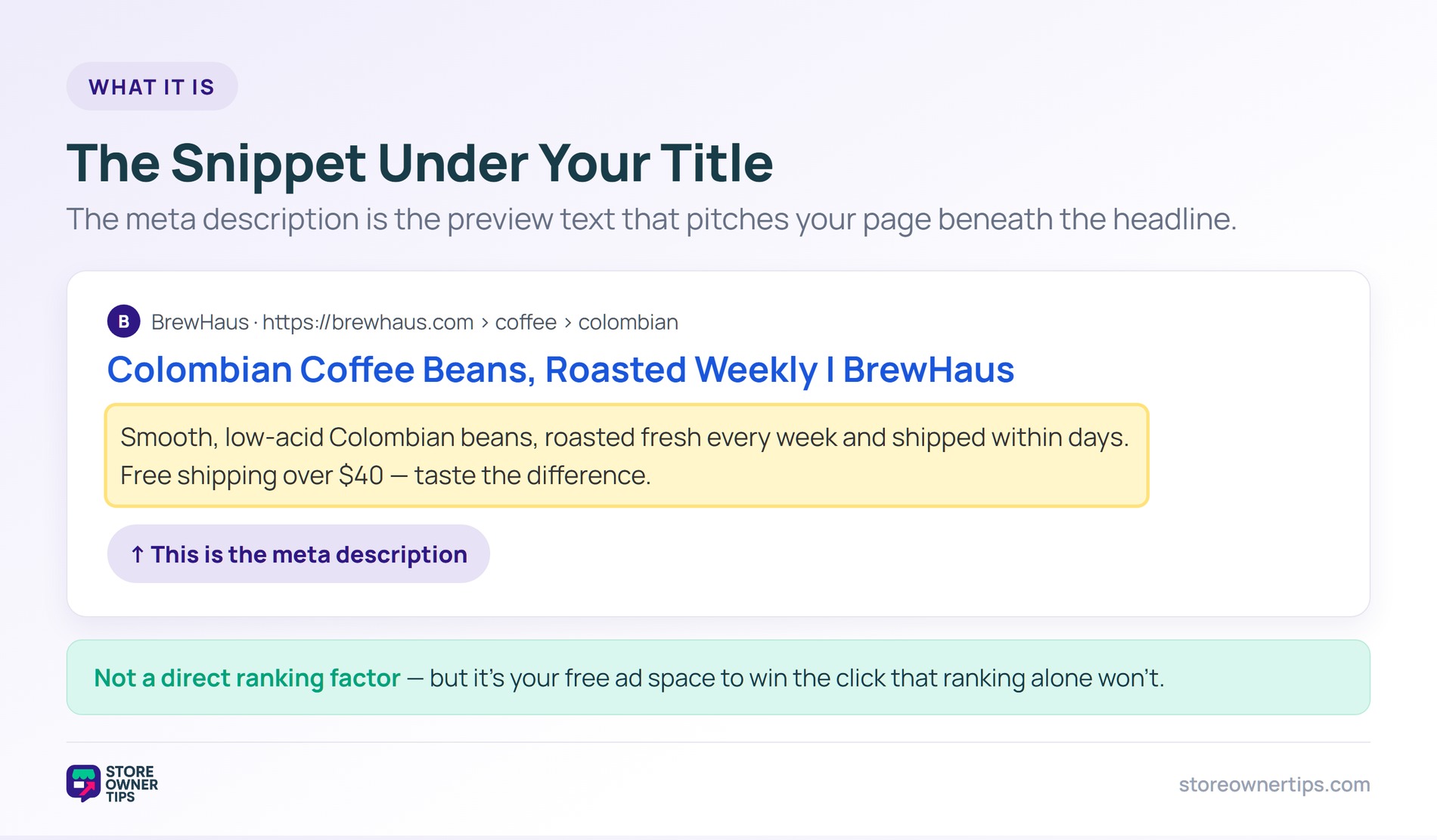
Think of it like the back-cover blurb of a book. The blurb does not change the story inside. But it convinces a browser to pick the book up.
You write one per page to preview the content. It frames what the searcher will find. A good one turns a glance into a click.
It also appears when your page is shared. Some social platforms pull it as the preview. So it shapes how your link looks beyond search.
Google has confirmed the meta description is not a direct ranking factor. Writing one will not push your page up by itself. So it works differently from the title tag.
Its real power is the click-through rate. A page that ranks well still has to earn the click. The top result gets about 27.6% of clicks, the top three over 54%.
More clicks can lift rankings over time. Engines notice a result that draws lots of clicks. So the meta description helps you indirectly.
So skip it, and you still might rank. But you waste the chance to sell the click. The ranking works harder when the snippet helps.
Start by matching the searcher’s intent. The description should answer what they hope to find. Reading customer intent guides the wording.
Lead with the main benefit or answer. Tell the searcher exactly why your page helps. A clear promise beats a vague summary.
End with a gentle nudge to act. A phrase like learn how or see the options invites a click. Keep it natural, not pushy.
Length is the most common pitfall. Aim for roughly 150 to 160 characters. Past that, Google cuts your text with an ellipsis.
Front-load the most important words. If the tail gets trimmed, the key message still lands. Never save your hook for the very end.
Include your main keyword naturally. Google often bolds matching terms in the snippet. That bolding draws the searcher’s eye.
Mobile snippets run shorter, so stay concise. A tight summary shows fully on a phone. Many searches now happen there.
On WooCommerce, an SEO plugin sets your meta descriptions. Tools like AIOSEO or Yoast add a field per page. You write the snippet right from the product or post editor.
Templates help across a big catalog. You can auto-generate a base description for every product. Then refine the key pages by hand.
Each important page deserves a unique description. Duplicates waste the chance to stand out. A distinct snippet per page reads far better.
Google does not always show your meta description. It may swap in its own snippet from the page. This happens often, especially for broad queries.
That is not a failure on your part. Google tries to match the snippet to the exact search. A well-written page gives it good material to pull.
Still, write your own for every key page. It is your best shot at controlling the message. When Google does show it, you win the framing.
A clear, on-topic page reduces rewrites. Google trusts a tidy summary that matches the content. Vague pages invite it to guess instead.
The meta description is a free ad space. Two pages can rank side by side. The better snippet wins the click.
Organic search drives 53.3% of all site traffic, and the snippet decides how much you capture. A dull summary leaves clicks for rivals. A sharp one claims your share.
Numbers and offers add pull. A price, a discount, or free shipping stands out. Concrete details beat generic claims.
Match the snippet to the title’s promise. Together they form one clear pitch. A consistent message reassures the searcher.
AI engines read your descriptions too. They use the summary to grasp a page fast. A clear snippet helps them place your content.
A tight, honest summary travels well into AI results. It frames your page for machines and humans. This aligns with generative engine optimization.
So the humble snippet still earns its keep. It guides classic and AI search alike. One clear summary works across both.
Treat descriptions as something to improve. A weak snippet on a top-ranked page wastes traffic. Rewrite it and watch the clicks.
Compare your click rate to your ranking. A high rank with low clicks flags a dull snippet. That gap is your signal to test.
Refresh snippets for seasons and offers. A timely hook can spike clicks. Keep the winners as templates for new pages.
Even a small click lift adds up over a catalog. A few points across many pages is real traffic. So the testing pays for itself.
The first mistake is leaving it blank. Google then scrapes random text from the page. That patchwork rarely sells the click.
Another trap is duplicate descriptions sitewide. Identical snippets blur your pages together. Write a fresh one for each important page.
A third slip is stuffing keywords. A snippet crammed with terms reads like spam. Write for the human who must choose to click.
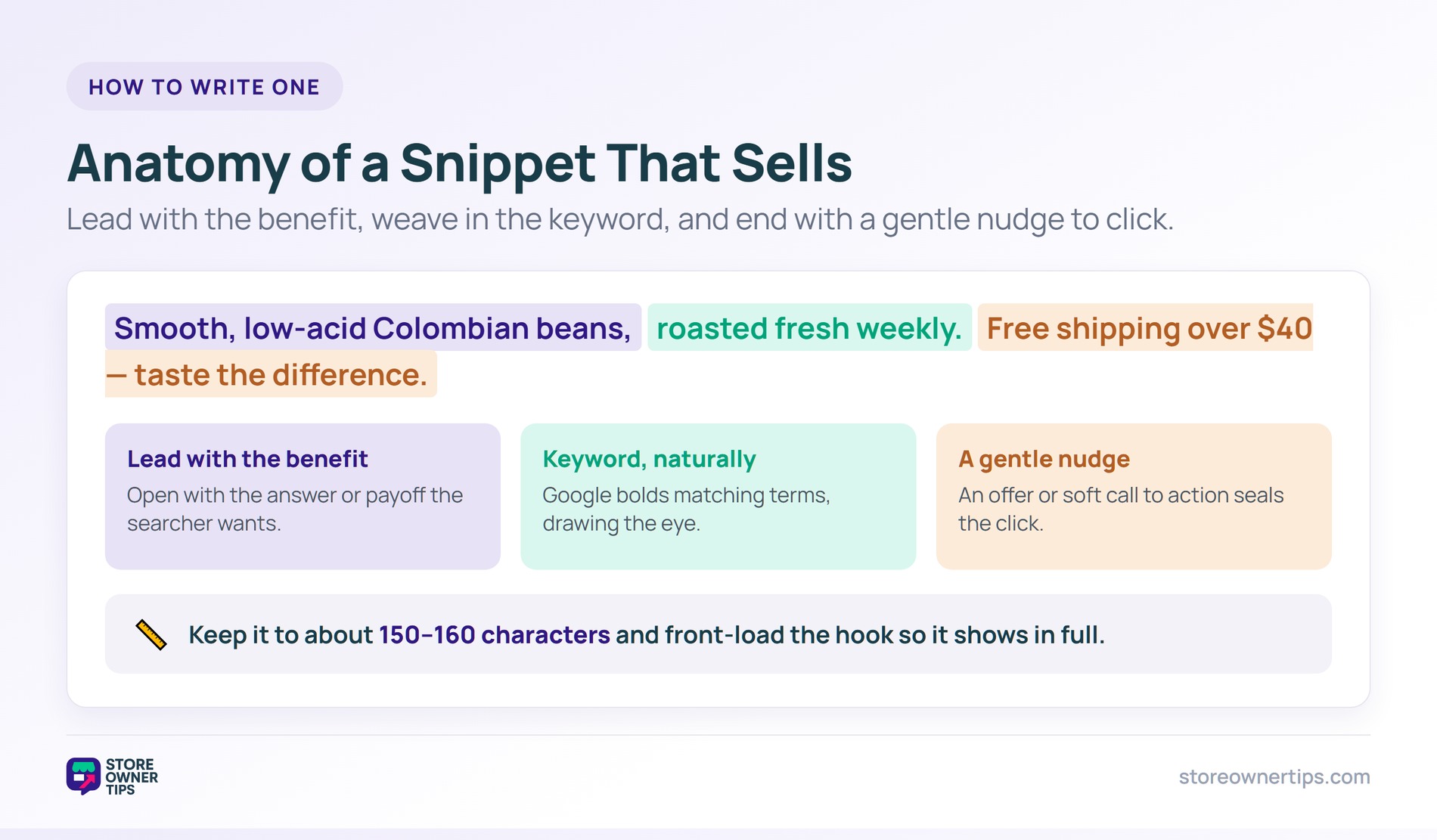
Imagine a coffee brand called BrewHaus on WooCommerce. Its product pages have no meta descriptions at all. Google fills the gap with stray bits of page text.
Those scraped snippets read like gibberish. They show prices and menu links, not benefits. Searchers see no reason to choose BrewHaus.
The page ranks decently but earns few clicks. BrewHaus also loses clicks to sharper rivals. Their snippets sell while its own says nothing.
BrewHaus writes a clear description for each product. One reads: Smooth, low-acid Colombian beans, roasted fresh weekly. Free shipping over $40. Each snippet leads with a real benefit.
The brand keeps every description tight and unique. It front-loads the key term and a hook. An SEO plugin makes the edits quick.
Click rates climb as snippets turn compelling. Searchers now see exactly why to choose BrewHaus. The same ranking suddenly drives more traffic.
BrewHaus also tests two snippet styles. The benefit-led version wins clearly. It rolls that style across the catalog.
The snippets also set honest expectations. Visitors arrive knowing what they will find. The lesson is clear: a strong snippet earns the click.
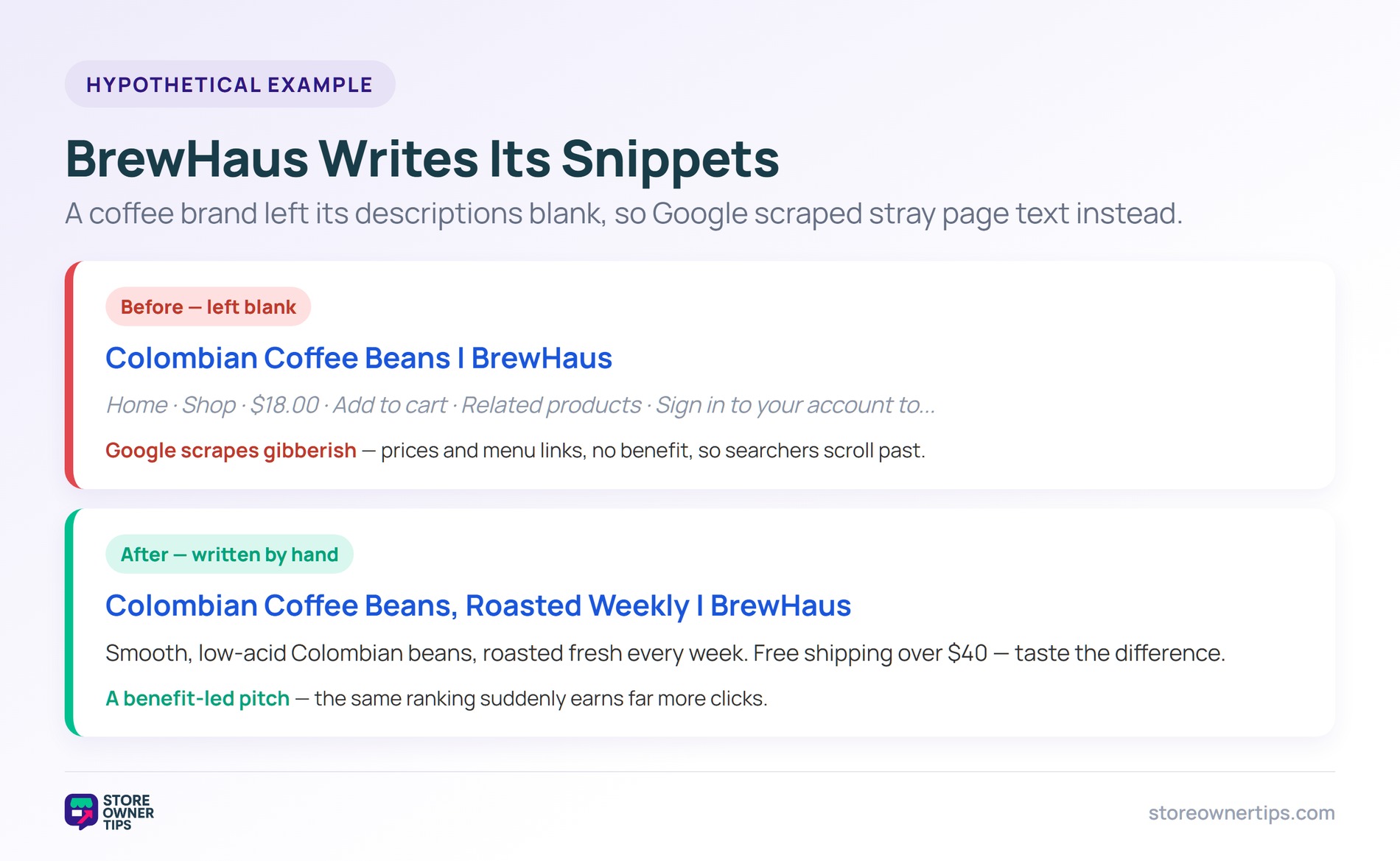
The meta description and title tag are a SERP pair. They appear together in every search listing. But they play different roles.
The title tag is the bold, clickable headline. It carries the most weight for both ranking and clicks. It is also a real ranking factor.
The meta description is the supporting text below. It adds context and a reason to click. It is not a direct ranking factor.
Write them as a team. The title grabs attention with the keyword. The description seals the click with a benefit.
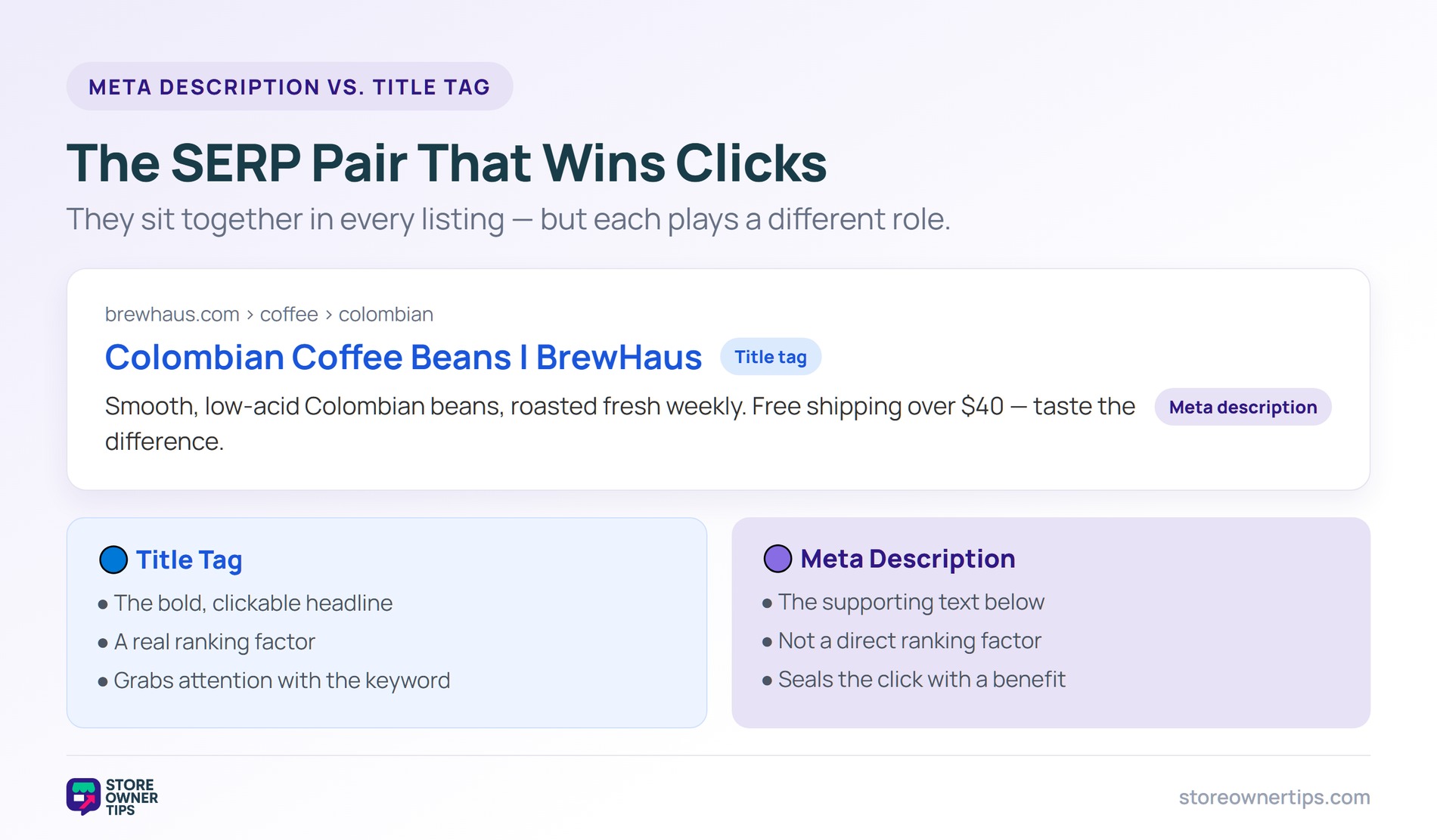
Aim for about 150 to 160 characters. Longer text gets cut off in search results. Put the key message near the front.
Not as a direct ranking factor, but it shapes clicks. A compelling snippet earns more visits. More clicks can lift rankings over time.
Google sometimes writes its own snippet to fit the query. It pulls the most relevant text from your page. Writing a strong one improves your odds of it showing.
A meta description is the snippet that previews your page in search results. It is not a ranking factor, but it is your pitch to win the click. Write a clear, benefit-led, intent-matched description for every key page, and your rankings turn into real traffic. Write the snippet that earns the click.
Copyright © StoreOwnerTips.com. All Rights Reserved.
