An early access sale is a sale that opens to a select group of shoppers before the public can buy. That group might be email subscribers, loyalty members, VIP customers, or shoppers who saved items to a wishlist. Stores use one to reward top customers, grow their list before a big event, and spread out orders.
An early access sale works by opening your sale in two stages: first for a gated group, then for everyone. Think of it like a concert pre-sale. Fan club members get a code and their own ticket window before general sale opens. Your store does the same thing with discounts.
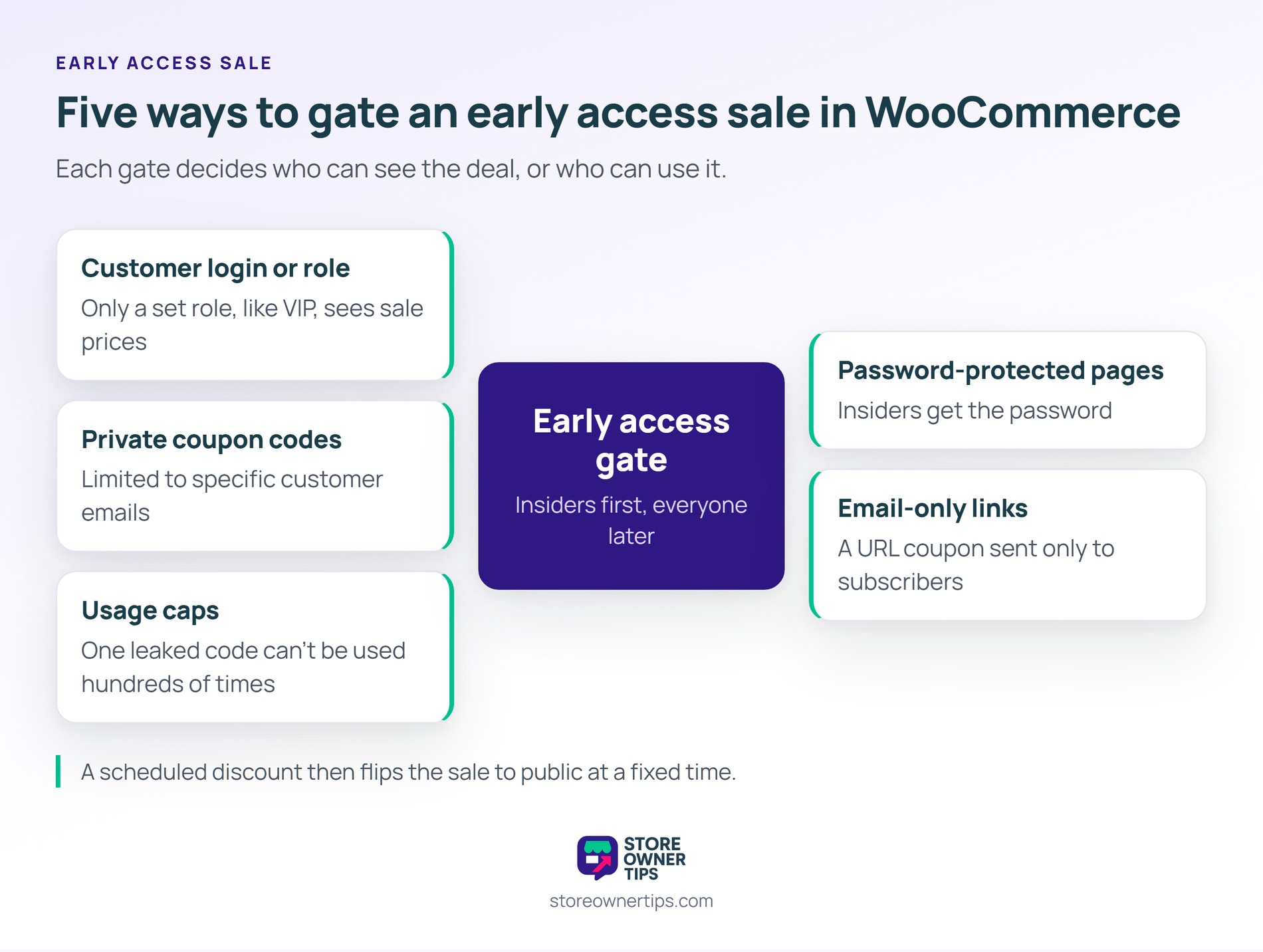
An early access sale in WooCommerce needs a gate, and that gate usually takes one of five forms. Each one decides who can see the deal, or who can use it.
Most stores then flip the sale to public at a fixed time. A scheduled discount handles that switch for you, so nobody has to be awake at midnight to press a button.
An early access sale leans on two well-known persuasion ideas. The first is scarcity. When shoppers know the best stock may sell out before the public arrives, they act faster. That’s the scarcity principle at work.
The second idea is belonging. Getting in early makes a customer feel part of an inner circle, the heart of the unity principle. For a loyal buyer, that recognition can feel as good as the price cut. Plus, early entry costs you nothing extra to give, which makes it a handy loyalty program perk.
An early access sale fits big shopping events because many shoppers already plan ahead. The NRF’s holiday survey found 42% of shoppers planned to start holiday shopping before November. The top reason they gave was spreading out their budget. An early window catches those planners before their money goes elsewhere.
Big sale days also bring heavy traffic. Adobe reported $11.8 billion in US online spending on Black Friday alone. When that kind of demand hits a small store all at once, pages slow down. A study commissioned by Google found a 0.1-second faster mobile site lifted retail conversions by 8.4%.
Splitting buyers into an early wave and a public wave keeps pages quicker for both groups. On top of that, “shop first” is an easy lead magnet. Shoppers join your list now in exchange for a head start later. A solid Black Friday prep checklist should put that sign-up form live weeks before the event.
Early access sales are usually framed as a loyalty reward, and loyalty research backs up that framing. The Bond Loyalty Report found 79% of consumers are more likely to recommend brands with solid loyalty programs. The same report says most consumers are also more likely to keep buying from those brands.
That said, be honest about what the data covers. No major public study isolates early access as its own tactic. The evidence points to the wider benefit of rewarding loyal customers, and early access is one simple way to deliver it. Your own store data is the real test.
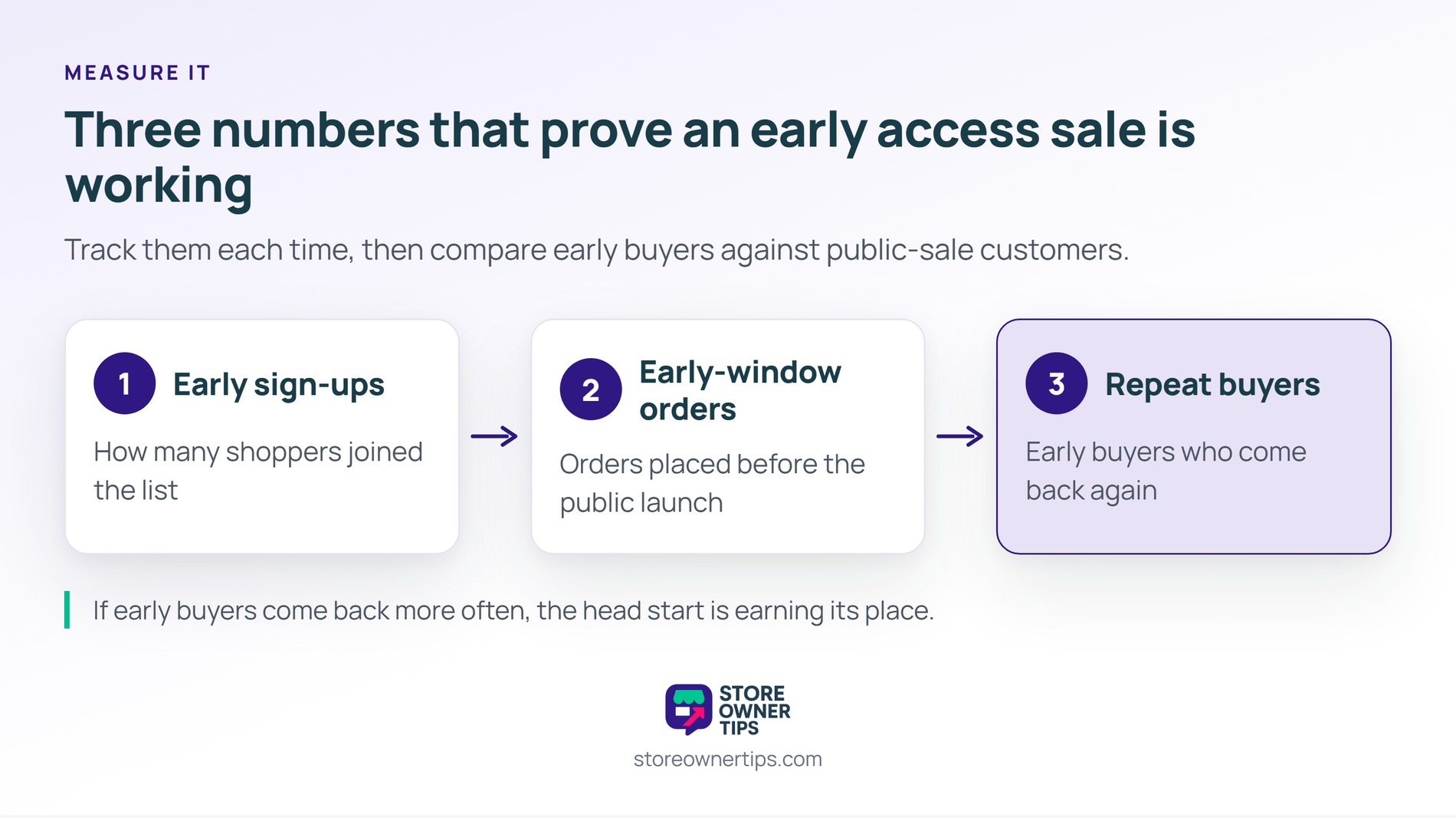
Track three numbers each time: early sign-ups, orders in the early window, and repeat buyers from that group. Compare them against your public-sale customers. If early buyers come back more often, the head start is earning its place in your plan.
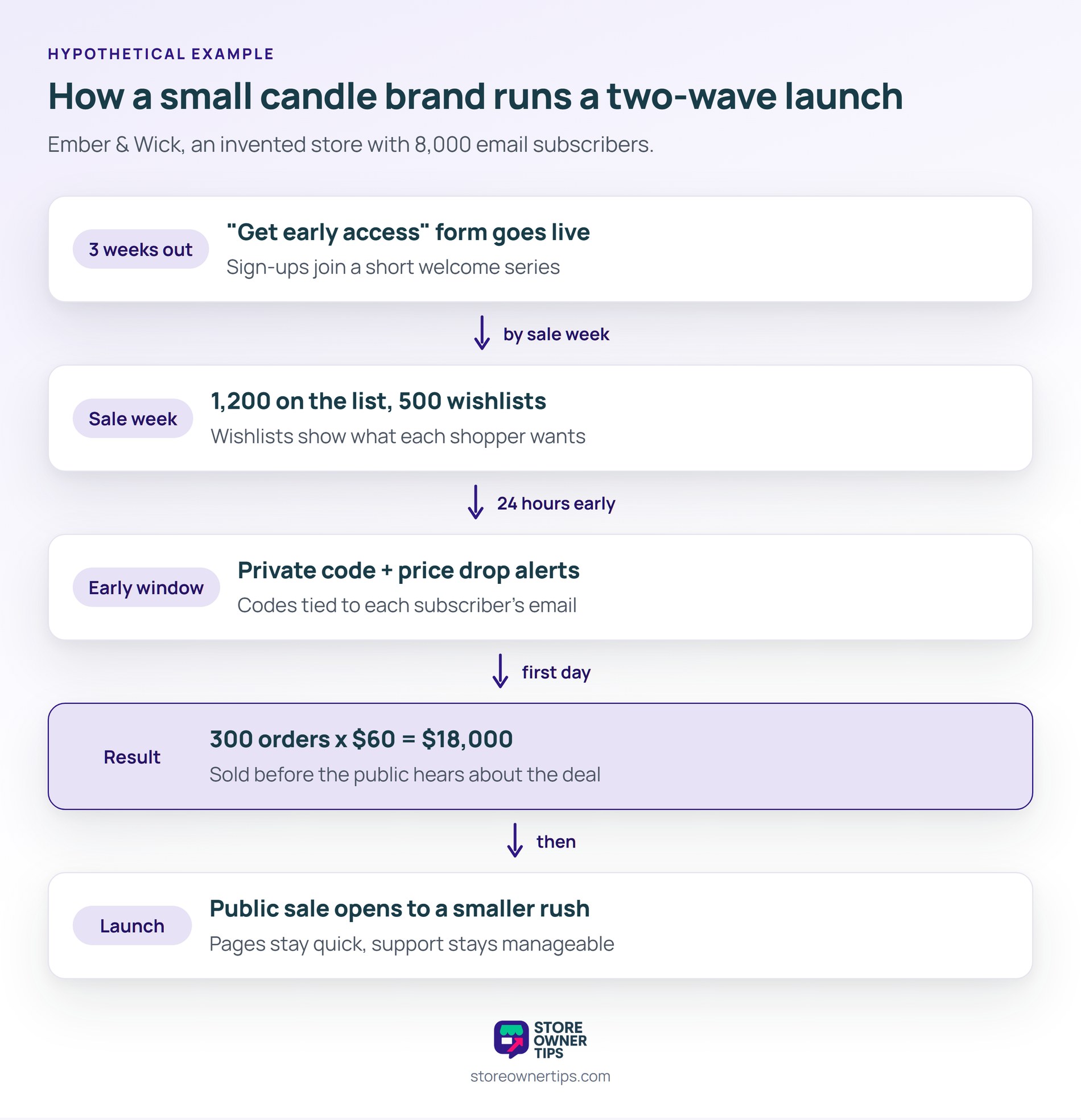
An early access sale in practice is a two-wave launch with a sign-up period before it. Here’s a hypothetical example. Imagine a small candle brand called Ember & Wick with 8,000 email subscribers. The owner wants a calmer Black Friday than last year.
Three weeks before the sale, Ember & Wick adds a “Get early access” form to its homepage and product pages. New sign-ups land in a short welcome series that explains the perk. The form also asks which scents each shopper likes, which is useful zero-party data for later emails.
By sale week, 1,200 shoppers have joined the early access list. Meanwhile, about 500 shoppers have saved candles to a wishlist. The owner plans to use both groups, because wishlists show exactly what each shopper wants before Black Friday.
Twenty-four hours before the public sale, the early access list gets a private code tied to their email addresses. Wishlist shoppers get a price drop alert on their saved items at the same moment. Using email segmentation, top past buyers get a note thanking them by name.
In that first day, 300 early shoppers place orders at an average of $60 each. That’s $18,000 in sales before the public even hears about the deal. The store’s best-selling scents also show low stock early, so the owner can reorder or adjust before launch.
When the public sale opens, the checkout rush is smaller because 300 orders are already done. Pages stay quick, and the support inbox stays manageable. As a result, the owner spends launch day answering questions instead of fixing a crashed site.
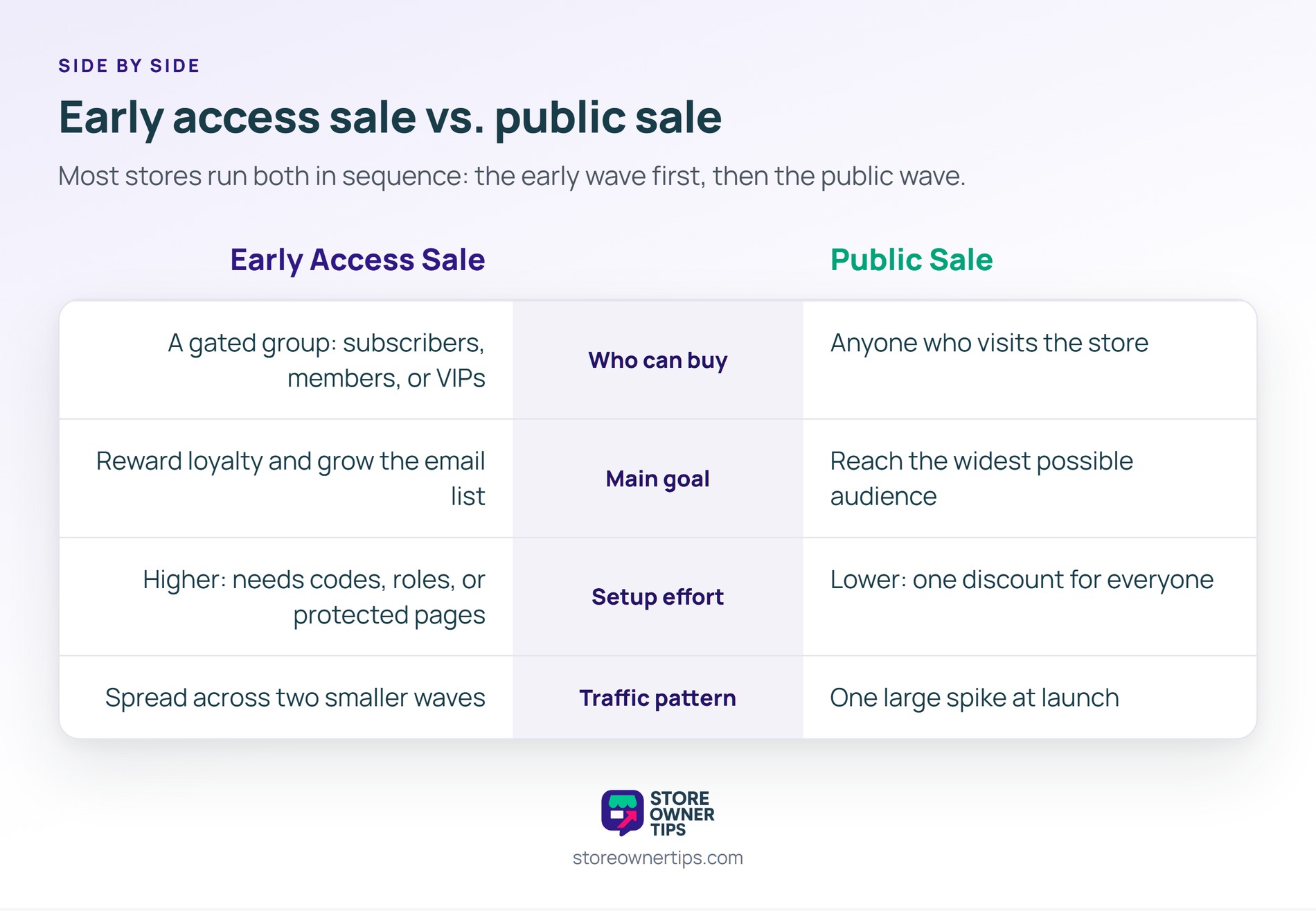
| What you’re comparing | Early Access Sale | Public Sale |
|---|---|---|
| Who can buy | A gated group: subscribers, members, or VIPs | Anyone who visits the store |
| Main goal | Reward loyalty and grow the email list | Reach the widest possible audience |
| Setup effort | Higher: needs codes, roles, or protected pages | Lower: one discount for everyone |
| Traffic pattern | Spread across two smaller waves | One large spike at launch |
An early access sale and a public sale aren’t rivals, because most stores run both in sequence. The early wave rewards your list, and the public wave brings in new buyers. A short, open-to-all flash sale is the better pick when you have no list to reward yet.
An early access sale brings real benefits, but it adds setup work and a few risks.
To give certain customers early access in WooCommerce, start by creating a coupon and limiting it to their email addresses. Then email that code to the group before the public launch. For a bigger group, give members a customer role and show sale prices only to that role. A password-protected sale page also works if you want something simple.
An early access sale usually works best with a short head start, such as one or two days. That’s long enough to feel special and spread out orders. However, a much longer window can drain the public sale before it begins. Whatever you pick, announce the exact start and end times so nobody is confused.
Early access customers don’t need a bigger discount, because the head start is the reward. Getting first pick of limited stock already has real value. Some stores add a small extra, like free shipping, for top members. Just keep the public deal strong, so new shoppers still feel they got a fair offer.
An early access sale matters because it turns a one-day rush into a relationship with your best customers. It grows your list, rewards loyalty, and keeps your store steady when traffic peaks. Run it well each season, and your biggest sale becomes your easiest one to manage.
Copyright © StoreOwnerTips.com. All Rights Reserved.
