Weekly ecommerce tips, deals & news.
Exit Intent is technology that senses when a visitor is about to leave your store, then shows a timely message to keep them. It tracks signals like the cursor racing toward the close button. At that moment, a popup might offer a discount, a reminder, or a reason to stay. The goal is to win back a sale that was about to walk out the door.
Picture a friendly shop greeter near the door. As you turn to leave empty-handed, they offer a small deal to change your mind. Exit intent is the online version of that gentle, last-second nudge. It tries to save the visit before it ends for good.
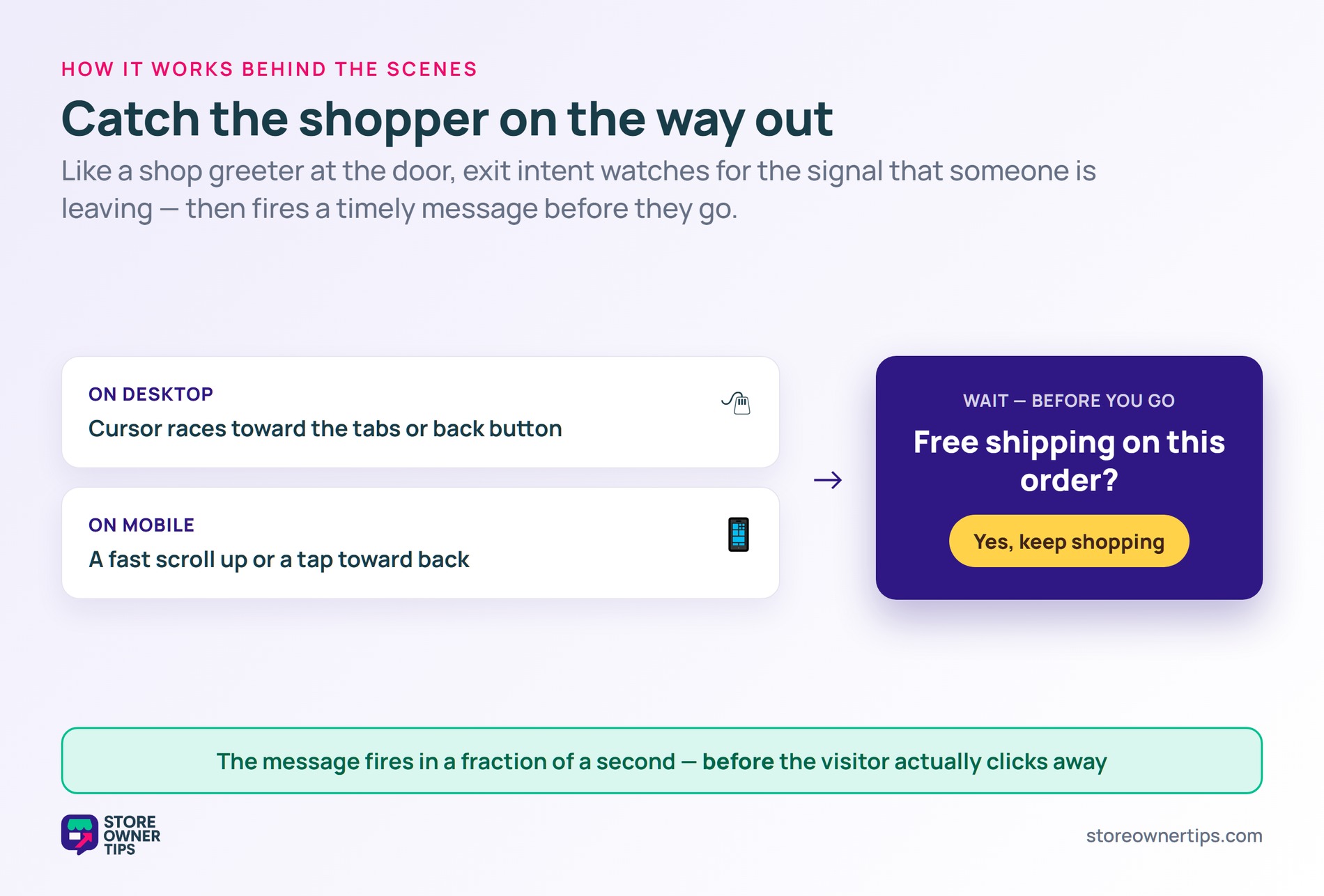
On desktop, the technology watches the movement of the mouse cursor. A quick move toward the browser tabs or back button signals an exit. That movement triggers your chosen message in a fraction of a second. It all happens before the visitor actually clicks away.
Mobile works a little differently, since there is no mouse to track. Instead, tools watch for fast scrolling up or a tap toward the back button. On WooCommerce or Shopify, popup apps handle this detection for you. So you can focus on the offer, not the code.
Exit intent targets people at their highest-risk moment. They have shown interest but are about to leave with nothing. Catching them there is far cheaper than finding a brand-new visitor. In fact, acquiring a new customer can cost five to 25 times more than saving one you already have.
The stakes are high because so many visitors leave without buying. Even cart abandonment alone runs about 70.22% across e-commerce. A timely exit message gives some of those shoppers a reason to reconsider. Even a small save rate adds up to real revenue.
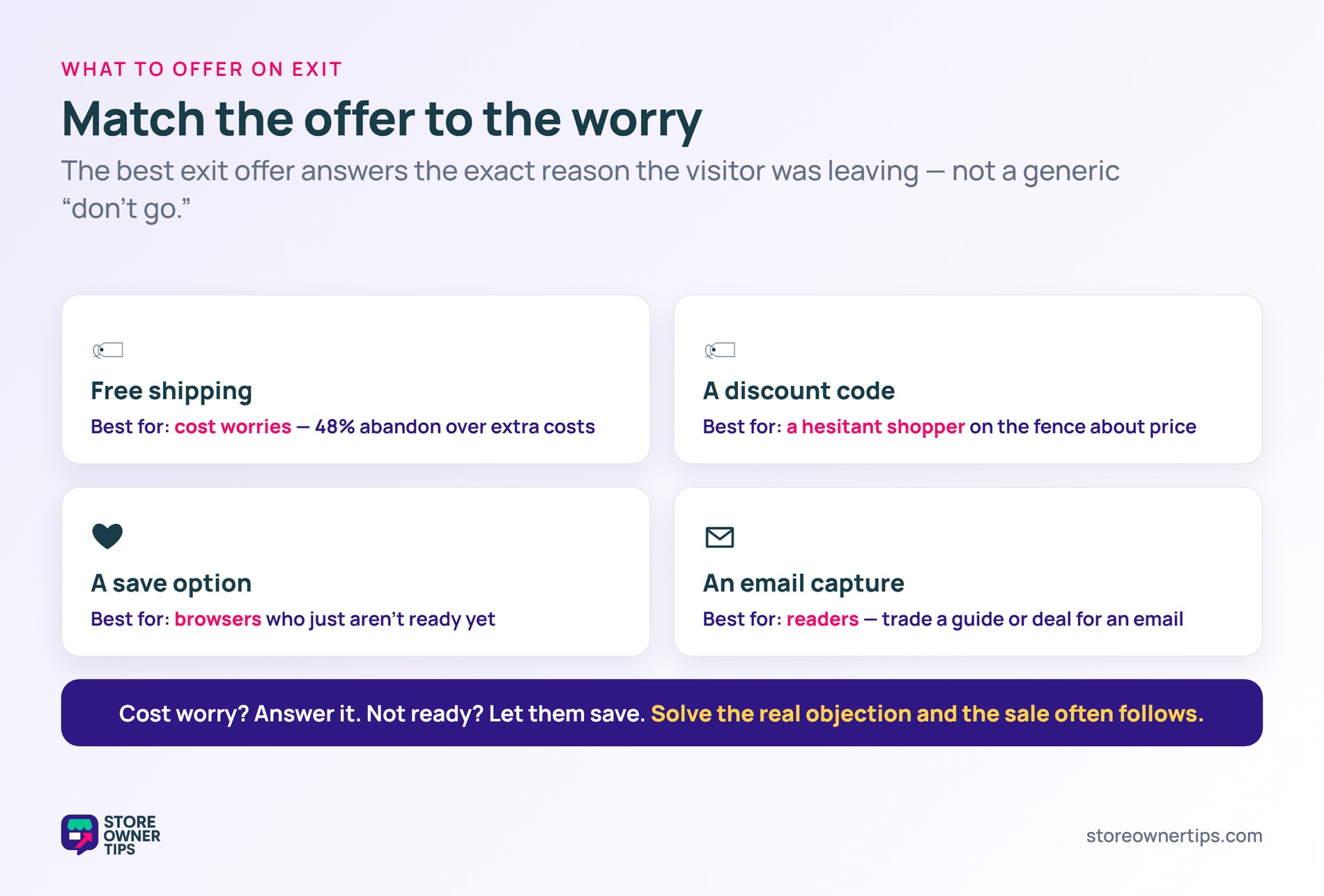
The best exit offer matches why the visitor was leaving. Cost worries are common, since 48% of shoppers abandon over high extra costs. A free-shipping or discount offer speaks directly to that fear. For browsers who just are not ready, a simple save option works better.
Common exit offers tend to fall into a few buckets:
A good exit popup helps the shopper, not just the store. Keep the message short, with one clear offer and an easy close. Show it once per visit so it never feels like nagging. A touch of gentle urgency can make the offer feel worth grabbing now.
That said, urgency only works when it is honest. A real deadline beats a fake countdown that resets every visit. Used well, this kind of FOMO nudges action without feeling like a trick. Trust is what turns a popup into a sale.
The biggest mistake is firing the popup too aggressively. Showing it on every page or every visit quickly wears thin. Another is making the offer generic and forgettable. A vague “wait, do not go” message rarely changes anyone’s mind.
It also pays to mind how the offer affects your margins. Constant discounts can train shoppers to expect them every time. So reserve your richest offers for the highest-value carts. Test different messages to see which truly moves the needle.
Exit intent shines most on high-stakes pages near the sale. The cart and checkout pages are the obvious first picks. A shopper leaving there is often just one worry away from buying. A timely offer can settle that worry on the spot.
It can also work on key product pages and blog posts. There, a save option or email capture fits better than a hard discount. The point is to match the message to where the visitor is. A reader is not the same as a ready-to-buy shopper.
Imagine a mid-sized brand called Northpeak Outfitters that sells jackets on WooCommerce. They get strong traffic but watch most visitors leave without buying. So they add an exit-intent popup to catch shoppers on the way out.
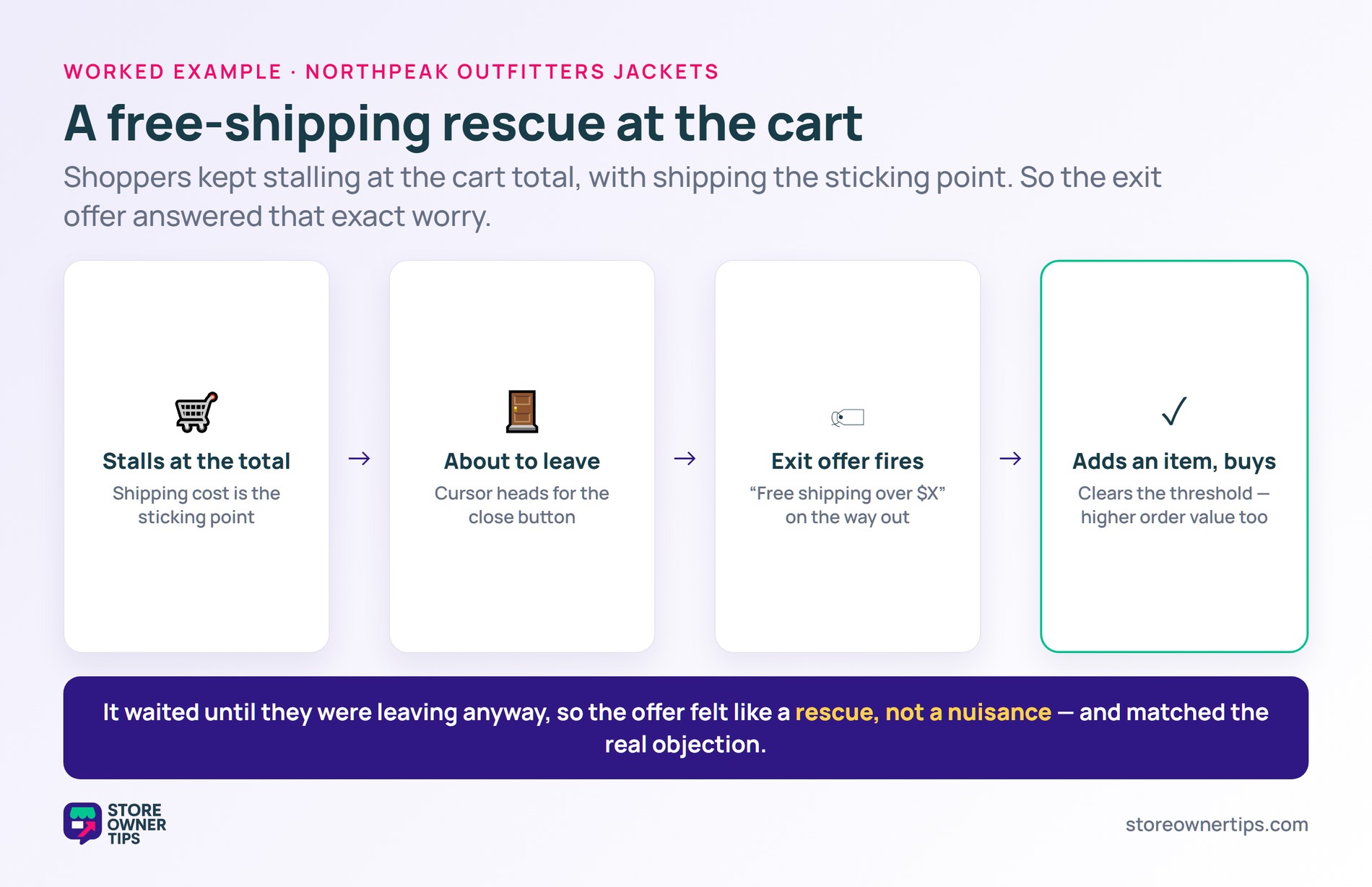
Northpeak notices many shoppers reach the cart, then stall at the total. Shipping costs seem to be the sticking point. So they build an exit offer of free shipping over a small threshold. It appears only when a shopper moves to leave the cart page.
A portion of leaving shoppers now pause and accept the offer. Free shipping removes the exact worry that was stopping them. Many add one more item to clear the threshold, lifting order value. Northpeak recovers sales it was losing, all from traffic it already had.
The team keeps the popup simple and easy to dismiss. They also cap it to once per visit to avoid annoyance. Over time, they test the threshold and the wording. Small tweaks keep the recovered revenue climbing.
The popup did not interrupt anyone mid-shopping. It waited until a shopper was already leaving anyway. That timing made the offer feel like a rescue, not a nuisance. And the offer matched the precise reason people were bailing.
That match between problem and offer is the whole secret. Solve the real objection, and the sale often follows.
A timed popup appears after a set number of seconds on the page. An exit-intent popup waits until the visitor signals they are leaving. The difference is interruption versus rescue. One can break focus, while the other catches a lost moment.
Timed popups can still work for newsletter signups or welcome offers. But they risk annoying shoppers who were happily browsing. Exit intent avoids that by holding back until the end. For recovering near-lost sales, exit intent is usually the gentler choice.
Many stores actually use both, but for different jobs. A welcome offer might greet brand-new visitors once. An exit message then catches anyone slipping away with an empty cart. The trick is to never stack them so they collide.
Yes, when the timing and offer are right. They catch shoppers at the exact moment they are about to leave. A relevant offer, like free shipping, can recover a real share of those visits. The key is to help, not to nag.
Results vary by store, so always test your own version. Track how many leavers accept the offer and buy.
They can be, if they are clumsy or appear too often. The trick is to show them once and only on exit. A clear close button and a genuinely useful offer keep things friendly. Done well, they feel like a helpful nudge, not a roadblock.
The fastest way to ruin them is to block the content. Never trap a shopper who simply wants to keep reading or shopping.
They do, but detection is less precise than on desktop. There is no mouse, so tools watch for fast scrolls or a back tap. Some stores use a short delay or scroll trigger instead. Test carefully so the popup does not fire too early.
It also helps to keep the mobile popup small and easy to close. A full-screen takeover on a phone can frustrate fast. So design the mobile version with extra care.
Exit intent is a low-cost way to rescue sales you were about to lose. It meets shoppers at their most fragile moment with a reason to stay. Use it with a relevant offer and a light touch, and you turn quiet exits into extra revenue.
Just remember that the offer is only half the job. The timing and the light touch are what make it work. Get both right, and a near-loss becomes a win.
Copyright © StoreOwnerTips.com. All Rights Reserved.
