Weekly ecommerce tips, deals & news.
Search intent is the real goal behind a person’s search query. It is the why beneath the words they type. Someone may want to learn, to find a site, to compare, or to buy. Matching your page to that goal is the heart of modern SEO.
Search intent is the purpose hiding inside a query. Two people can type similar words for different reasons. The words alone do not tell the whole story.
Think of it like a librarian reading between the lines. A vague request still hints at a real need. Good SEO reads that need the same way.
It is closely tied to customer intent. Both ask what the person truly wants. Search intent just focuses on the search itself.
Intent can shift over time too. A trending term may change meaning. So revisit your big keywords now and then.
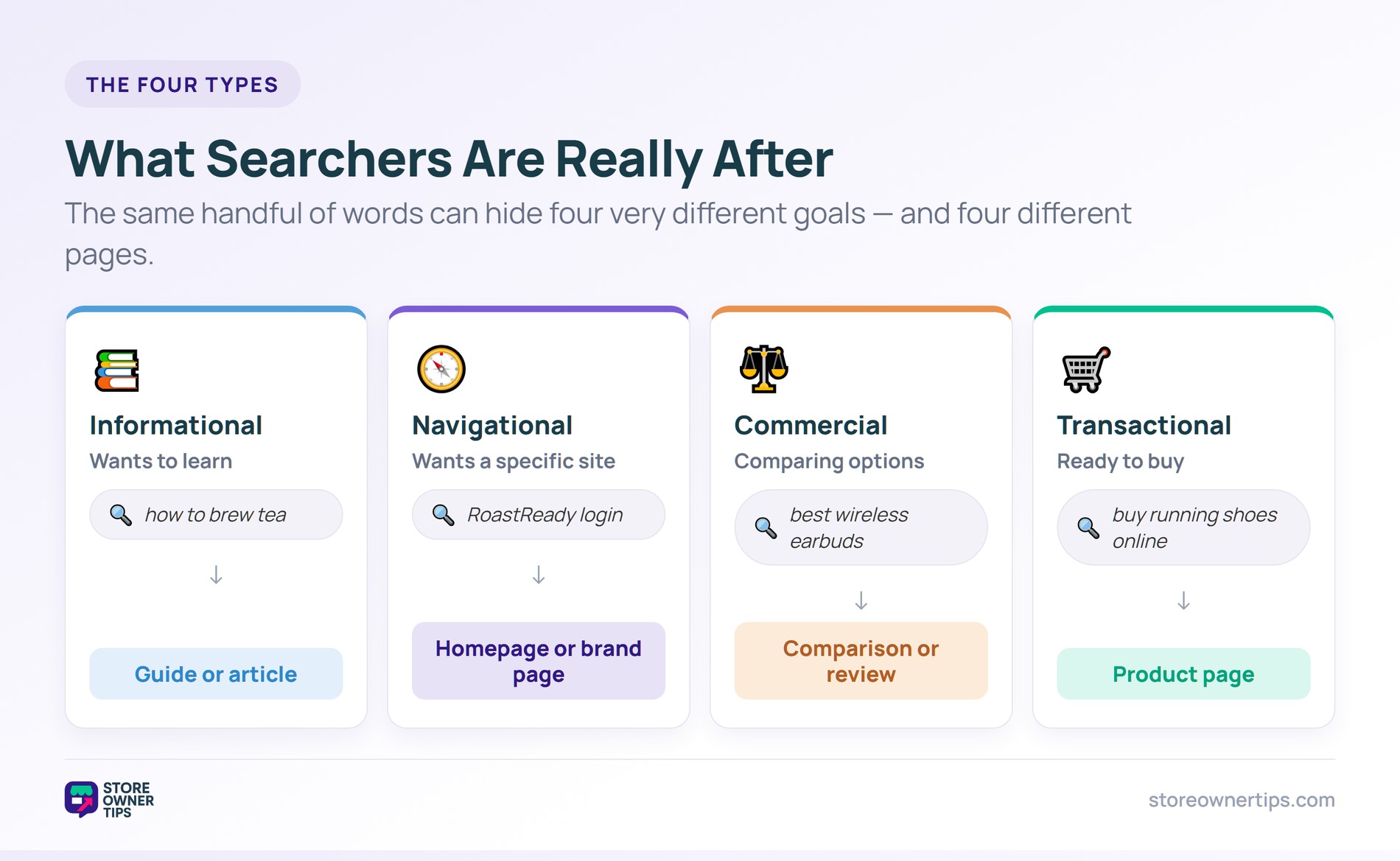
Most searches fall into four buckets. Informational searches seek knowledge, like how to brew tea. Navigational searches look for a specific site or brand.
Commercial searches compare options before buying. A query like best wireless earbuds fits here. The searcher is weighing choices, not yet buying.
Transactional searches are ready to act. A query like buy running shoes online signals a purchase. This is where purchase intent is highest.
Many queries blend two intents at once. A best coffee maker search compares and buys. Smart pages serve both sides of that blend.
The query itself holds the biggest clues. Words like how or what signal a learning goal. Words like buy or price signal a purchase.
The search results reveal intent too. Look at what already ranks for a term. Google shows the format it thinks fits the goal.
If guides rank, the intent is informational. If product pages rank, it is transactional. Follow that signal when you build your page.
Watch the format Google favors as well. Lists, videos, or shopping ads all signal intent. The layout itself is a strong hint.
Matching intent is what earns a ranking. Google rewards pages that satisfy the searcher. A mismatch rarely climbs, no matter how good it looks.
The reward for ranking is huge. The top organic result earns about 27.6% of clicks. The top three together take over 54%.
Organic search drives 53.3% of all site traffic, and intent decides your share of it. Match the goal, and you claim more of that flow. Miss it, and rivals take those clicks.
Intent also drives conversions, not just clicks. A page that fits the goal turns visitors into buyers. A mismatch sends them bouncing right back.
Each intent calls for a different page type. Informational queries deserve a clear guide or article. Transactional queries deserve a clean product page.
Forcing the wrong page wastes the ranking. A product page cannot satisfy a how-to search. A guide cannot satisfy a ready buyer.
So decide the page type from the intent. Build the format Google already rewards. That alignment lifts both rank and conversion.
AI search raises the stakes for intent. Assistants try to satisfy the goal directly. They pull the best-matching content into their answers.
This makes intent matching more important, not less. A page that nails the goal is the one cited. Tools like answer engine optimization build on that idea.
So read intent for both humans and machines. The clearer your match, the more visible you stay. Intent is the common thread across every engine.
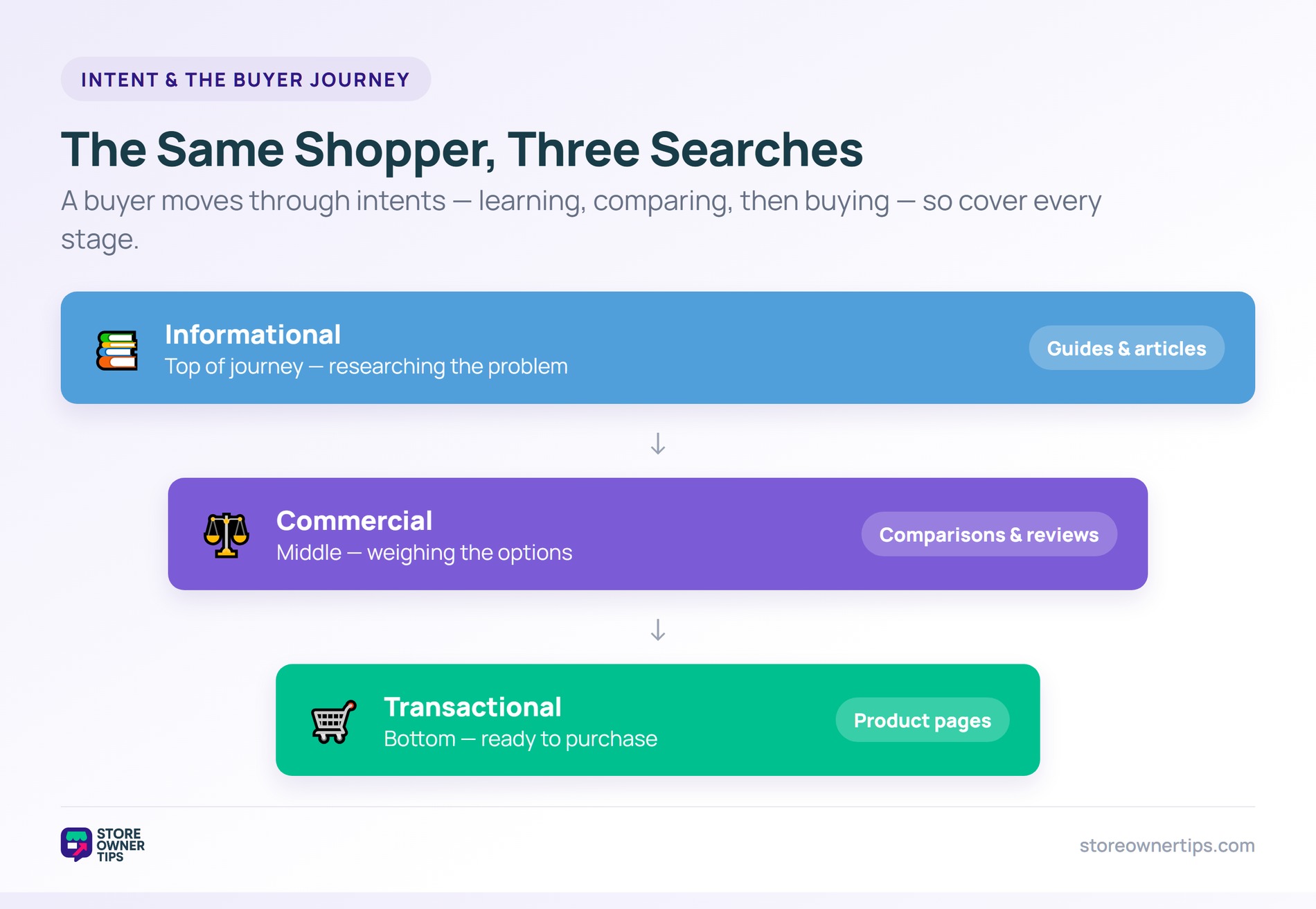
Intent maps neatly onto the buyer journey. Informational searches sit at the top, during research. Transactional ones sit at the bottom, near purchase.
A shopper often moves through several intents. They learn, then compare, then finally buy. Each stage is a different search and page.
So cover the whole journey, not just the sale. Guides catch early researchers and build trust. Product pages convert them once they are ready.
Map your content to each stage on purpose. Fill the gaps where you lack a page. A complete map captures buyers all the way down.
You do not have to guess at intent. Keyword tools label the likely goal of a term. They group searches by type for you.
The live results are the best free check. Search the term and study page one. Its format reveals the intent Google rewards.
People-also-ask boxes add more clues. They show the related questions searchers have. Answering them deepens your intent match.
Your own analytics help too. High bounce on a page flags an intent gap. Fix the format, and the bounce often falls.
Start by naming the single intent you target. One page should serve one clear goal. Mixing goals muddies the match.
Then shape the page around that goal. A guide leads with answers and depth. A product page leads with the item and a buy button.
Finally, check the page against the top results. Match their depth, format, and angle. Then keep refining until it earns the top spot.
The first mistake is targeting words, not goals. A keyword with no clear intent leads nowhere. Always ask what the searcher really wants.
Another trap is the wrong page format. Ranking a product page for a how-to query fails. Match the format to the goal instead.
A third slip is ignoring the live results. The current top pages reveal the intent. Skipping that check means guessing blind.
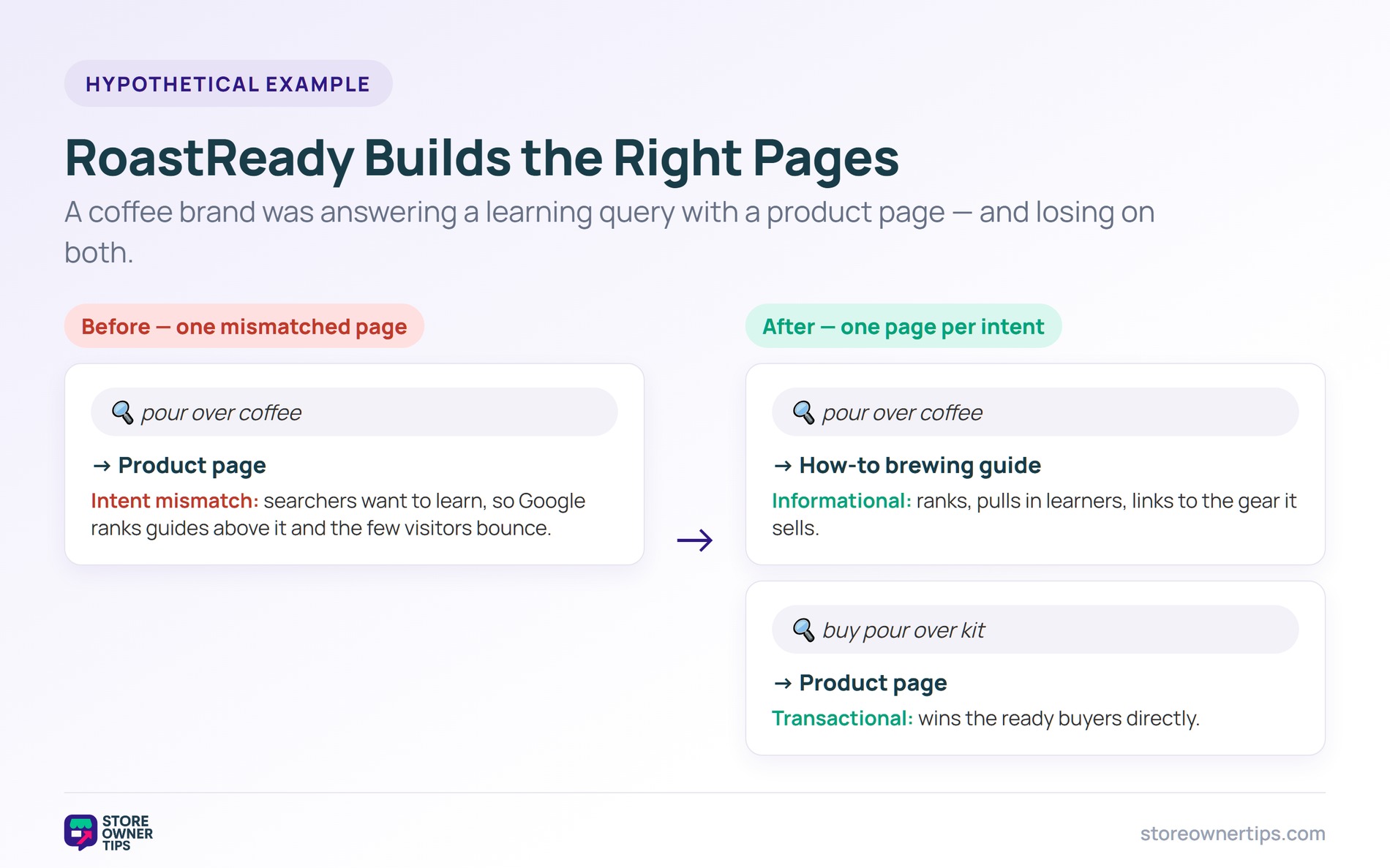
Imagine a coffee brand called RoastReady on WooCommerce. It targets the keyword pour over coffee on a product page. Yet the page barely ranks or converts.
Searchers for pour over coffee mostly want to learn. They seek a brewing guide, not a product to buy. RoastReady offers a product page that ignores that goal.
So Google ranks guides above its page. The few visitors who land bounce quickly. The keyword brings traffic that never converts.
RoastReady studies the intent behind the term. It builds a clear how-to guide on pour over brewing. The guide links naturally to the gear it sells.
For ready buyers, it targets buy pour over kit instead. That transactional term gets a sharp product page. Each query now meets its matching page.
The guide climbs the rankings and pulls in learners. Many readers click through to buy the gear. The product page wins the ready buyers directly.
RoastReady also adds a clear call to action to its guide. Readers move smoothly from learning to buying. The two pages now work as a team.
RoastReady now ranks for both kinds of searcher. Traffic and conversions rise together. The lesson is clear: intent decides which page wins.
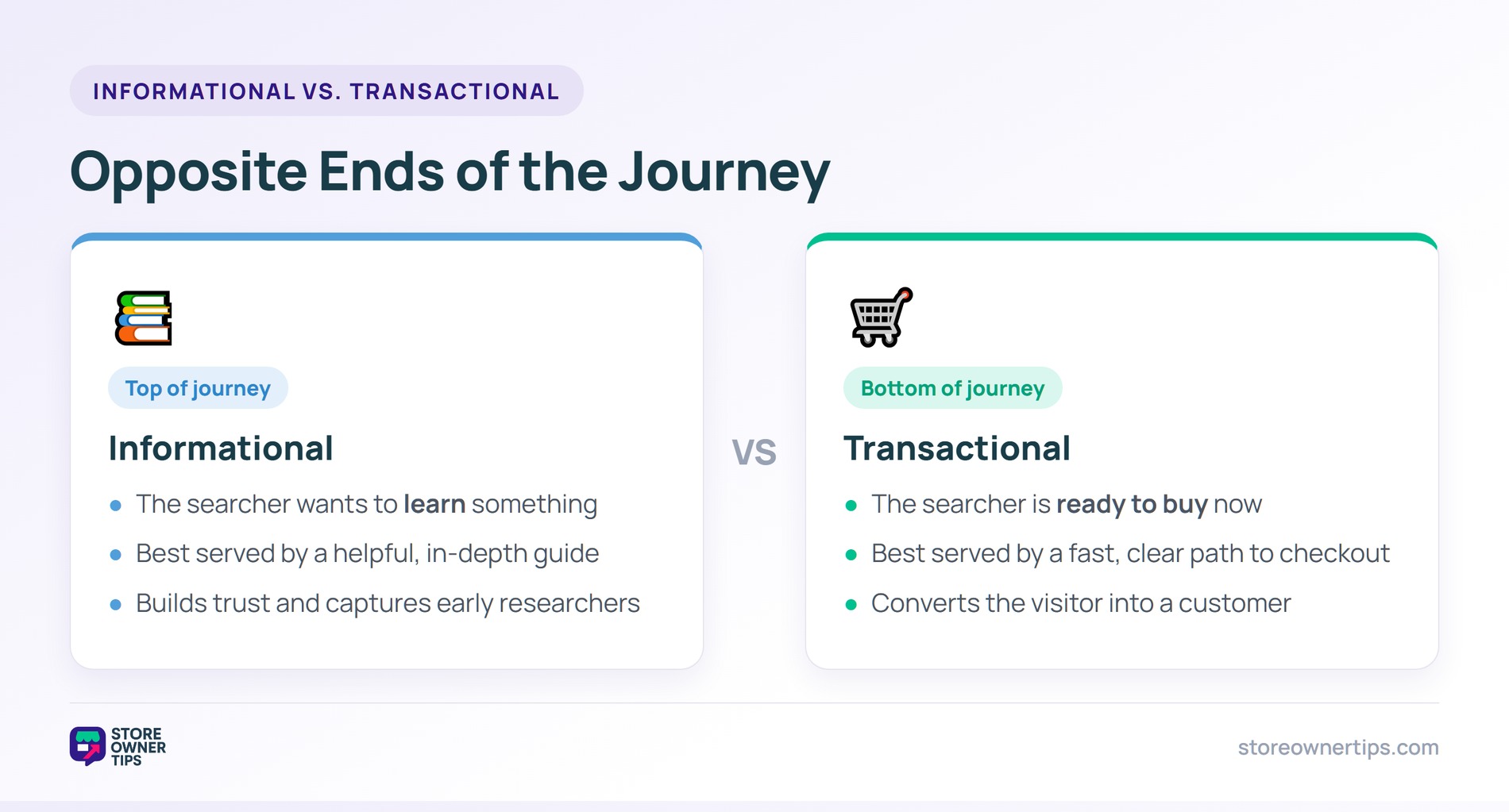
Informational and transactional intent sit at opposite ends. Informational searchers want to learn something. Transactional searchers are ready to buy now.
The two need very different pages. Learners want a helpful, in-depth guide. Buyers want a fast, clear path to checkout.
Mixing them up wastes the visit. A guide frustrates a ready buyer. A product page frustrates a curious learner.
Smart stores serve both along the journey. Guides capture early learners and build trust. Product pages convert them when they are ready.
They are informational, navigational, commercial, and transactional. Each reflects a different goal behind the search. Matching your page to one is the key.
Read the words for clues like how or buy. Then check what already ranks for it. When in doubt, copy the format that already ranks.
Google rewards pages that satisfy the searcher’s goal. Matching intent lifts both rankings and conversions. It is the link between traffic and revenue.
Search intent is the goal behind every query, and matching it is the core of modern SEO. Read the intent, then build the page format that satisfies it. Get this right, and you win the ranking, the click, and the sale. Read the why, and the ranking follows.
Copyright © StoreOwnerTips.com. All Rights Reserved.
